Do I need to sear the pork first?
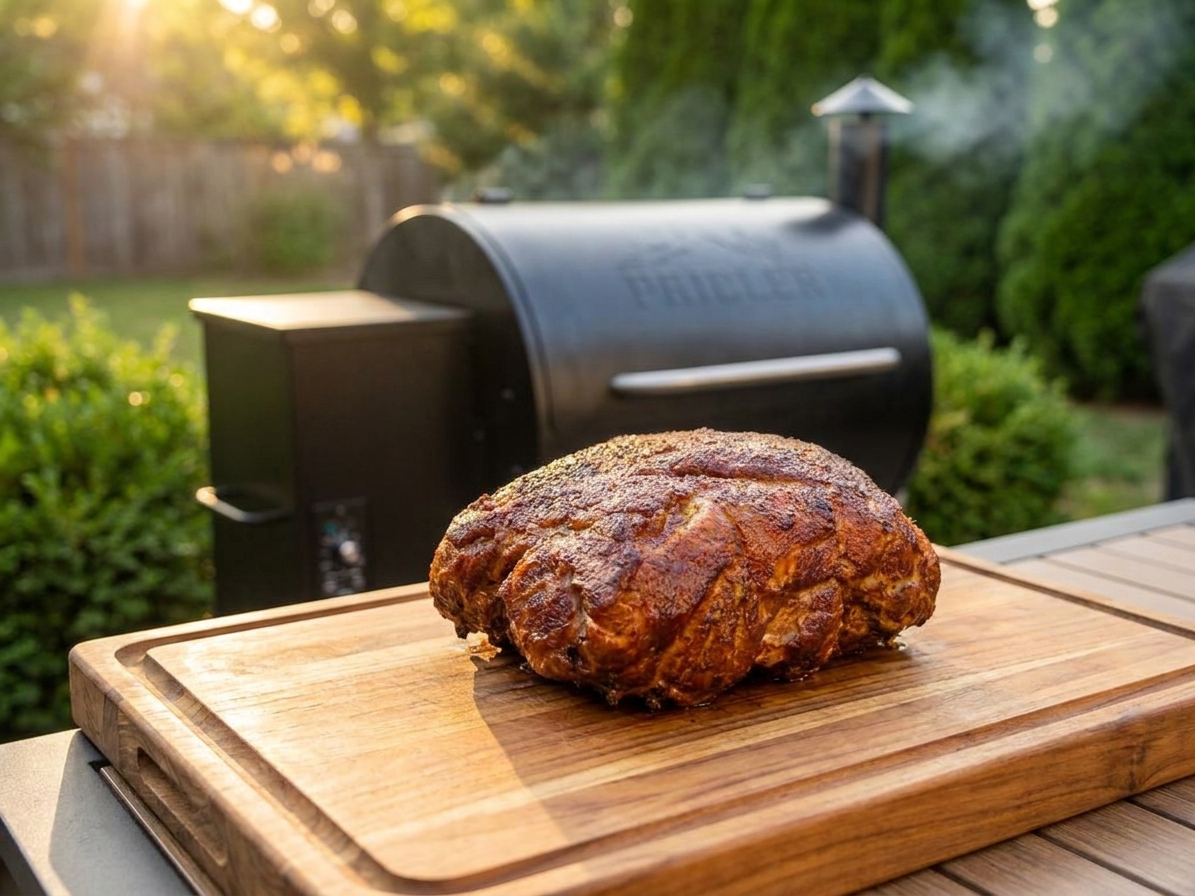
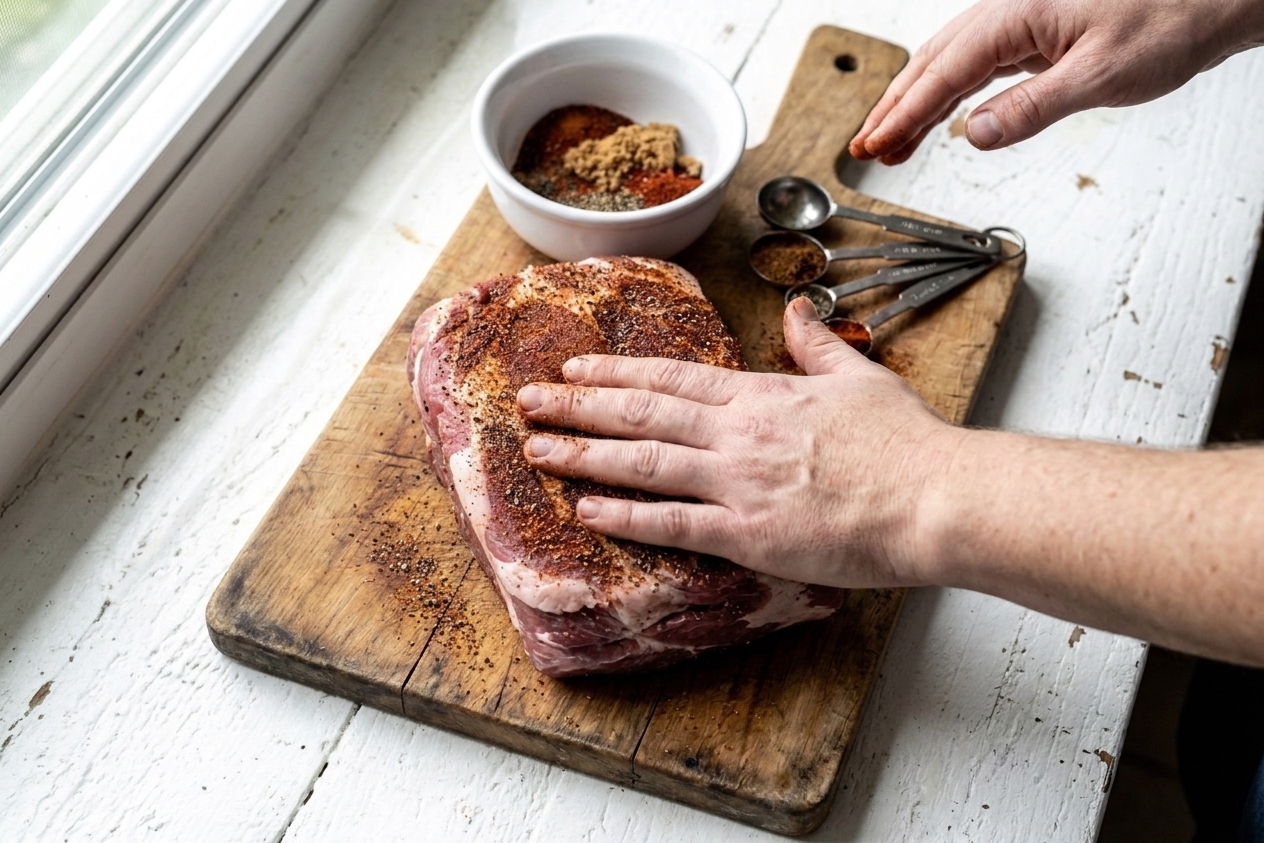
You do not need to, and this recipe is built to be great without it. That said, if you have 6 extra minutes and a hot skillet, a quick sear adds a deeper roasted note. Sear just to brown the outside; do not try to cook it through. The slow cooker will handle the rest.
What cut of pork is best for pulled pork?
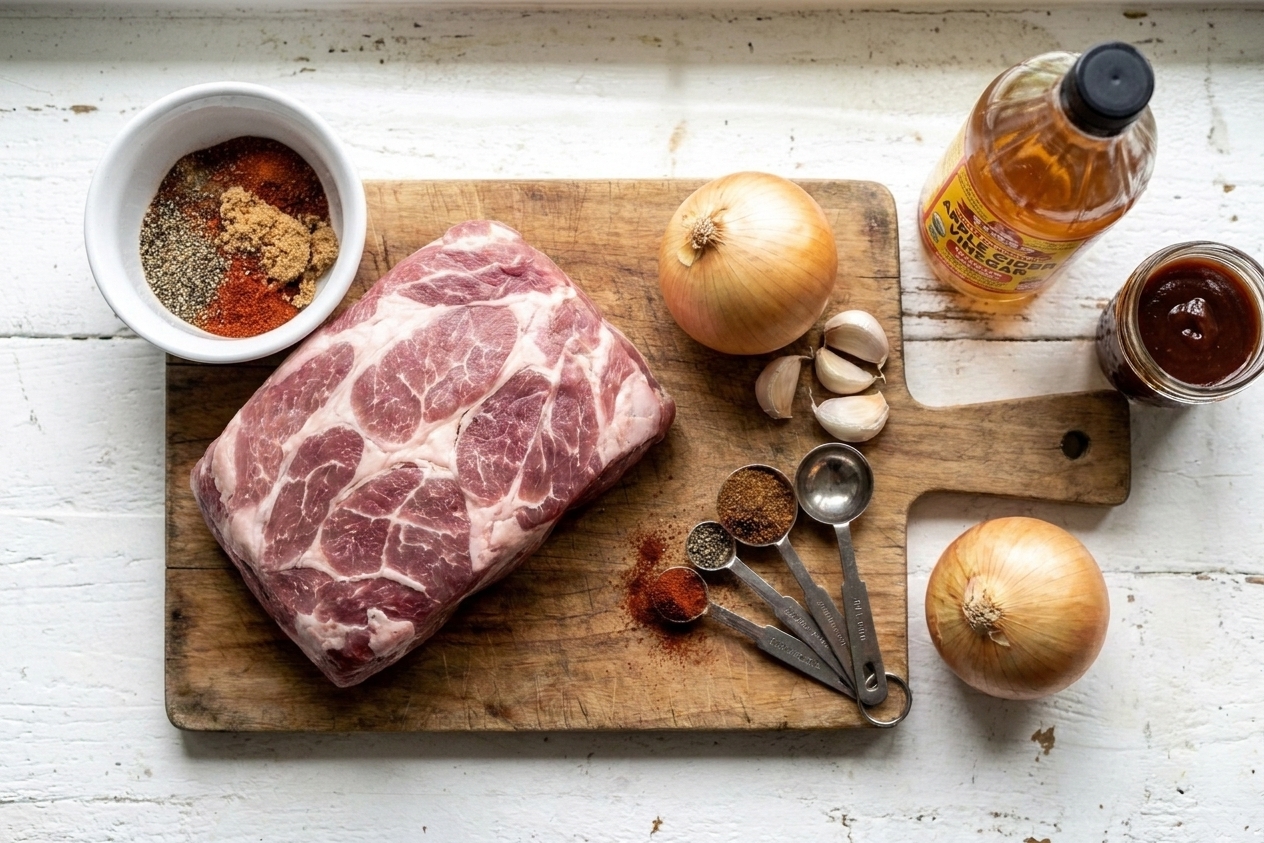
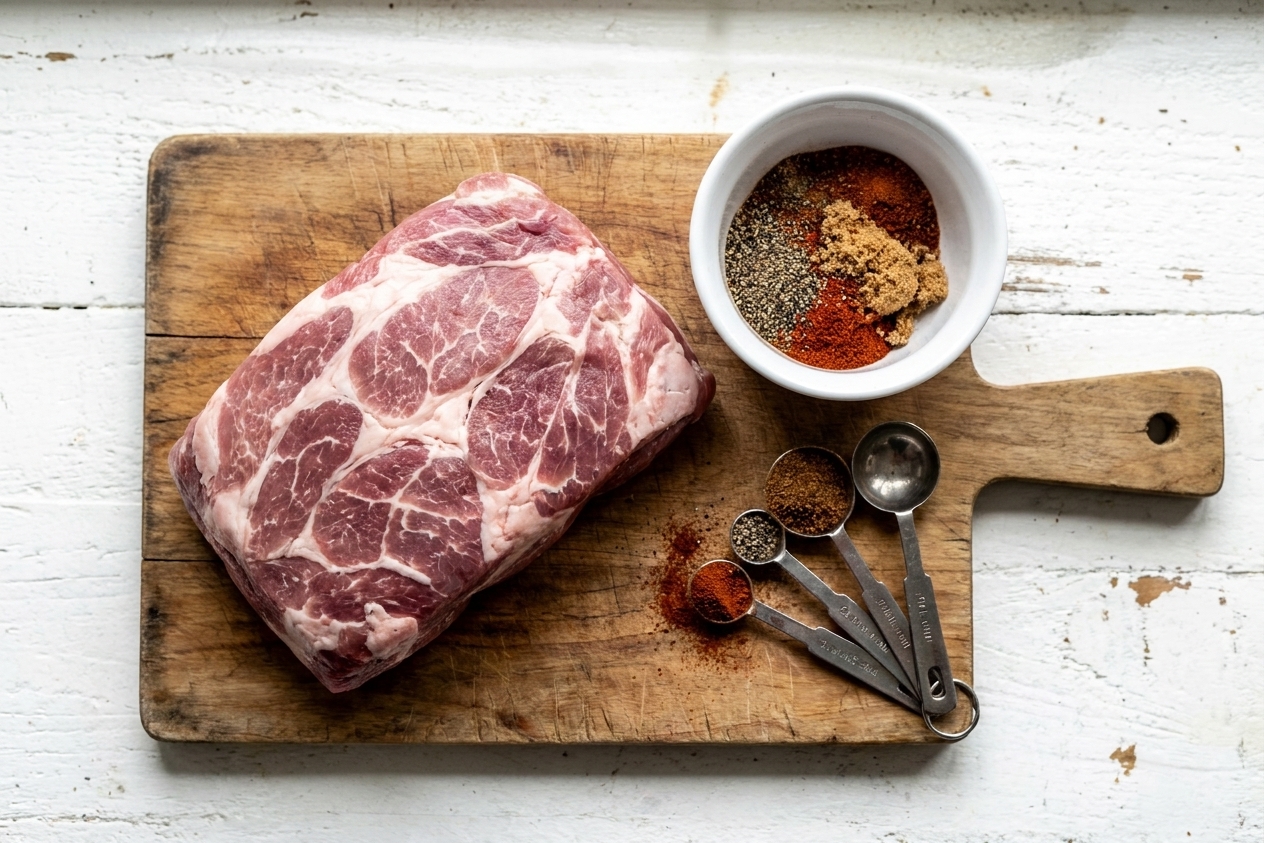
Pork shoulder is the classic. Look for boneless pork shoulder or Boston butt. It has the right fat to stay moist and shred easily.
Can I use pork loin?
You can, but it will be noticeably leaner and can turn dry. If pork loin is what you have, shorten the cook time and add extra sauce at the end. For best results, stick with shoulder.
Do I need to trim the fat cap?
A little fat is your friend here. If your pork shoulder has a thick fat cap, trim it down to about 1/4 inch. Also remove any big, hard pieces of fat that will not really melt.
What if I bought bone-in pork shoulder?
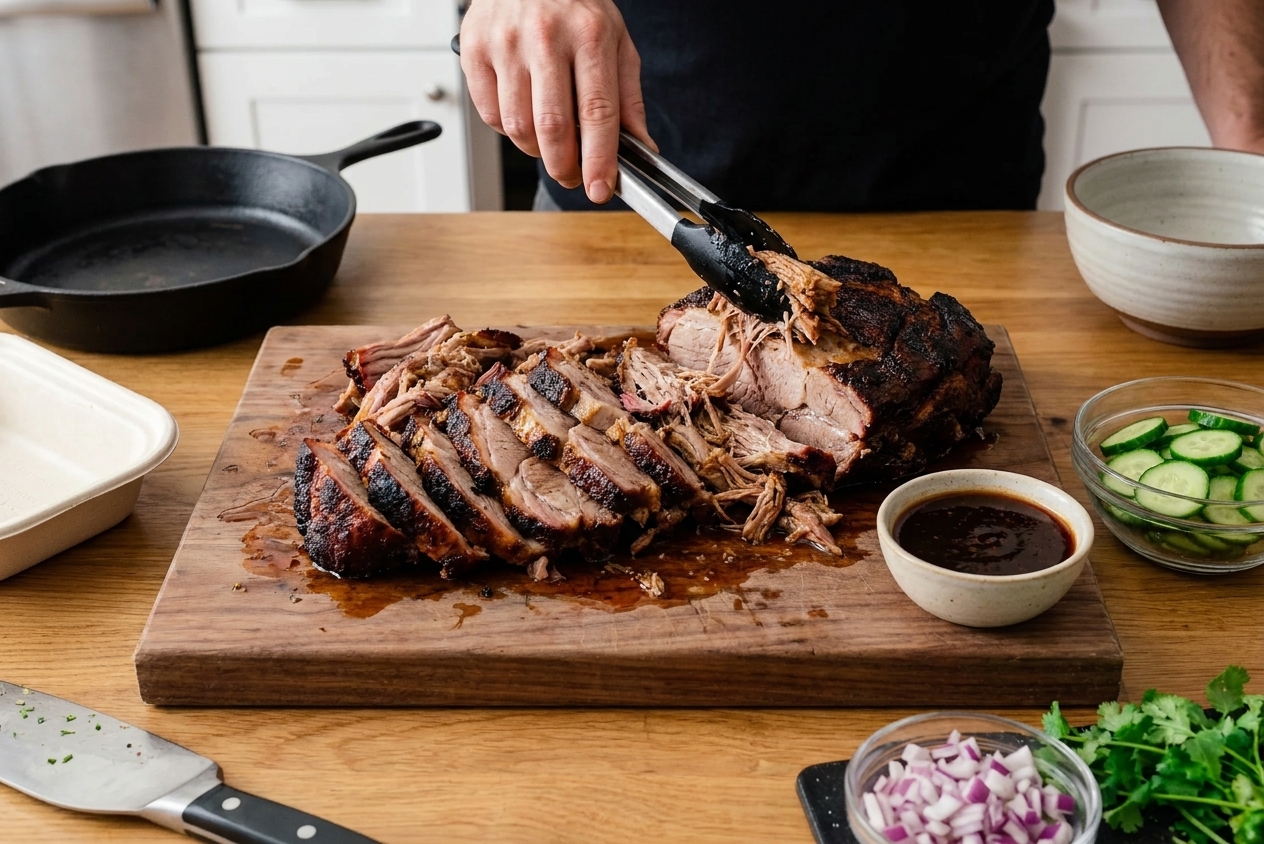
Totally fine. Cook it the same way. Once it is tender, the bone should slide out easily before you shred.
How do I know it is done?
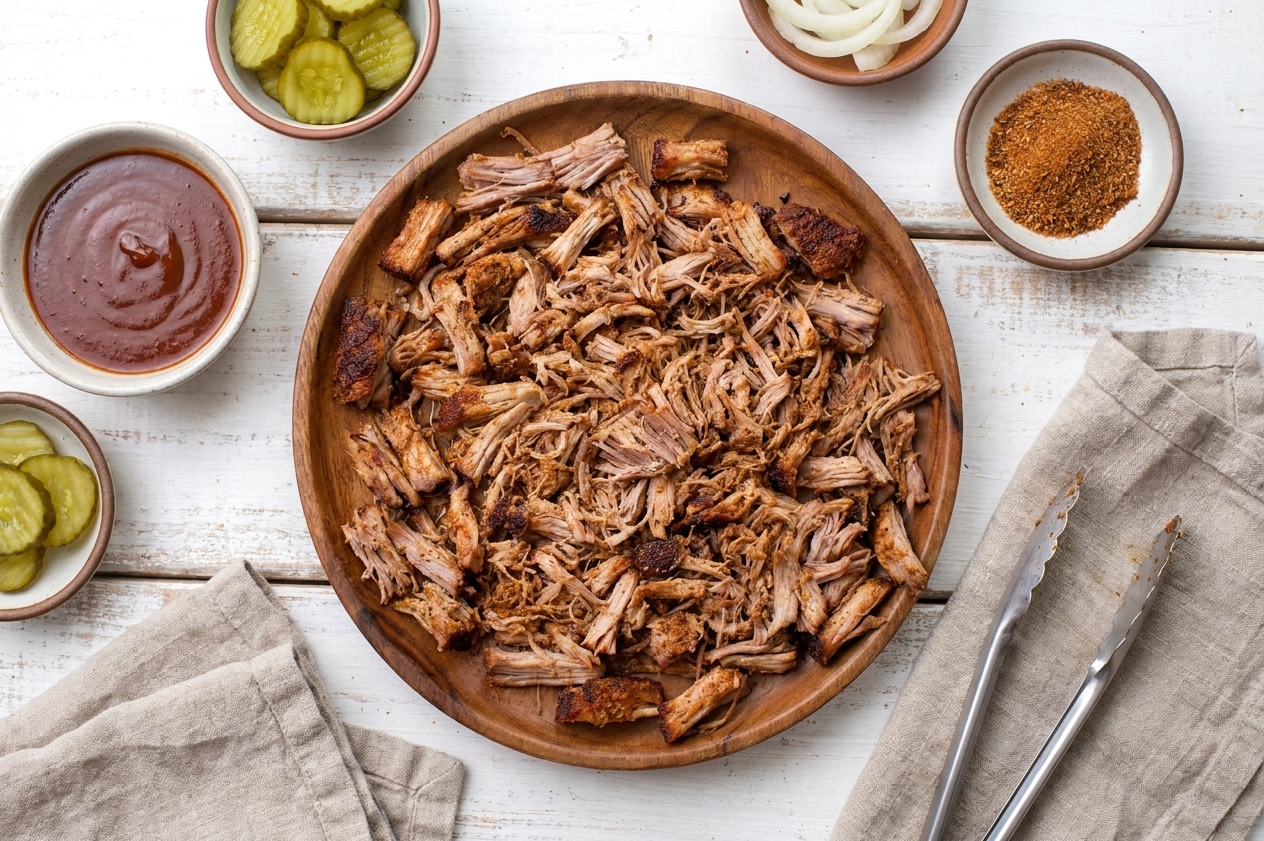
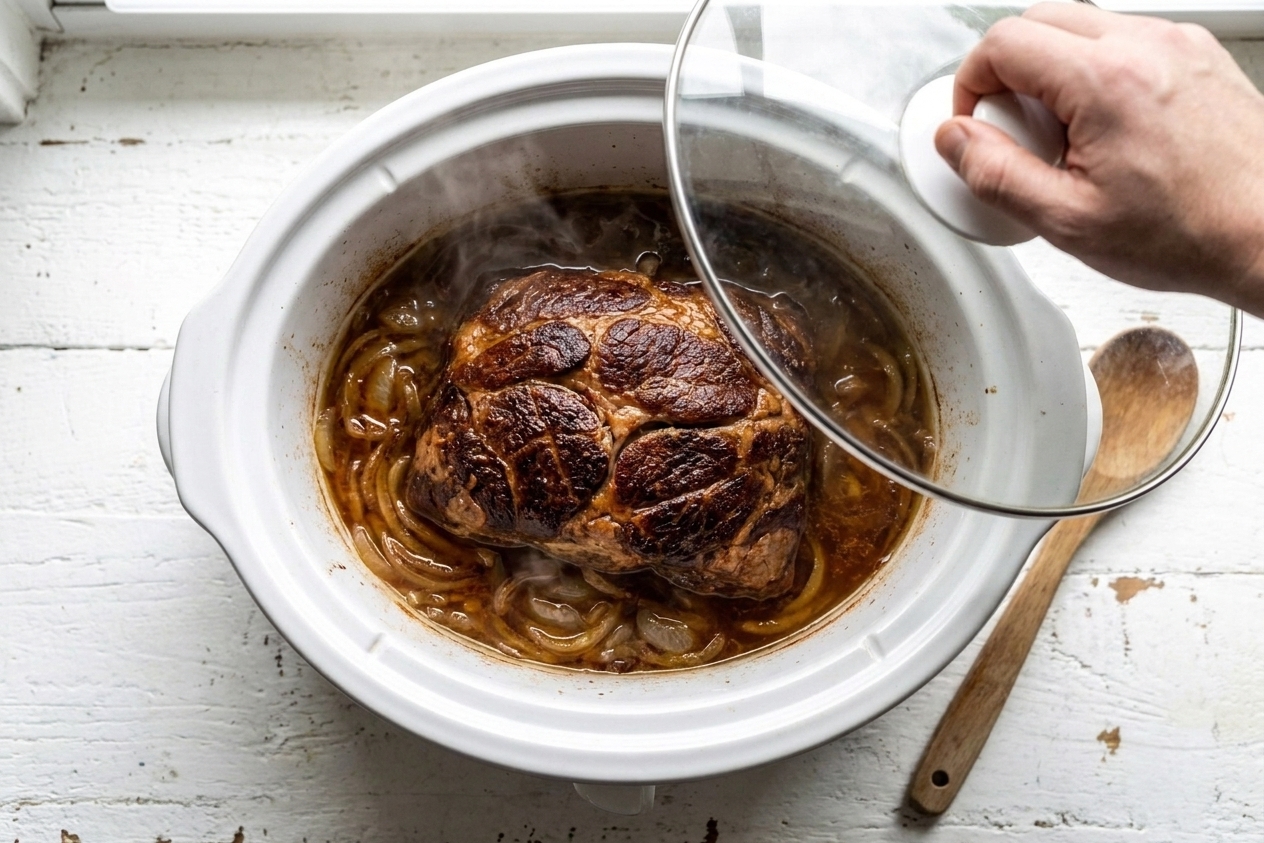
It is done when it shreds easily with a fork. If you like numbers, aim for an internal temp around 195 to 205°F, which is where the connective tissue fully relaxes. (Food safety note: pork is considered safe at 145°F, but it will not be shred-tender until much higher.)
Should I cook on low or high?
Low is best for the most tender texture. High works when you are in a pinch, but it can be a little less silky. Either way, cook until it shreds easily.
My pulled pork tastes bland. How do I fix it?
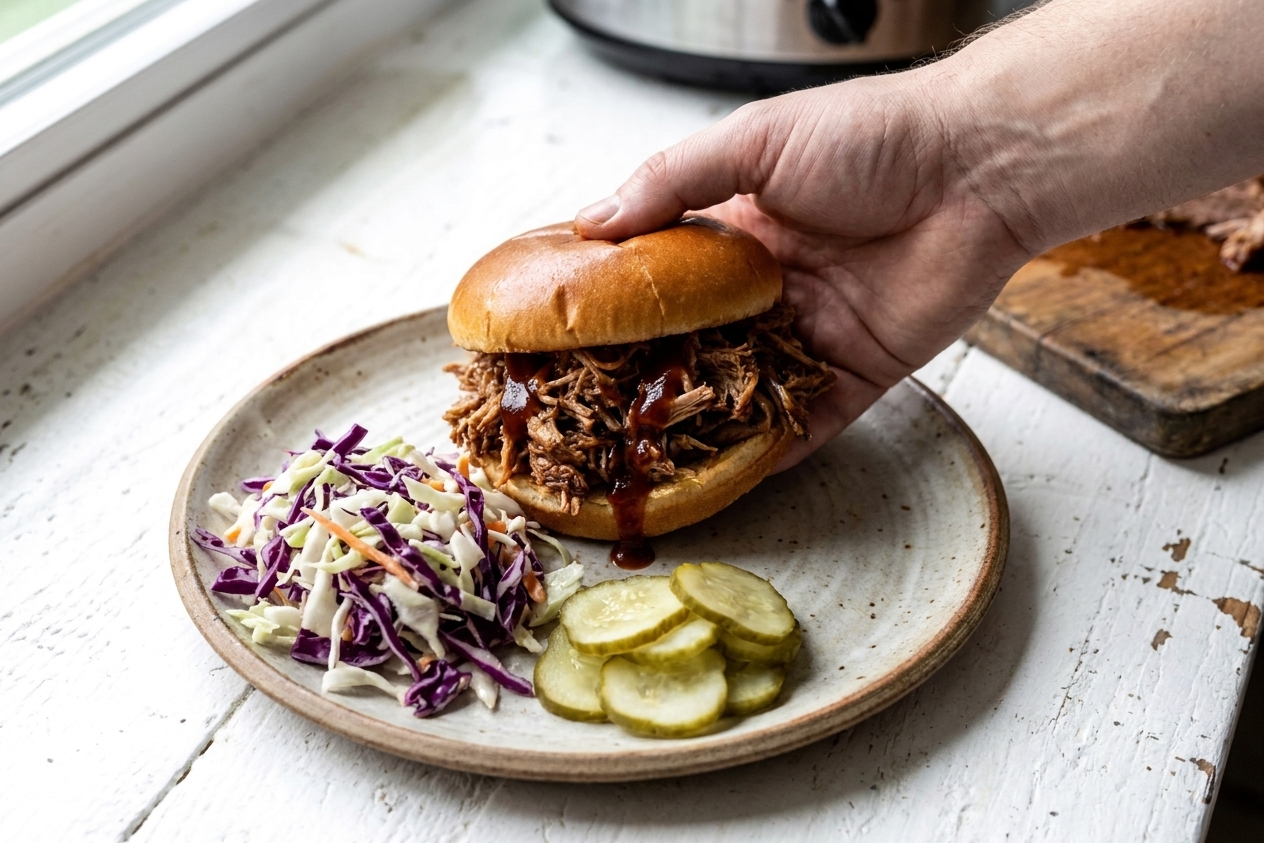
Salt and acid are usually the answer. Stir in a pinch more salt and a splash of apple cider vinegar or pickle juice. Then add sauce gradually until it tastes like you want to keep “testing” it.
Do I have to mix the cooking liquid back in?
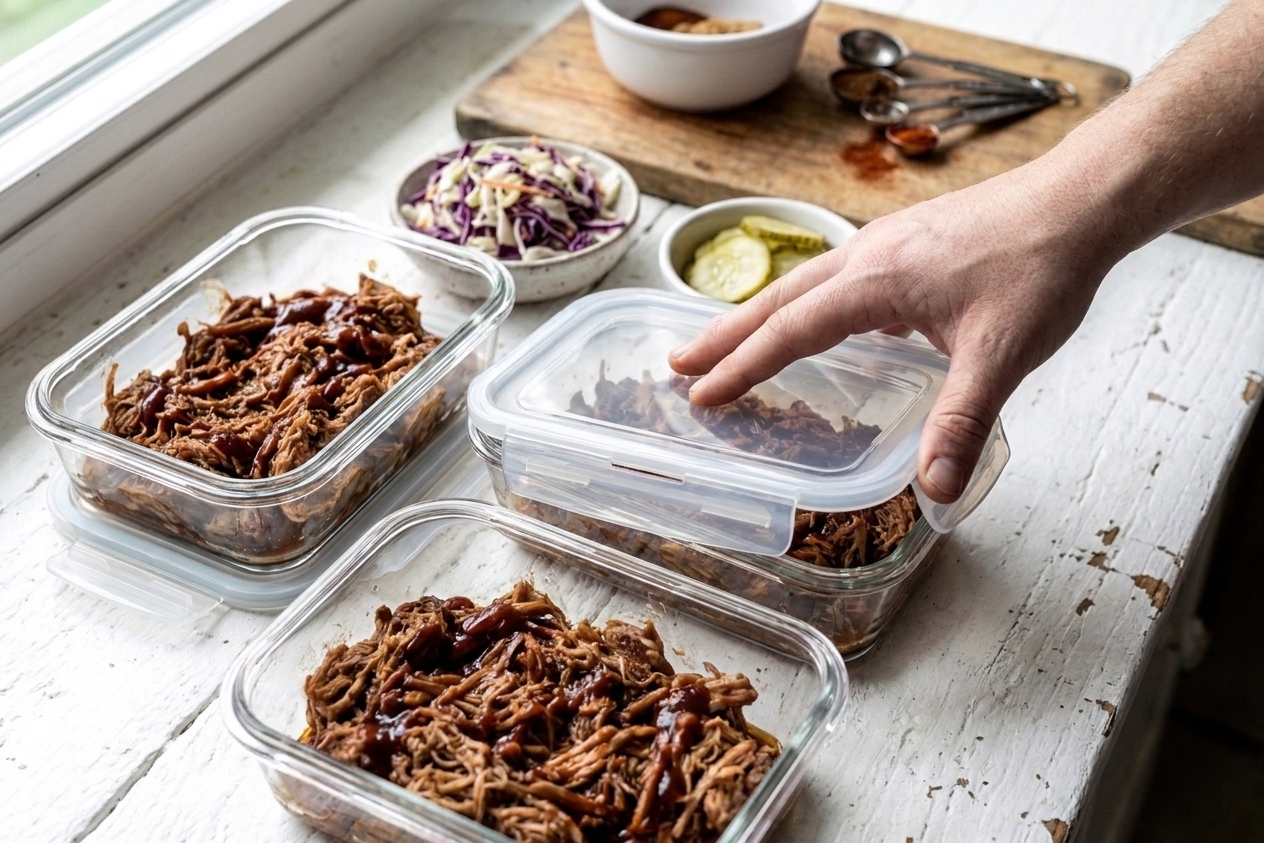
You do not have to, but a little goes a long way for juicy pork. If you want a smoother texture, strain the cooking liquid first, then stir a few spoonfuls back into the shredded meat until it is glossy, not soupy.