Common Questions
Do I have to sear the short ribs first?
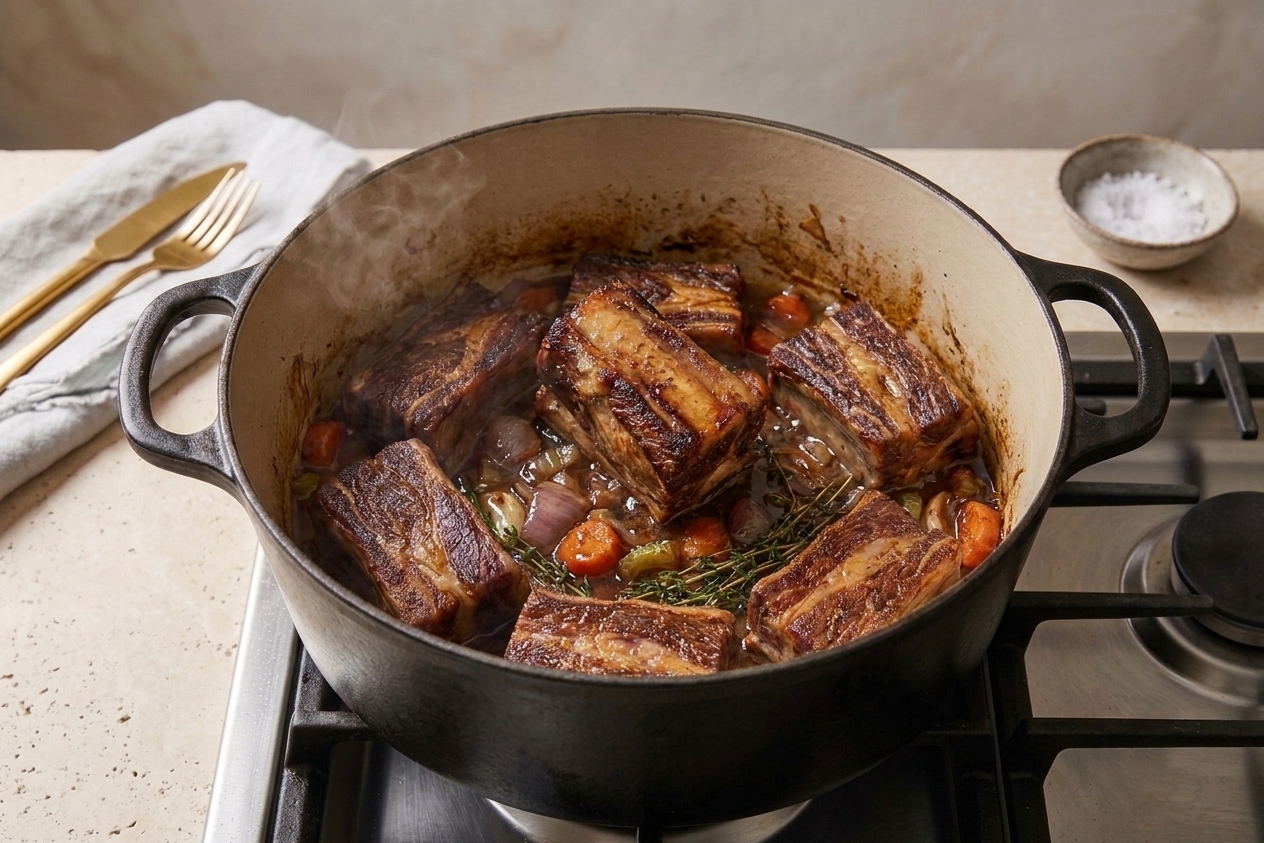
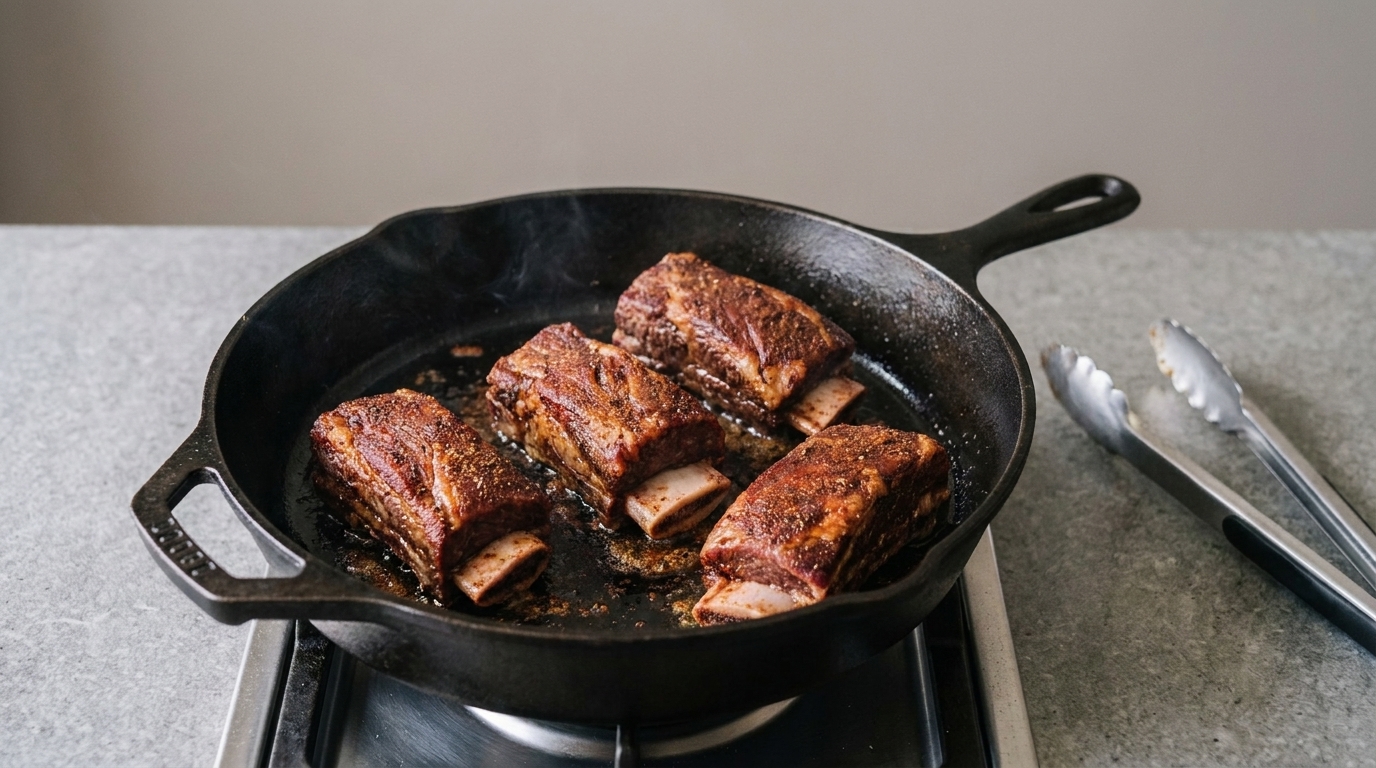
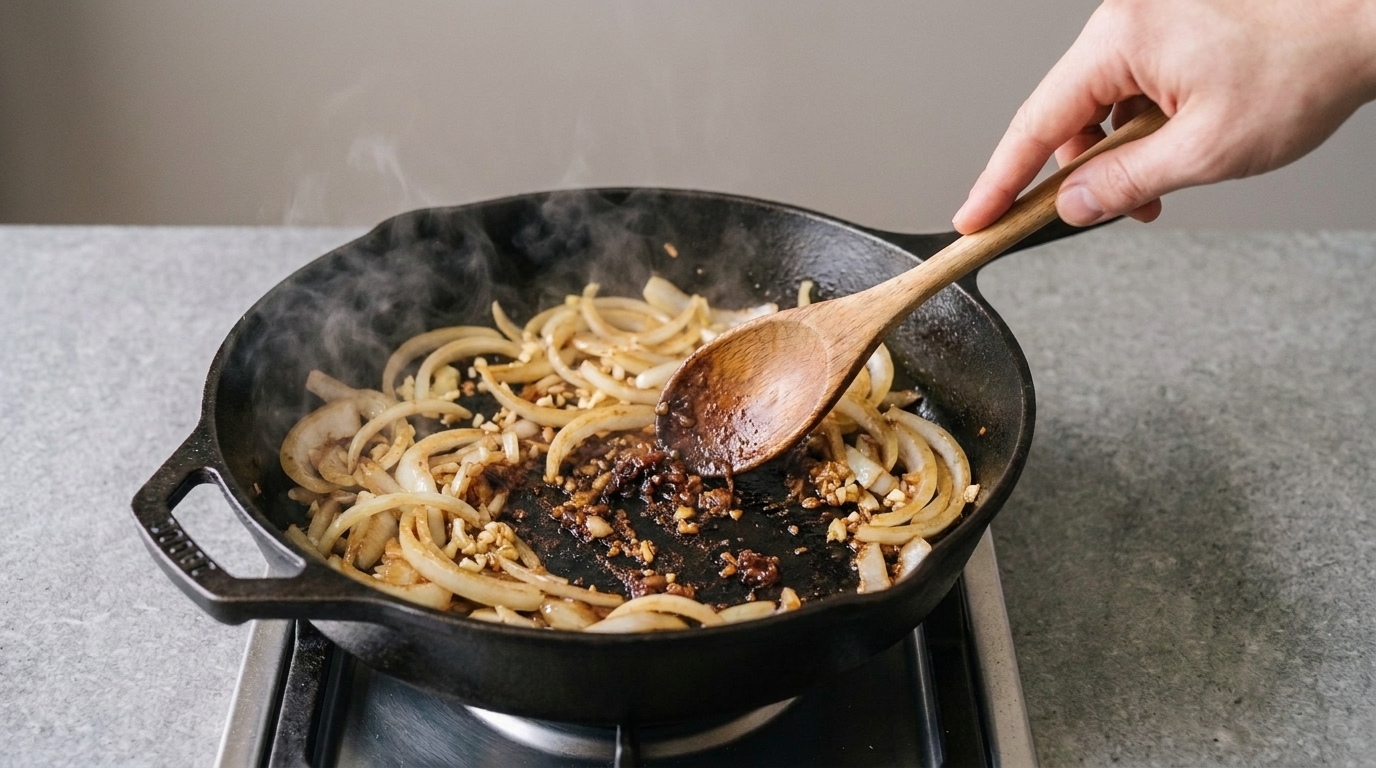
You do not have to, but I really recommend it. Searing builds a browned crust that adds serious flavor to the final gravy. If you are skipping it, at least season aggressively and do not skip the tomato paste step.
Bone-in or boneless short ribs?
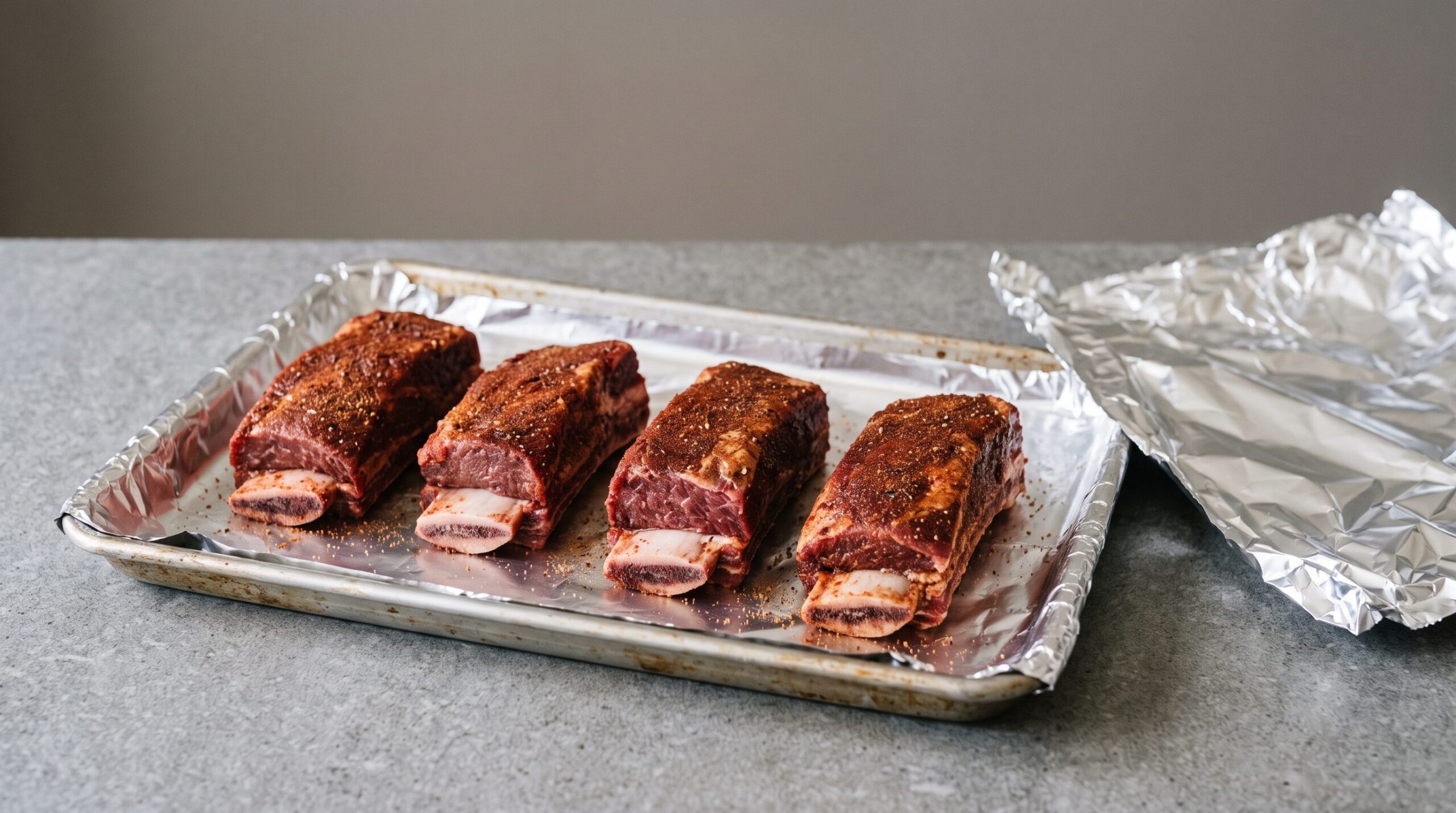
Both work. Bone-in tends to be a little more flavorful and stays extra juicy. Boneless is easier to serve. Cook time is similar, but boneless can finish a bit sooner depending on thickness, so start checking tenderness around the 7-hour mark on low and go by the fork test, not the clock.
What if my gravy is too thin?
The most reliable fix is a cornstarch slurry (instructions in the recipe). Removing the lid for the last 20 to 30 minutes can help some slow cookers reduce, but many do not simmer hard enough to make a big difference. You want glossy, not gummy, so add slurry gradually.
What if my gravy is too salty?
Add a splash of unsalted broth or water and a squeeze of lemon. You can also stir in a little extra tomato paste or a spoonful of unsalted butter to round things out.
How do I know the short ribs are done?
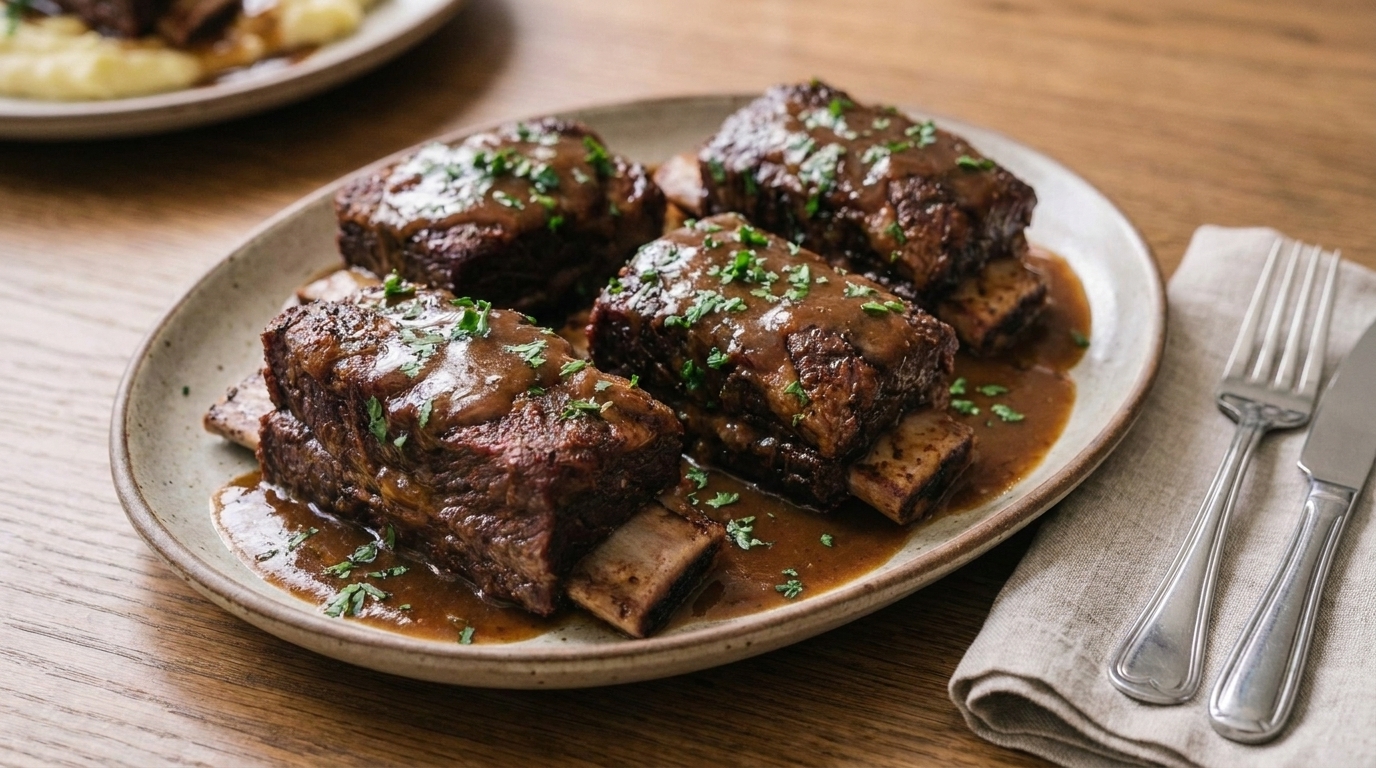
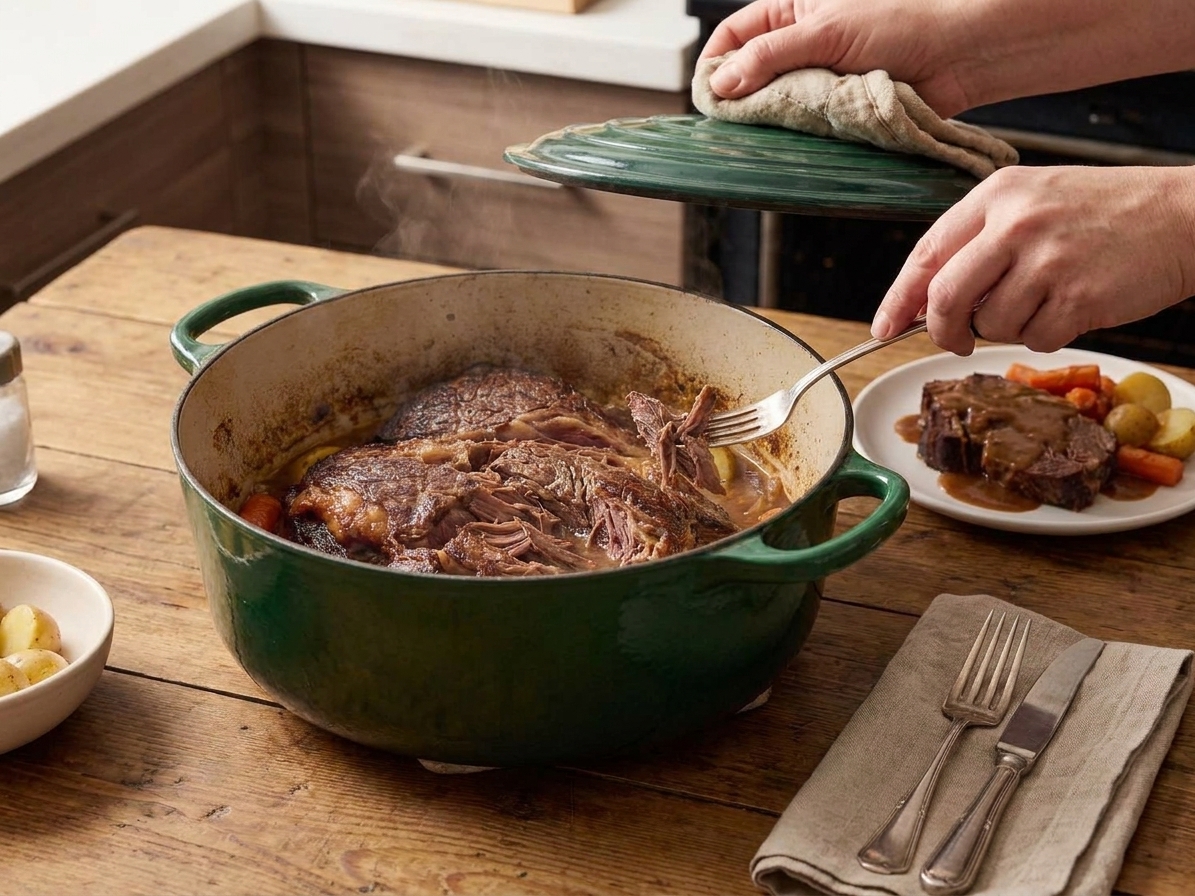
They are done when you can pull the meat apart with a fork with almost no resistance. If they are still tight or chewy, they just need more time. Short ribs are stubborn until they are suddenly perfect.
Can I make this without wine?
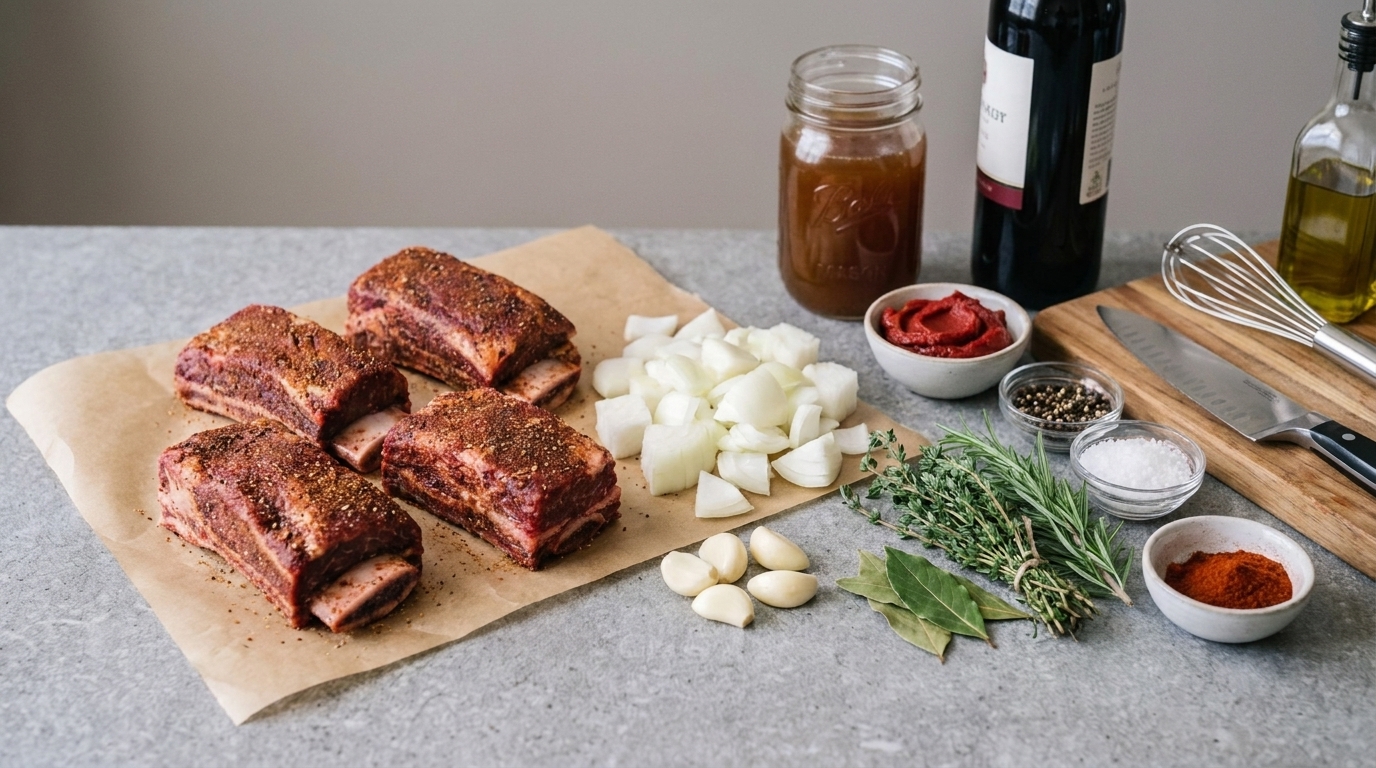
Yes. Swap the wine for more beef broth plus 1 tablespoon balsamic vinegar (or Worcestershire) to keep the sauce bright and complex.
Can I use a smaller slow cooker?
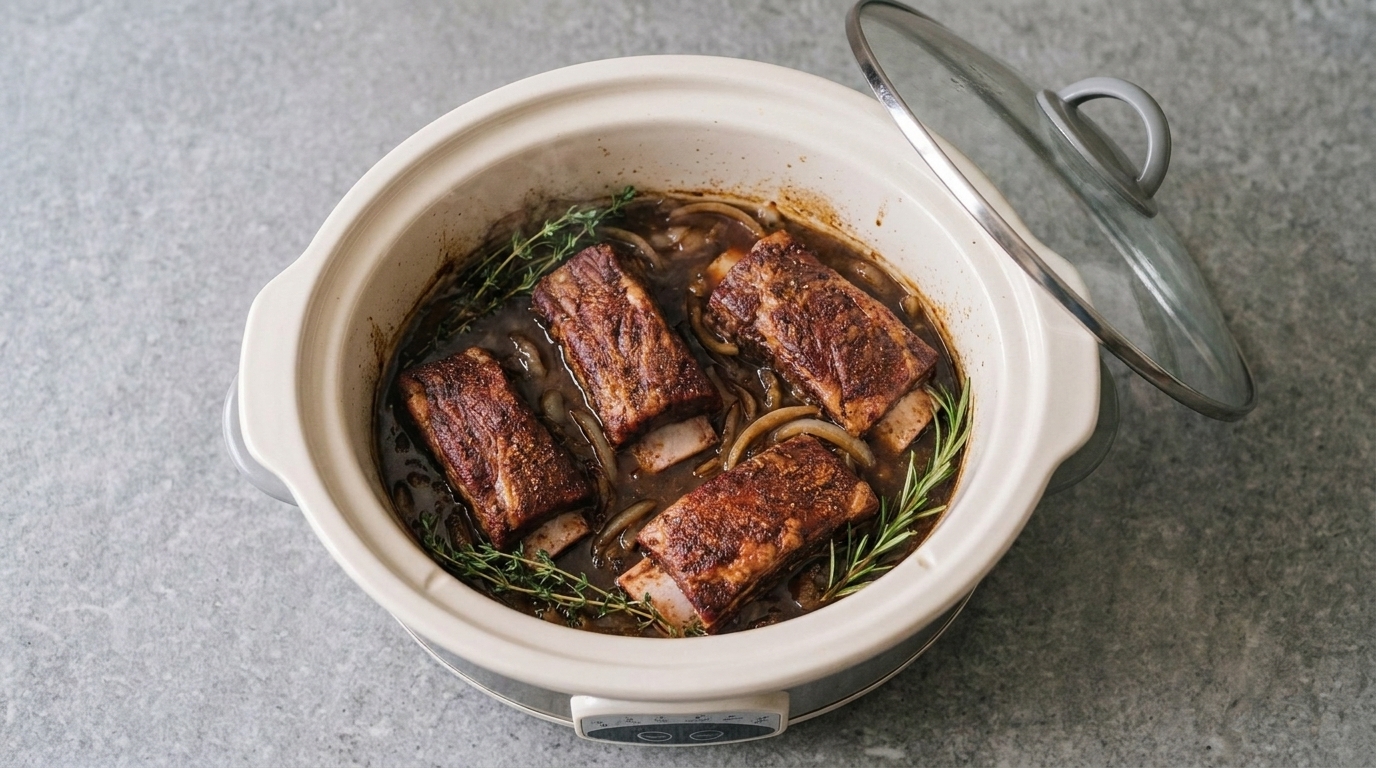
Yes, as long as it is not packed to the brim. The ribs should fit in a snug layer or two with some room for the sauce to bubble around them. If you have a 4-quart, consider scaling down slightly or choosing shorter, thinner pieces.