Mom's Best Recipes
Recipe

Deer Jerky

A bold, not fussy venison jerky recipe with a soy, brown sugar, and pepper marinade plus oven and dehydrator options.

Author By Matt Campbell
4.8
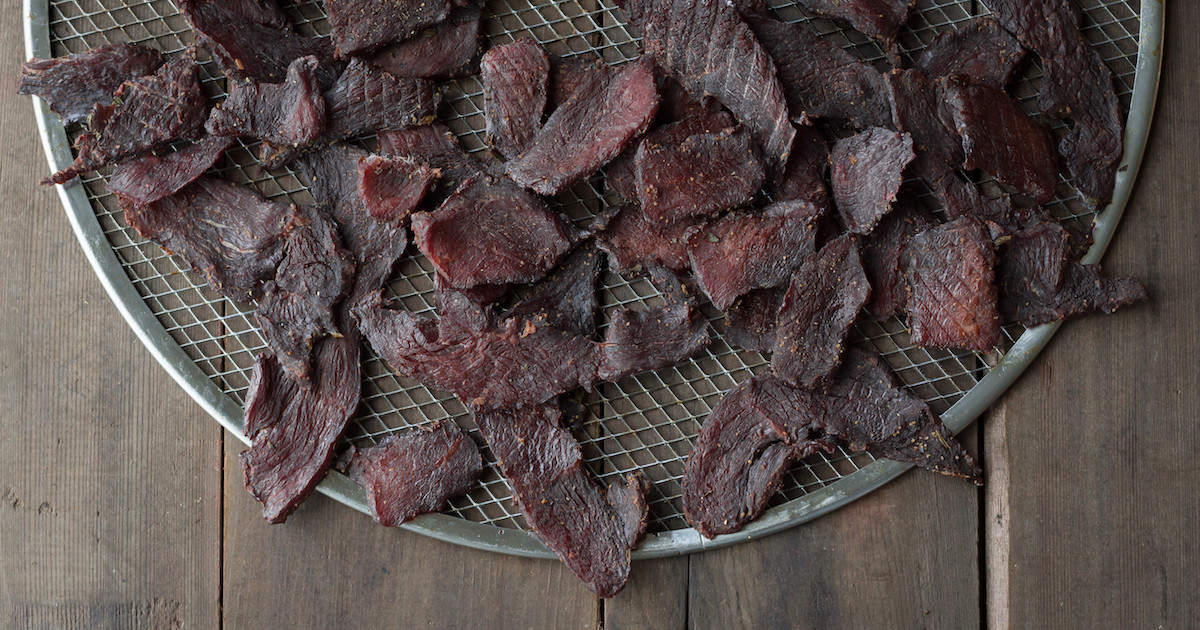
Finished deer jerky strips drying on a wire rack over a sheet pan on a neutral stone kitchen counter, warm natural window light

Deer jerky is one of those recipes that feels rugged and mysterious until you make it once, then you realize it is basically: slice thin, marinate overnight, dry patiently, snack shamelessly.

This version is my weeknight-friendly, low drama deer jerky. The flavor hits sweet-salty first, then a little heat and a lot of black pepper. The texture goal is chewy with a clean snap, not brittle and not wet.

You can do it in a dehydrator if you have one, or in the oven with the door cracked. Either way, I will walk you through slicing, smart safety steps, and the doneness cues that actually matter.

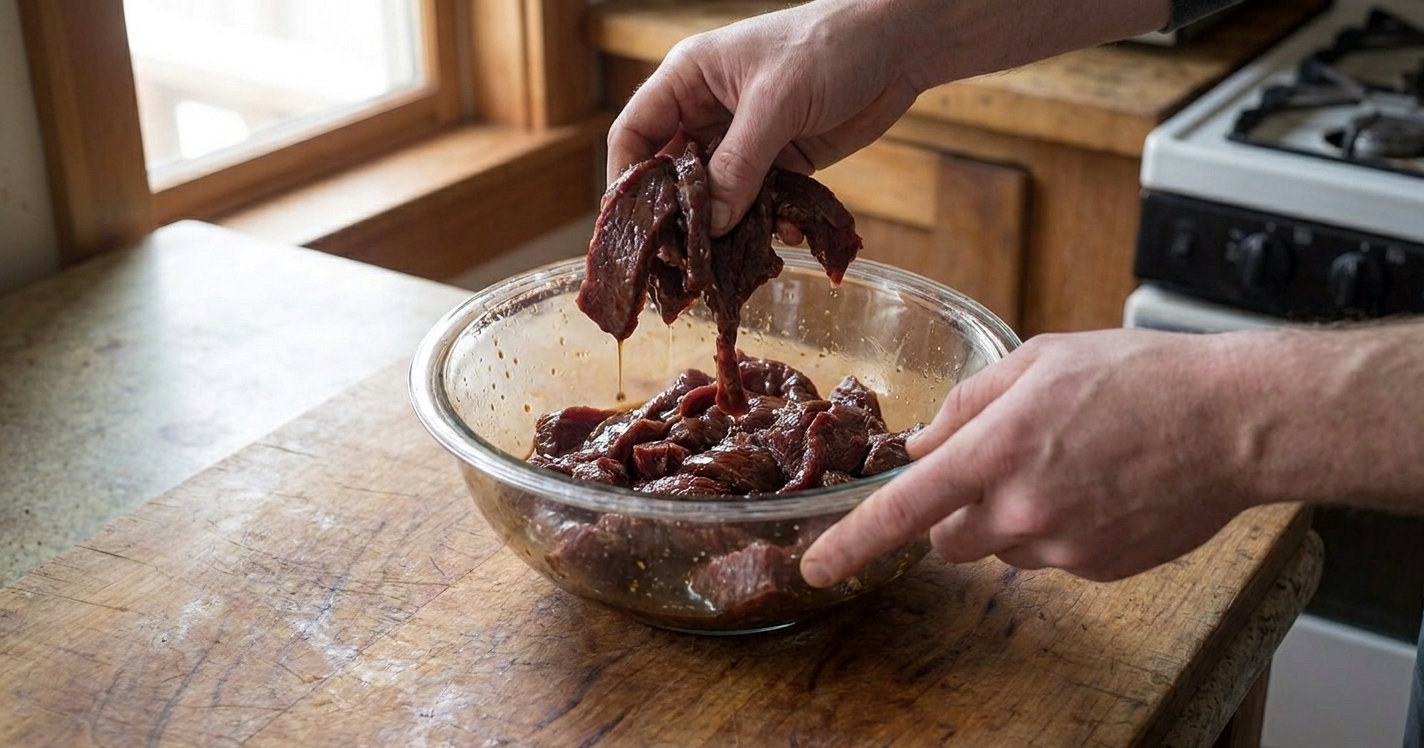
Raw venison strips in a glass bowl being tossed with a dark soy based marinade on a kitchen counter

Why It Works

  • Big flavor with basic pantry stuff. Soy sauce, Worcestershire, garlic, pepper, and brown sugar do a lot of heavy lifting.
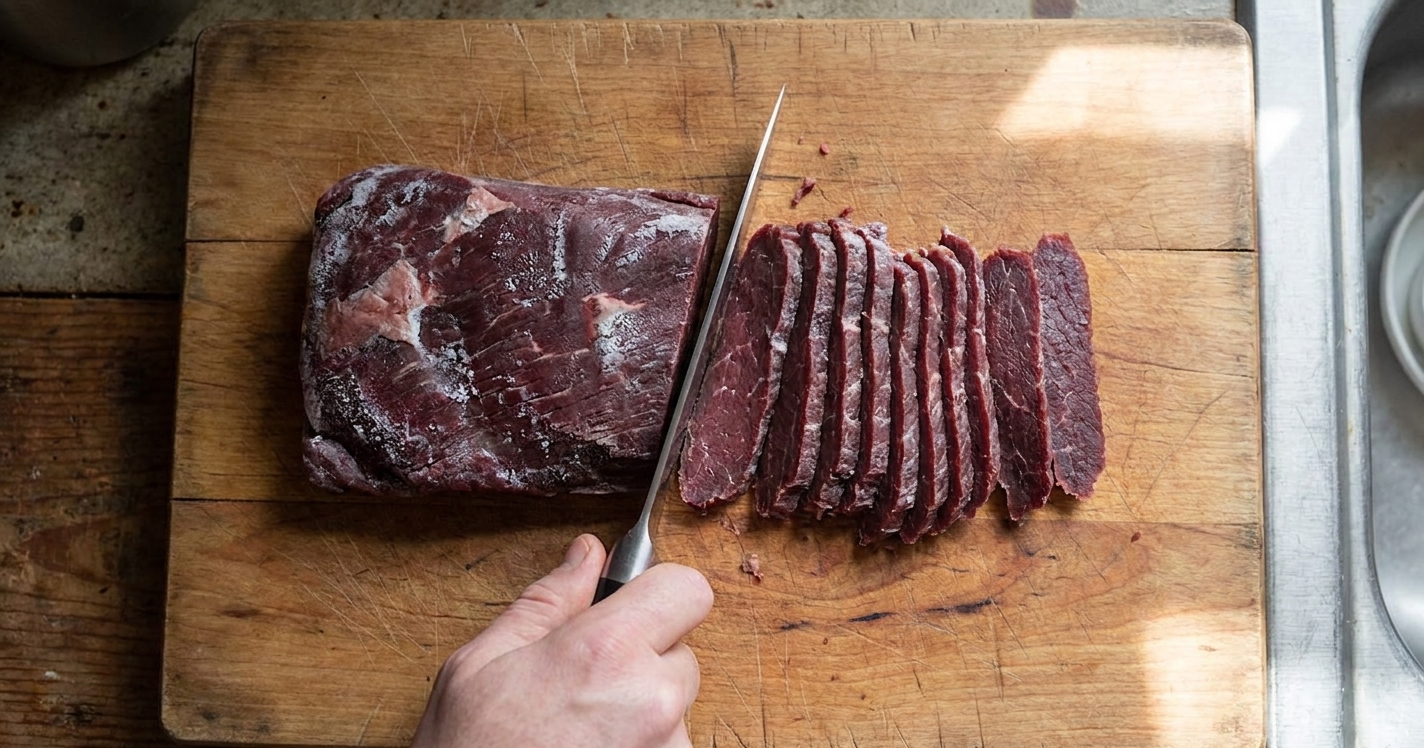
  • Better texture. A short freeze makes slicing thin easier, and an optional oven heat step can add peace of mind without over drying.
  • Flexible heat level. Add more red pepper for spice or keep it kid-friendly and pepper-forward.
  • Clear doneness cues. You will know what to look for so you do not end up with steak chips.

Pairs Well With

Storage Tips

Cool completely before storing. Any trapped steam turns into condensation, and condensation is jerky sabotage.

Short term

  • Fridge (default for this no-cure recipe): 2 to 3 weeks in a zip-top bag or airtight container. Add a paper towel to the container if you live somewhere humid.
  • Counter (only if very dry): If your jerky is fully dry, your kitchen is cool and low humidity, and you are confident you followed safe heating and handling, you can keep it airtight for up to 1 day. When in doubt, refrigerate.

Long term

  • Freezer: Up to 6 months. Freeze in small bags so you are not thawing the whole batch repeatedly.

Quick safety note: If you see moisture beads in the bag, smell anything funky, or the jerky feels tacky and wet after storage, toss it. Jerky should smell meaty and seasoned, not sour.

Common Questions

What cut of deer meat is best for jerky?

Go for lean, whole-muscle cuts: top round, bottom round, eye of round, sirloin tip, or backstrap. Avoid heavily sinewy pieces and anything with a lot of fat, because fat can go rancid faster.

Do I slice with the grain or against the grain?

With the grain makes jerky that is chewier and holds together. Against the grain is more tender and easier to bite through. I like a middle path: slice mostly with the grain, then keep the slices thin so it still eats nicely.

How thick should I slice venison for jerky?

Target 1/8 inch. If you are closer to 1/4 inch, it will still work, but drying takes longer and the center can stay a little too soft.

How do I know deer jerky is done?

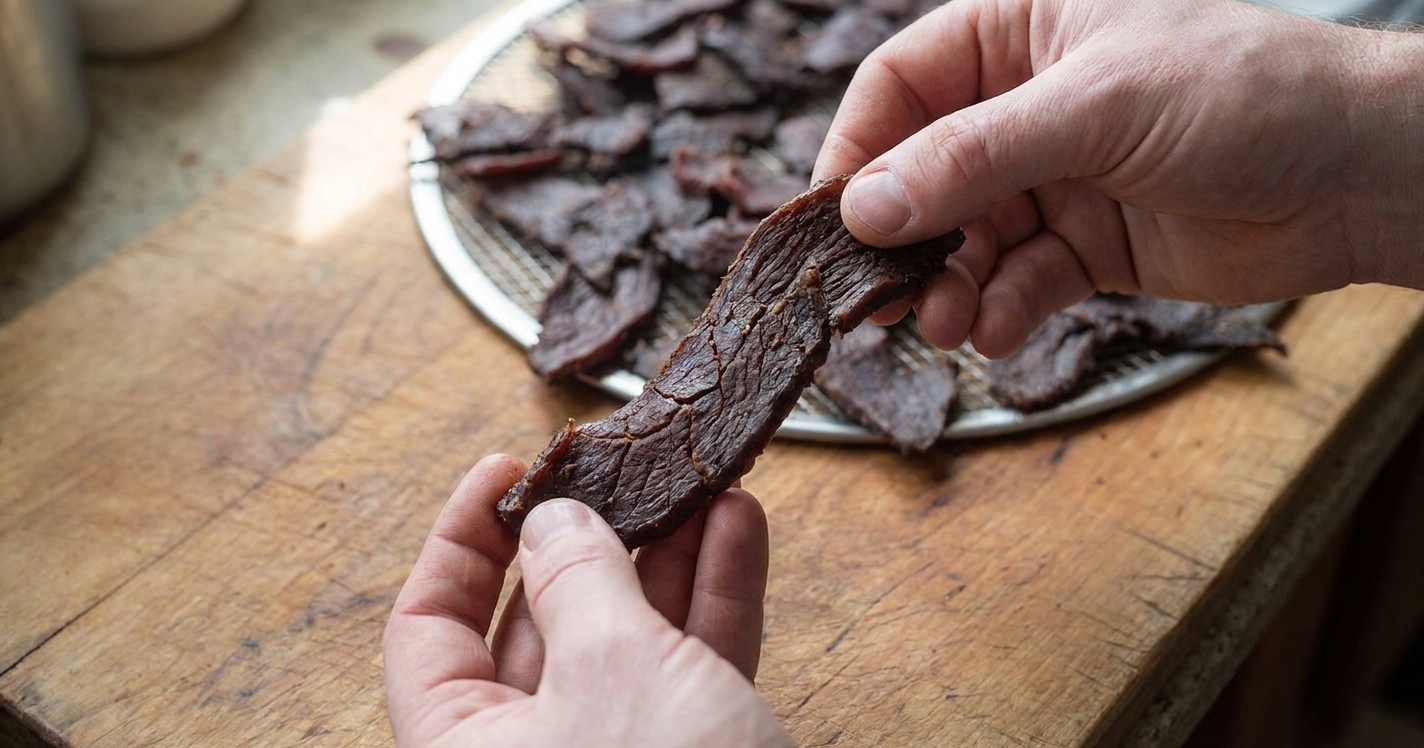
It should look dry on the outside, darkened in color, and when you bend a strip it should crack and separate into fibers but not snap clean in half like a cracker. If it feels squishy or you can squeeze out moisture, keep drying.

Do I need curing salt (pink salt)?

For jerky you will store at room temp for longer periods, curing salt is commonly used. For this recipe, I keep it accessible and focus on refrigerator or freezer storage. If you want to add curing salt, follow the package directions precisely for the weight of meat and do not eyeball it.

Can I make deer jerky in the oven without a dehydrator?

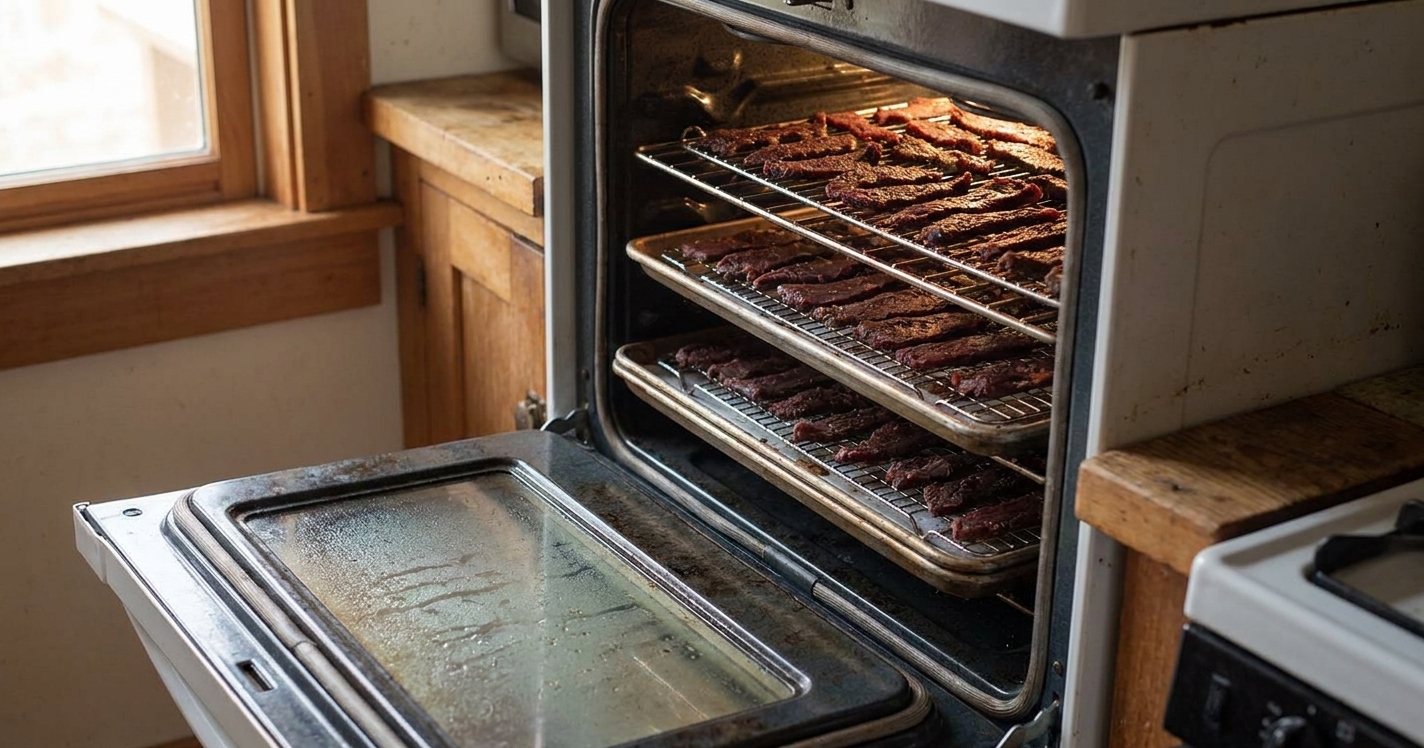
Yes. Use the lowest oven temp (often 170°F), place strips on racks for airflow, and crack the oven door slightly to let moisture escape. It takes longer than a dehydrator, but it works.

Should I heat venison jerky to a specific temperature?

USDA jerky guidance is commonly summarized as: heat meat to a safe internal temperature (160°F for red meat) and then dry. Because thin strips can be tricky to temp accurately during drying, some extension-tested home approaches use a short oven heat step as an added safety measure. In this recipe, you can do an optional post-dry oven heat at 275°F for 10 minutes on racks, and if you use a thermometer during a heating step, aim for 160°F. Either way, do not under-dry or store no-cure jerky at room temperature for long.

I used to think jerky was a special-equipment, all-day, do not breathe wrong kind of project. Then I watched a buddy slice venison in a half-frozen block, toss it in a bag with a simple marinade, and basically let time do the work. That was my kind of cooking: practical, a little chaotic, and very snack-motivated.

Now deer jerky is my go-to “future me will be so happy” recipe. You do a little prep today and your next week is full of salty, peppery, protein-packed wins.