Common Questions
How much salt do I use for a dry brine steak?
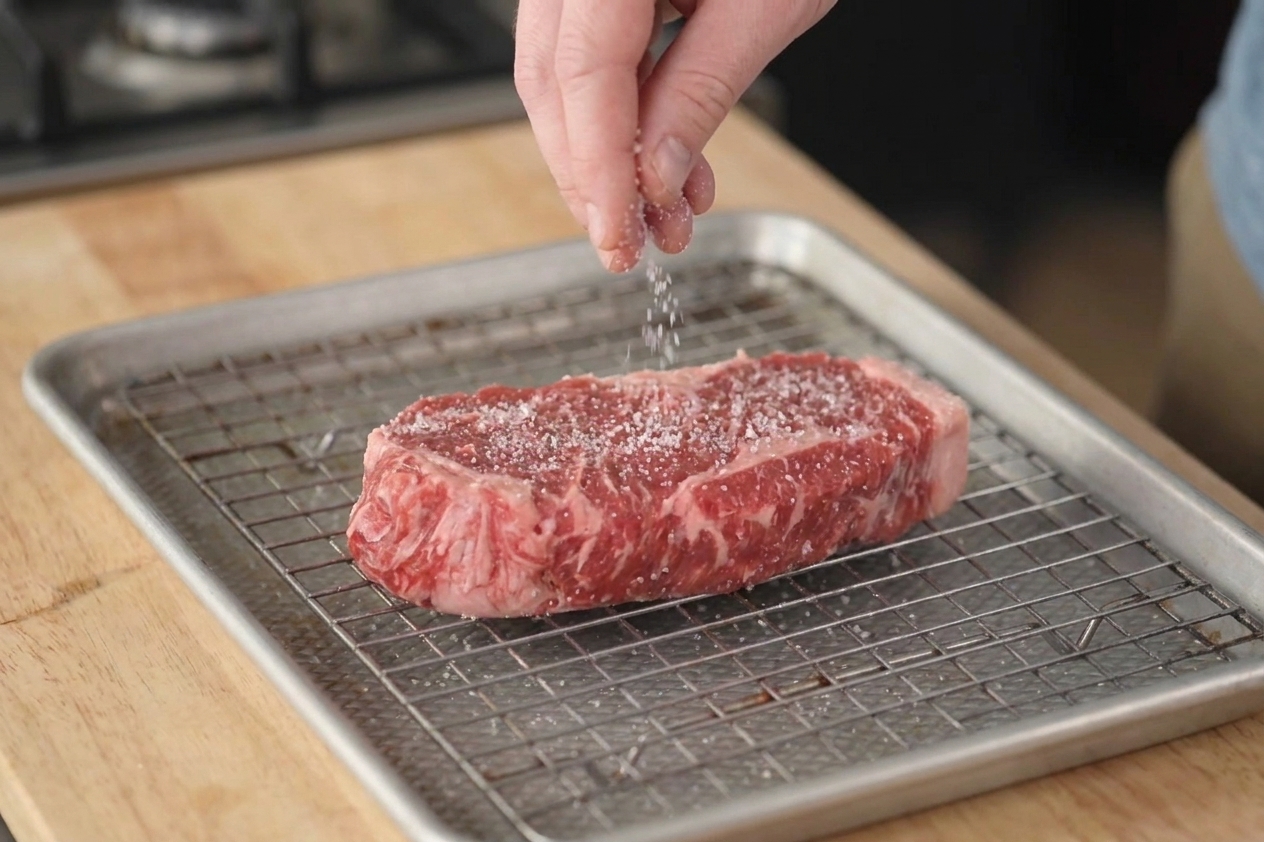
If you want the most reliable result, go by weight: use about 0.75% to 1% salt by weight.
- Per pound of steak (454g): use 3.5g to 4.5g kosher salt
If you are using measuring spoons, these are good starting points:
- Diamond Crystal kosher salt: about 1/2 teaspoon per pound
- Morton kosher salt (denser): about 1/3 teaspoon per pound
- Fine table salt: about 1/4 teaspoon per pound
Two important notes: saltiness is personal, and some steaks are sold pre-salted or “enhanced”. If your package lists a salt solution, broth, or sodium on the ingredients panel, use less salt or skip the dry brine.
How long should I dry brine steak?
Use thickness as your guide. These are guidelines and can vary with fridge airflow and your salt preference:
- 1/2 inch: 45 minutes to 2 hours
- 3/4 inch: 1 to 4 hours
- 1 inch: 4 to 12 hours
- 1 1/2 inches: 12 to 24 hours
- 2 inches: 18 to 24 hours
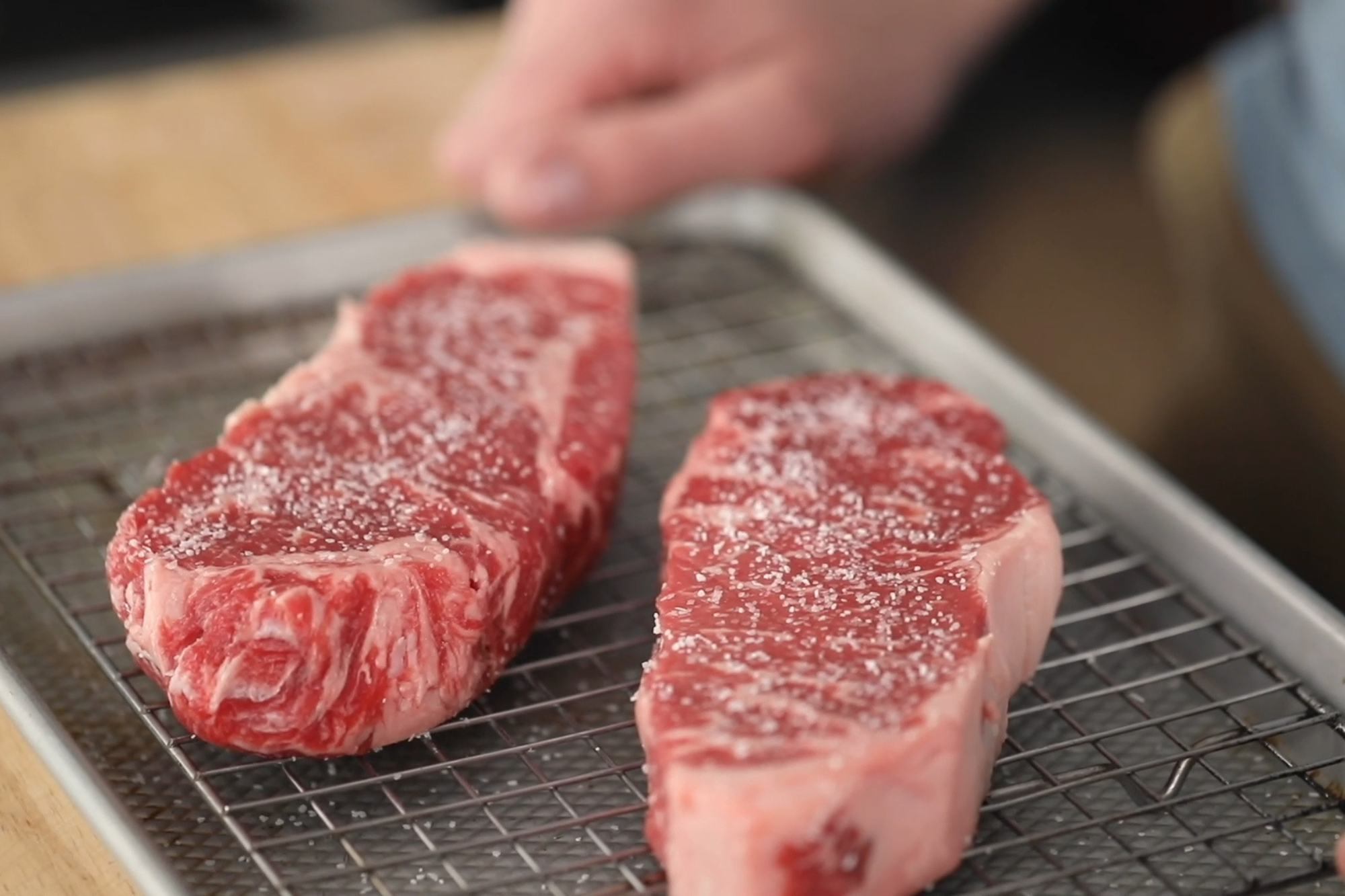
If you only have 30 to 45 minutes, it still helps. If you go longer, keep the steak uncovered on a rack so the surface can dry.
Do I rinse the salt off before cooking?
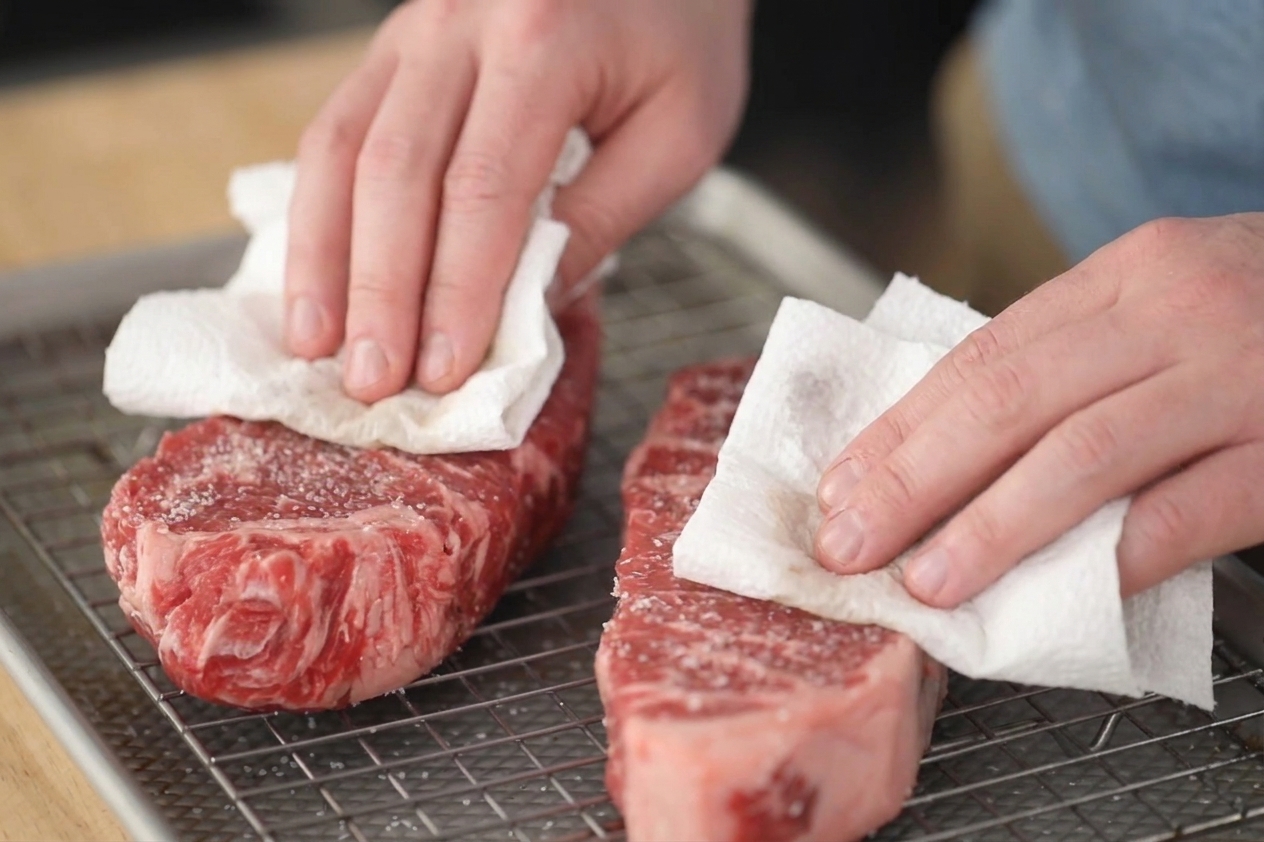
No rinsing. Instead, pat the steak very dry right before it hits the hot pan. Any moisture left on the surface slows browning.
Should the steak be covered or uncovered in the fridge?
For best crust, place it on a rack over a tray and refrigerate uncovered. If you must cover it because of fridge space or strong odors, crack the lid or wrap loosely and still pat dry well before searing.
What internal temperatures should I cook steak to?
These are the temperatures to pull the steak from the heat. It will usually rise a few degrees while resting.
- Rare: 115°F to 120°F
- Medium-rare: 125°F to 130°F
- Medium: 135°F to 140°F
- Medium-well: 145°F to 150°F
- Well-done: 155°F and up
How long should steak rest?
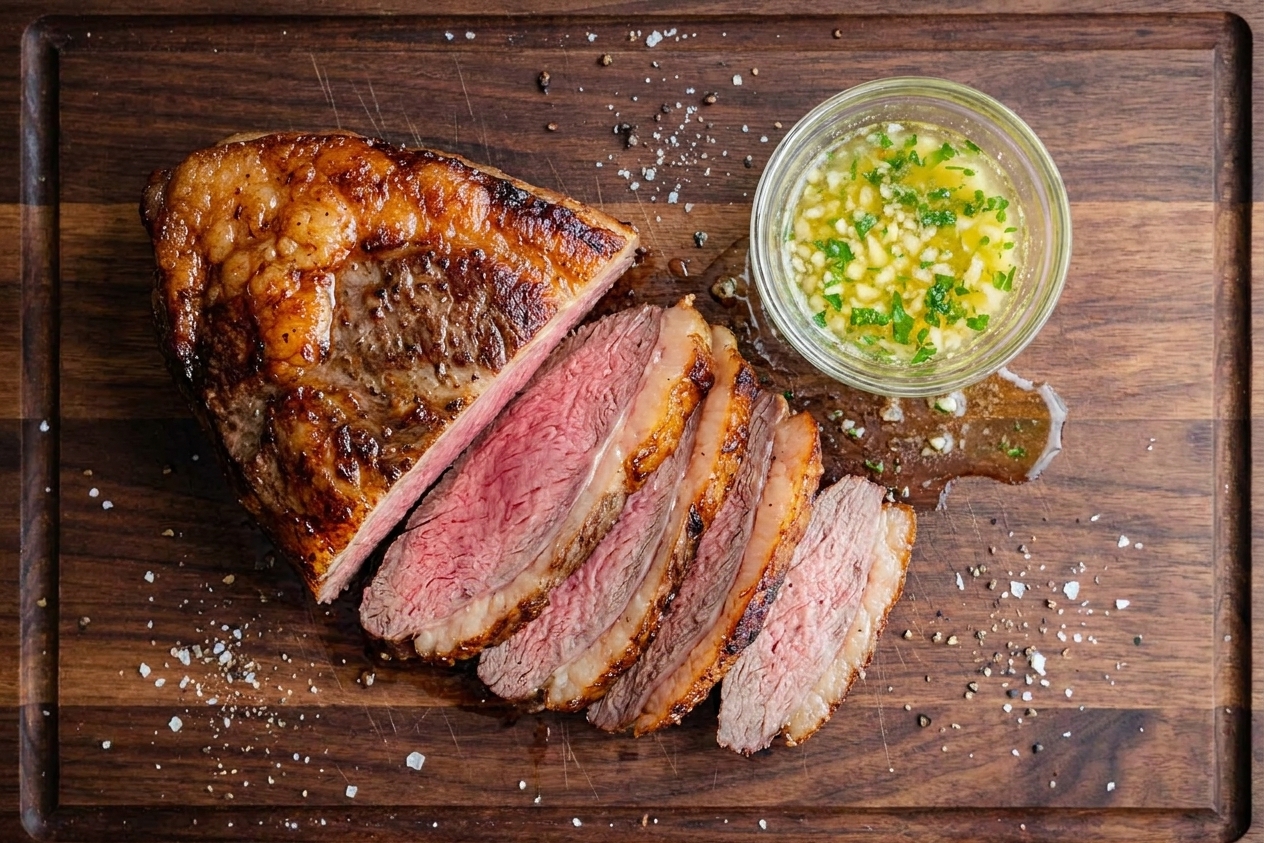
Rest 5 to 10 minutes for thinner steaks and 10 minutes for thicker cuts. Resting helps the juices redistribute so the first slice is as juicy as the last.
Do I need oil in the pan?
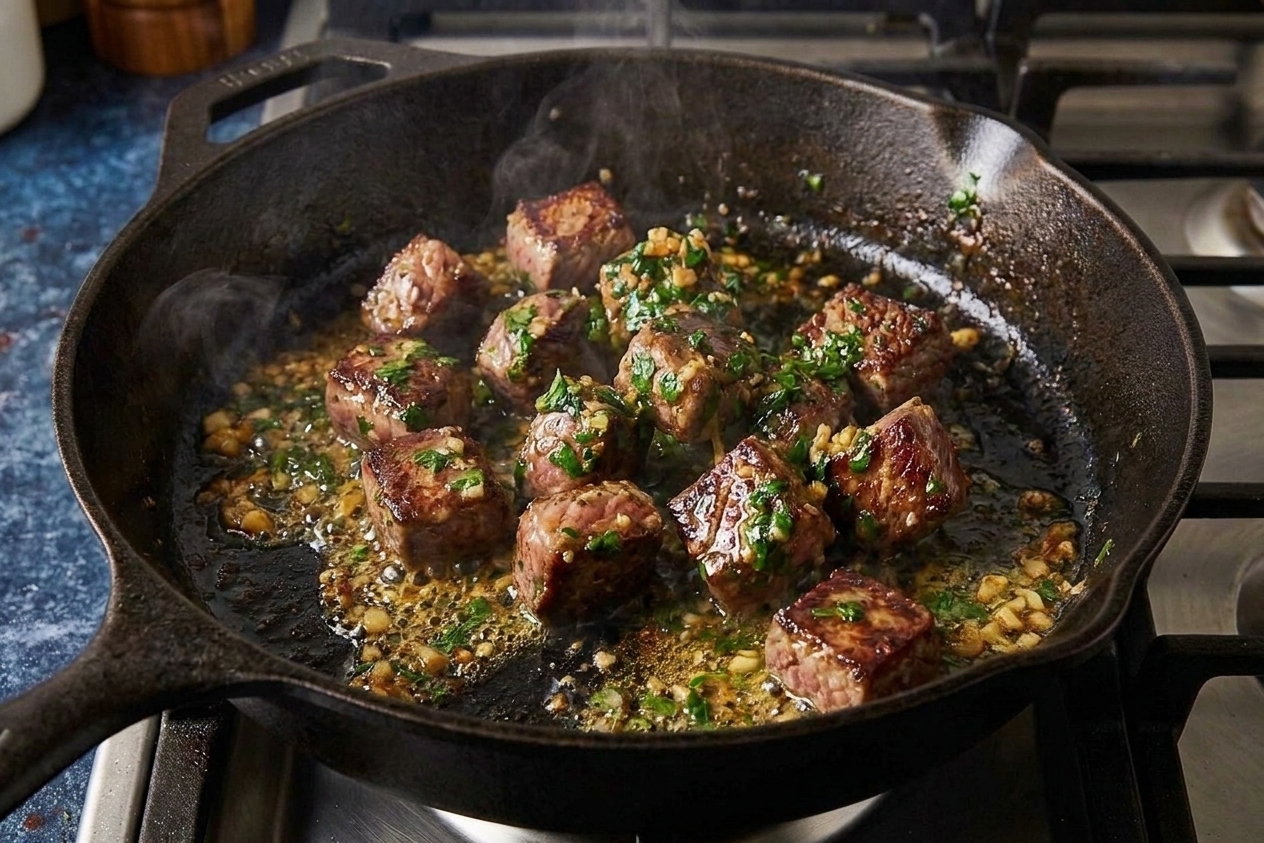
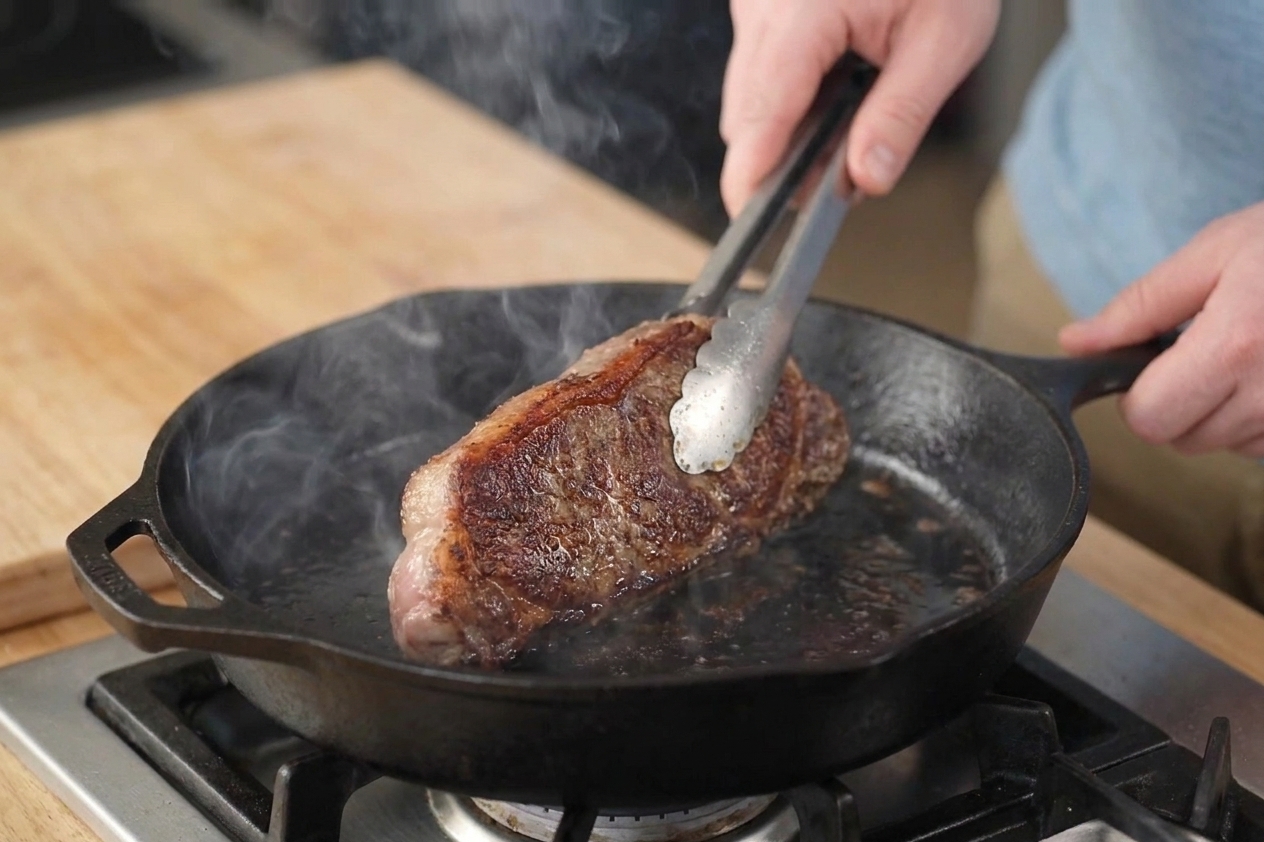
This recipe keeps the dry brine strict (salt and time only), but when it is time to sear, a little oil can make your life easier. A dry pan sear can work well with a well-seasoned cast iron skillet and a fattier cut, but for stainless steel or leaner steaks, use 1 to 2 teaspoons of a high-smoke-point oil to reduce sticking and encourage even browning.
Which cuts work best?
This method shines on ribeye, strip, and sirloin. Filet works too, but it is lean, so it benefits from careful temperature control and a quick rest.