Mom's Best Recipes
Recipe

Duchess Potatoes

Rich mashed potatoes bound with egg yolks (and sometimes a little whole egg in other versions), piped into ridges, chilled to hold their shape, then baked until the peaks are golden and crisp.

Author By Matt Campbell
4.8
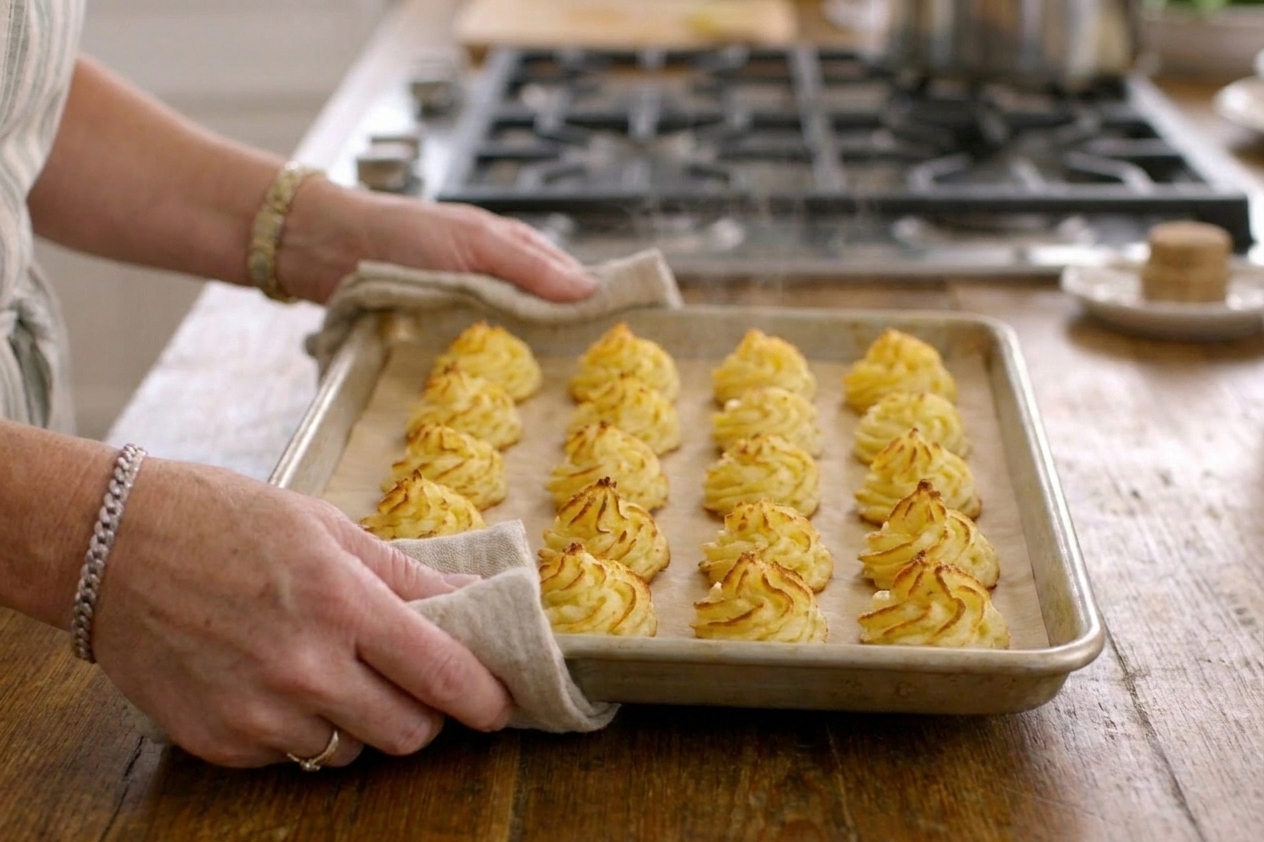
Golden-brown duchess potatoes with crisp ridges on a parchment-lined baking sheet, fresh from the oven

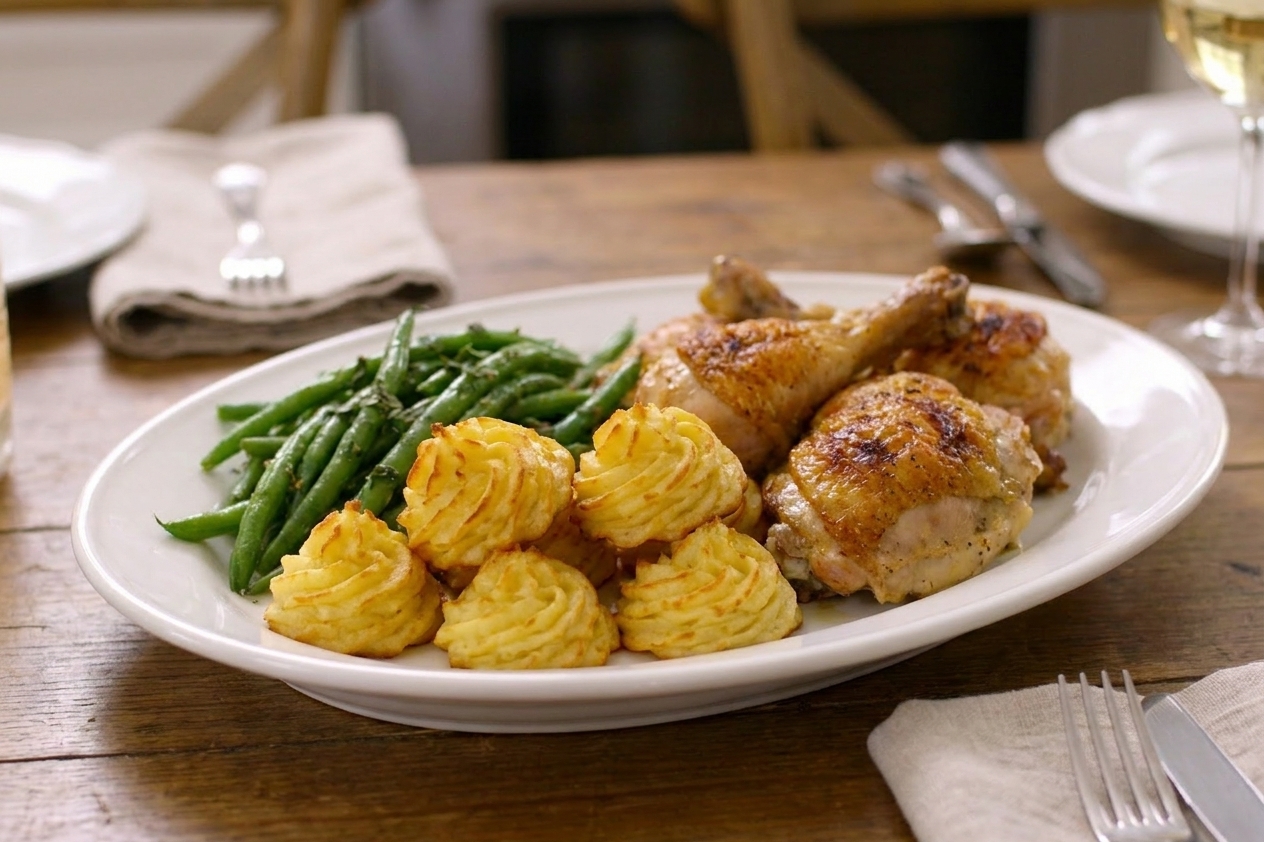
Duchess potatoes are what happens when mashed potatoes decide to put on a nice outfit. They are still cozy and buttery, but they also have structure. Thanks to egg yolks, the mash becomes pipeable, holds those pretty ridges, and bakes up with browned peaks that get just a little crisp.

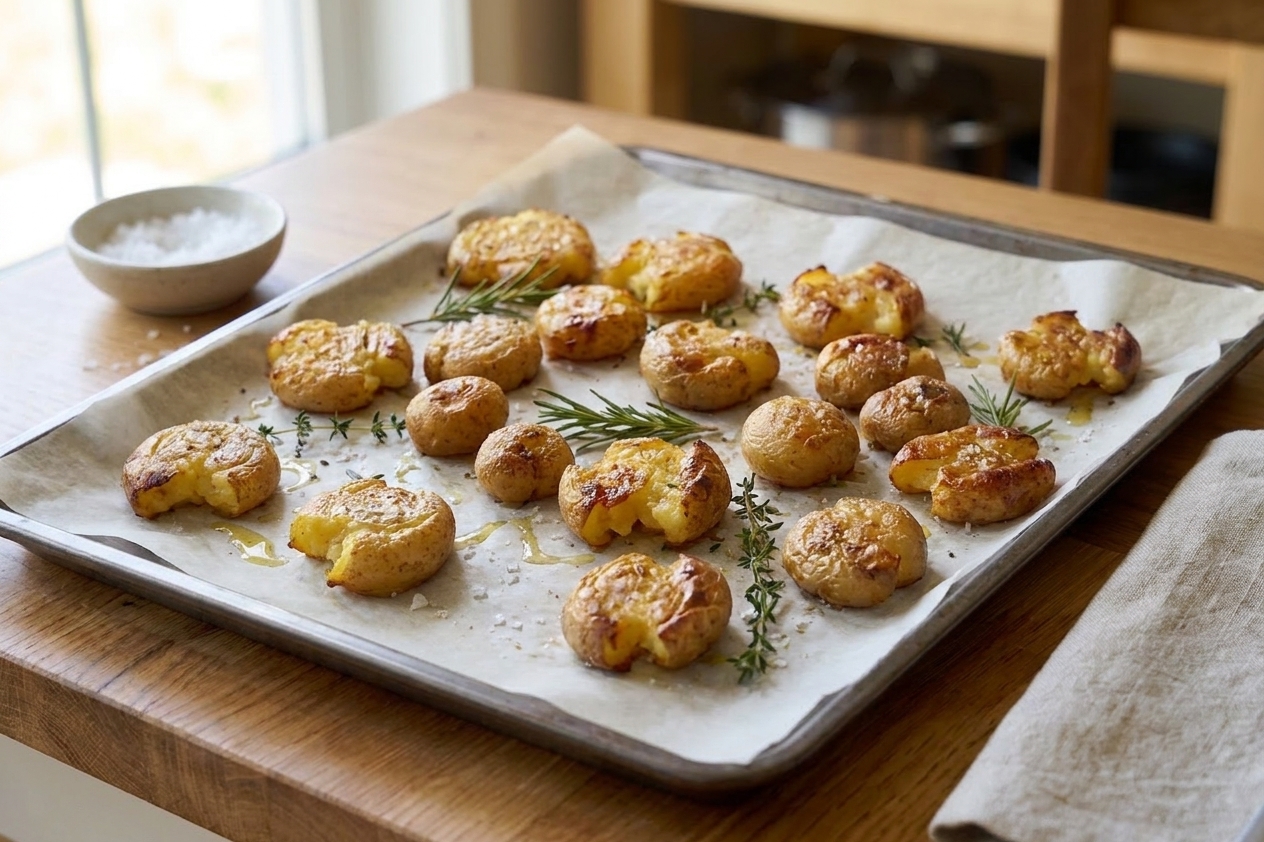
Important note so nobody gets disappointed: these are not smashed roasted potatoes. Smashed potatoes start as whole roasted potatoes you smash and crisp hard. Duchess potatoes start as a smooth mash that you pipe, chill, and bake to set and brown. Different vibe, different texture, same potato happiness.
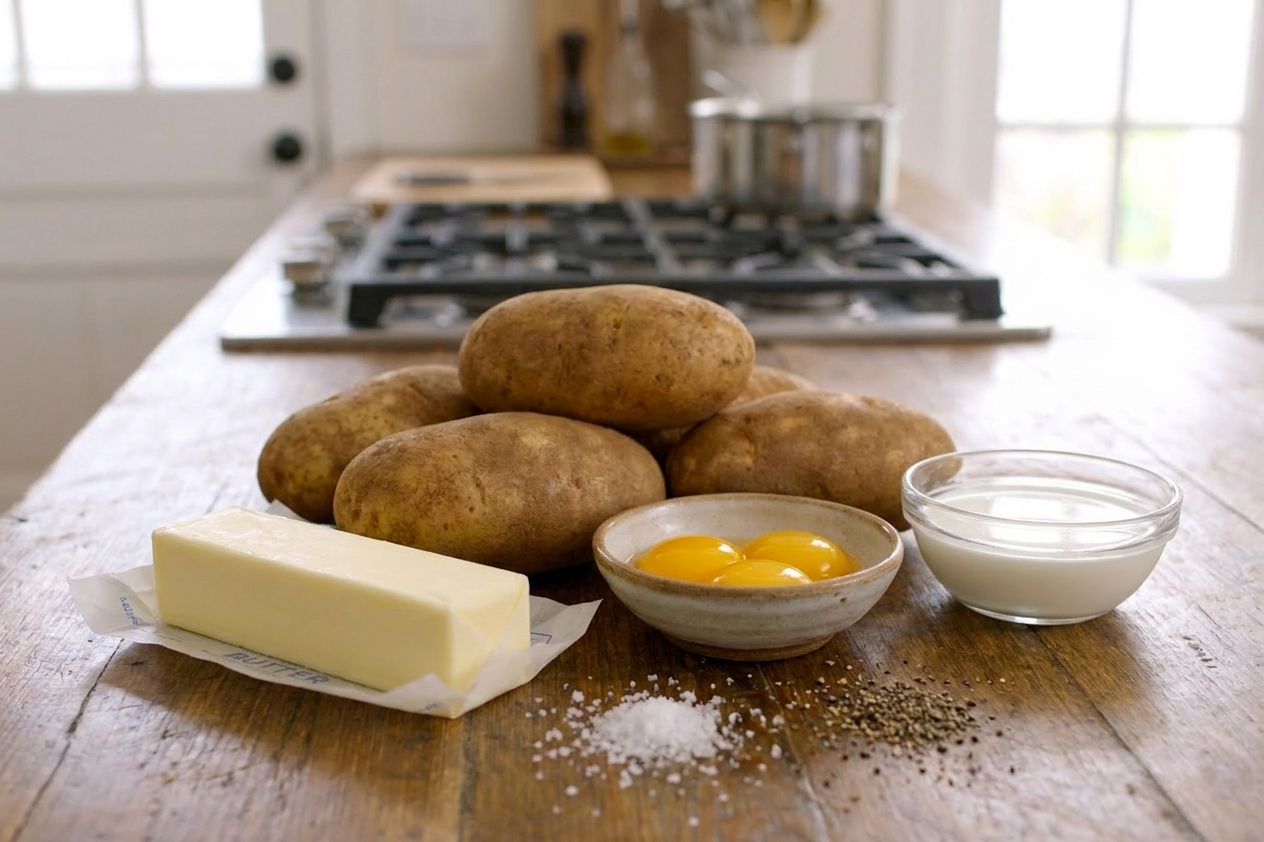
Whole russet potatoes, a stick of butter, egg yolks, salt, pepper, and a small bowl of milk on a kitchen counter

What makes them work

  • Dry potatoes give you a fluffy mash that pipes cleanly. Waterlogged potatoes slump and spread.
  • Egg (usually yolks, sometimes a mix of yolks and whole egg depending on the recipe) adds richness and helps the ridges set instead of melting into a blob.
  • Chilling firms the piped shapes so the oven browns the peaks before the swirl relaxes.
  • High heat at the end helps with browning and that signature golden top. If you broil, keep a close eye so you get color without scorching.
Why It Works

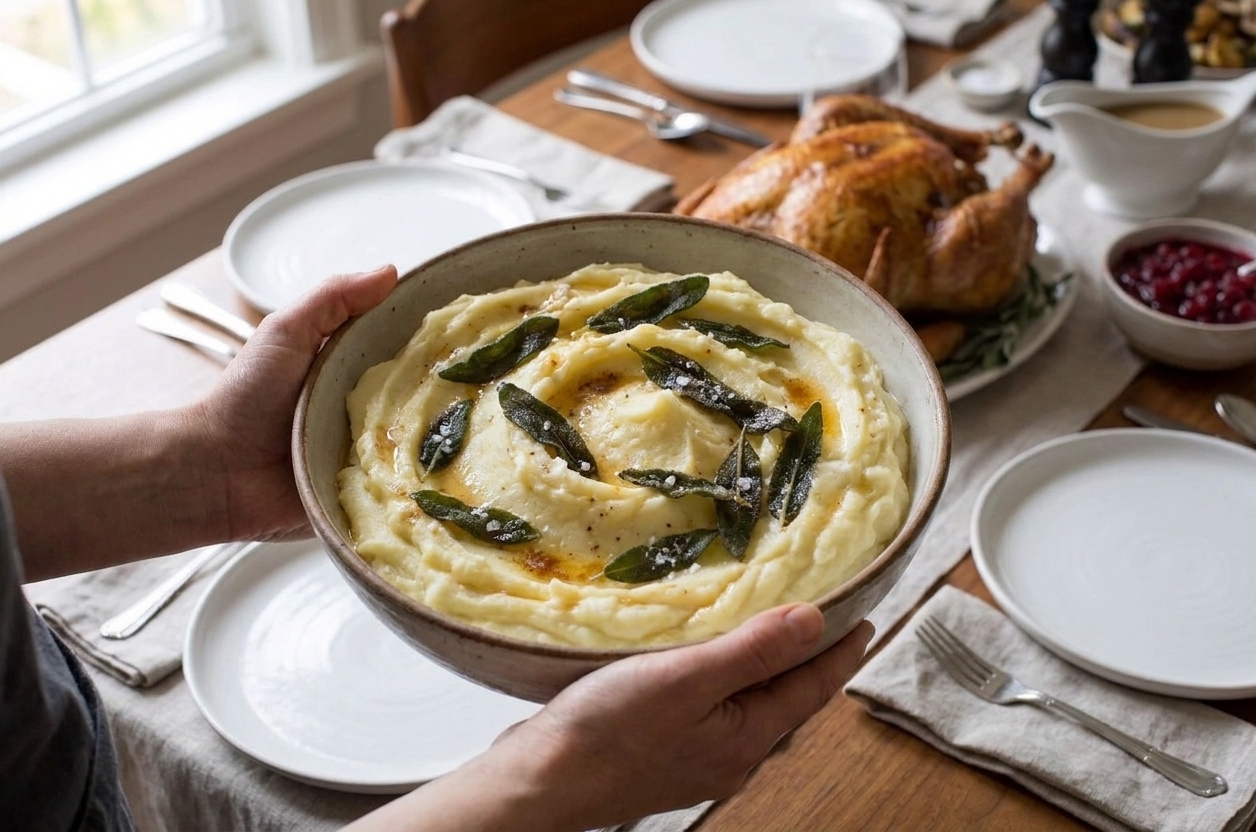
You get potatoes that are plush on the inside, glossy and buttery, and just crisp at the ridges. They hold their piped shape, brown at the peaks, and feel fancy enough for a holiday plate but easy enough for a random Tuesday when you want your dinner to look like it has its life together.

Best part: you can pipe them ahead and bake later, which is the kind of low-drama planning I fully support.

Pairs Well With

Storage Tips

How to store and reheat

  • Refrigerate: Store baked duchess potatoes in an airtight container for up to 3 days. Since they contain egg, refrigerate promptly.
  • Reheat: Warm on a parchment-lined sheet at 375 F until heated through, about 10 to 15 minutes. If you want the ridges crisp again, finish with 1 to 2 minutes under the broiler, watching closely.
  • Make ahead (my favorite move): Pipe onto the baking sheet, chill until firm, then cover loosely and refrigerate up to 24 hours. Bake when you are ready to serve.
  • Freeze: Pipe, chill until firm, then freeze on the tray until solid. Transfer to a freezer bag or container for up to 1 month. Bake from frozen at 425 F, adding 5 to 10 extra minutes, or until browned and hot all the way through.

Common Questions

Common questions

Why do my duchess potatoes spread in the oven?

Usually it is one of three things: the potatoes were too wet, the mash was too warm when you piped, or you skipped the chill. Use starchy potatoes, drain well, dry them briefly in the hot pot, and chill the piped swirls until they feel firm to the touch.

Do I have to use a piping bag?

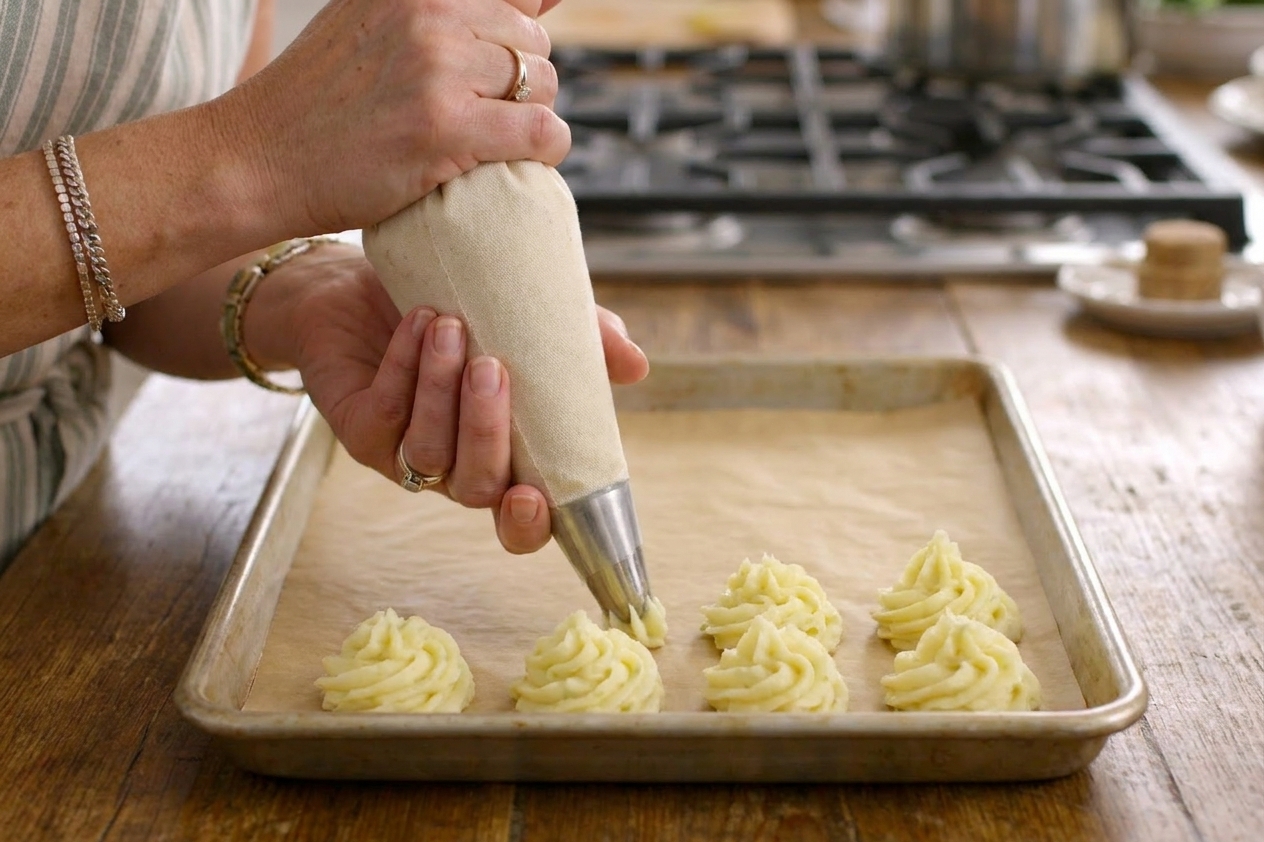
No, but it is the easiest way to get defined ridges. You can use a sturdy zip-top bag with the corner cut off, but you will get softer lines unless you cut a larger opening. If you want the classic look, use a large star tip.

What piping tip should I use?

A large star tip gives the best ridges and the most browning on the peaks. Think 1/2 inch wide opening. Smaller tips can clog if your mash is not perfectly smooth.

Can I make them without eggs?

You can pipe plain mashed potatoes, but they will not set the same way and the shapes tend to relax. Traditional duchess potatoes typically include egg yolks, and some recipes also use a whole egg. The egg is what gives you that set, pipeable structure.

My mash is too stiff to pipe. What do I do?

Warm it slightly (a minute or two over very low heat, stirring) and add a splash of warm milk, 1 tablespoon at a time, until it moves through the piping bag without a forearm workout. Keep it thick enough to hold ridges.

My piping tip keeps clogging. Help?

That is almost always lumps. A ricer or food mill is the fix. If you do not have one, mash extremely well while the potatoes are hot, then press the mash through a fine mesh sieve if you can. Also use a large star tip rather than a smaller one.

How do I know they are done?

Look for golden-brown ridges and deeper browning on the peaks. They should feel set at the edges, not squishy. Also make sure they are hot all the way through. If they are pale, they will taste fine but you will miss that crisp, toasty top.

Can I use Yukon Gold potatoes?

Yes. They are slightly creamier and a little less fluffy than russets, but they still work well. Just make sure you dry them well after draining.

The first time I made duchess potatoes, I treated them like normal mashed potatoes and tried piping while the mash was still warm. The swirls looked cute for about five minutes, then slowly relaxed like they had given up on being fancy. Now I do the chill step every time. It feels like an extra hoop until you watch those ridges stay sharp in the oven and the peaks turn golden. That is the moment duchess potatoes go from “nice mash” to “okay wow.”