Common Questions
What cut of beef is best for Dutch oven pot roast?
Chuck roast is the classic for a reason: it has enough fat and connective tissue to turn meltingly tender with braising. Brisket and bottom round can work, but chuck is the easiest path to juicy results.
Do I have to sear the roast first?
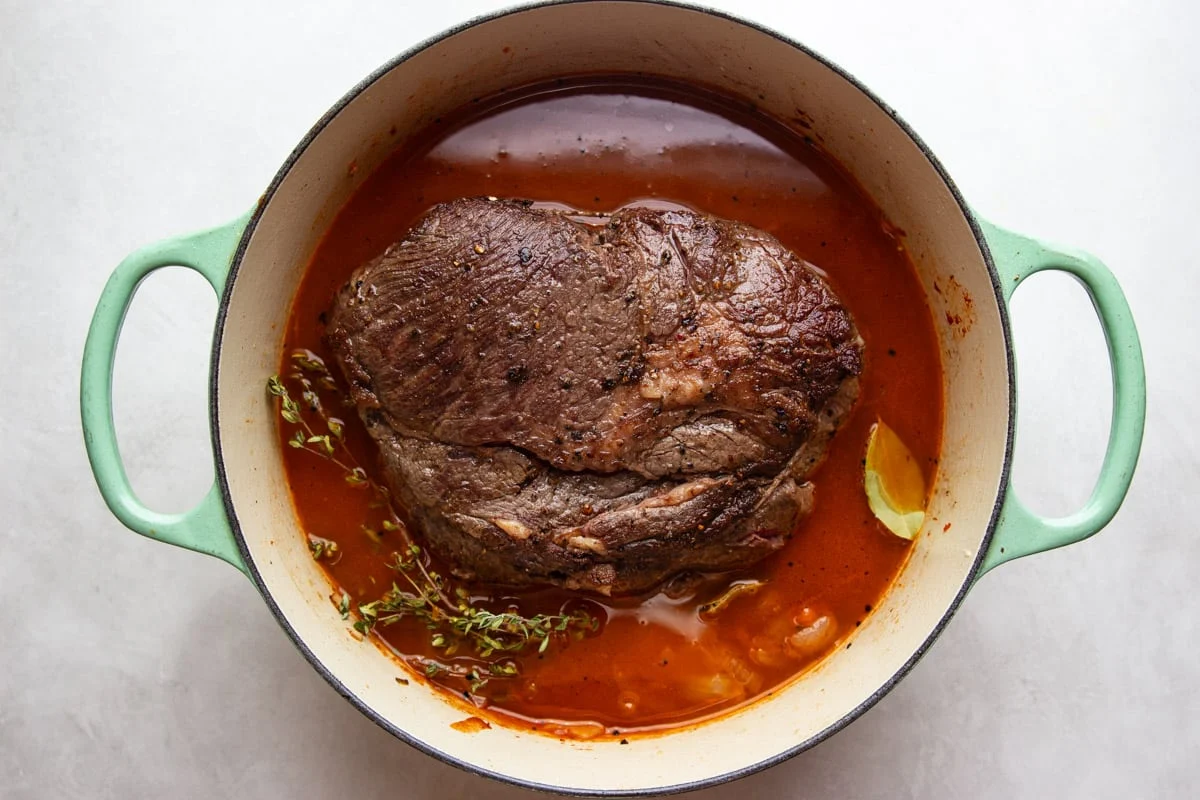
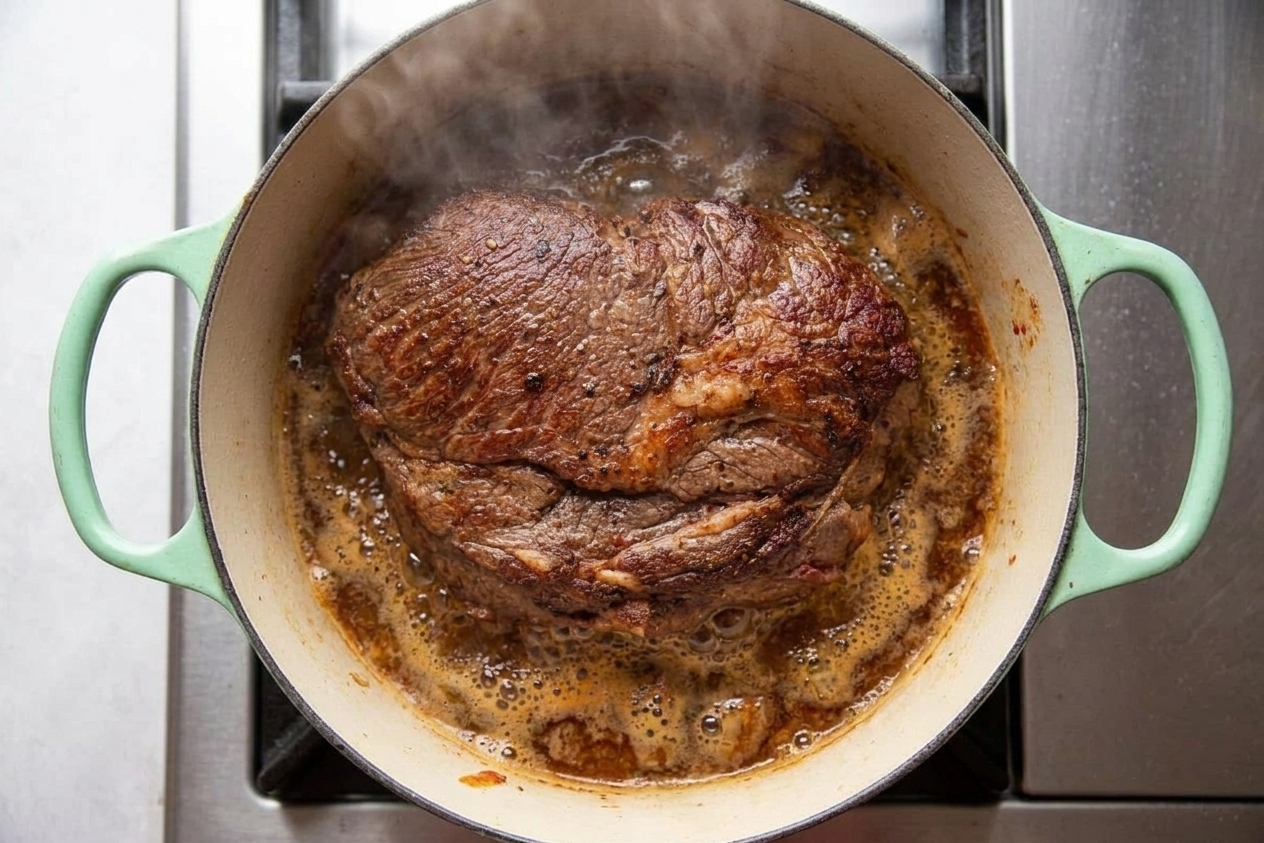
You do not have to, but you really should. Searing builds a deeper, roastier flavor in the meat and gives you those browned bits (fond) that become your gravy.
What temperature should I cook pot roast in the oven?
300°F is my sweet spot for a steady, gentle braise. Hotter can work, but it increases the odds of the meat tightening up before it has time to relax and tenderize.
How do I know when the pot roast is done?
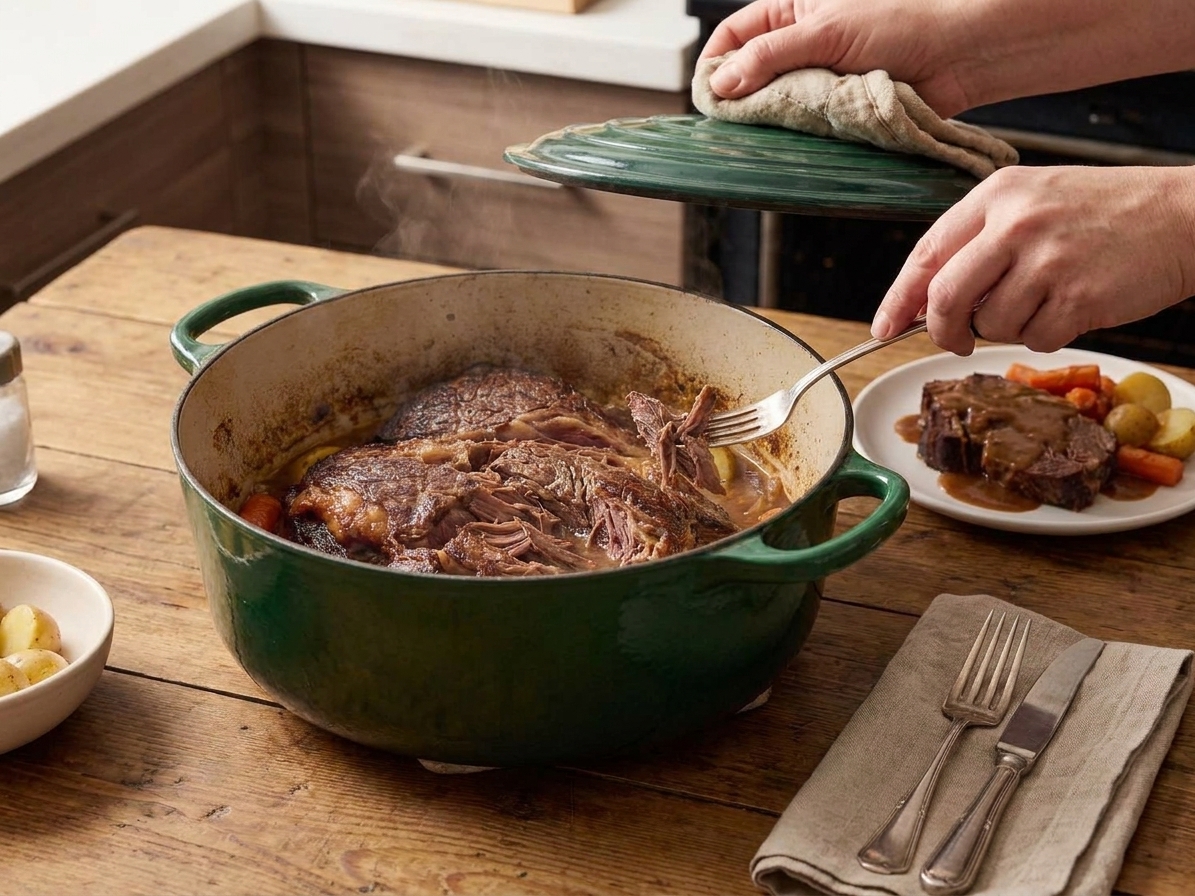
Forget exact minutes. It is done when you can slide a fork in and twist and the meat starts to separate easily. If it is still tough, it needs more time, not more effort. If you use a thermometer, many roasts turn tender around 195 to 205°F, but texture wins over numbers.
Why is my pot roast tough?
Usually it is undercooked. Tough roast just means the collagen has not broken down yet. Put it back in the oven, keep it covered, and check again in 30 to 45 minutes.
When should I add potatoes and carrots?
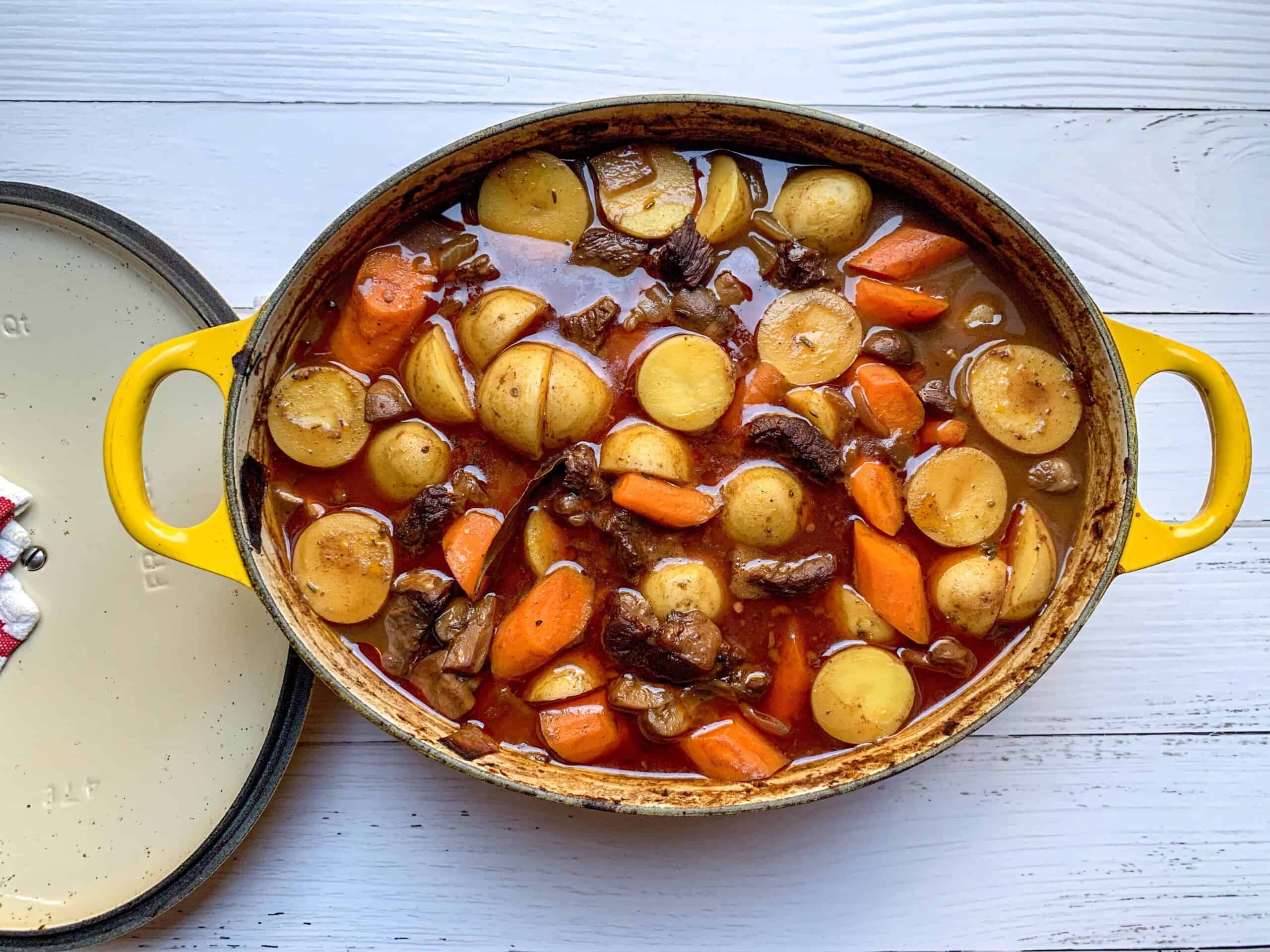
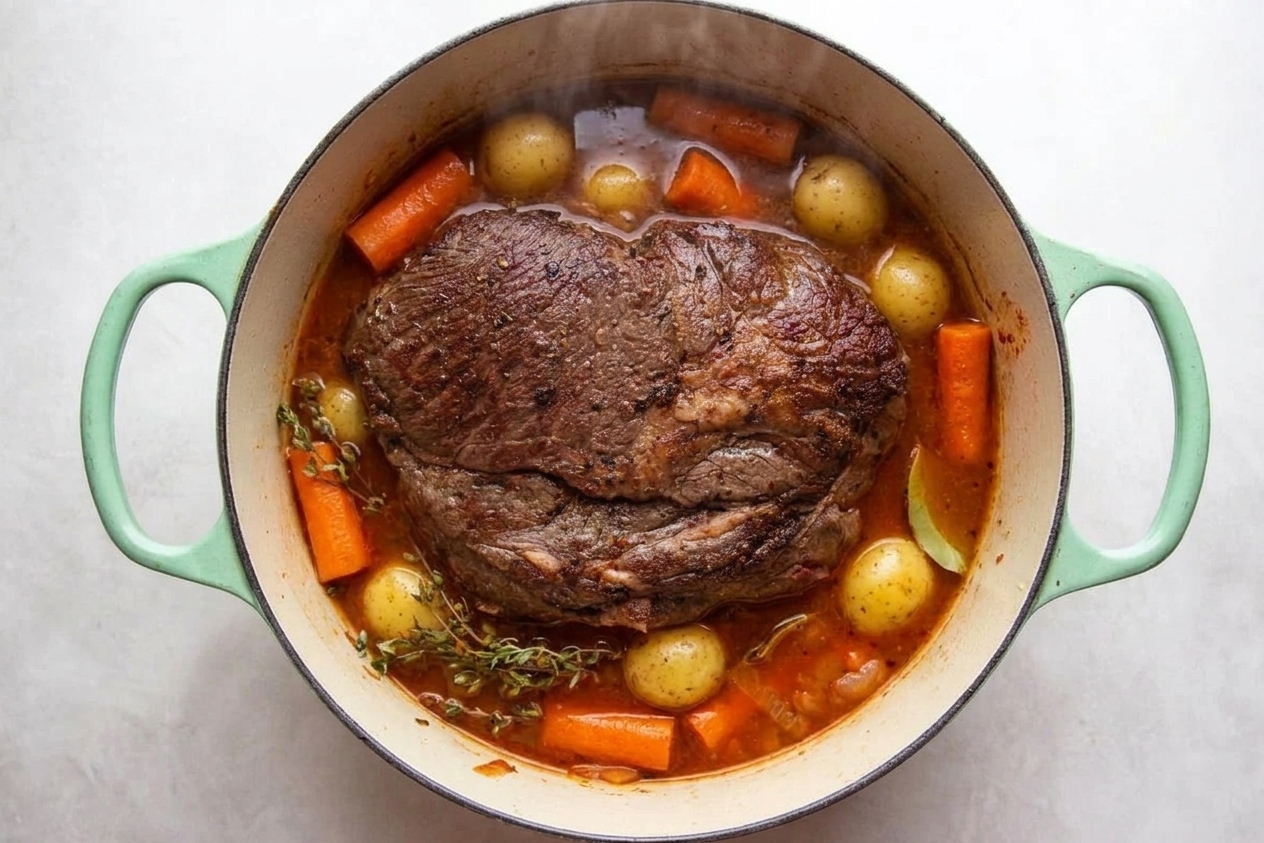
Add them about halfway through so they do not turn to mash. If you like super soft carrots, you can add them earlier. Potatoes are the first to go from tender to falling apart, so give them less time.
Can I make this without wine?
Absolutely. Use 1 additional cup of beef broth (so you still have the same total liquid). Then add a small splash of balsamic vinegar at the end for brightness.
Is pot roast better the next day?
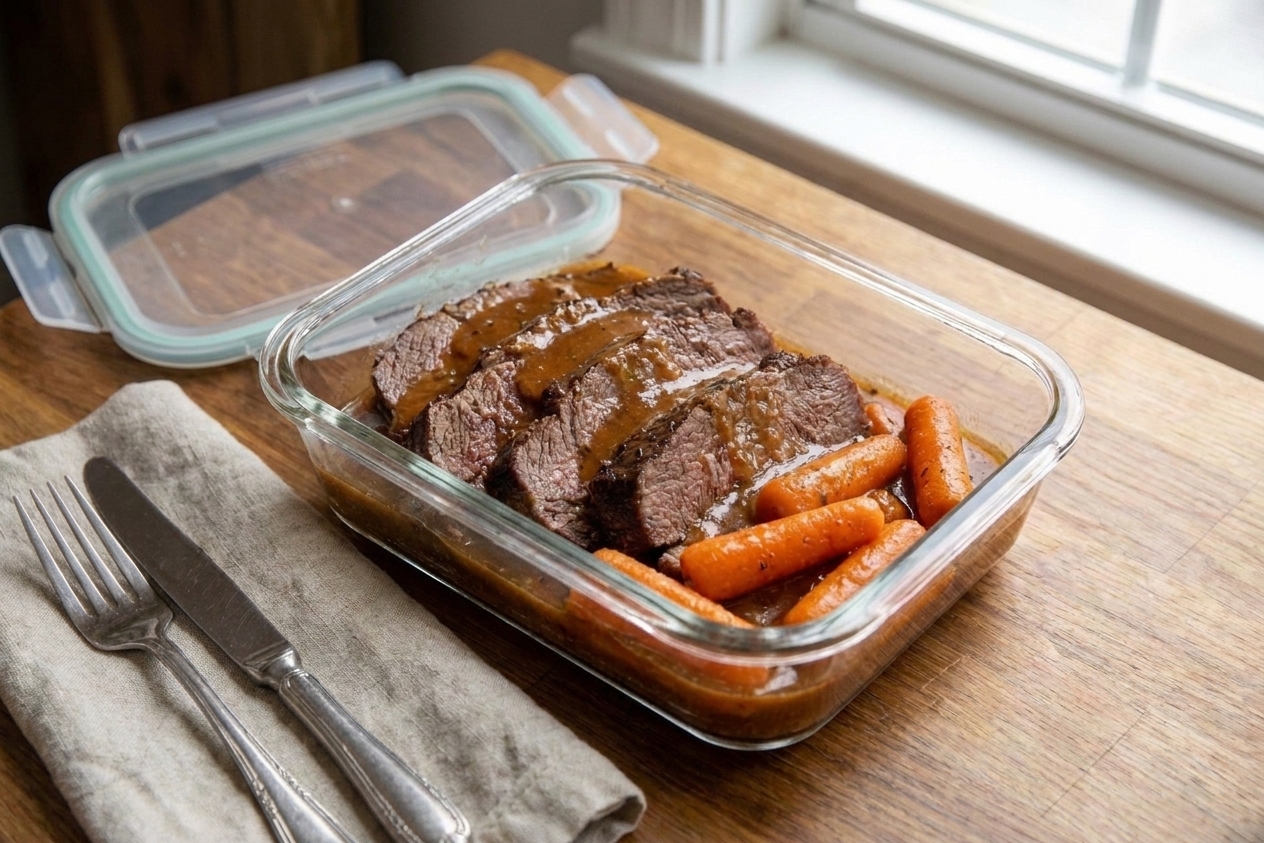
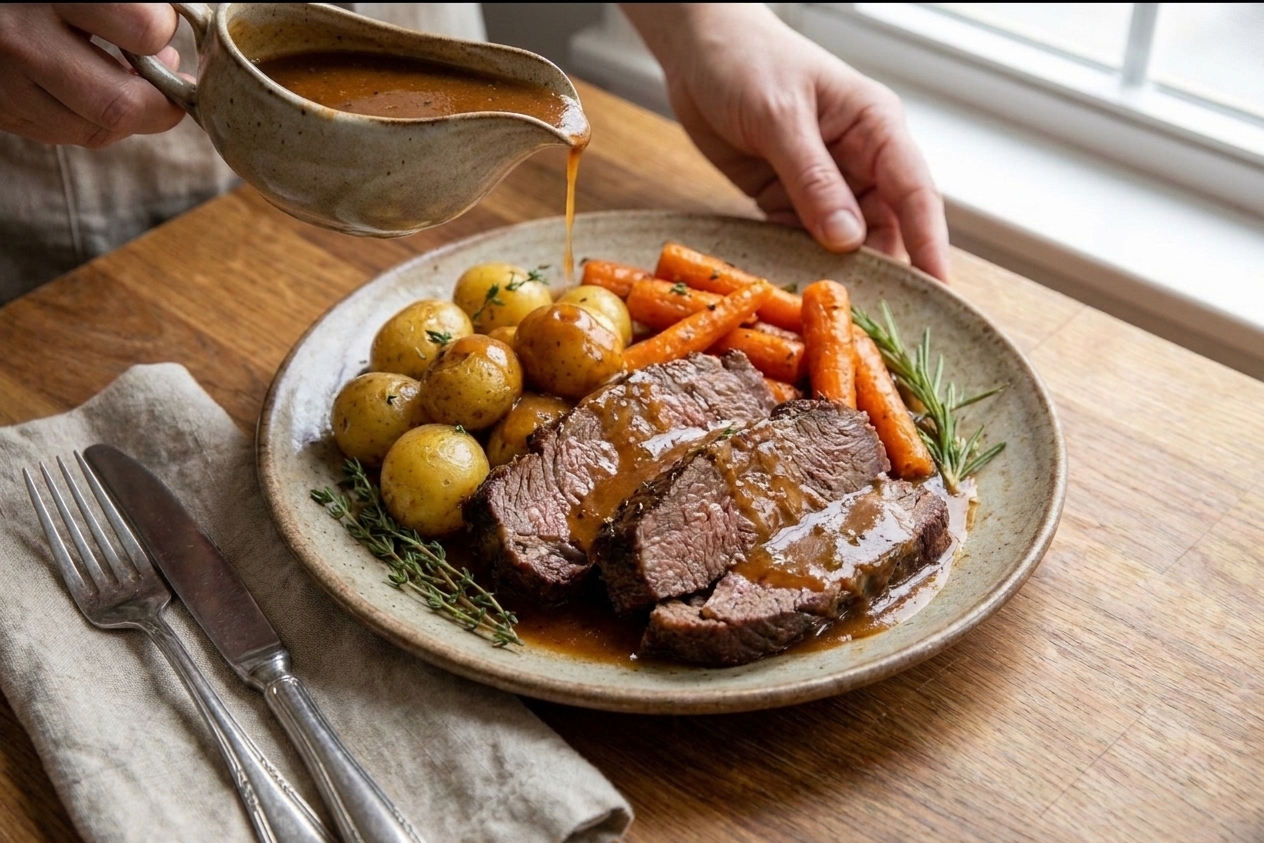
Yes. The flavors settle in and the gravy thickens a bit as it chills. Reheat gently with a splash of broth to loosen it up.