Common Questions
Why are my egg cups watery?
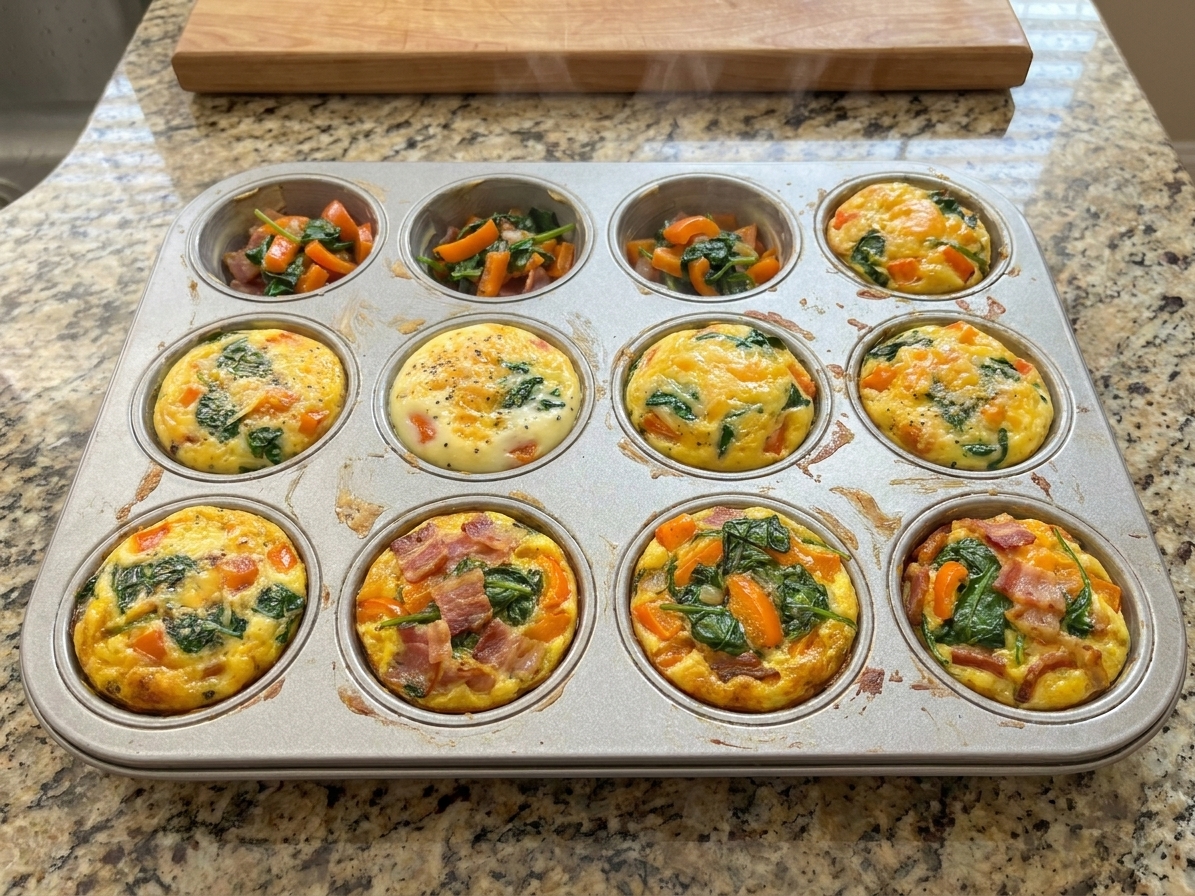
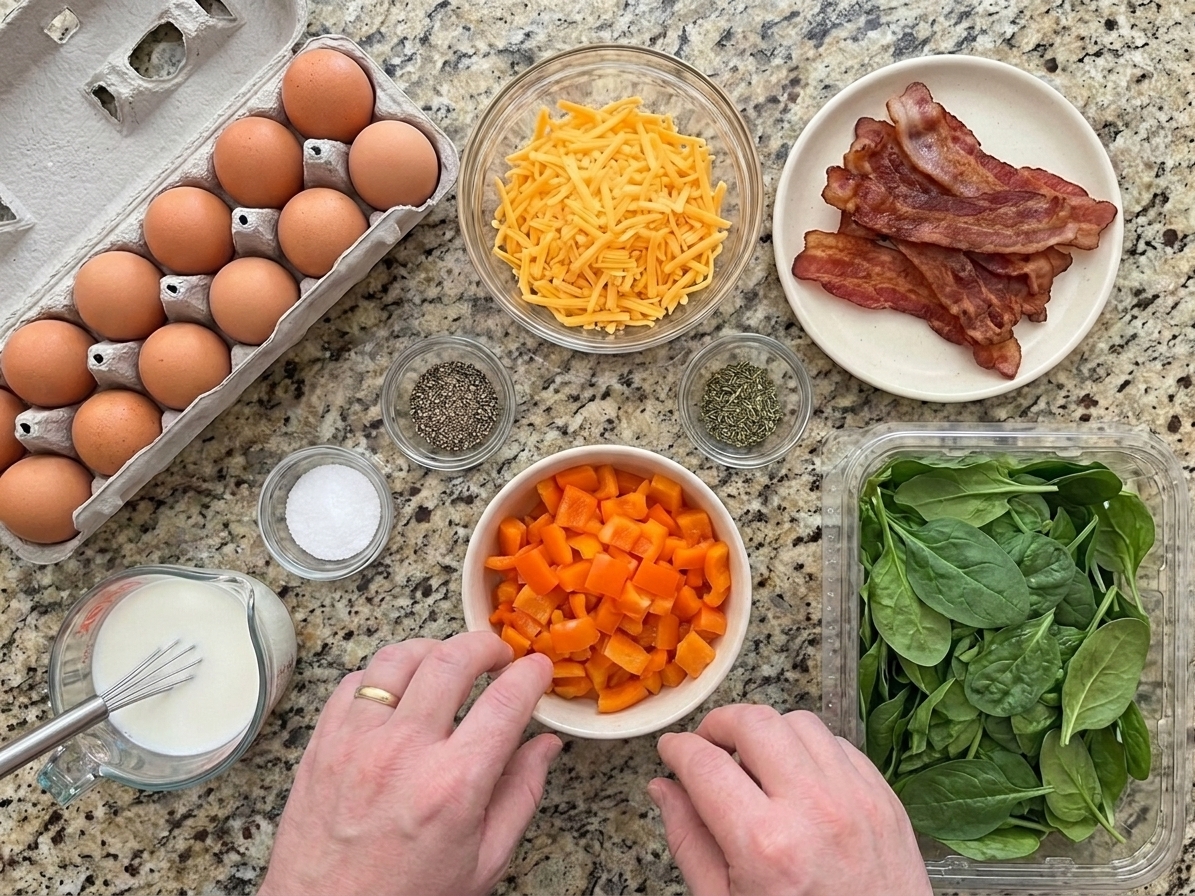
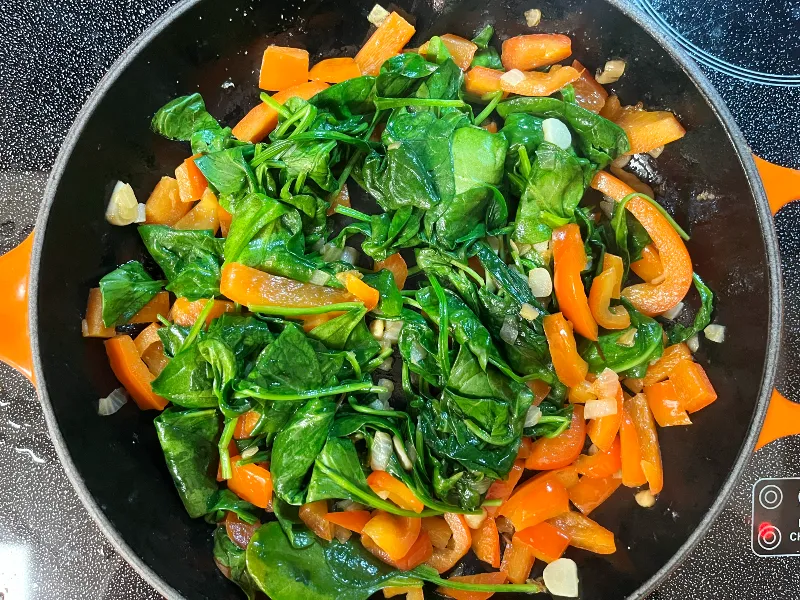
The usual culprits are watery vegetables (mushrooms, zucchini, tomatoes, spinach) or fillings added raw. Cook the veggies first, and let them cool a minute so they do not steam the eggs. Also avoid overloading the cups.
How do I keep egg cups from sticking to the pan?
Grease generously. Muffin tins are clingy. Use nonstick spray or brush each cup with oil or softened butter, getting into the corners. Silicone muffin cups also work great.
Quick heads-up on paper liners: they tend to stick to eggs like it is their job. If you use them, grease the liners too, or use silicone for the easiest release.
Can I make egg cups without milk?
Yes. The texture will be a little firmer, but still tasty. You can also use half-and-half for richer cups, or an unsweetened non-dairy milk if needed.
How full should I fill each muffin cup?
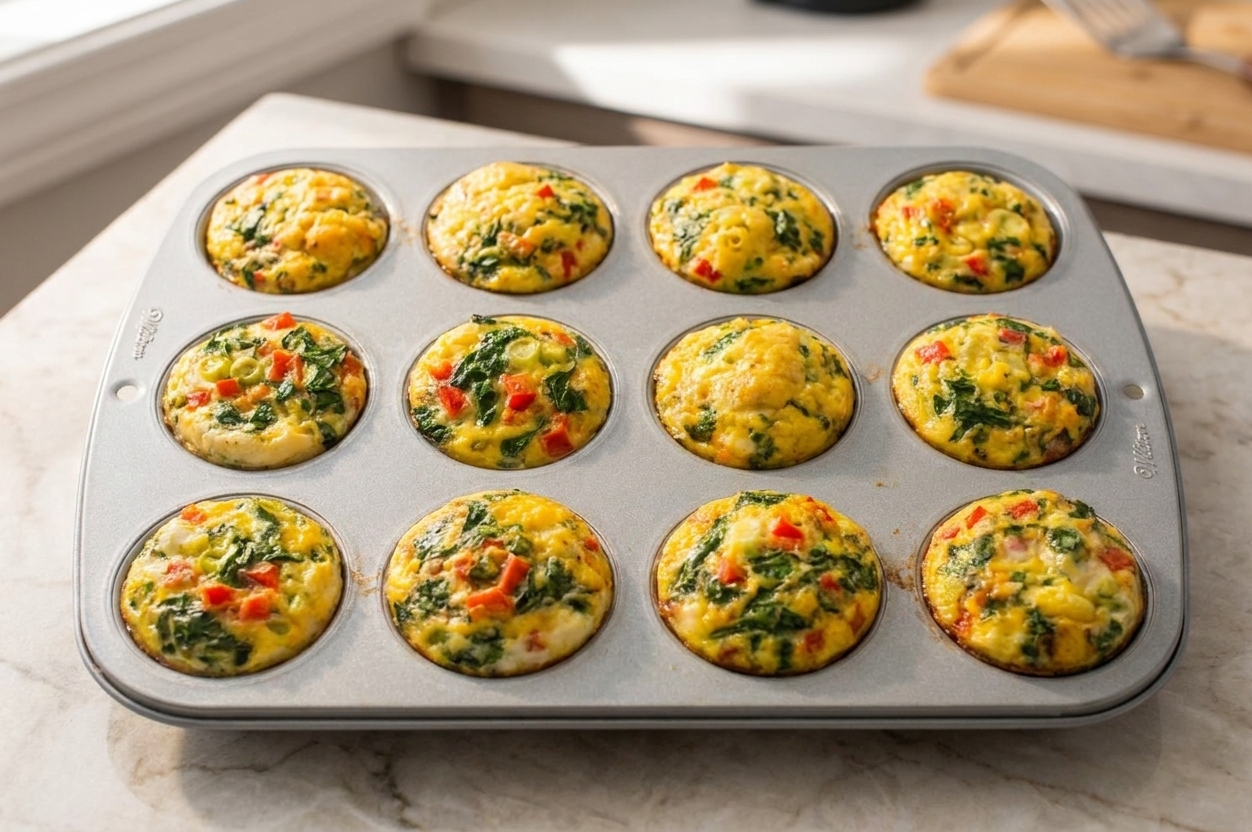
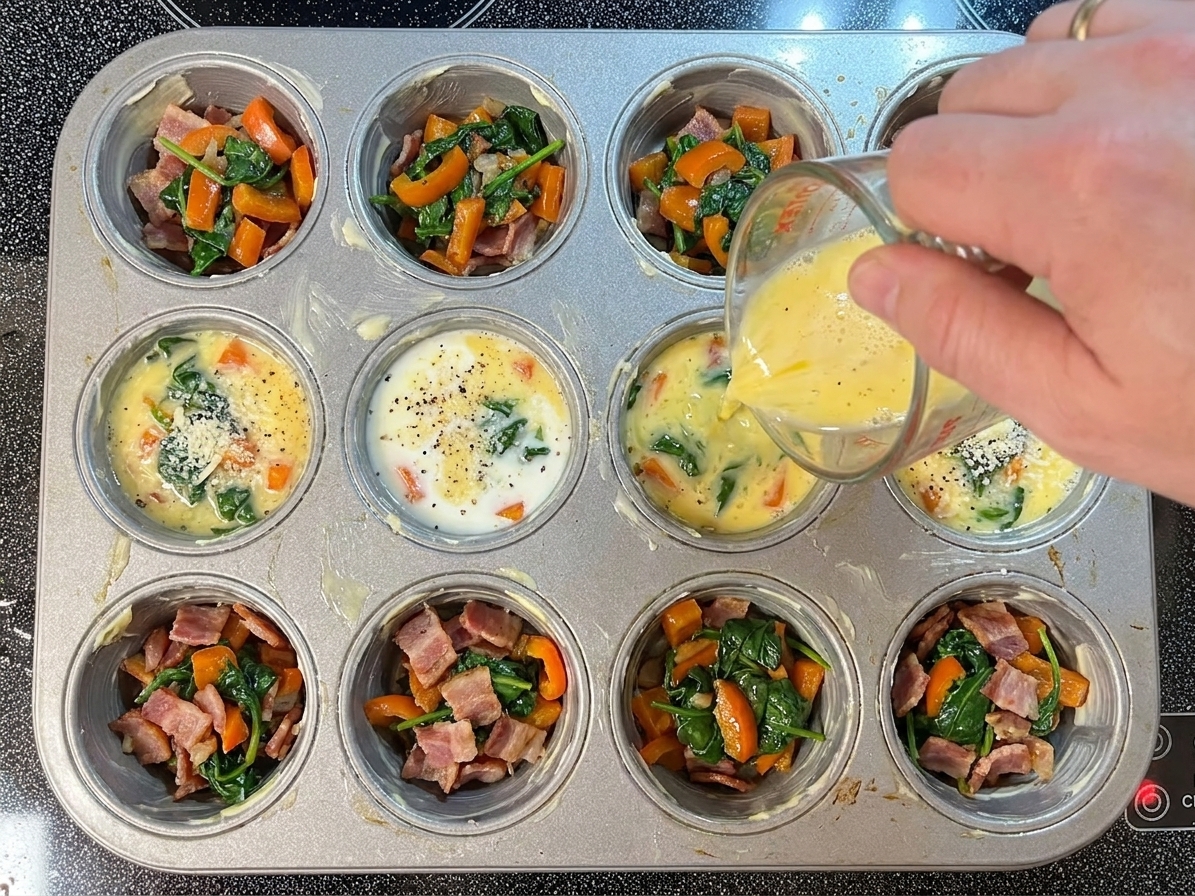
About three-quarters full. Eggs puff as they bake. Overfilling leads to spillover and uneven cooking.
How do I know they are done?
The centers should look set, not wet. For temperature, follow your kitchen standard: most guidance lands at 160°F to 165°F for egg dishes. If you are using a thermometer, aim for at least 160°F and fully set (or 165°F if that is your household or site policy).
Why did my egg cups sink after baking?
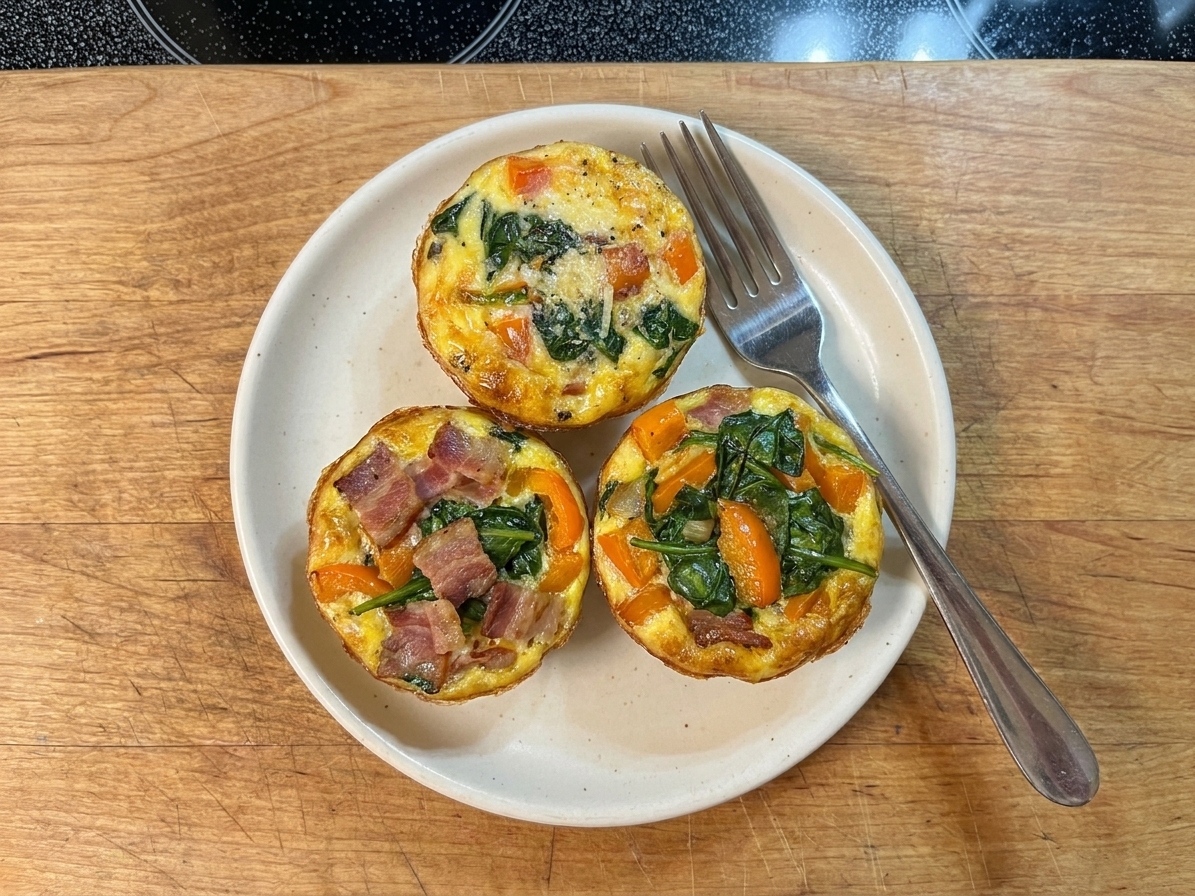
Totally normal. They puff up in the oven, then deflate a bit as they cool. That is just eggs being eggs, not a recipe fail.
Can I double the recipe?
Absolutely. Use two muffin tins and rotate racks halfway through baking for even cooking.