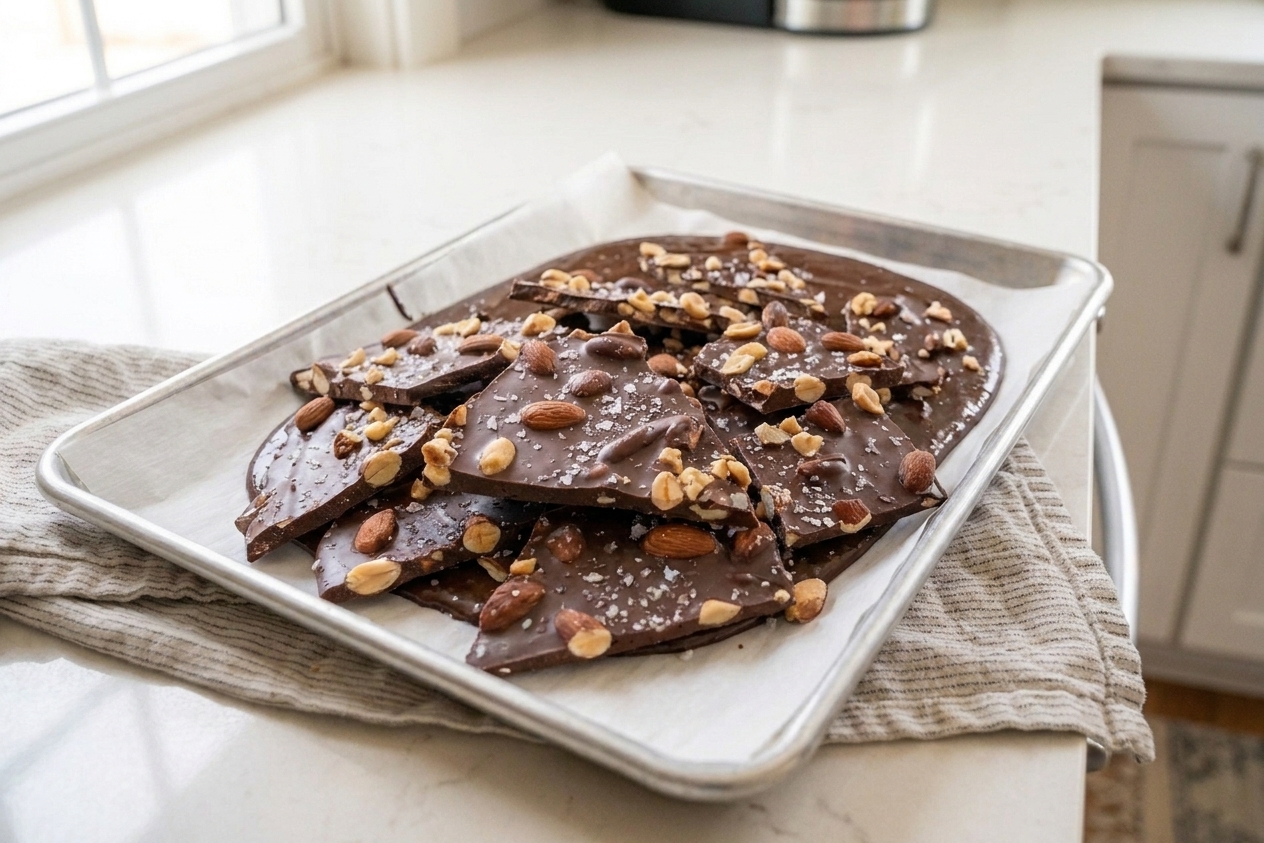
Is cocoa bark the same as chocolate bark?
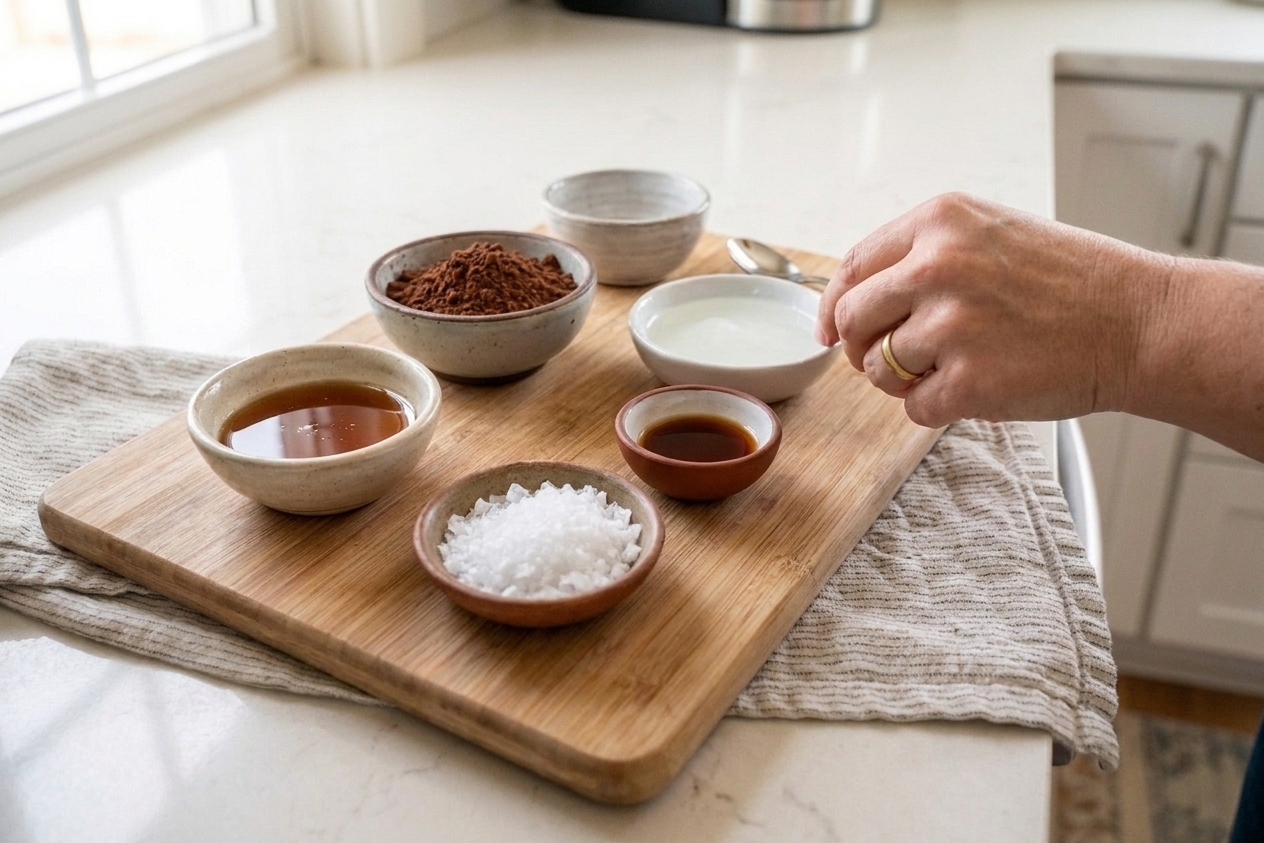
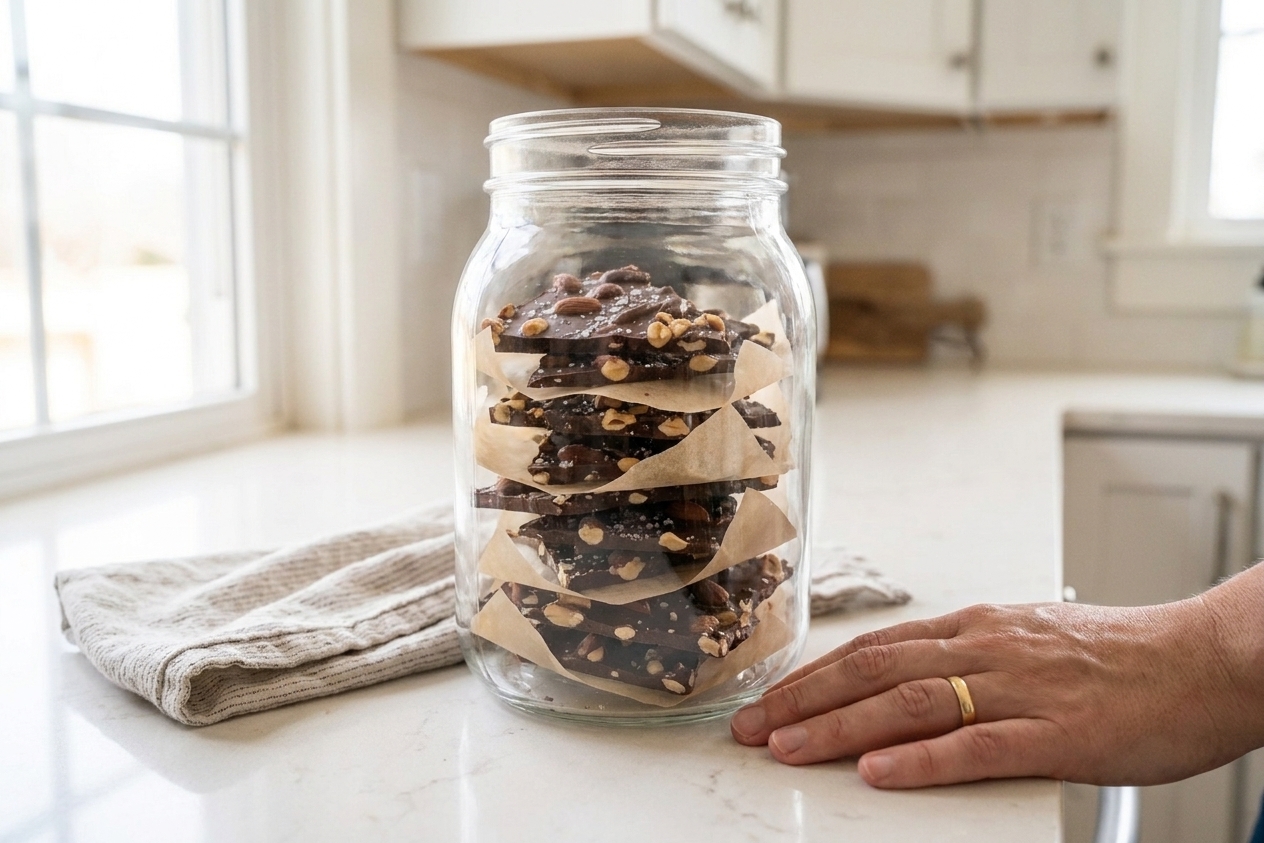
Kind of. Classic chocolate bark is usually made with melted chocolate (chips or bars). Cocoa bark is made by mixing cocoa powder with a fat (here, coconut oil) plus sweetener, which makes it extra pantry friendly and easy to customize.
Why is my bark grainy?
A few usual suspects: undissolved sweetener (especially if your mixture is not warm enough), cocoa that was not fully dispersed, or a mixture that got too hot and then cooled unevenly. Powdered sugar is the smoothest option, but even that can feel a little powdery if it is not whisked long enough. To fix it, whisk until the mixture looks glossy and completely uniform, and warm gently for a few seconds if needed (warm, not hot). Sifting cocoa before whisking also helps.
Can I use maple syrup or honey instead of powdered sugar?
Yes, but it is a trade. Liquid sweeteners can make the bark softer and a little less snappy when chilled. If you want the firmest texture, stick with powdered sugar. If you use maple syrup or honey, whisk very thoroughly and chill well.
Can I use butter instead of coconut oil?
You can, but it will set softer and can get greasy at room temp. If you want to use butter, consider doing half butter, half coconut oil for a better chill-set texture.
Does this need to be tempered?
No. This is a mix-and-chill situation. The set comes from the fat solidifying, not cocoa butter crystals like traditional tempered chocolate.
What toppings work best?
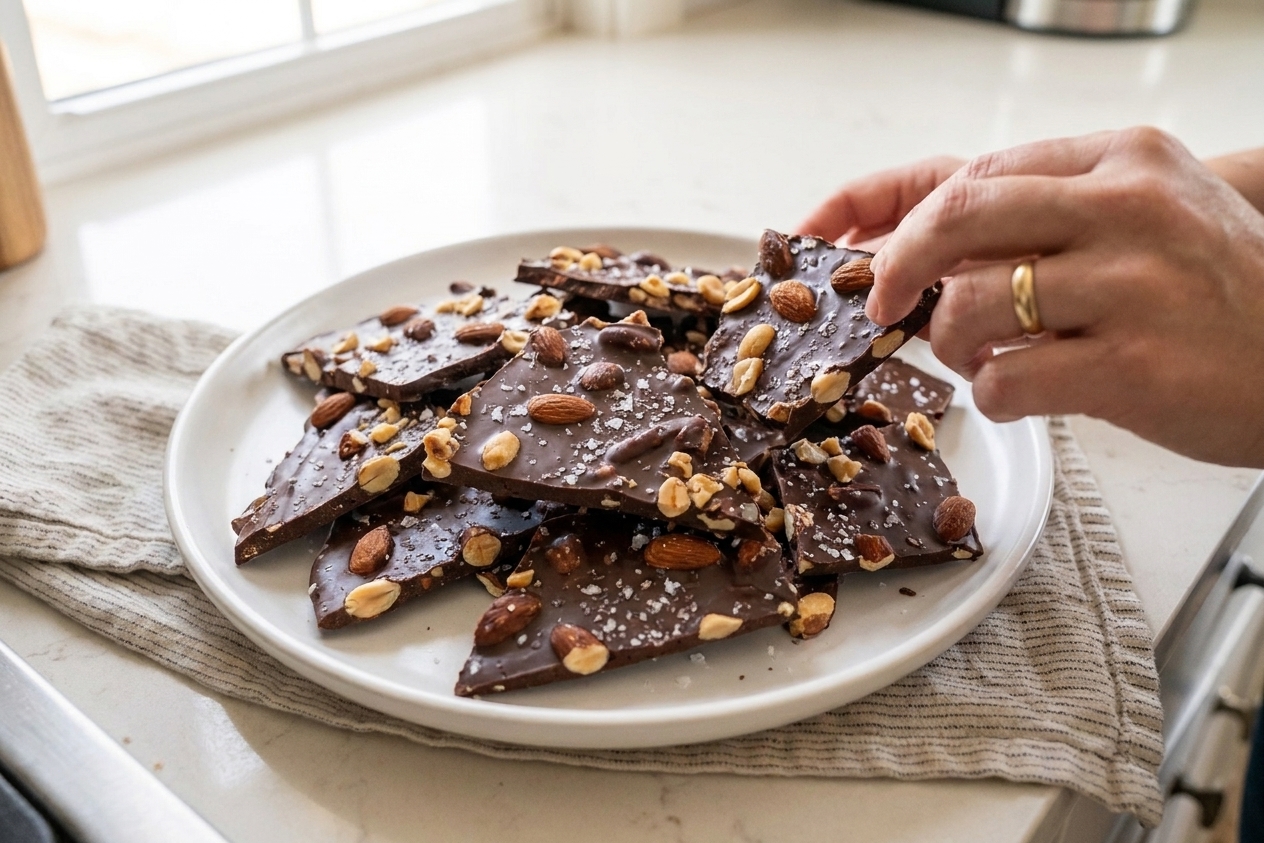
Anything with crunch: toasted nuts, pepitas, crushed pretzels, toasted coconut, dried cherries, freeze-dried strawberries, flaky salt. Keep toppings dry. Fresh fruit will weep and make the bark messy.
How do I keep it snappy?
Keep it cold. Coconut oil sets up firm in the fridge and freezer, but it softens fast in a warm kitchen. This bark is at its best straight-from-the-fridge crisp.