Common Questions
What should crepe batter look like?
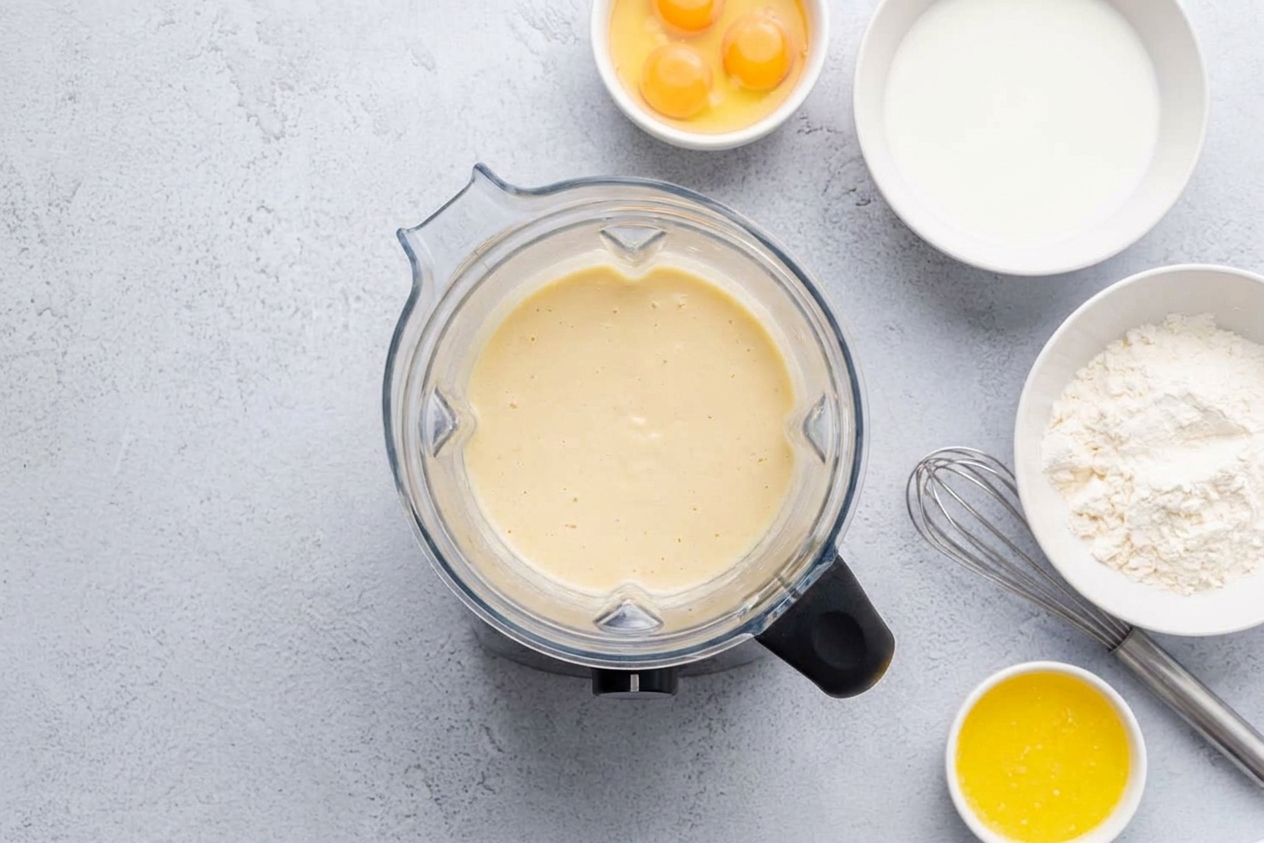
It should look like heavy cream: thinner than pancake batter, thicker than milk. When you lift a spoon, it should stream off smoothly and leave a thin coating. If it pours like pancake batter, your crepes will be thick and more likely to tear. If it pours like straight milk, they can turn fragile and lacy.
Do I have to rest crepe batter?
You can cook immediately, but resting for 30 minutes makes a noticeable difference. The batter smooths out, the crepes tear less, and the texture gets more tender.
Why are my crepes tearing?
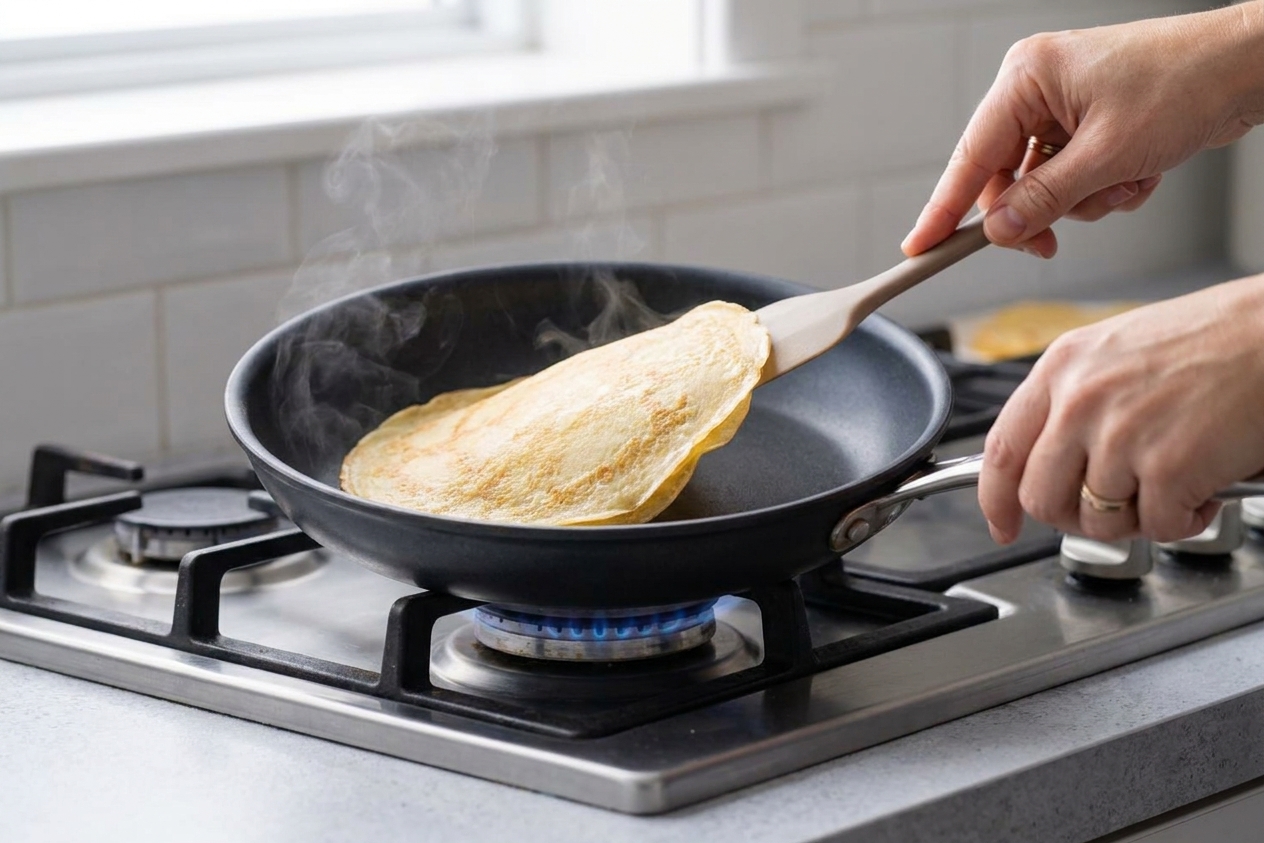
Usually one of these: batter did not rest, pan is not hot enough, crepe is being flipped too early, or the batter is too thick. Try resting the batter, heating the pan longer, and thinning with 1 tablespoon milk at a time.
Why are my crepes rubbery?
Most often it is too much flour (batter too thick) or cooking too long. Thin the batter slightly and cook just until set and lightly golden.
Why is the first crepe always weird?
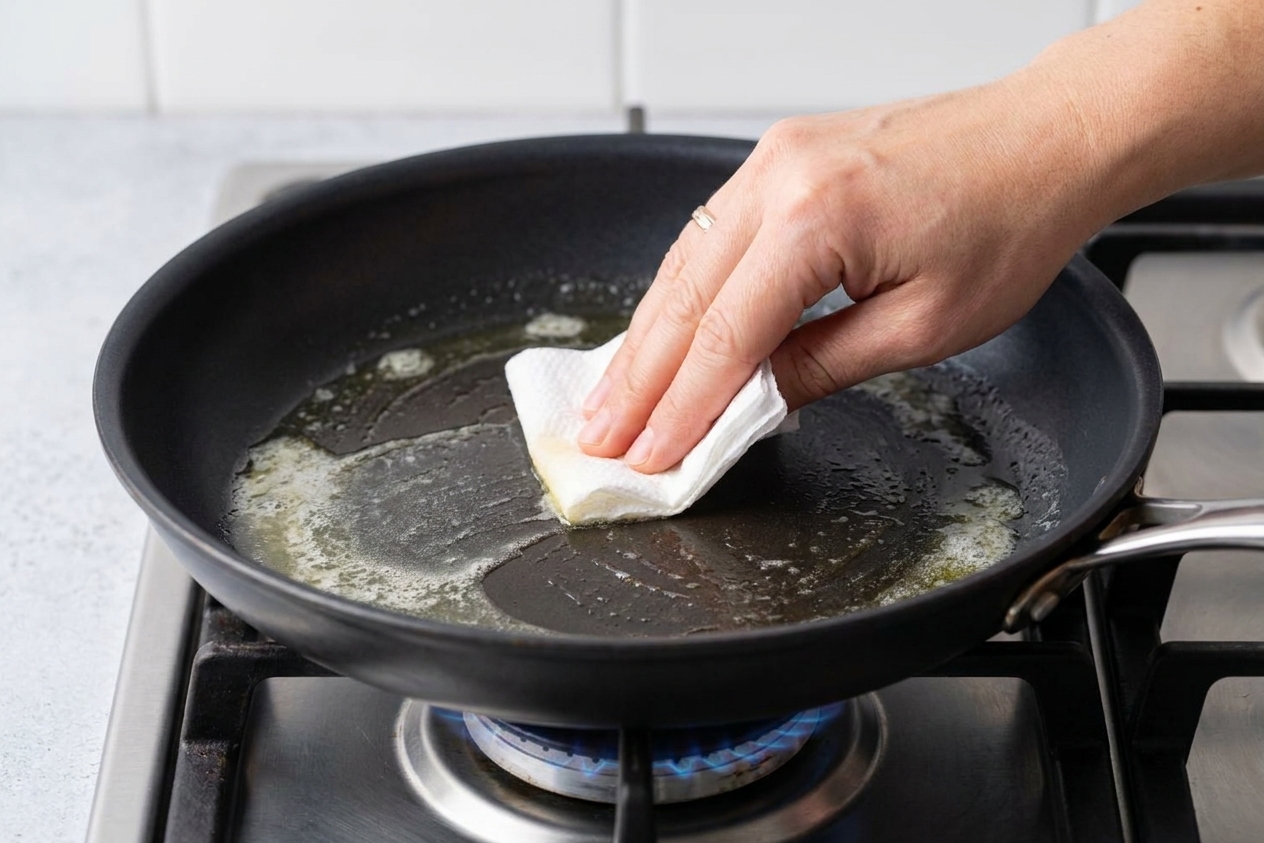
The pan is still finding its groove. The first crepe is your test run for heat and butter. Consider it the cook’s snack.
Can I make this without a blender?
Yes. Whisk the dry ingredients first, then whisk in the eggs. Add a splash of milk to make a smooth paste, then gradually whisk in the remaining milk and water. If you get lumps, strain the batter through a fine mesh sieve.
Can I make crepes with water instead of milk?
You can, but they will be less tender and less flavorful. If you are out of milk, use half water and half milk if possible, or add a little extra melted butter for richness.
Sweet or savory crepes?
This batter works for both. For savory crepes, skip sugar and vanilla. For sweet crepes, add 1 tablespoon sugar and 1 teaspoon vanilla (or a little extra, if that is your thing).
Can I use dairy-free milk?
Yes. An unsweetened, neutral option like oat or soy milk works best. The crepes may brown a little differently and can be slightly less tender, but they will still be very workable.