What vegetables should I avoid in vegetable broth?
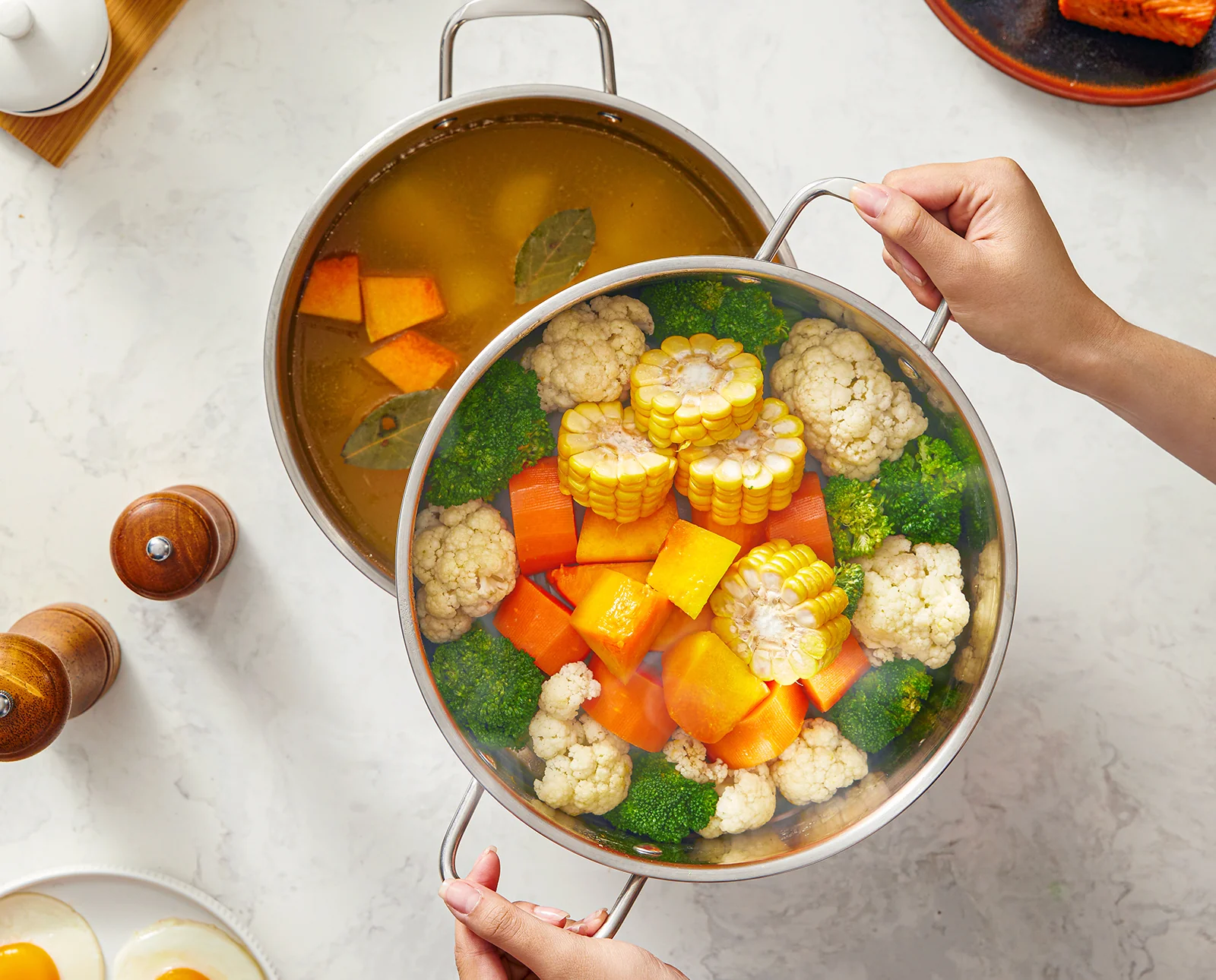
For a clean, mellow broth, go easy on long-simmering cruciferous veggies like broccoli, cauliflower, Brussels sprouts, cabbage, and sometimes kale. They can make broth sulfur-y and harsh, especially if you simmer hard or go past an hour. If you love them, a small amount is usually fine in a shorter simmer. Also use beet sparingly unless you want a sweet, pink broth.
How do I make vegetable broth taste richer, like store-bought “stock”?
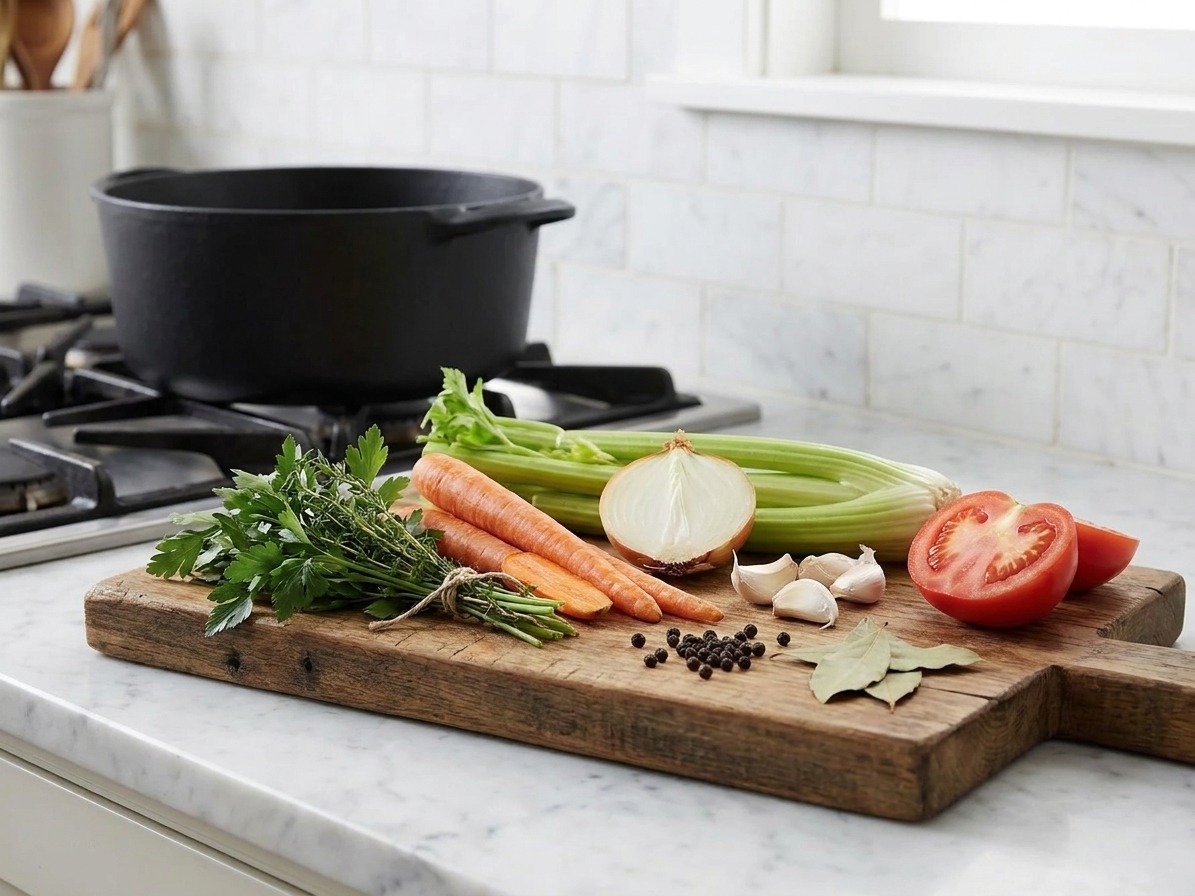
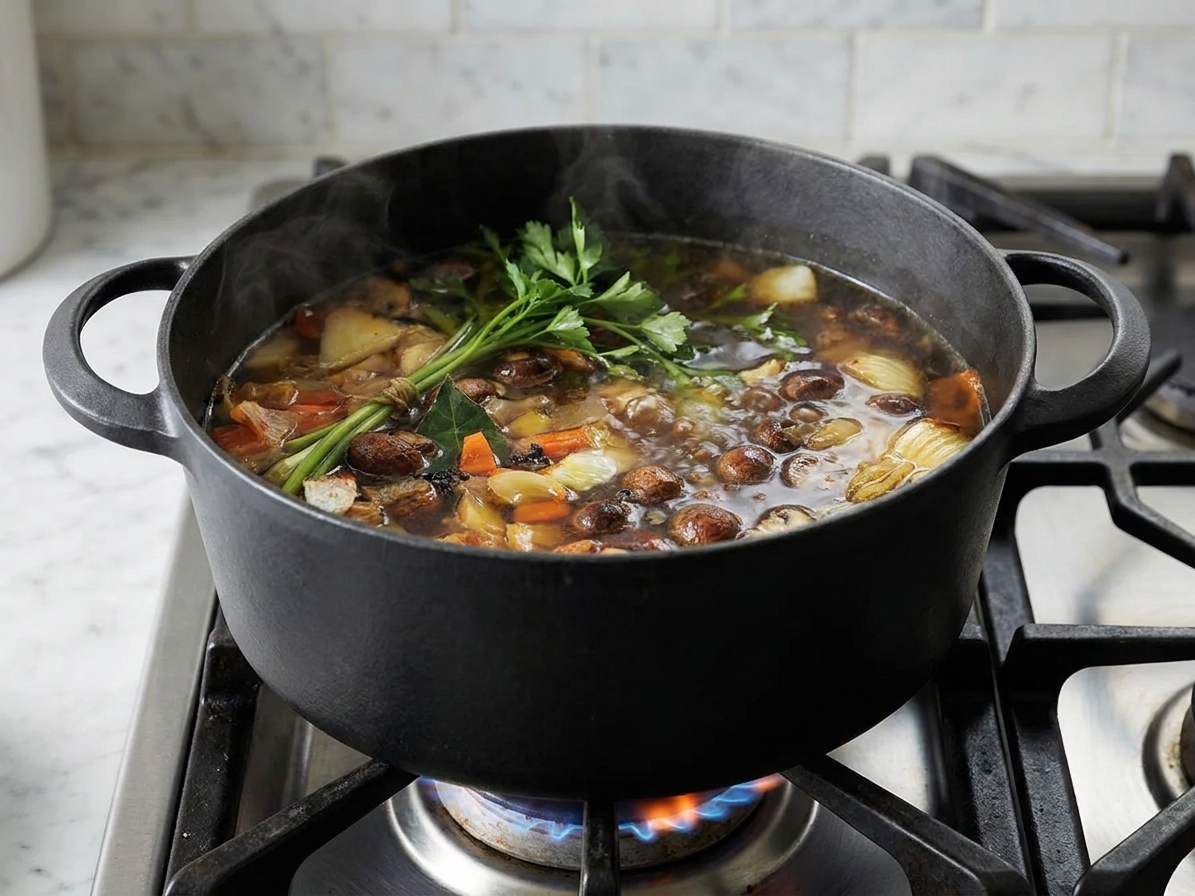
Two easy upgrades: roast the vegetables first (more caramel flavor) and add umami like mushrooms, tomato paste, or a small piece of kombu. In this recipe, you can do either without changing the method.
Can I make this broth from kitchen scraps?
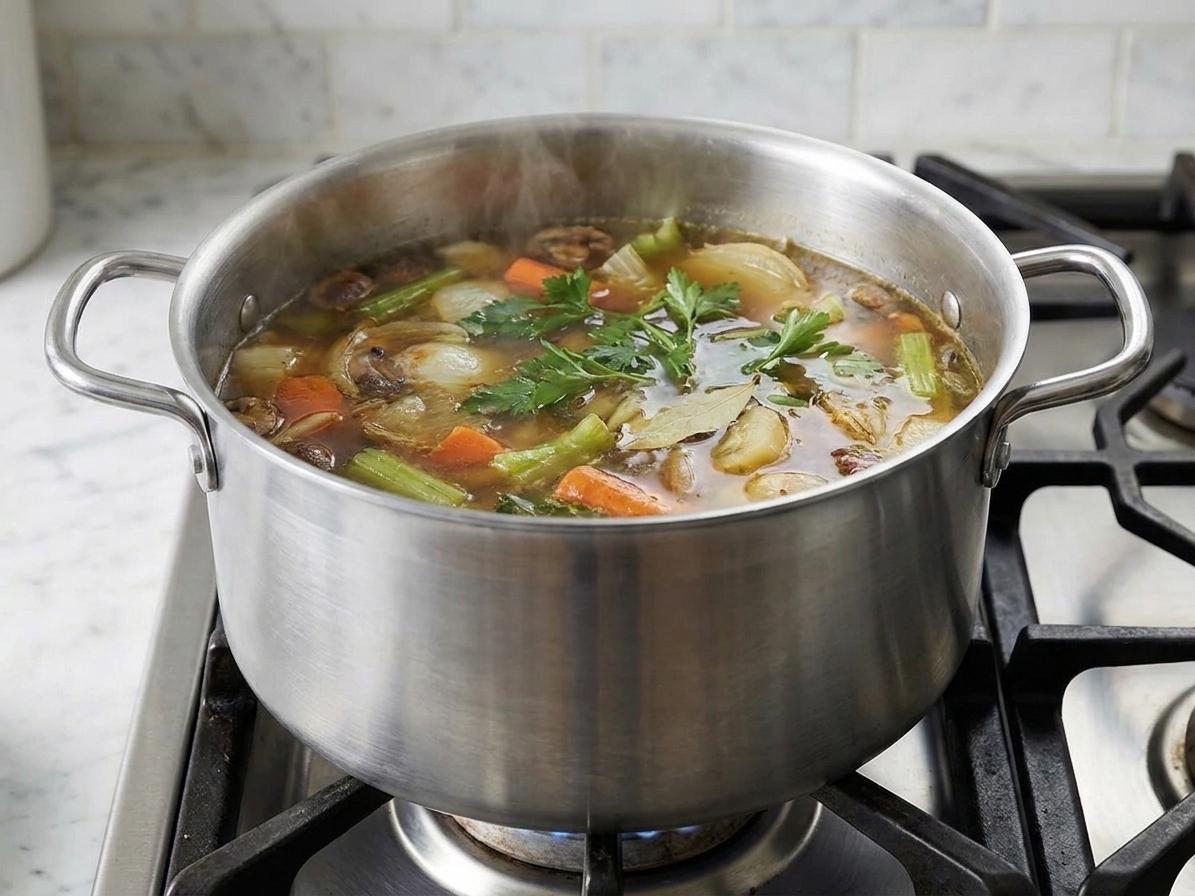
Yes, with a little strategy. Keep a freezer bag of clean scraps like onion ends, carrot peels, celery leaves, mushroom stems, and herb stems. When you have enough, make broth. Skip scraps that are old, slimy, or very heavy on cruciferous veggies.
Why is my vegetable broth bitter?
Usually it is from cruciferous vegetables, too many green herbs, or simmering too hard for too long. Keep it at a gentle simmer and aim for 45 to 60 minutes. If it is slightly bitter, try balancing with a tiny pinch of salt and a splash of lemon at the end, depending on how you plan to use it.
Is vegetable broth the same as vegetable stock?
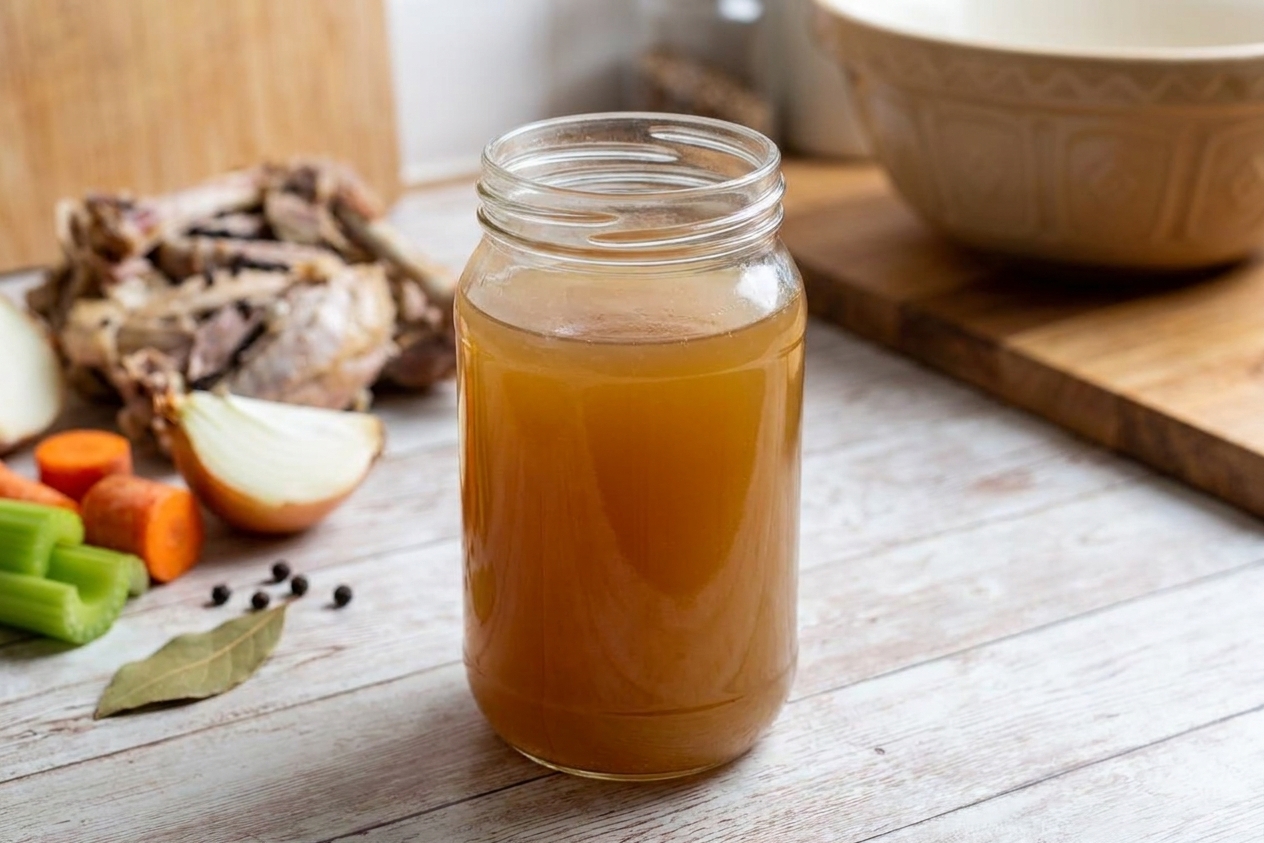
In home cooking, people use the terms interchangeably. Technically, “stock” often implies more body and is often kept unsalted so you can reduce it later. With vegetable versions, the line is blurry. This recipe lands in the happy middle: light enough for everything, flavorful enough to stand on its own.
Do I need to peel the onions and garlic?
You do not have to peel the garlic. For onions, I remove the skins here to keep the flavor extra clean and the color more golden than brown. If your onion skins are clean and you like a deeper color, you can leave a little on, just know it can slightly deepen the flavor too.