Do I need a special hot pot pot?
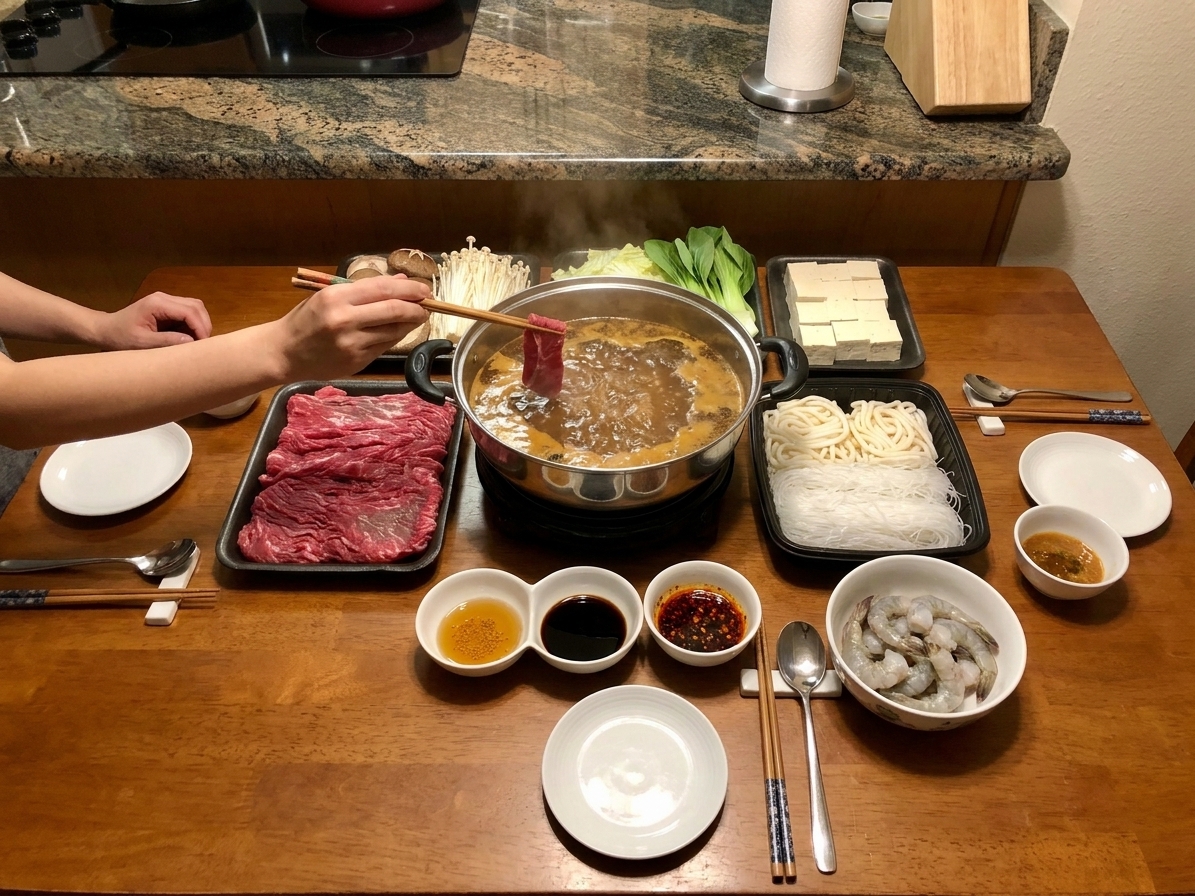
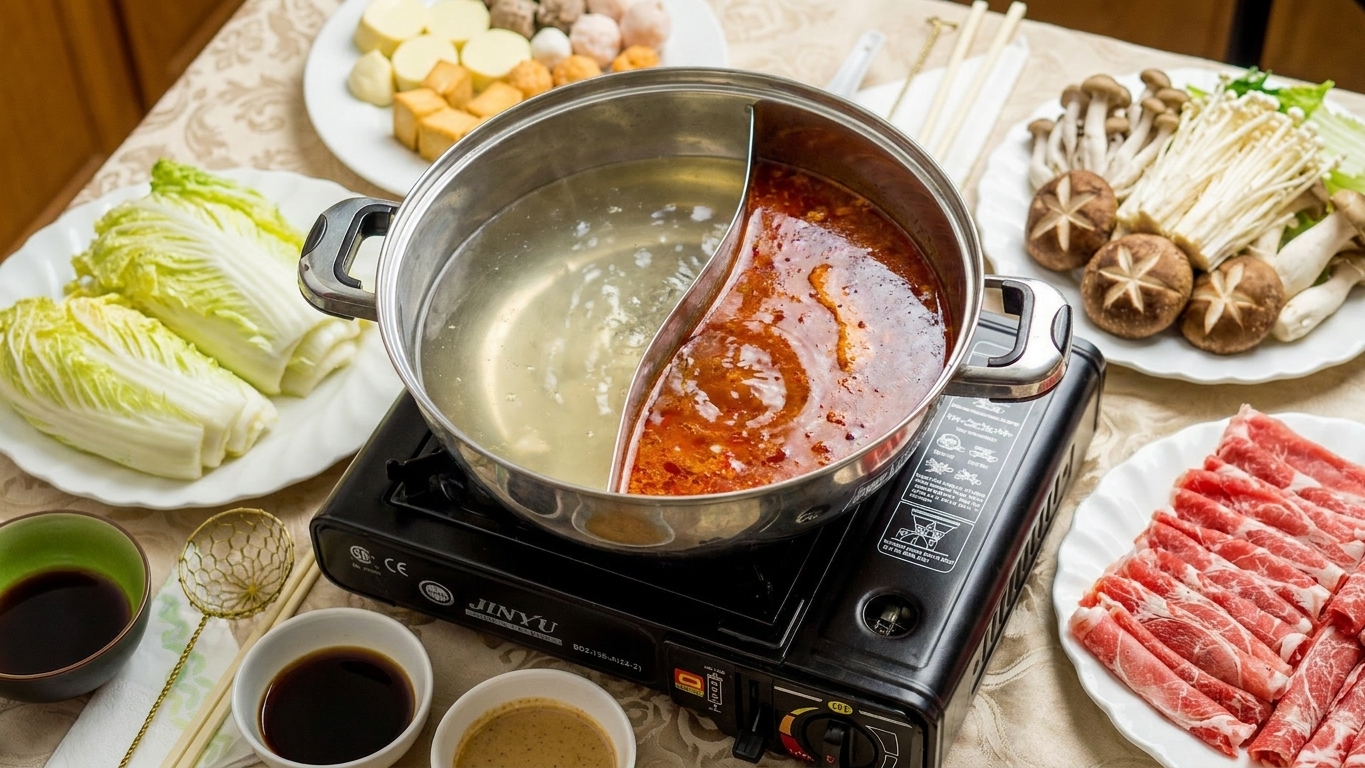
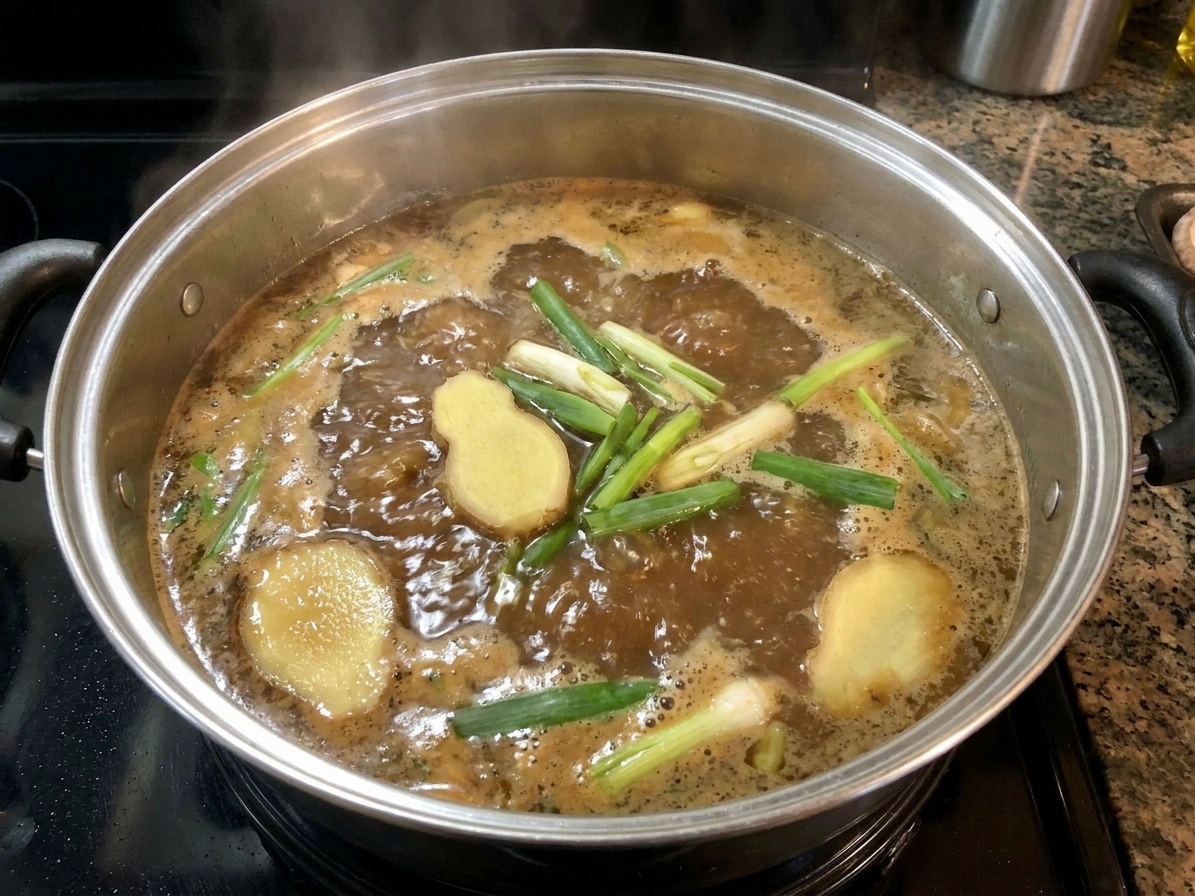
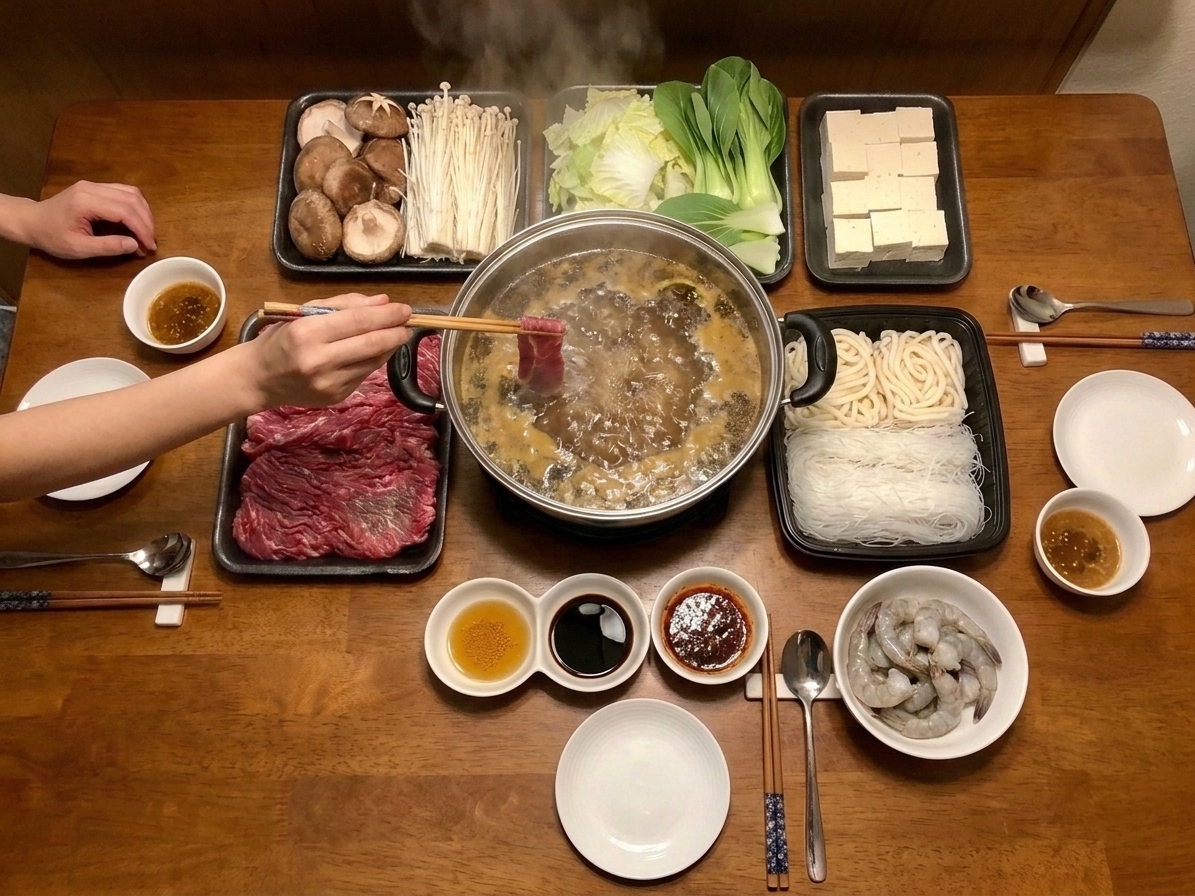
No. A Dutch oven or any wide pot works. If you want the classic table setup, use a portable induction burner or an electric hot pot, but you can also keep the pot simmering on the stove and bring it to the table between batches.
What is the best broth for beginners?
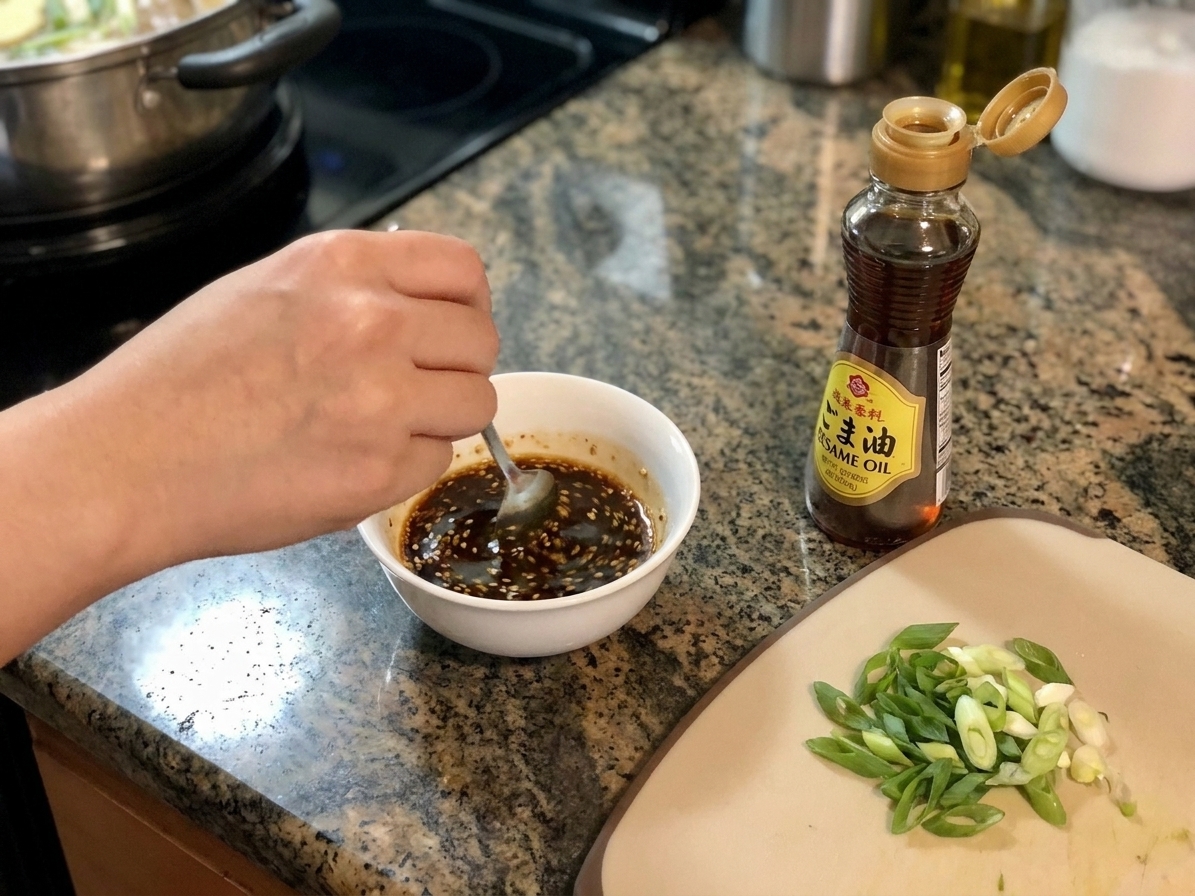
This ginger-garlic soy broth is forgiving and kid-friendly. If you want spicy, add chili crisp or a spoonful of gochujang. If you want richer, add a splash more sesame oil at the end.
What cooks fastest in hot pot?
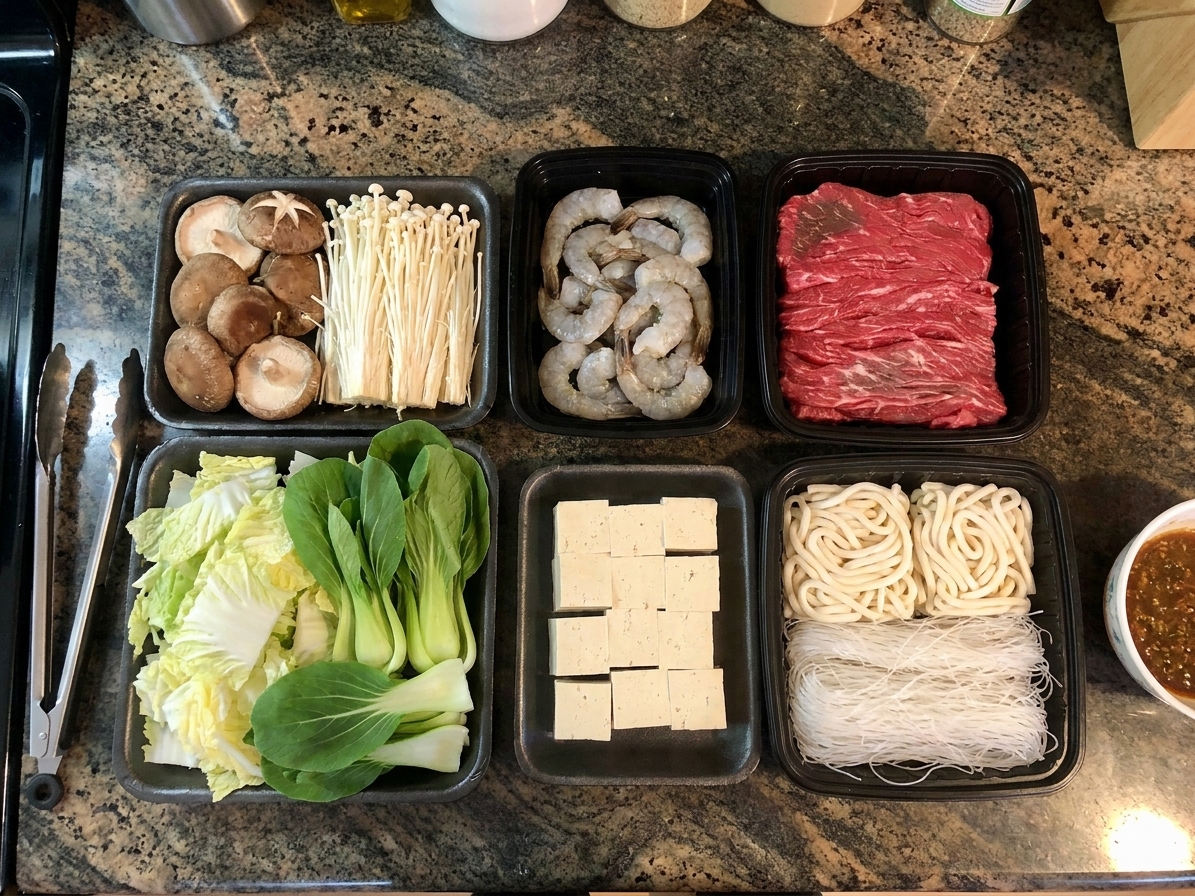
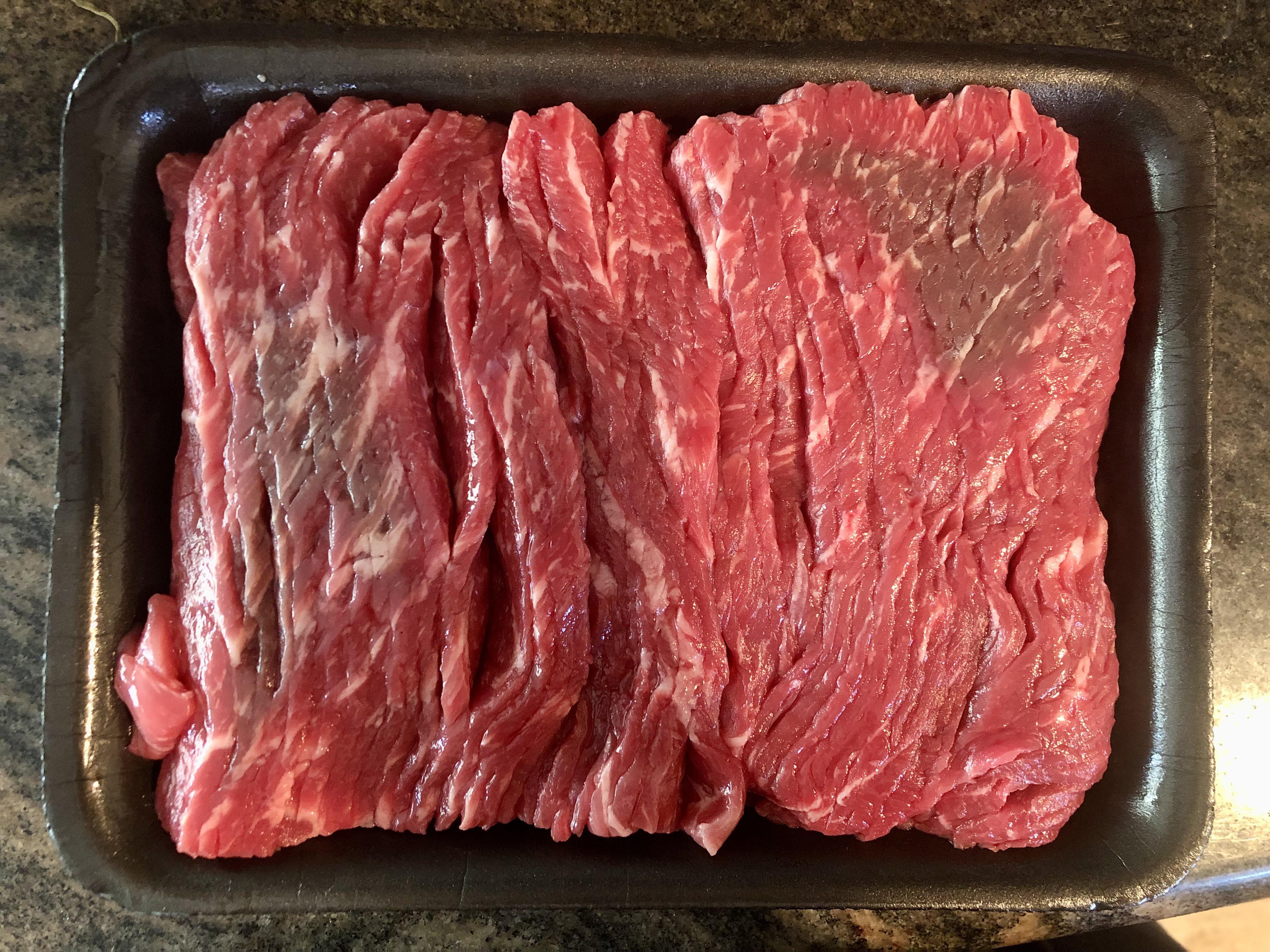
Leafy greens, thin mushrooms, shrimp, tofu, and thin-sliced beef cook in 30 seconds to 3 minutes. Save thicker items like meatballs or dumplings for earlier in the meal so the broth stays at a steady simmer.
Is it safe to cook raw meat at the table?
Yes, as long as the broth stays at a steady simmer and proteins are cooked through. Use separate chopsticks or tongs for raw ingredients, and do not dip raw-meat chopsticks into shared sauces. Keep raw items chilled until serving, and if the broth stops simmering after you add a bunch of cold ingredients, let it return to a simmer before cooking more.
Can I make it vegetarian?
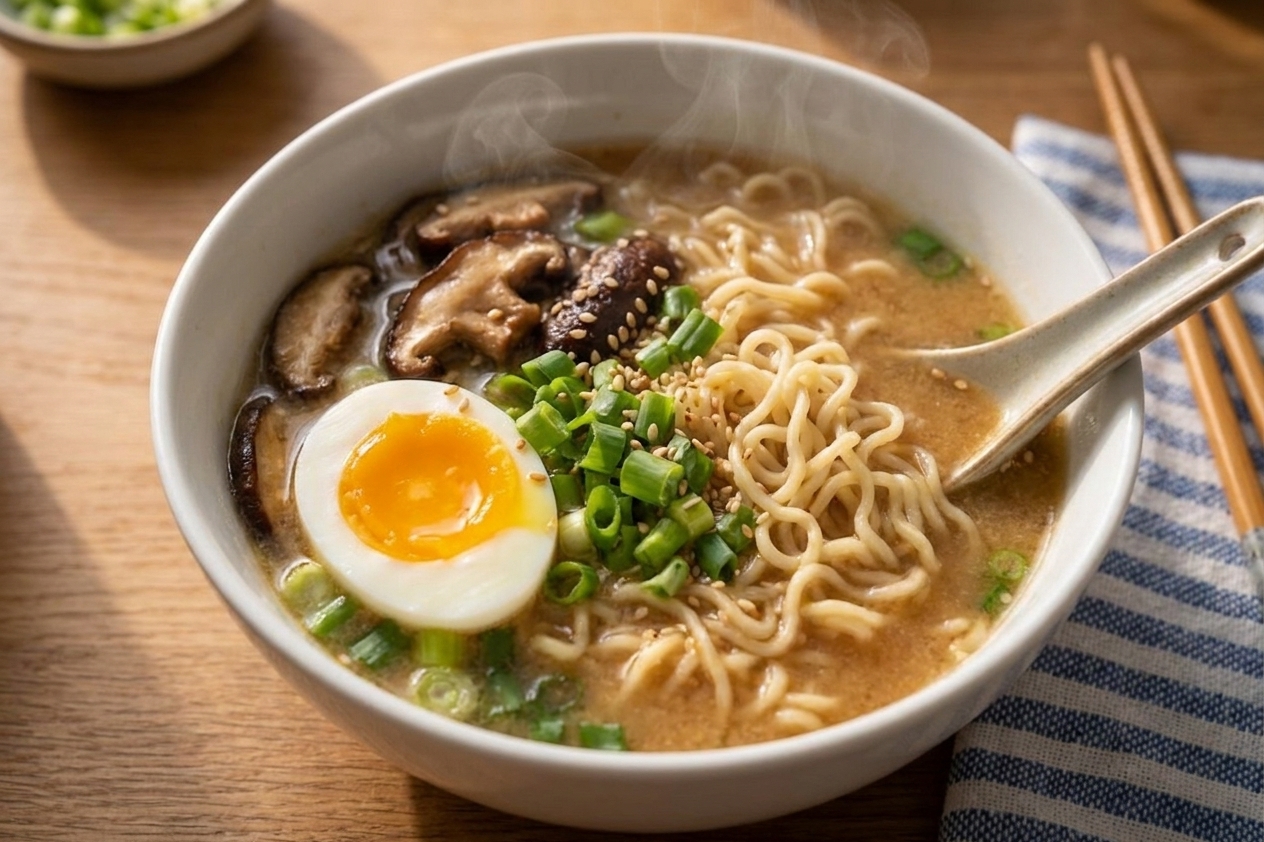
Absolutely. Use vegetable broth, add extra mushrooms (shiitake are great), tofu, baby corn, and noodles. For extra depth, add a spoonful of miso at the end (off heat) and a dash of soy.
How much should I buy per person?
Hot pot is flexible, but a good starting point is 4 to 6 ounces protein per person (more if it is the main event), 2 to 3 cups mixed veggies per person, and about 2 ounces dried noodles (or 4 to 5 ounces fresh) per person. If you are serving lots of sides, lean toward the lower end.
Any allergy-friendly swaps?
Soy: Use tamari (gluten-free) or coconut aminos (slightly sweeter). Peanut: Swap sunflower seed butter. Sesame: Skip sesame oil and use a neutral oil; choose a vinegar-forward sauce instead.