Mom's Best Recipes
Recipe

Easy Italian Focaccia Bread

Fluffy, olive-oil-rich focaccia with crisp edges, deep dimples, and a rosemary-salt top that makes you “taste-test” half the pan.

Author By Matt Campbell
4.8
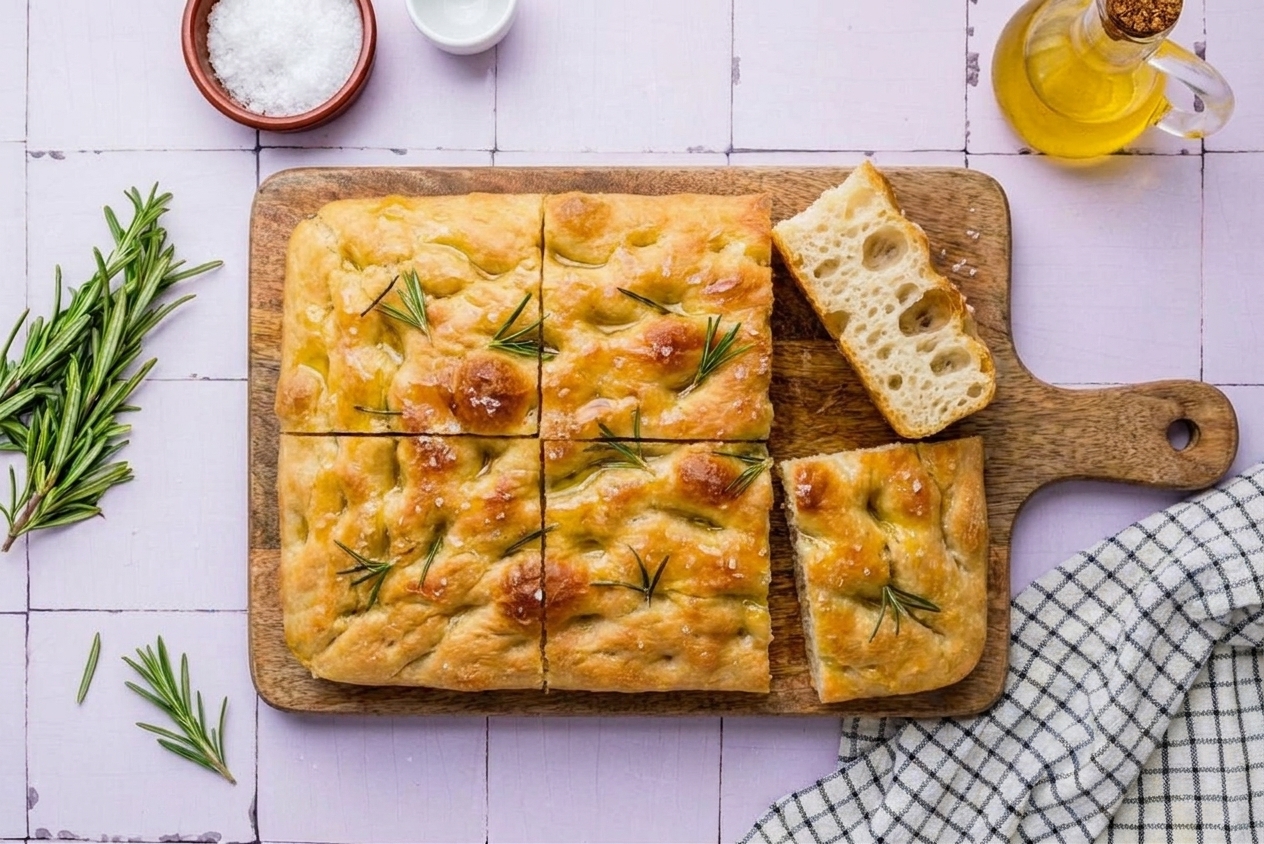
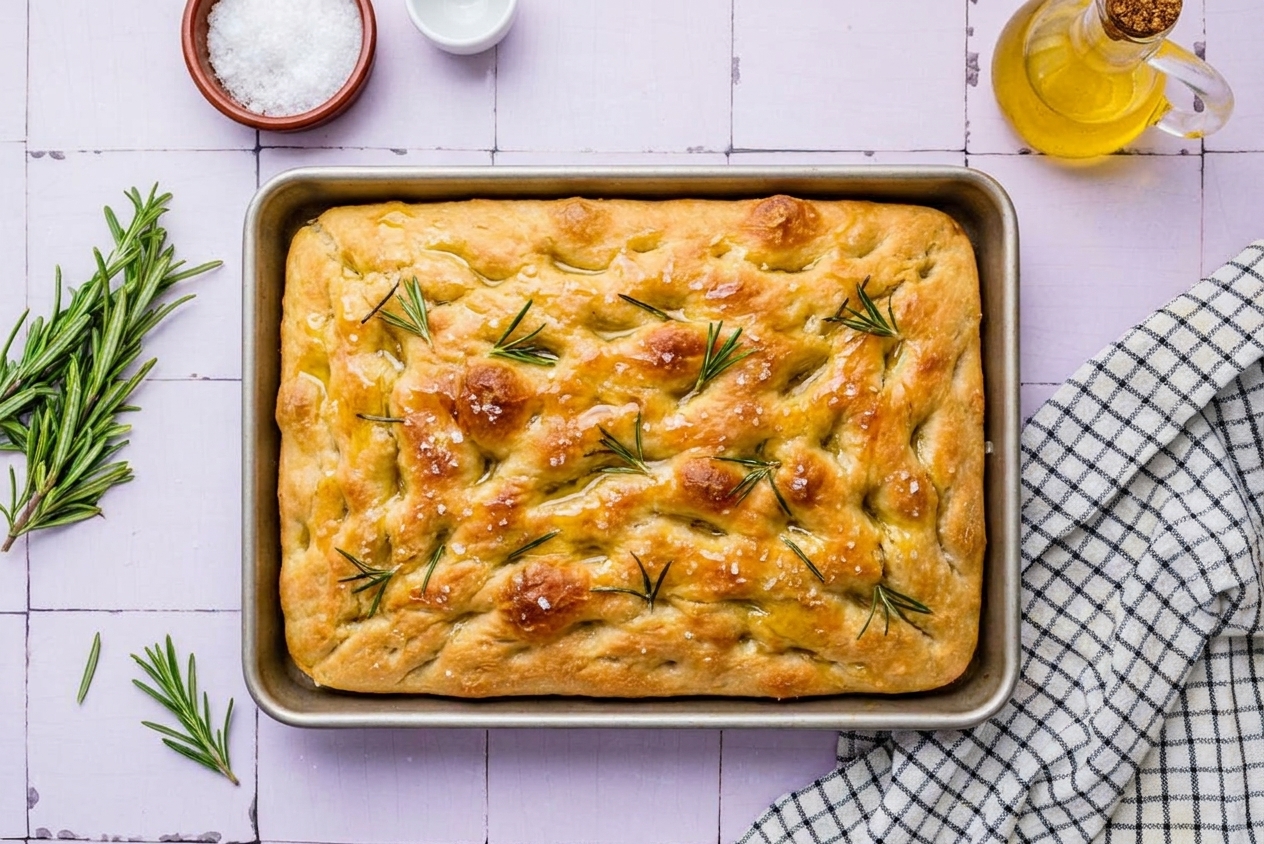
A golden pan of rosemary focaccia with deep dimples, glossy olive oil, and flaky salt on top, sitting on a warm kitchen counter

Focaccia is the bread I make when I want maximum comfort with minimum drama. It is basically pizza dough’s cozy cousin: soft and airy in the middle, crisp and almost fried around the edges thanks to a generous slick of olive oil.

This version keeps ingredients simple and the method forgiving. You do not need a mixer, you do not need fancy flour, and you do not need to be a bread whisperer. You just need time for the dough to rise and the confidence to dimple it like you mean it.
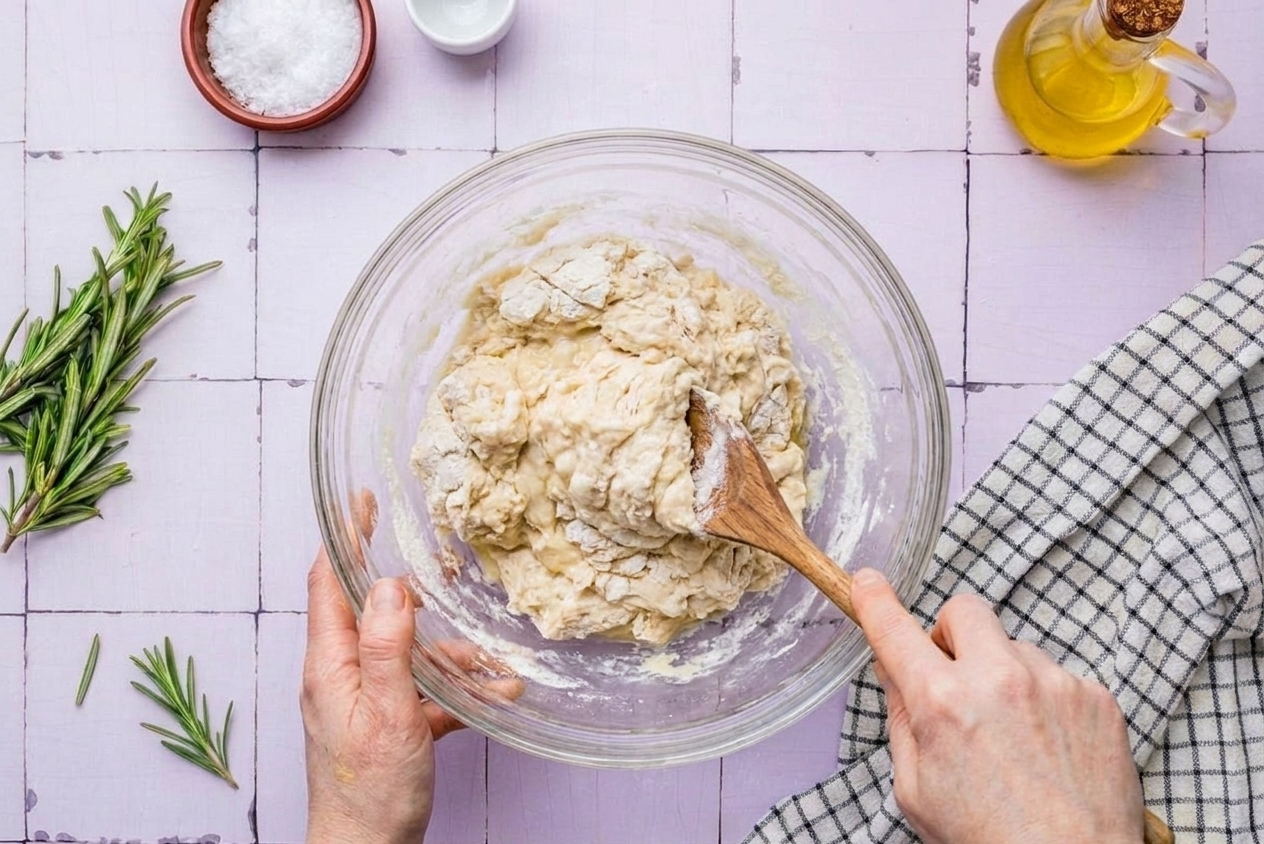
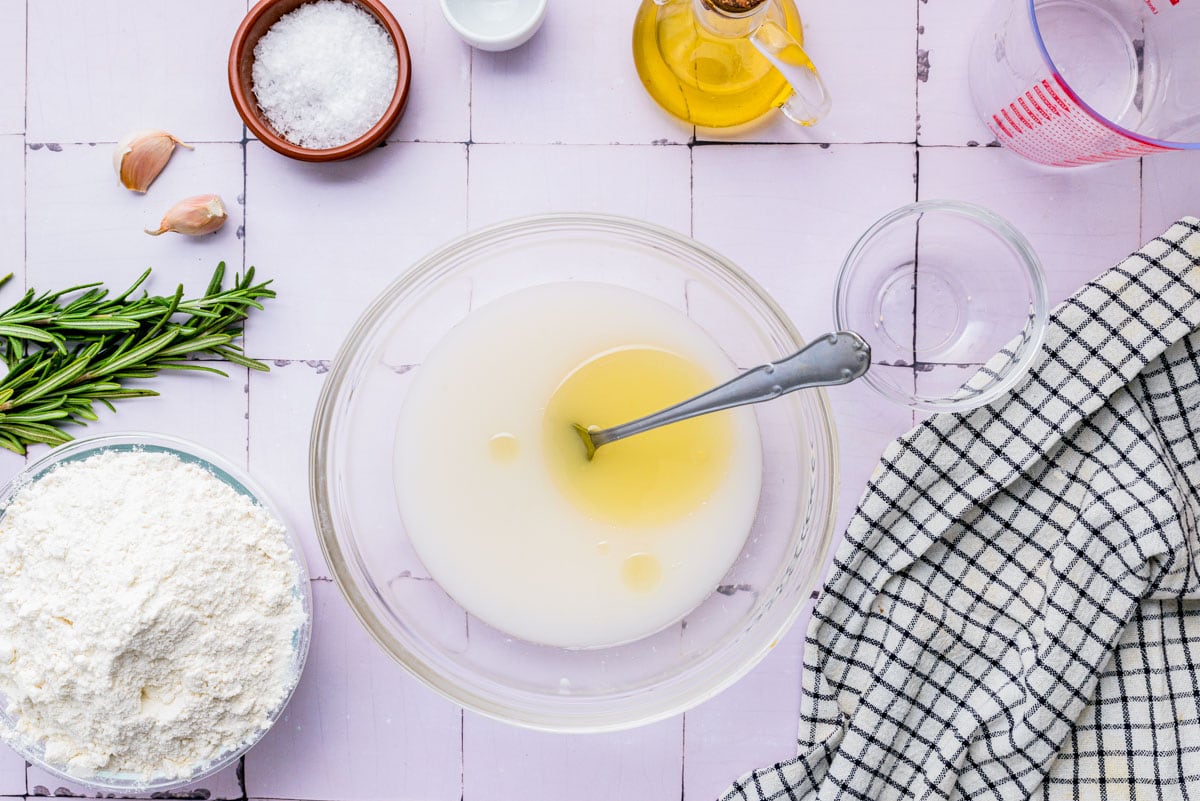
A large bowl with shaggy focaccia dough being stirred with a wooden spoon on a kitchen counter

Why It Works

  • Big olive oil flavor and crisp edges: Baking in a well-oiled pan gives you that signature golden, crunchy bottom.
  • Airy, tender crumb: A high-hydration dough plus a good rise equals those bubbly pockets.
  • Beginner-friendly dough: No kneading marathon. Just mix, optionally fold once or twice, and let time do the heavy lifting.
  • Endlessly customizable: Keep it classic with rosemary, or go full snack mode with tomatoes, olives, or caramelized onions.

Pairs Well With

Storage Tips

Room temp (best for 1 to 2 days): Let the focaccia cool completely, then wrap slices tightly in foil or keep in an airtight container. If the crust softens, re-crisp in a 400°F oven for 5 to 8 minutes.

Refrigerator (up to 4 days): I only do this if my kitchen is very warm. Cool completely first, then store airtight. Reheat in the oven or toaster oven so it does not stay chewy.

Freezer (up to 2 months): Cool completely. Slice, wrap individual pieces in plastic wrap, then stash in a freezer bag. Reheat from frozen at 375°F for 10 to 15 minutes.

Best leftover move: Split and toast for sandwiches, or cube and bake into croutons.

Common Questions

Why is my focaccia dense?

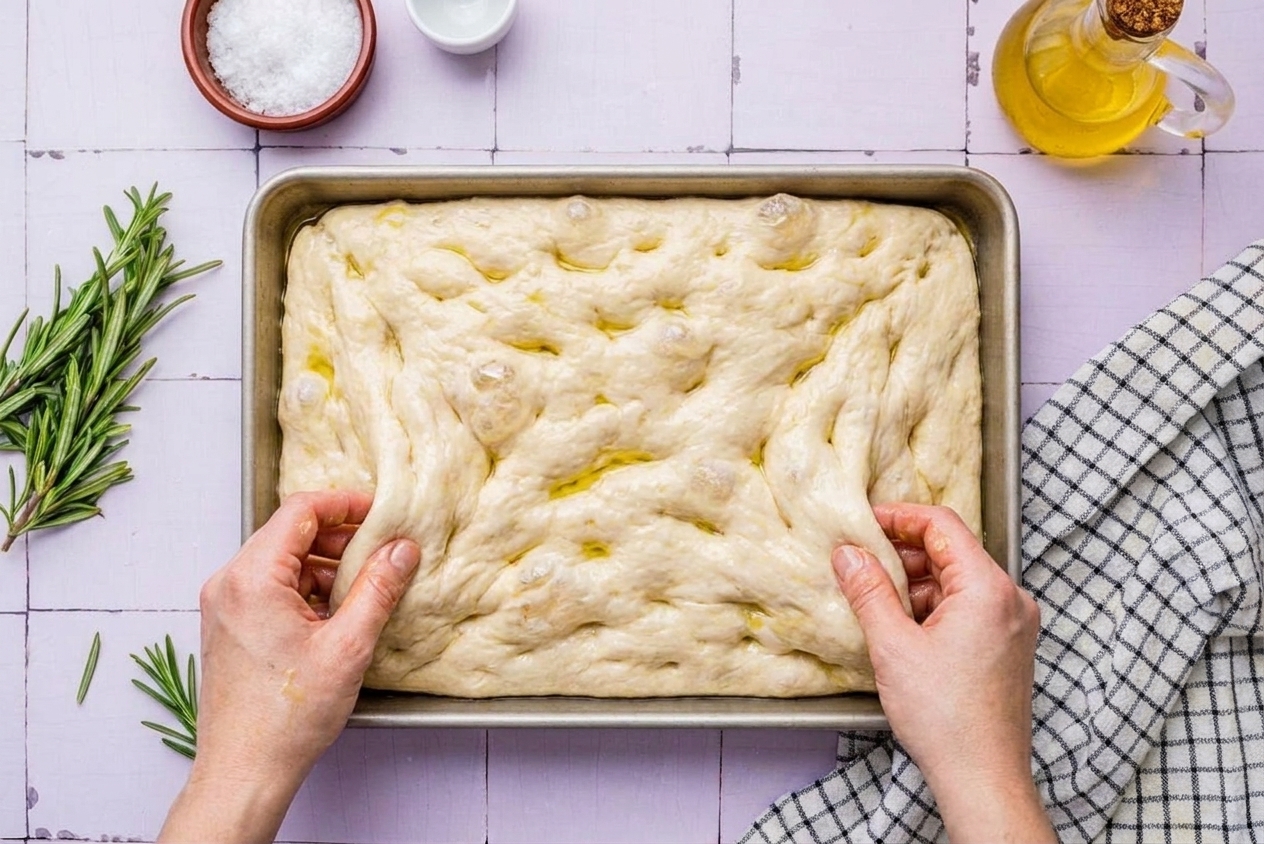
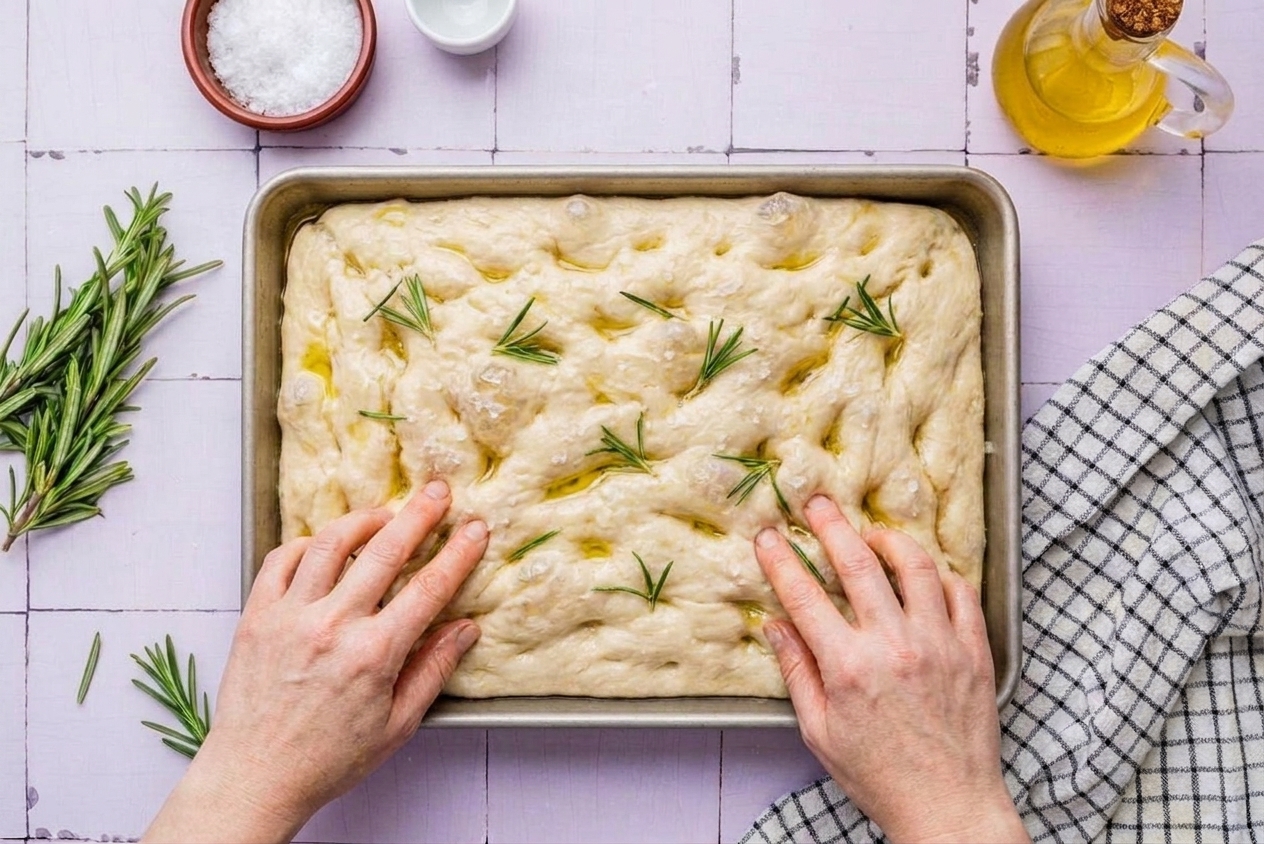
Usually it is under-proofed. The dough should look puffy and jiggly before baking. Also be gentle when dimpling so you do not press out all the air.

Can I make focaccia without a stand mixer?

Yes. This dough is made for a bowl and a spoon. Optional stretch-and-folds during the first rise help strengthen the dough, but you can still get great focaccia without them.

Do I have to use bread flour?

No. All-purpose flour works great here. Bread flour will give a slightly chewier bite, but it is not required.

Can I make the dough ahead?

Absolutely. After the first rise, refrigerate the dough (covered) overnight. Let it come to room temperature for 60 to 90 minutes before stretching into the pan and doing the final proof. The cold rest also deepens the flavor.

What toppings work well?

Rosemary and flaky salt are the classic. You can also add halved cherry tomatoes, thinly sliced onions, olives, roasted garlic, or a sprinkle of grated Parmesan after baking.

I wanted to go to culinary school, but honestly, most of my real learning happened in regular kitchens with regular ingredients and a lot of trial and error. Focaccia is one of those recipes that rewards that energy. You make it once, you learn what “puffy” actually looks like, you taste the difference olive oil makes, and suddenly you are the person bringing bread to dinner like it is no big deal. Spoiler: it is a big deal.