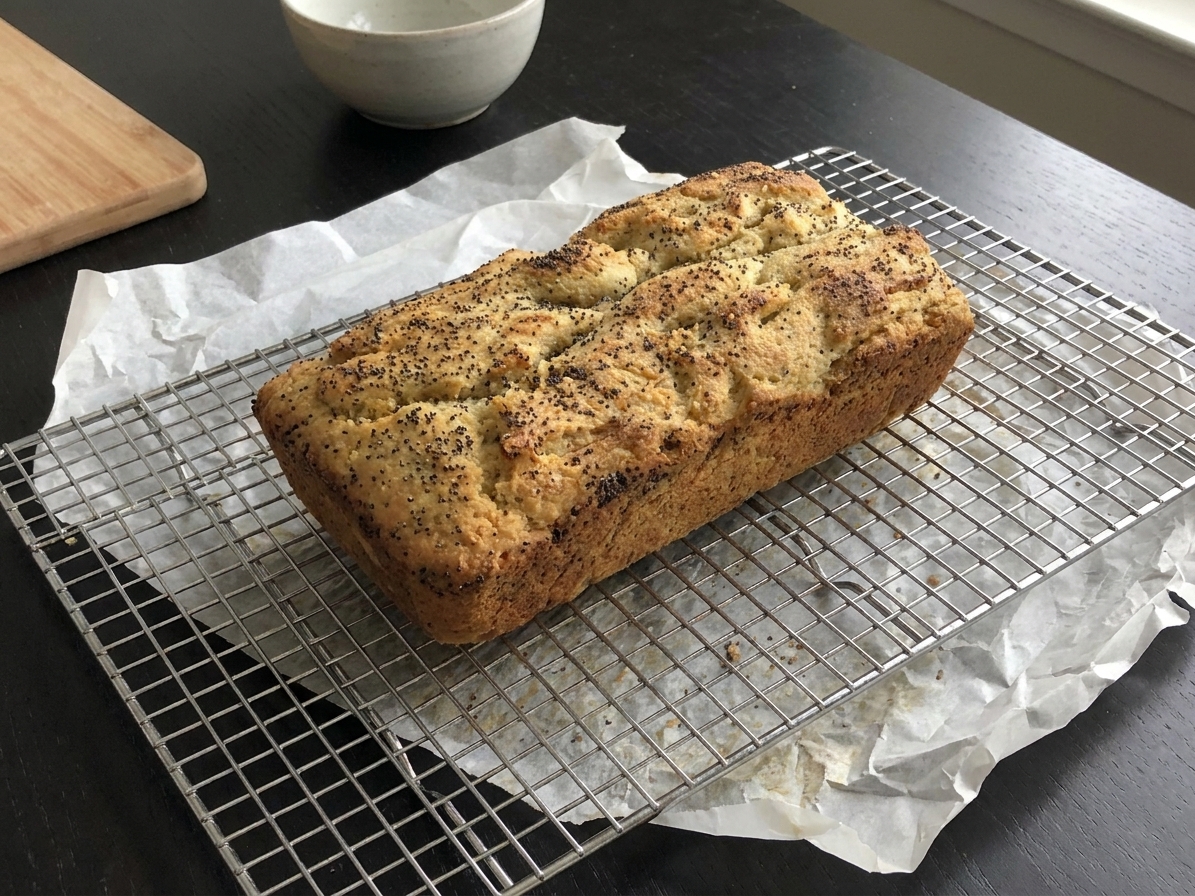
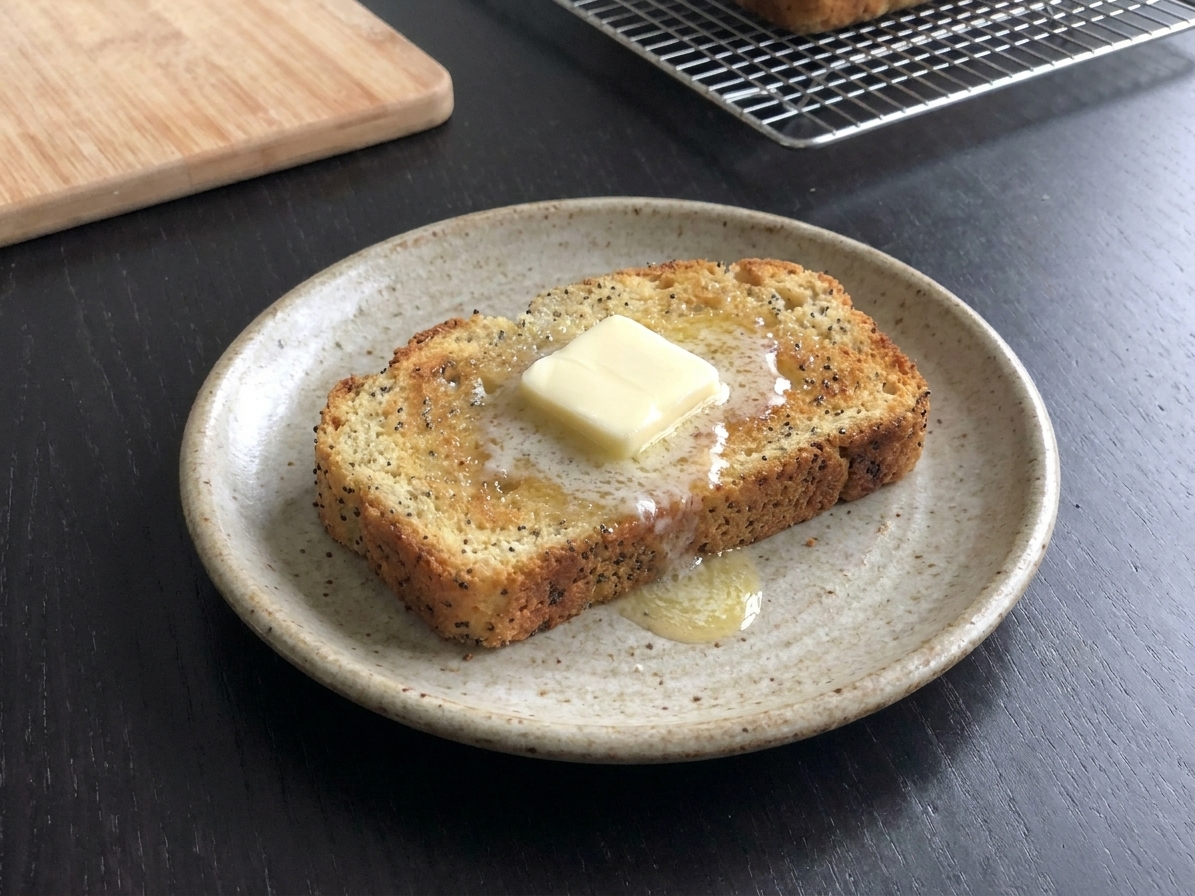
Is this keto?
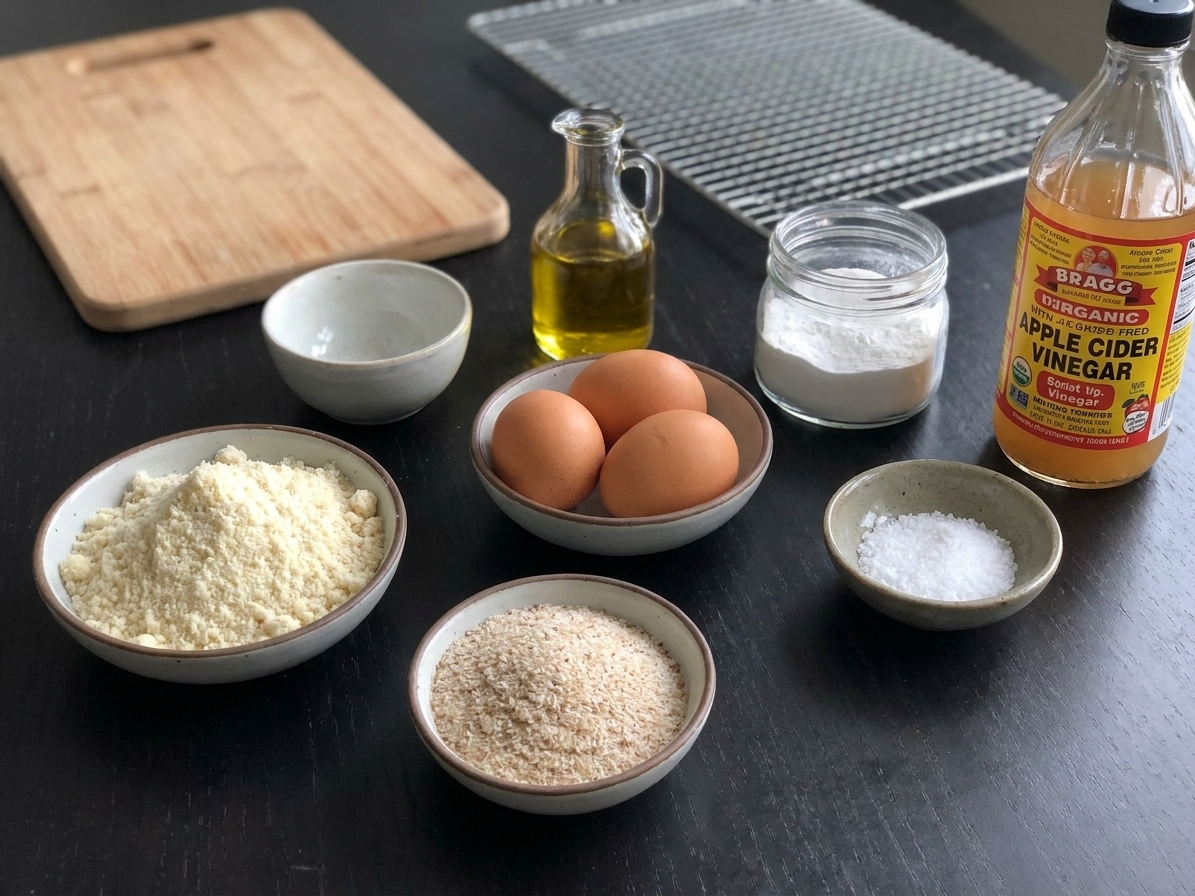
It can be keto-friendly depending on your macros and portion size. Almond flour and psyllium are both low in net carbs, but exact counts vary by brand. If you track strictly, plug your specific ingredients into your calculator.
Do I have to use psyllium husk?
For this style of loaf, yes. Psyllium is doing the heavy lifting for structure and a bread-like bite. Without it, you are in “cakey quick bread” territory.
Whole psyllium husk or powder?
Use whole psyllium husk here. Powder is not a 1:1 swap and can make the loaf dense or gummy. If you only have powder, use a recipe tested specifically for it.
Why did my bread turn purple or gray?
That is often the psyllium. Some brands oxidize and shift color when baked. It is safe, just not cute. Try a different brand labeled blond or light psyllium husk.
Can I make it dairy-free?
This recipe is naturally dairy-free as written. If you add optional toppings like butter, swap in olive oil or dairy-free butter.
Can I use coconut flour instead of almond flour?
Not as a 1:1 swap. Coconut flour is much more absorbent. If you need nut-free, I would use a tested coconut flour loaf instead of forcing this one to behave.
My loaf is gummy in the middle. What happened?
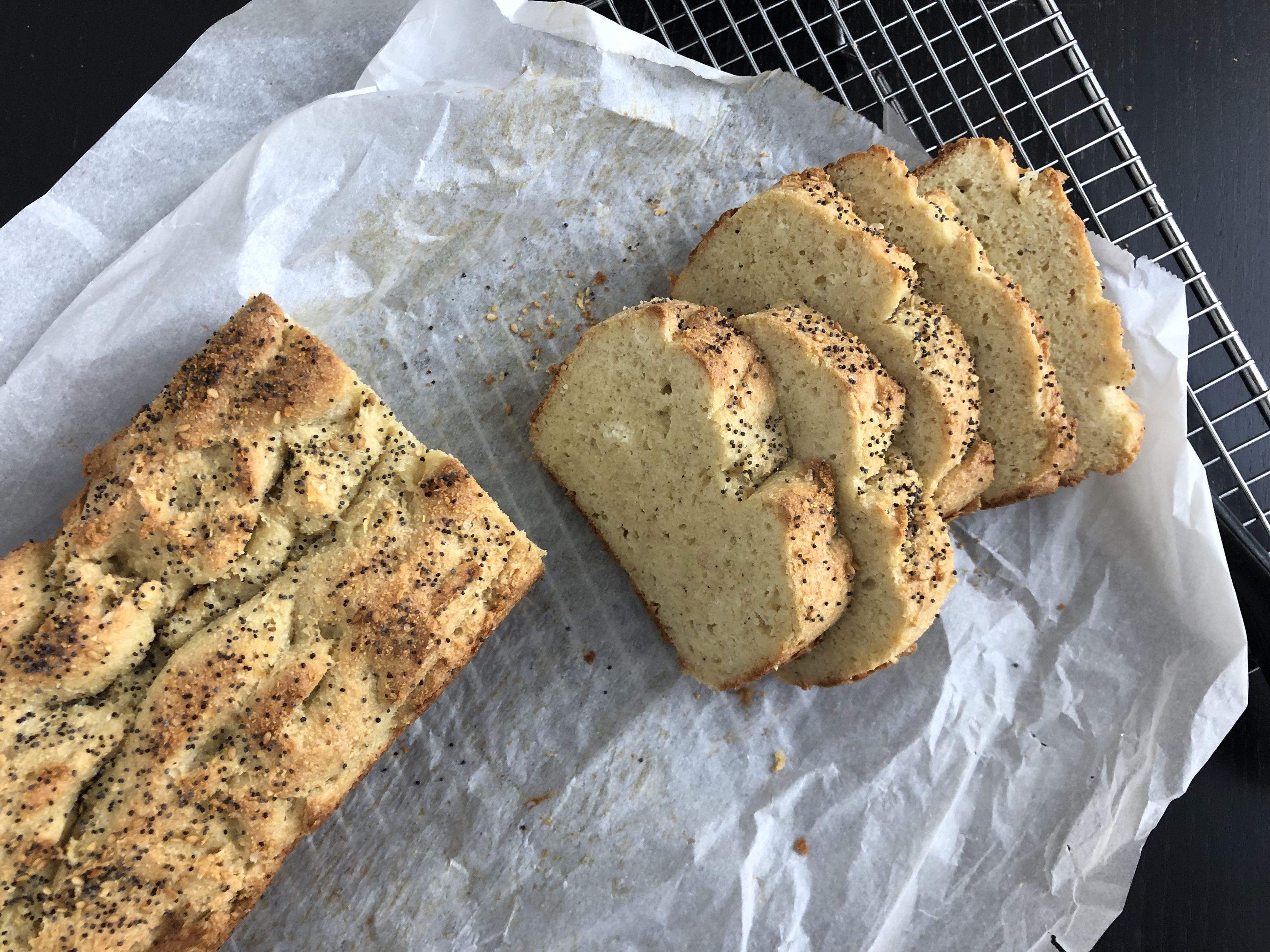
Usually one of these: it needed more bake time, it was sliced before fully cooling, or the oven runs cool. Let it cool completely, then toast slices. Next time, add 5 to 10 minutes of baking and use an instant-read thermometer if you have one. Aim for around 200°F in the center, plus cues like a firm top and a crumb that is not wet.
What pan size works best?
An 8.5 x 4.5-inch pan gives you a taller loaf. If you use a 9 x 5-inch pan, the loaf will be a bit shorter and may bake a little faster. Start checking around 45 to 50 minutes.