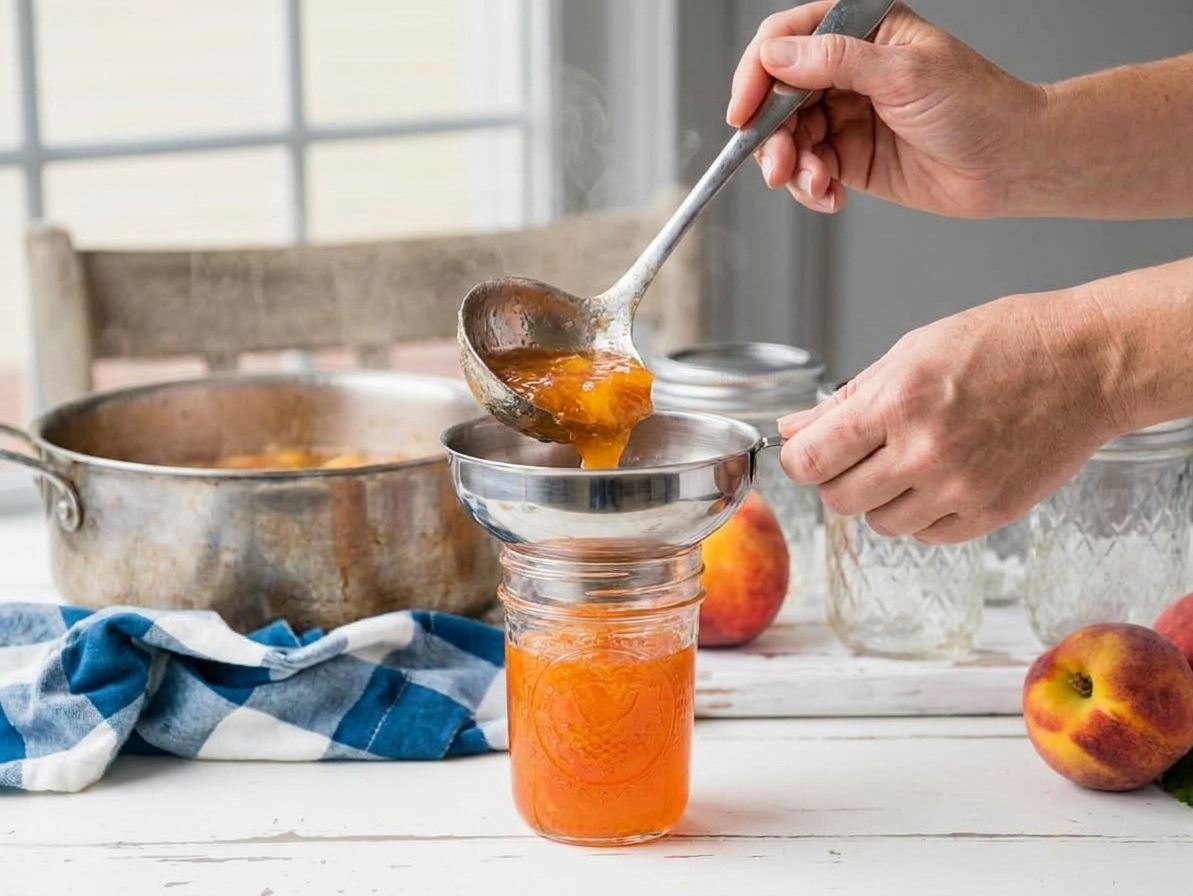
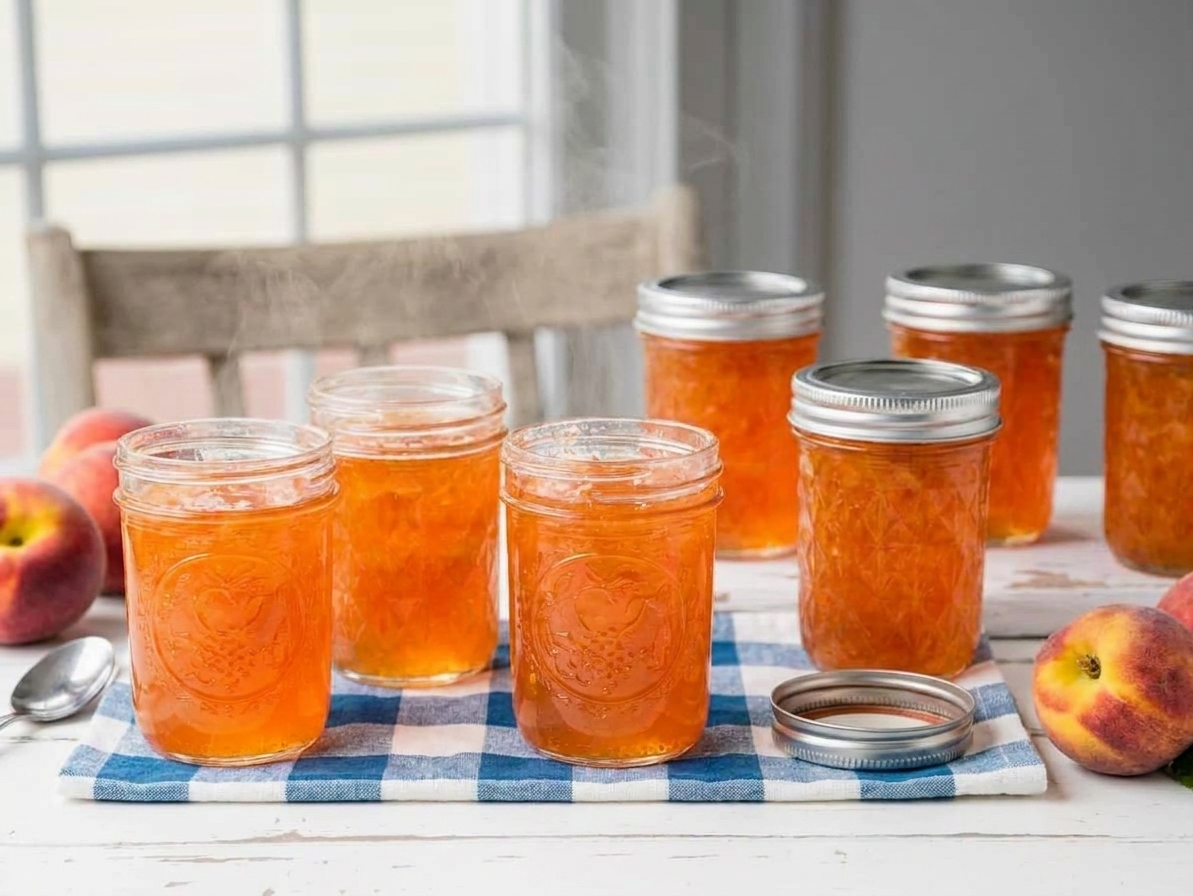
Common Questions
Why is my peach jelly not setting?
Most of the time it is one of these:
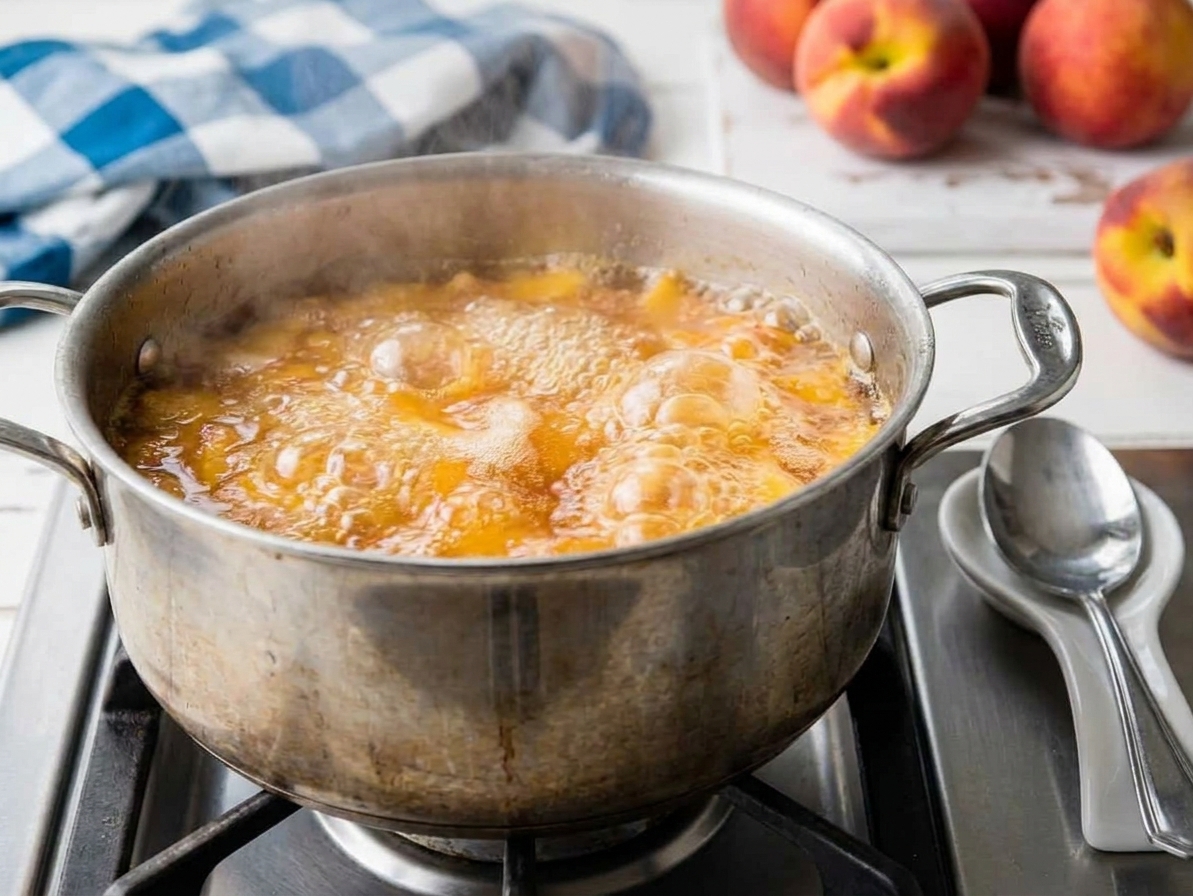
- Not a full rolling boil. You need a boil that does not stop bubbling when you stir.
- Measurement drift. Jelly is picky. Measure the juice, sugar, and lemon juice accurately.
- Old pectin or the wrong type. Pectin loses strength over time. Also make sure you are using regular powdered pectin, not low-sugar pectin unless you are following that specific recipe.
- Boil issues after adding sugar. Underboiling is the most common problem. Overboiling can also change texture and flavor, making it too firm or a little caramel-y.
If it is still loose after 24 to 48 hours, you can re-cook it. See the next question.
Can I reprocess jelly that did not set?
Yes, but pectin brands vary, so use your pectin package “remake” directions when available.
If you do not have brand directions, here is a common remake method: for each 4 cups jelly, whisk 2 tablespoons sugar with 1 tablespoon regular powdered pectin. Bring the jelly to a rolling boil, whisk in the pectin mixture, then boil hard for 1 minute, stirring constantly. Jar again.
Do I need to peel peaches?
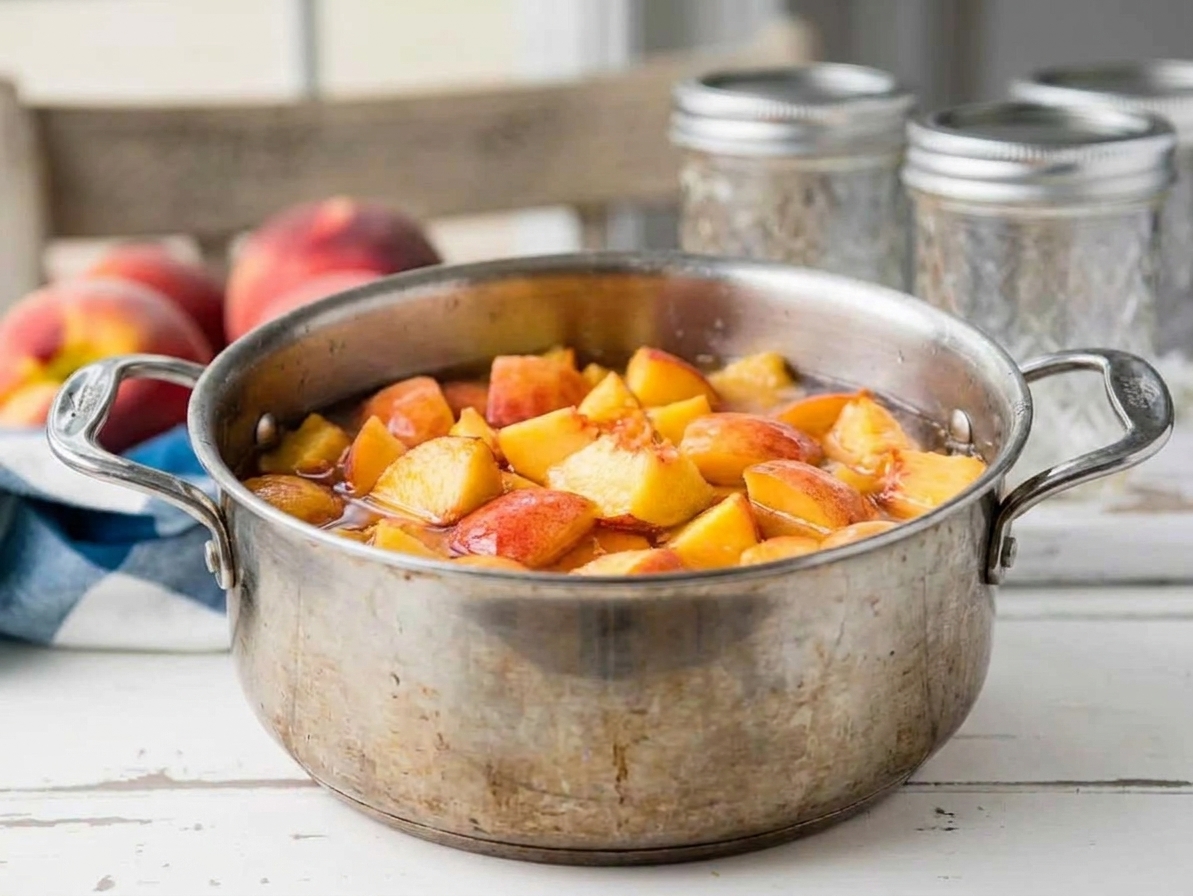
No. Since we are extracting juice, you can leave skins on. Just wash the peaches well.
Can I use bottled peach juice?
You can, but the flavor is usually flatter and sweeter. If you go that route, choose 100% peach juice with no added sweeteners if possible.
Is this the same as peach jam or peach preserves?
Not quite. Jelly is made from juice and is smooth. Jam uses crushed fruit. Preserves have larger pieces of fruit.
How do I reduce foam on top?
Skim it off with a spoon, or stir in 1/2 teaspoon butter after boiling. It helps the foam settle down.
Do I have to can it?
Nope. You can refrigerate it and eat it within a few weeks, or freeze it for longer storage.
Is the canning time tested?
This recipe follows a standard high-sugar, added-pectin jelly method, but canning guidance can vary by pectin brand, jar size, and altitude. For the safest results, follow your pectin package instructions and current USDA/NCHFP water-bath canning guidance, including altitude adjustments.