How do I know when custard pie is done?
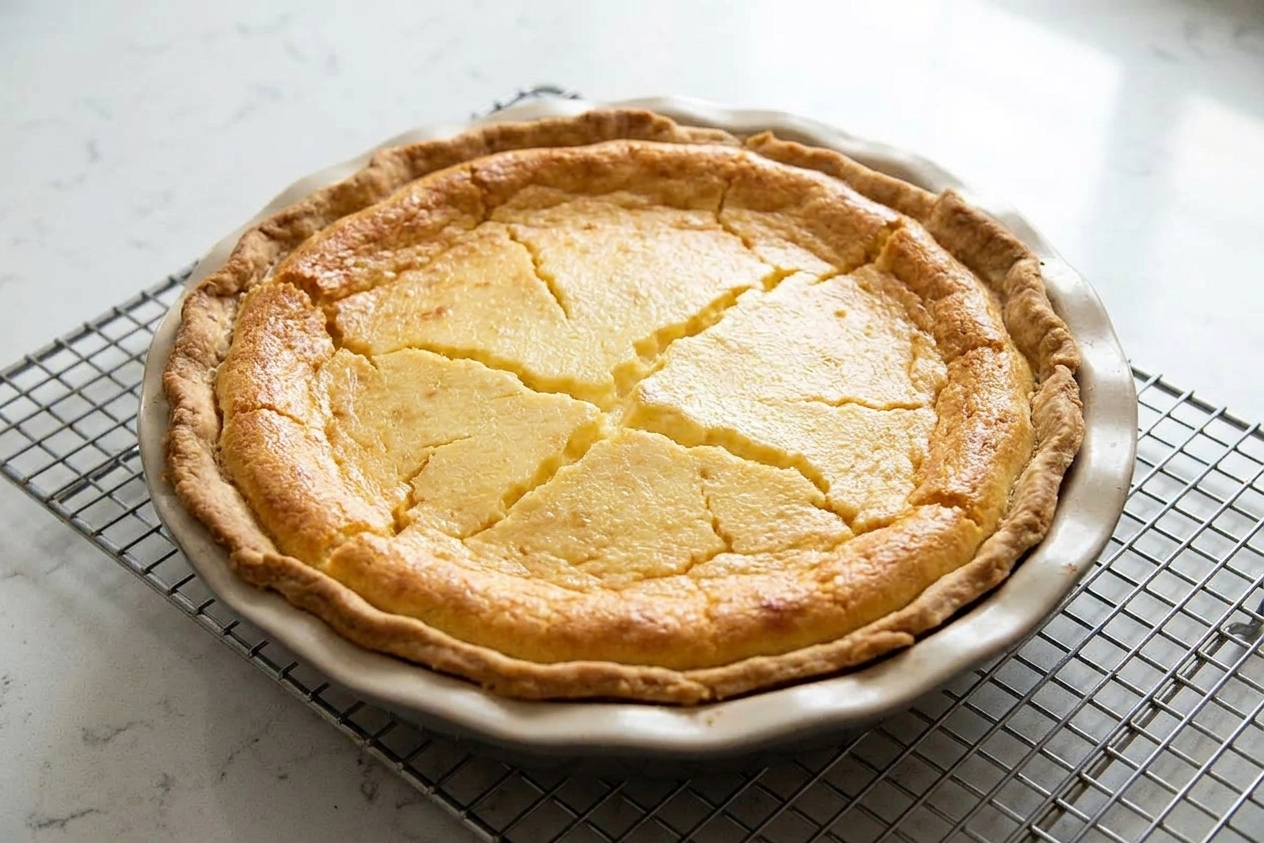
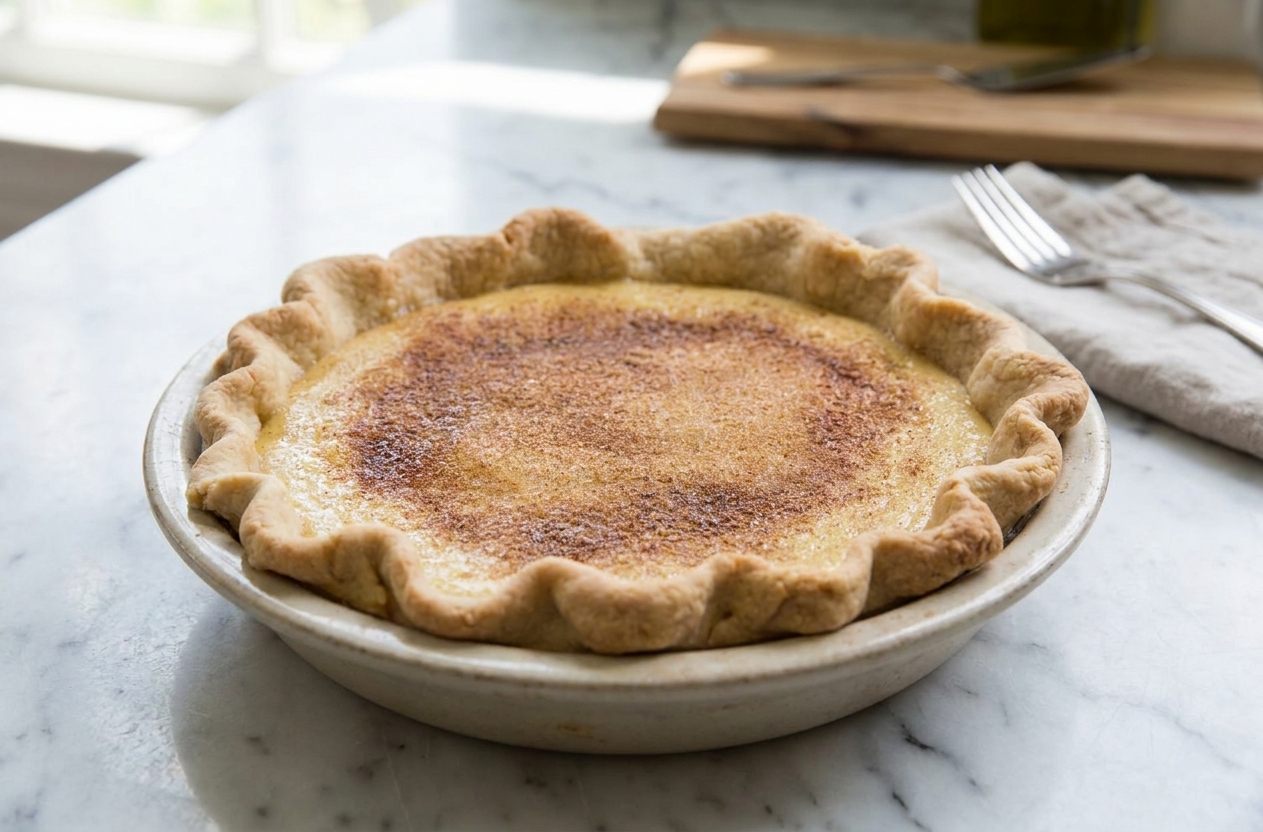
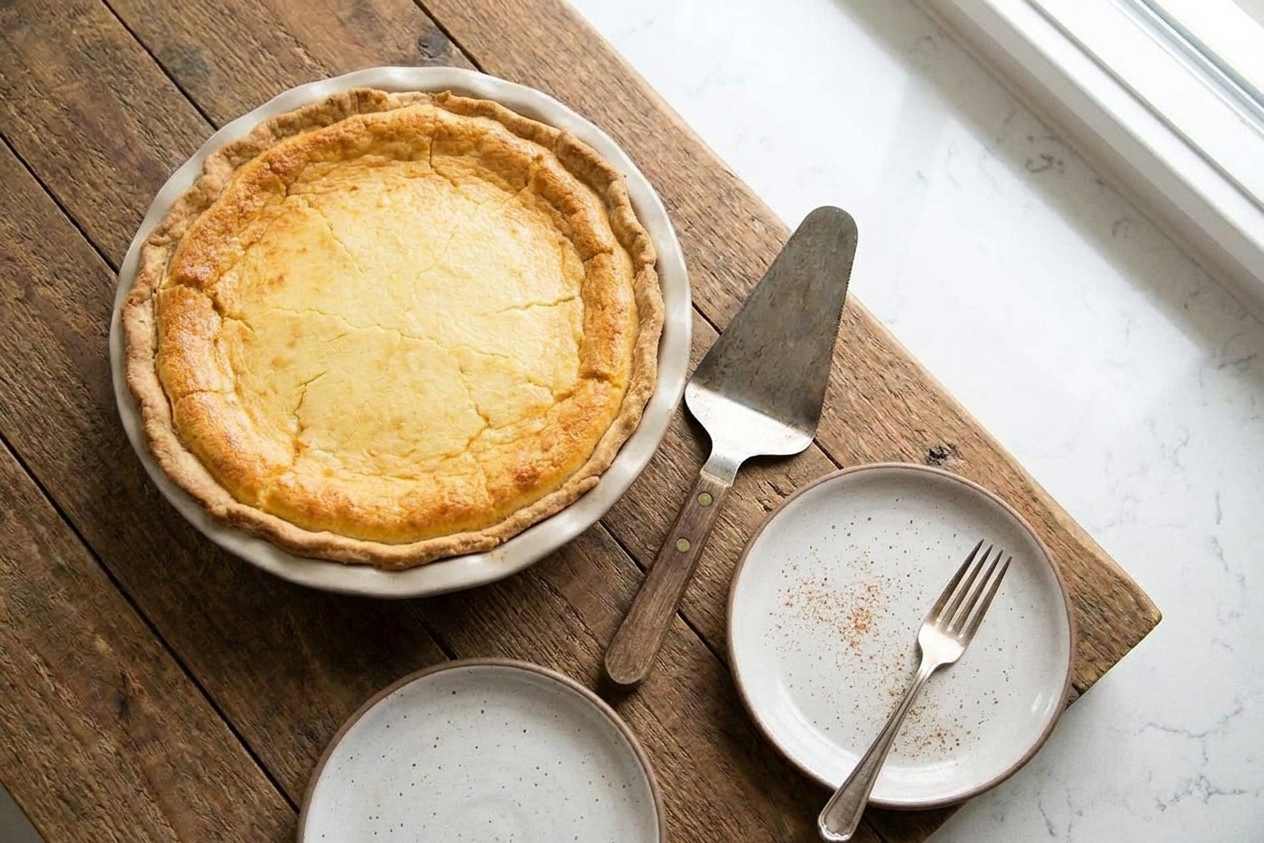
Look for set edges and a 2 to 3 inch center that still jiggles when you nudge the pan. If the whole pie sloshes, it needs more time. If it is puffed and cracking, it is past ideal. Custard keeps cooking from residual heat as it cools. Optional accuracy tool: the center will usually read around 175 to 180°F on an instant-read thermometer.
Why did my custard crack on top?
Usually it is overbaking or baking at too high a temperature. Pull it earlier (slight wobble) and cool it gradually. Also avoid whisking in lots of air, which can contribute to puffing and cracking.
Why is my custard watery?
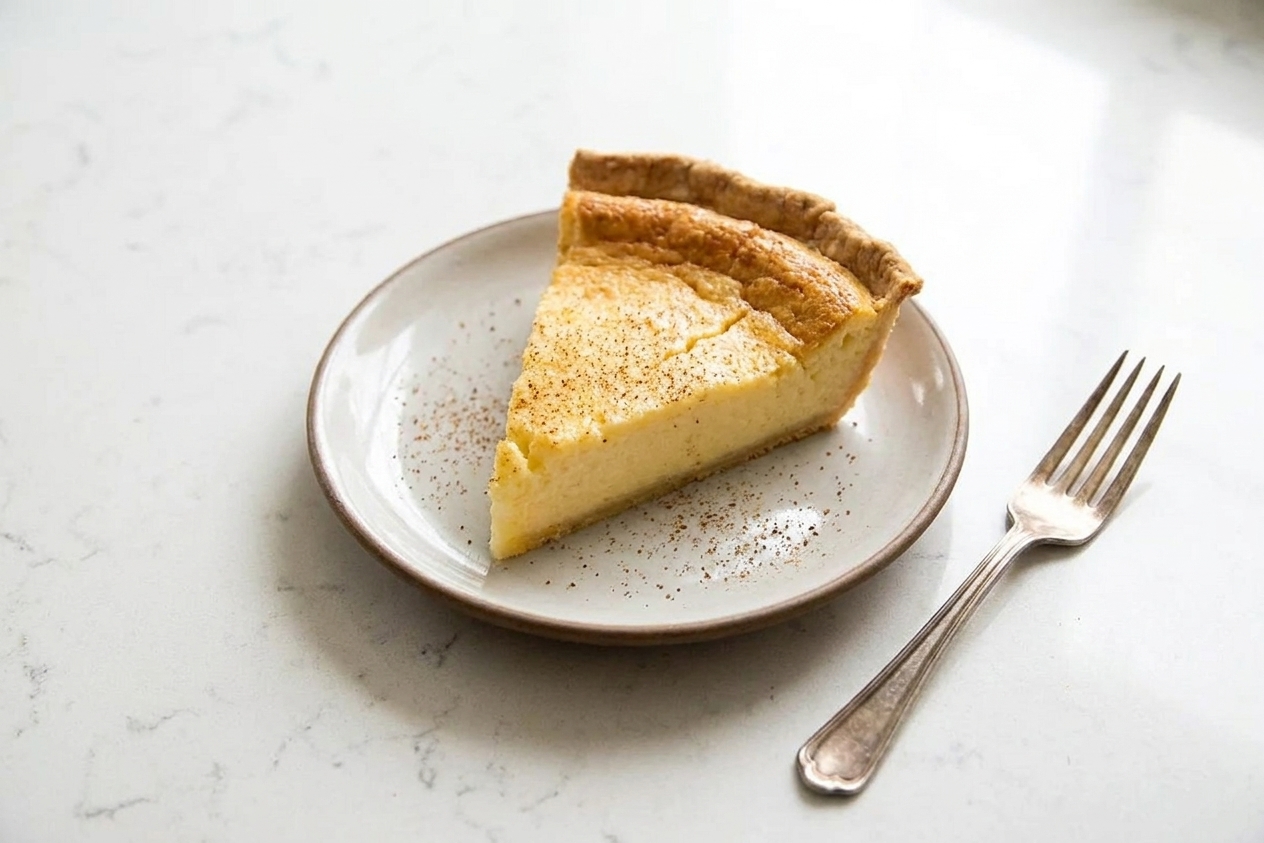
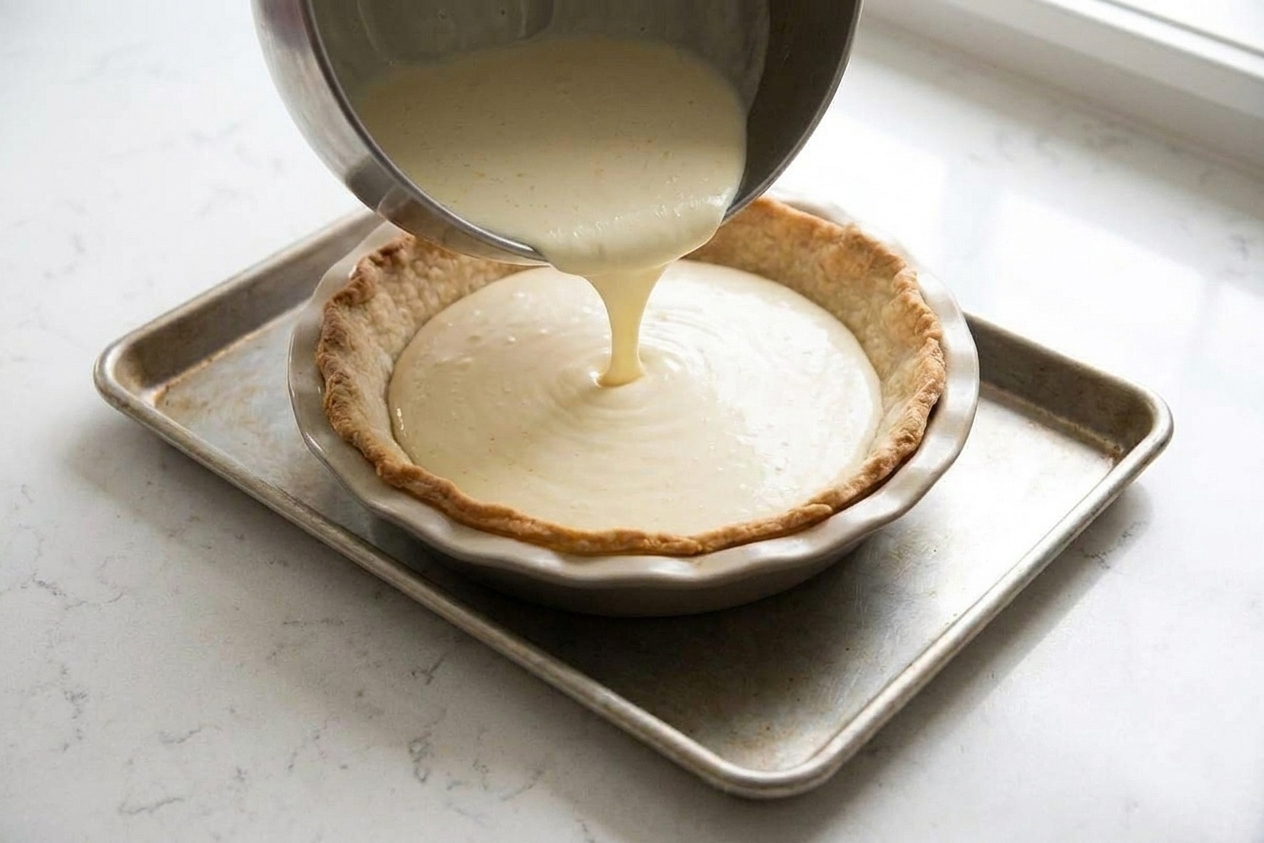
Common culprits: underbaking, slicing while still warm, or using low-fat milk. Give it a full chill to set. Whole milk (or half-and-half) helps the custard hold a creamy, stable texture.
Can I use a store-bought crust?
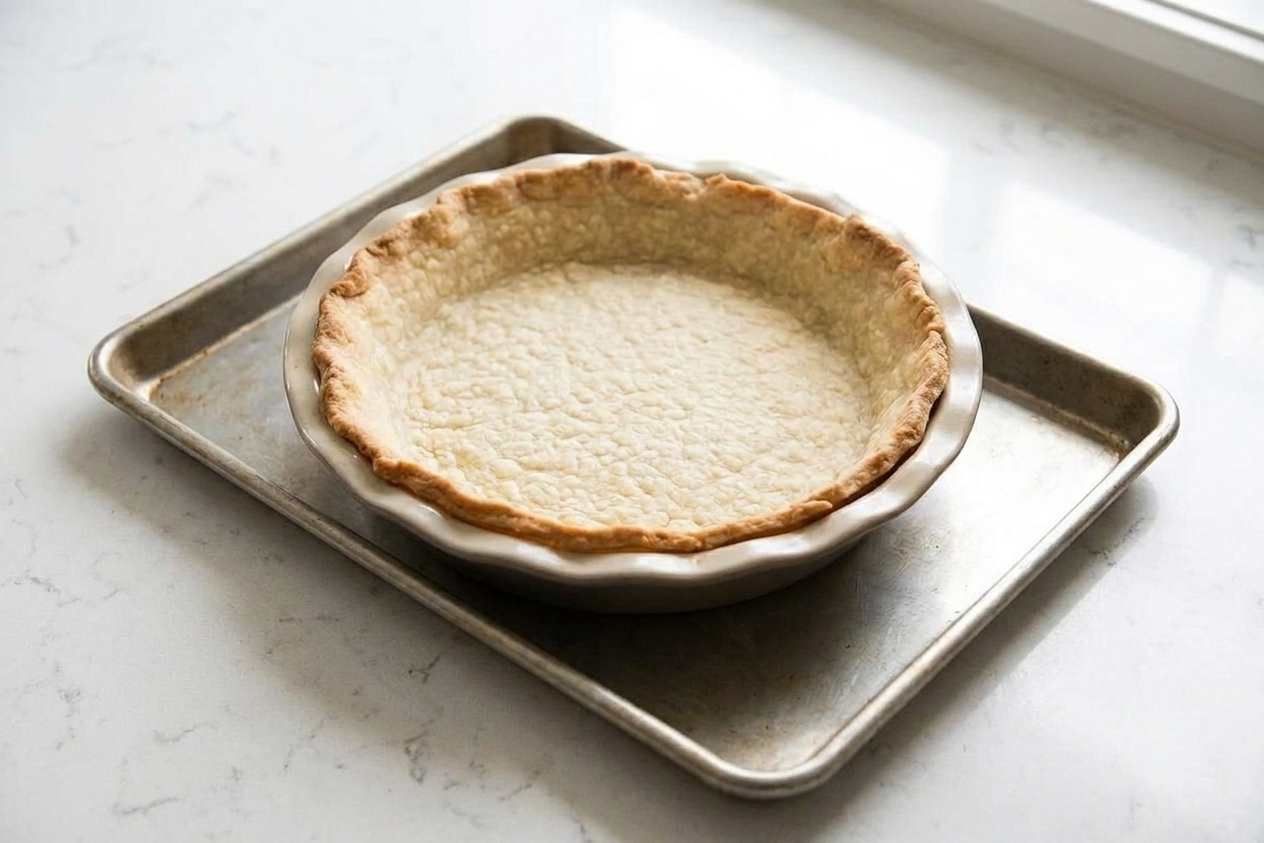
Absolutely. This is a low-drama win. Use a standard 9-inch crust (not deep-dish, unless you scale the filling). Still par-bake it so the bottom stays crisp.
Can I make it without nutmeg?
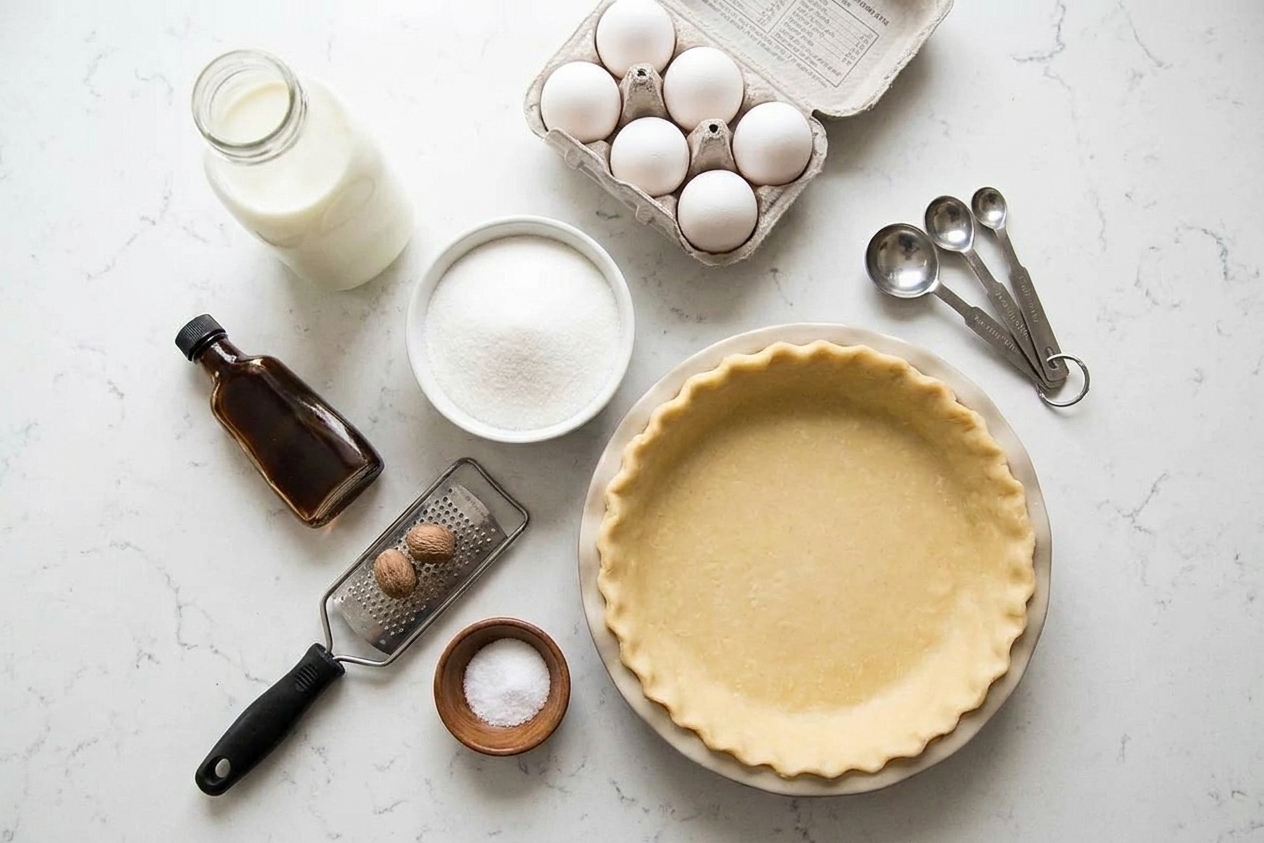
Yes. Nutmeg is classic, but you can swap in cinnamon, or do a lighter touch with grated orange zest. If you skip spice entirely, add a tiny bit more vanilla and a pinch more salt to keep the flavor from tasting flat.
Can I swap the milk?
Yes. Half-and-half makes it richer. Whole milk is the sweet spot. I do not recommend nonfat milk, since the custard can set thinner and taste less rounded.
Can I reduce the sugar?
You can nudge it down a bit (try 2 to 3 tablespoons less) without breaking the set, but going too low can make the custard taste more egg-forward.