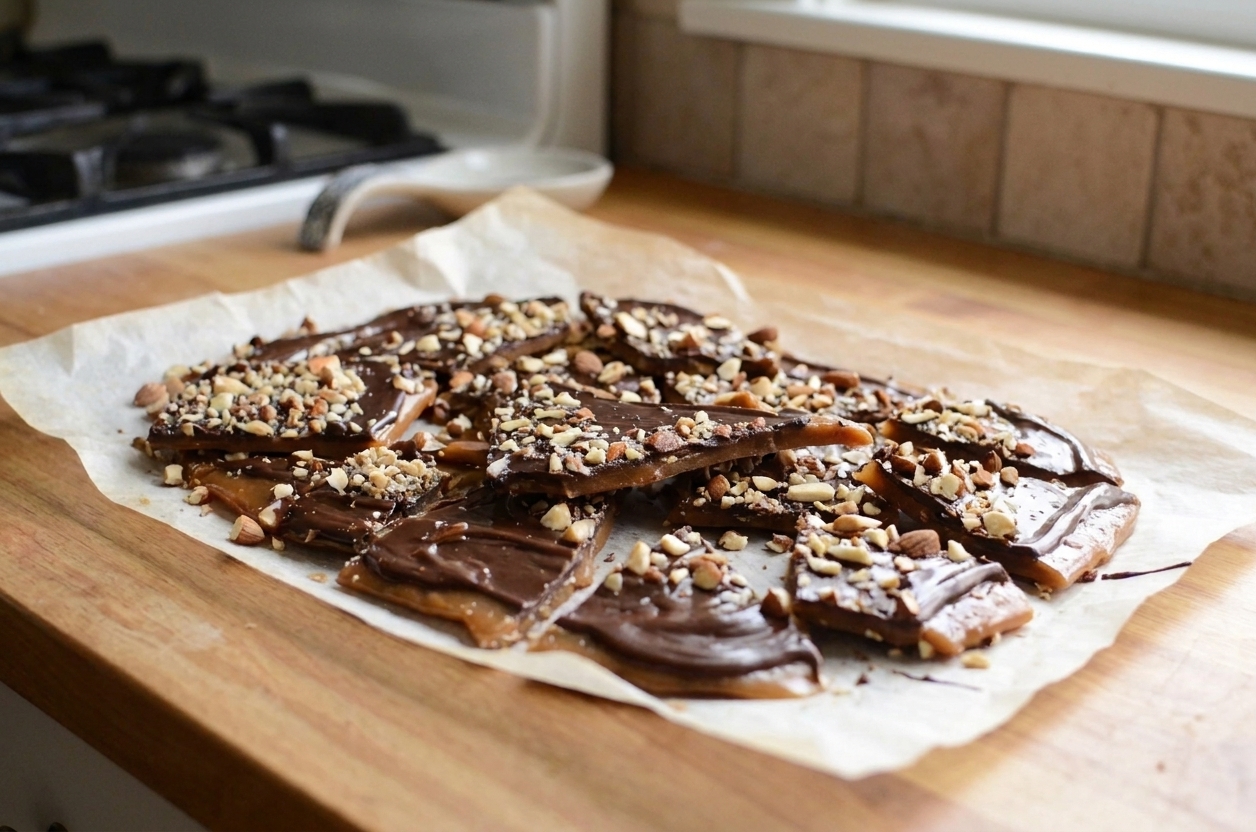
Is English toffee the same as American toffee?
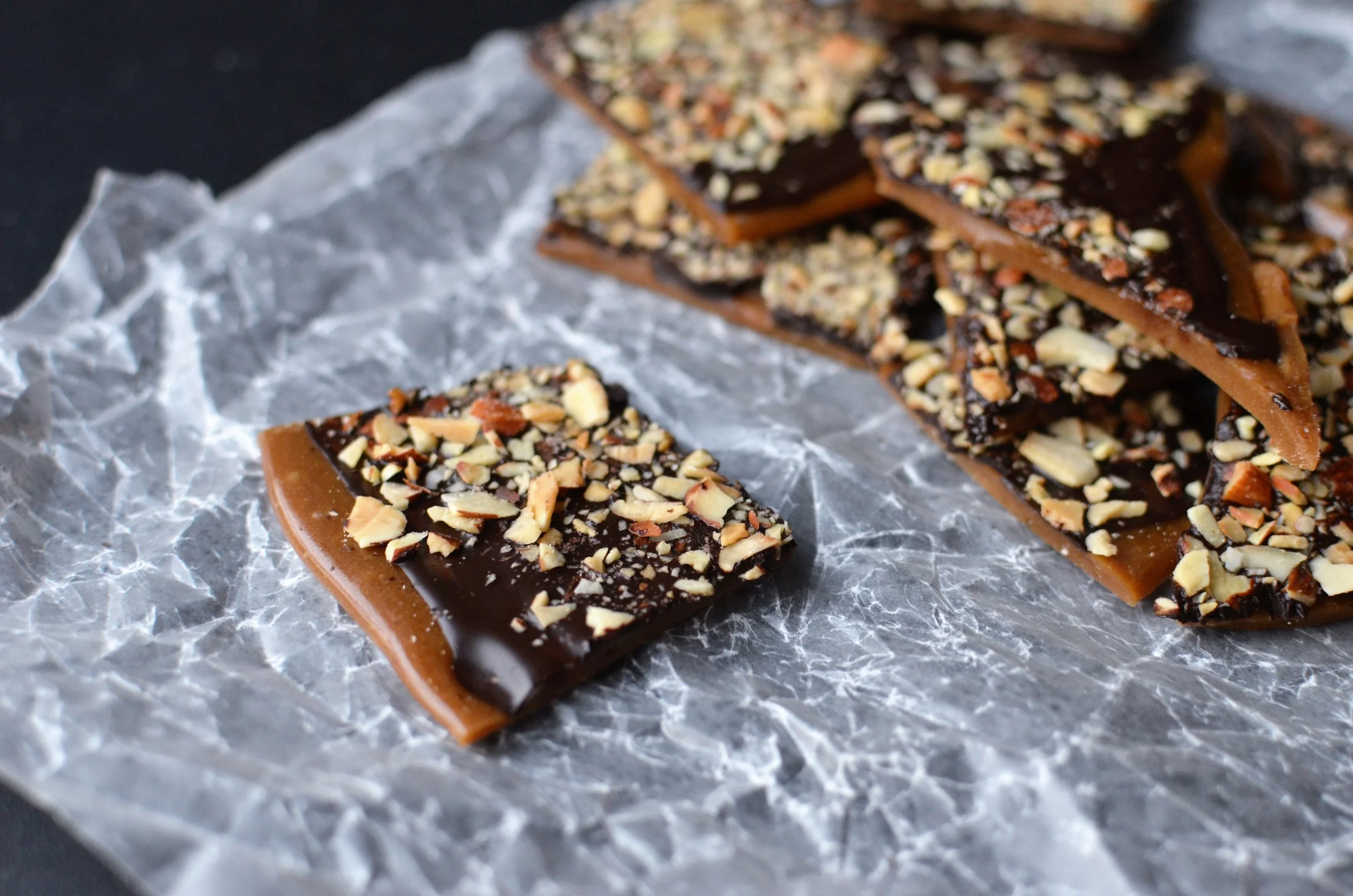
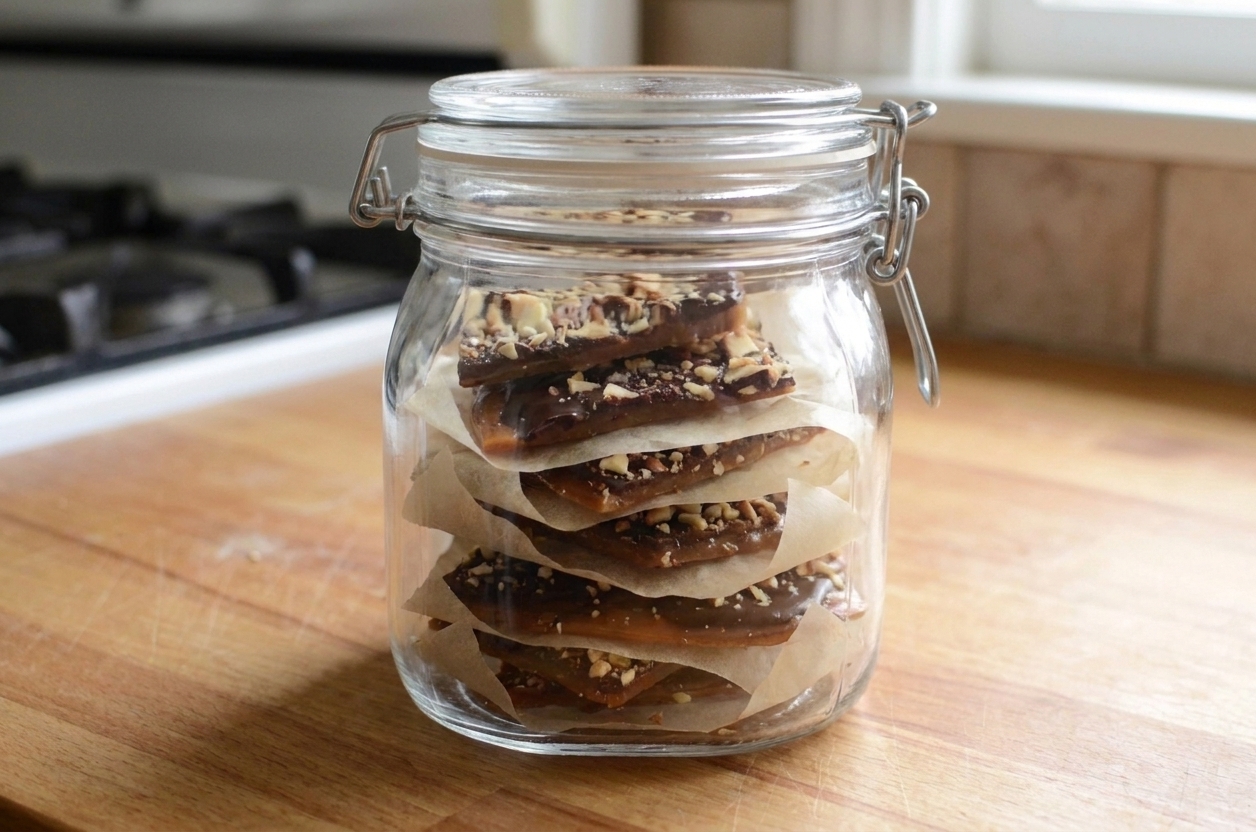
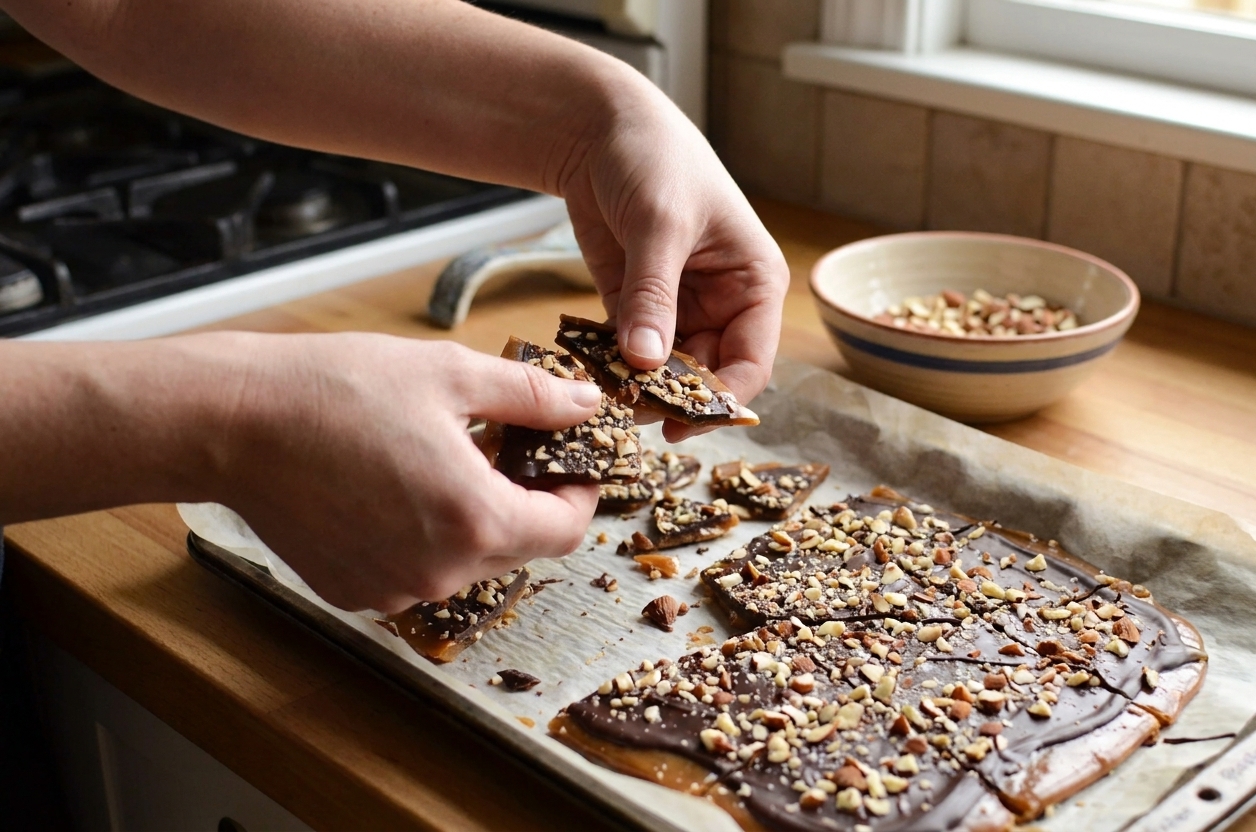
They are very similar. “English toffee” usually points to a butter-forward, hard-crack toffee that is often topped with chocolate and nuts. The important part is cooking it to the right temperature for that crisp snap.
Do I need a candy thermometer?
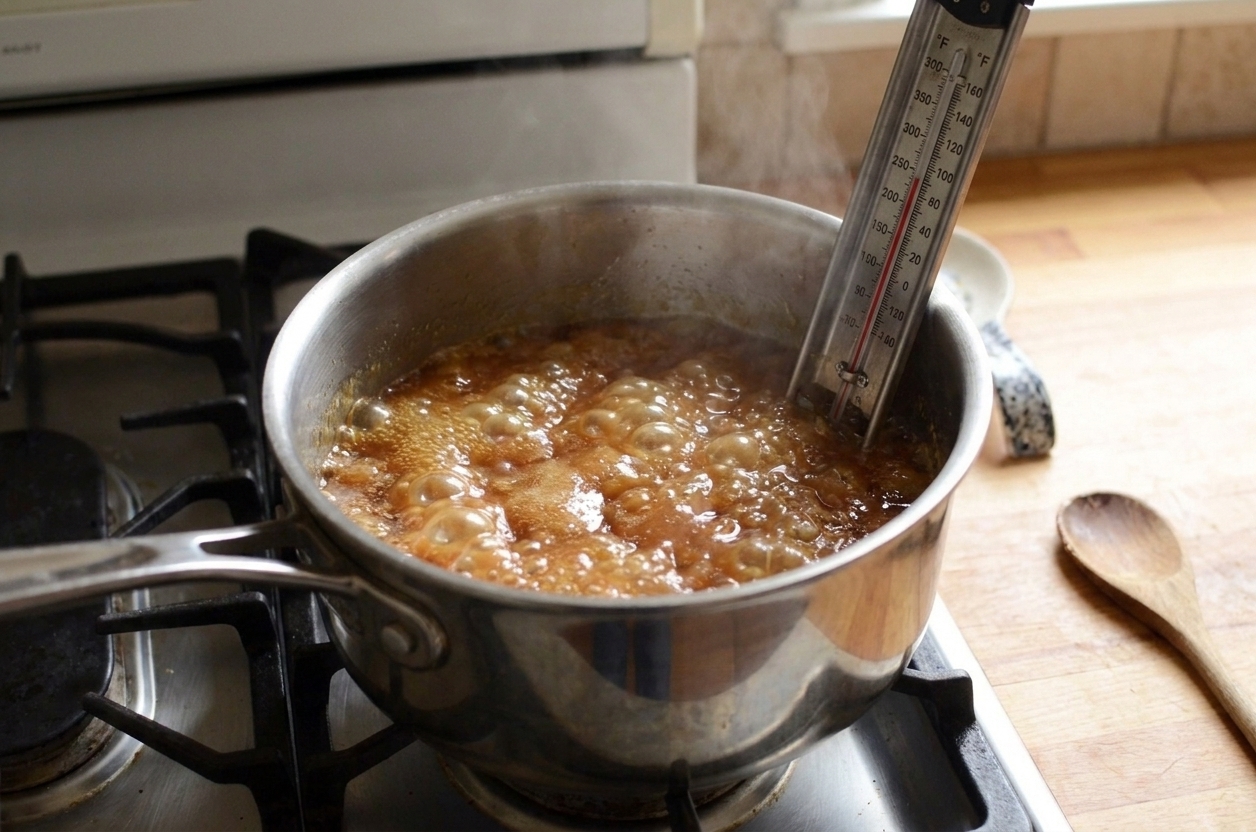
It is strongly recommended. Toffee is a temperature game. If you do not have one, you can use the cold water test: drip a little syrup into cold water and it should form brittle threads that snap (hard crack). Still, a thermometer makes this feel way less like a science fair.
Why did my toffee turn grainy?
Graininess usually comes from sugar crystals forming. Common causes are stirring too aggressively early on, sugar stuck to the sides of the pan, or sudden temperature shifts. Use a wet pastry brush to wash down the sides early, then keep stirring gentle and steady as it thickens.
Why did my butter separate?
Separation can happen if the mixture heats too fast, if the pan is thin, or if it is stirred inconsistently. A heavy pan, medium heat, and steady stirring help a lot. If you see a greasy layer forming, try whisking vigorously for 10 to 20 seconds to bring it back together.
Can I make it without nuts?
Absolutely. Skip them entirely or swap in toasted seeds (like pepitas) if you want crunch. If nut-free for allergies, double check your chocolate too.
What chocolate works best?
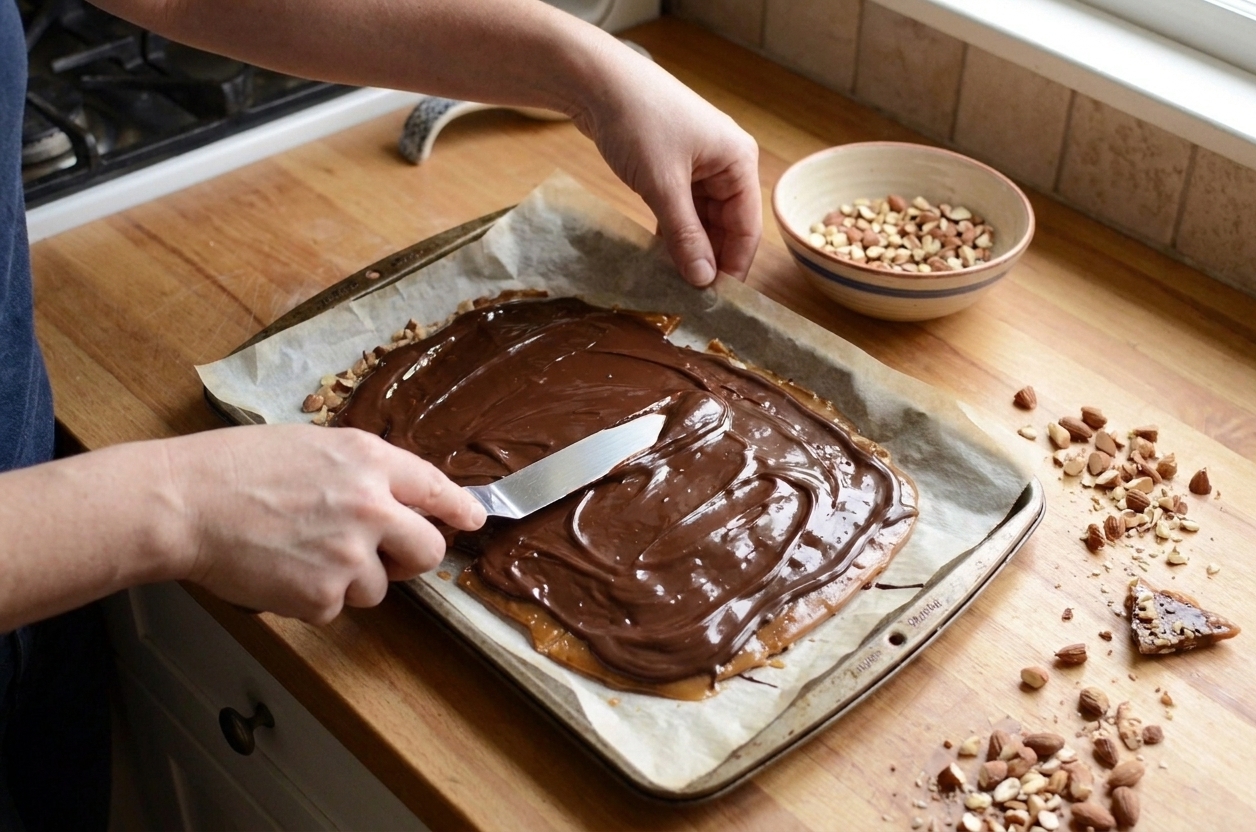
Semisweet is classic. Dark chocolate makes it extra grown-up. Milk chocolate makes it sweeter and a little softer. Use chips or chopped bars, just pick something you like eating straight from the bag because you will.
How do I toast the nuts?
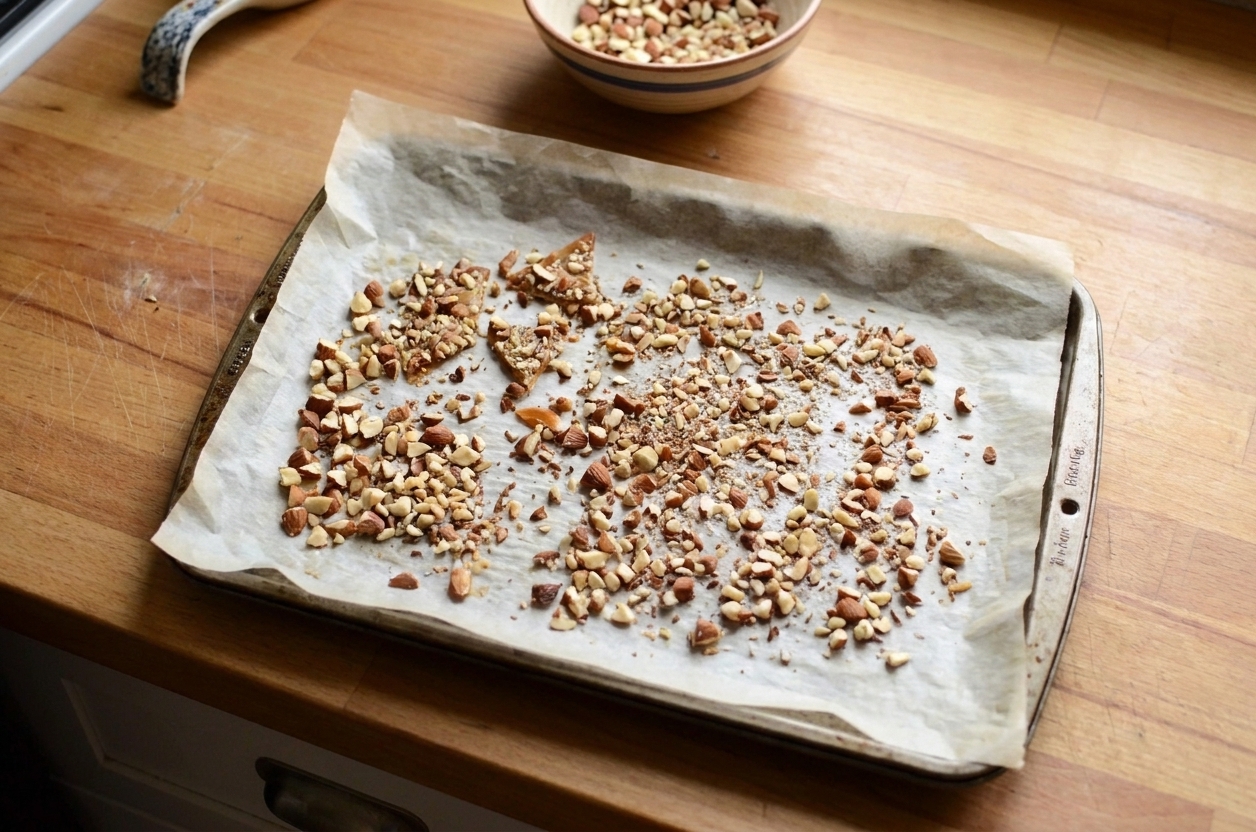
Spread nuts on a sheet pan and toast at 350°F for 6 to 10 minutes, stirring once, until fragrant. Cool completely, then chop (warm nuts are harder to chop neatly and can get oily).