Mom's Best Recipes
Recipe

Filipino Chicken Adobo

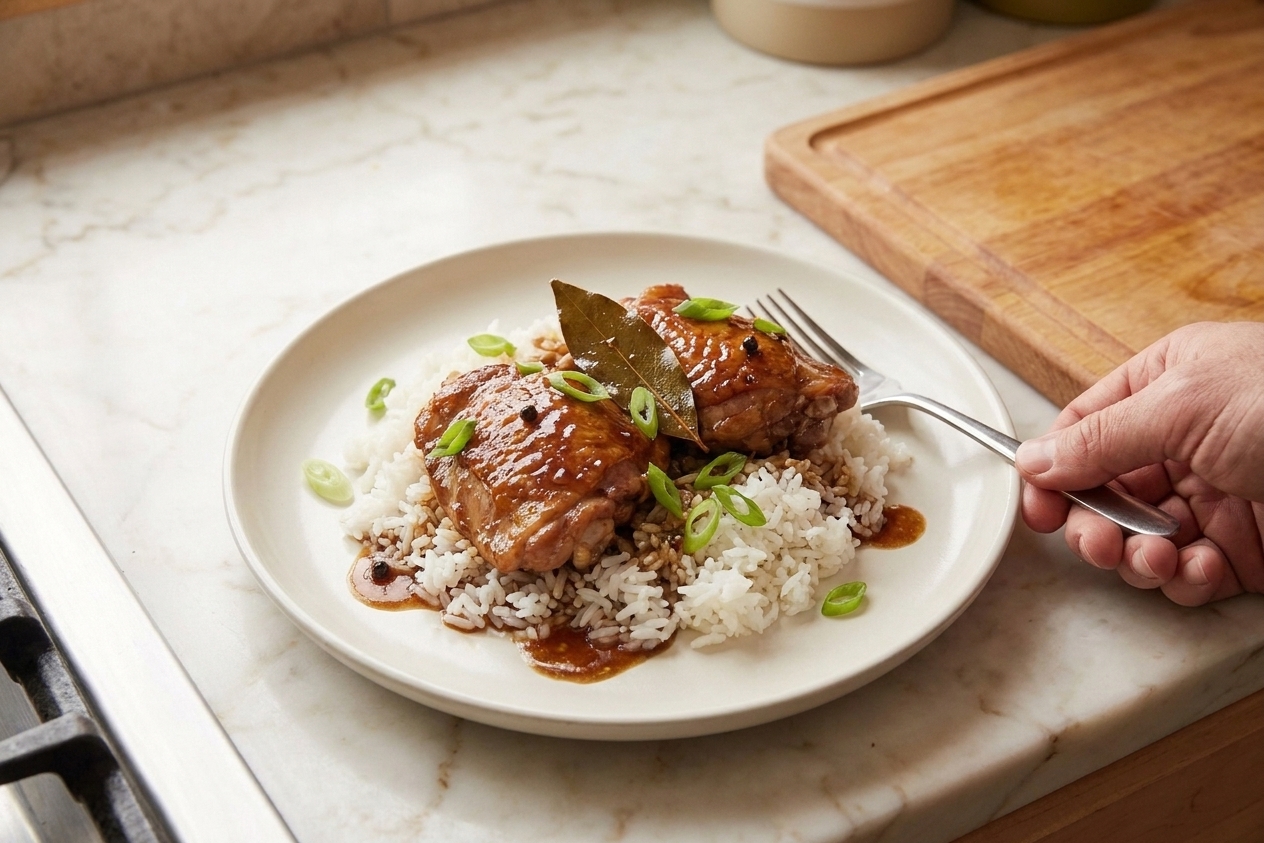
Garlicky chicken braised in soy sauce and vinegar until tender, then simmered into a glossy, punchy sauce made for rice.

Author By Matt Campbell
4.8
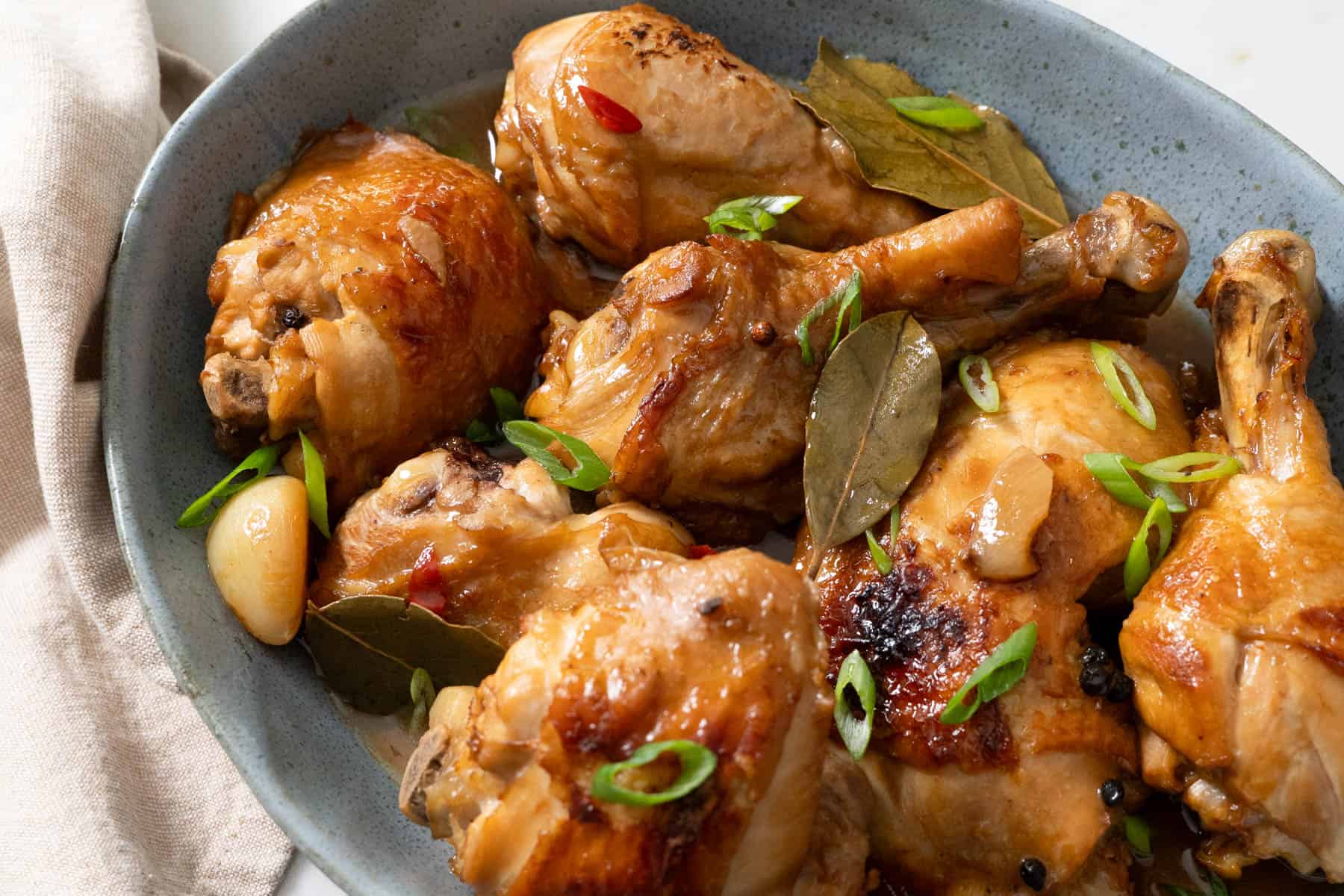
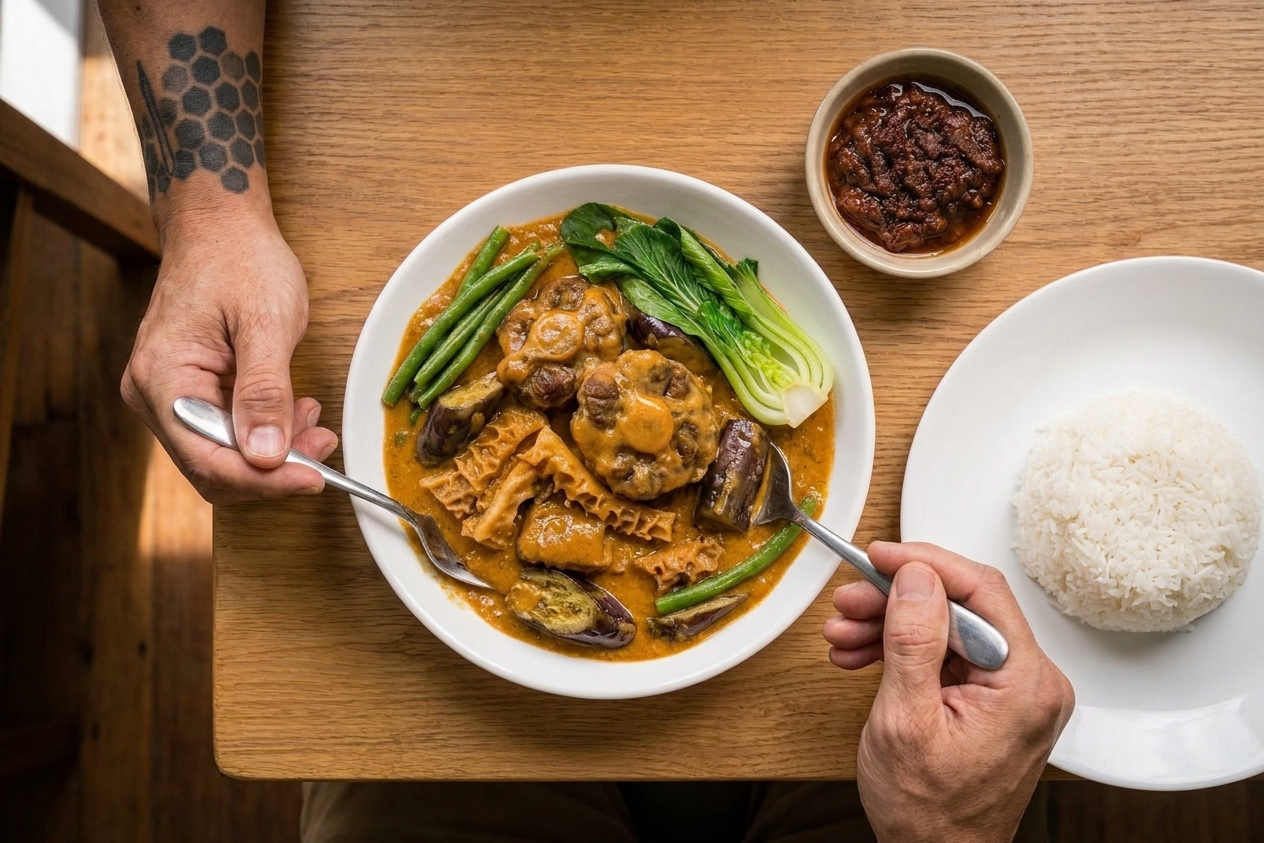
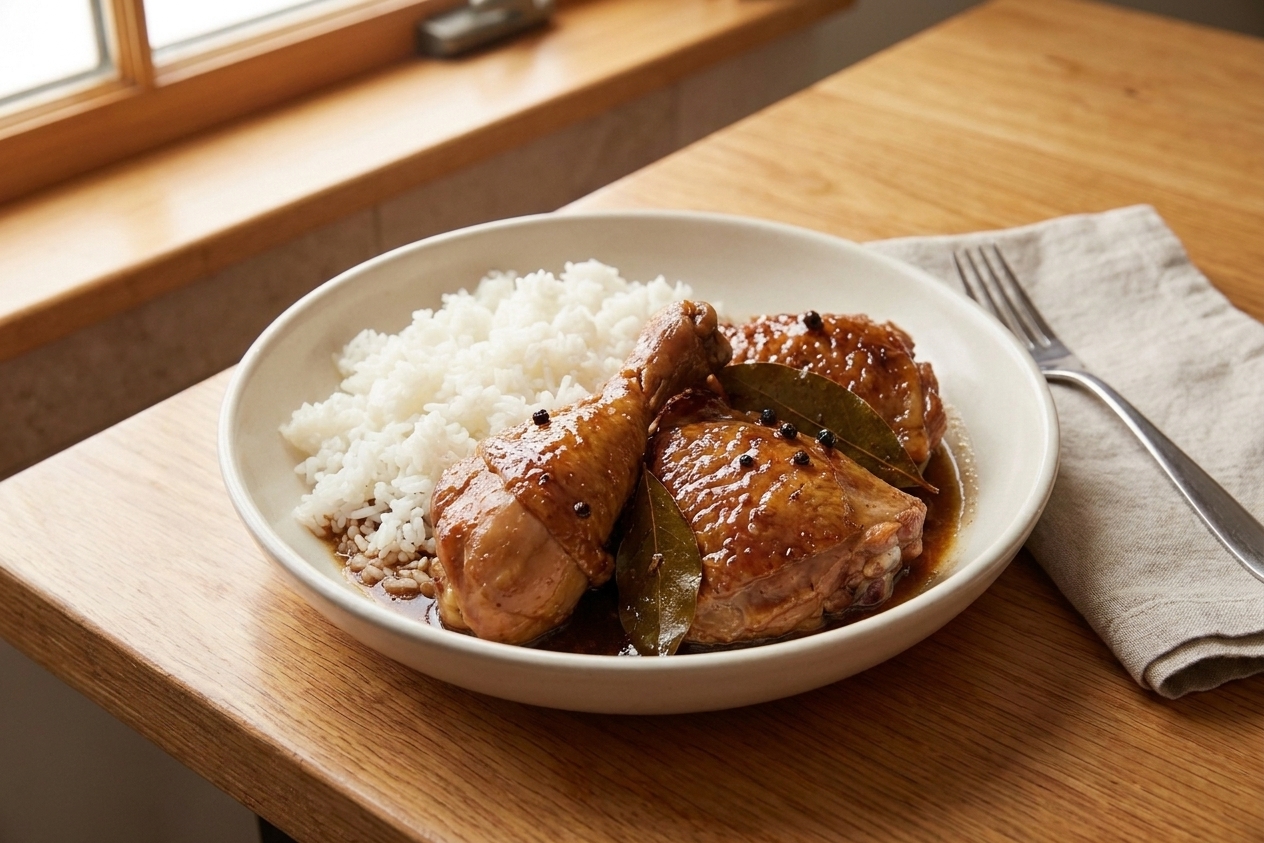
A shallow bowl of Filipino chicken adobo with glossy brown sauce, bay leaves, and cracked black pepper, served with steamed white rice on a warm-toned wooden table

Adobo is one of those dishes that feels like a magic trick you can repeat anytime your week needs a win. You throw a handful of pantry staples in a pot, walk away for a bit, and come back to chicken that is tender, punchy, and basically begging for a mountain of rice.

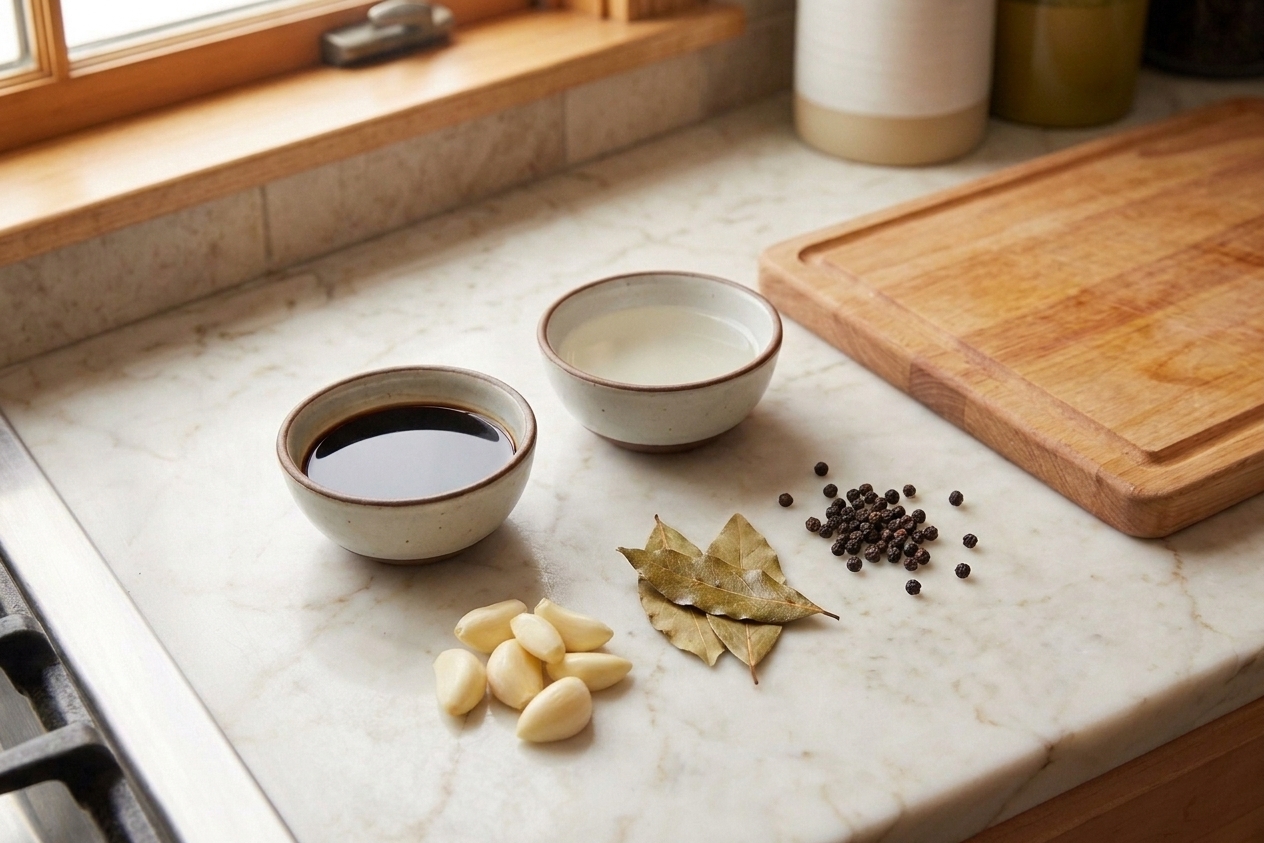
This is Filipino chicken adobo: soy sauce for savory depth, vinegar for that clean tang, a lot of garlic, bay leaves for cozy aroma, and whole peppercorns for little pops of warmth. The sauce ends up glossy and concentrated, like it learned how to behave in public but still has a fun streak.

Small bowls of soy sauce and cane vinegar with peeled garlic cloves, bay leaves, and whole peppercorns arranged on a kitchen counter

Why It Works

  • Big flavor from small effort: The soy sauce and vinegar combo builds a bold, balanced braise without complicated prep.
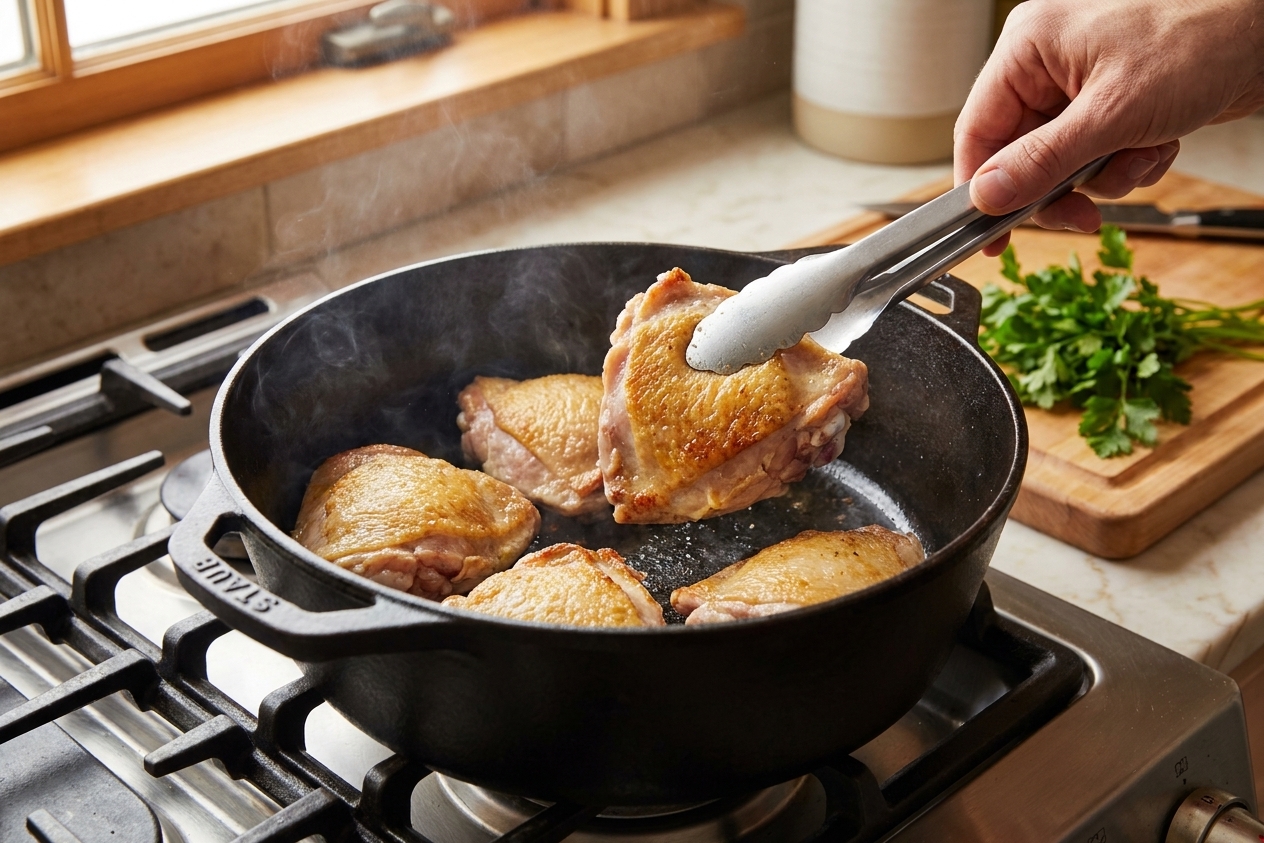
  • Tender chicken, crisp edges if you want them: A quick sear is optional but highly recommended for deeper flavor and better texture.
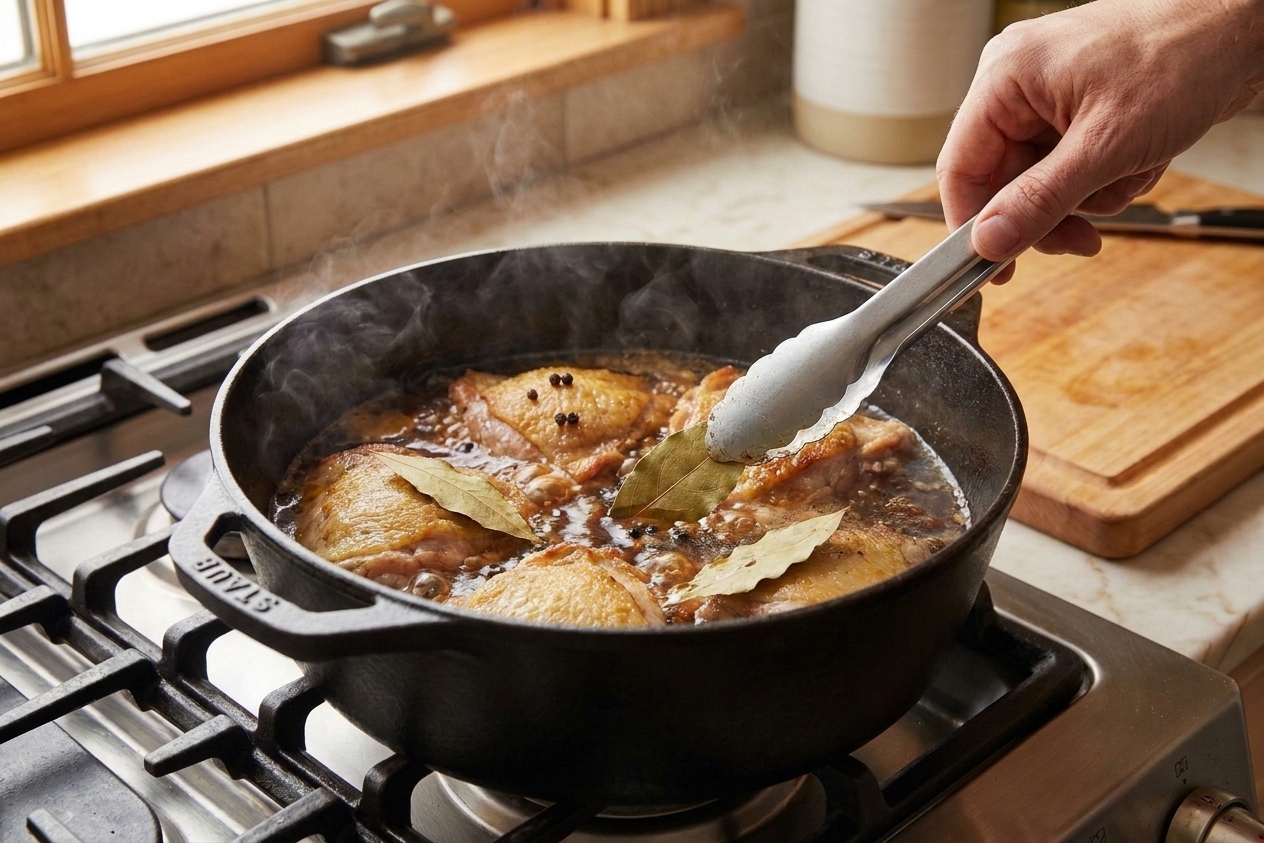
  • A sauce that actually tastes like something: Simmering uncovered at the end reduces it into that signature adobo glaze.
  • Even better tomorrow: Like chili and stew, adobo levels up after a night in the fridge.

Pairs Well With

Storage Tips

Refrigerate: Cool completely, then store in an airtight container for up to 3 to 4 days. Keep chicken and sauce together so everything stays juicy.

Freeze: Freeze in a sealed container for up to 3 months. Thaw overnight in the fridge.

Reheat: Warm gently in a saucepan over medium-low heat with a splash of water if the sauce has tightened too much. Heat until the chicken reaches 165°F/74°C. You can also microwave, but stovetop reheating keeps the sauce silkier.

Bonus move: If you love crispy bits, pull the chicken out after reheating and sear it skin-side down in a skillet for 2 to 4 minutes, then spoon the hot sauce over top.

Common Questions

What kind of vinegar should I use for chicken adobo?

Traditional versions often use cane vinegar. If you can find it, use it. Coconut vinegar is also a classic option and tastes a little softer and rounder. If neither is available, distilled white vinegar works great and keeps the flavor clean and sharp. Apple cider vinegar is a little fruitier, still delicious.

Can I use chicken breast instead of thighs?

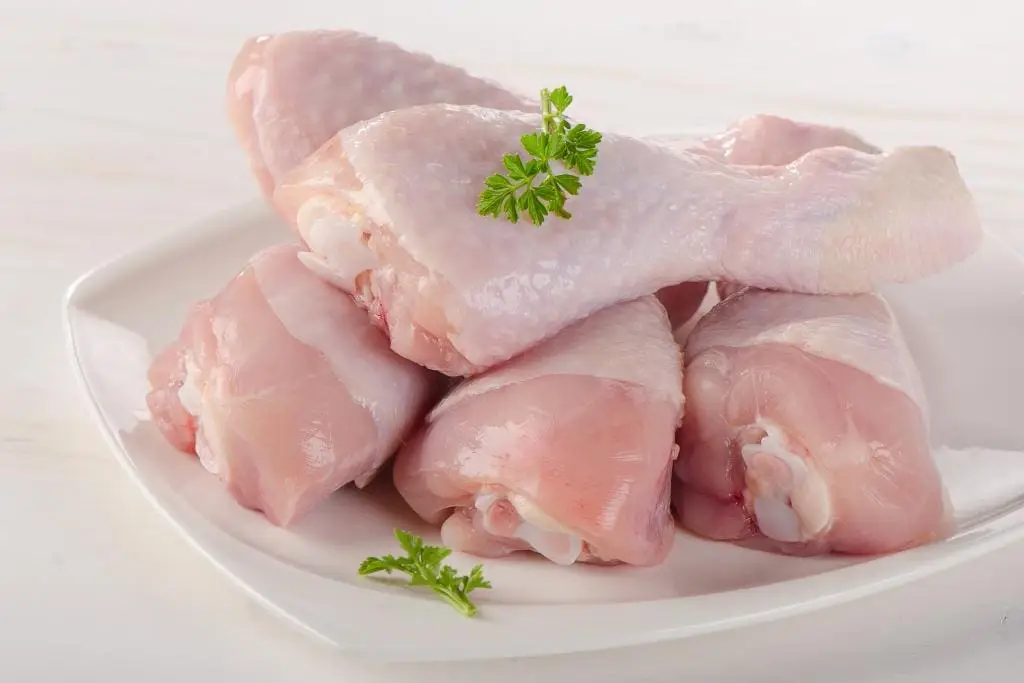
You can, but thighs and drumsticks stay tender and forgiving during a braise. If you use breast, use bone-in if possible and start checking for doneness earlier. Pull it as soon as it hits 165°F/74°C so it stays juicy.

Do I have to marinate the chicken first?

Nope. A quick marinate is nice if you have time, but the braise does the heavy lifting. This recipe is built to taste great even if you start cooking immediately.

Why does my adobo taste too sour?

Two common reasons: you used a very strong vinegar or you did not simmer long enough after adding vinegar. Let it simmer uncovered so the sauce mellows and concentrates. If it is still too sharp, add 1 to 2 teaspoons brown sugar and a splash of water, then simmer a few minutes.

Is Filipino adobo spicy?

Not usually. Peppercorns add warmth and a gentle peppery bite, but it is not meant to be hot. If you want spice, add 1 to 2 dried chilies or a pinch of red pepper flakes.

Should I cover the pot while it cooks?

Cover for the tenderizing braise (keep it at a gentle simmer, not a hard boil), then uncover at the end to reduce the sauce into that glossy finish.

I love recipes that feel like a team project between you and your pantry. Adobo is exactly that. The first time I made it, I expected something complicated because the flavor is so bold, but it is basically a braise that tastes like it has secrets. Now it is one of my go-to “feed me and make it comforting” dinners, especially when I want food that gets better while I am not hovering over it.