1) Simmer the beef
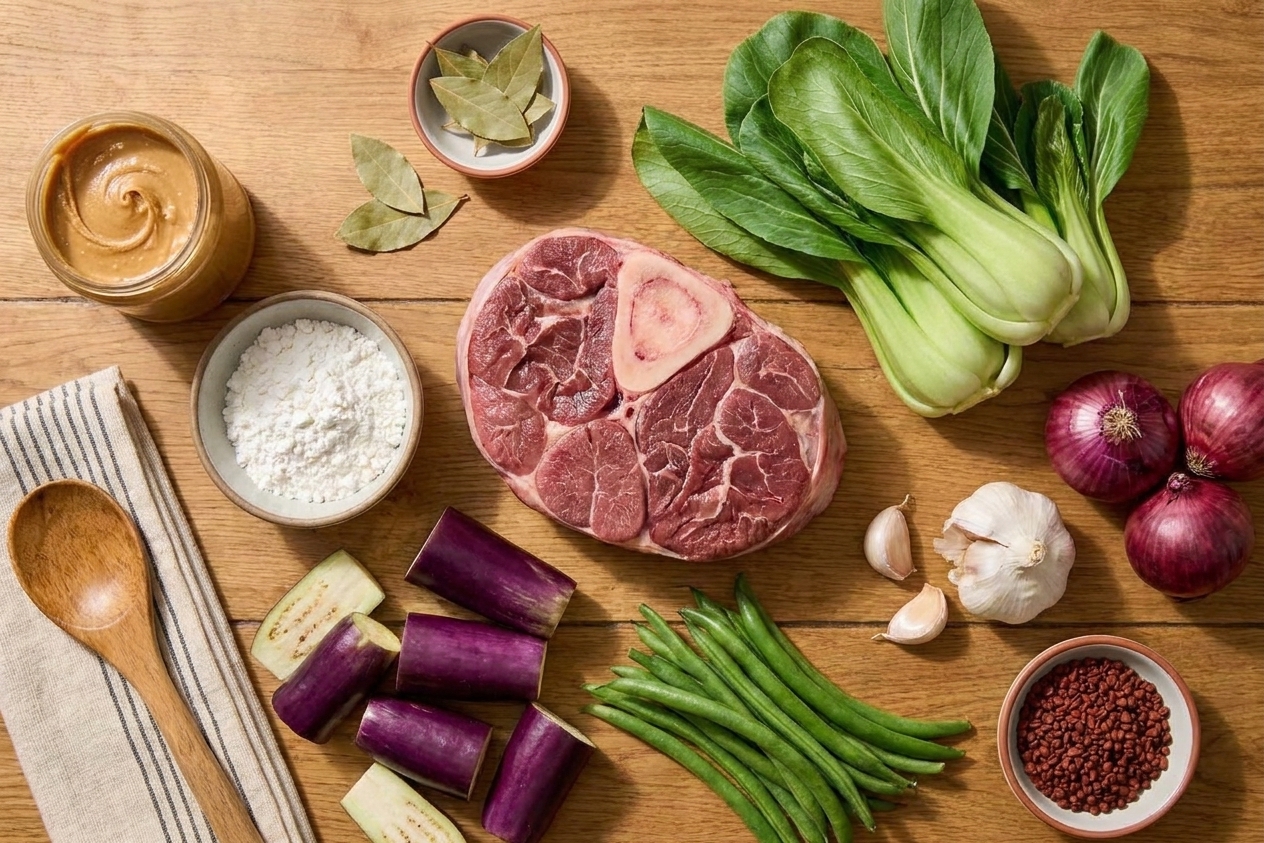
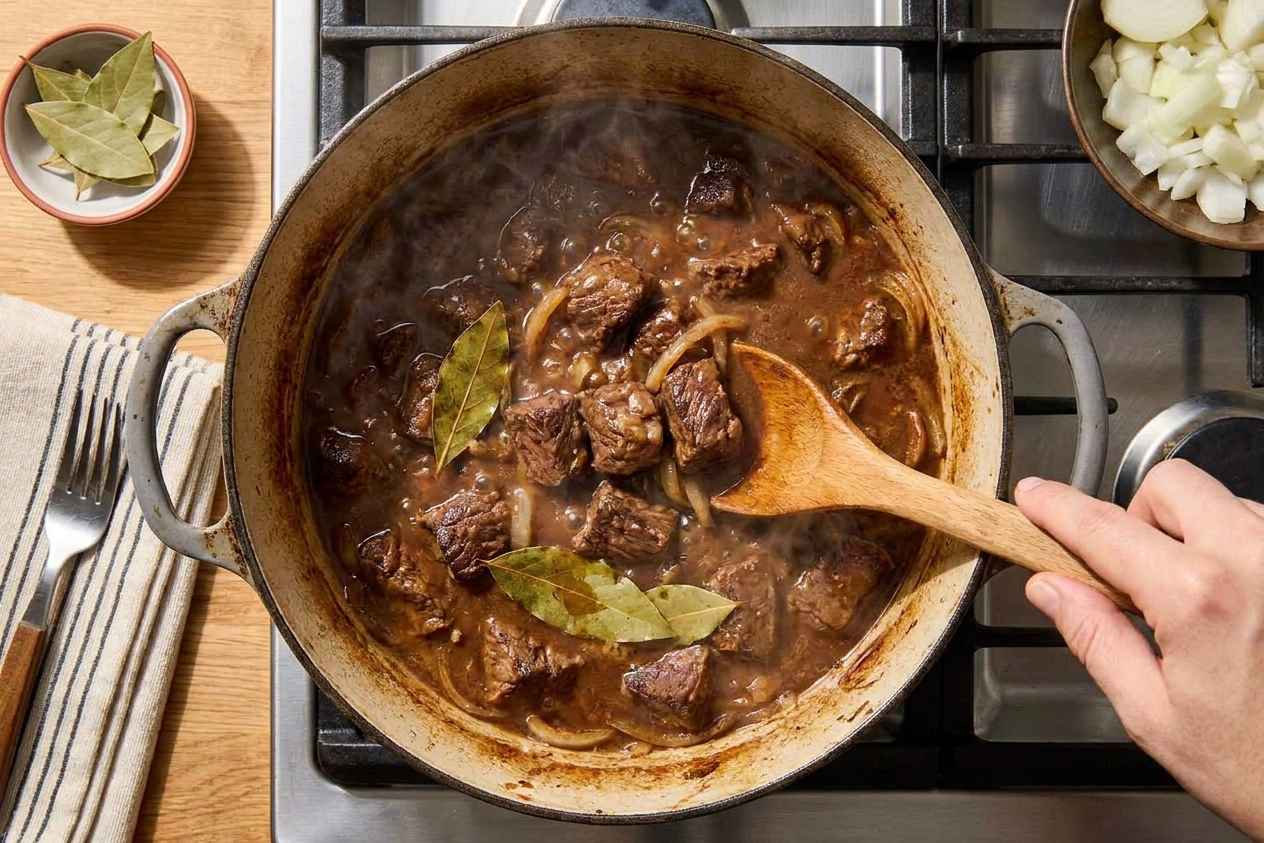
Add beef, onion, garlic, bay leaves, peppercorns, fish sauce, and water to a large pot. Bring to a boil, then reduce to a gentle simmer. Skim foam for the first 10 minutes if needed.
Want a cleaner broth? Optional move: after 5 minutes of boiling, drain the water, rinse the beef quickly, wipe the pot, then refill with fresh water and continue the simmer. Not required, but it helps if your pot is throwing a lot of foam.
Cover partially and simmer until the beef is very tender, about 1 1/2 to 2 hours. Add more water as needed to keep the beef mostly submerged.
2) Strain and save the broth
Remove the beef to a bowl. Strain the broth if you want a smoother sauce (and to catch peppercorns and bits). You want about 6 cups broth total: 5 cups to build the sauce and about 1 cup reserved for loosening later.
3) Start the kare kare base
In the same pot (wiped out if needed), heat oil over medium heat.
If using annatto oil, stir it in and move on. If using annatto powder mixed with water, stir it in and cook for 30 seconds to bloom the color. If you notice any little annatto specks, you can strain the annatto liquid through a fine-mesh strainer before adding it to the pot.
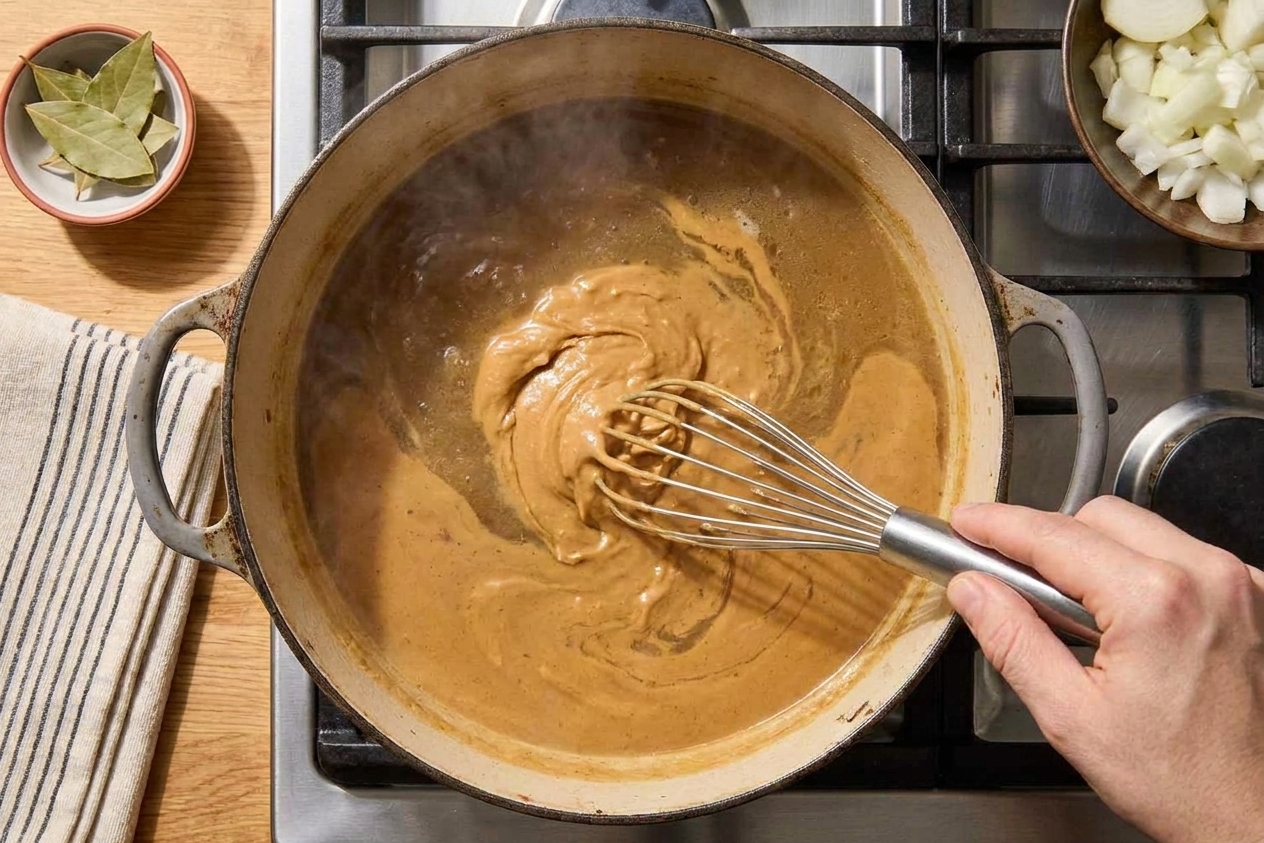
Pour in 5 cups of the broth and bring to a simmer. Whisk in the peanut butter until smooth. If using ground peanuts, whisk them in too.
4) Thicken with rice slurry
In a small bowl, whisk rice flour with cool water until smooth. Slowly pour in about half the slurry while whisking. Simmer 3 minutes, then decide if you want more. Add the rest gradually until the sauce is thick, glossy, and able to coat a spoon.
Taste and adjust, but keep the base seasoning a little restrained. Between fish sauce and the optional bagoong on the side, it is easy to oversalt if you go hard too early.
5) Add beef back in
Add the cooked beef back to the pot. Simmer gently for 10 minutes so it soaks up the peanut sauce. If the sauce gets too thick, loosen with a splash of the reserved broth.
6) Cook the vegetables at the end
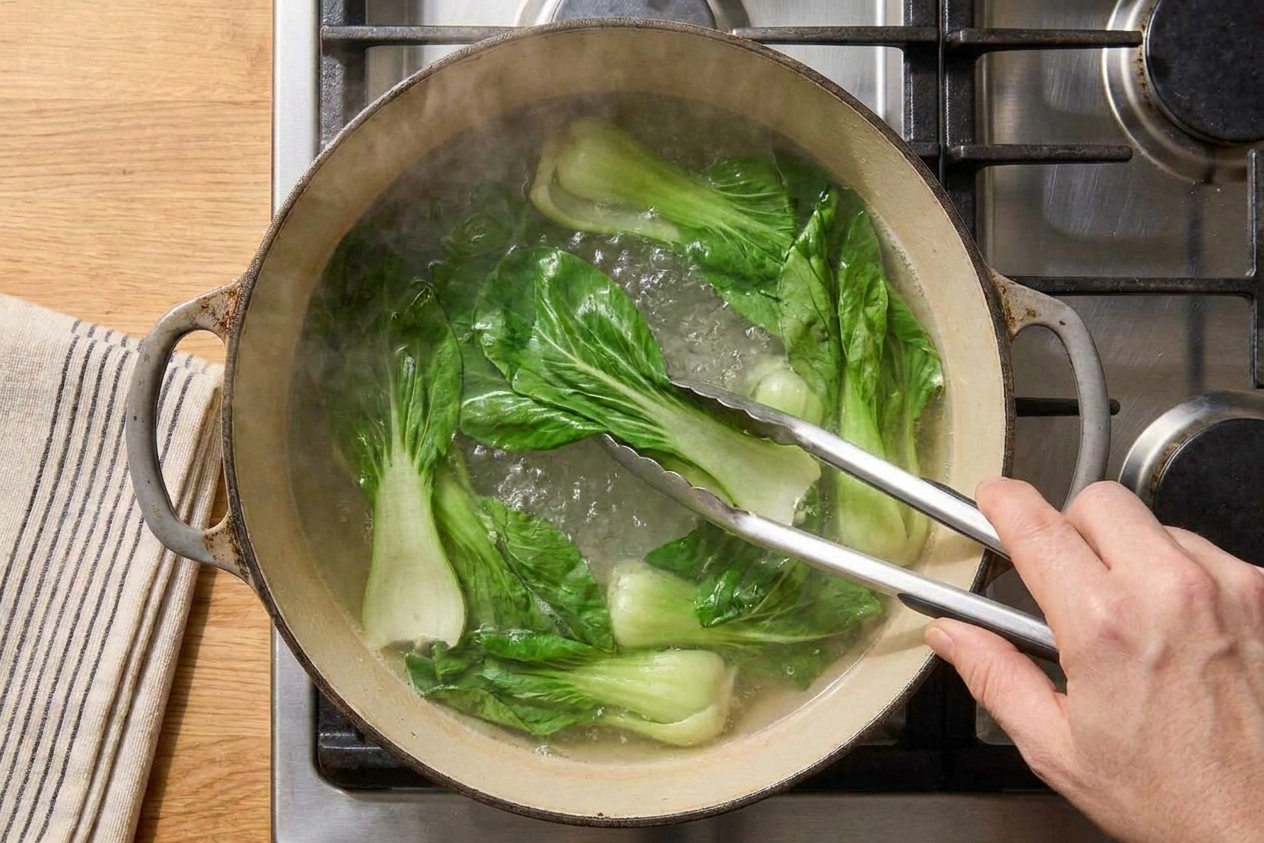
For the best texture, cook the vegetables separately, then add them to the pot right before serving.
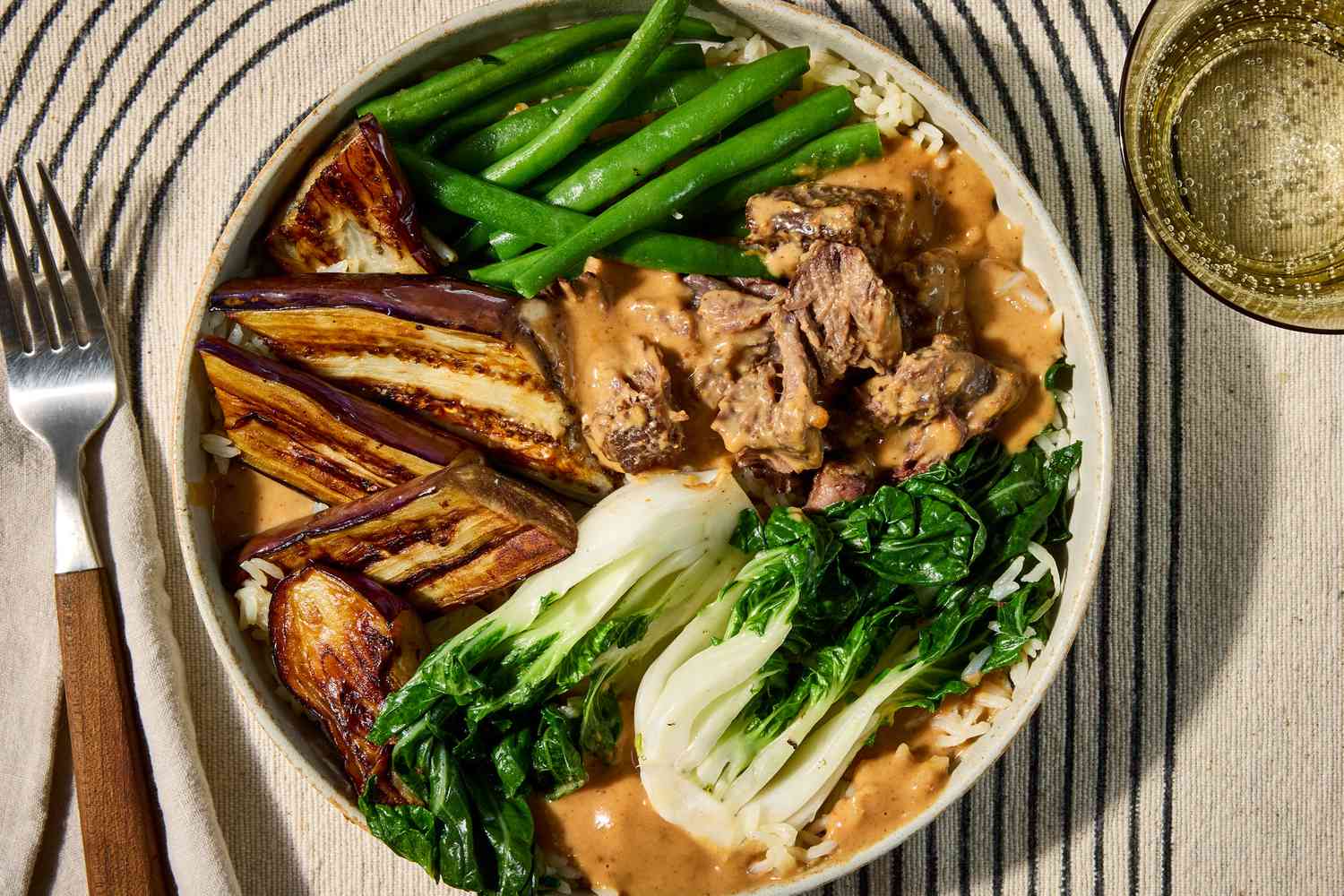
- Eggplant: pan-sear in a little oil until browned and tender, or simmer in the sauce for 6 to 8 minutes.
- Beans: blanch 2 to 3 minutes in salted boiling water, then drain.
- Bok choy: blanch 1 minute, then drain.
- Okra (optional): blanch 2 minutes, then drain.
Stir vegetables into the kare kare just to warm through, about 1 to 2 minutes.
7) Serve
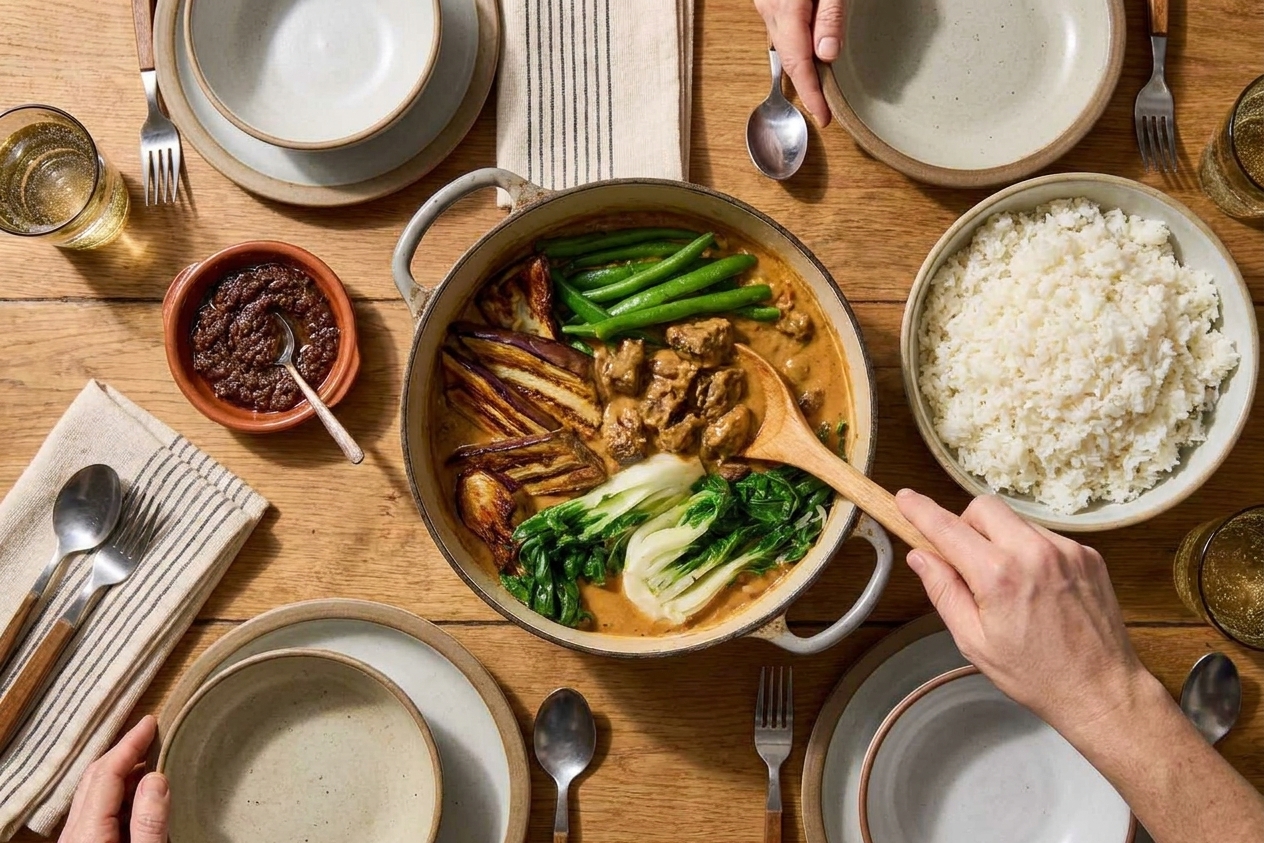
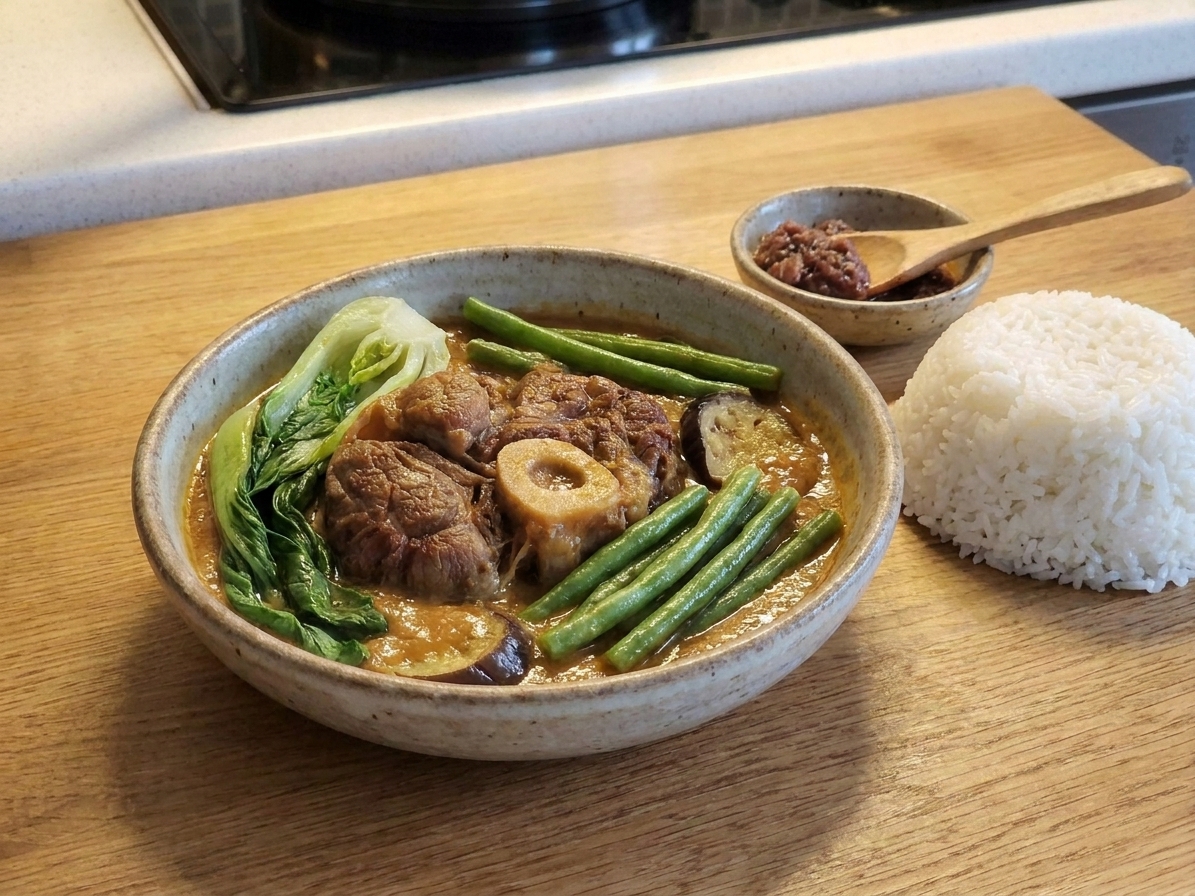
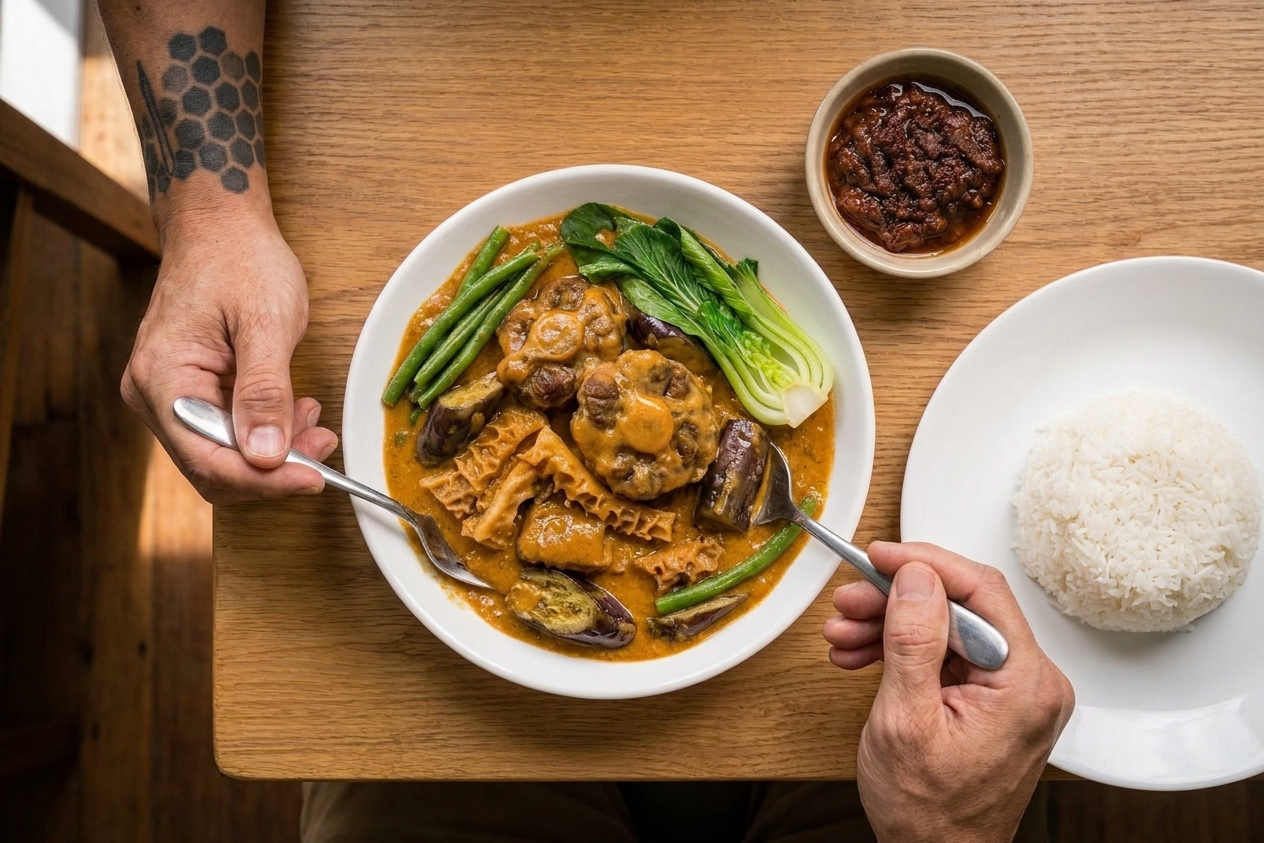
Ladle kare kare into bowls with rice. Serve bagoong on the side so everyone can add a little at a time. Taste as you go. Kare kare is a team effort between the stew and that salty sidekick.