Mom's Best Recipes
Recipe

Filipino Sinigang

A cozy, tangy tamarind soup with tender pork and a rainbow of vegetables, balanced with fish sauce and served hot with rice.

Author By Matt Campbell
4.8
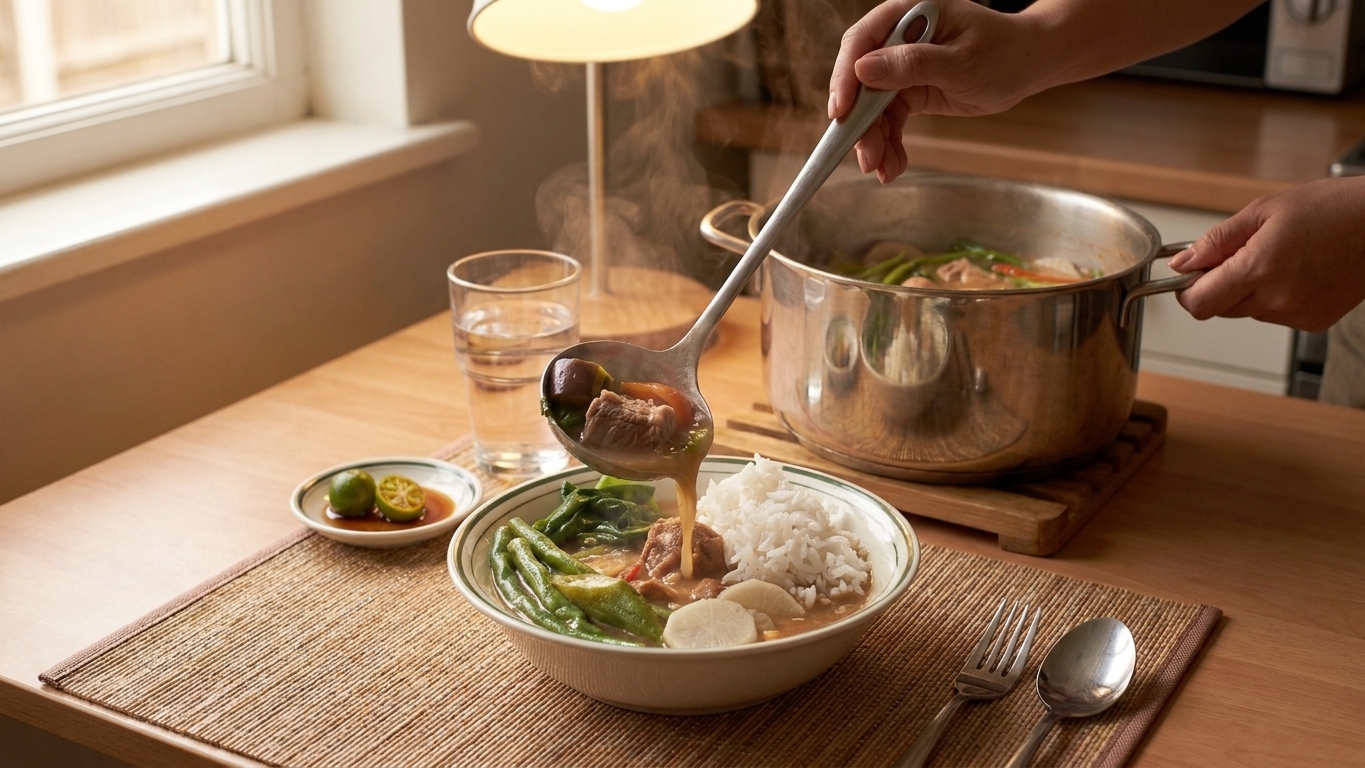
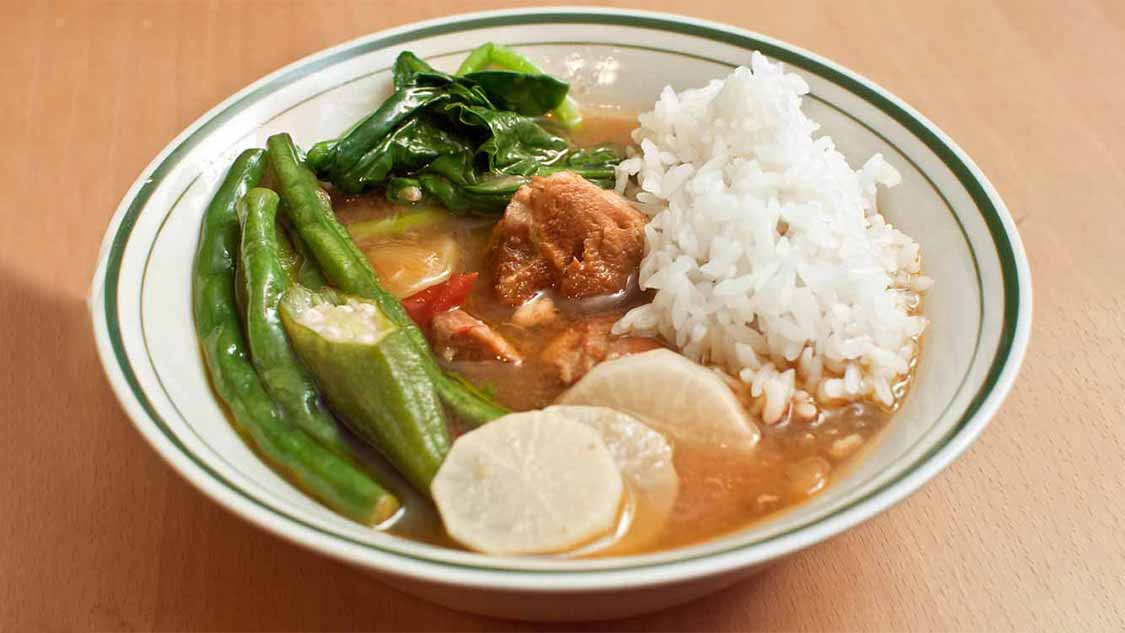
A steaming bowl of pork sinigang with radish, green beans, and leafy greens in a clear tangy broth, served with a small bowl of white rice on a simple wooden table

Sinigang is the kind of soup that wakes your whole face up in the best way. It is warm and comforting, but also bright and tangy, like someone squeezed a little sunshine straight into the pot. The magic is the sour base, usually tamarind, plus savory depth from pork and just enough fish sauce to make everything taste like it belongs together.

This is my go-to Filipino sinigang with pork, radish, eggplant, green beans, and greens. It is weeknight doable, but it still feels like you did something special. And yes, you should taste as you go. Sinigang is a living, breathing soup. You get to decide how sour is your sour.
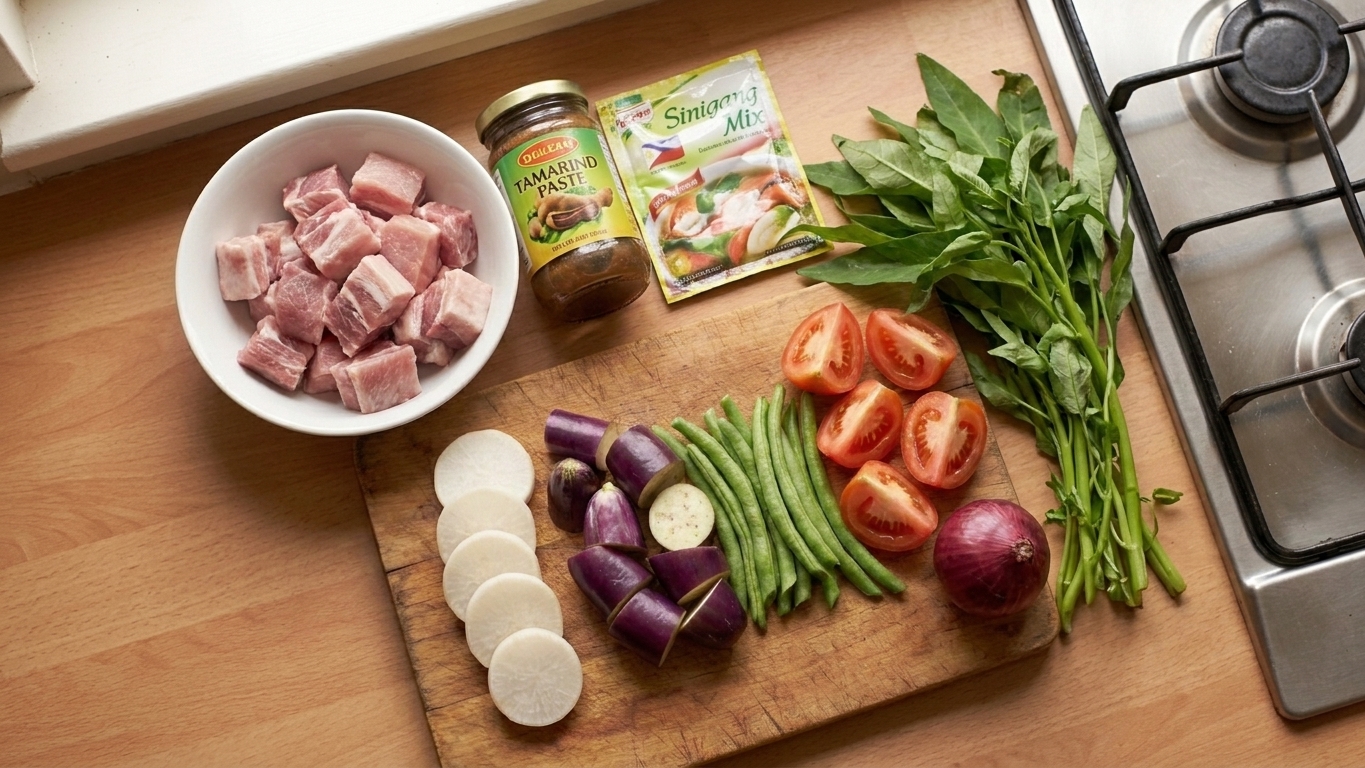
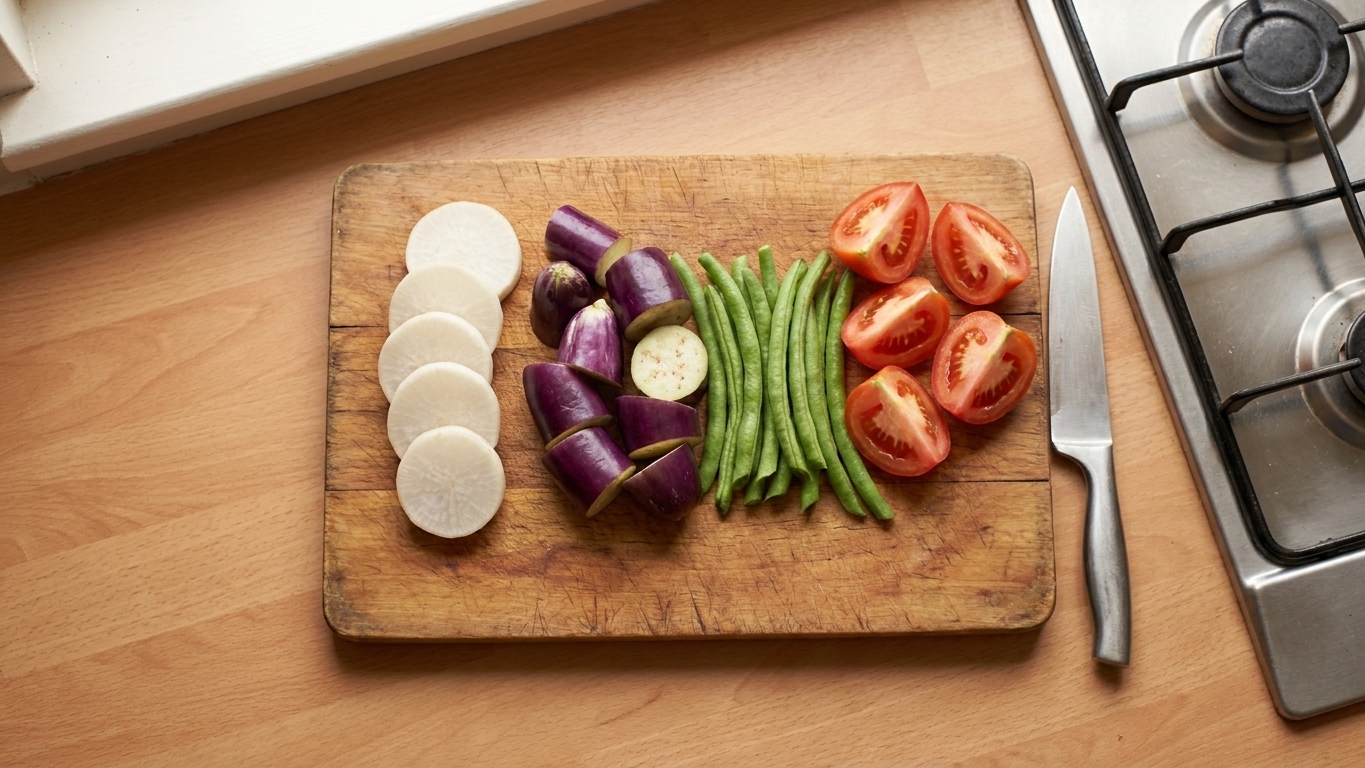
All the ingredients for pork sinigang arranged on a kitchen counter: pork shoulder pieces, tamarind paste or sinigang mix, onion, tomatoes, daikon radish, eggplant, long beans, and leafy greens

Why It Works

  • Bold, adjustable tang: You can make it gently sour or full on pucker with a simple add-and-taste approach.
  • Tender pork, not stringy pork: A steady simmer softens the meat and gives you a broth that tastes like it has been working hard.
  • Crisp-tender vegetables: Veggies go in by timing, so nothing turns to mush unless you want it to.
  • Accessible ingredients: Tamarind concentrate or a sinigang mix both work. Use what you can find and still land in the right flavor neighborhood.

Pairs Well With

Storage Tips

Refrigerate: Cool sinigang quickly, then store in an airtight container for up to 4 days. The flavor often tastes tangier and more developed after resting.

Keep veggies separate (optional but smart): If you want the vegetables to stay crisp-tender, store them in a second container and reheat them gently in the broth right before eating.

Freeze: Freeze the broth and pork for up to 2 months. I recommend leaving out the leafy greens and eggplant before freezing since their texture can go soft. Add fresh veggies when reheating.

Reheat: Warm over medium heat until steaming hot. Taste the broth after reheating and adjust with a splash of fish sauce, a pinch of salt, or a little extra tamarind.

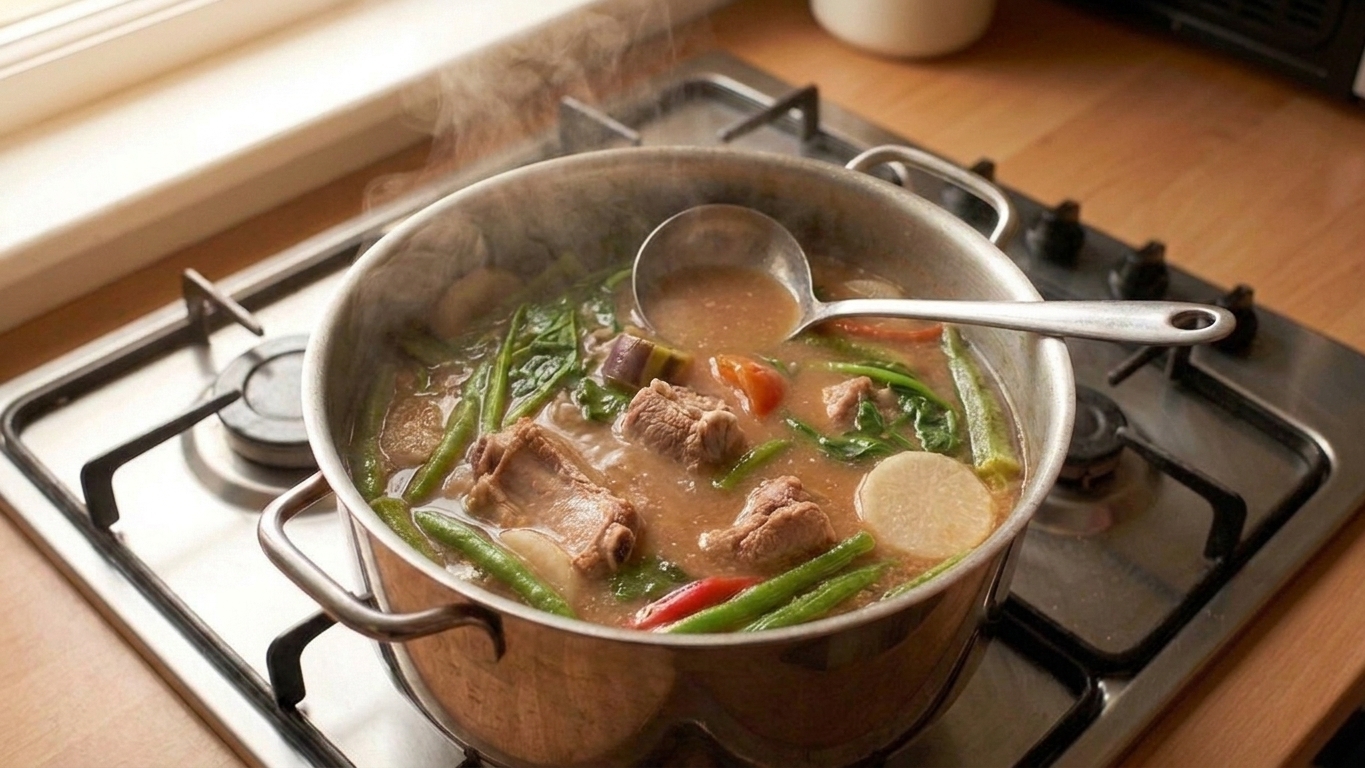
A pot of leftover sinigang gently reheating on a stovetop with steam rising, a ladle resting on the rim

Common Questions

What makes sinigang sour?

Traditionally, tamarind (sampalok). Some versions use other souring agents like guava, green mango, calamansi, or kamias, but tamarind is the classic taste most people think of.

Can I use a sinigang mix instead of tamarind?

Absolutely. Sinigang soup mix is a practical shortcut and still tastes great. Add it gradually and taste, since different brands vary in salt and sourness.

What cut of pork is best for sinigang?

Pork shoulder (also called pork butt) is my favorite for tenderness and flavor. Pork ribs are also popular and give you a richer broth. Pork belly is delicious but heavier.

How do I fix sinigang that is too sour?

Add more water or unsalted broth to dilute, then rebuild the flavor with fish sauce or salt. A little extra tomato can round it out too. Serve with rice to mellow each bite.

How do I fix sinigang that is not sour enough?

Add more tamarind concentrate or mix, a little at a time. Let it simmer for a minute, then taste again. Sourness blooms more when the soup is hot.

Is sinigang spicy?

Not automatically. If you want heat, add long green chiles (siling pangsigang) for gentle warmth, or a sliced Thai chile for real spice.

Do I need to strain out the onion and tomatoes?

Nope. Most people keep them in. They soften, break down a bit, and make the broth taste fuller. If you prefer a cleaner bowl, you can scoop out some of the tomato skins and onion at the end.

The first time I made sinigang at home, I treated the sour element like it was a strict measurement, not a vibe. Big mistake. The moment I started tasting and adjusting, everything clicked. Sinigang is comforting like chicken soup, but it has this bright edge that makes you sit up a little straighter. Now it is one of my favorite “reset” meals, especially when dinner needs to feel cozy without tasting sleepy.

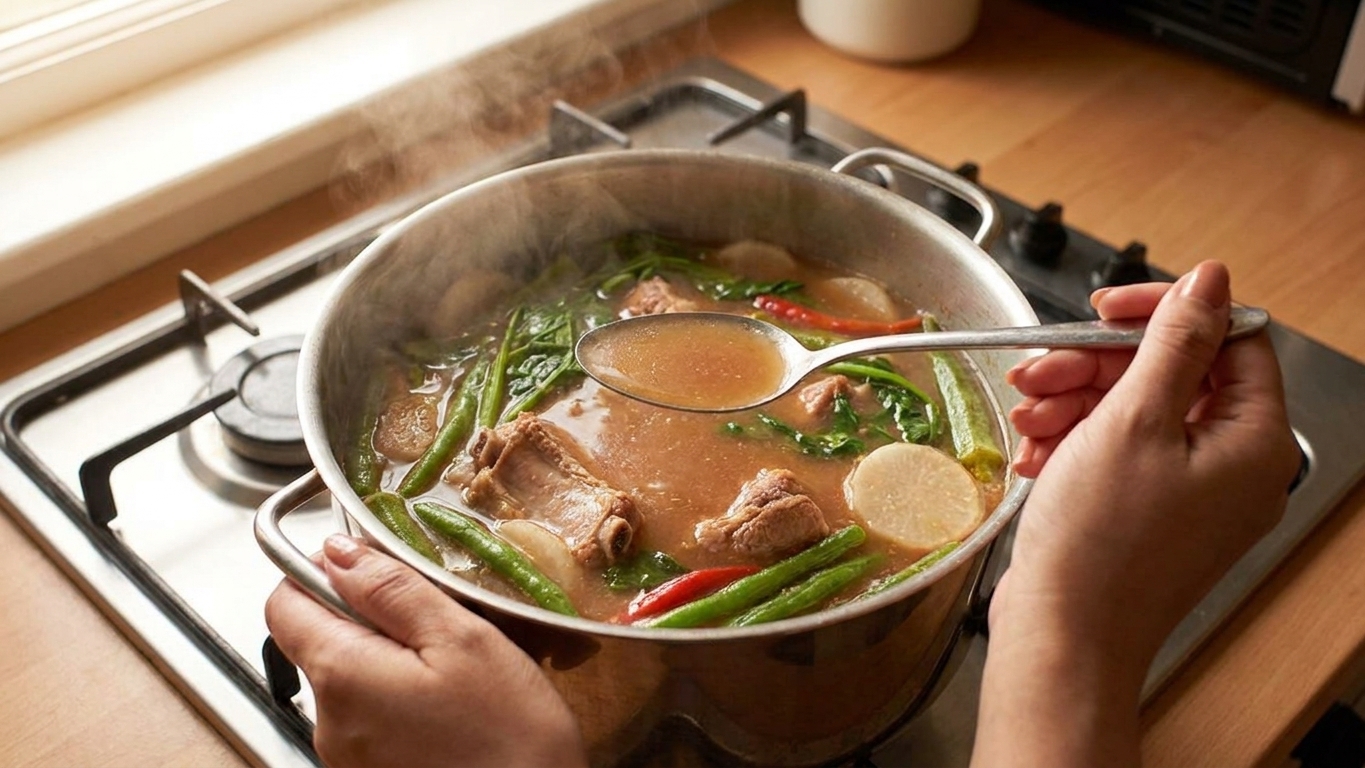
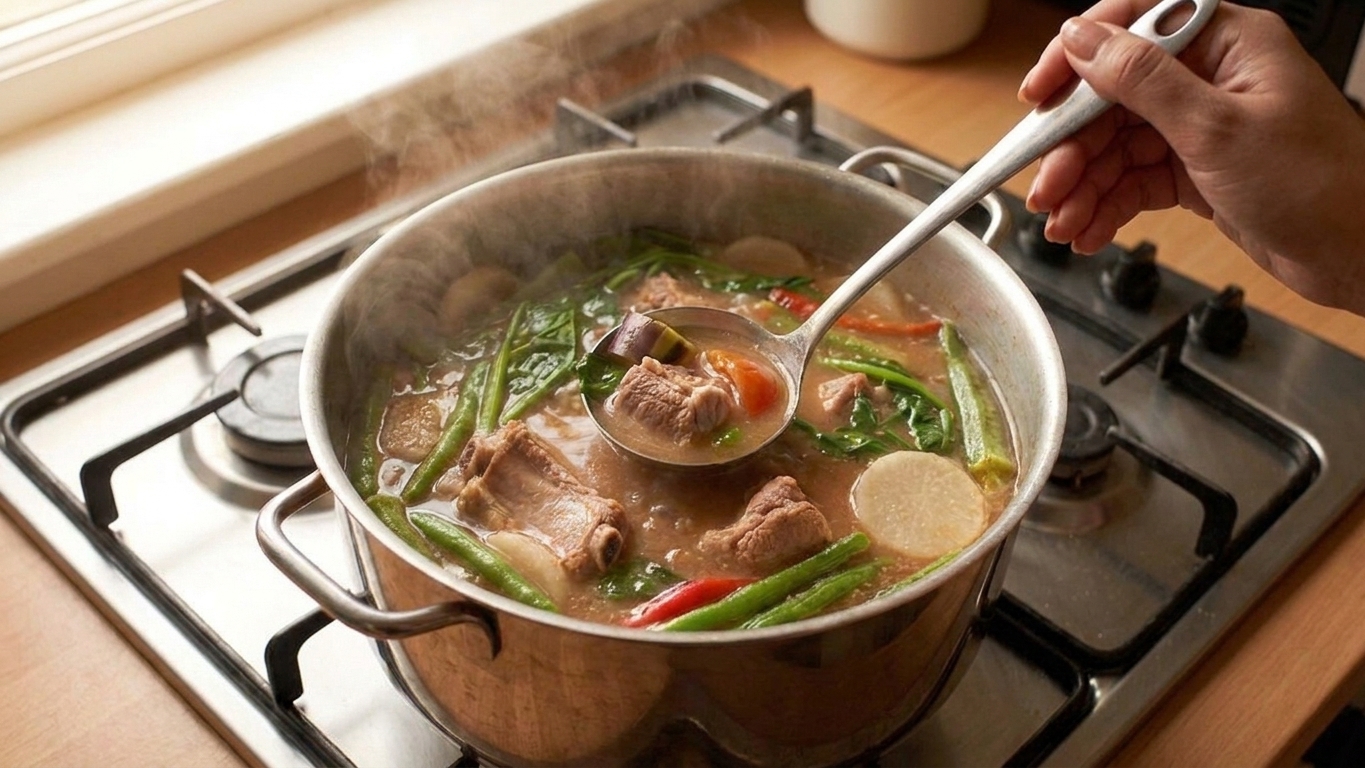
A home cook’s hands holding a spoon over a pot of simmering sinigang, tasting the broth on a warmly lit kitchen stove