Mom's Best Recipes
Recipe

Tom Yum Goong (Thai Shrimp Soup)

A bright, hot-and-sour Thai shrimp soup with lemongrass, lime, chili, and mushrooms, finished with fish sauce and fresh herbs.

Author By Matt Campbell
4.8
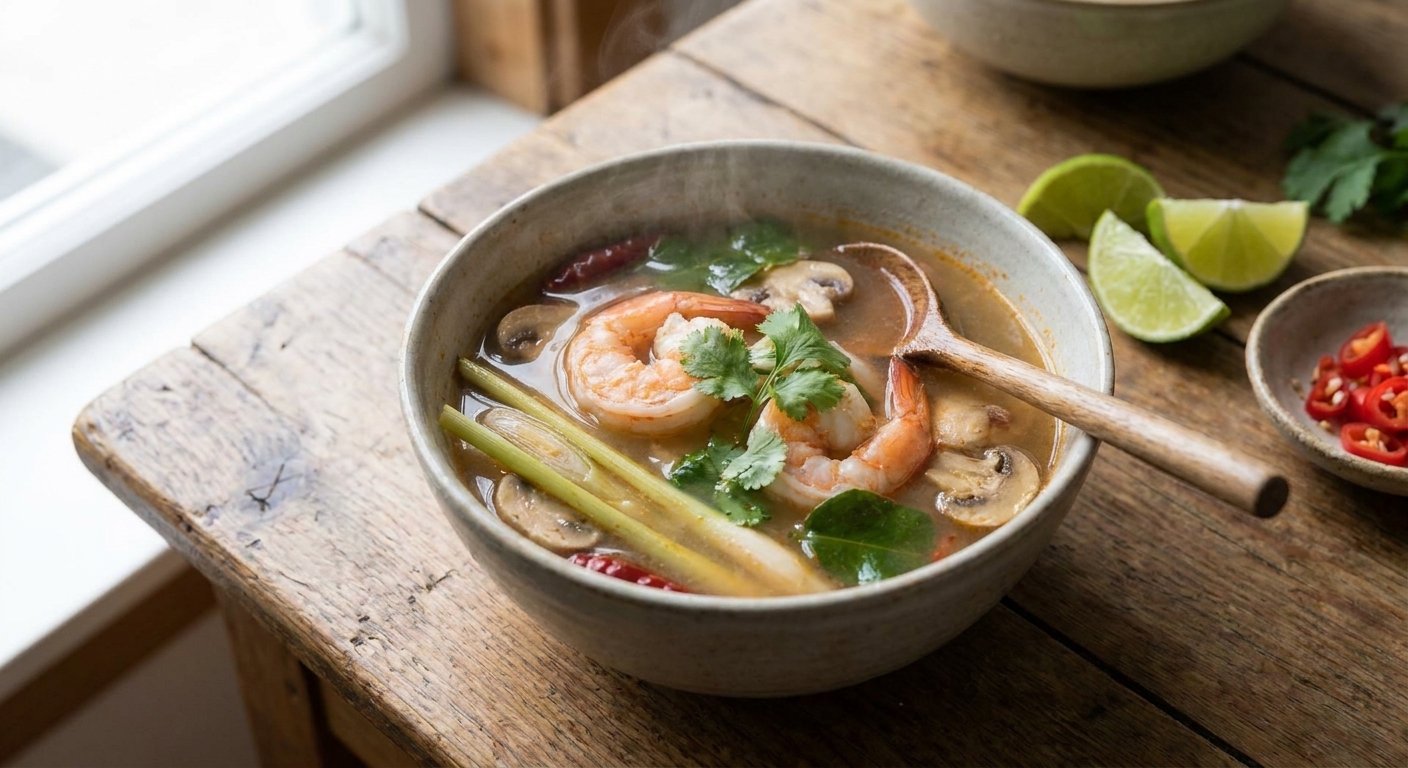
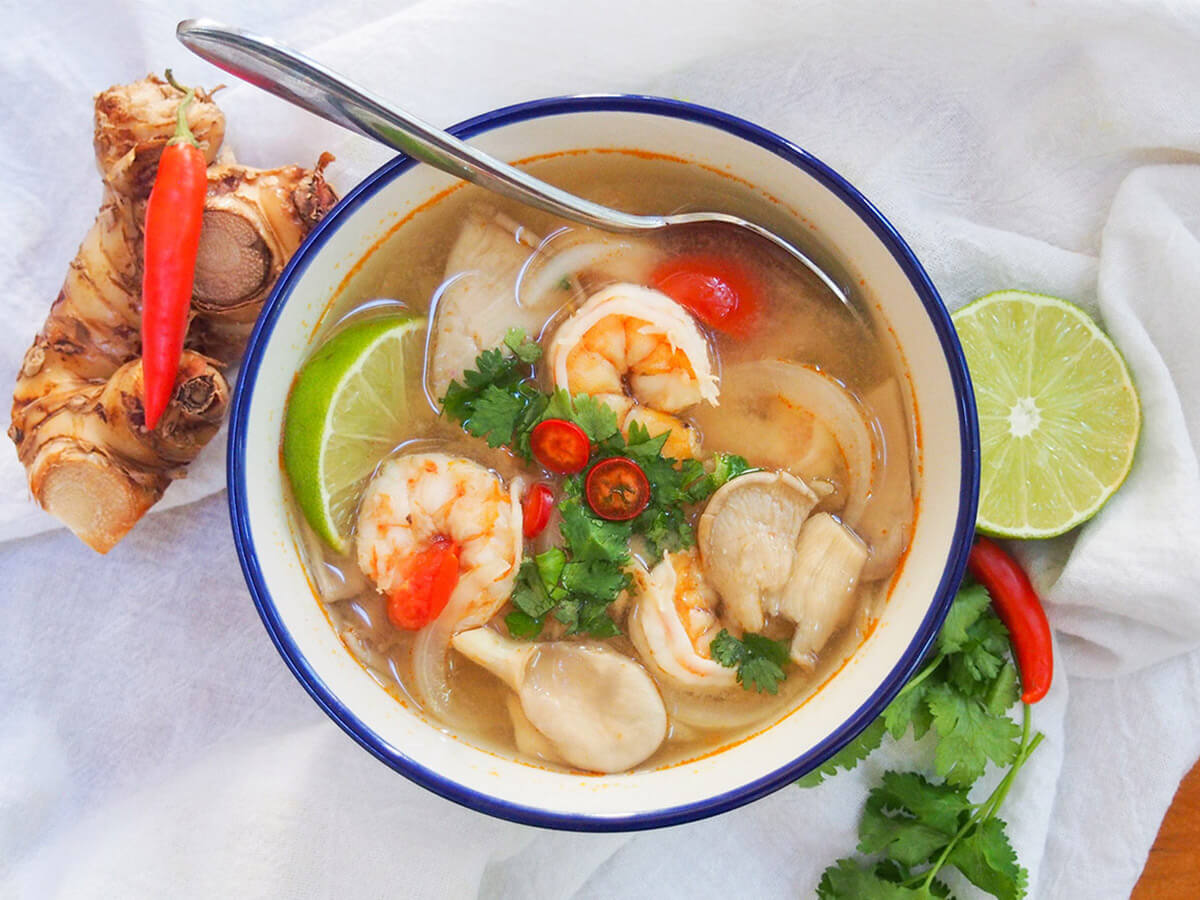
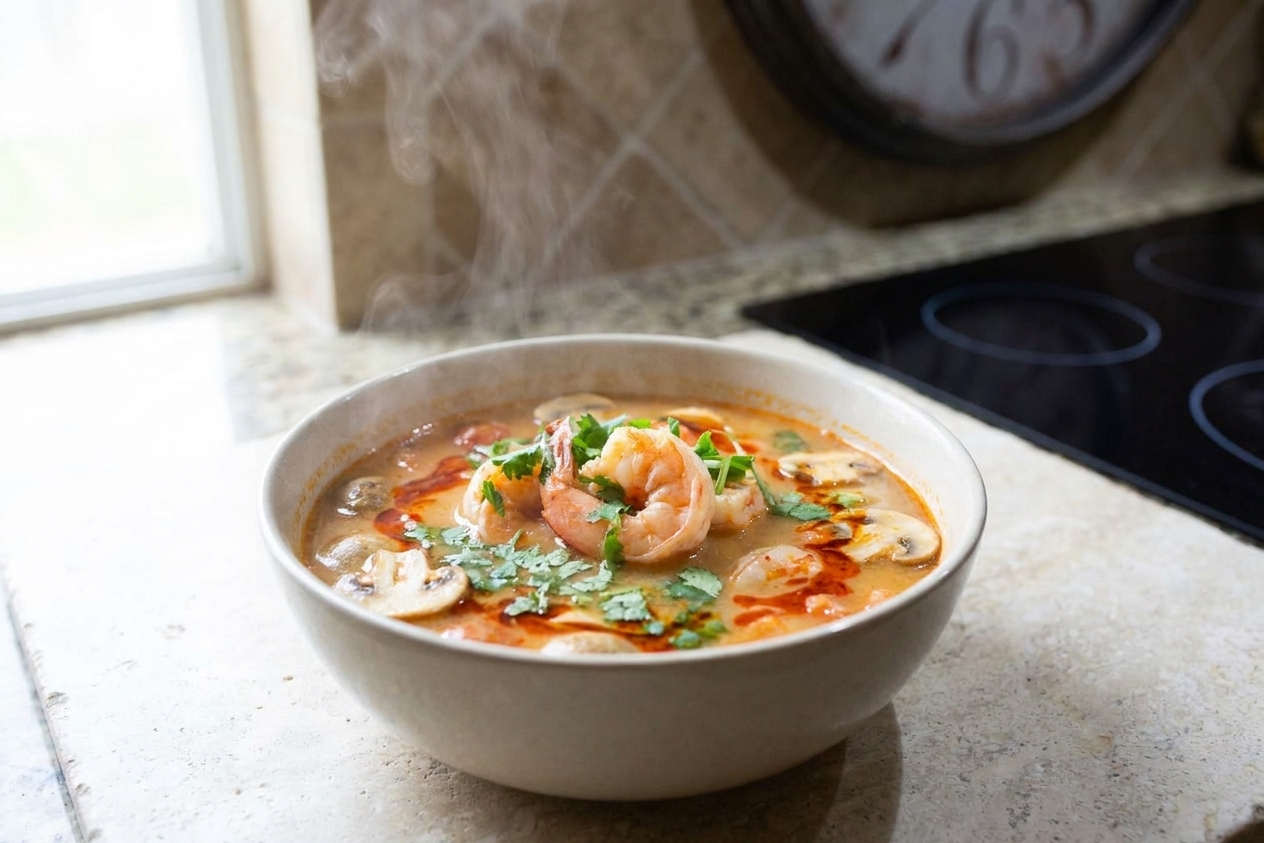
A steaming bowl of tom yum goong with shrimp, mushrooms, cilantro, and red chili oil on a light stone kitchen counter with soft natural window light

Tom Yum Goong is one of those soups that tastes like it has a whole backstory. It is bright and citrusy, a little spicy, a little funky (in the best way), and somehow still cozy enough to eat in sweatpants on a Tuesday.

This is the clear, broth-y version, not the creamy one. Think lemongrass perfume, lime snap, and shrimp that stay bouncy because we do not overcook them. If you can simmer water and taste as you go, you can absolutely pull this off.

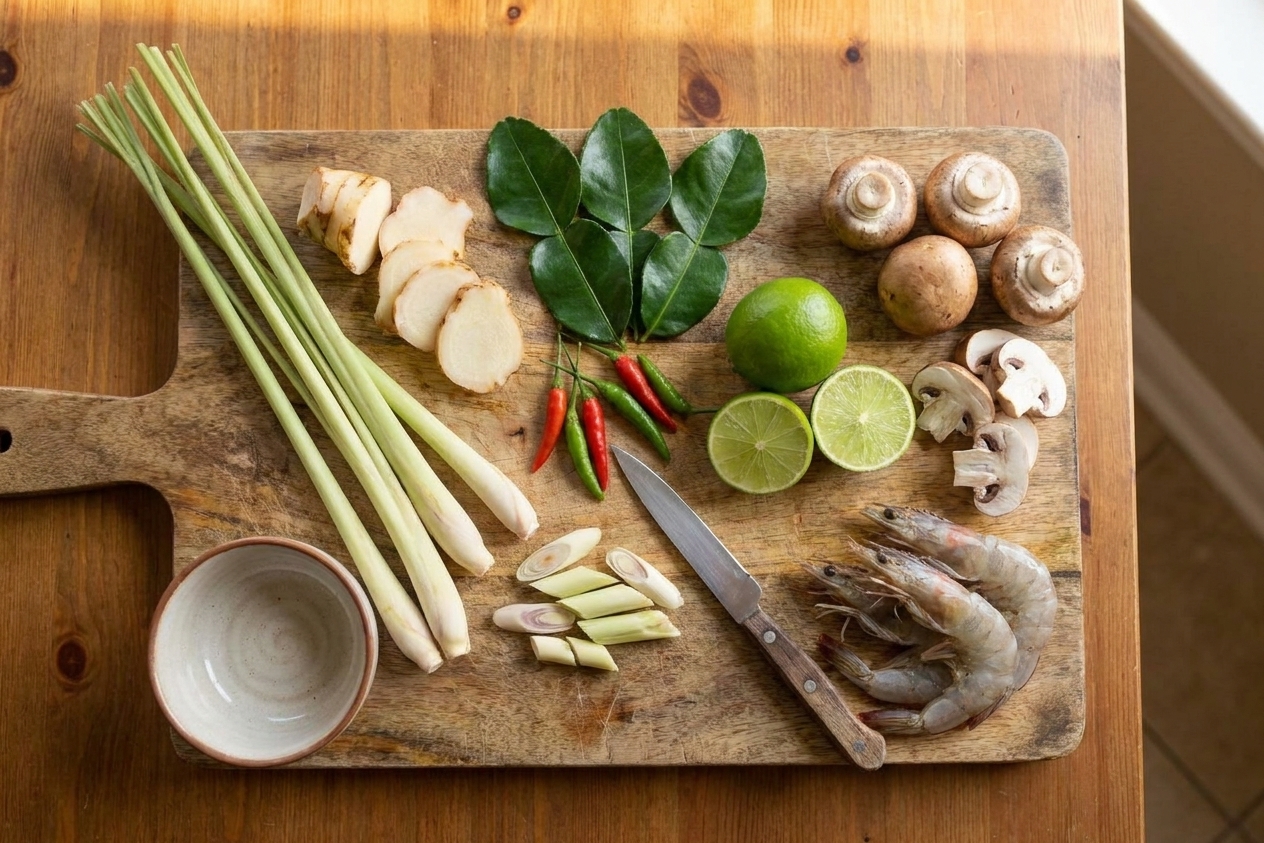
Raw tom yum ingredients arranged on a wooden cutting board including lemongrass stalks, galangal slices, kaffir lime leaves, Thai chilies, limes, mushrooms, and shrimp

Why It Works

  • Fast flavor build: We crush aromatics (lemongrass, galangal, lime leaves) so the broth tastes like you actually meant it.
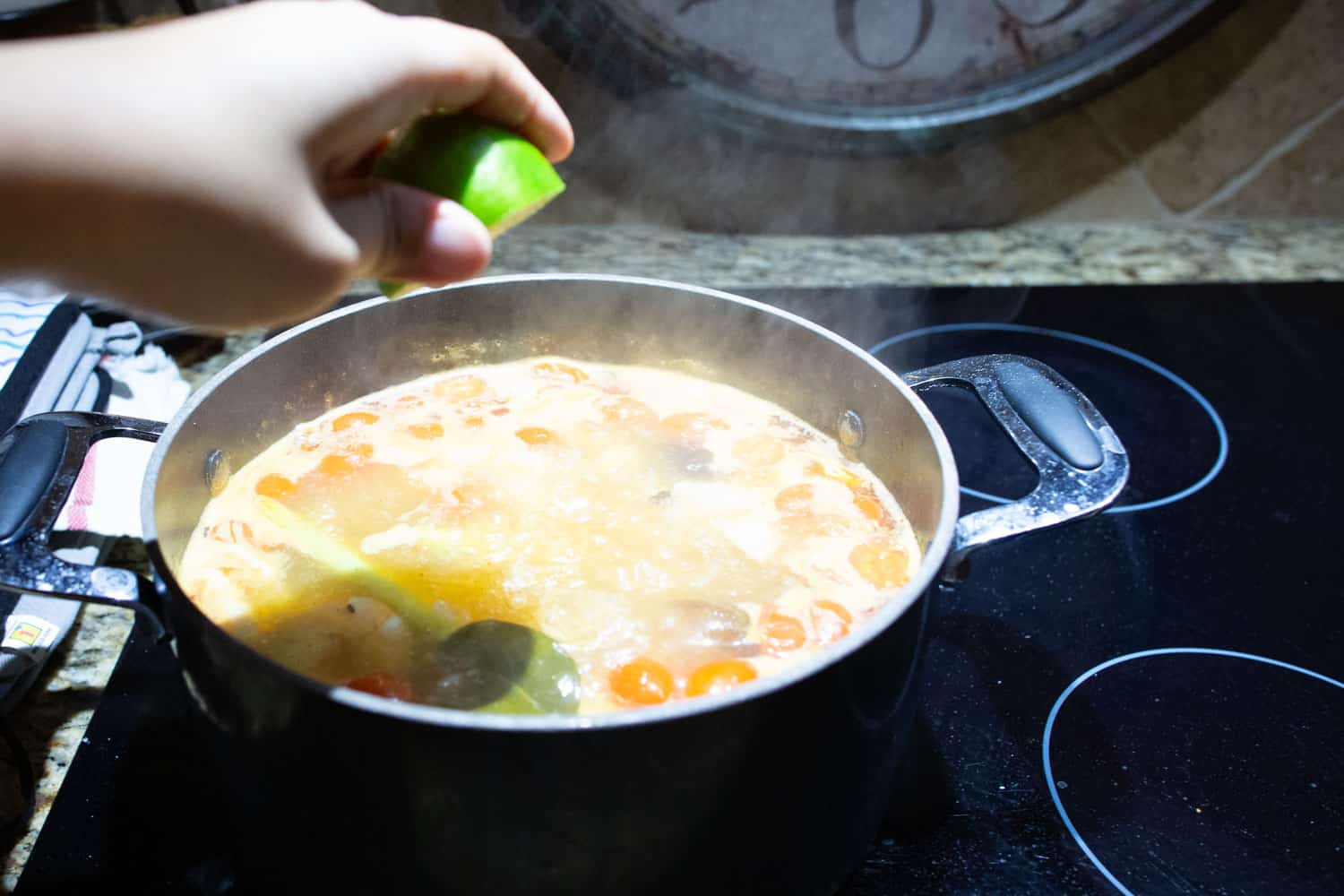
  • Clean, punchy balance: Lime juice goes in at the end so it stays bright, not bitter.
  • Perfect shrimp texture: Shrimp cook off-heat in the hot broth, which keeps them tender instead of rubbery.
  • Flexible but still legit: Easy swaps for galangal, Thai chilies, and even the chili paste, without losing the soul of the soup.

Pairs Well With

Storage Tips

Best move: If you are planning leftovers, store the broth separately from the shrimp. Shrimp are drama queens in the fridge. They overcook fast on reheat and get tough if you blast them.

Refrigerator

  • Cool soup quickly, then refrigerate in airtight containers.
  • Broth: 3 to 4 days.
  • Cooked shrimp: 1 to 2 days for best texture.

Freezer

  • Freeze broth only (no shrimp, no mushrooms if you are picky about texture) up to 2 months.
  • Thaw overnight in the fridge, reheat, then add fresh shrimp and mushrooms to finish.

Reheating

  • Reheat broth gently until steaming, not violently boiling.
  • Add shrimp at the end just to warm through.
  • Always re-taste and refresh with a squeeze of lime and a tiny splash of fish sauce.

Common Questions

What does “tom yum” mean?

“Tom” is to boil or cook in liquid. “Yum” points to that bold Thai yum style of seasoning: hot, sour, salty, and a little sweet, all mixed into one bright hit. So yes, the name is basically a promise.

Is Tom Yum Goong supposed to be cloudy or clear?

This version is clear. If you want the creamy style (often called tom yum nam khon), stir in a little evaporated milk at the end (common) or add a splash of coconut milk if that is your pantry move. I keep this one clean and bright.

Can I make it without galangal or kaffir lime leaves?

You can. For galangal, use ginger (not the same, still good). For kaffir lime leaves, use wide strips of lime peel (no white pith) or a little extra lime juice at the end. If you can find the leaves frozen, grab them. They are a game changer.

What is the best mushroom for tom yum?

Straw mushrooms are classic, but hard to find fresh. I love cremini or baby bella for weeknight accessibility. Oyster mushrooms are also fantastic if you want a more restaurant vibe.

How spicy is this recipe?

Moderately spicy as written. Thai bird’s eye chilies bring sharp heat fast. Serrano is a solid substitute, just a slightly different kind of heat and flavor. Start with fewer chilies, then add heat at the end with chili oil or extra paste. The goal is a fun burn, not regret.

Can I use chicken instead of shrimp?

Yep. Use thin slices of chicken breast or thigh and simmer until cooked through. The flavor profile still works beautifully.

The first time I made tom yum at home, I treated it like a normal soup. I politely simmered everything, walked away, came back, and wondered why it tasted like hot lemon water that had once met a mushroom.

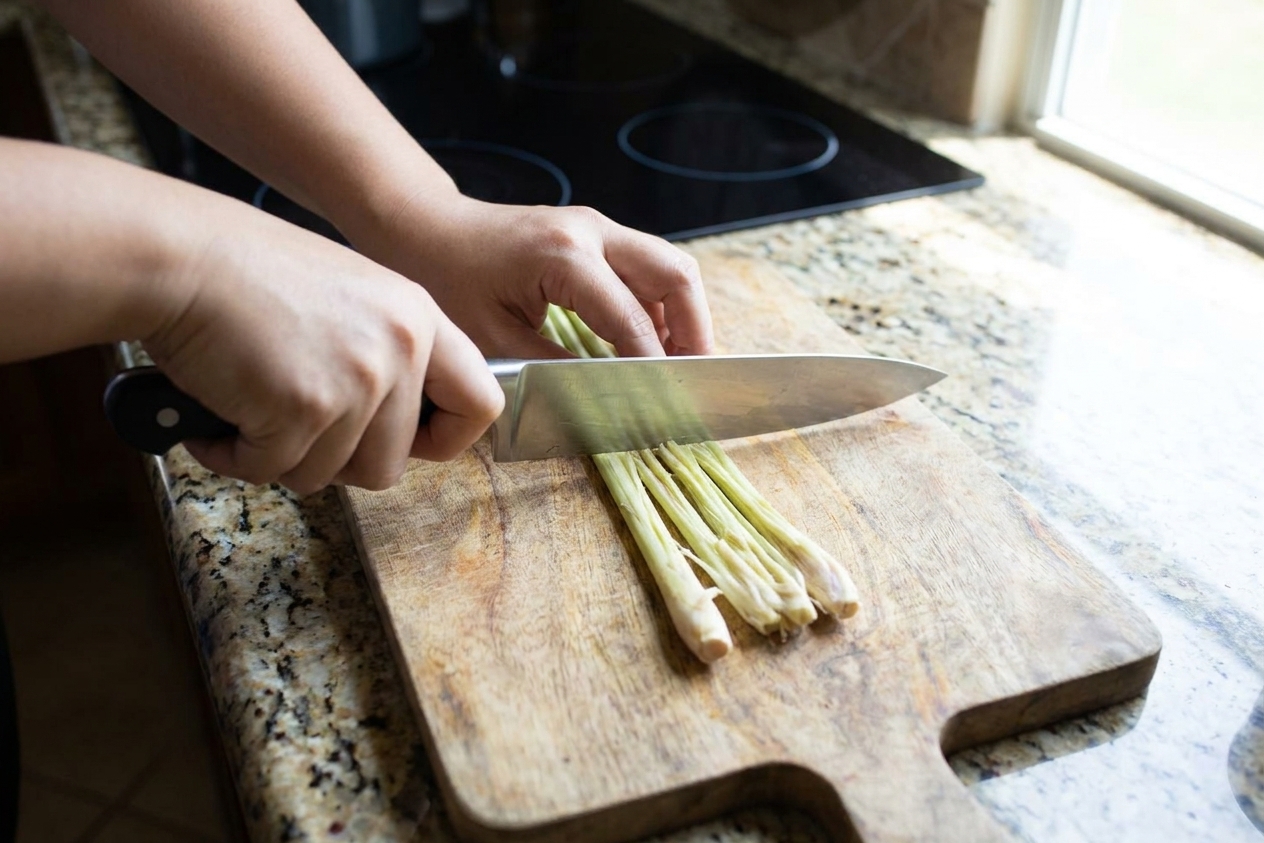
Then I learned the real secret: you have to wake the aromatics up. Bruise the lemongrass. Tear the lime leaves. Give the chilies a little smash. Suddenly the broth smells like a Thai restaurant doorway, and you are standing there tasting, adding lime, adding fish sauce, tasting again, feeling like a wizard with a spoon.