FAQ
Is pearl barley the same as hulled barley?
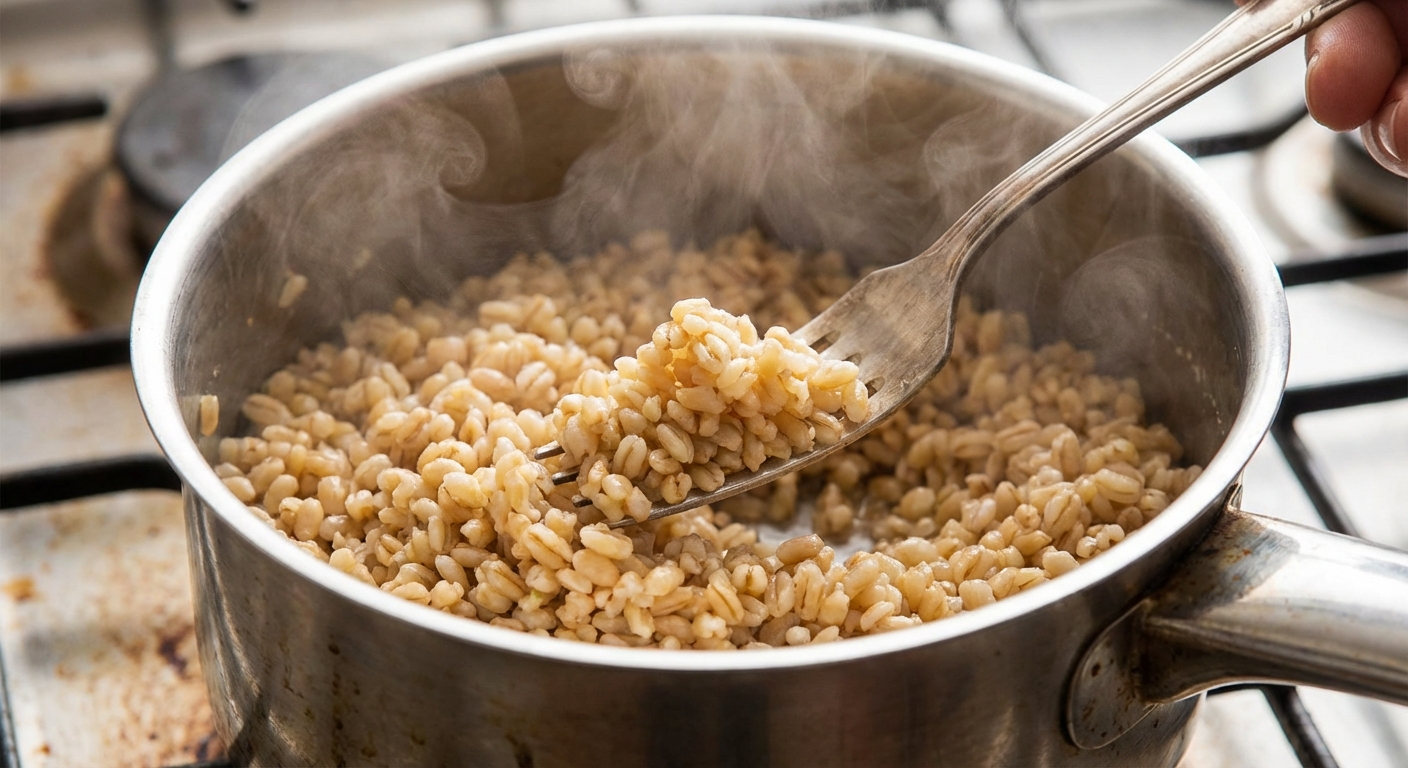
No. Pearl barley has the outer bran partially removed, so it cooks faster and is what most grocery stores carry. Hulled barley is more intact and takes longer, but has a nuttier bite.
Can I use this method for hulled barley?
Yes, but plan on a longer simmer. Start checking around 45 minutes and expect closer to 45 to 70 minutes depending on freshness, brand, and whether it was soaked. Go by texture: tender and pleasantly chewy, not crunchy in the center. The drain-and-steam-dry step still applies.
Why drain barley instead of using an exact water amount?
Because barley is a little wild. Cooking it in plenty of water, then draining, helps prevent gummy texture and makes the timing more forgiving. You are basically giving yourself a bigger margin of error, which is my favorite kitchen tool.
Do I have to rinse barley?
I strongly recommend it. A quick rinse removes extra starch and any pantry dust, and it helps the grains cook up more separate.
Can I cook barley in broth?
Absolutely. You can replace part or all of the water with broth. Just keep the liquid plentiful so you can still drain at the end.
Is barley gluten-free?
No. Barley contains gluten, so it is not safe for people with celiac disease or a gluten intolerance.
How do I make it taste less plain?
Finish with one of these: olive oil and lemon, butter and herbs, toasted nuts, feta, a spoon of pesto, or a little soy sauce plus sesame oil. Barley loves bold friends.
Can I cook barley with an absorption method (no draining)?
Yes. Use 1 cup pearl barley to 3 cups water or broth. Bring to a boil, then cover and simmer gently for 35 to 45 minutes until tender and the liquid is absorbed. Rest off heat for 5 minutes, then fluff. I still prefer the pasta method for the most reliably separate grains.