Mom's Best Recipes
Recipe

Heart-Healthy Lemon Herb Salmon Bowls

Crisp-edged salmon over quinoa with garlicky greens and a bright lemon yogurt sauce. Weeknight-easy, meal-prep friendly, and built for bold flavor with a heart-smart, lower-saturated-fat approach.

Author By Matt Campbell
4.8
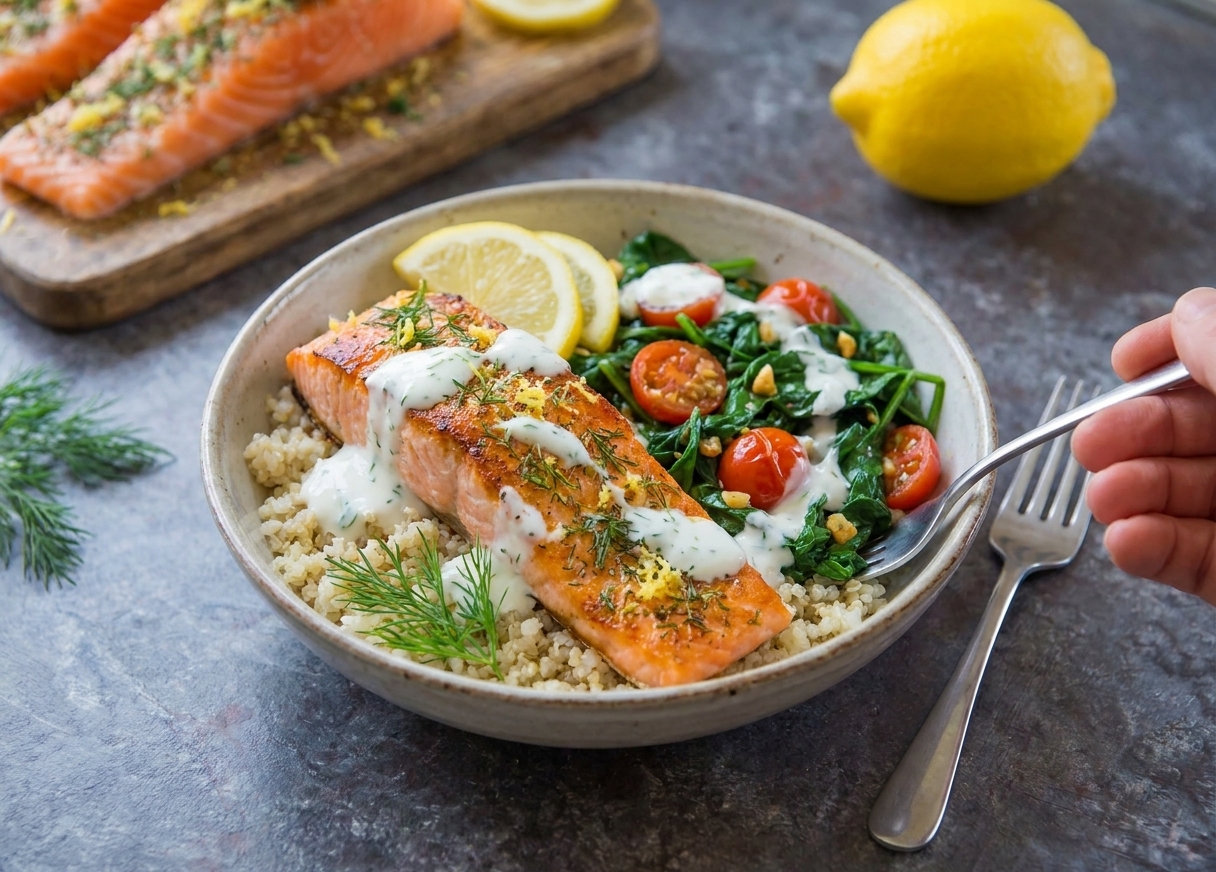
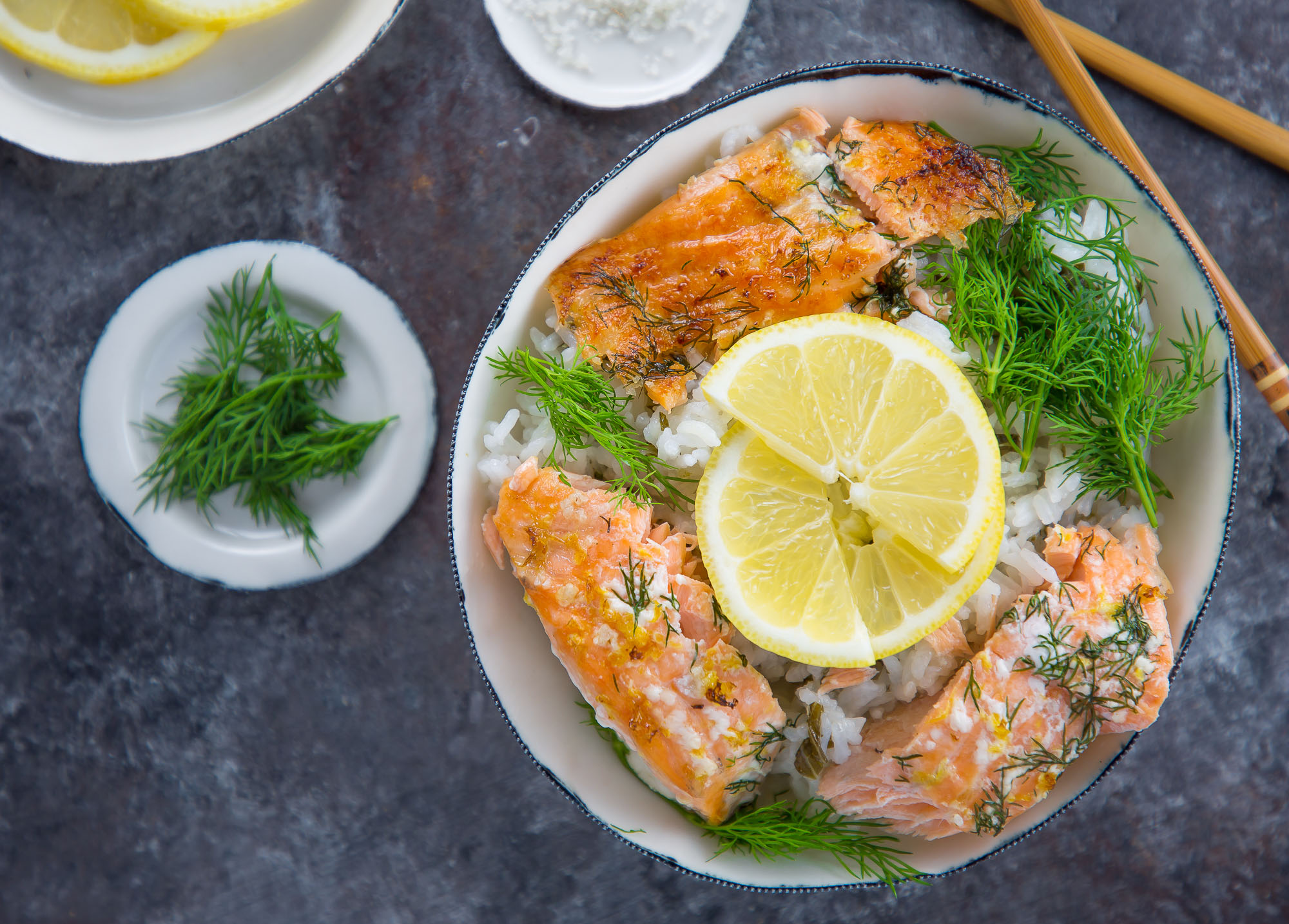
A plated lemon herb salmon quinoa bowl with sautéed spinach, cherry tomatoes, and a drizzle of lemon yogurt sauce served in a light stoneware bowl on a bright kitchen table

If “low cholesterol” makes you picture sad steamed chicken and a single tear rolling into plain rice, come hang out in my kitchen for a minute. We can absolutely cook in a heart-smart way without giving up the stuff that makes dinner worth eating: bright sauces, crisp edges, and that moment where you taste and immediately reach for another bite.

Quick note: salmon does contain dietary cholesterol. This recipe focuses on the bigger heart-healthy levers most people are aiming for: lower saturated fat, more unsaturated fats, and plenty of fiber-rich sides.

These lemon herb salmon bowls do the most with simple ingredients. You get flaky salmon with a lightly crisped surface, nutty quinoa (or brown rice if that is what you have), garlicky greens, and a tangy lemon yogurt sauce that tastes like you tried harder than you did.
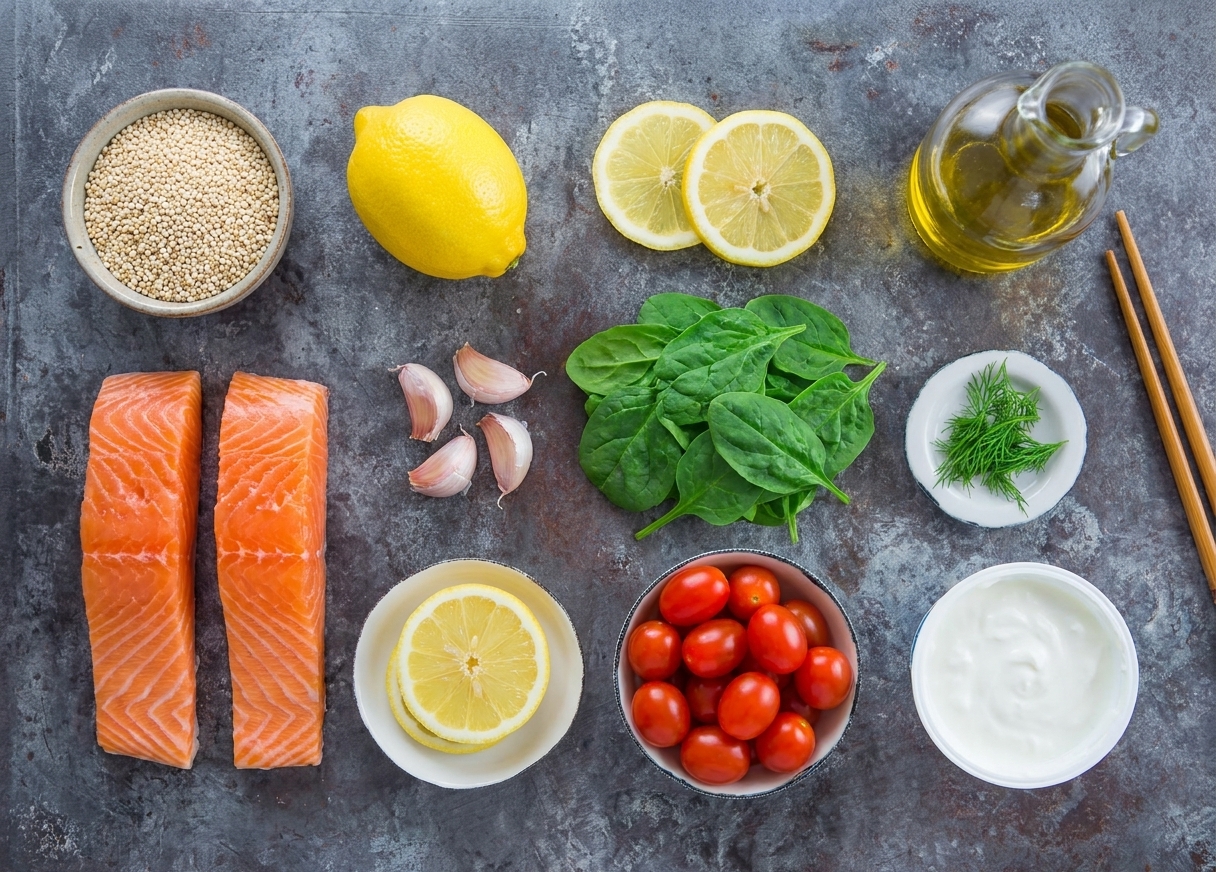
A neat lineup of ingredients for salmon bowls including salmon fillets, quinoa, lemons, garlic, spinach, cherry tomatoes, olive oil, and Greek yogurt arranged on a kitchen counter

Why It Works

  • Heart-smart by design: salmon brings omega-3s, we lean on olive oil, herbs, lemon, and garlic for flavor, and the sauce uses nonfat yogurt instead of mayo or cream.
  • High flavor, low drama: one pan for the salmon, one pot for quinoa, and the greens go in fast at the end.
  • Texture wins: quinoa for cozy carbs, sautéed greens for silky bite, and salmon with crisp edges so it feels restaurant-y.
  • Meal prep friendly: everything holds up well for lunches, with a quick tip so the fish does not get sad in the microwave.

Keep saturated fat lower: use nonfat or low-fat yogurt, stick with olive oil, skip butter, and add extra greens or a side salad for more fiber.

Pairs Well With

Storage Tips

Refrigerate: Store components in separate containers if possible and refrigerate promptly. Salmon, quinoa, and greens keep well for up to 3 to 4 days. Keep sauce in its own container for up to 3 to 4 days.

Reheat: Warm quinoa and greens first (microwave 45 to 90 seconds). Add salmon at the end and heat in short bursts (15 to 20 seconds) so it stays flaky. Or eat the salmon chilled on top like a fancy salad situation.

Freezing: Quinoa freezes well for up to 2 months. I do not love freezing the greens or the yogurt sauce. Salmon can be frozen, but the texture is best when eaten fresh within a few days.

Common Questions

Is salmon actually “low cholesterol”?

Salmon contains dietary cholesterol, but it is also rich in omega-3 fats and tends to be recommended in heart-healthy eating patterns. If you are managing high cholesterol, the bigger levers are usually reducing saturated fat, choosing unsaturated fats (like olive oil), and getting plenty of fiber. If you have specific medical targets, check with your clinician or dietitian.

Can I make this without fish?

Yes. Swap the salmon for chickpeas or baked tofu. For chickpeas, sauté them in the same spice mix until lightly crisp, then build the bowls the same way.

What is the best low-cholesterol sauce swap if I do not want yogurt?

Try a quick lemon-tahini sauce (tahini, lemon juice, garlic, water, pinch of salt) or a blended white bean sauce. Both are creamy without relying on heavy dairy.

How do I keep salmon from sticking to the pan?

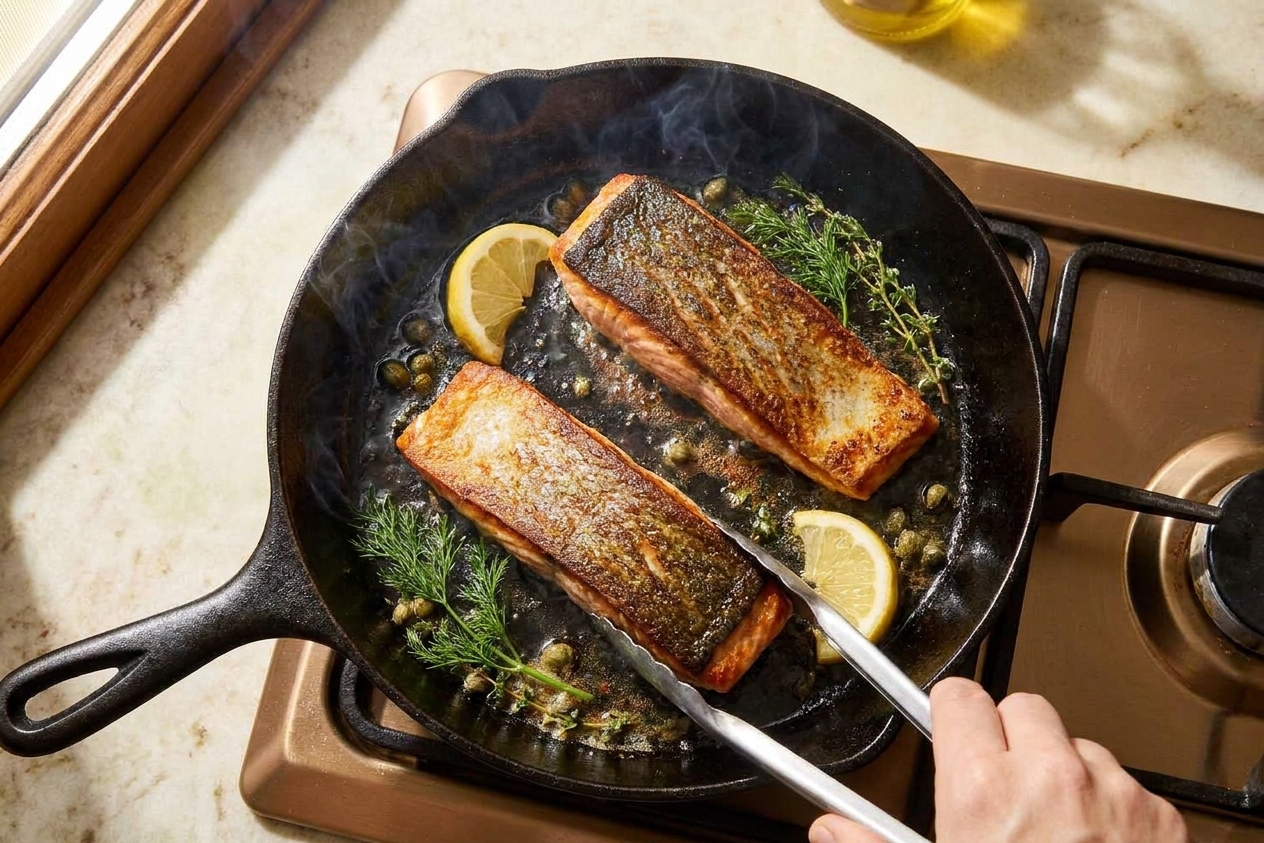
Use a nonstick skillet or a well-seasoned cast iron pan, preheat it, and add a little olive oil. Also, do not rush the flip. When salmon is ready, it releases more easily.

Can I use frozen spinach or frozen salmon?

Absolutely. Thaw frozen salmon in the fridge overnight if you can. For frozen spinach, thaw and squeeze it dry, then sauté with garlic for 1 to 2 minutes to drive off extra water.

I started making versions of these bowls when I realized I was treating “healthy dinner” like a punishment. Which is wild, because the whole point of cooking is to make something you actually want to eat. The first time I nailed the lemony sauce and got that golden crust on the salmon, I remember standing at the counter doing that classic fork-in-hand taste test that turns into half a meal. This is the kind of food that feels good after you eat it, but also feels good while you are eating it. That matters.