Mom's Best Recipes
Recipe

French Baguette

Classic home-baked baguettes with a crisp, crackly crust and a chewy center, made with simple pantry ingredients and a few smart techniques.

Author By Matt Campbell
4.8
Two golden French baguettes with crackly, blistered crust resting on a wooden cutting board on a bright kitchen counter

If you have ever walked past a bakery and thought, I need that baguette energy in my life, this is your sign. We are talking crisp crust that shatters a little, chewy middle that hugs butter like it was born for the job, and that sweet wheaty aroma that makes your kitchen feel like a tiny Paris daydream.

This is a home-friendly baguette. No obscure ingredients. No fancy mixer required. Just flour, water, yeast, salt, and a couple technique moves that do the heavy lifting: gentle folds for structure, a confident shape, and steam in the oven for that bakery-style crust.

Measured flour, water, yeast, and salt arranged in small bowls on a clean kitchen counter with a wooden spoon nearby

Why It Works

  • Crunchy crust, chewy crumb: Steam at the start keeps the surface flexible so the baguette can expand, then it bakes into that crisp shell.
  • Big flavor from simple dough: A slower rise in the fridge builds that lightly tangy, wheaty depth without extra effort.
  • Beginner-friendly shaping: Clear, calm steps that get you long loaves with clean seams and good oven spring.
  • Real-life equipment: A sheet pan works. A pizza stone is great but not required.

Pairs Well With

Storage Tips

Baguettes are at their best the day they are baked. That said, leftovers are not a tragedy. They are just the beginning of croutons, garlic bread, and heroic sandwiches.

Room temperature (best for 1 day)

  • Cool completely, then store cut-side down on a cutting board, or loosely wrapped in paper.
  • Avoid sealing in plastic at room temp unless you like soft crust.

Freeze (best for 1 to 2 months)

  • Once fully cool, wrap tightly in foil, then place in a freezer bag.
  • For convenience, you can slice first and freeze slices, then toast straight from frozen.

How to revive a baguette

  • Whole loaf: Lightly mist the crust with water, then bake at 350°F for 8 to 12 minutes.
  • Slices: Toast, or warm in a skillet with a little butter for crisp edges.

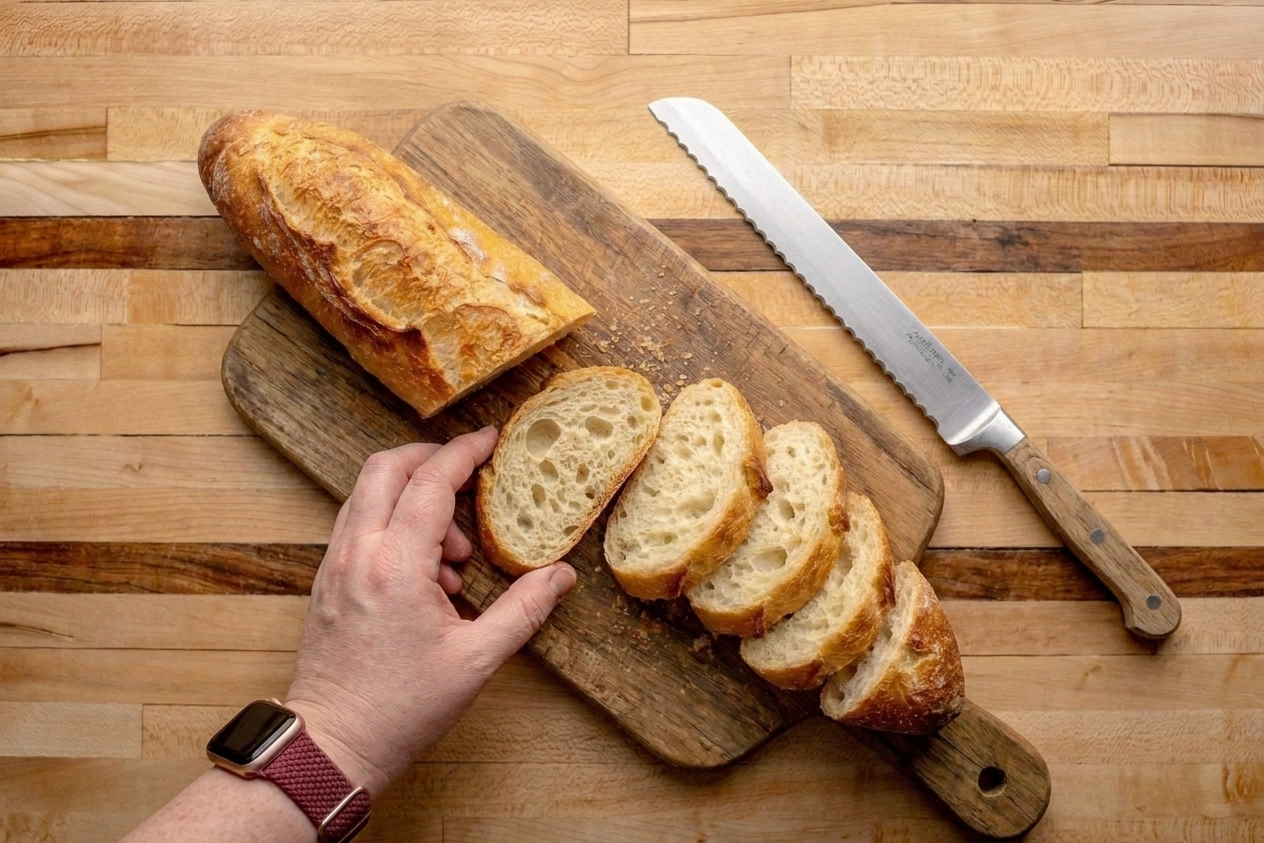
A partially sliced baguette on a wooden cutting board with scattered crumbs and a serrated bread knife

Common Questions

Why is my baguette not as crispy as the bakery?

Usually it is one of three things: not enough steam at the beginning, oven not hot enough, or you cut while it was still warm. Make sure the oven is fully preheated, add steam (see instructions), and cool at least 45 minutes before slicing so the crust sets.

Do I need bread flour?

No. Bread flour helps with chew and height, but all-purpose flour works. If using all-purpose, be gentle with shaping and give the dough enough time to develop strength during folds.

Can I make the dough ahead?

Yes, and it is encouraged. A cold overnight rise improves flavor and makes the dough easier to handle. You can refrigerate the covered dough for up to 24 hours after it has started rising at room temperature.

What is the easiest way to create steam?

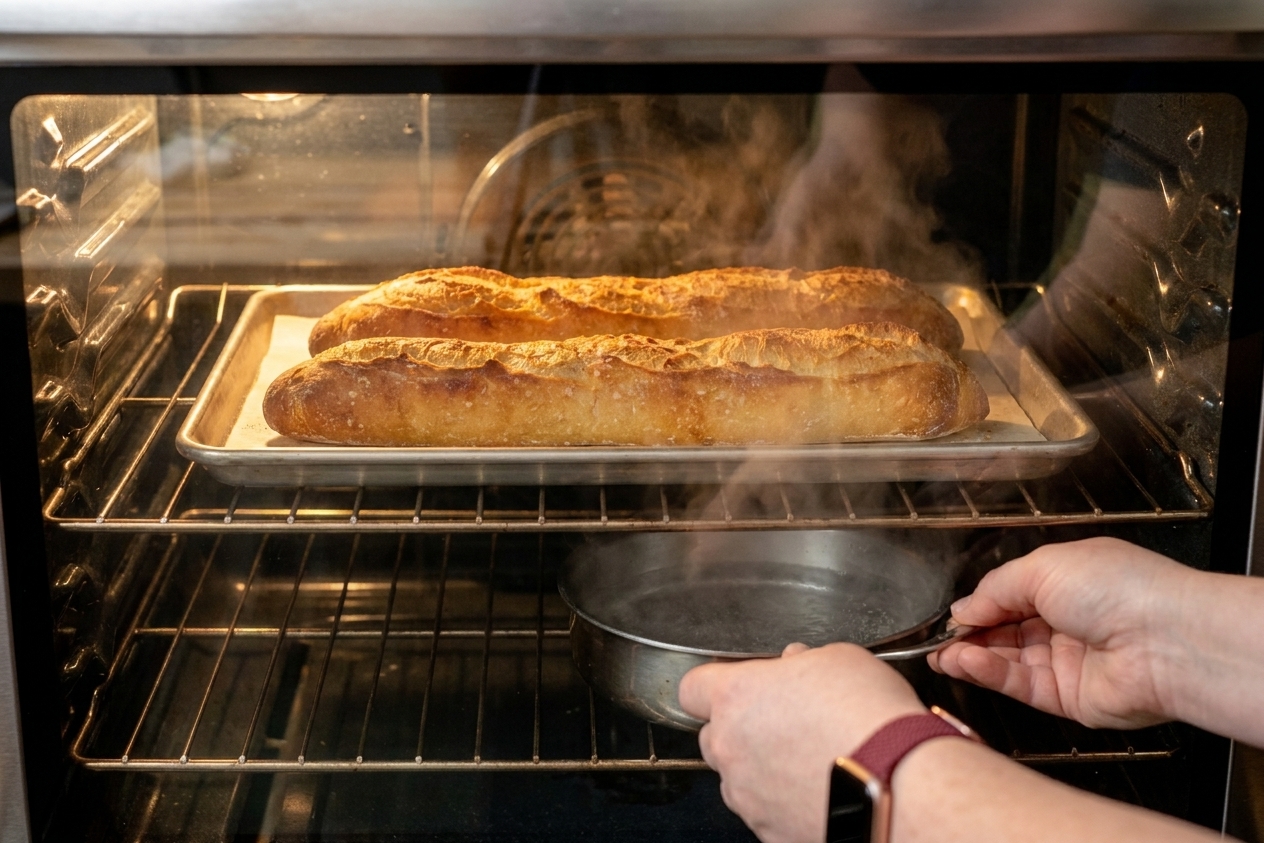
Put a small metal pan on the lower rack while the oven preheats. When the bread goes in, carefully pour 1 cup hot water into that pan and quickly close the door. Keep your face and hands clear of the steam. Avoid using glass, ceramic, or enamel pans for this, and keep kids and pets out of the kitchen while you add the water.

My baguettes burst on the side. What happened?

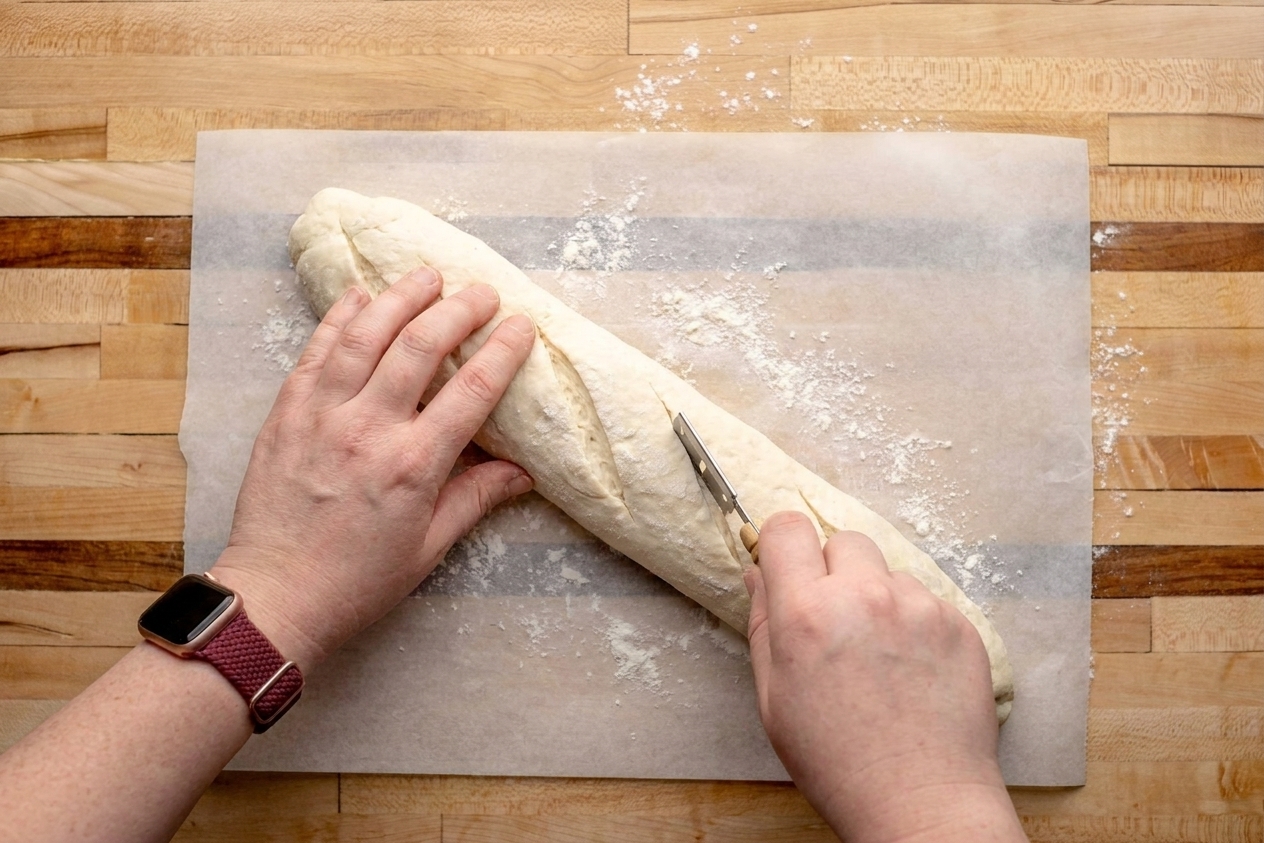
That is usually a scoring, seam, or proofing issue. Make sure the seam is well sealed and placed down on the parchment, score with angled cuts about 1/4 inch deep, and do not rush the final proof. Underproofed loaves often split where they feel like it.

Can I skip the couche towel and use parchment?

Absolutely. A floured towel helps the loaves hold their shape, but you can use parchment with folded “walls” between loaves to support them during the final proof. A couple of rolled kitchen towels (or foil “logs”) alongside the parchment can help keep those walls standing tall.

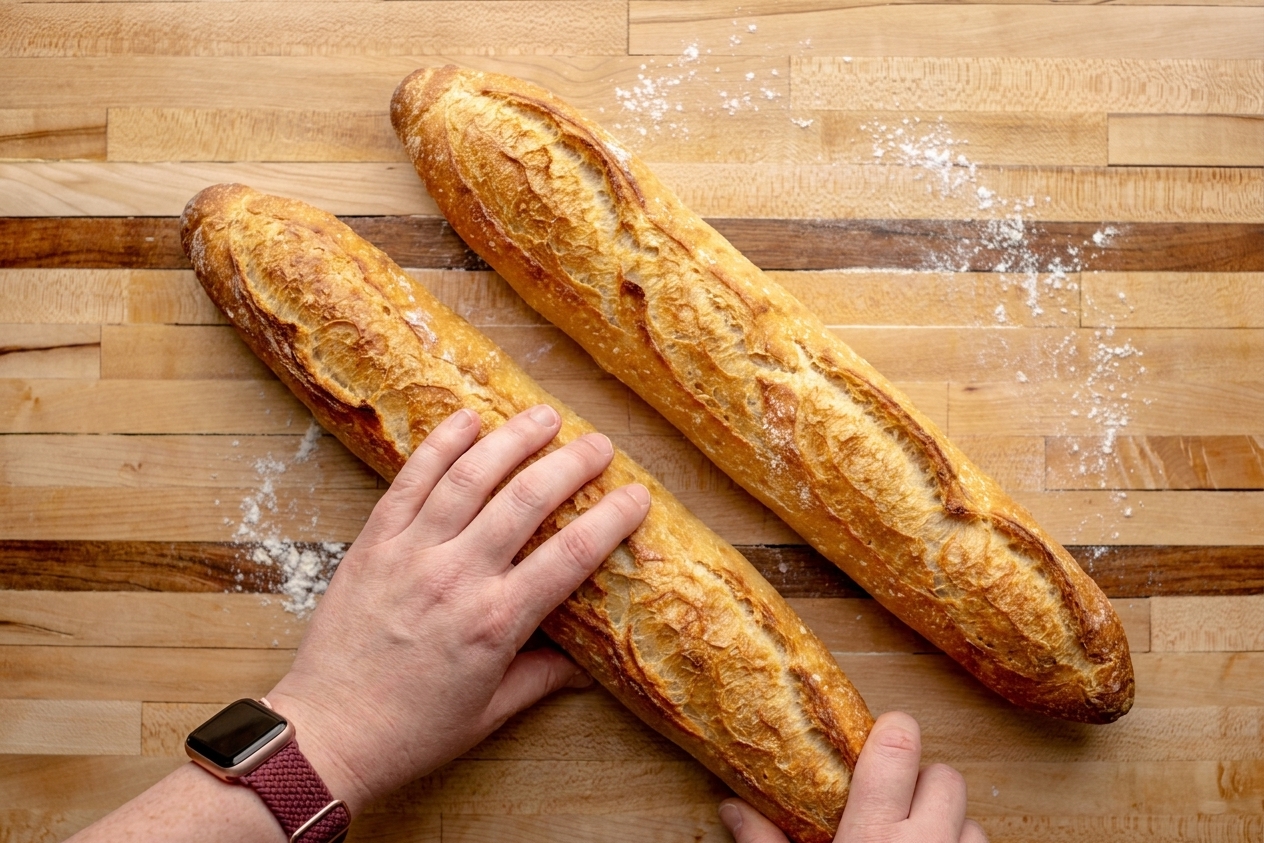
I did not start baking baguettes because I thought I was going to become a bread person overnight. I started because I wanted the kind of sandwich bread that fights back a little. The first time I tried, I got two weird, lumpy loaves that looked like they had opinions. Still tasted great. That is the thing with baguettes. Even the imperfect ones are wildly useful. Tear one open, swipe with salted butter, drag it through a bright garlicky sauce, and suddenly dinner feels like you planned it.