Mom's Best Recipes
Recipe

Fried Chicken Tenders

Golden, crunchy tenders with juicy centers and a seasoned crust that actually sticks.

Author By Matt Campbell
4.8
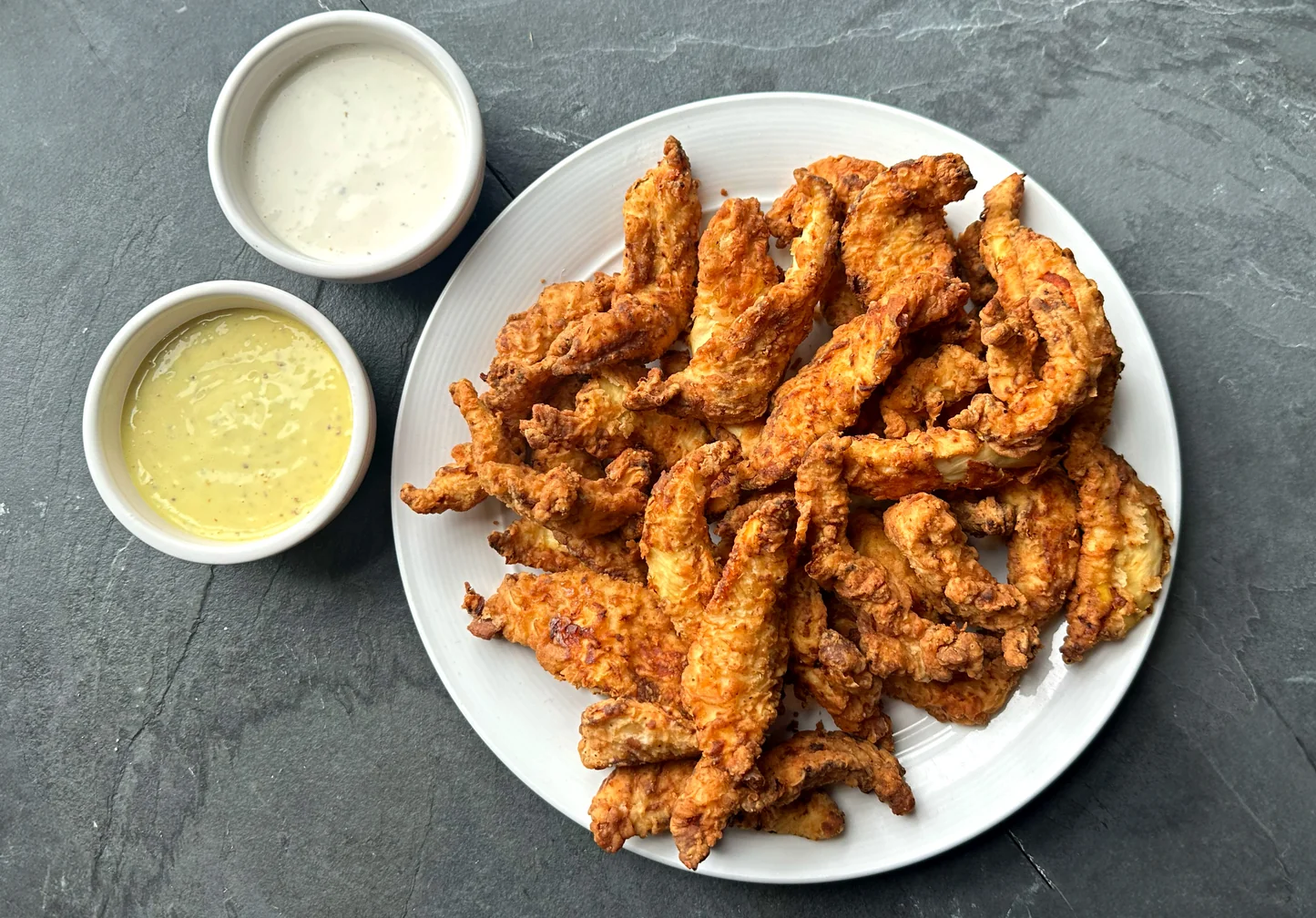
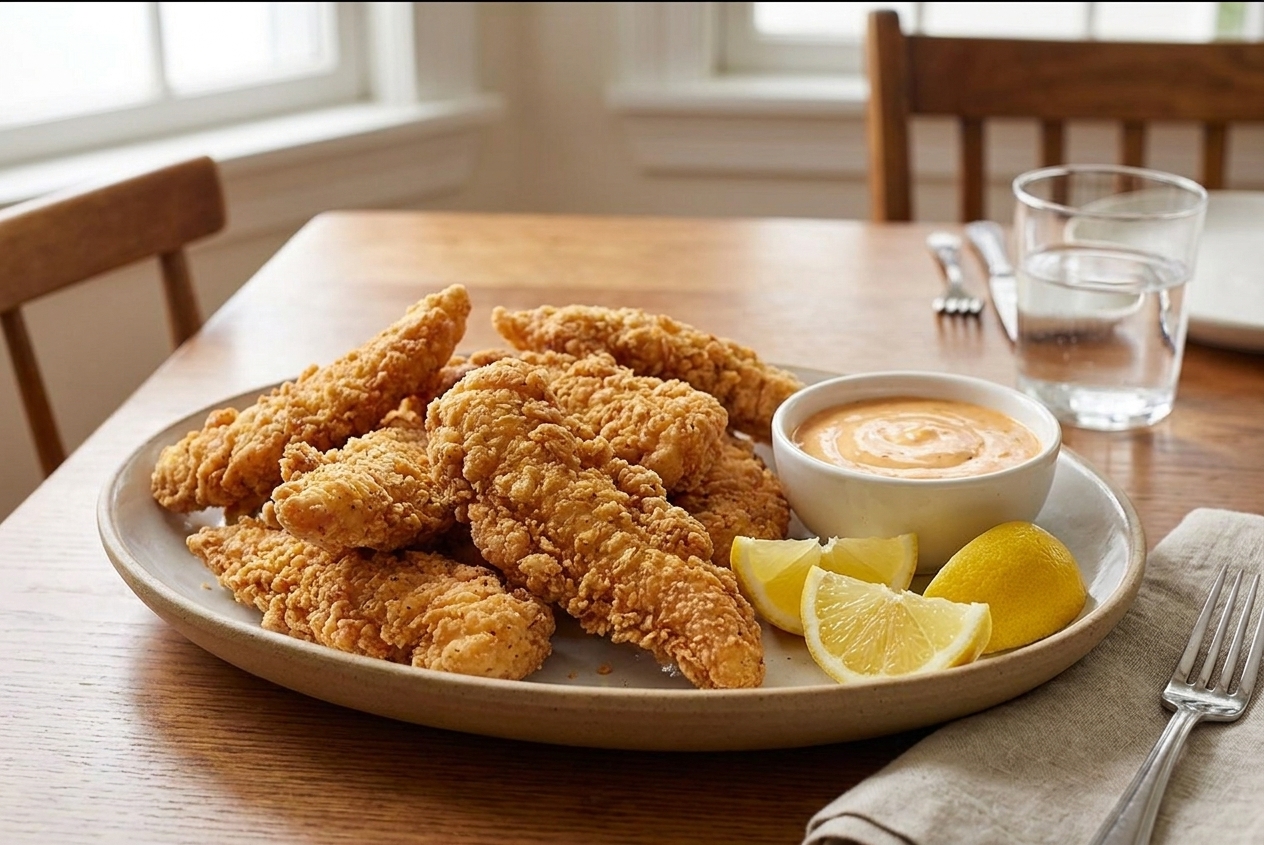
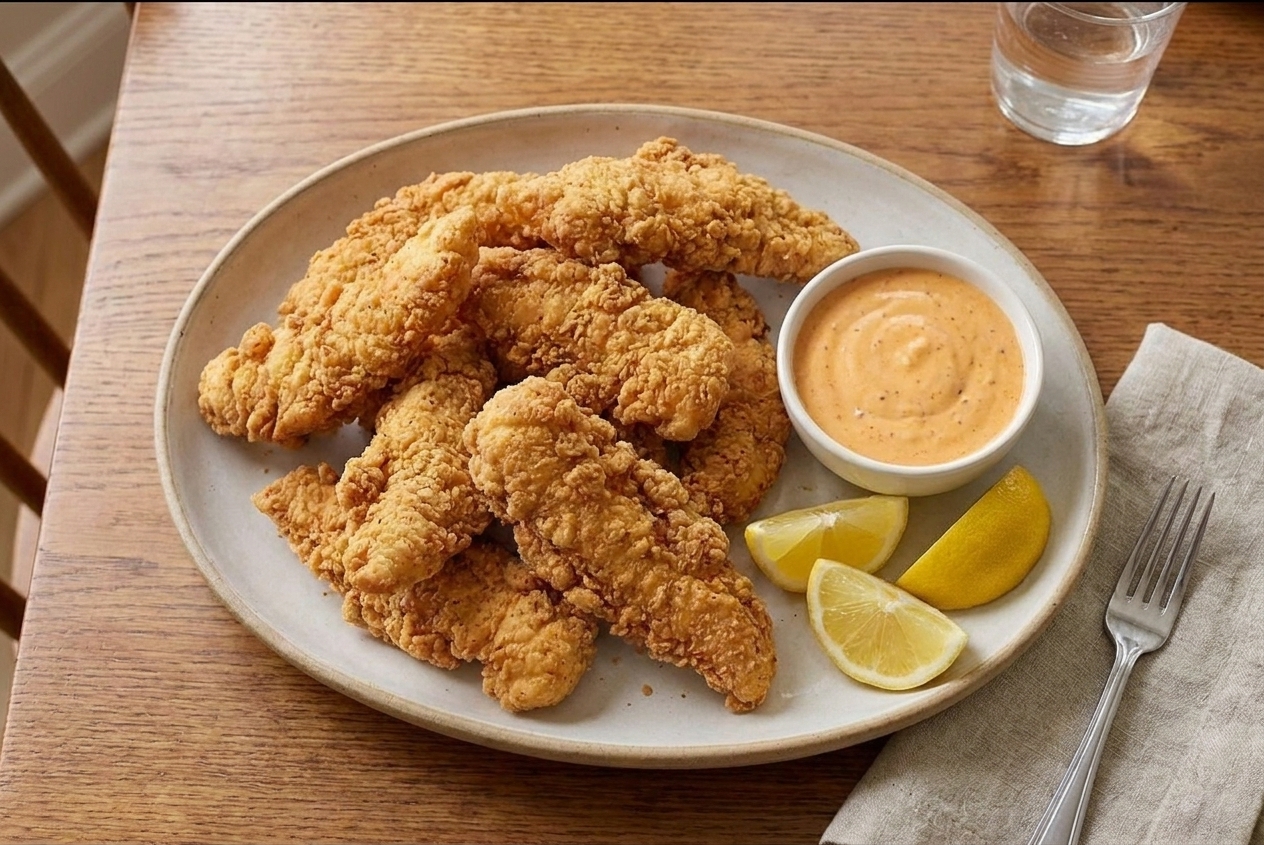
A plate of golden fried chicken tenders with a small bowl of dipping sauce on a wooden table, warm kitchen lighting

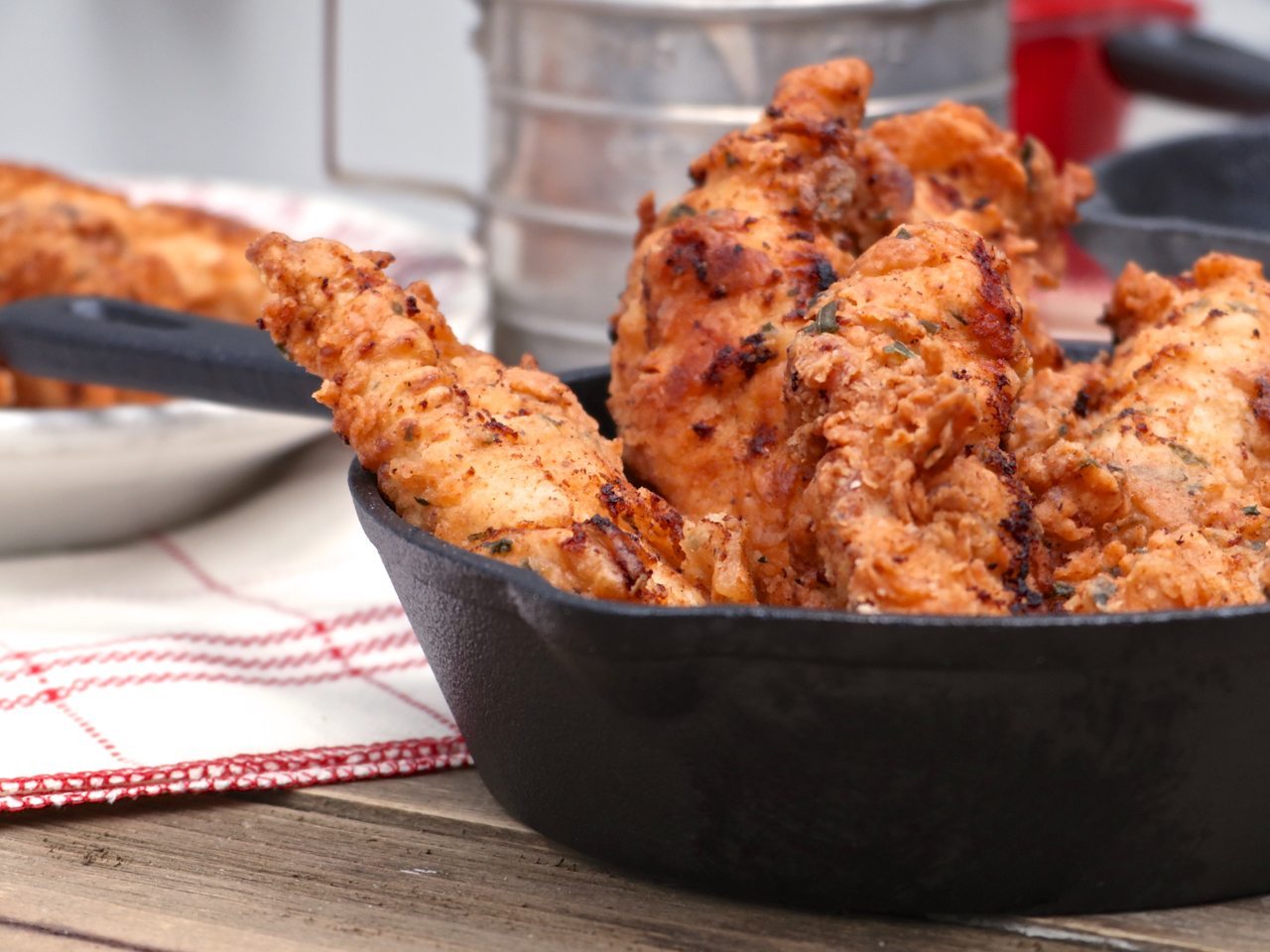
Fried chicken tenders are the ultimate peace treaty meal. Kids love them, adults love them, and you get to feel like a kitchen wizard when that first batch comes out crackly and golden. This version keeps it simple: a quick buttermilk soak for juiciness, a well-seasoned flour and cornstarch dredge for crisp edges, and a steady oil temp so you do not end up with soggy breading or raw centers.

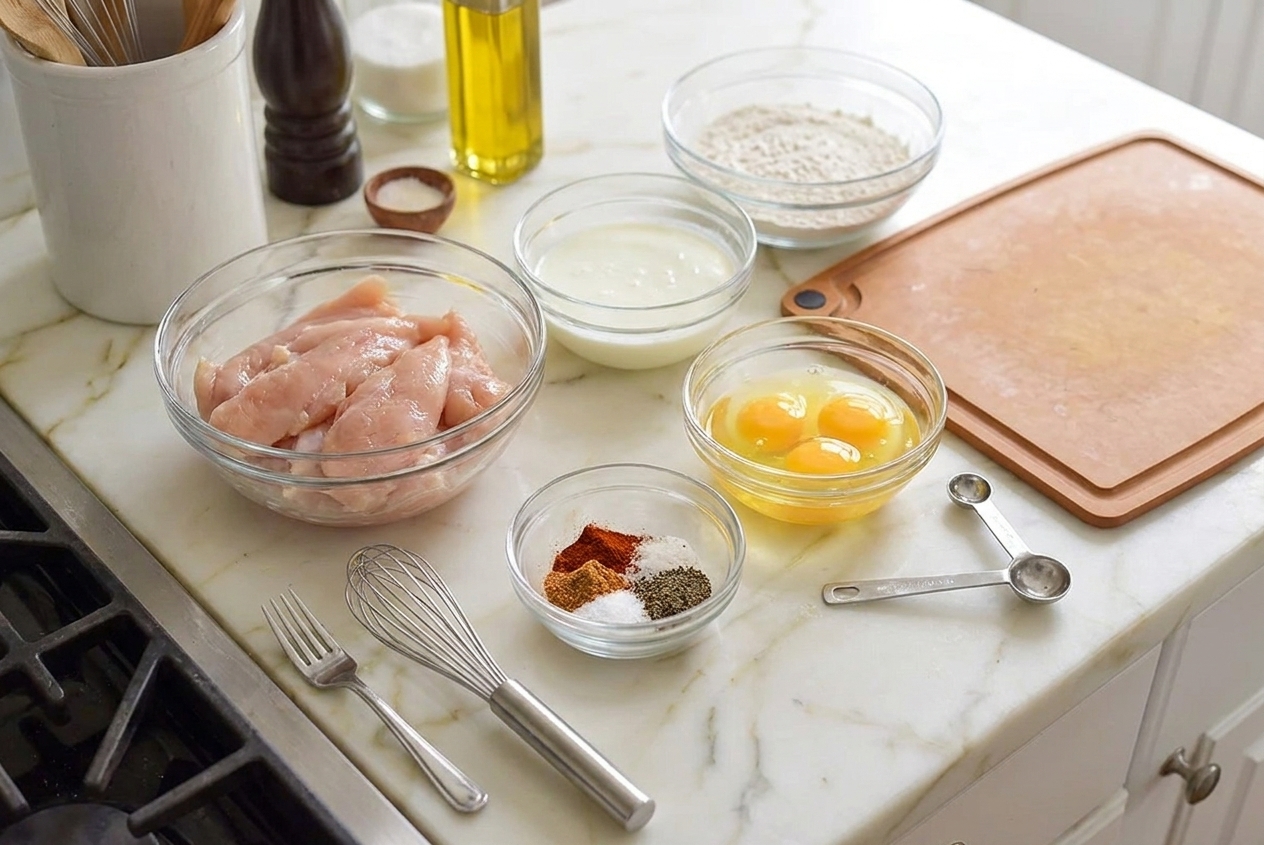
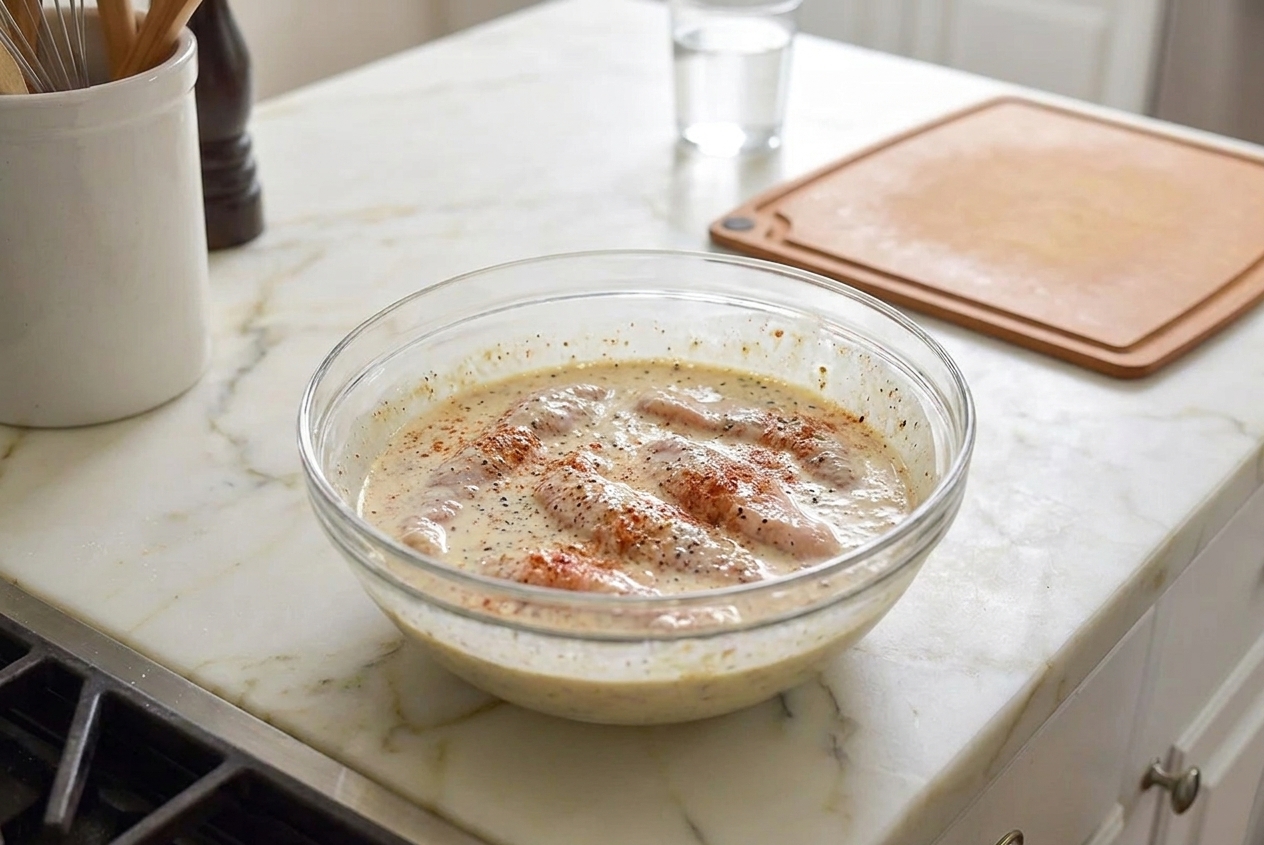
Raw chicken tenders, buttermilk, flour, spices, and eggs arranged on a bright kitchen counter

Why It Works

  • Juicy inside: Buttermilk plus a short rest time keeps the chicken tender, not chewy.
  • Crunchy outside: A flour and cornstarch combo fries up light and crisp with those little craggy bits everyone fights over.
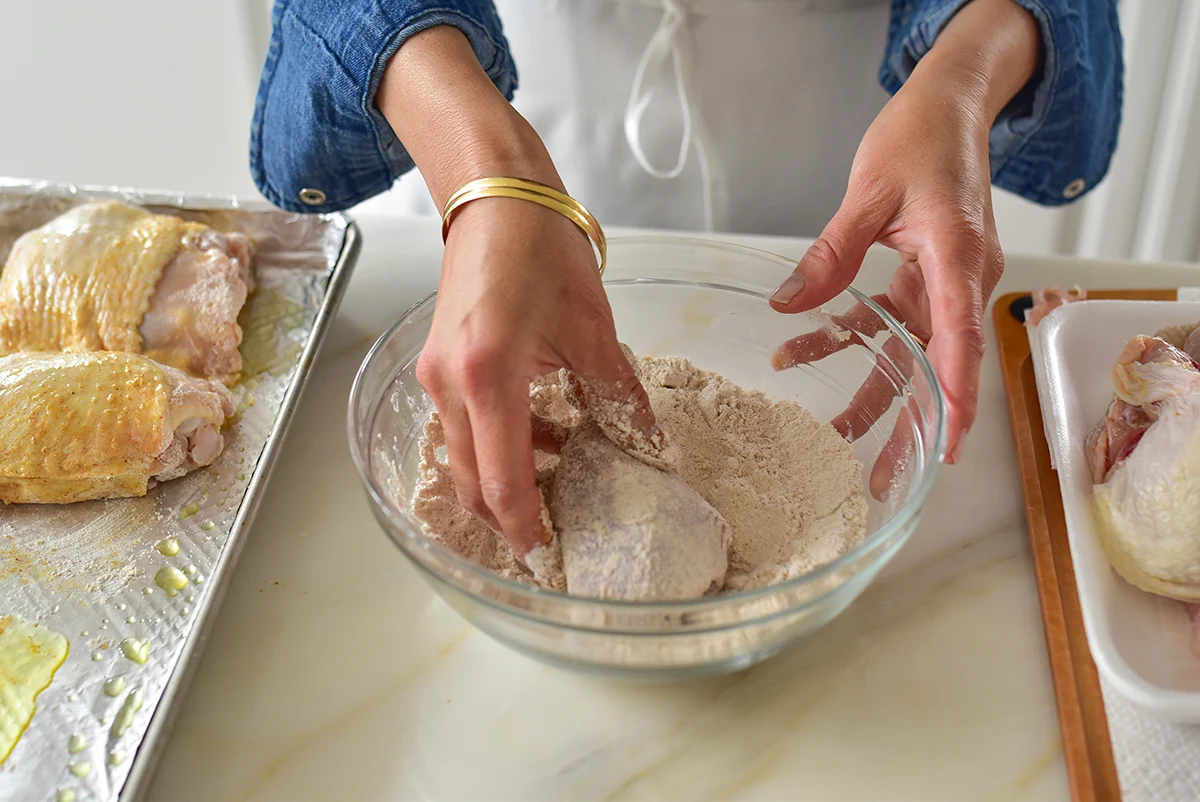
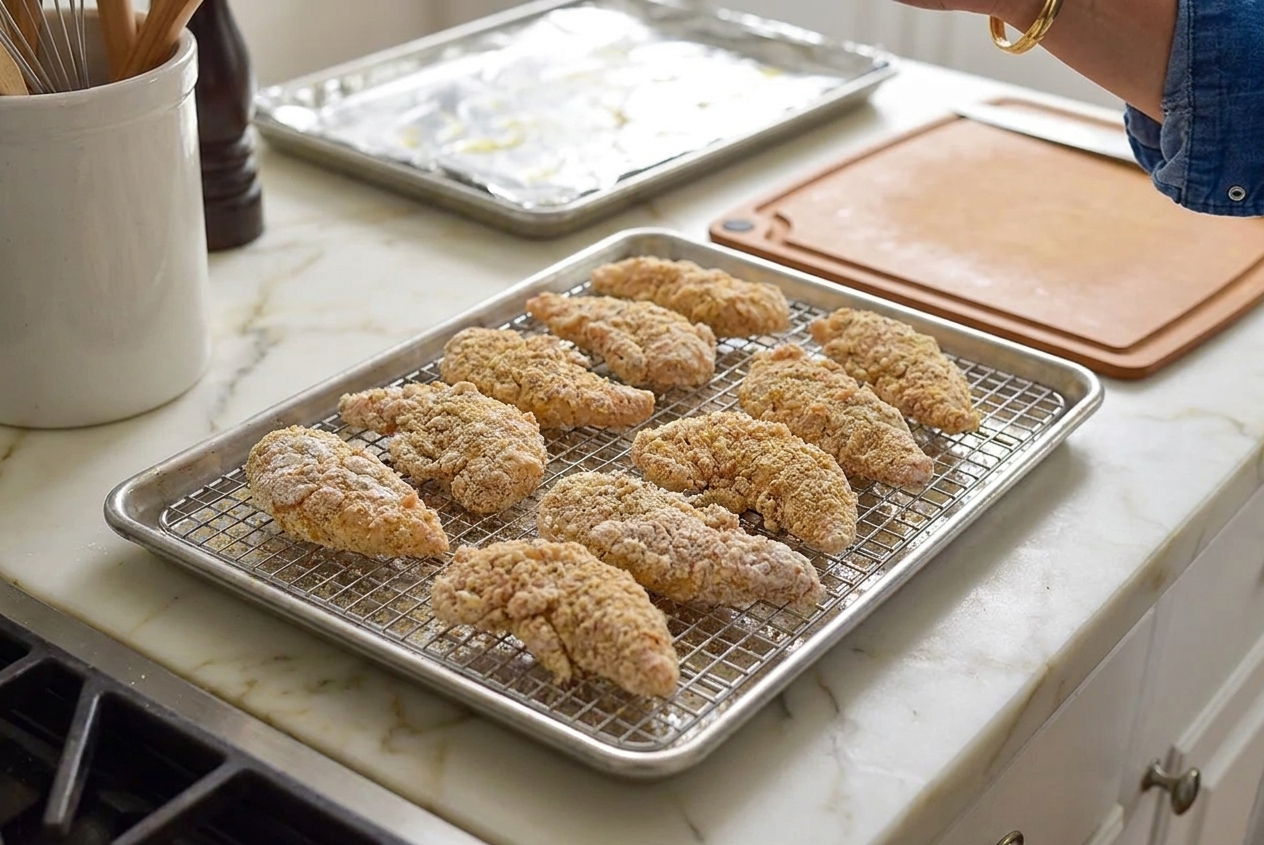
  • Coating that sticks: Pressing the dredge on and a quick rest before frying help the breading stay put.
  • Weeknight friendly: You can marinate in the morning or just 30 minutes before dinner, then fry in quick batches.

Pairs Well With

Storage Tips

Refrigerate: Cool tenders completely, then store in an airtight container lined with a paper towel for up to 3 days.

Reheat (best for crispiness): Bake on a wire rack set over a sheet pan at 400°F for 10 to 14 minutes, flipping once. Or air fry at 375°F for 6 to 8 minutes.

Freeze: Freeze cooked, cooled tenders in a single layer on a sheet pan until firm, then transfer to a freezer bag for up to 2 months.

Reheat from frozen: Bake at 425°F on a rack for 18 to 22 minutes or until hot and crisp (165°F inside).

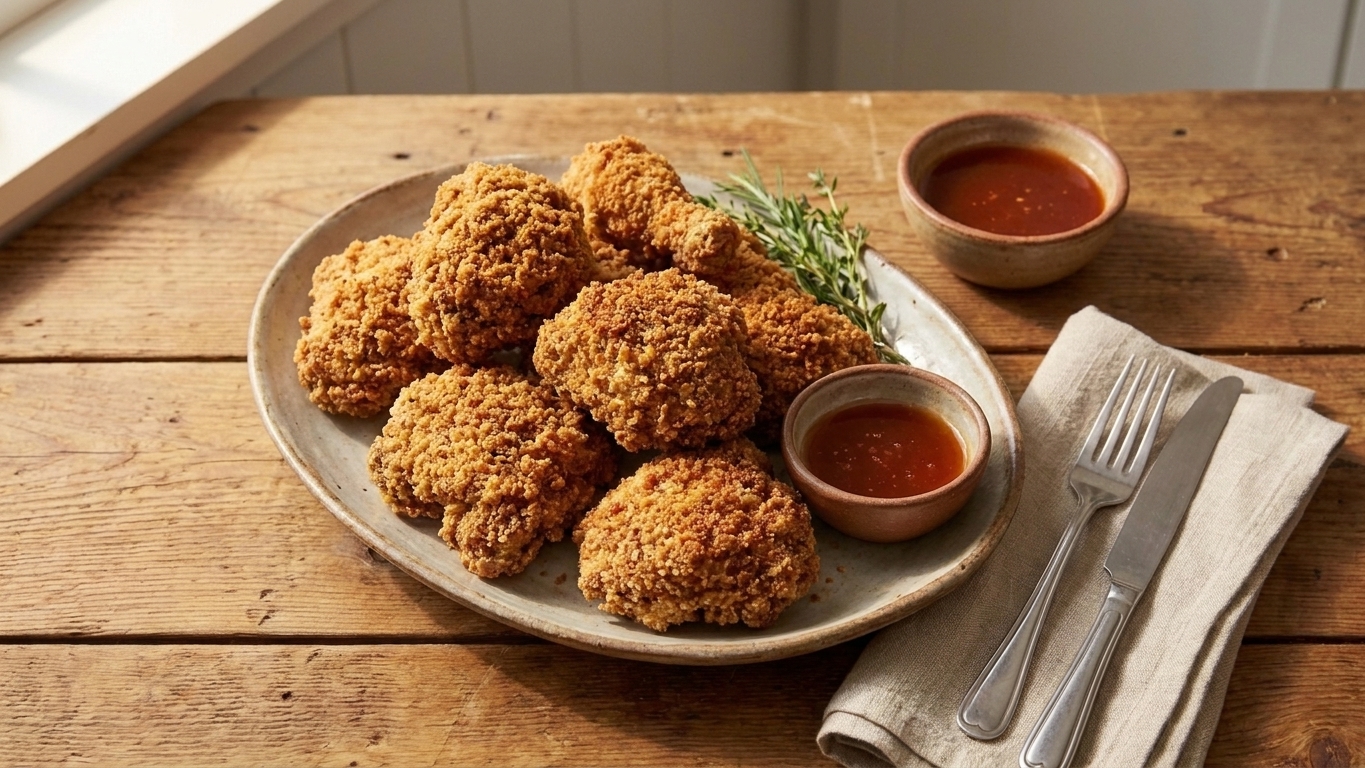
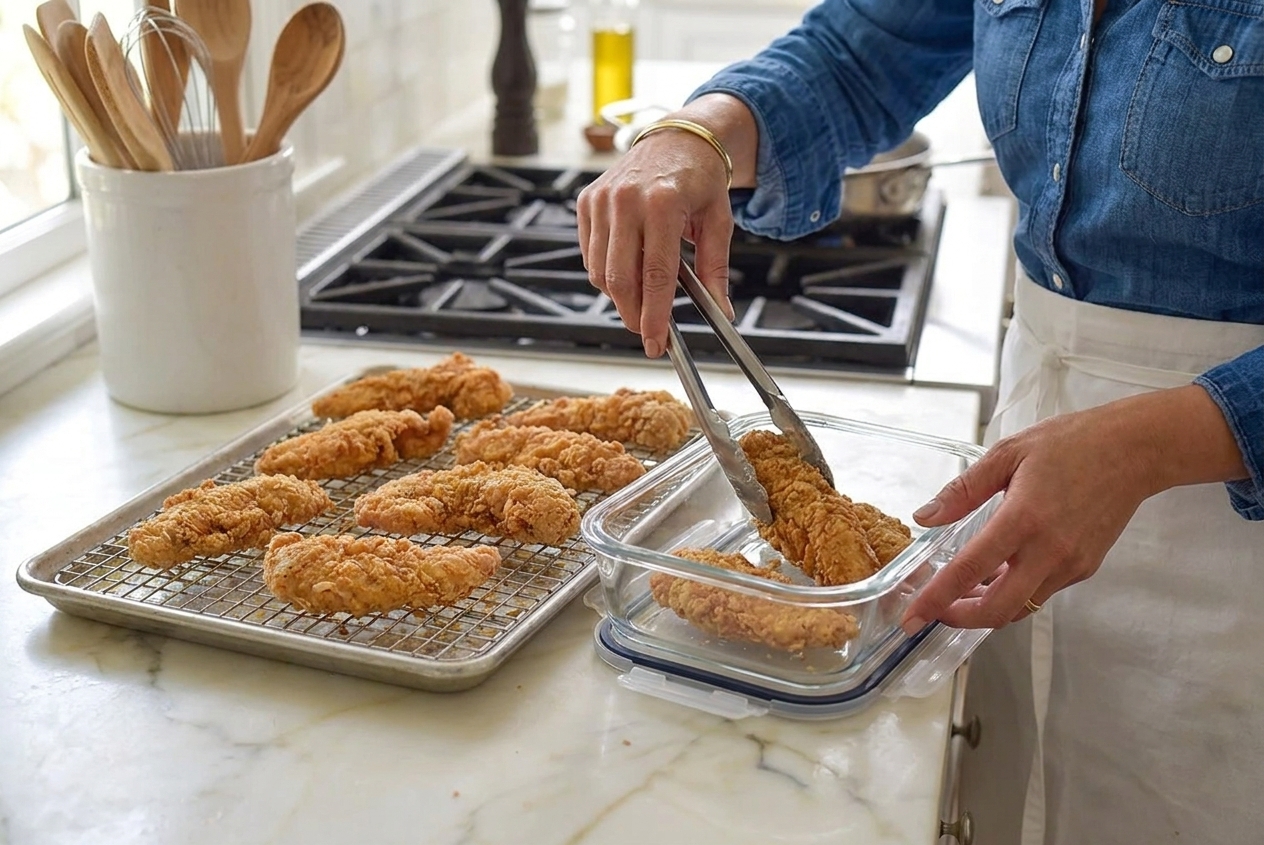
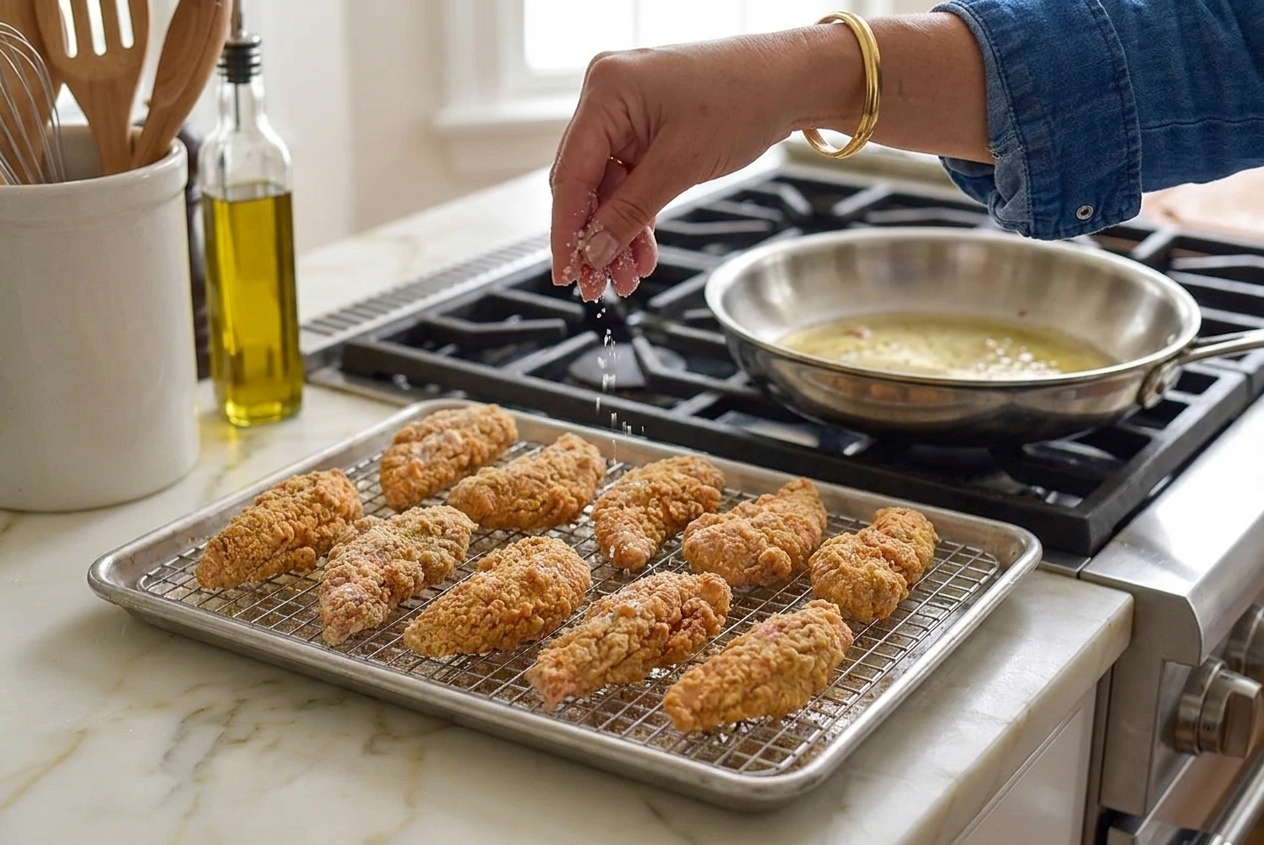
Crispy fried chicken tenders cooling before being placed into a glass storage container on a kitchen counter

Common Questions

What oil is best for frying chicken tenders?

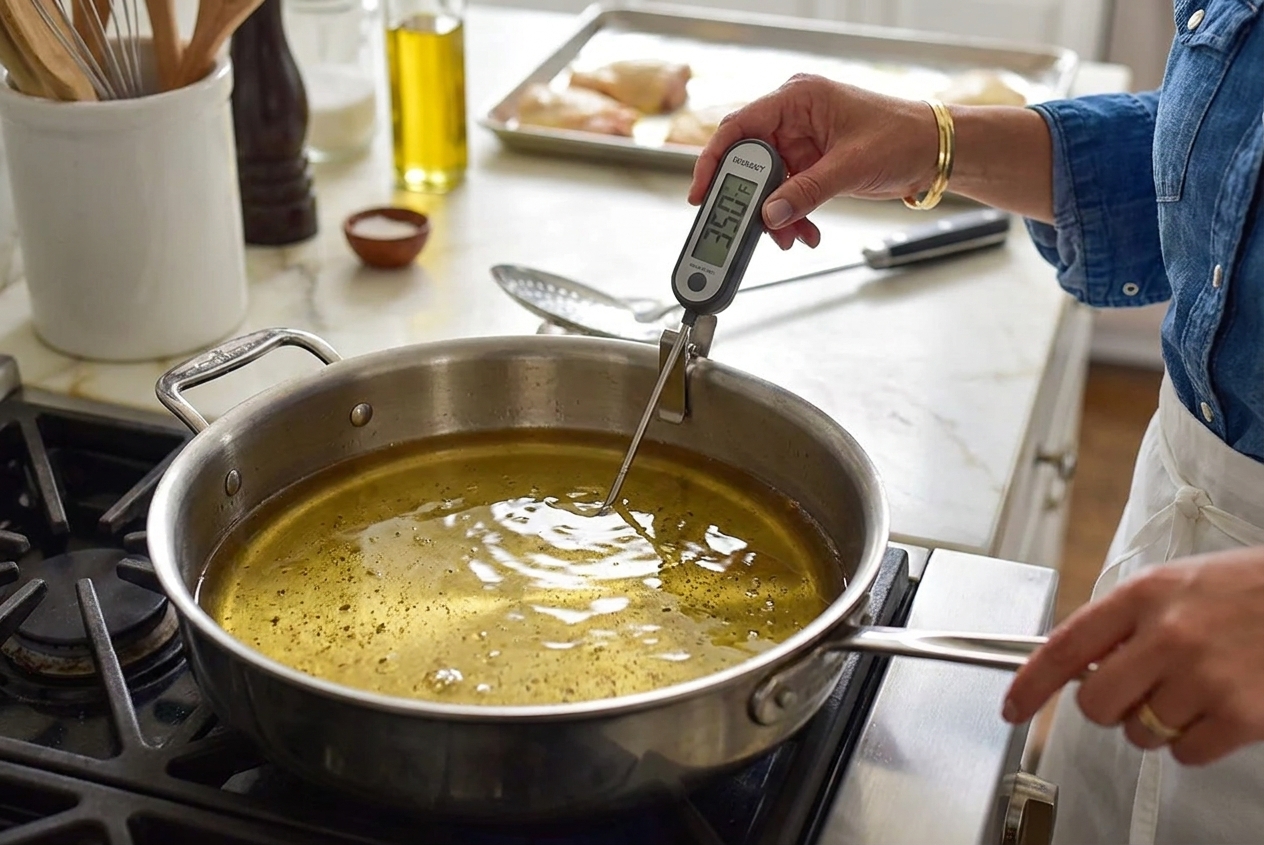
Use a neutral oil with a higher smoke point like peanut, canola, vegetable, or avocado oil. You want clean flavor and steady frying at 350°F to 365°F.

How do I know when chicken tenders are done?

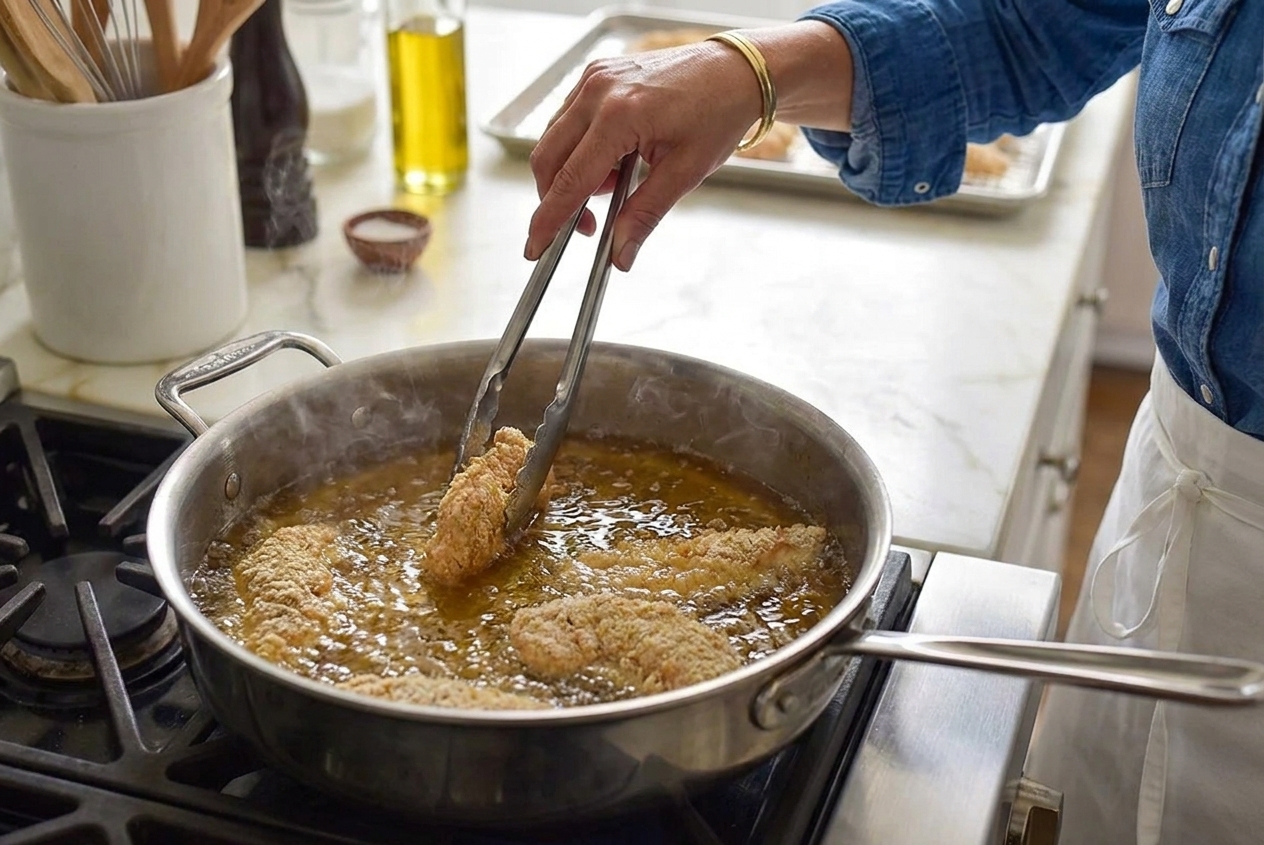
The most reliable way is a thermometer. Pull them when the thickest part hits 165°F. Visually, they should be deep golden brown and feel firm when you gently squeeze with tongs.

Why is my breading falling off?

Usually it is one of these: the chicken is too wet going into the flour, the oil is not hot enough, or you are flipping too early. Let excess marinade drip off, press the coating onto the chicken, let the breaded tenders rest 5 to 10 minutes, and fry at 350°F to 365°F.

Can I make these without buttermilk?

Yes. Mix 1 cup milk with 1 tablespoon lemon juice or white vinegar and let it sit 5 minutes. It is a solid backup for flavor and moisture, but true buttermilk tends to tenderize a bit better.

Can I bake them instead of frying?

You can, but they will be more “crispy baked” than true fried crunch. Bake on a rack at 425°F, spray both sides with oil, and cook about 16 to 20 minutes, flipping halfway. Time depends on thickness, so cook until the centers reach 165°F.

I started making fried chicken tenders because I wanted “restaurant crunchy” at home without turning my kitchen into a full-time fry shack. The first time I nailed the temperature and let the breading rest before frying, it clicked. You get that crisp shell that crackles when you bite, but the chicken stays juicy and tender. Now it is my go-to when I need a dinner everyone agrees on, which is basically a culinary miracle.