Mom's Best Recipes
Recipe

Gajar ka Halwa (Indian Carrot Pudding)

Grated carrots cooked in milk and sugar until thick and glossy, finished with cardamom and nuts.

Author By Pip
4.8
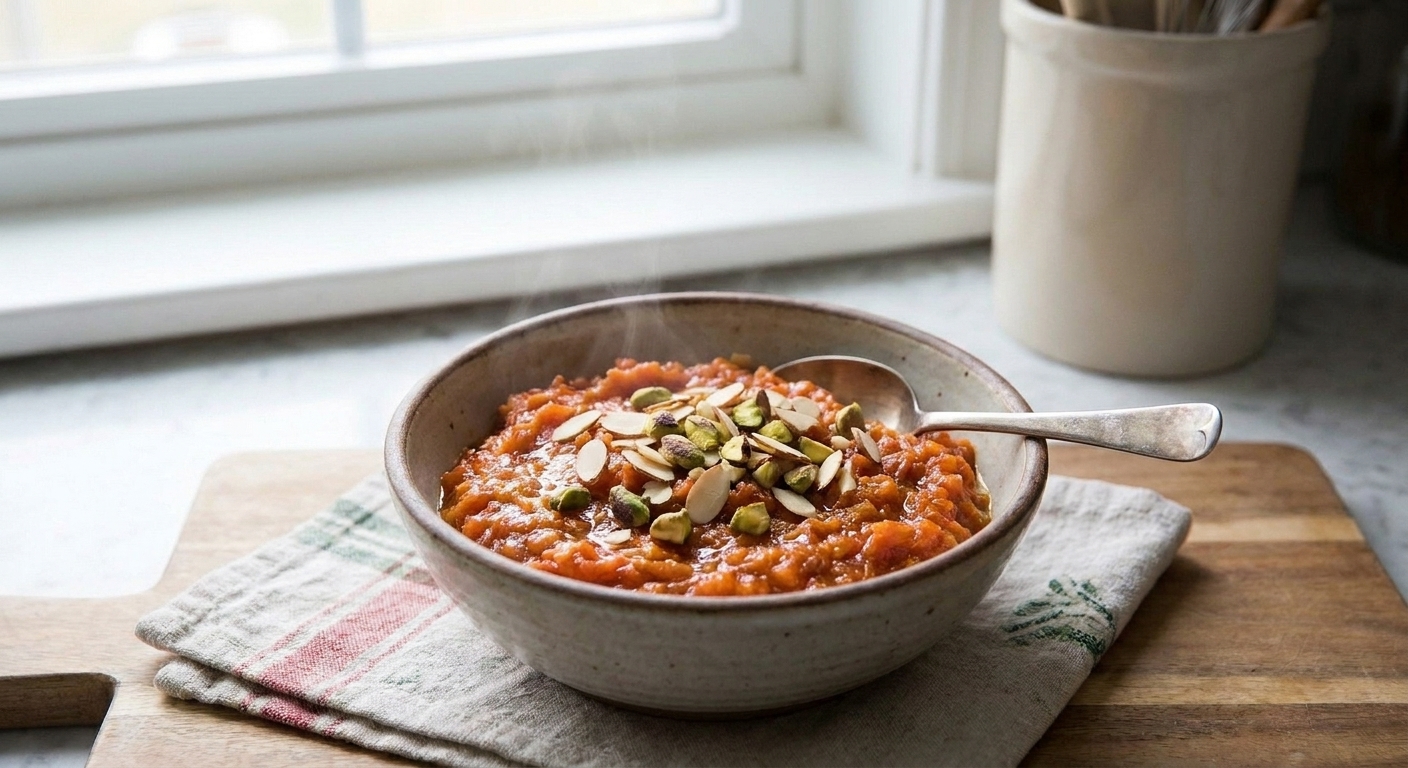
A warm bowl of gajar ka halwa with a glossy carrot pudding texture, topped with sliced almonds and pistachios on a cozy kitchen table

Small paws, big appetite, and a soft spot for comfort food. If you are wondering, yes, I am the type who magically appears the second something sweet starts simmering.

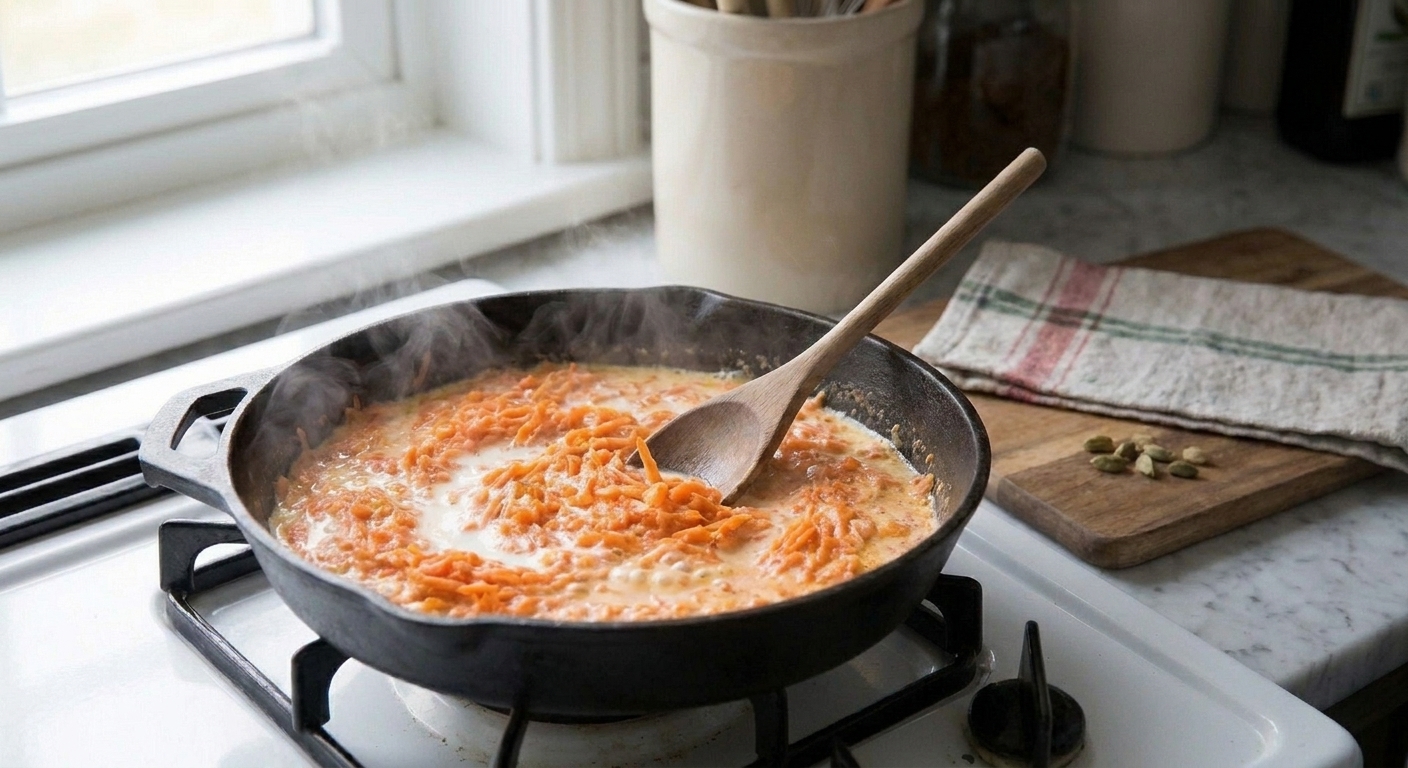
If you have carrots and a saucepan, you are very close to gajar ka halwa, a classic Indian carrot pudding that turns humble grated carrots into something rich, fragrant, and spoonably cozy. This is not a frosted carrot layer cake. It is a stovetop dessert where carrots simmer in milk, the milk reduces, and everything turns thick and glossy.

I will walk you through the two little details that make a big difference: how fine to grate and what “done” looks like so you can stop cooking at the perfect moment.

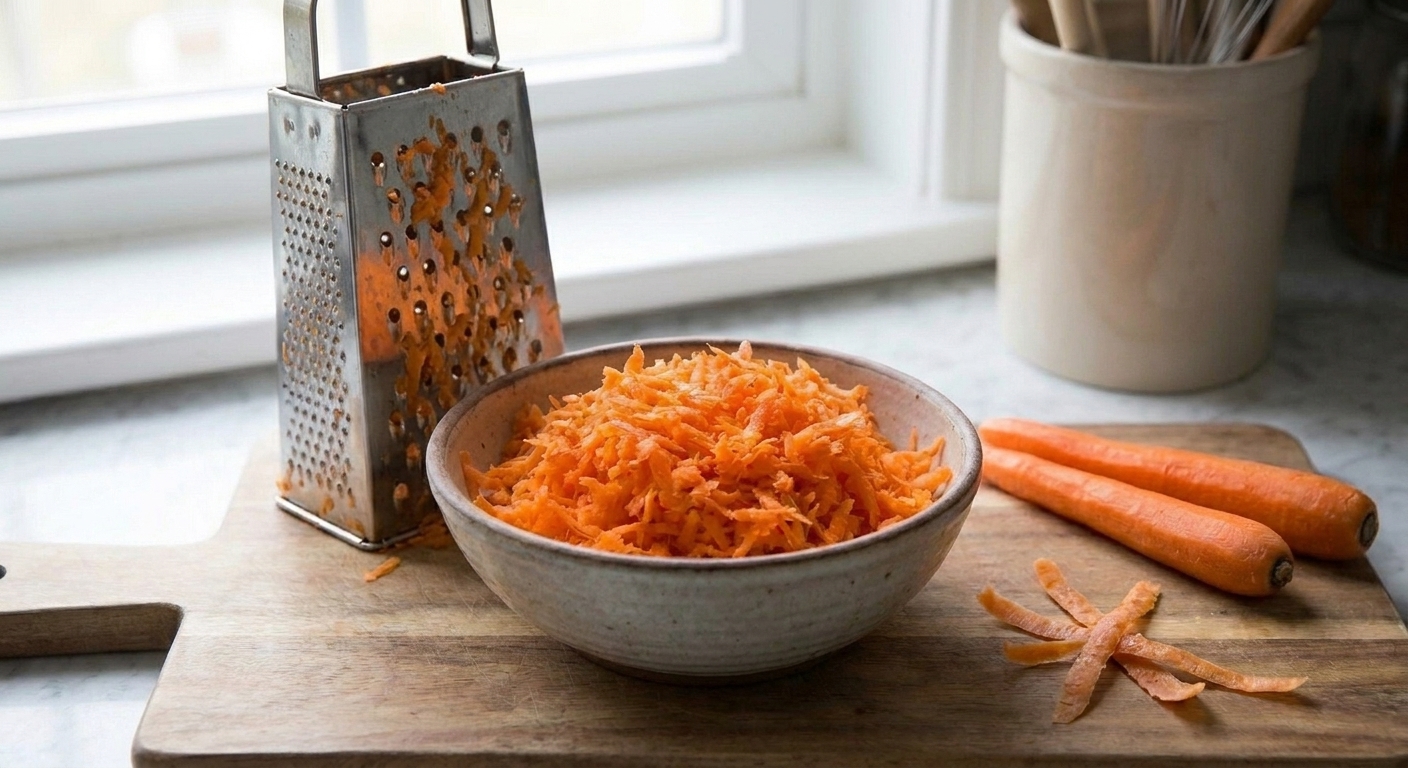
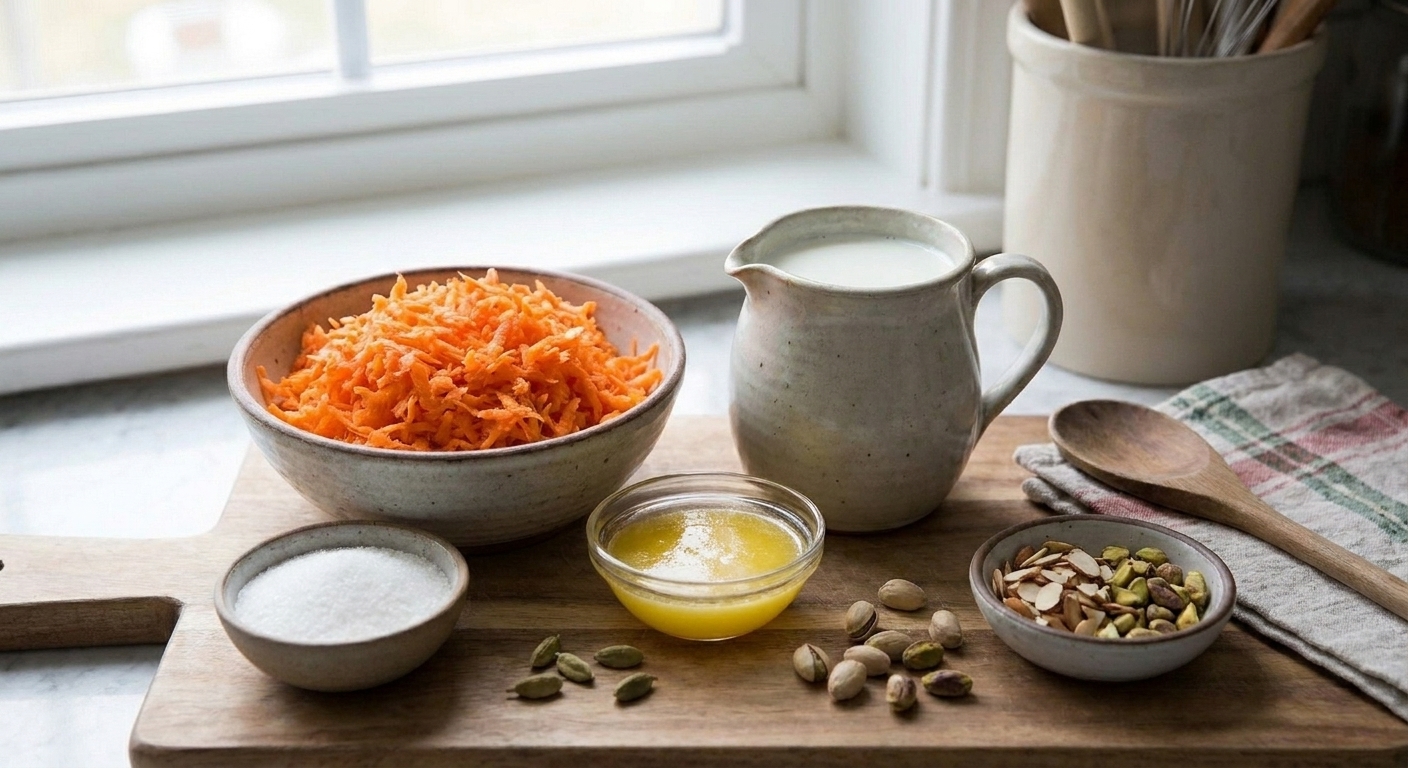
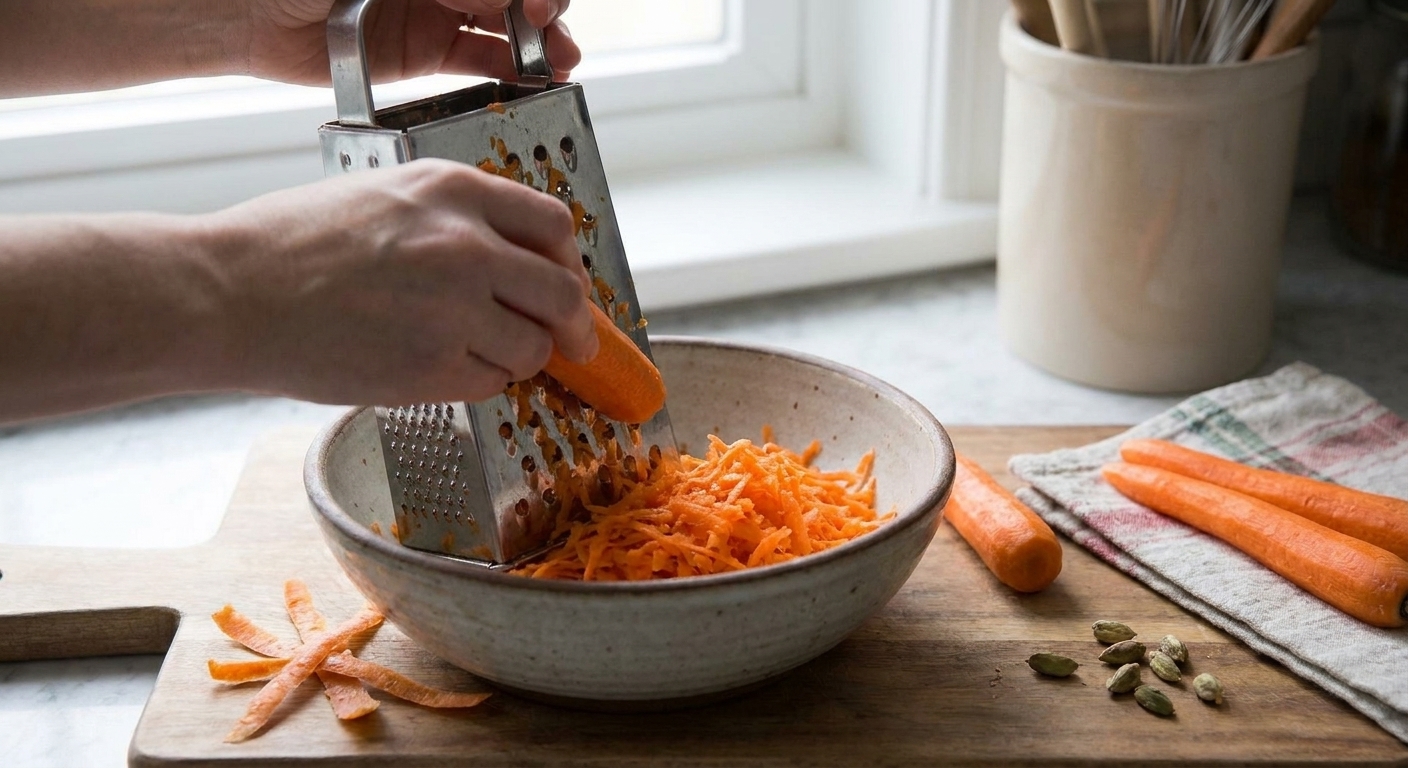
A bowl filled with freshly grated carrots on a wooden counter beside a box grater and peeled carrots

Why It Works

  • Thick, glossy texture from patiently reducing the milk and cooking off excess moisture.
  • Carrots that are tender but not mushy, thanks to the right grate size and steady heat.
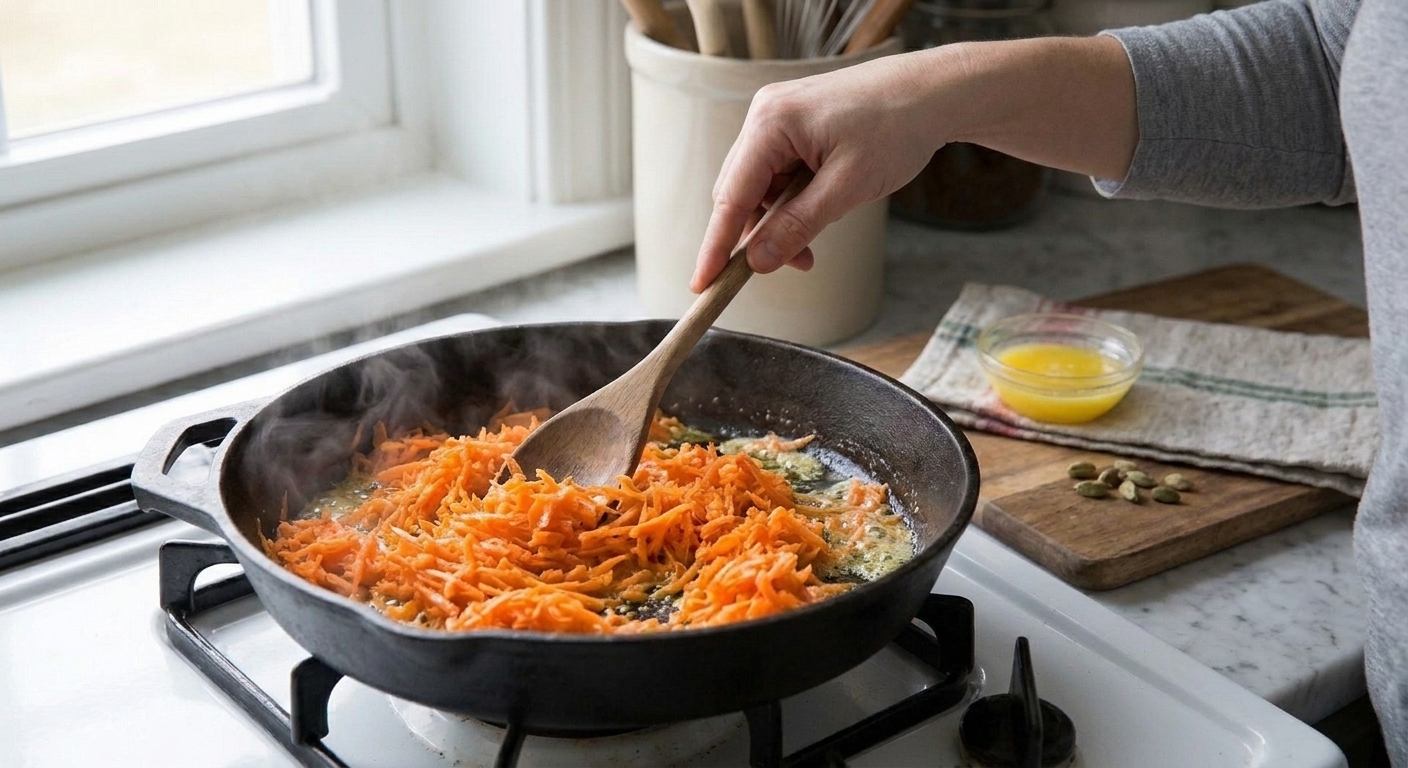
  • Deep flavor from lightly sautéing the carrots first, then simmering until the dairy concentrates.
  • Warm aroma from cardamom added at the end so it stays bright and not bitter.

Pairs Well With

Storage Tips

How to Store Gajar ka Halwa

  • Refrigerator: Cool completely, then store in an airtight container for up to 4 days.
  • Freezer: Freeze in a freezer-safe container for up to 2 months. Thaw overnight in the fridge. The texture may be a bit softer after freezing, but it will still be delicious.
  • Reheat: Warm in a small saucepan over low heat with a splash of milk to loosen, or microwave in short bursts, stirring between each.
  • Tip: Halwa thickens as it sits. That is normal. A spoonful of warm milk brings it right back to creamy.
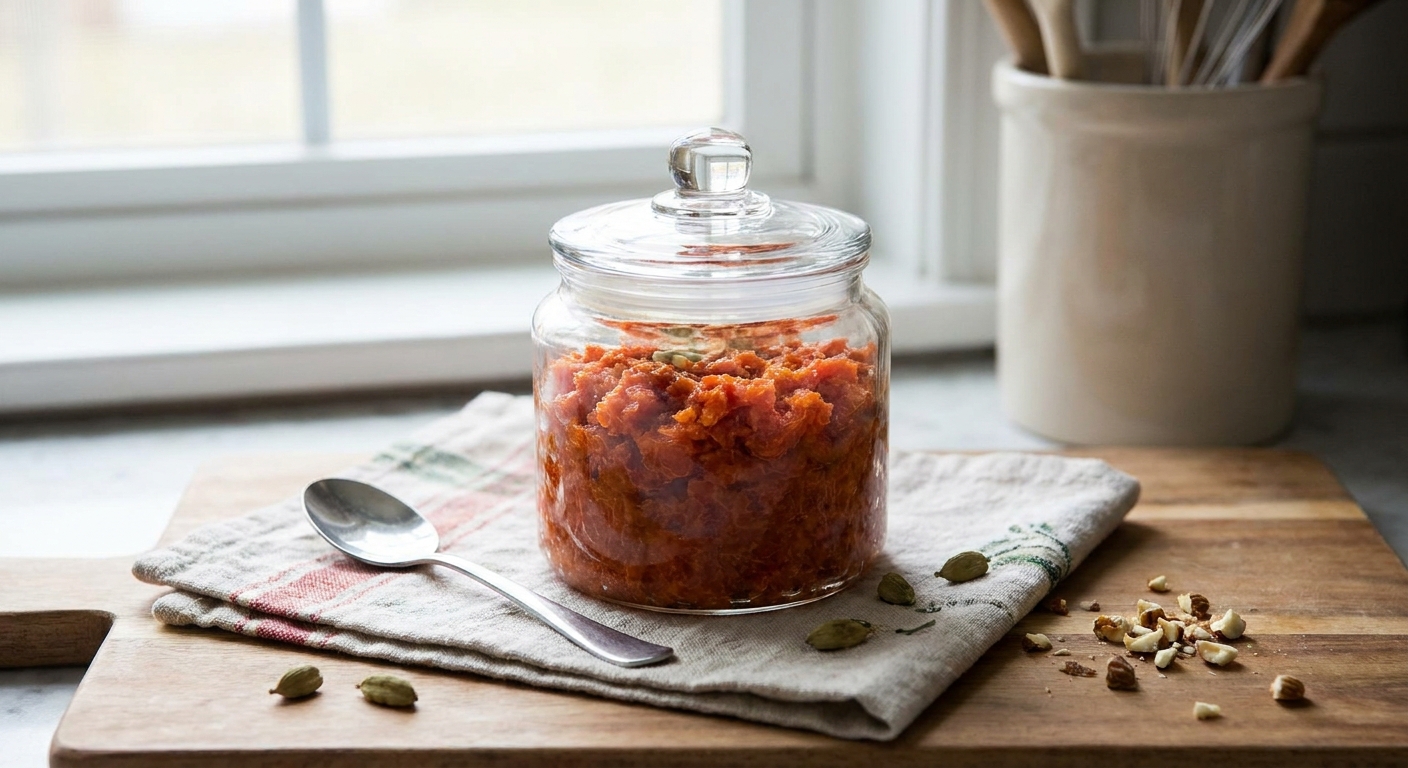
An airtight glass container filled with carrot halwa cooling on a kitchen counter with a spoon nearby

Common Questions

Common Questions

What kind of carrots work best?

Use fresh, sweet carrots. If you ever find red Delhi carrots in season, they are the classic choice, but everyday orange carrots make a delicious halwa too. The fresher the carrots, the sweeter and more fragrant the final bowl.

What size should I grate the carrots?

A medium grate is the sweet spot for most kitchens. On a box grater, use the side with medium holes. Too fine can make the halwa turn pasty, and too coarse can leave crunchy bits unless you cook much longer.

Do I have to reduce the milk first?

No separate step needed. The milk reduces as the carrots simmer. The key is using a wide, heavy pan and stirring often so the milk concentrates without scorching.

Does the cook time really vary that much?

Yes. Pan width, stove heat, carrot moisture, and how lively your simmer is can all change the timeline. Treat the minutes as a guide and trust the visual doneness cues more than the clock.

How do I know gajar ka halwa is done?

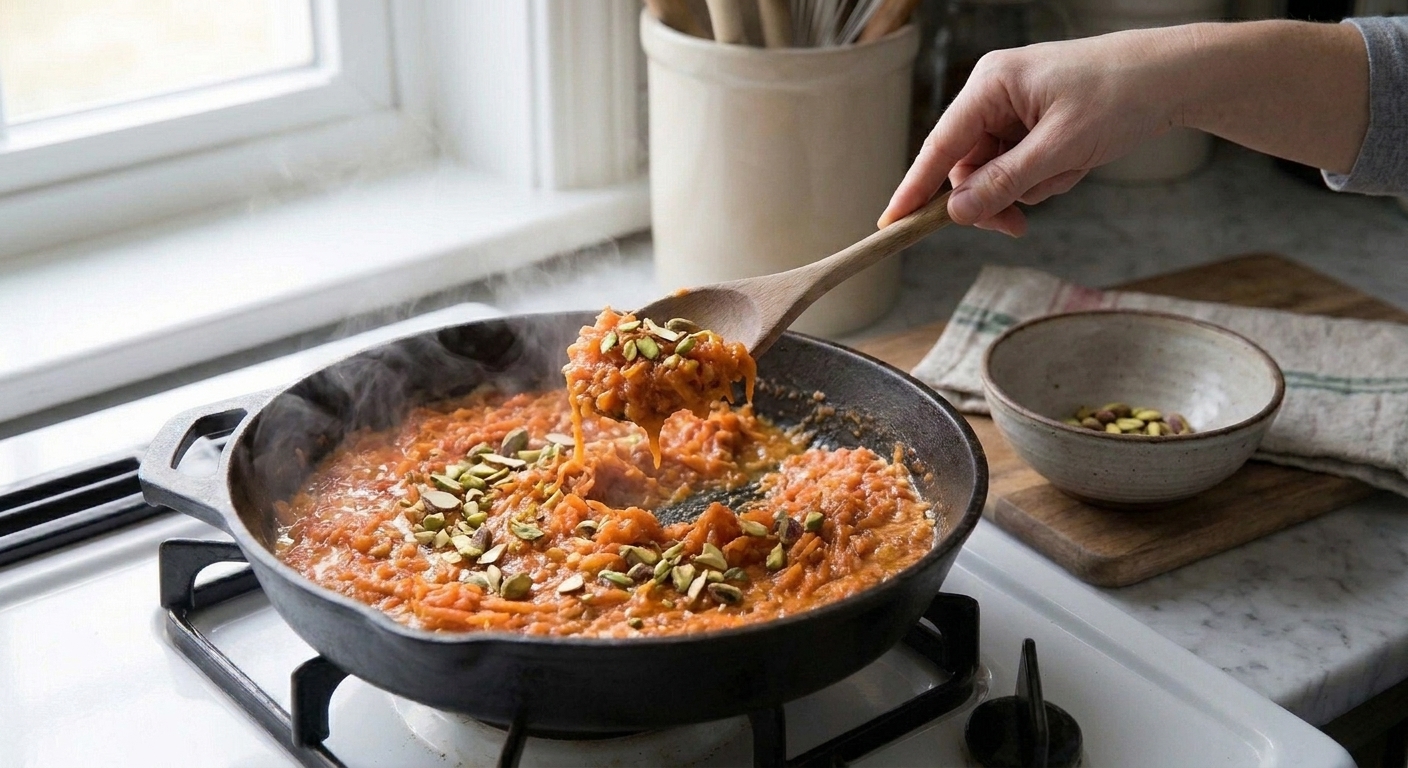
Look for three cues: (1) it is thick enough that a spoon leaves a trail on the bottom of the pan for a second or two, (2) the mixture starts pulling away from the sides, and (3) the sheen turns glossy and the carrots look jammy, not watery.

Can I make it less sweet?

Yes. This recipe starts at a moderate sweetness. Add the sugar, then taste near the end and adjust. Keep in mind sweetness balances the concentrated milk and carrots, so add slowly and stop where it tastes cozy to you.

Which milk should I use?

Whole milk gives the richest, most traditional result. Lower-fat milk works, but it can take longer to reduce and the halwa will taste a bit less creamy.

Which nuts are traditional?

Almonds and pistachios are common, and cashews are also lovely. Use what you like, toast them lightly for extra aroma, and add some on top right before serving for crunch.
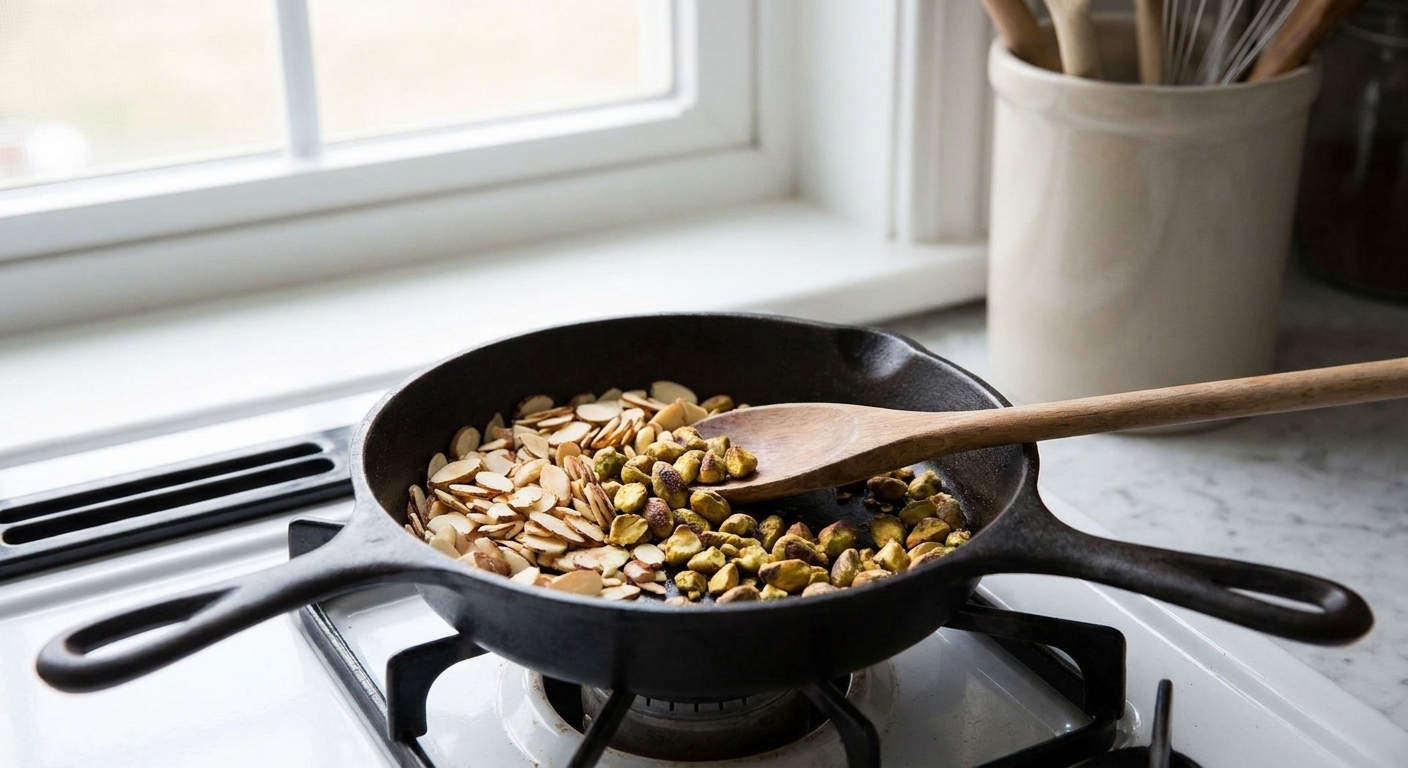
A small skillet with lightly toasted sliced almonds and chopped pistachios on a stovetop

Some desserts feel like a blanket you can eat, and gajar ka halwa is that for me. It is the kind of stovetop simmer that makes the kitchen smell sweet and warm, and it rewards a little patient stirring with that magical moment when everything turns glossy. If you catch me hovering near the pan, I am not being suspicious. I am just waiting for the first spoonful.