Is pork sirloin roast the same as pork loin roast?
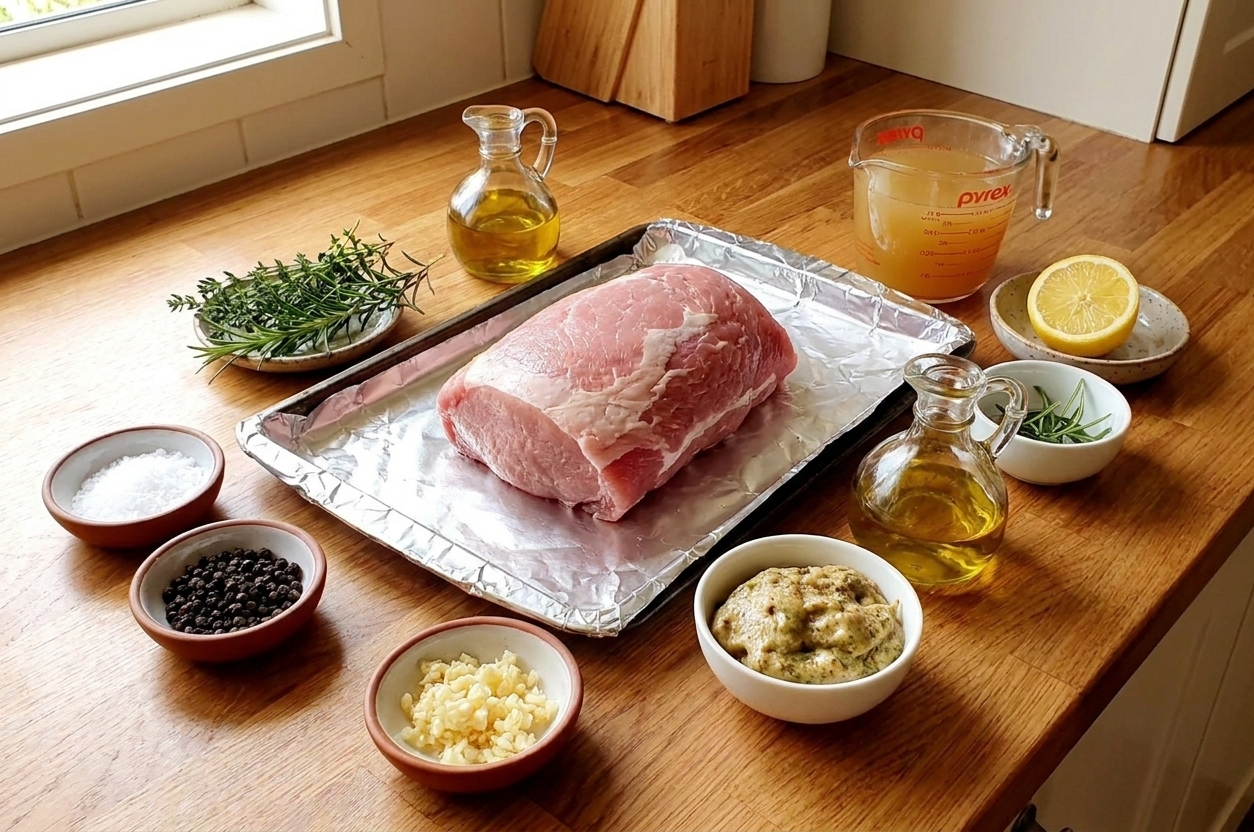
Not exactly, and labeling can vary from store to store. Pork loin roast is usually a larger, very lean cut from the back. Pork sirloin roast is often from the sirloin end of the loin or closer to the hip, and it can have a bit more connective tissue and an irregular shape. Both can be great, but sirloin really benefits from careful temperature control and a good rest.
What temperature should I cook pork sirloin roast to?
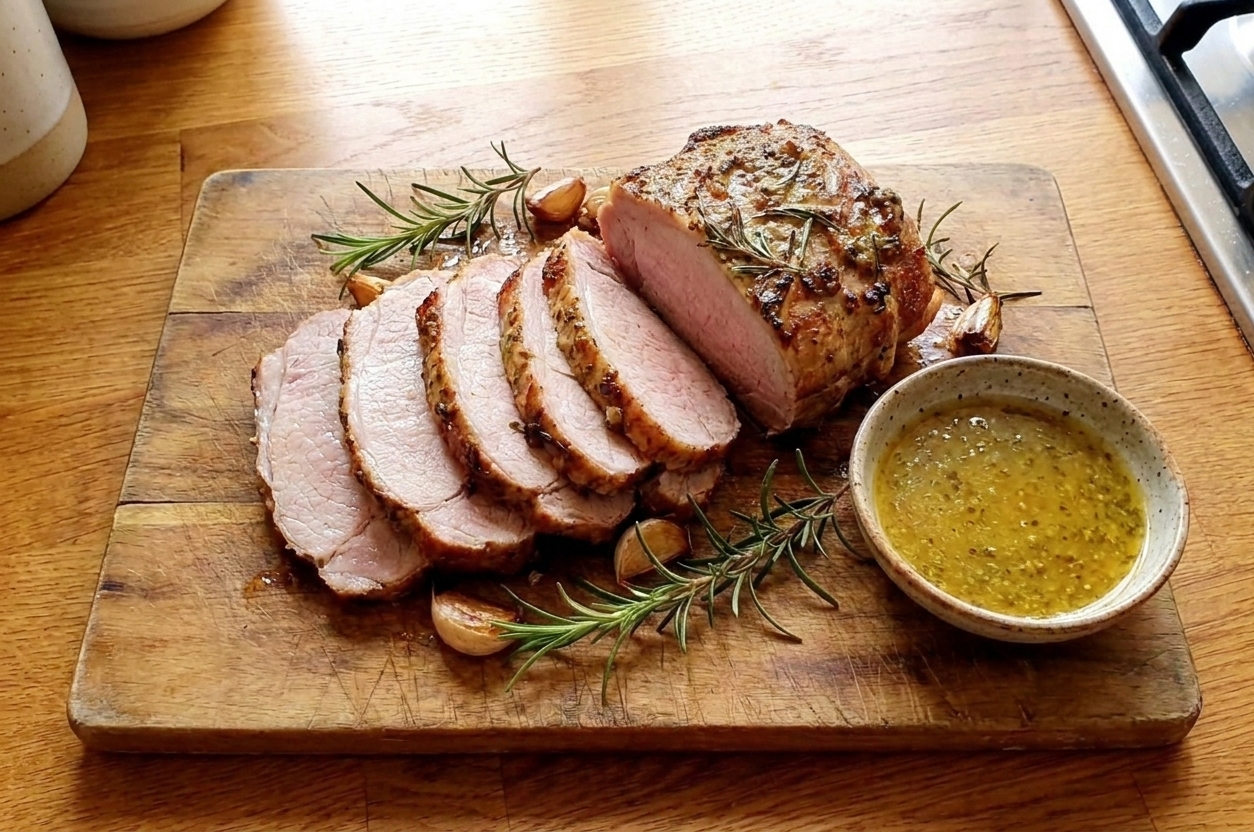
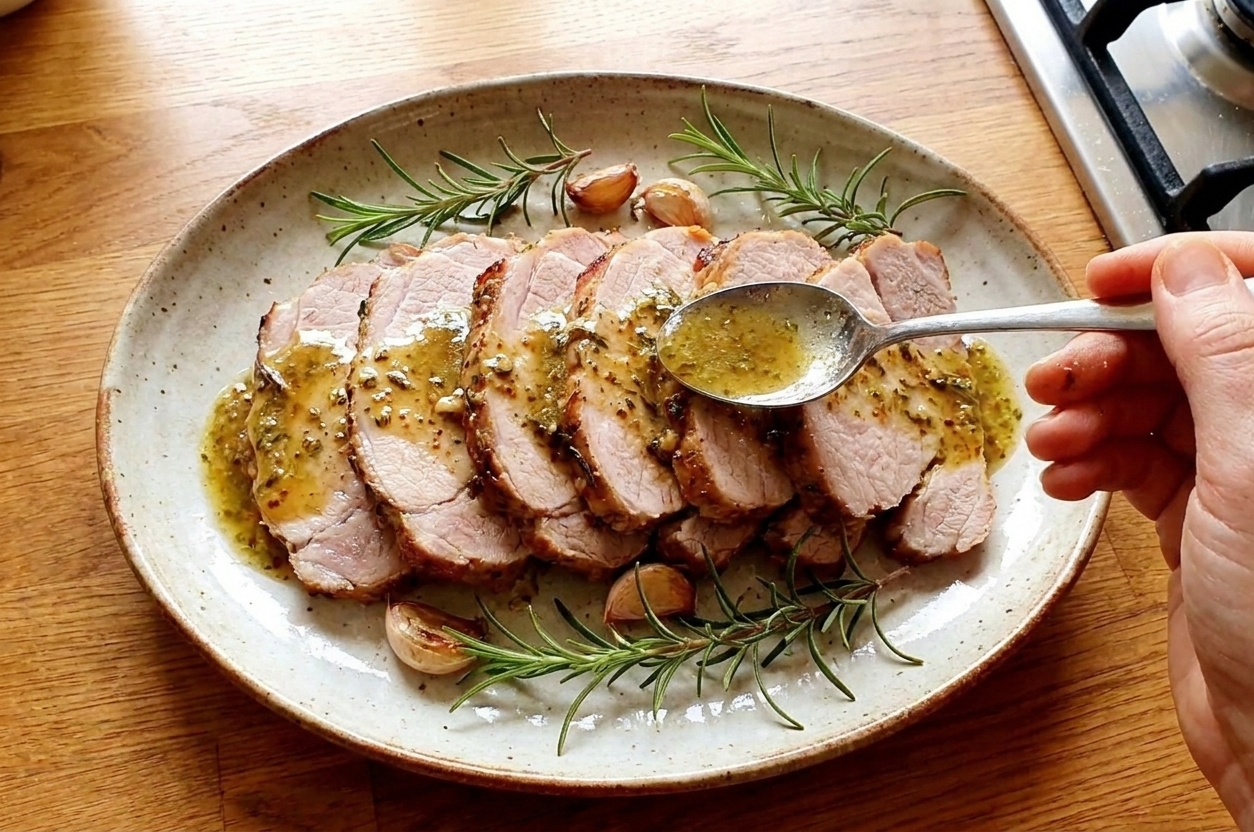
For slices that stay juicy, aim for 145°F in the thickest part. USDA guidance for whole cuts is 145°F followed by a 3-minute rest. In this recipe, we rest 10 to 15 minutes, which covers that safety rest and helps keep the roast juicy.
My pork is a little pink. Is it done?
Yes, it can be. Pork cooked to 145°F and rested can still have a light blush in the center, and that is normal for a juicy roast.
Why did my pork roast turn out dry?
Usually one of three things: the roast was cooked past 145°F, it was sliced right away, or it did not have enough salt. Use a thermometer, rest it, and season generously. Those three fixes do a lot of heavy lifting.
Do I need to sear it first?
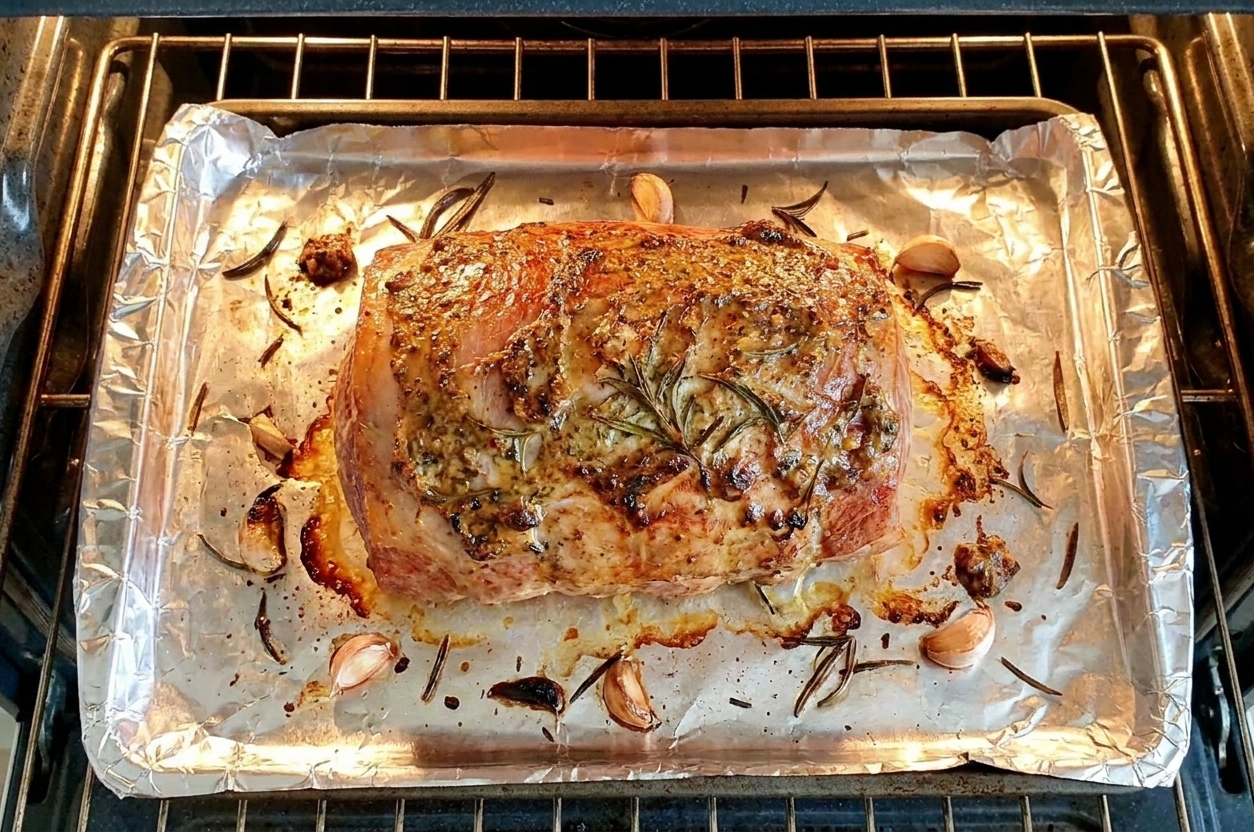
Not required. This recipe uses a hot oven start to brown the outside without an extra pan. If you love a hard sear, you can brown it in an oven-safe skillet first, then roast.
Can I cook this with vegetables in the pan?
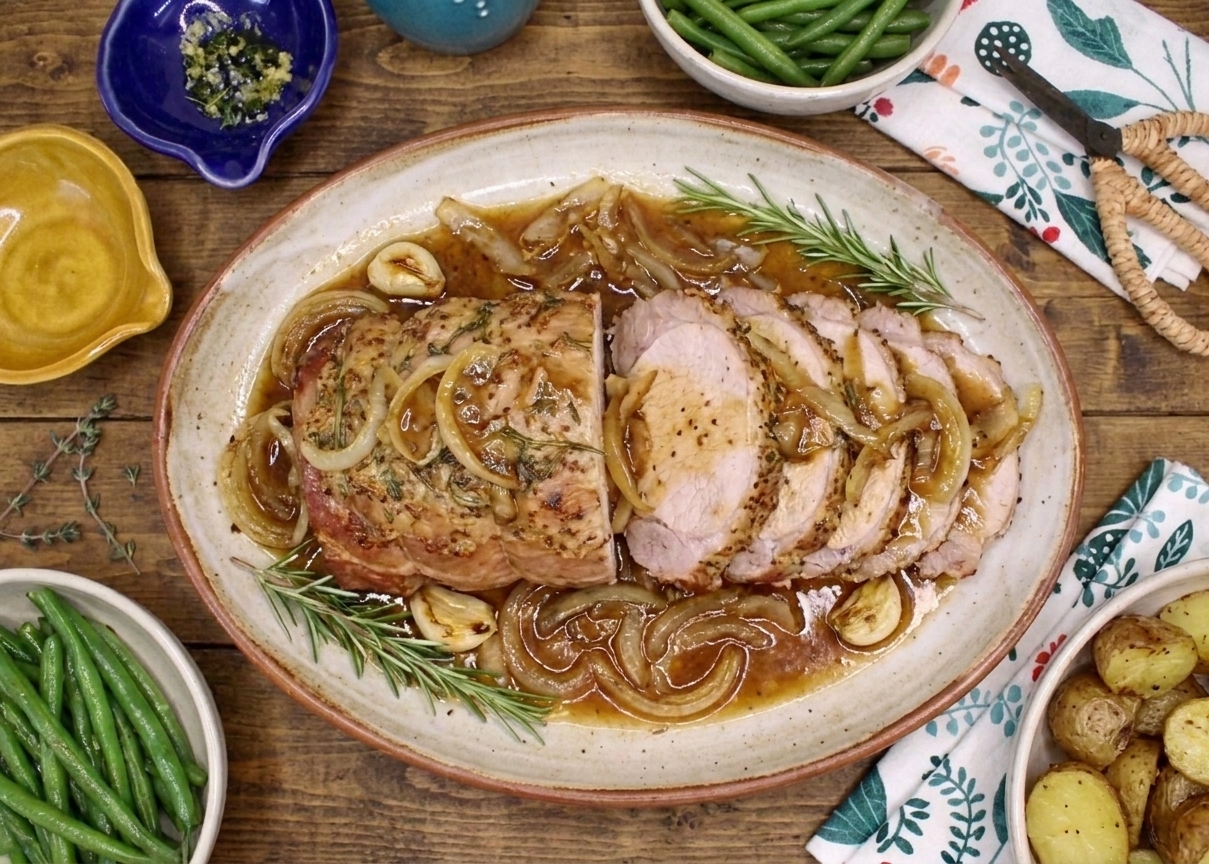
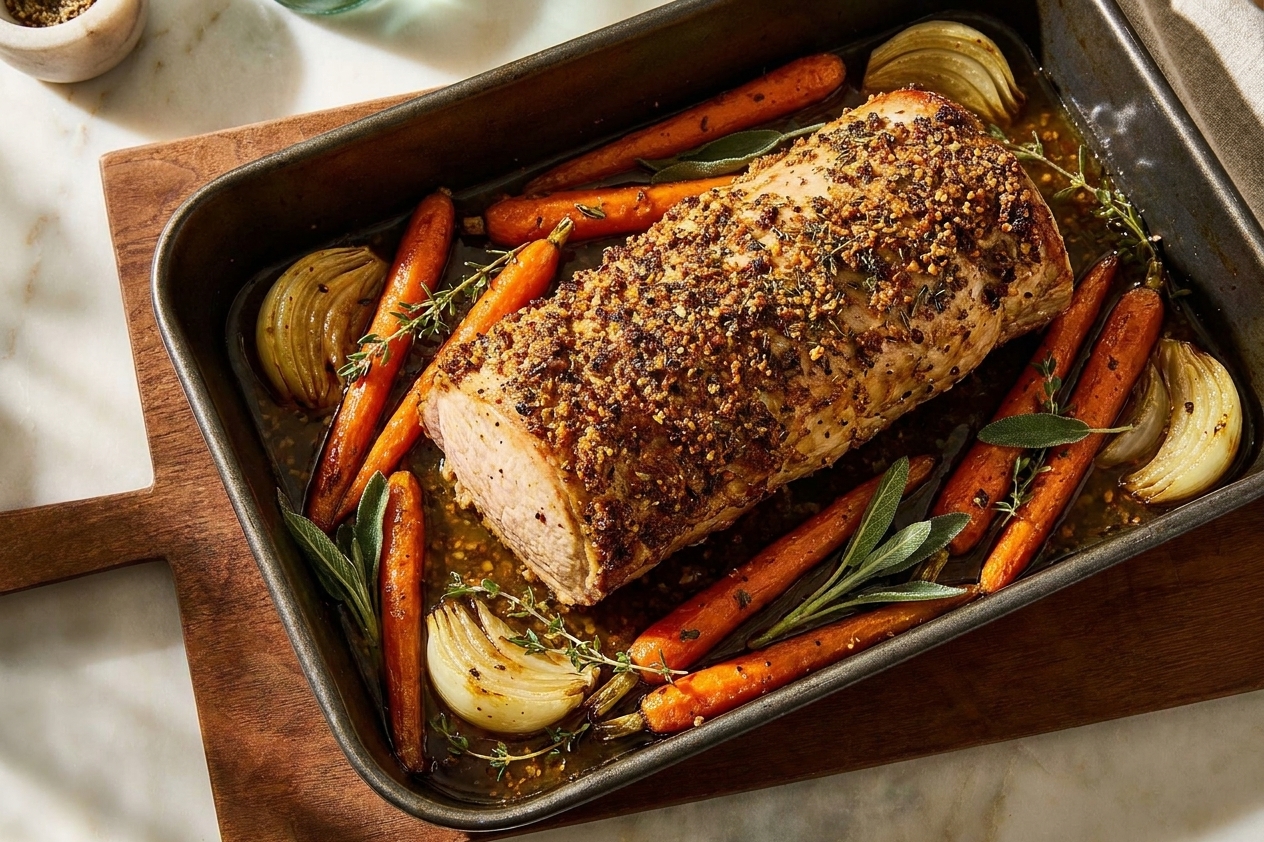
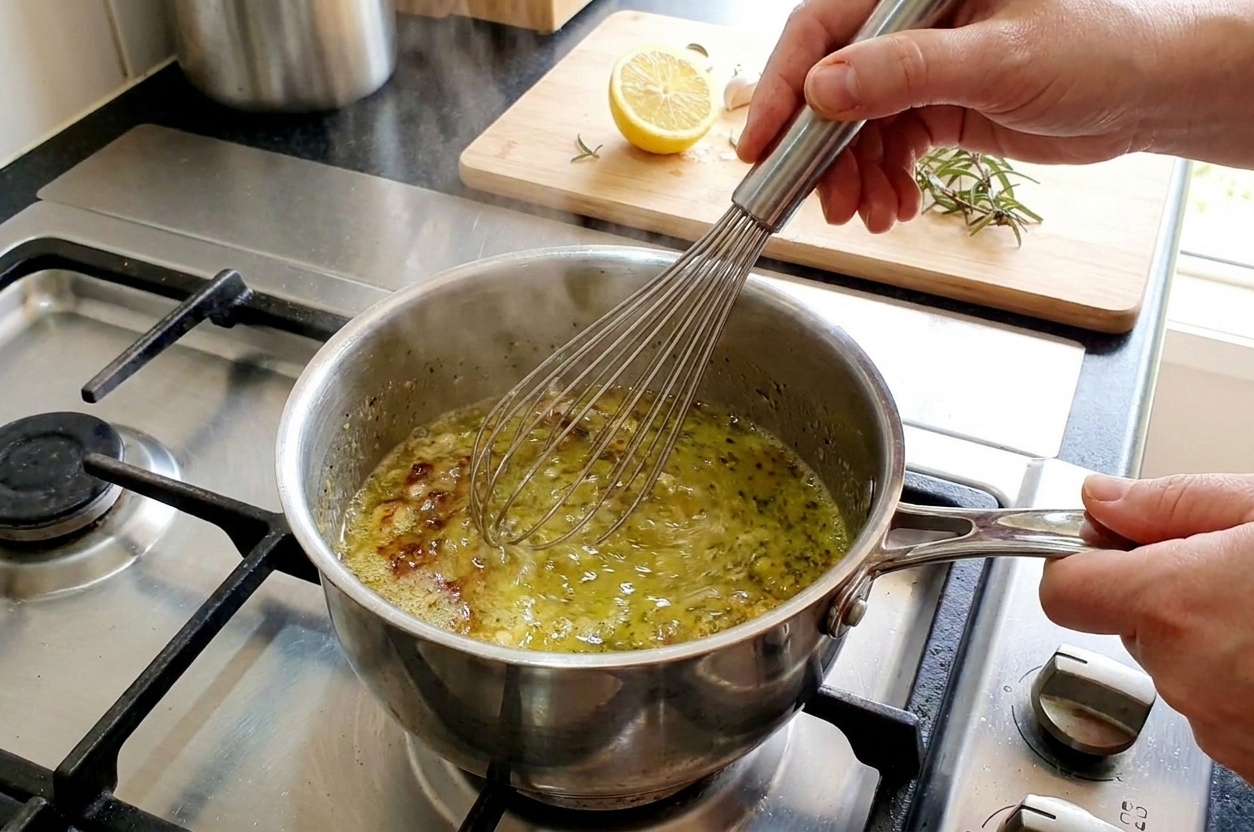
Yes. Add chunks of onion, carrots, or baby potatoes around the roast. Just know they can soak up drippings, so you may need a touch more broth when making the sauce.