Is German chocolate cake frosting the same as coconut pecan frosting?
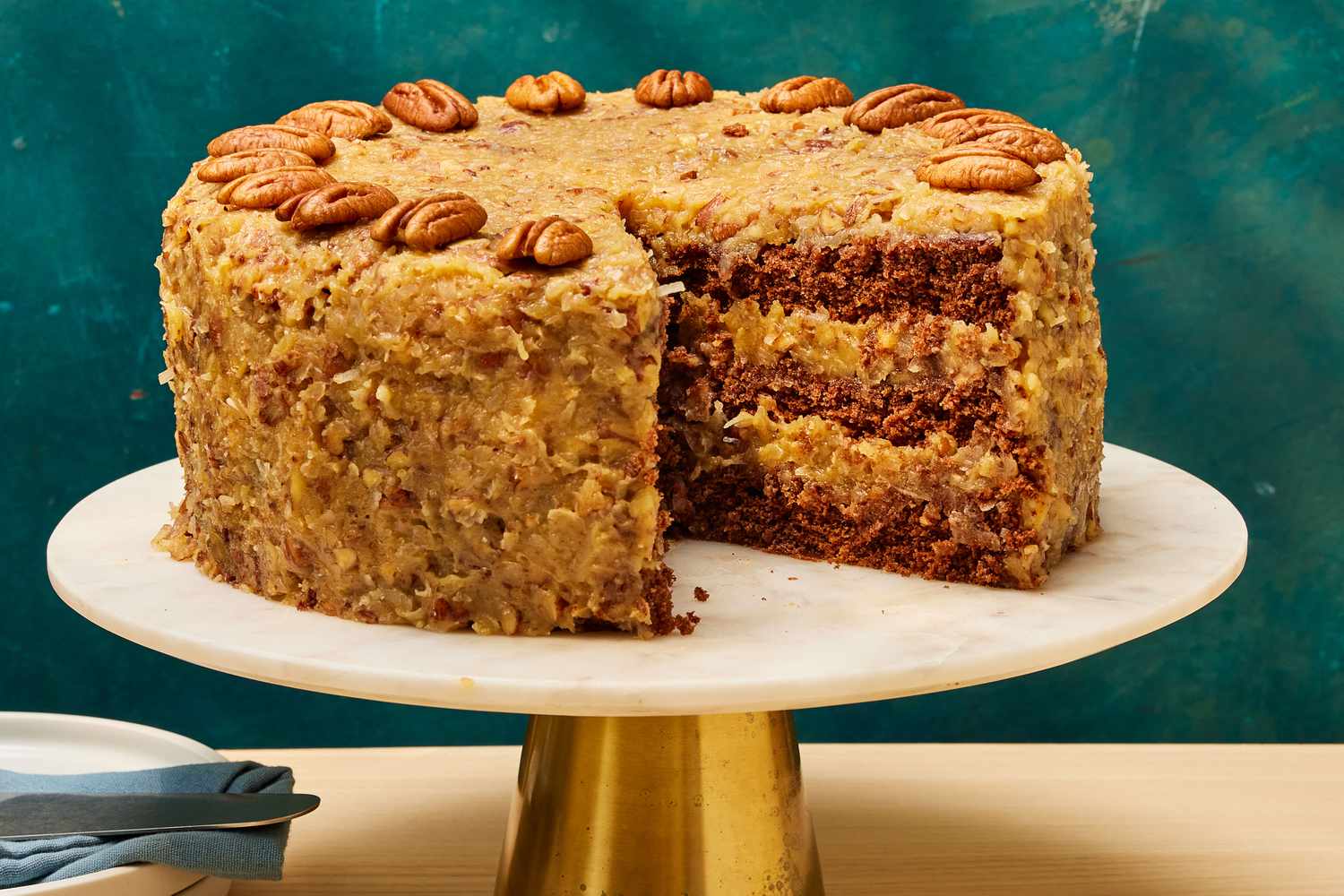
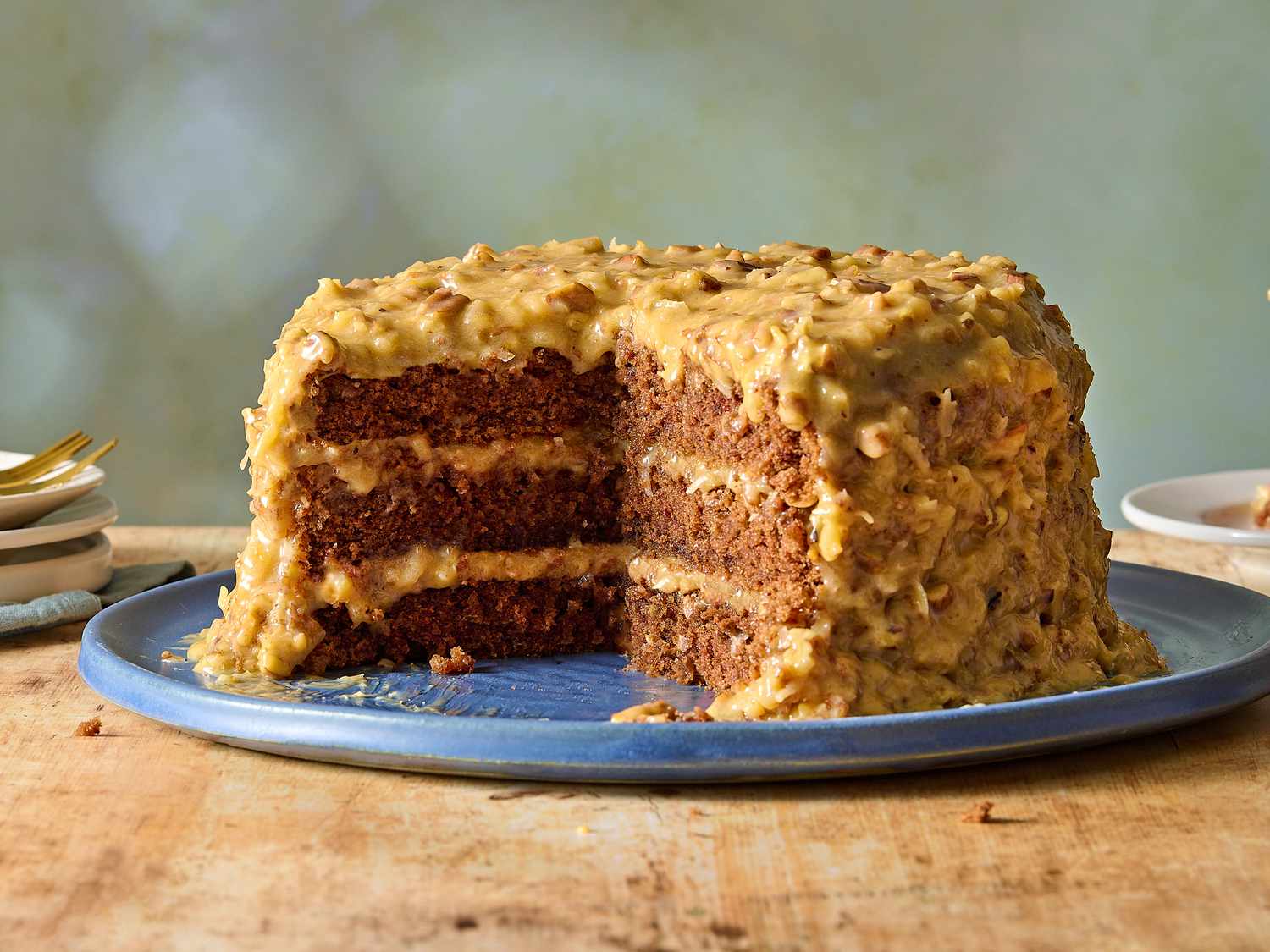
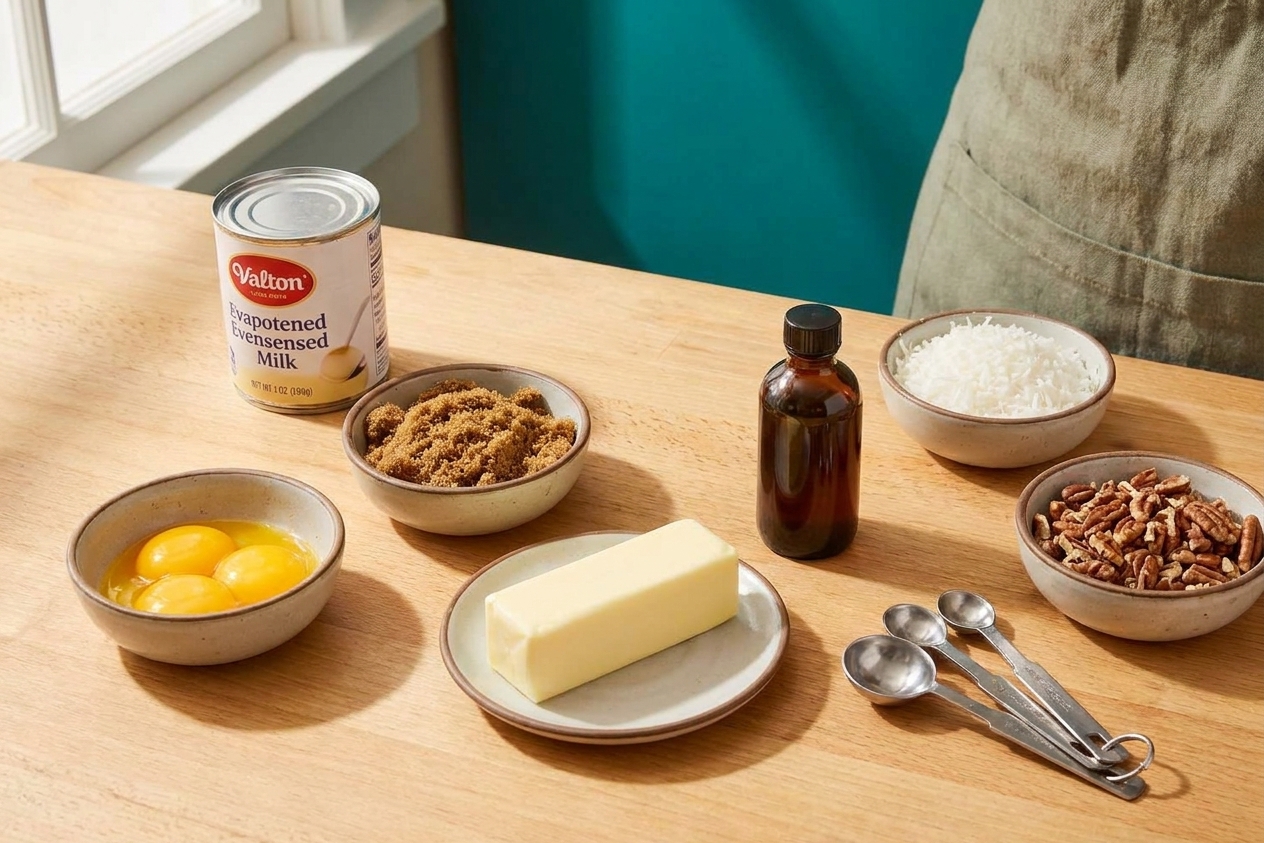
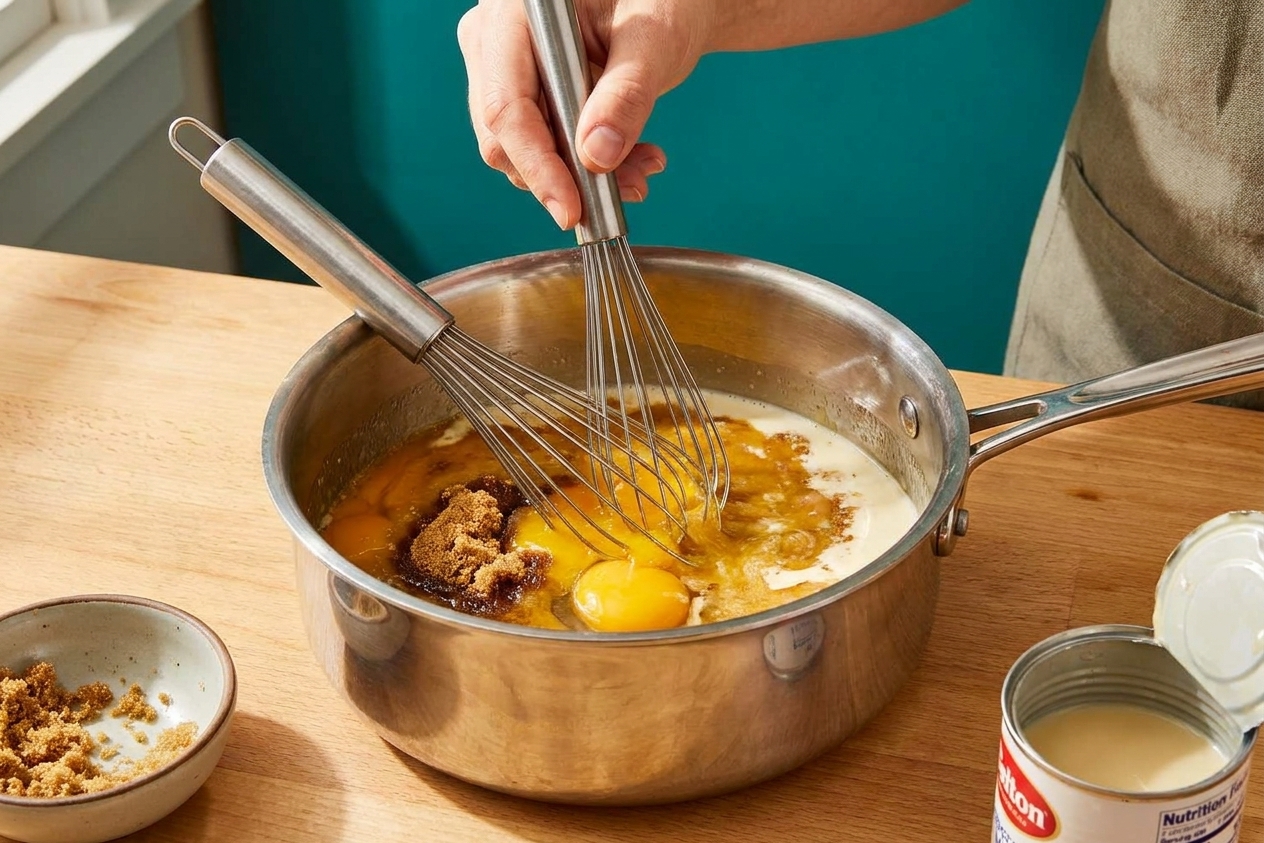
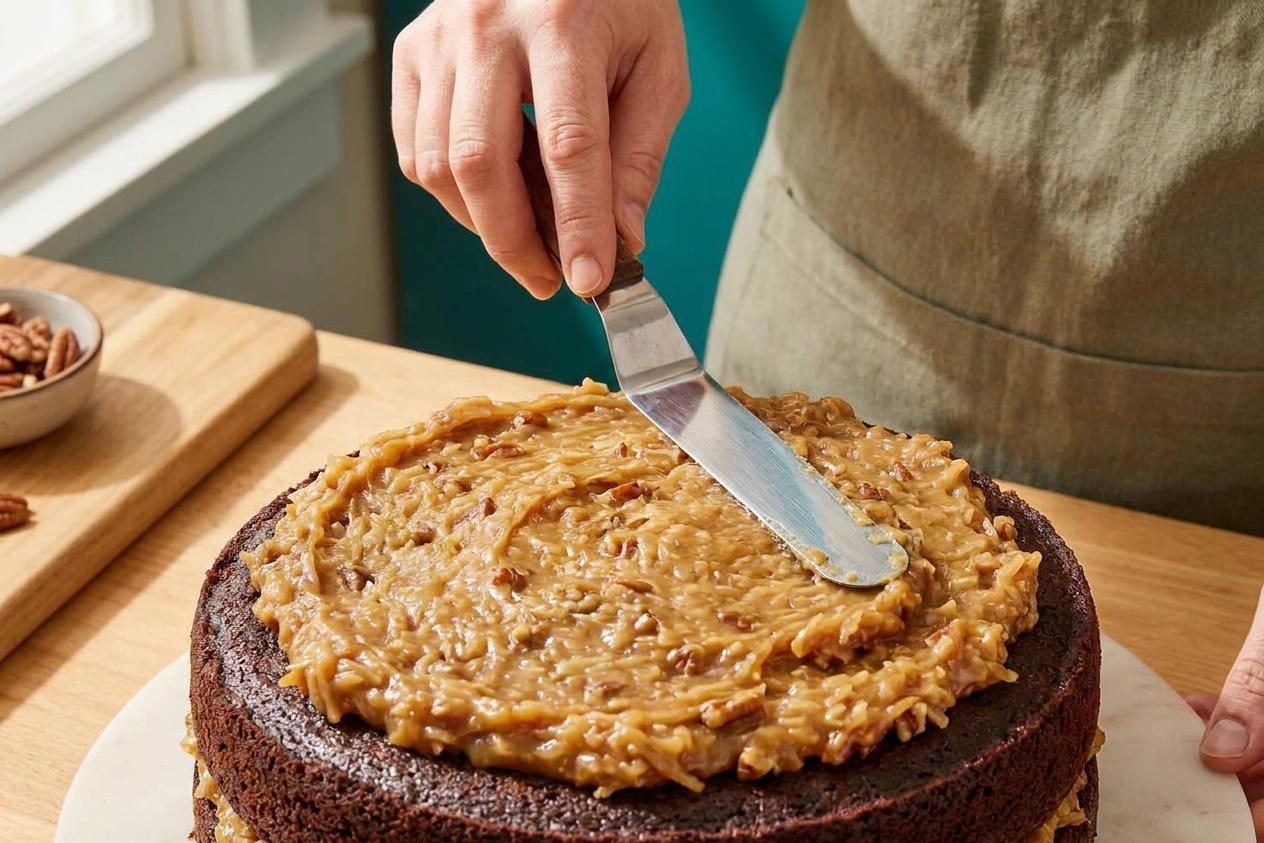
Yep. Most people use the names interchangeably. It is the classic cooked frosting made with evaporated milk, egg yolks, sugar, butter, coconut, and pecans.
Why is it called German chocolate if it is not from Germany?
The cake is tied to German’s Sweet Chocolate, a baking chocolate created by Samuel German for Baker’s Chocolate Company. The name stuck, even though the dessert is American.
My frosting is runny. How do I thicken it?
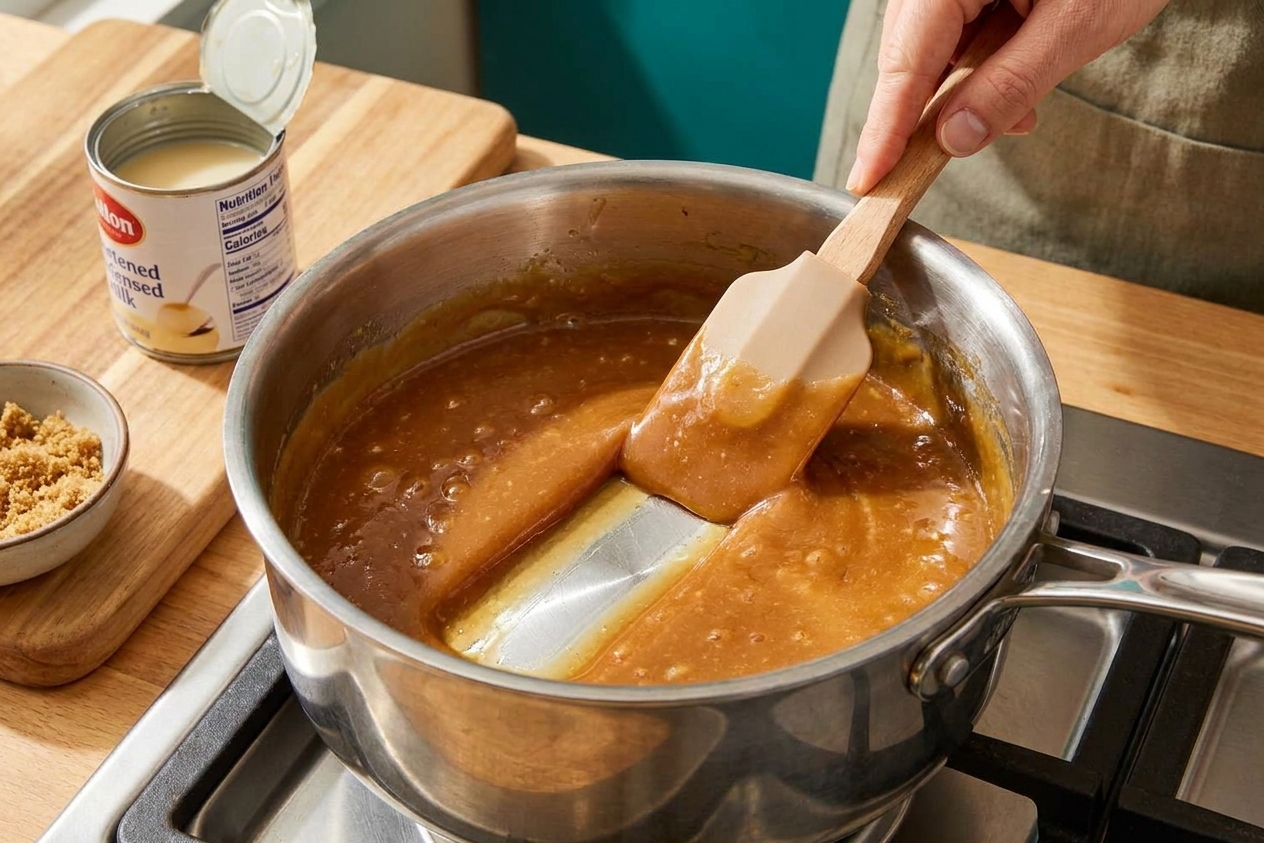
First, make sure you cooked it long enough. It should coat a spoon and leave a track when you drag a spatula across the bottom of the pan. If it is still thin, return it to medium-low heat and cook 2 to 4 minutes longer, stirring constantly. It also thickens a lot as it cools.
My frosting looks curdled or has egg bits. Did I ruin it?
Not necessarily. This usually happens from heat that is a little too high or not stirring enough. Take it off the heat and whisk hard. If you see actual bits, strain it through a fine-mesh sieve, then continue with coconut and pecans. Next time, keep the heat medium-low and stir like you mean it.
Can I make it without pecans?
Absolutely. Swap in walnuts, almonds, or leave nuts out entirely. If you skip nuts, add a little extra coconut for body.
Can I use sweetened condensed milk instead of evaporated milk?
I do not recommend it. Sweetened condensed milk is much sweeter and thicker, and it throws off the balance. Stick with evaporated milk for the classic result.
Does it have to be refrigerated on the cake?
It is recommended for safety and best texture since this is an egg-and-dairy cooked custard frosting. Chill the cake, then let slices sit at room temperature for 15 to 20 minutes before serving so the frosting softens slightly. For serving, a short room-temperature window is totally fine.
Can I pipe this frosting?
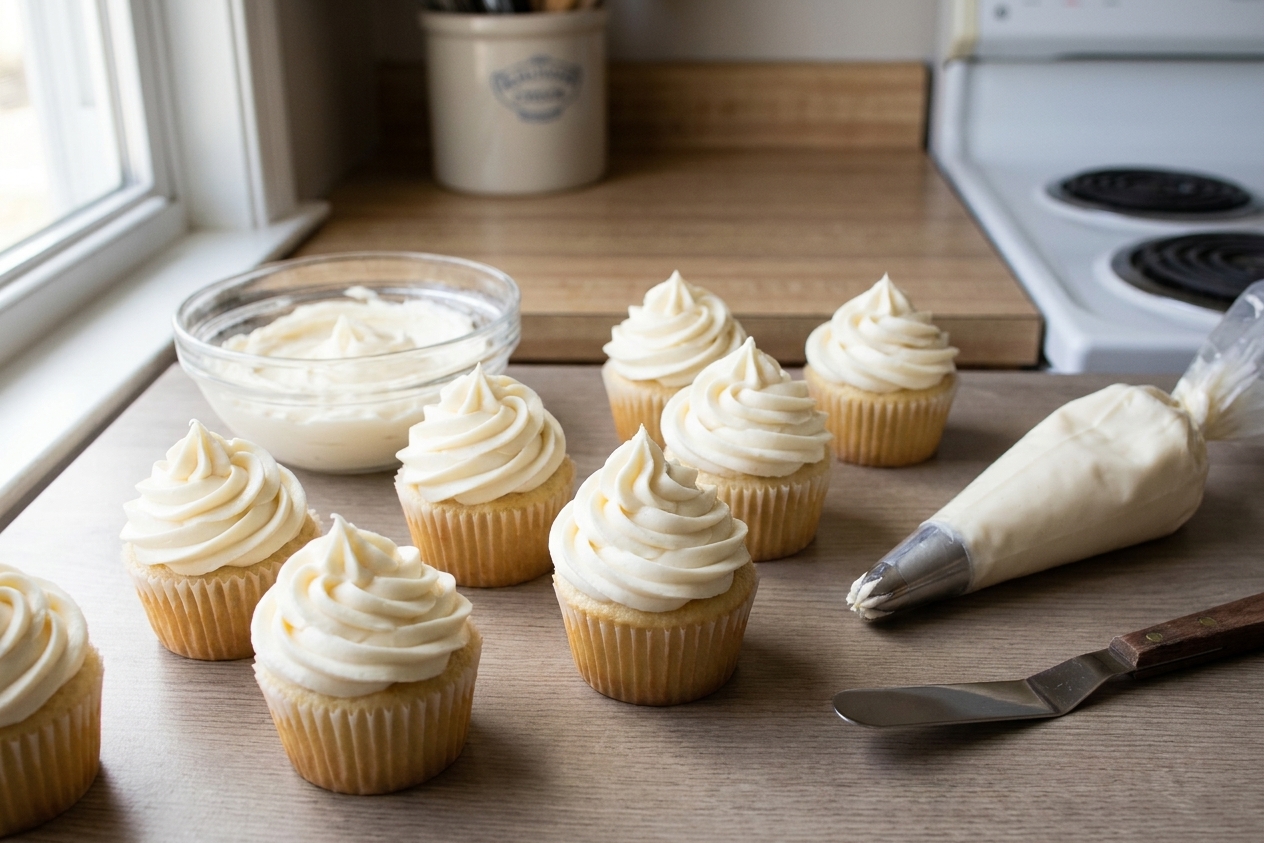
This one is meant for spreading, not piping like buttercream. It is textured (coconut and nuts) and sets up thick and scoopable, not fluffy.