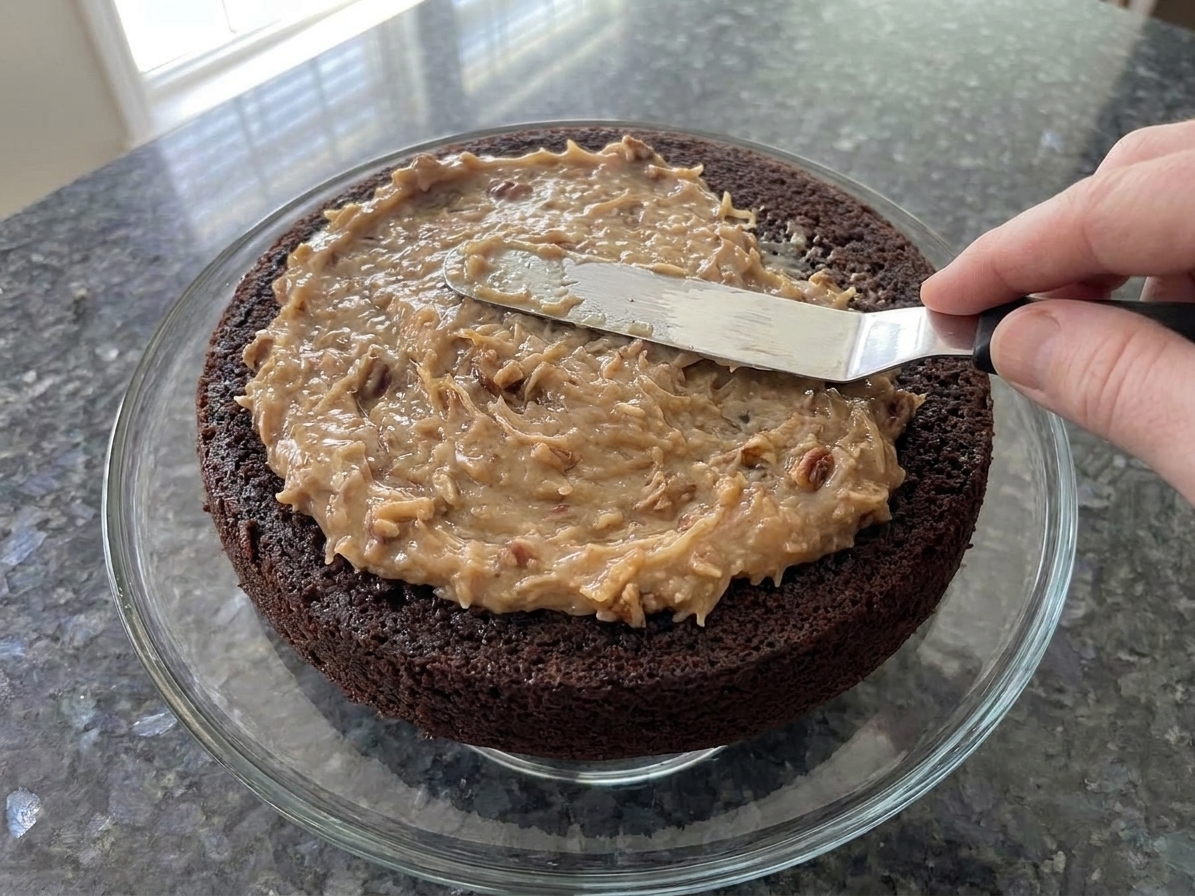
Is German chocolate frosting actually chocolate?
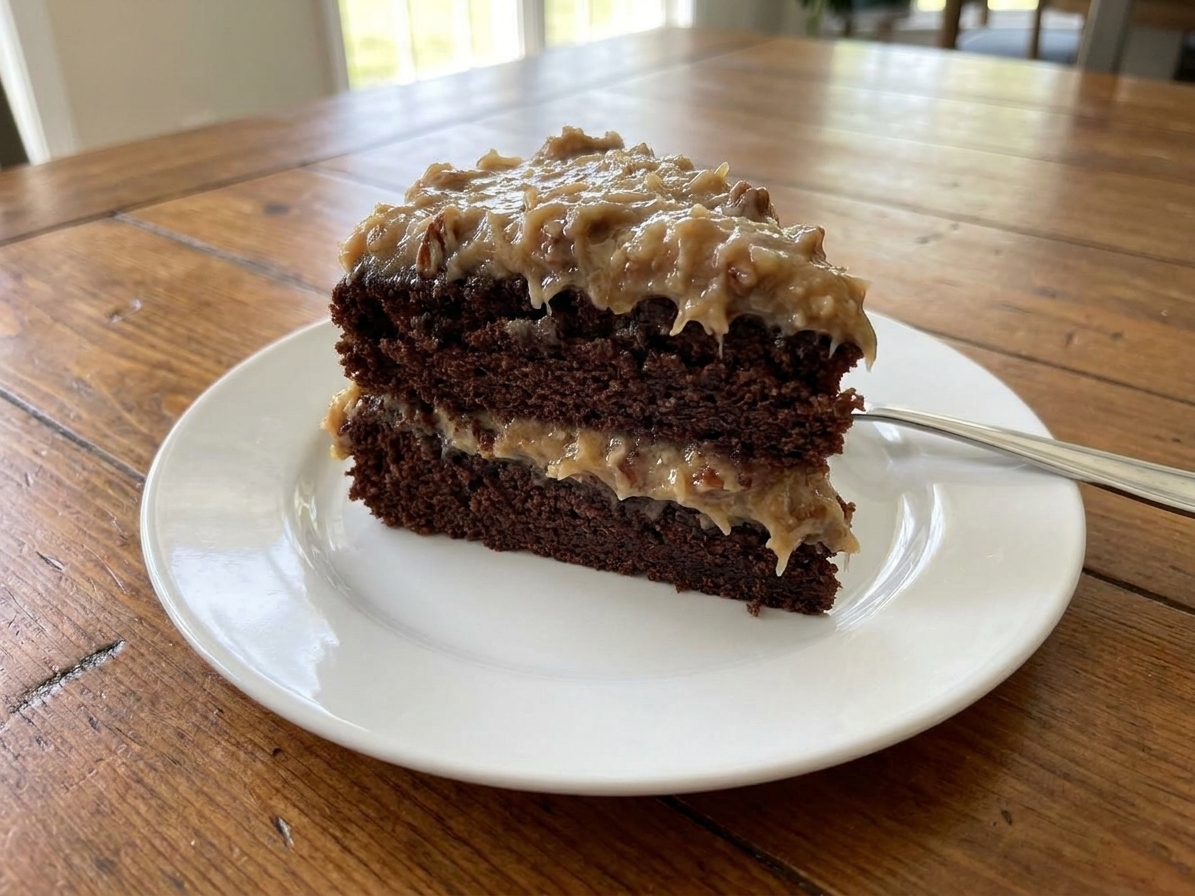
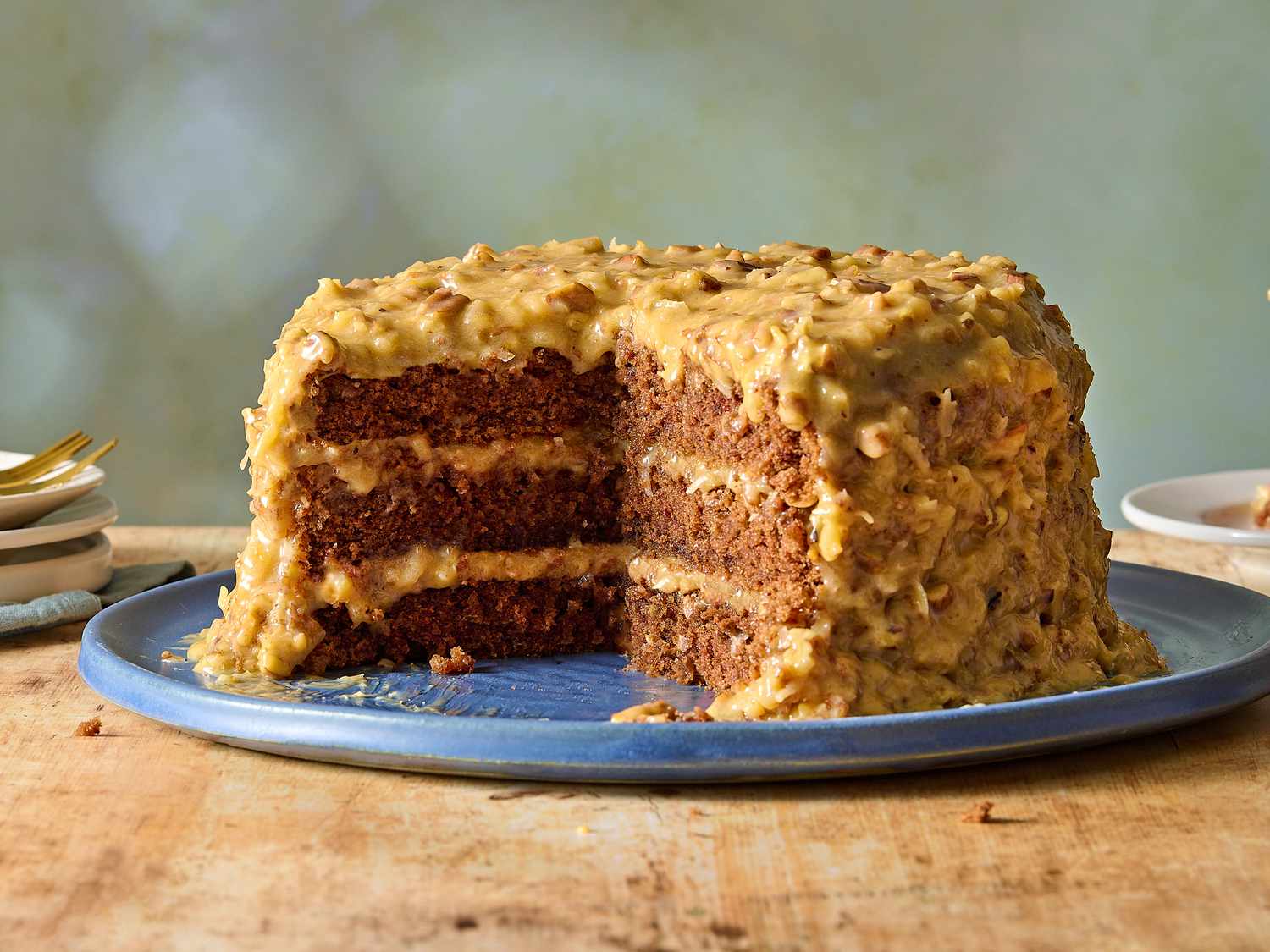
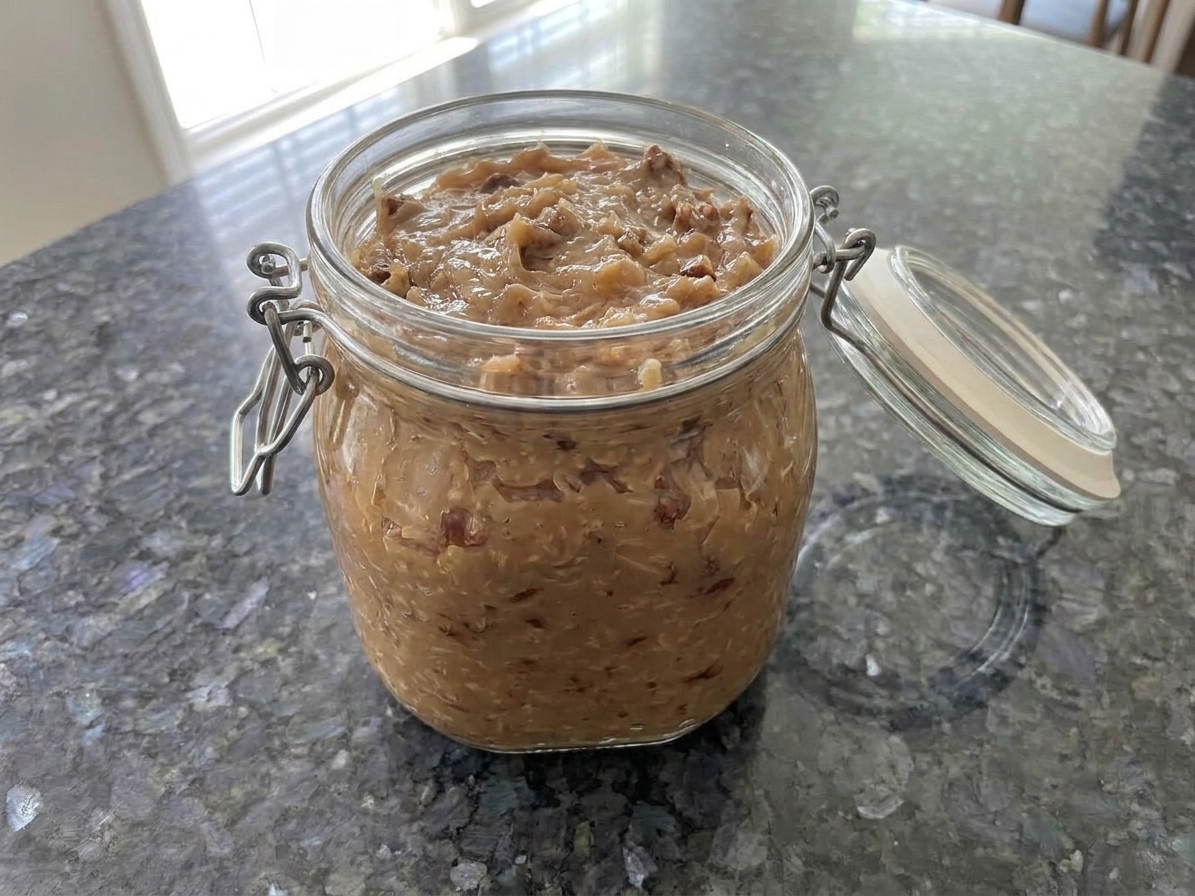
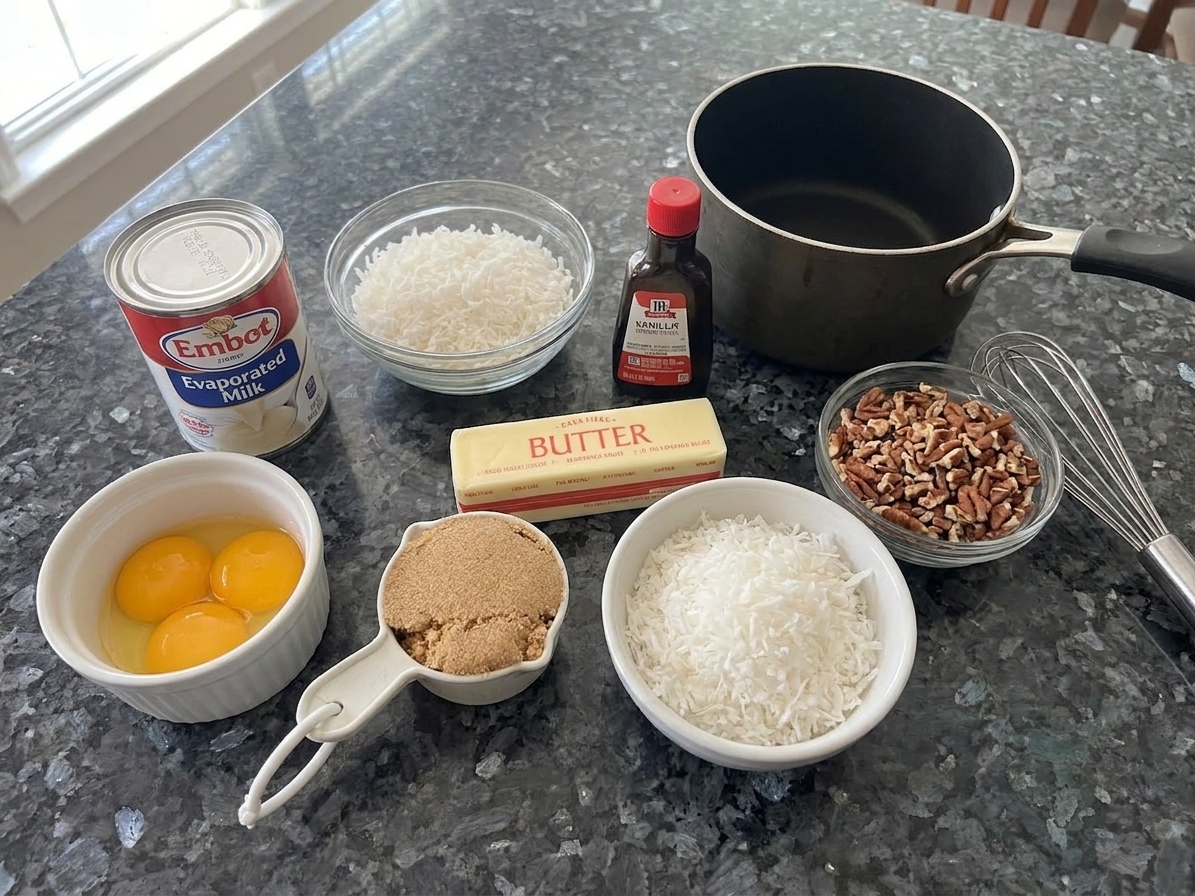
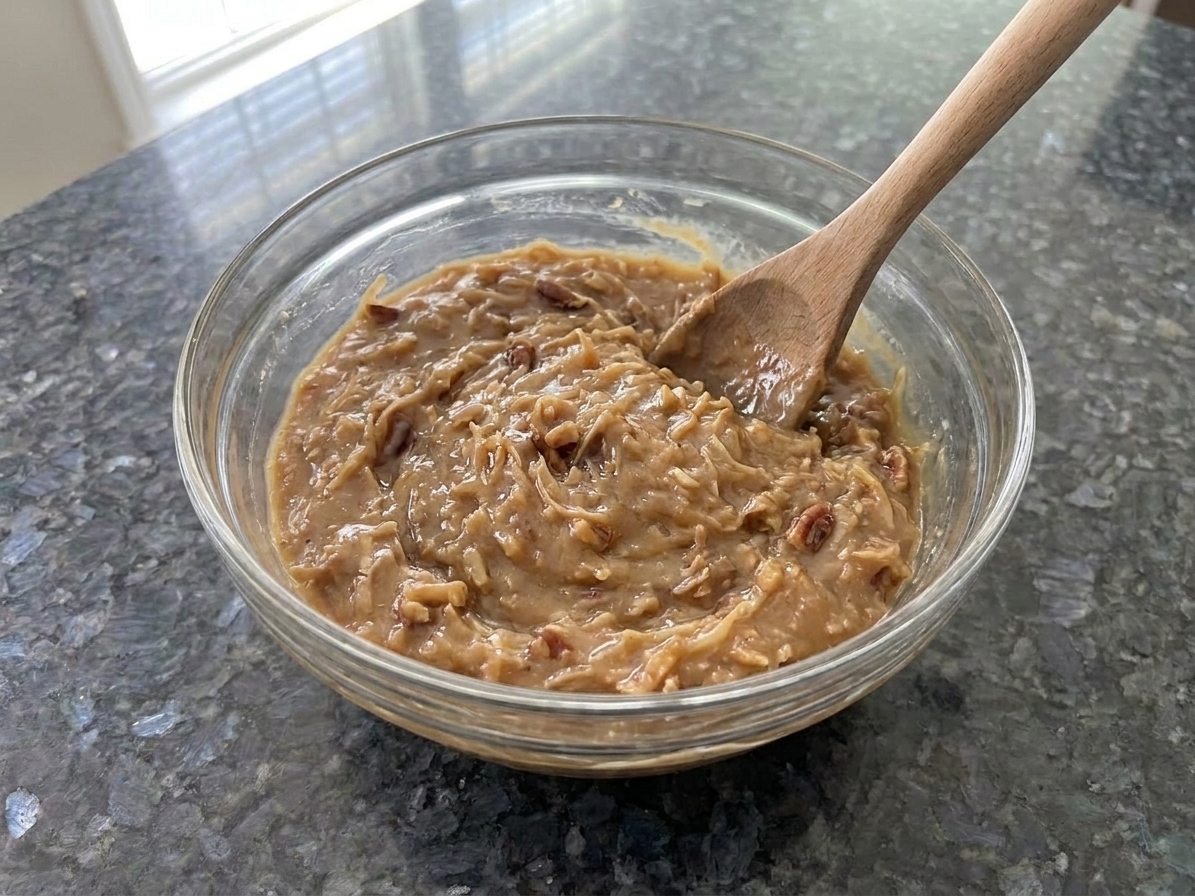
Not usually. The classic frosting is a coconut-pecan custard with a caramel flavor. It is traditionally paired with German chocolate cake, which is where the chocolate comes in.
Why is it called German chocolate frosting?
It is tied to German’s Sweet Chocolate, a baking chocolate created by Samuel German. The cake recipe made the rounds, and the frosting became the star.
Can I use regular milk instead of evaporated milk?
You can, but evaporated milk gives the best body and richness. If you substitute, use whole milk and expect a slightly looser set.
My frosting looks runny. Did I mess it up?
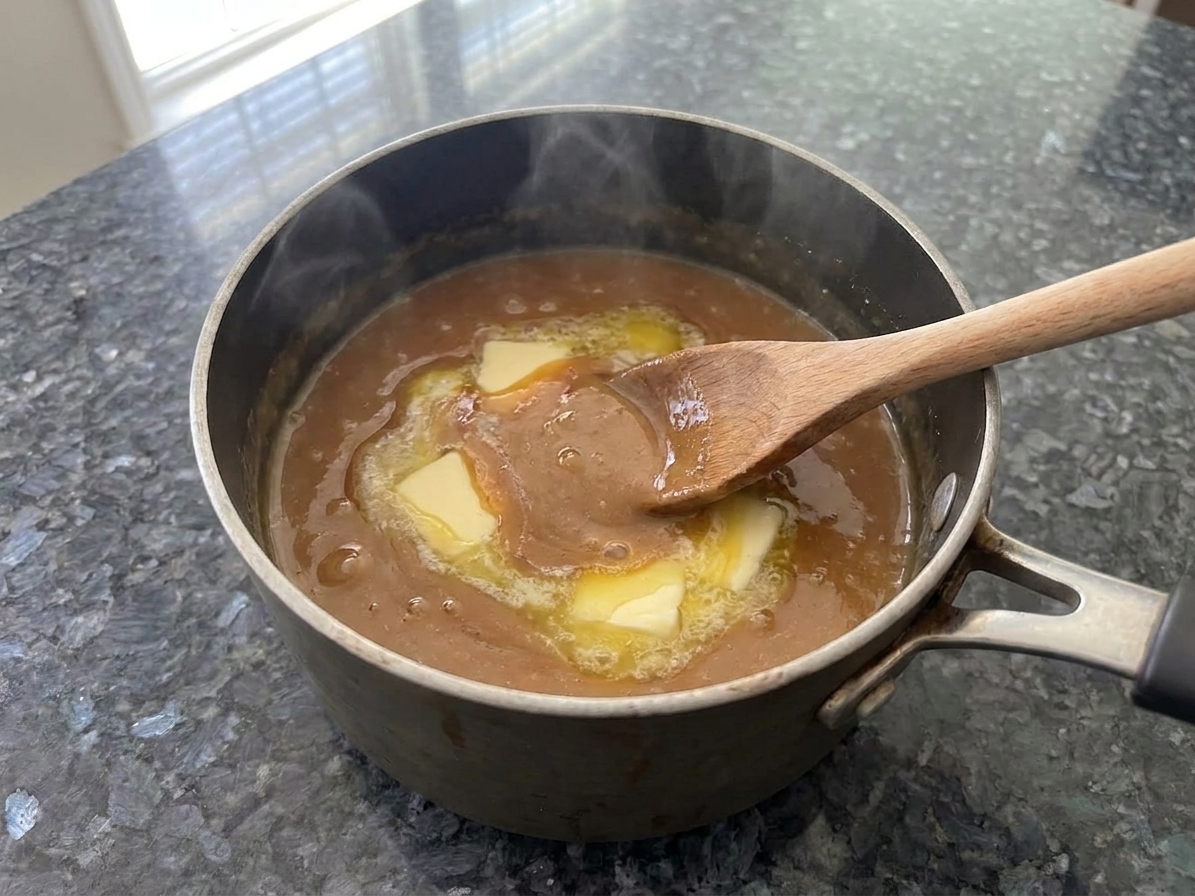
Probably not. It thickens a lot as it cools. If it is still runny after cooling to room temperature, it likely needed another minute or two on the stove, or the heat was too low to properly thicken the custard.
My frosting turned grainy. What happened?
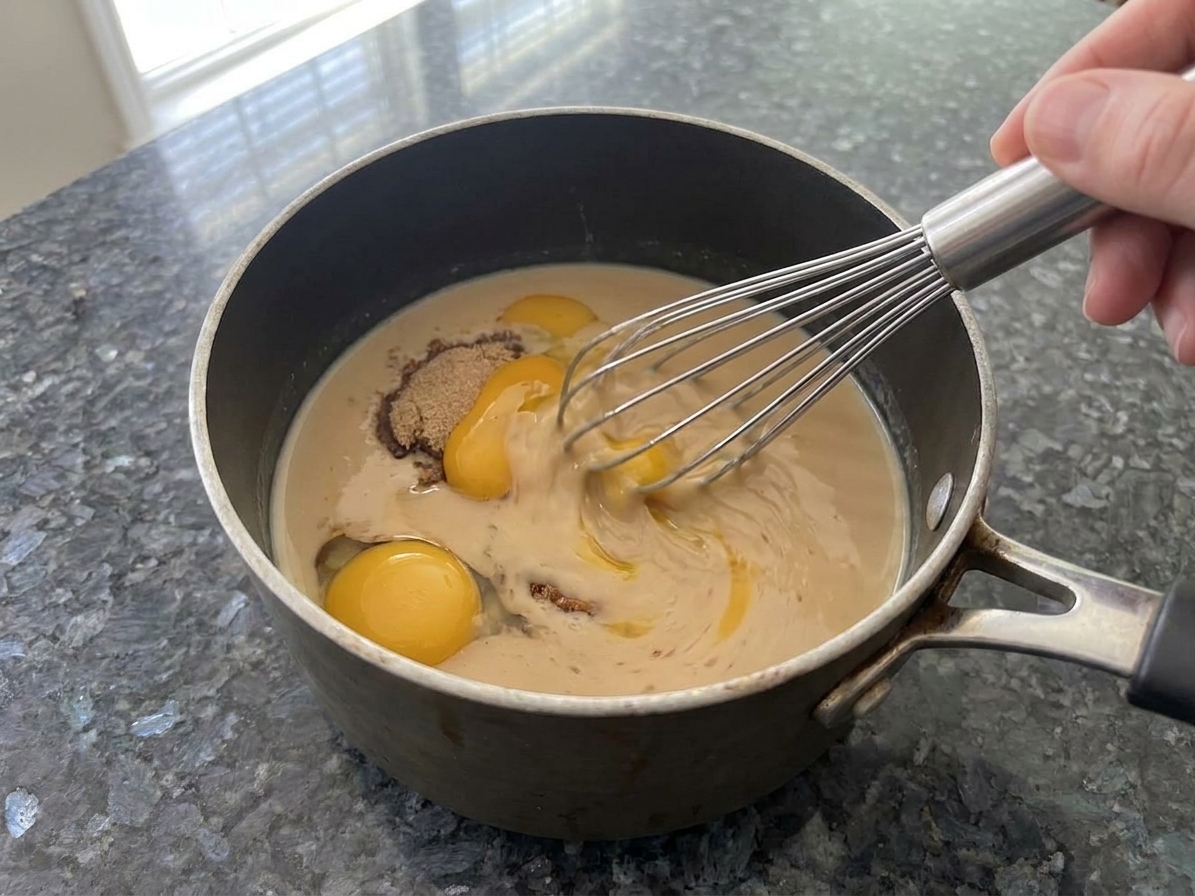
Graininess can happen from sugar crystallization or if the custard gets overcooked and the egg yolks start to curdle. Keep the heat at medium to medium-low and stir constantly, especially around the edges of the pan. If it is a little grainy, you can sometimes smooth it out by warming gently while whisking, or by pushing it through a fine-mesh sieve before adding the coconut and pecans.
Can I toast the coconut and pecans?
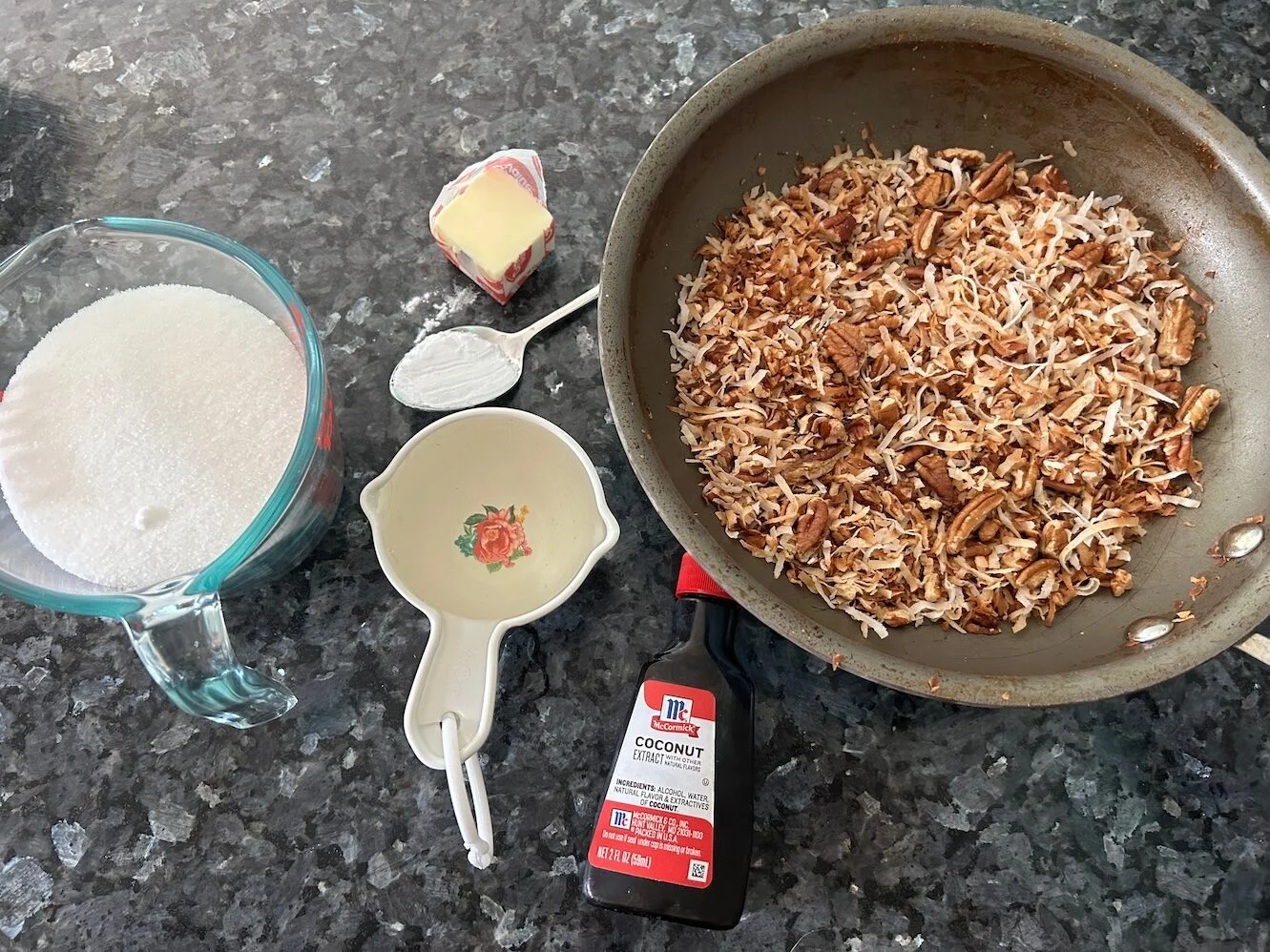
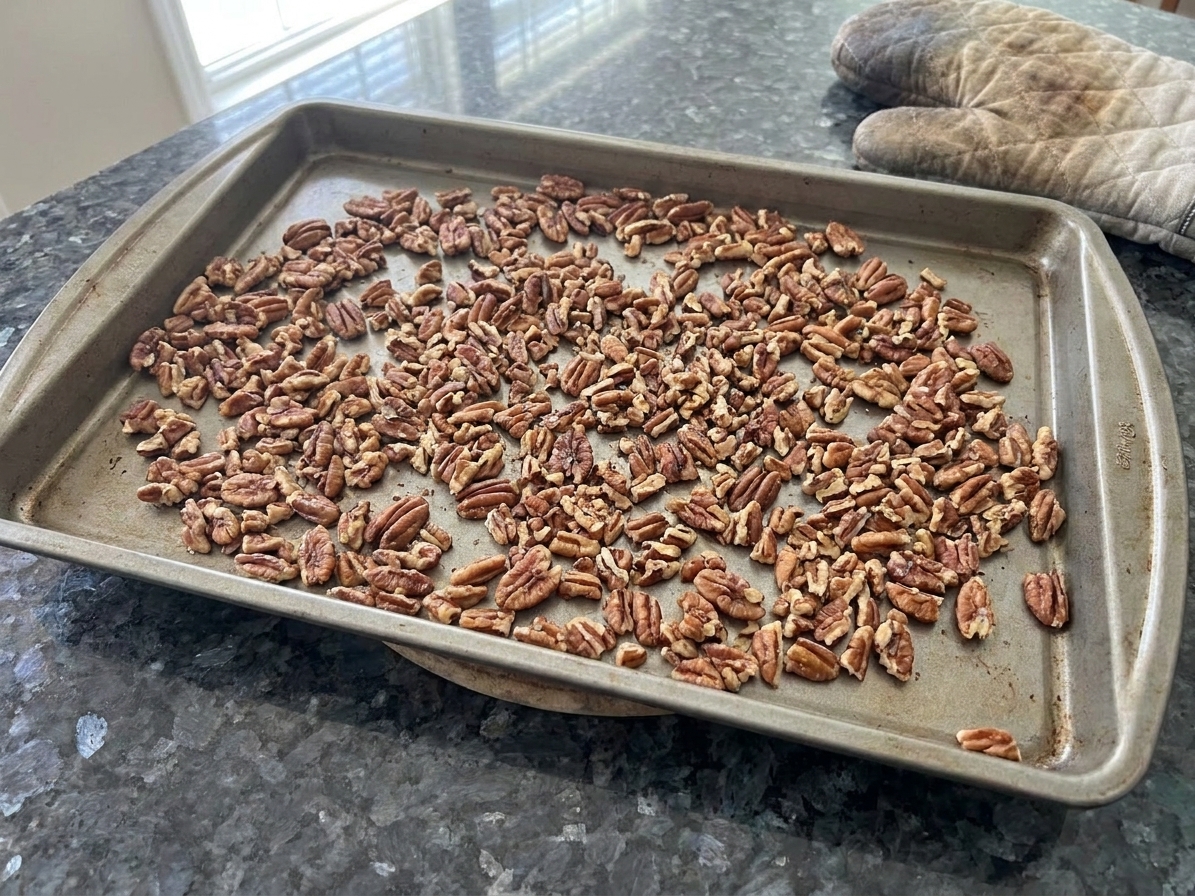
Yes, and it is a great move. Toast pecans and coconut separately since coconut browns quickly. Toasting adds a deeper, nuttier flavor and keeps the frosting from tasting one-note sweet.
Do I need to refrigerate this frosting?
Yes. Because it is a cooked egg-yolk custard frosting, keep it refrigerated when you are not actively using it, and avoid leaving it at room temperature for extended periods.