Common Questions
What gluten-free flour is best for waffles?
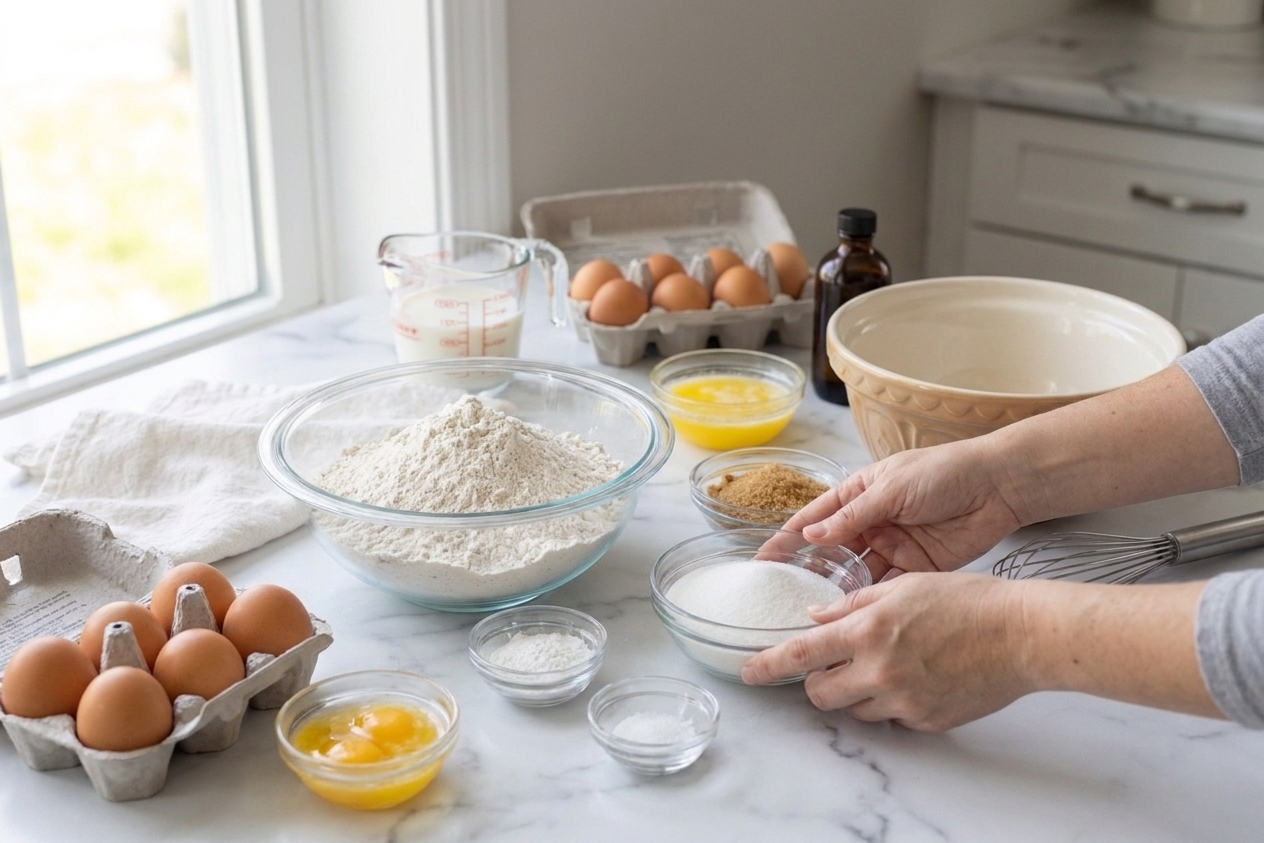
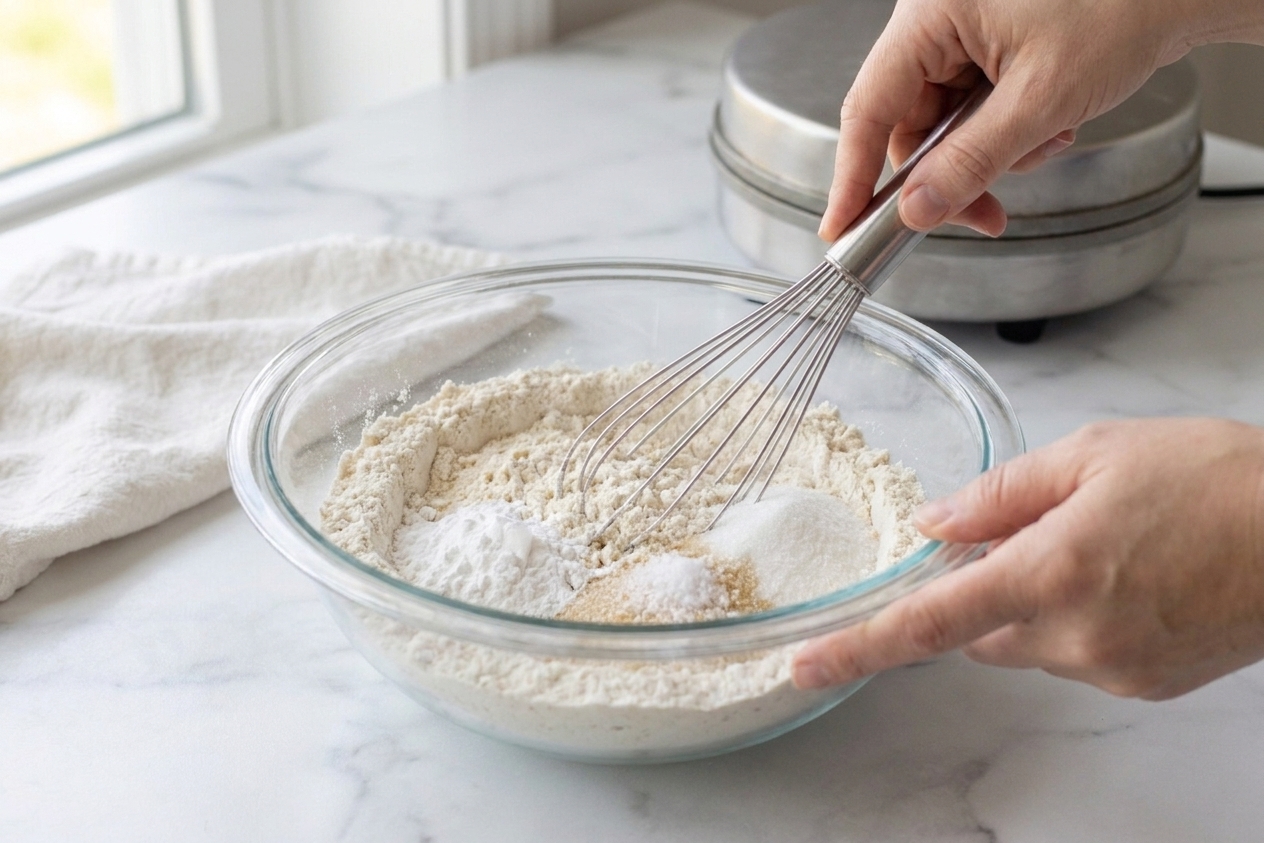
Use a 1:1 gluten-free flour blend that is meant to replace all-purpose flour. Not all blends behave exactly the same, so pick one you like and stick with it. I recommend a blend that includes xanthan gum (many do). If your blend does not include it, add 1/4 to 1/2 teaspoon xanthan gum to the dry ingredients for this batch, or follow the blend maker’s guidance.
Why are my gluten-free waffles sticking?
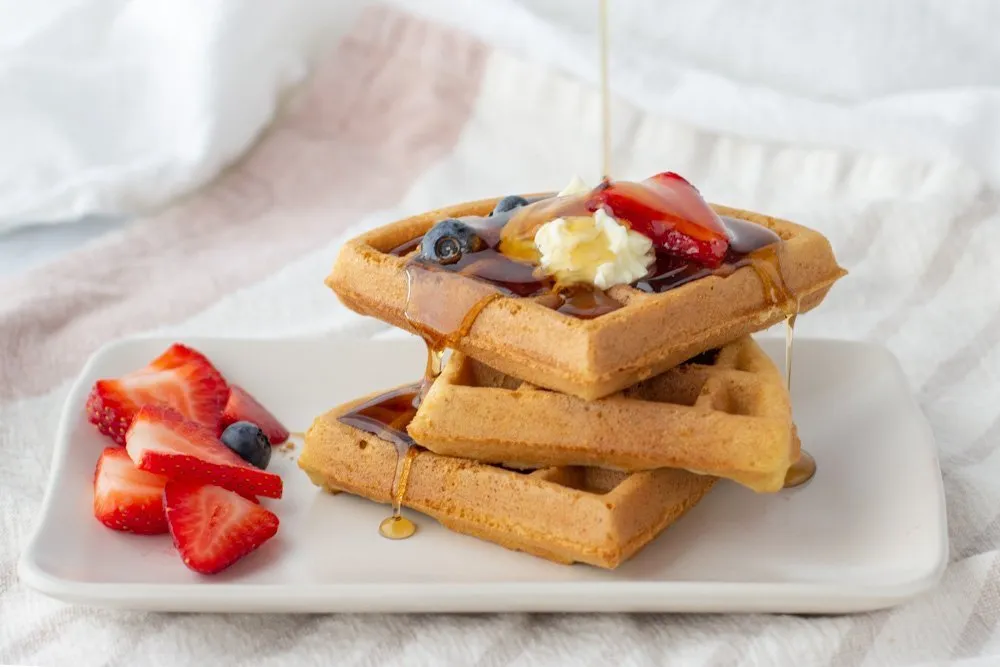
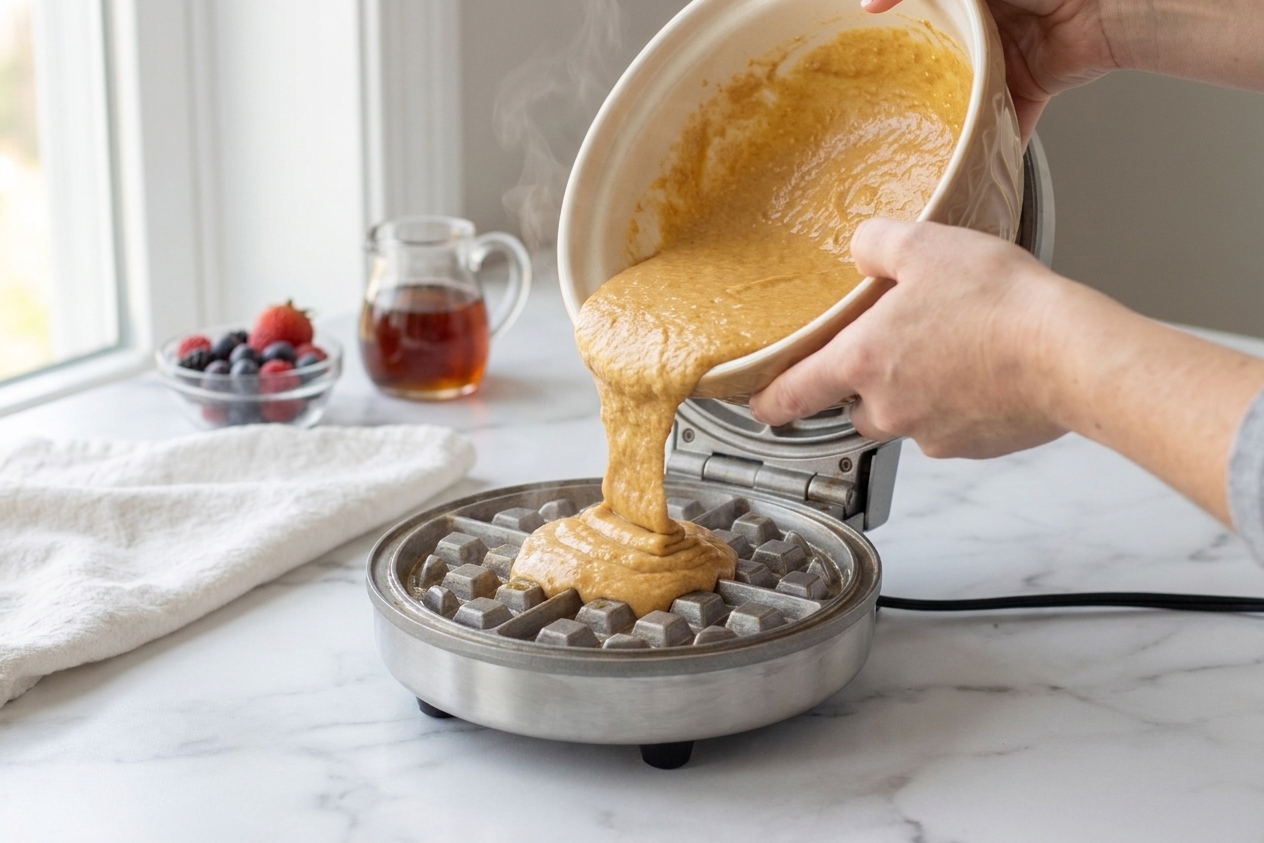
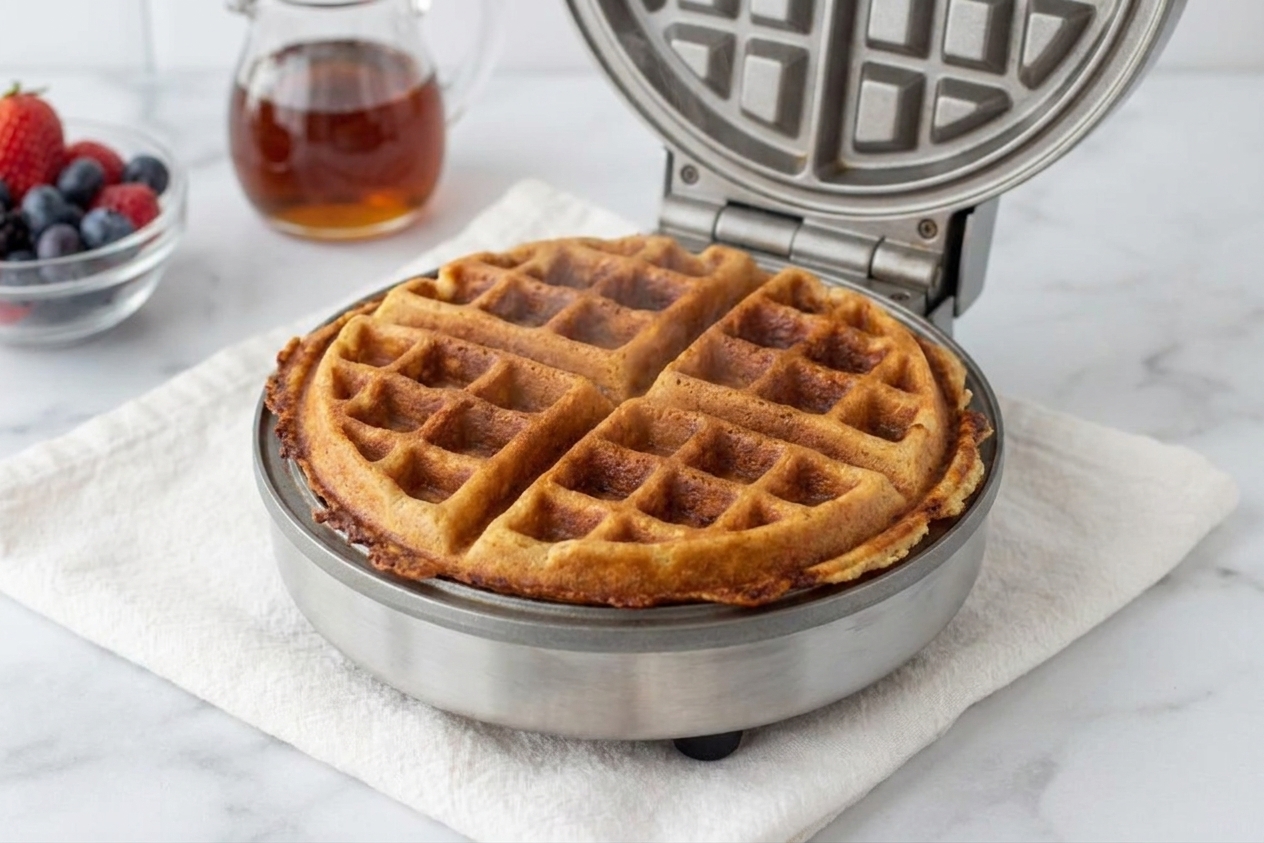
Usually one of three things: the iron is not hot enough, you did not grease it well, or you opened it too early. Preheat fully, grease lightly (gluten-free batter often needs it) and wait until steam slows down before lifting the lid. If your iron is extra sticky, grease between every batch.
How do I make them crispier?
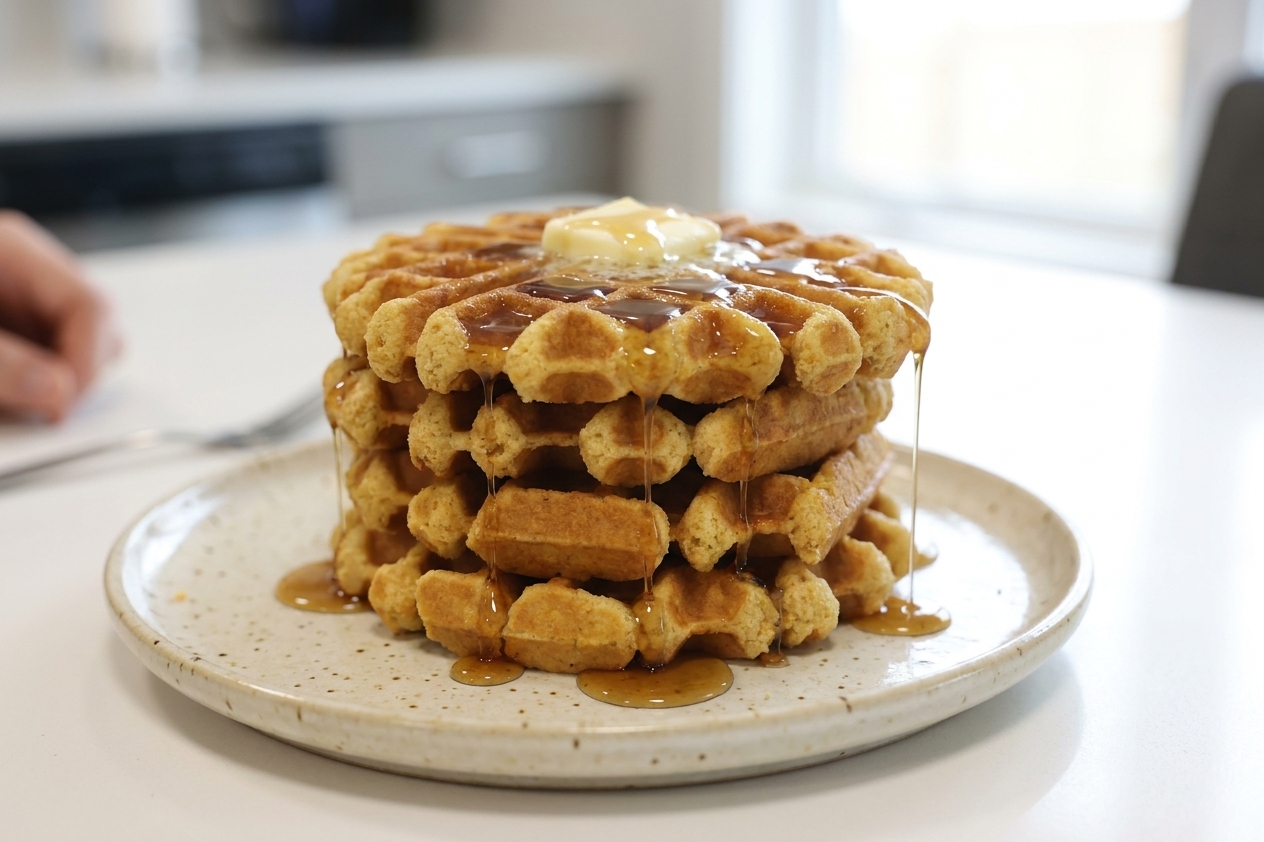
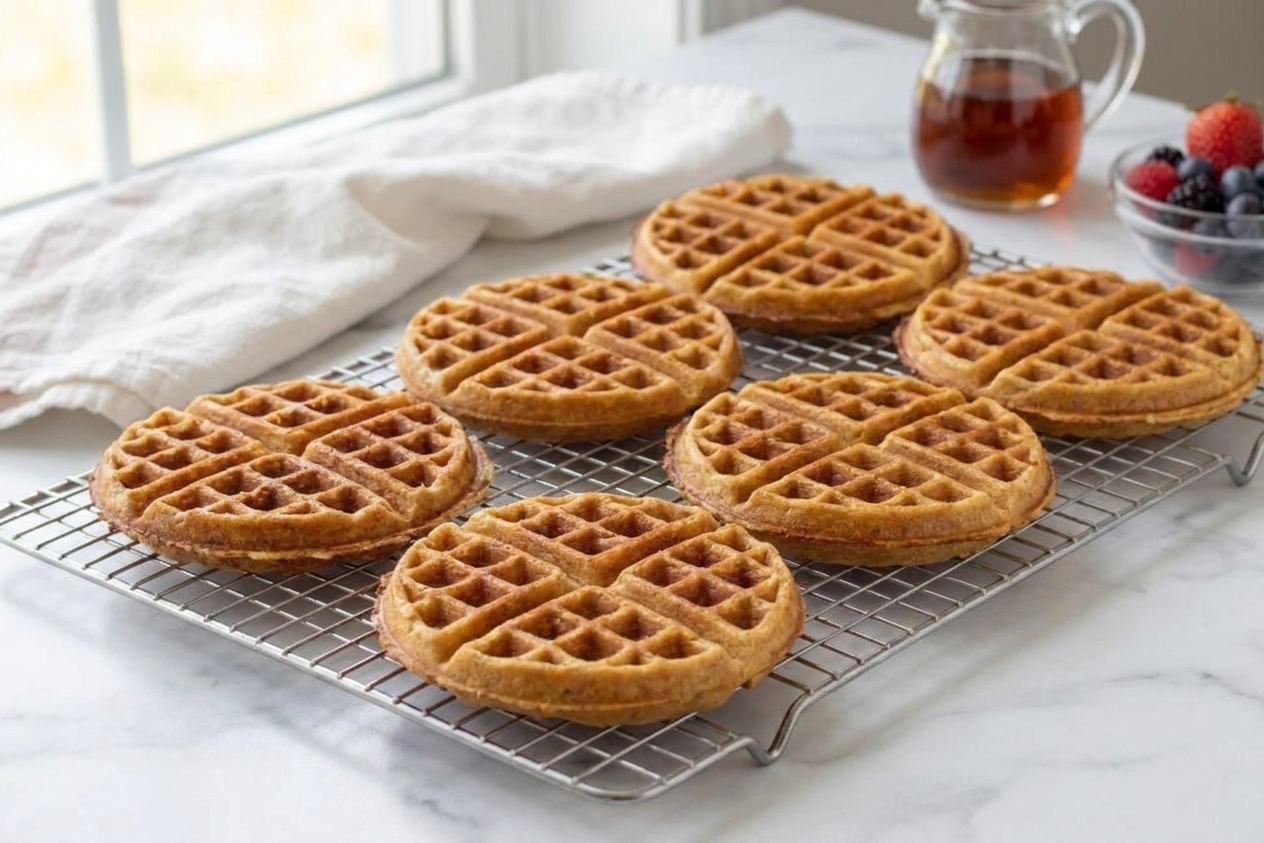
Make sure the waffle iron is fully preheated, and do not stack hot waffles on a plate. Keep finished waffles on a wire rack, or hold them in a 200°F oven directly on the rack so air can circulate.
Does waffle iron type matter?
Yes. Belgian irons make thicker waffles that may need a little extra cook time to get crisp, while classic irons cook faster and crisp up quickly. Either works. Just cook until the waffle is deeply golden and the steam slows down.
Can I make these dairy-free?
Yes. Use unsweetened almond milk or oat milk and swap the butter for melted coconut oil or a neutral oil. If using coconut oil, melt it and let it cool slightly so it does not scramble the eggs.
Can I make these egg-free?
Egg-free waffles are trickier because eggs help with structure and crisping. If you need egg-free, try two flax eggs (2 tablespoons ground flax + 5 tablespoons water, rested 10 minutes). Expect a softer, more tender, sometimes slightly denser waffle. It can be delicious, just not as crisp.
Can I use this batter for pancakes?
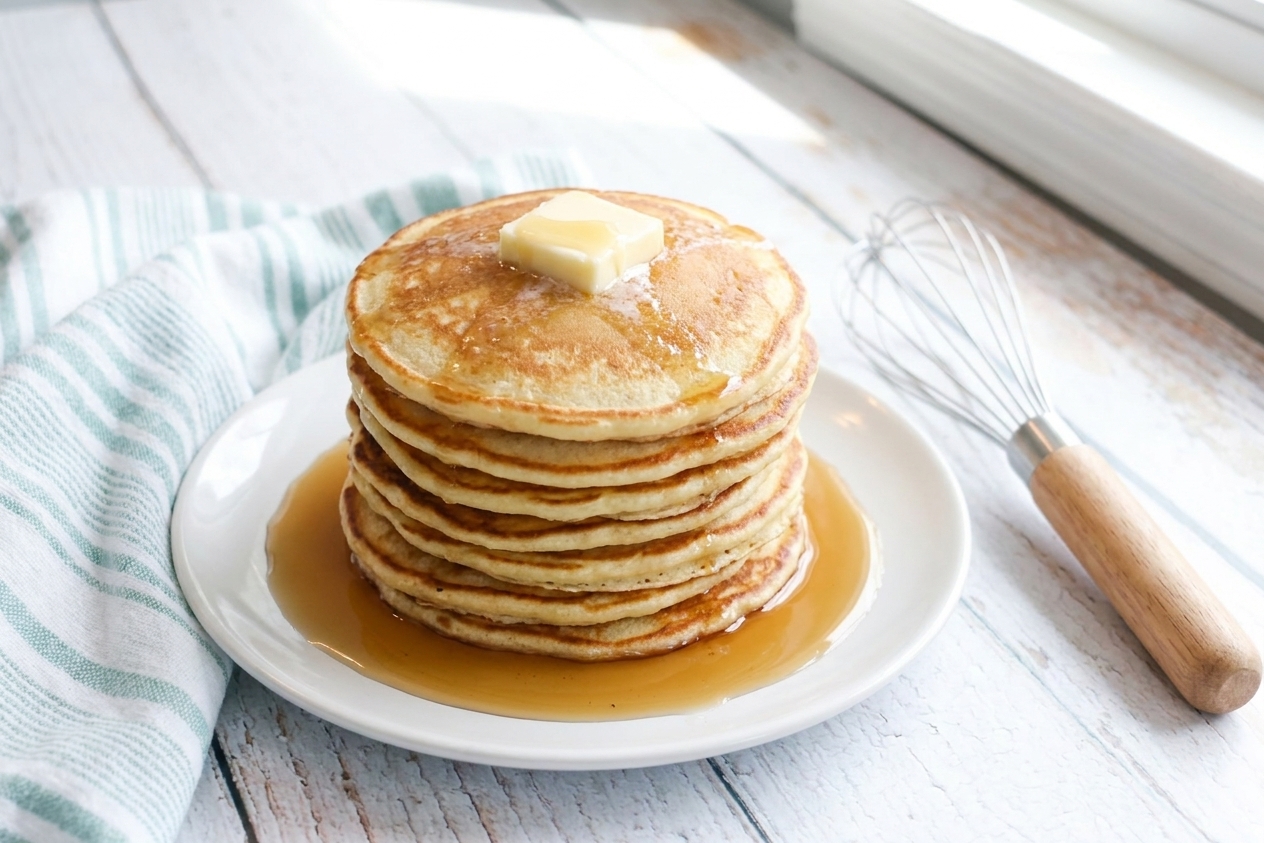
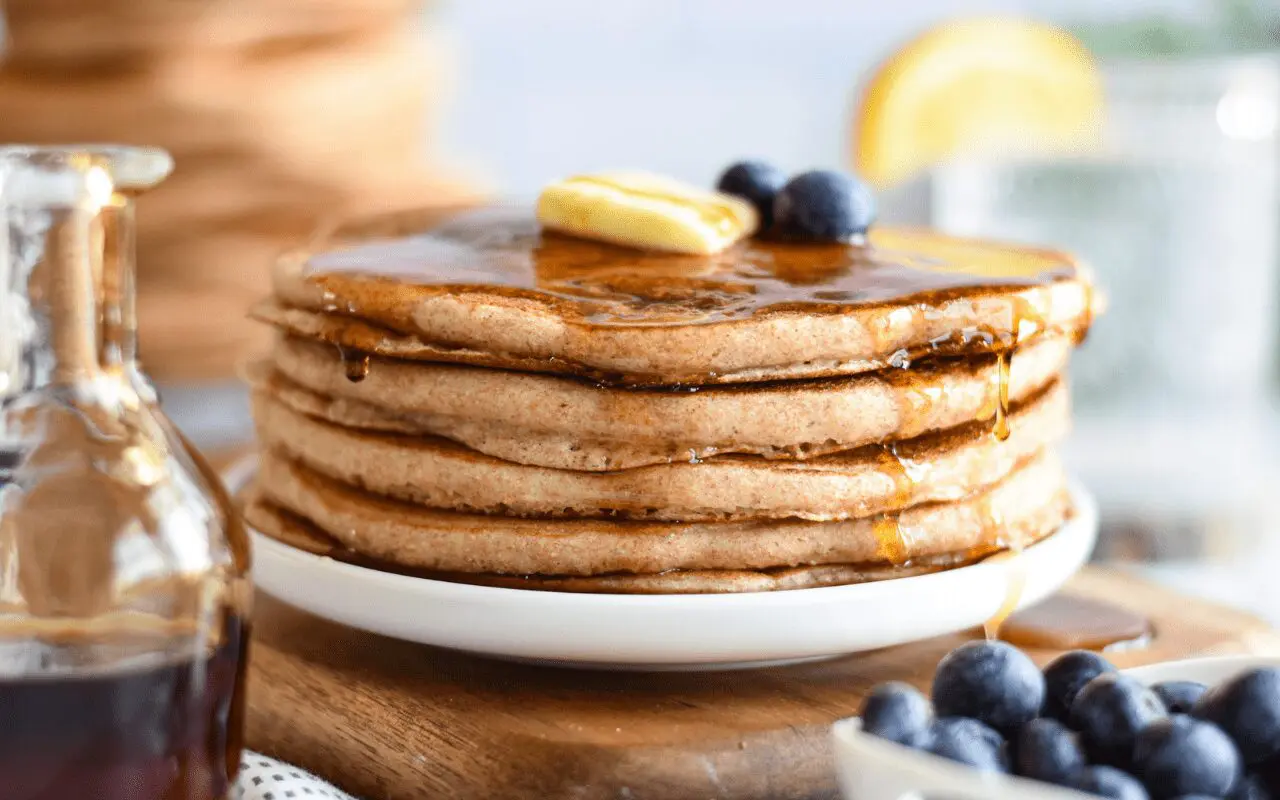
Yes, but you may need a splash more milk to thin it. Cook low and slow so the centers set without burning the outside.