Mom's Best Recipes
Recipe

Greek Yogurt vs Sour Cream

A simple, no-drama guide to taste, texture, and the best ways to swap Greek yogurt and sour cream in everyday recipes.

Author By Matt Campbell
4.7
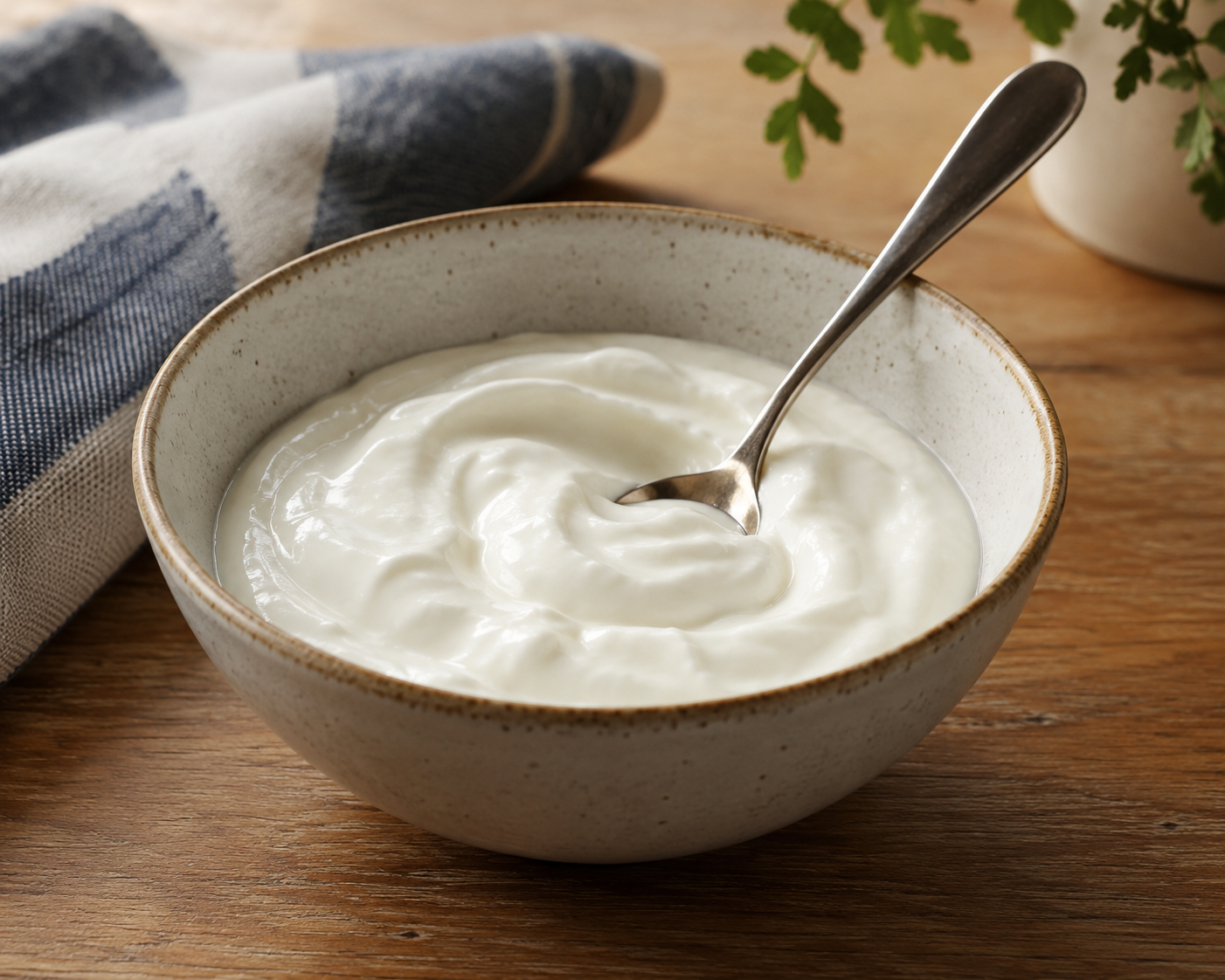
A wooden kitchen counter with two small bowls, one filled with thick Greek yogurt and the other with sour cream, next to sliced limes and a bunch of cilantro in bright natural window light

If you have ever stood in front of the fridge with a taco in one hand and a spoon in the other thinking, Greek yogurt or sour cream? welcome. They look suspiciously interchangeable. They both do that cool, creamy thing that tames spicy chili and makes baked potatoes feel like a hug.

But they are not identical. One is a little brighter and leaner. The other is richer and a bit more luxurious. The good news: you can swap them most of the time if you know when the swap is flawless and when it needs a small trick so your sauce does not split and your dip does not taste like health class.

This is my kitchen-tested breakdown, plus quick rules you can use on weeknights without doing math.
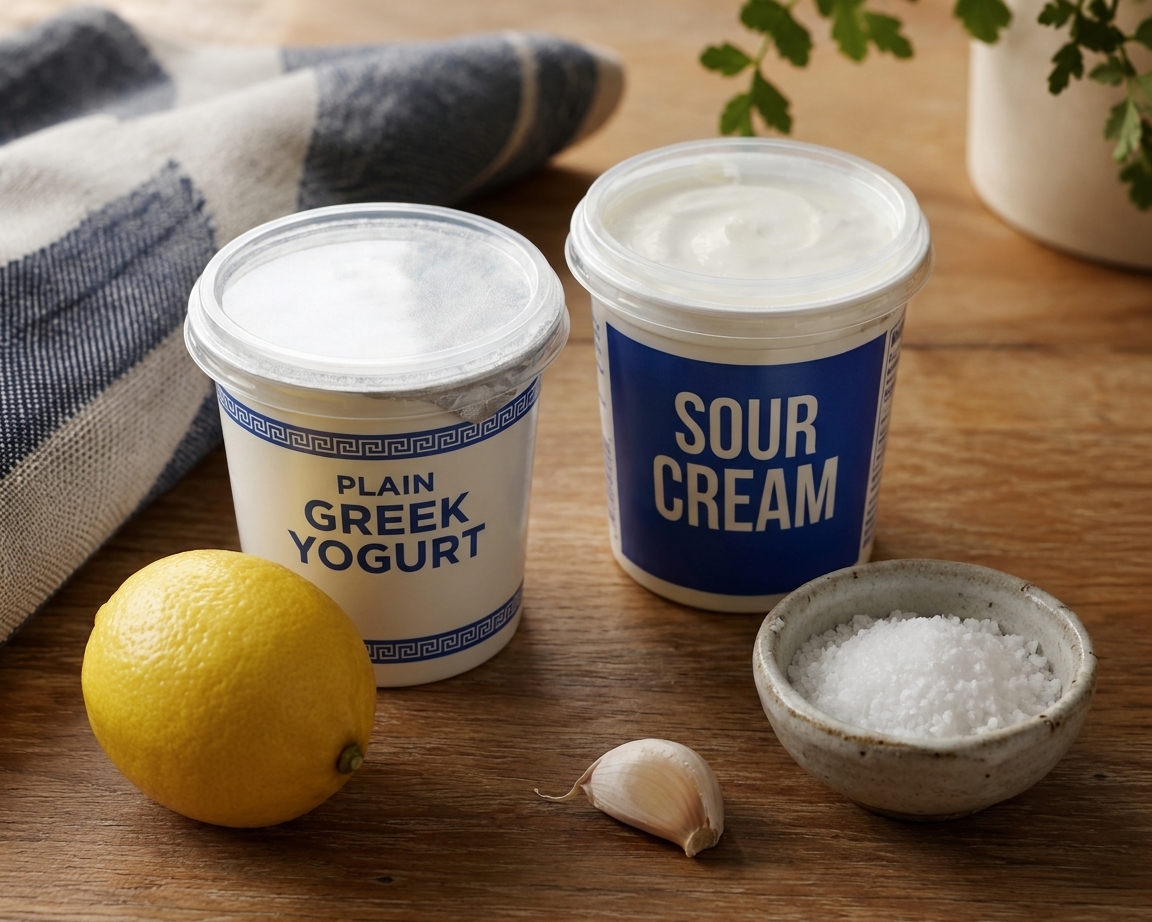

Two unopened containers on a kitchen counter, one labeled plain Greek yogurt and one labeled sour cream, next to a lemon, a garlic clove, and a small bowl of salt

Why It Works

What you will get from this guide

  • Flavor clarity: how tangy each one is and why it matters in dips and tacos.
  • Texture control: how to keep things thick and spoonable, not watery.
  • Heat strategy: how to prevent Greek yogurt from curdling in hot soups and sauces.
  • Swap rules you can trust: quick ratios for dips, baking, dressings, and toppings.

The quick take

Sour cream is richer and rounder, with a soft tang and a “coat the tongue” finish.

Greek yogurt is often thicker because it is strained and higher in protein, and it can taste more sharply tangy, especially nonfat. It reads a little cleaner and brighter.

Quick comparison

CategoryGreek yogurtSour cream
TasteBrighter, tangierRounder, mellow tang
TextureOften thicker (strained)Creamy, can loosen when mixed
Heat behaviorMore likely to curdle, temper firstMore forgiving, still avoid boiling
Best atDips, dressings, cold sauces, lighter toppingsTaco topping, baked potatoes, richer baking, creamy comfort

Swap rules by category

  • Dips and toppings: 1:1 swap. Use full-fat Greek yogurt for the closest match.
  • Dressings: 1:1 swap, then thin with water or milk a teaspoon at a time.
  • Baking (cakes, muffins, quick breads): 1:1 swap. Expect a little more tang with Greek yogurt. Full-fat is more forgiving.
  • Soups and hot sauces: 1:1 is fine, but temper Greek yogurt and add it off heat to avoid curdling.

One important note

Use plain, unsweetened yogurt. Vanilla yogurt is not a “fun twist” in taco sauce. Also, regular plain yogurt is thinner than Greek yogurt, so you may need to use a little less liquid, or strain it briefly if you want a thicker result.

Pairs Well With

Storage Tips

Storage tips for both

  • Keep it cold: store both in the coldest part of your fridge, not the door.
  • Use clean spoons: double dipping introduces bacteria and can shorten shelf life fast.
  • Watch for separation: a little liquid on top is normal. Stir it back in for sauces and baking. For dips, you can pour off excess liquid if you want it extra thick.
  • Leftover dips and sauces: store airtight and eat within 3 to 4 days for best quality. If anything smells or tastes off, discard it.
  • Freezing: neither is a star freezer ingredient. Frozen and thawed sour cream and Greek yogurt can turn grainy. If you must freeze, use it later in baked casseroles, not as a topping.

Common Questions

Common questions

Can I swap Greek yogurt for sour cream 1:1?

Usually yes, especially in cold uses like dips, taco topping, and dressings. For the closest match, use full-fat plain Greek yogurt. If you only have nonfat, add a small splash of olive oil or a spoonful of mayo to round it out.

Can I swap sour cream for Greek yogurt 1:1?

Yes in most recipes. Sour cream is a bit richer and less sharp, so your dish may taste slightly more mellow and decadent.

Why does Greek yogurt curdle in hot dishes?

Greek yogurt is more prone to breaking when it meets high heat or a sudden temperature change. To prevent curdling, temper it by whisking a few spoonfuls of hot broth into the yogurt first, then stir the warmed mixture back into the pot off heat.

Which is better for baking?

Both work. Sour cream adds richness and tenderness. Greek yogurt adds tenderness too, but can taste tangier. In cakes and quick breads, full-fat Greek yogurt is the smoothest swap. If your batter is already very acidic, sour cream can be the calmer choice.

Which one is thicker?

It depends on brand, but Greek yogurt is often thicker because it is strained and higher in protein. Sour cream is creamy and spoonable, but can loosen or thin depending on what you mix in, including added liquid, salt, and acid.

What is the best choice for tacos and chili?

For pure comfort and richness, sour cream. For a brighter, lighter finish that still feels creamy, full-fat Greek yogurt. Either way, add a pinch of salt. It makes the dairy taste more like itself, in a good way.

I used to be a strict sour cream guy. Then I started cooking more weeknight meals and realized I was buying sour cream for one taco night and watching it quietly expire in the back of the fridge like a sad little science project. Greek yogurt was already in my rotation for breakfast, so I started swapping it in. The first time I spooned it onto chili I thought, okay, this is close. Then I added a squeeze of lime and a pinch of salt and it clicked. It was not “diet sour cream.” It was its own thing and it worked.

Now I keep both around when I can, and I pick based on the vibe: sour cream for indulgent, Greek yogurt for bright and tangy. Either one gets my full support as long as you taste as you go.