Common Questions
What cut of beef is best for grillades?
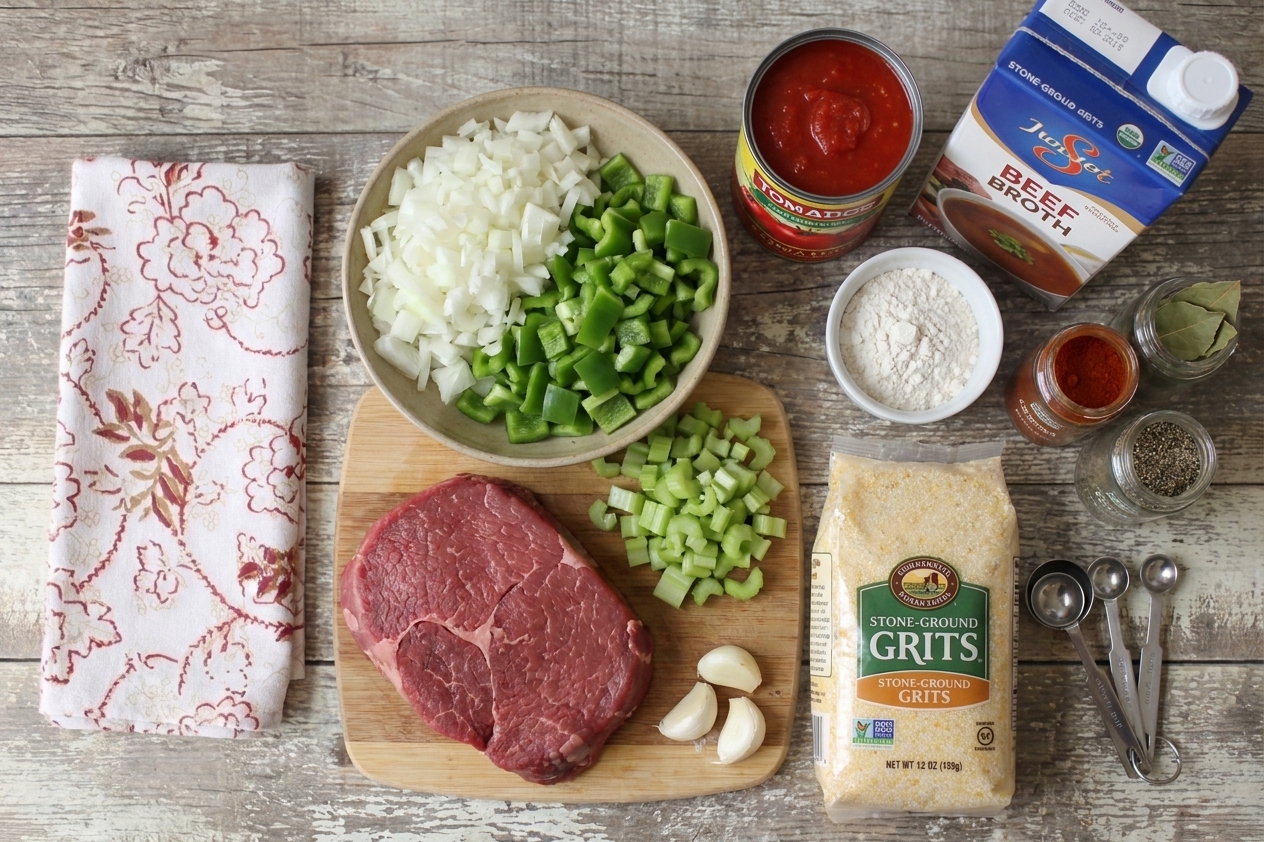
Look for a lean-ish cut you can slice and pound thin, like top round, bottom round, or sirloin tip. You want thin pieces that braise steadily and end up tender in the gravy.
Is grillades made with veal or beef?
Traditionally you will see both. Veal cooks a little faster and can be extra tender, but beef is common and easier to find. This recipe uses beef, with the same method working for veal.
How thick should the gravy be?
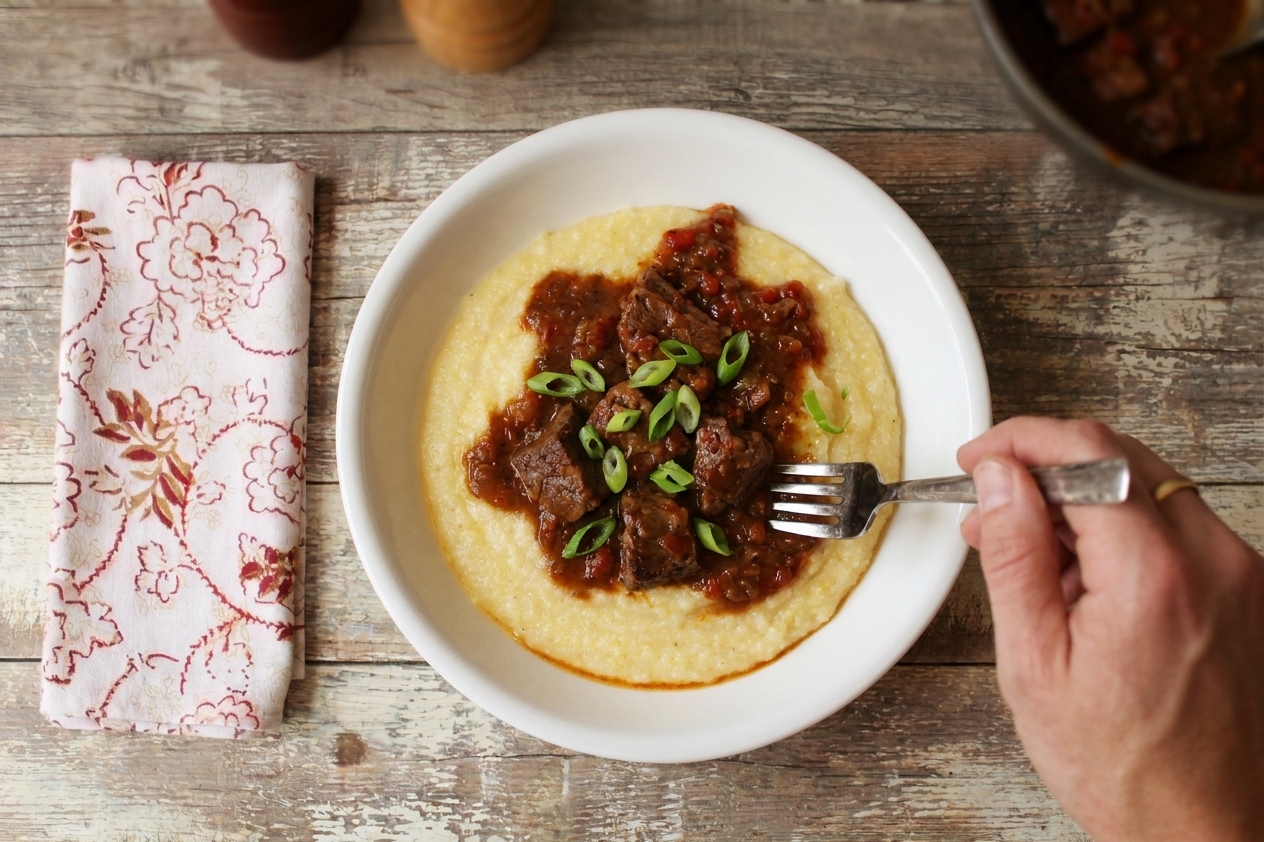
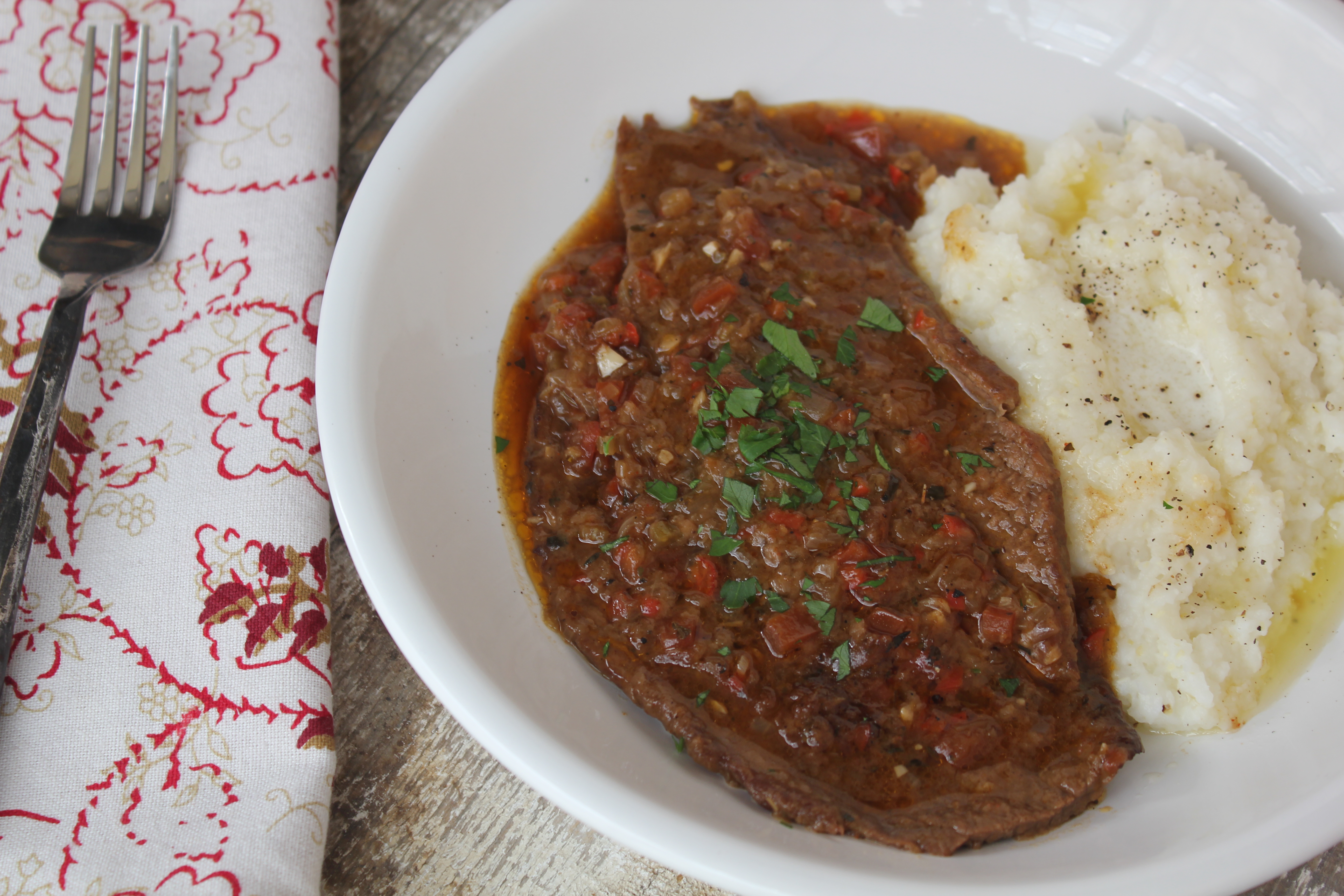
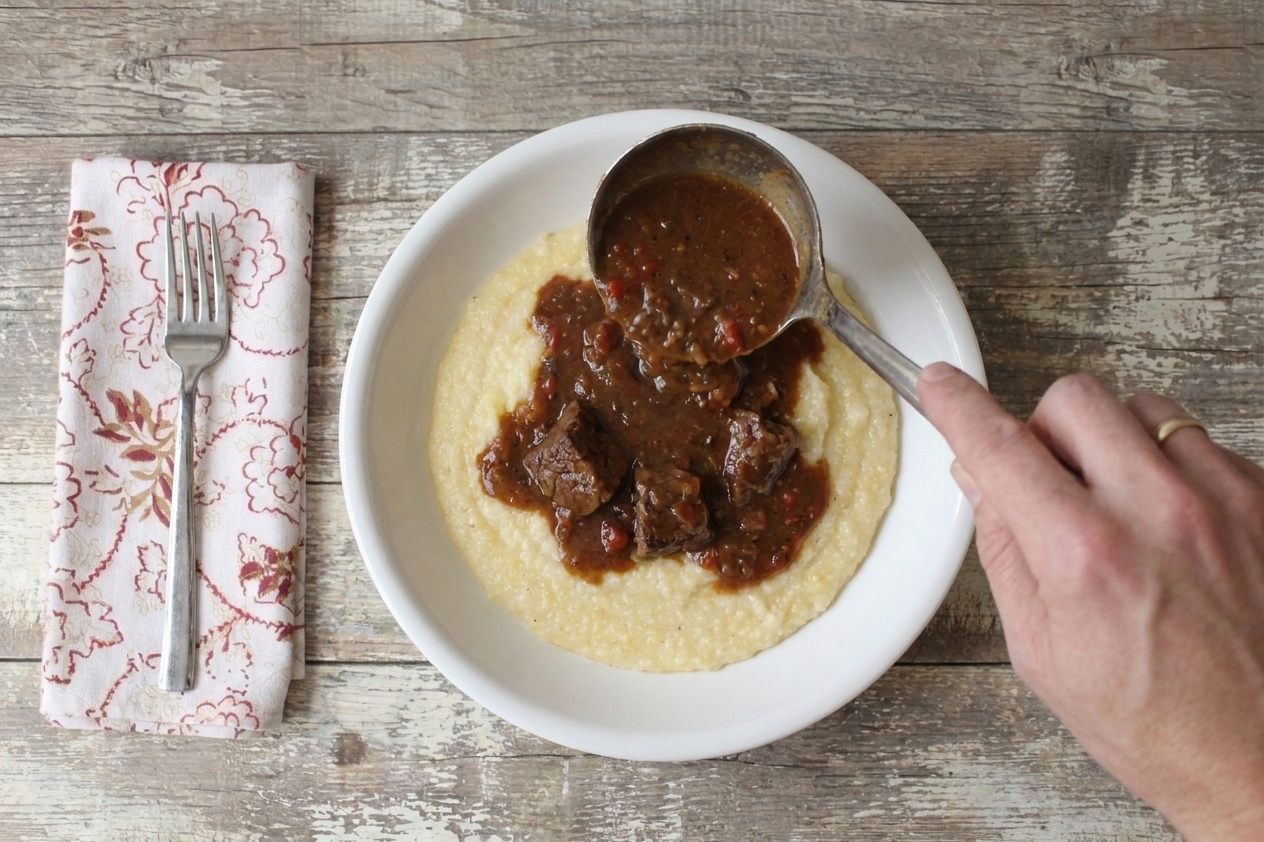
It should be spoonable and clingy. When you drag a spoon through the pot, the trail should briefly hold before filling in. Too thin and it runs off the grits. Too thick and it turns pasty. If it is thin, simmer uncovered a few minutes. If it is too thick, add broth a splash at a time.
How do I keep grits from turning gummy?
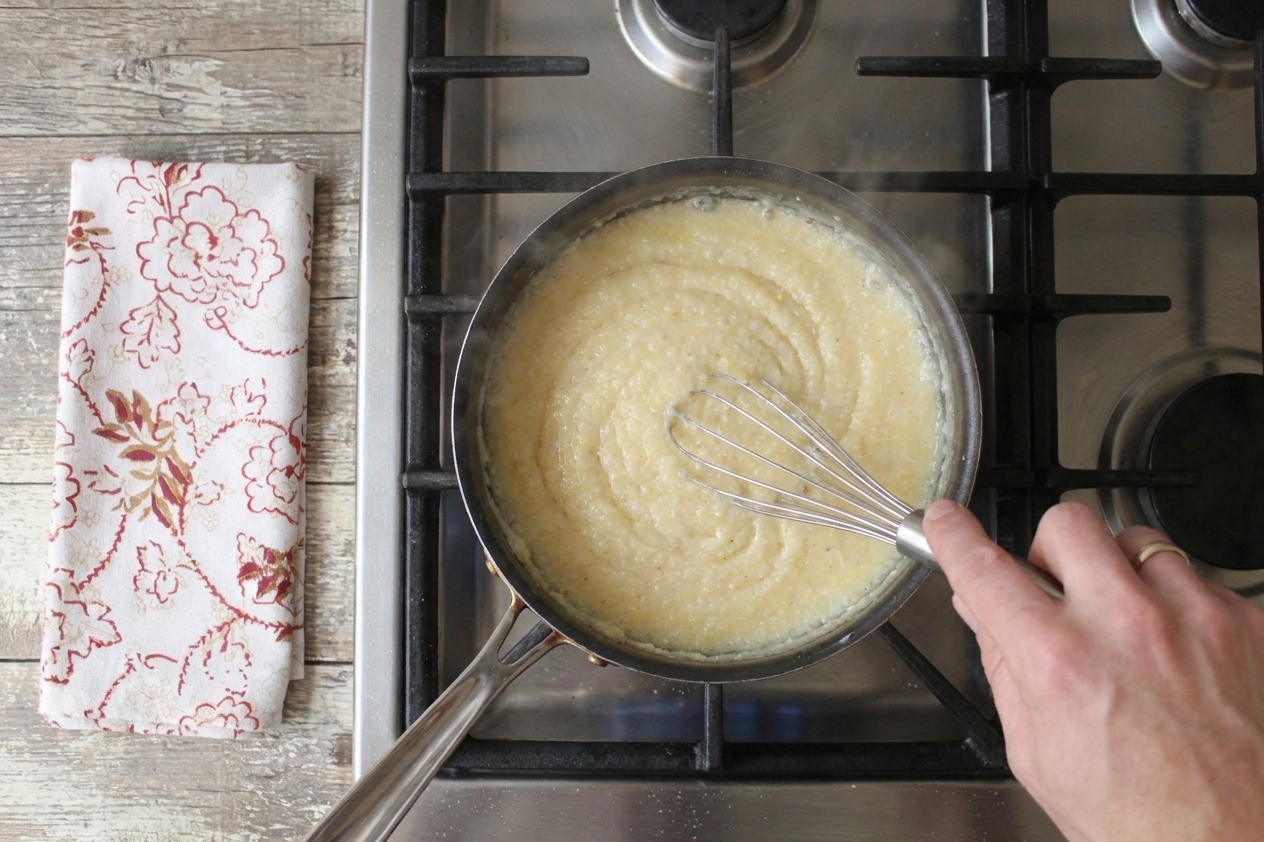
Three things help the most: (1) use the right liquid ratio and keep them at a gentle simmer, (2) stir occasionally (enough to prevent sticking, not so much that you whip them), and (3) do not cook them at a hard boil. Grits like calm water, not a jacuzzi.
Can I make grillades without tomatoes?
Tomatoes are classic in many versions, but you can use less if you prefer a browner gravy. Start with half the tomatoes and add more to taste after simmering.
What kind of grits should I buy?
Stone-ground grits give the best texture and corn flavor, but they take longer and timing varies by brand and grind. Quick grits work in a pinch, but watch the package liquid ratio and keep the heat low to avoid gummy texture.