Mom's Best Recipes
Recipe

Gulab Jamun

Pillowy fried milk dough balls soaked in warm cardamom rose syrup, with tips for that deep golden color and soft center.

Author By Matt Campbell
4.8
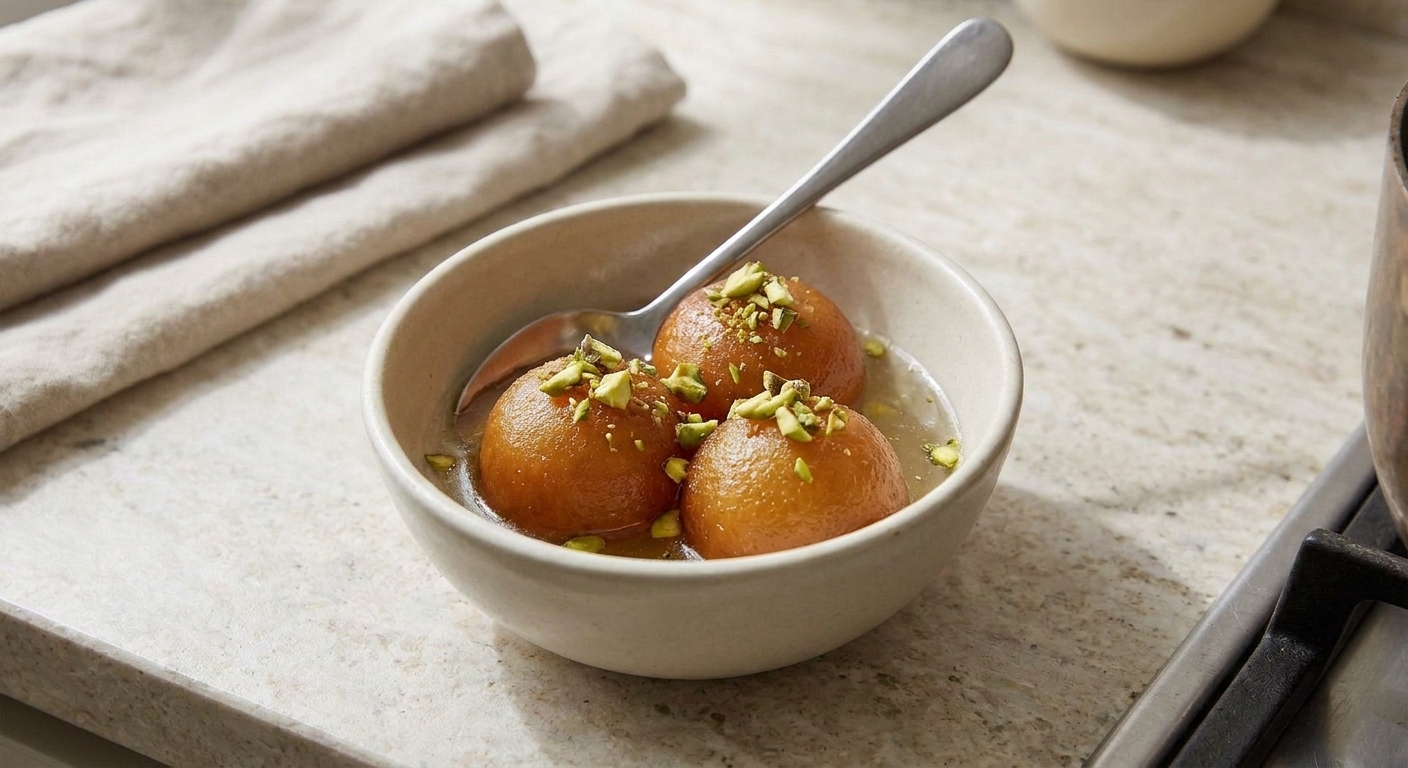
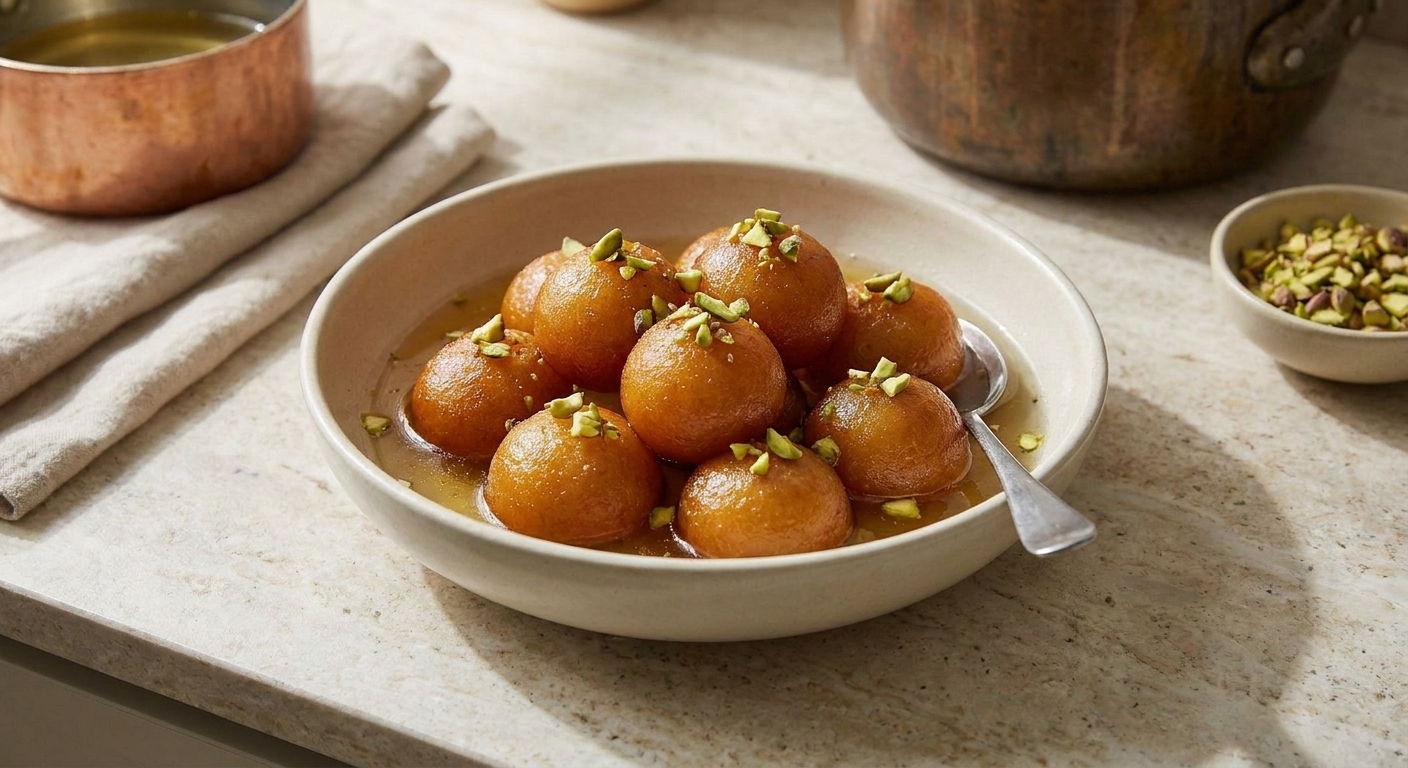
A shallow bowl of gulab jamun soaking in amber sugar syrup, garnished with chopped pistachios, on a warm-toned kitchen table with soft natural light

Gulab jamun is one of those desserts that feels like a magic trick. You start with a humble dough, roll a few little balls, fry them until they turn the kind of golden that makes you hover over the pot, then you drop them into warm syrup and suddenly they become soft, glossy, and dangerously snackable.

This is a Moms Best Recipes version, so we are keeping it approachable. No khoya hunt required. We are using milk powder for a dough that is forgiving, fast, and still gives you that classic tender bite once it drinks up the syrup.

One promise before we start: if you nail the frying temperature and you do not overwork the dough, you are going to get jamuns that are fluffy inside, not dry, not tough, and not mysteriously hollow.
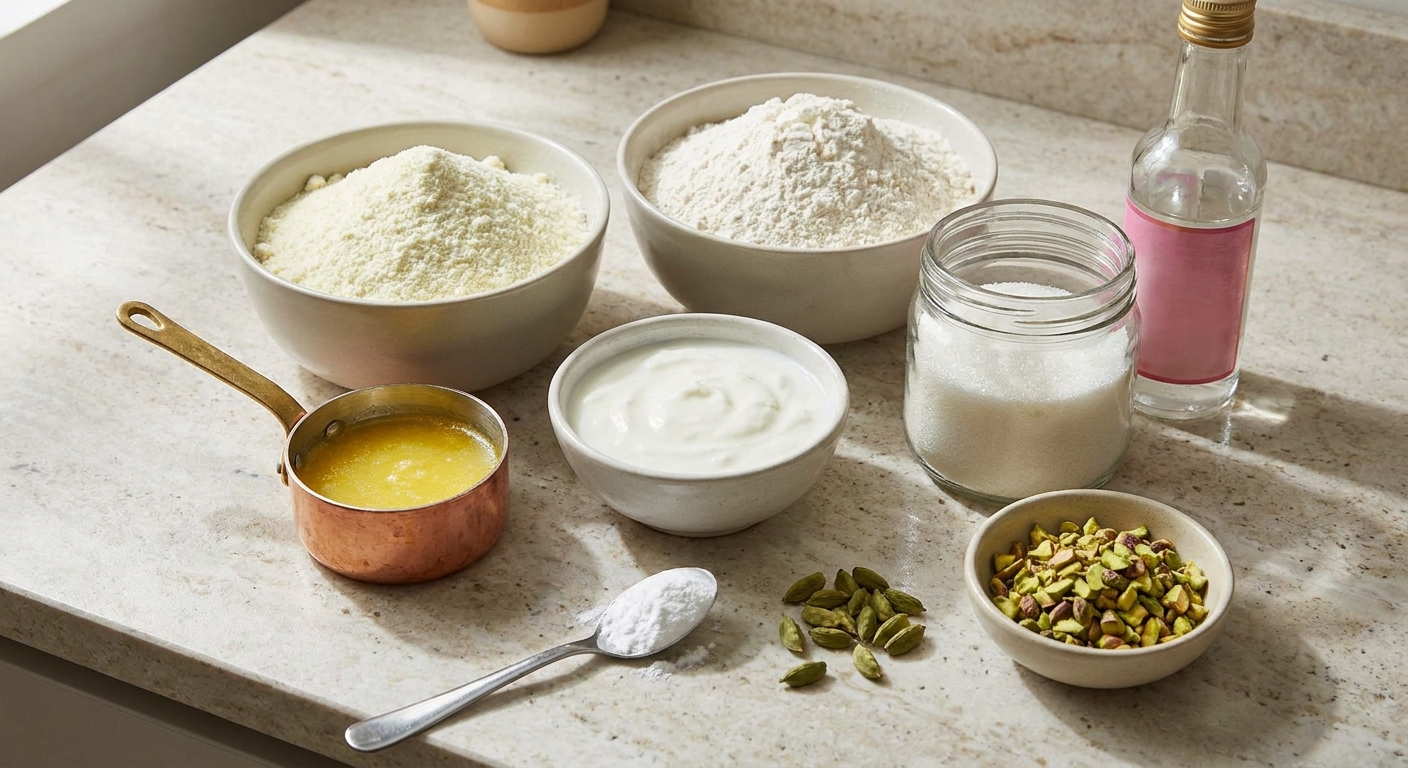
Milk powder, all-purpose flour, ghee, yogurt, baking powder, cardamom pods, sugar, rose water, and chopped pistachios arranged on a light stone kitchen counter

Why It Works

  • Soft centers, not doughy: The milk powder and a gentle mix make a tender dough that soaks syrup instead of fighting it.
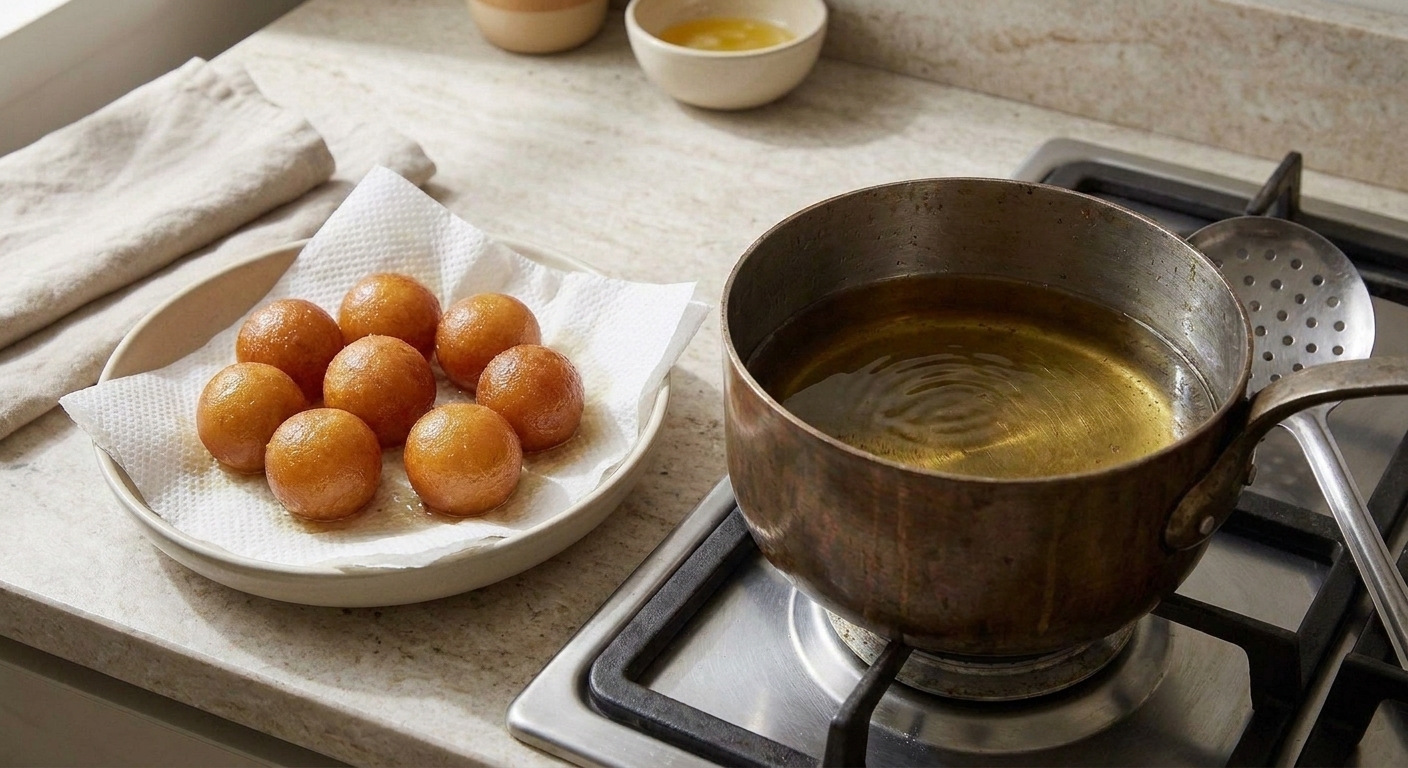
  • Even, deep golden color: Low and steady frying prevents the outside from browning before the inside cooks.
  • Syrup that actually tastes like something: Cardamom and rose water bring that signature gulab jamun aroma without being overpowering.
  • Make-ahead friendly: Gulab jamun is arguably better after a rest, when the syrup has fully moved in.

Pairs Well With

Storage Tips

Refrigerator: Store gulab jamun fully submerged in syrup in an airtight container for up to 4 days. The syrup is their protection blanket.

To reheat: Warm a portion gently in the microwave in 15 to 20 second bursts with a spoonful of syrup. You want warm, not boiling.

Freezing: You can freeze the fried, unsoaked jamuns (cool completely first) for up to 2 months. Thaw in the fridge, warm the syrup, then soak. I do not love freezing them already soaked because texture can get a little spongy, but it works in a pinch.

Common Questions

Why did my gulab jamun crack while frying?

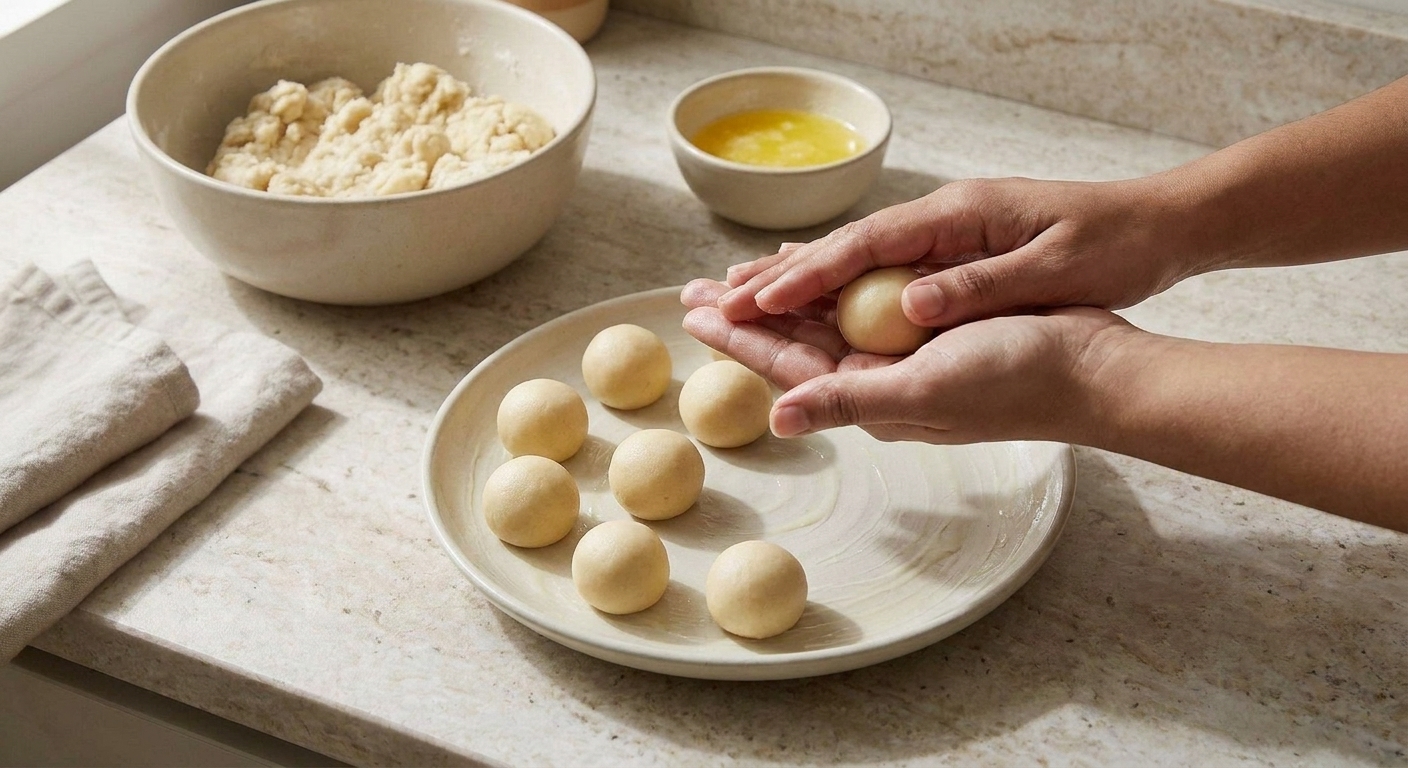
Cracking usually means the dough was too dry or the oil was too hot. Add milk 1 teaspoon at a time next round, and keep the oil around 310 to 330°F so they brown slowly. Also, roll the balls smooth with lightly greased palms.

Why are my jamuns hard?

Most common culprits: you overmixed the dough, added too much flour while shaping, or fried too hot. Mix just until it comes together, and use a little ghee instead of flour on your hands.

Can I make gulab jamun without rose water?

Yes. Skip it and add a little extra cardamom, or use a tiny splash of orange blossom water if you have it.

What is the best oil for frying gulab jamun?

A neutral oil like canola, vegetable, or avocado oil works great. Some people use ghee for flavor, but it is pricey and can brown fast. My compromise: neutral oil for frying and a little ghee in the dough for flavor.

Do the jamuns go into hot syrup or cold syrup?

Warm syrup, warm jamuns. Not ripping hot, not cold. If the syrup is cold, they tighten up and soak slower. If it is boiling, the outside can get overly soft.

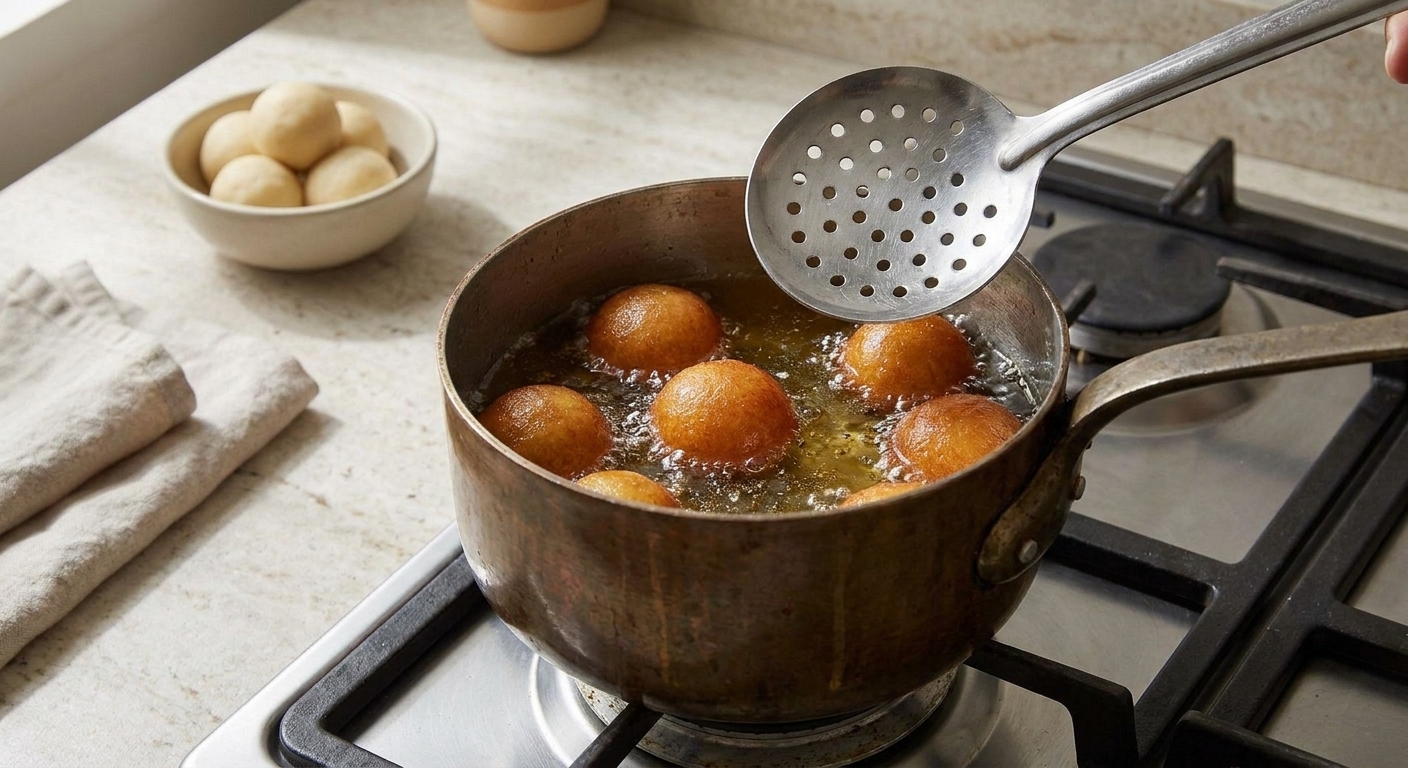
Round gulab jamun balls frying in a small deep saucepan of oil, gently bubbling, with a slotted spoon hovering above

The first time I tried making gulab jamun at home, I treated the dough like a bread project. I kneaded it like it owed me money. The result was… edible, but with the texture of a stress ball.

Once I started mixing it gently, frying low and slow, and letting the syrup do its thing, everything clicked. Now it is my favorite kind of dessert chaos: a pot of syrup that smells like cardamom, a little frying action, and a final payoff that makes the kitchen feel like a celebration.