Mom's Best Recipes
Recipe

Kunafa

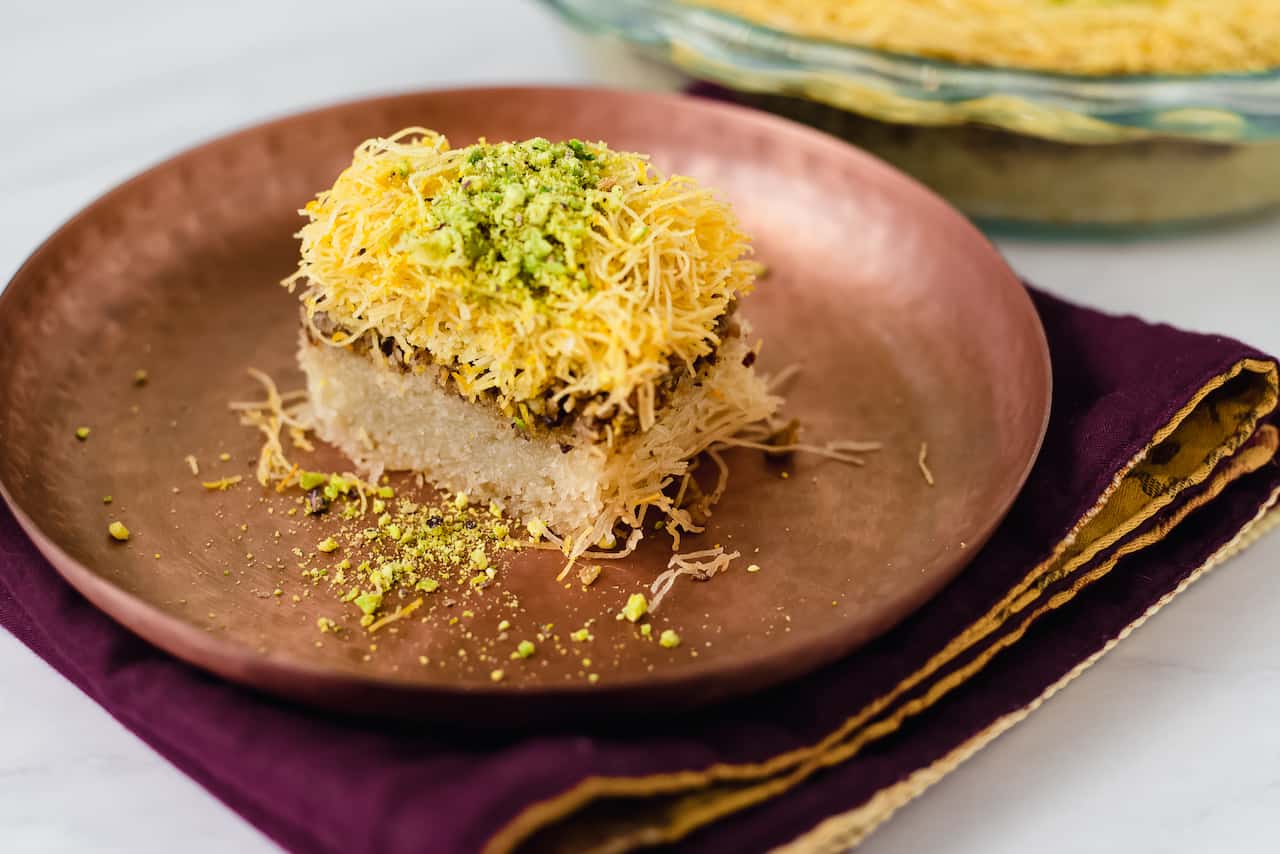
A crisp, buttery kataifi crust wrapped around a gooey cheese center, finished with orange blossom syrup and pistachios.

Author By Matt Campbell
4.8
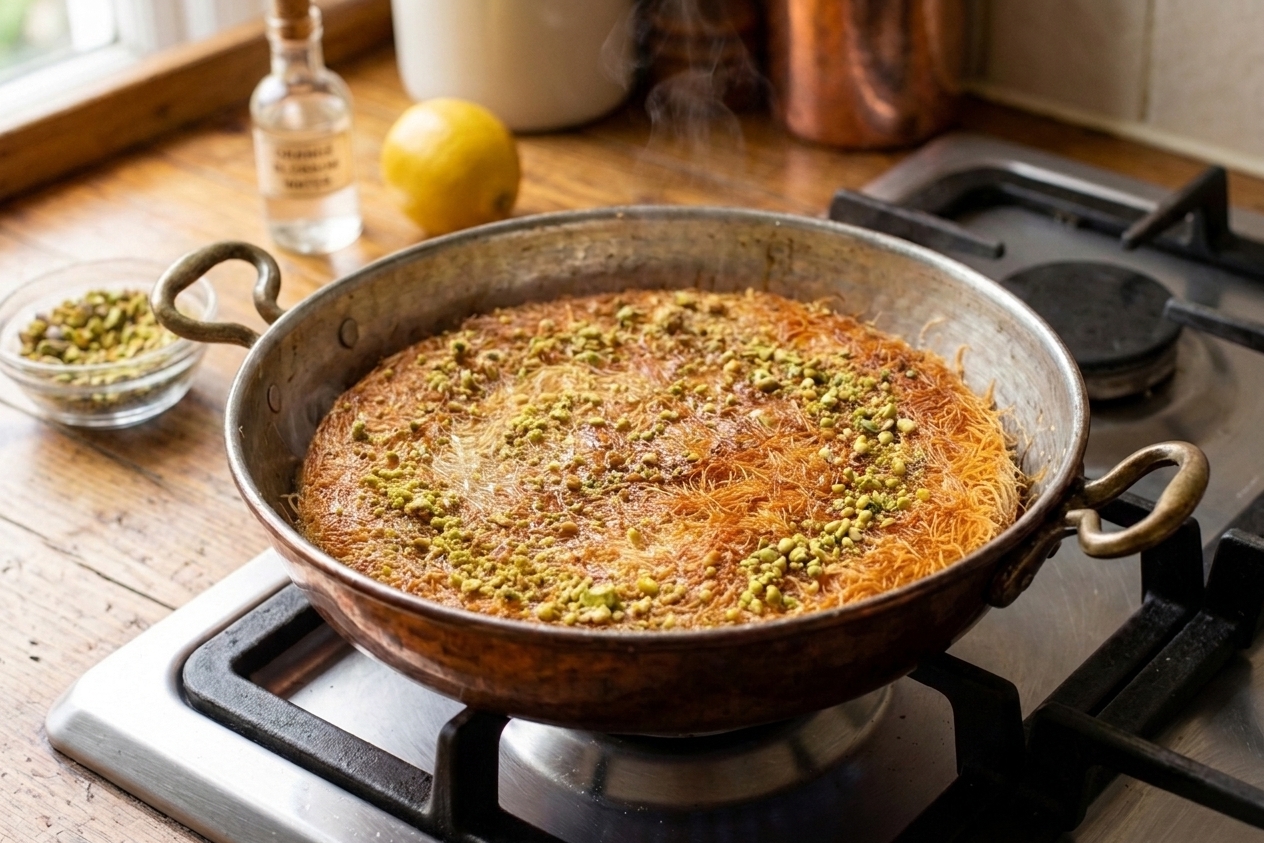
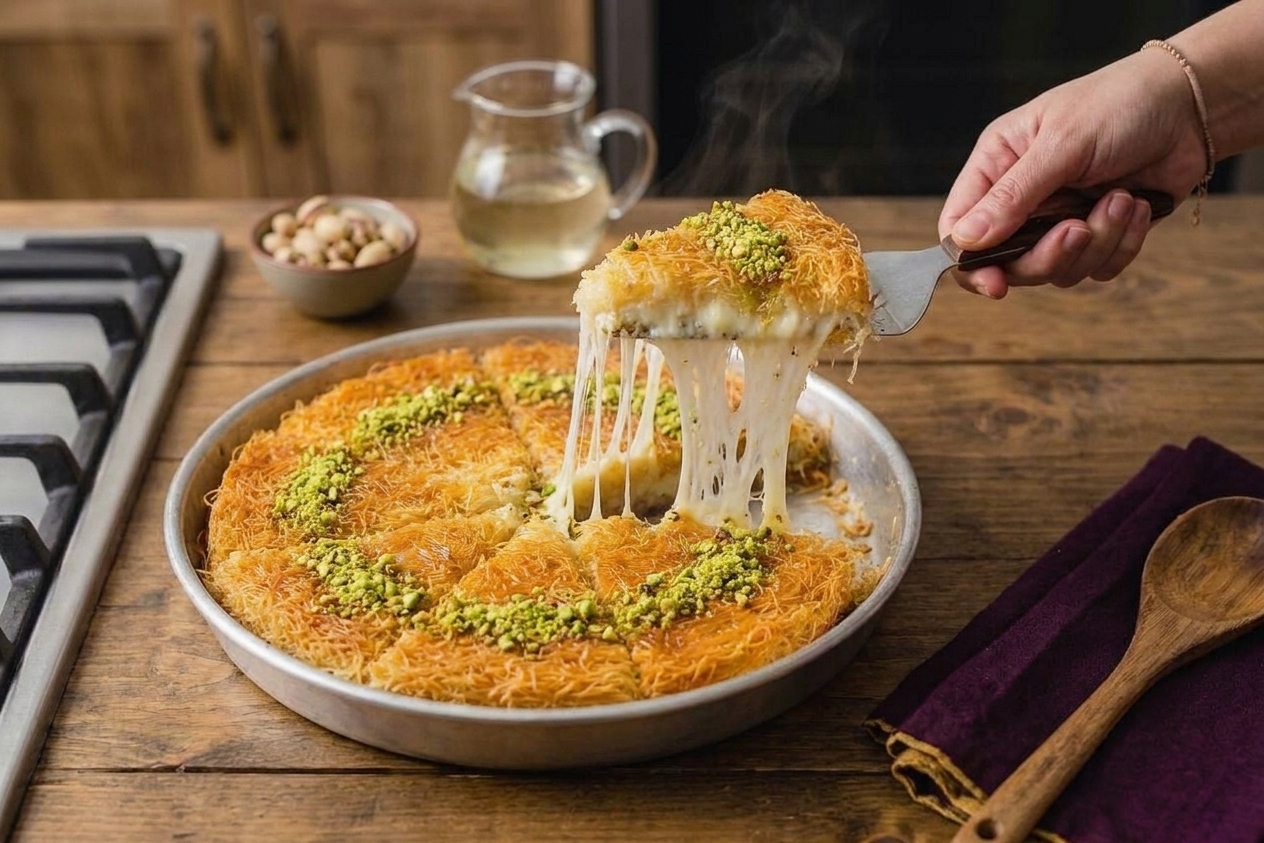
A round pan of golden kunafa with a crisp shredded pastry top, cut into wedges with stretchy melted cheese, finished with pistachios on a warm kitchen table

Kunafa is the dessert that makes people wander back into the kitchen pretending they are just getting water. It is crunchy and buttery on the outside, gloriously stretchy and gooey in the middle, and soaked with a citrusy, floral syrup that somehow tastes both cozy and bright.

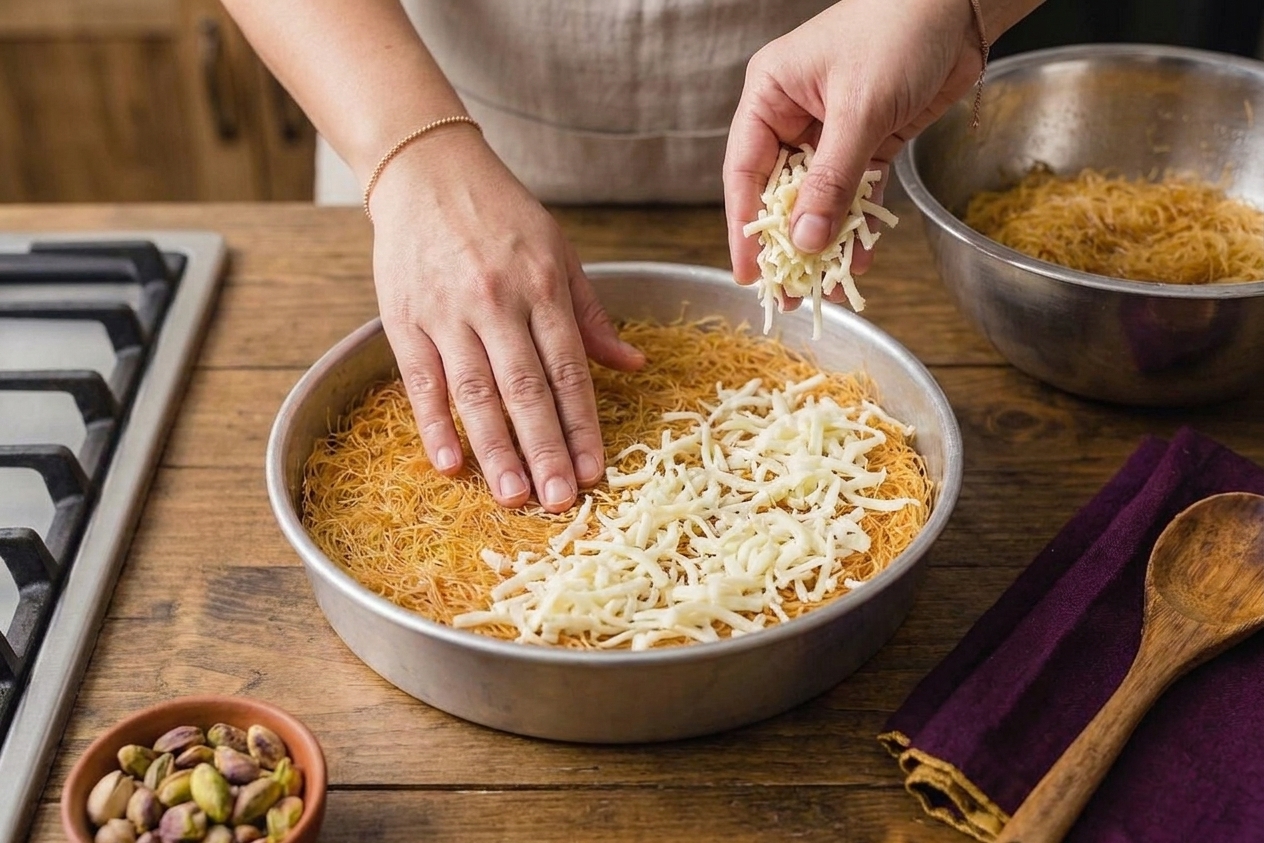
This is the classic cheese kunafa: kataifi (shredded phyllo) toasted in butter, packed into a pan, layered with cheese, baked until bronzed, then hit with syrup. The vibe is simple: crisp edges, melty center, and a little pistachio confetti because we are classy like that.

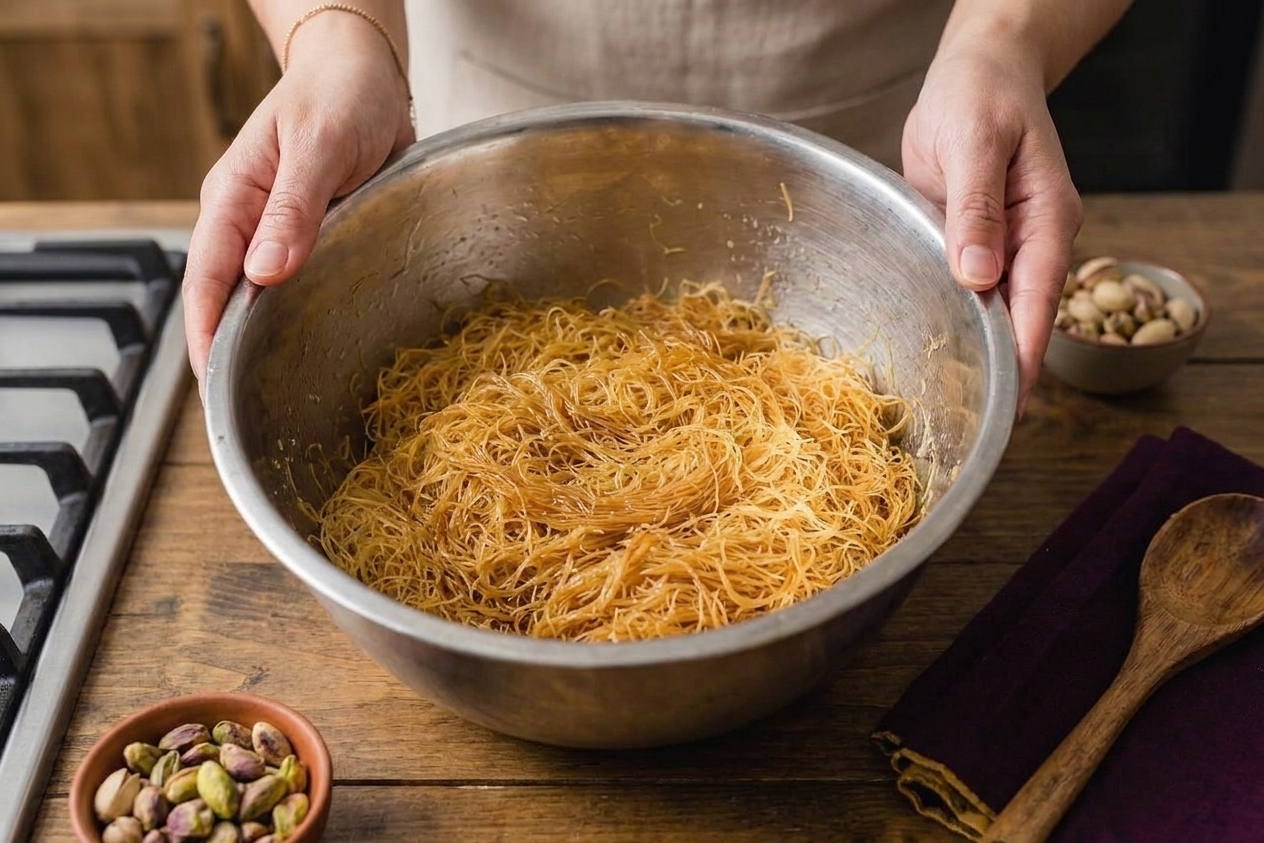
A bowl of kataifi shredded phyllo pastry on a kitchen counter beside melted butter and a mixing spoon

Why It Works

  • Crisp stays crisp: We butter and separate the kataifi thoroughly so it bakes up like a nest of crunchy strands instead of a steamed clump.
  • Gooey, not leaky: A smart cheese mix gives you stretch and flavor without flooding the pan with liquid.
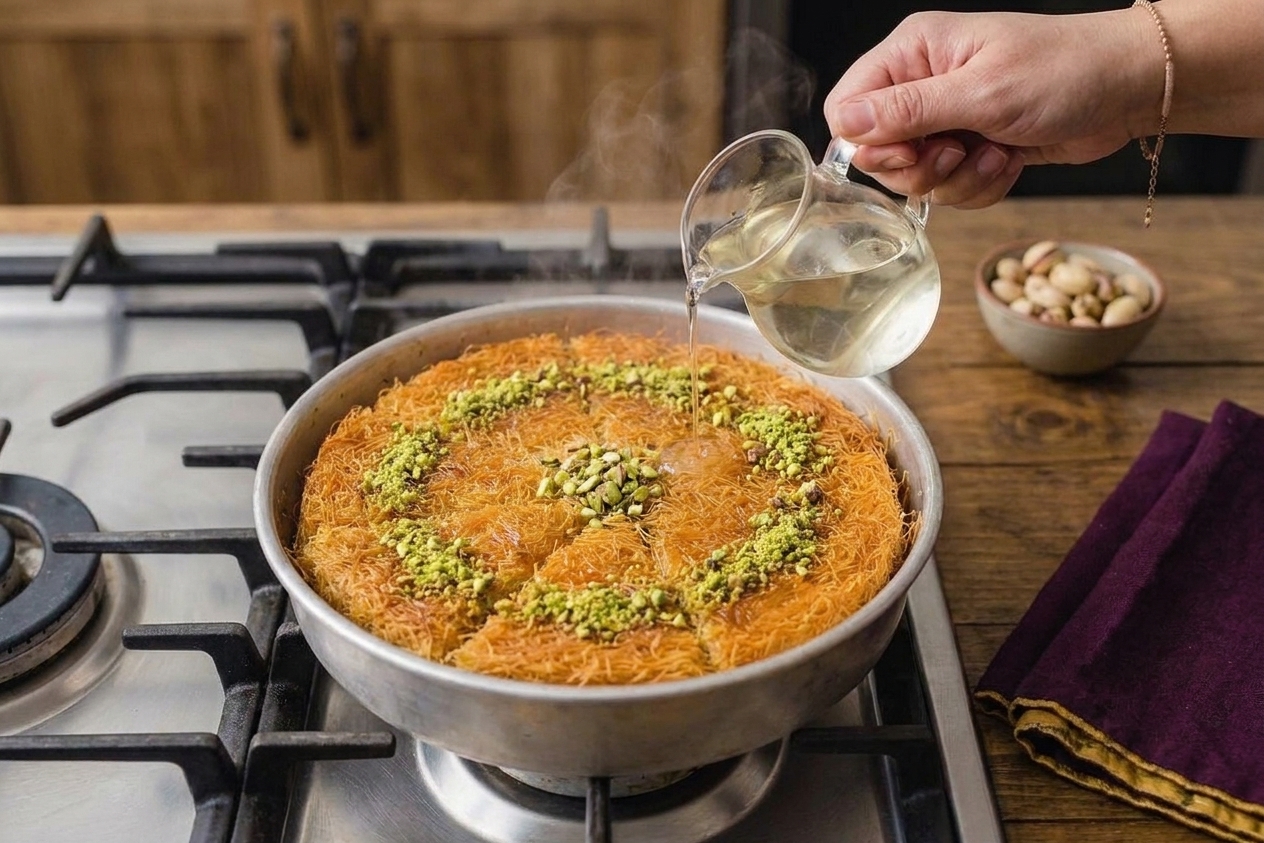
  • Syrup timing is flexible: I use warm syrup on hot kunafa for quick absorption, and I control crunch by controlling syrup amount.
  • Weeknight-friendly technique: You can prep the syrup and buttered kataifi ahead, then assemble and bake when you are ready.

Pairs Well With

Storage Tips

Storing

Kunafa is best in the first hour after baking when the top is at maximum crunch. That said, leftovers are still dangerously snackable.

  • Refrigerate: Cover and refrigerate up to 3 days, but it is best within 1 to 2 days for texture.
  • Reheat for crunch: Warm in a 350°F oven for 8 to 12 minutes until the top re-crisps. Avoid the microwave unless you are fully accepting a softer top.
  • Freezing: You can freeze baked kunafa (wrapped well) up to 1 month. Thaw overnight in the fridge, then reheat in the oven. Texture will be less shatter-crisp, but still very good.

Tip: If you know you will have leftovers, go a little lighter on the syrup when serving and add more to individual portions later.

Common Questions

What is kunafa made of?

Classic cheese kunafa is made with kataifi (shredded phyllo dough) tossed with butter, a mild melting cheese filling, and a sugar syrup flavored with lemon and often orange blossom or rose water. Pistachios are a common topping.

What cheese should I use for kunafa?

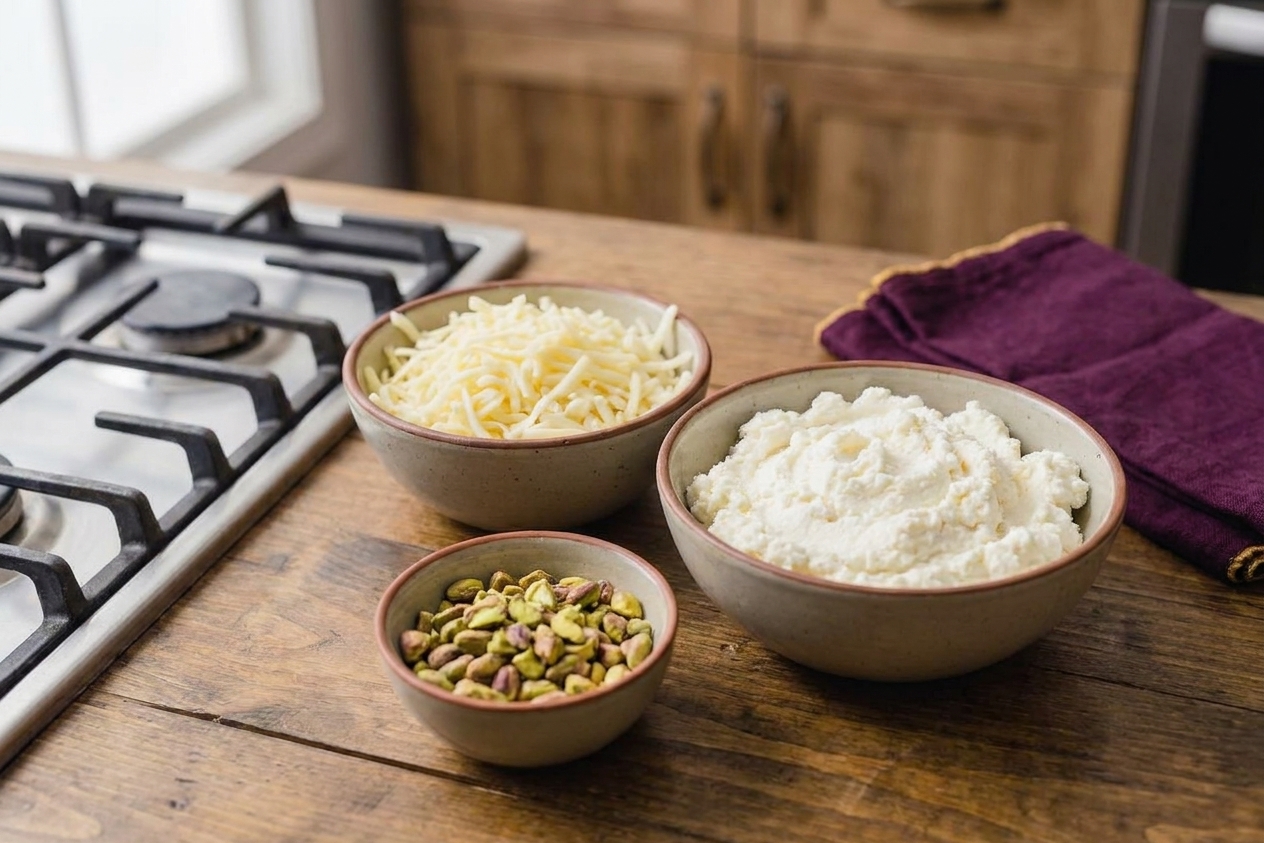
The goal is melt and stretch with a mild flavor. If you can find it, akkawi (often soaked to reduce salt) is traditional. For an easy grocery-store version, I like low-moisture mozzarella plus a little whole-milk ricotta for creaminess. Ricotta is not traditional, but it is a very workable swap. Avoid fresh mozzarella here since it releases too much water.

Can I make kunafa without kataifi?

Kataifi is what gives kunafa that signature crunchy, shredded top. If you cannot find it, you can use phyllo sheets chopped into thin ribbons and tossed with butter. It will not be identical, but it gets you close enough to be happy.

Why is my kunafa soggy?

  • Too much syrup, or syrup poured unevenly so some spots get flooded. Start with less and add more to taste.
  • Underbaked kataifi. Go by color. Pale kunafa is usually soft kunafa.
  • Kataifi not fully separated or not enough butter, so it steams instead of toasts.
  • Cheese too wet. Use low-moisture cheese and drain ricotta if it looks watery.

Do I pour syrup on hot or cold kunafa?

There are a few schools of thought here. For this style, I like warm syrup over hot kunafa right after it comes out of the oven because it absorbs quickly and gives you that glossy, soaked-in bite. If you want the top crisper, use less syrup and serve extra on the side.

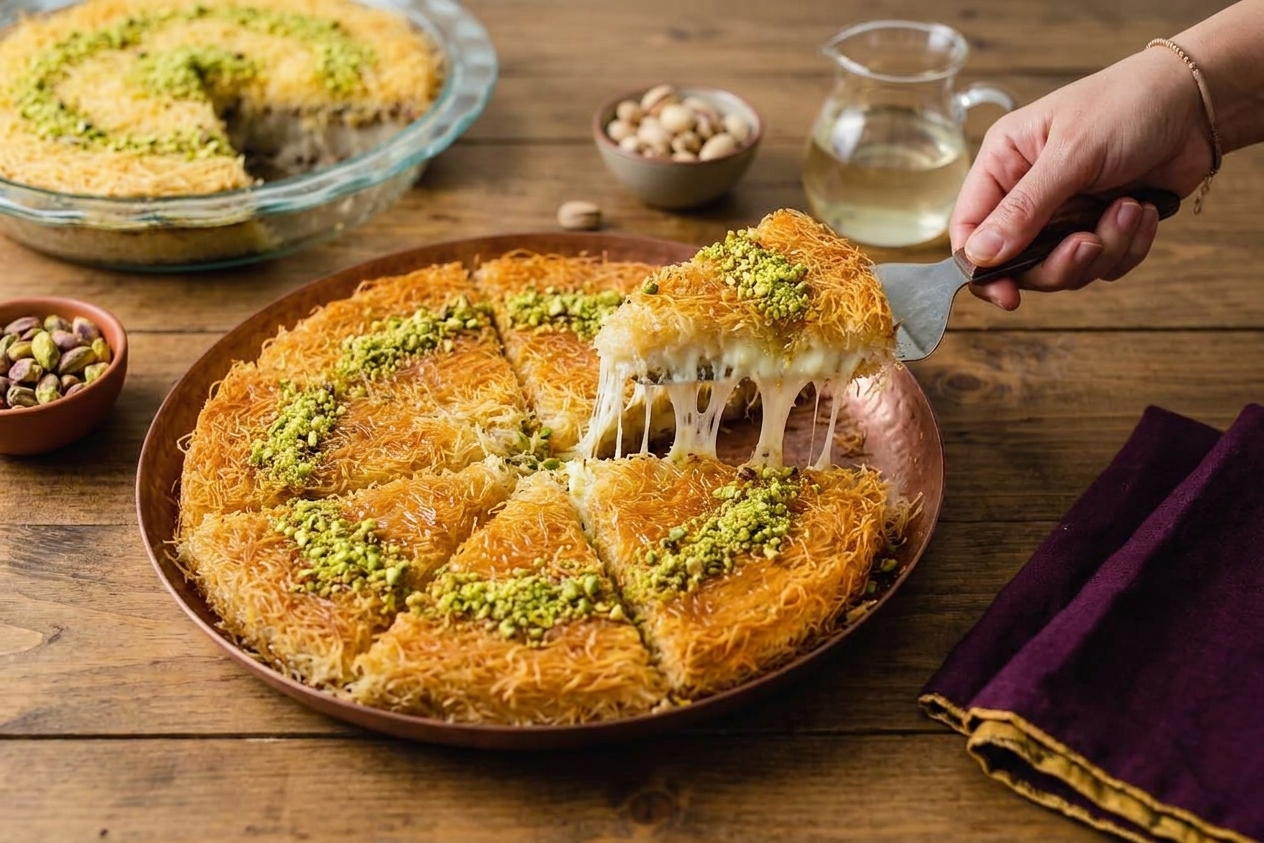
I love desserts that feel like a team sport. Kunafa is exactly that. Somebody is on syrup duty, somebody is shredding and fluffing the kataifi like it is laundry day, and somebody is hovering by the oven calling out, “Is it brown enough yet?” The first time I made it, I learned the hard way that kataifi does not like being rushed. When you take the extra minute to separate every strand and butter it like you mean it, the payoff is loud crunch, gooey cheese pull, and that syrupy citrus perfume that makes the whole kitchen smell like a celebration.