Mom's Best Recipes
Recipe

Homemade Pancake Mix

A pantry-friendly dry mix that makes fluffy, golden pancakes with crisp edges. Just add buttermilk (best), or milk with a slightly bigger splash of acid, eggs, and melted butter.

Author By Matt Campbell
4.8
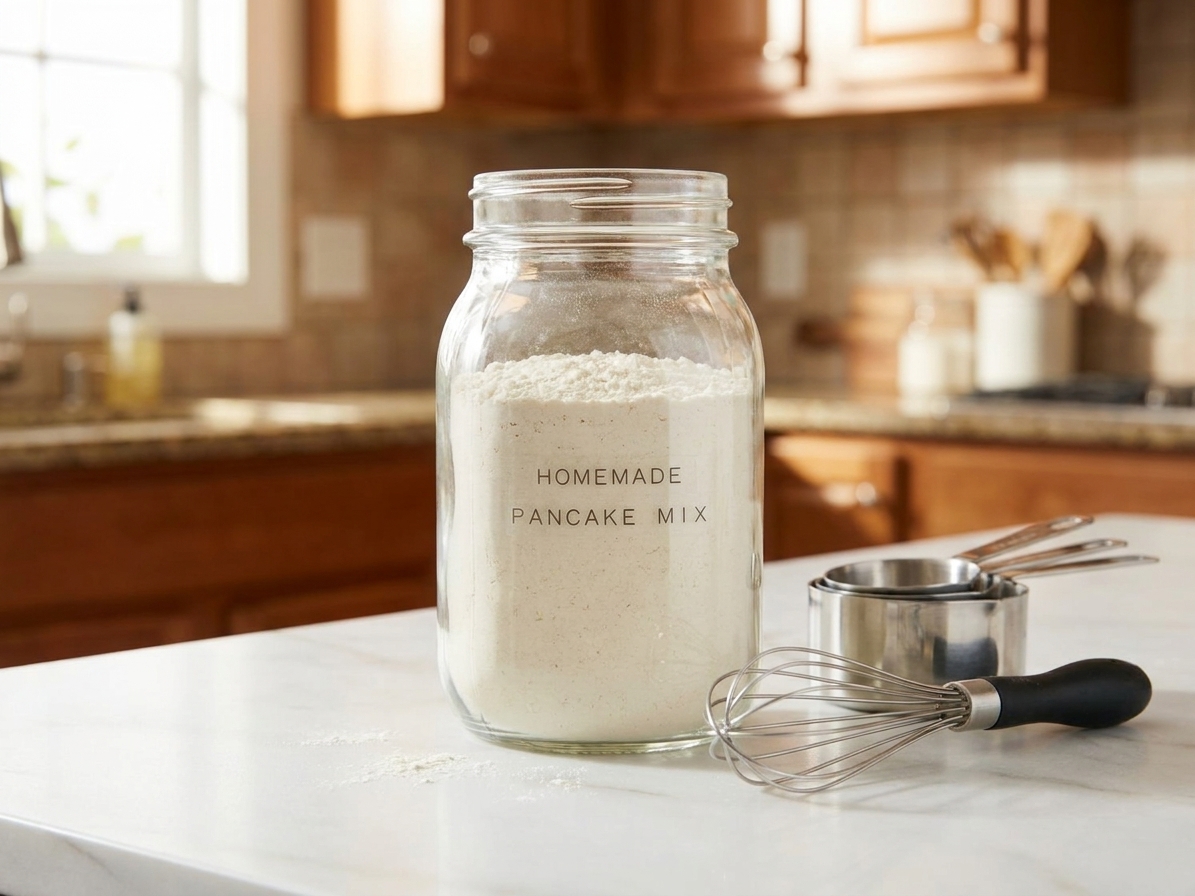
A clear glass jar filled with homemade pancake mix on a warm kitchen counter with a whisk and measuring cups nearby

There are two kinds of mornings: the ones where you feel like being a breakfast hero, and the ones where you are negotiating with a toaster like it owes you money. This homemade pancake mix is for both.

You stir the dry stuff together once, stash it in the pantry, and when the craving hits you just add milk, eggs, and butter. You get fluffy centers, crisp edges, and that faint vanilla-butter smell that makes everyone wander into the kitchen “just to see what’s going on.”

Bonus: it is flexible. Want whole wheat? Easy. Want a little cinnamon? Do it. Want to toss in frozen blueberries and pretend you planned ahead? I support your journey.

One small note that saves the whole vibe: this mix includes baking soda, which behaves best with something acidic. So you can use buttermilk, or you can “acidify” regular milk with a bit of lemon juice or vinegar. Same pancakes, fewer weird chemical aftertastes.
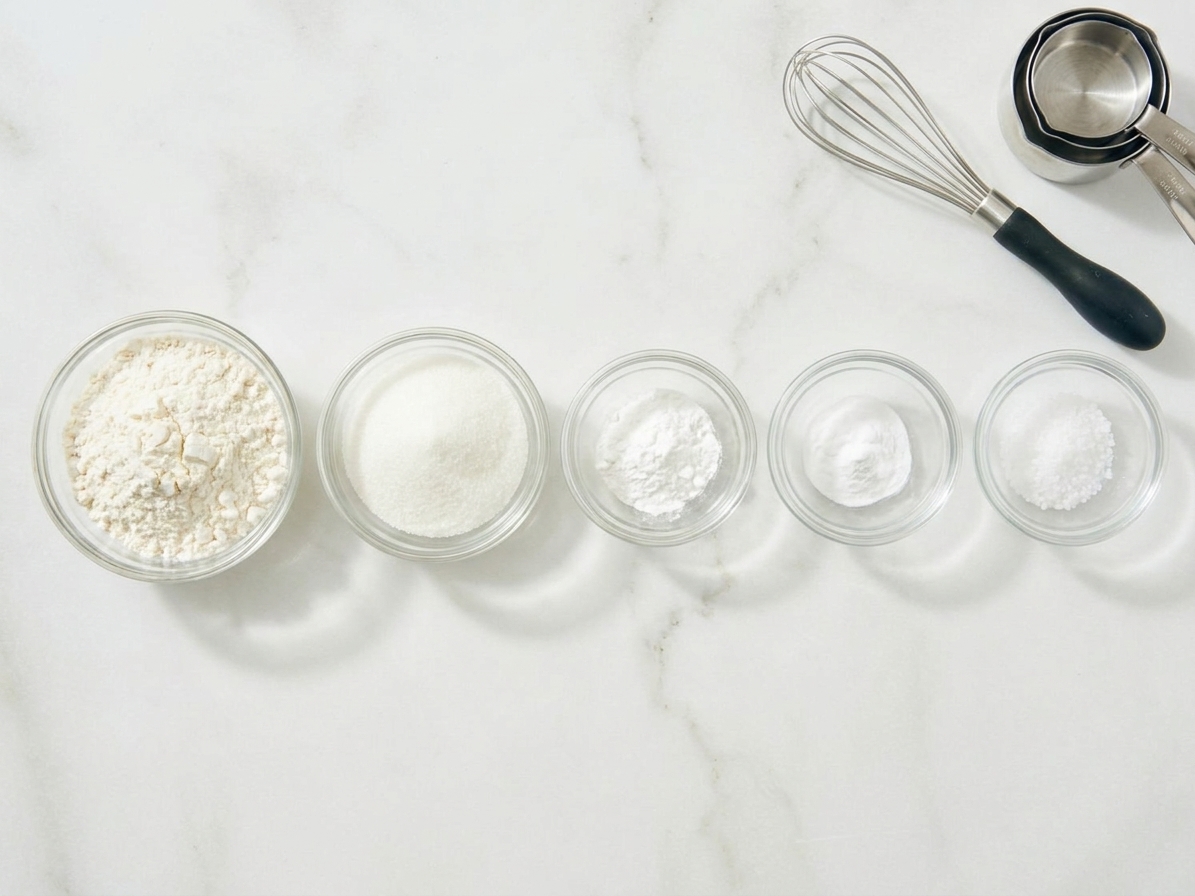
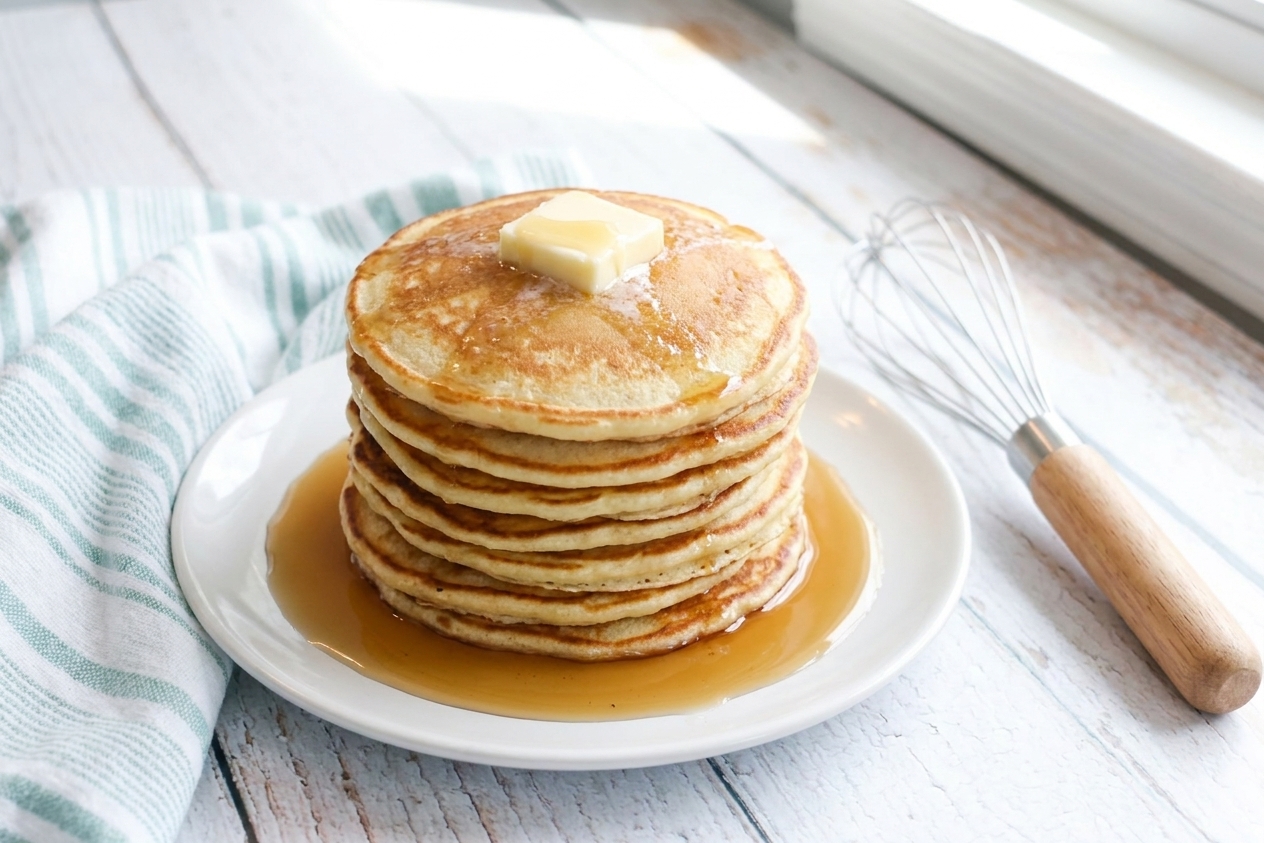
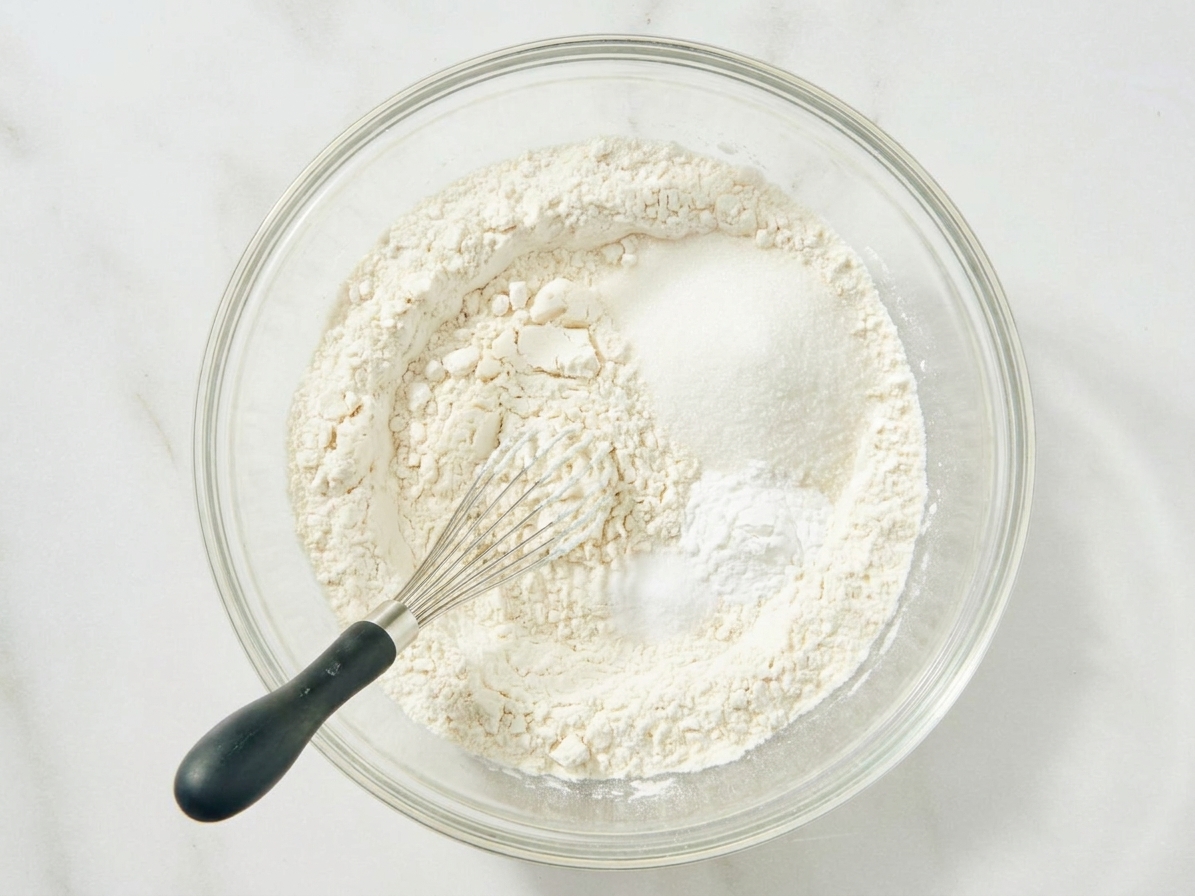
Flour, sugar, baking powder, baking soda, and salt measured into separate small bowls on a light kitchen counter

Why It Works

  • Reliable rise: Baking powder is the main lift, with baking soda helping with browning and tenderness when it has an acidic partner (buttermilk, yogurt, or a splash of lemon or vinegar).
  • Even flavor: Sugar and salt are balanced so the pancakes taste good plain, and even better with toppings.
  • Make-ahead convenience: The dry mix holds up well in the pantry, and a jar on the shelf makes weekday pancakes a low-drama situation. Over time, leavening power can fade, so fresher mix equals fluffier pancakes.
  • Clean batches: The mix makes about 6 cups, which is roughly three 2-cup “just add” batches. If you want it perfectly consistent every time, use the weight option: 250 g mix per batch.
  • Big picture yield: Using the whole jar makes about 3 batches, which is roughly 24 to 30 4-inch pancakes, depending on how generous you are with that 1/4 cup scoop.

Pairs Well With

Storage Tips

Store the Mix

  • Pantry: Store the dry mix in an airtight container (jar, canister, or zip-top bag) in a cool, dry place for up to 3 months for best results. Leavening power may fade over time, so older mix may bake up a little less fluffy.
  • Freezer: For longer best-quality storage, freeze up to 6 months. This can help protect flavor and slow down humidity issues that make leaveners weaker over time.
  • Label it: Write the date and the “just add” directions on a piece of tape. Future-you deserves that kindness.
  • Quick leavener check: If your baking powder has been open for ages, test it before a big breakfast: it should bubble in hot water.

Leftover Pancakes

  • Fridge: Cool completely, then refrigerate in an airtight container for up to 4 days.
  • Freezer: Freeze pancakes in a single layer, then transfer to a bag with parchment between layers. Best within 2 months.
  • Reheat: Toaster for crisp edges, or oven at 350°F for 6 to 10 minutes. Microwave works, but you will lose the crisp.

Common Questions

Can I use this mix to make waffles?

Yes. Use the same “just add” directions, then add 1 extra tablespoon melted butter per batch for a crispier waffle. Cook in a preheated waffle iron until deeply golden.

Do I have to sift the mix?

No, but you do want to whisk the dry ingredients really well so the baking powder and salt are evenly distributed. If your flour is clumpy, a quick sift helps.

Why do my pancakes come out flat?

Usually one of three things: your baking powder is old, you overmixed the batter, or the pan was not hot enough. Use fresh leaveners, mix until just combined, and preheat the skillet so the batter sizzles softly when it hits.

Can I make this dairy-free?

Absolutely. Use your favorite non-dairy milk. For the best flavor and browning, pick something with a little body like oat milk. Use melted coconut oil or a neutral oil instead of butter. If you are using non-dairy milk, keep the lemon juice or vinegar in the recipe so the baking soda has something to work with. If you are sensitive to baking soda flavor, use the higher-acid option (see the directions) or swap in yogurt.

Can I make it whole wheat?

Yes. Replace up to 50% of the all-purpose flour with whole wheat flour. If the batter feels thick, add a splash more milk.

What is the difference between baking powder and baking soda here?

Baking powder does most of the lifting. Baking soda helps with browning and tenderness, but it needs an acid to avoid a soapy taste. That is why this recipe uses buttermilk or adds a quick splash of lemon juice or vinegar to regular milk. If you are sensitive to baking soda flavor, stick with buttermilk or the yogurt swap.

How long do baking powder and baking soda last?

If yours have been open for a while, do a quick check. Baking powder should bubble when stirred into hot water. Baking soda should fizz when you add vinegar or lemon juice. If nothing happens, they are not going to save breakfast.

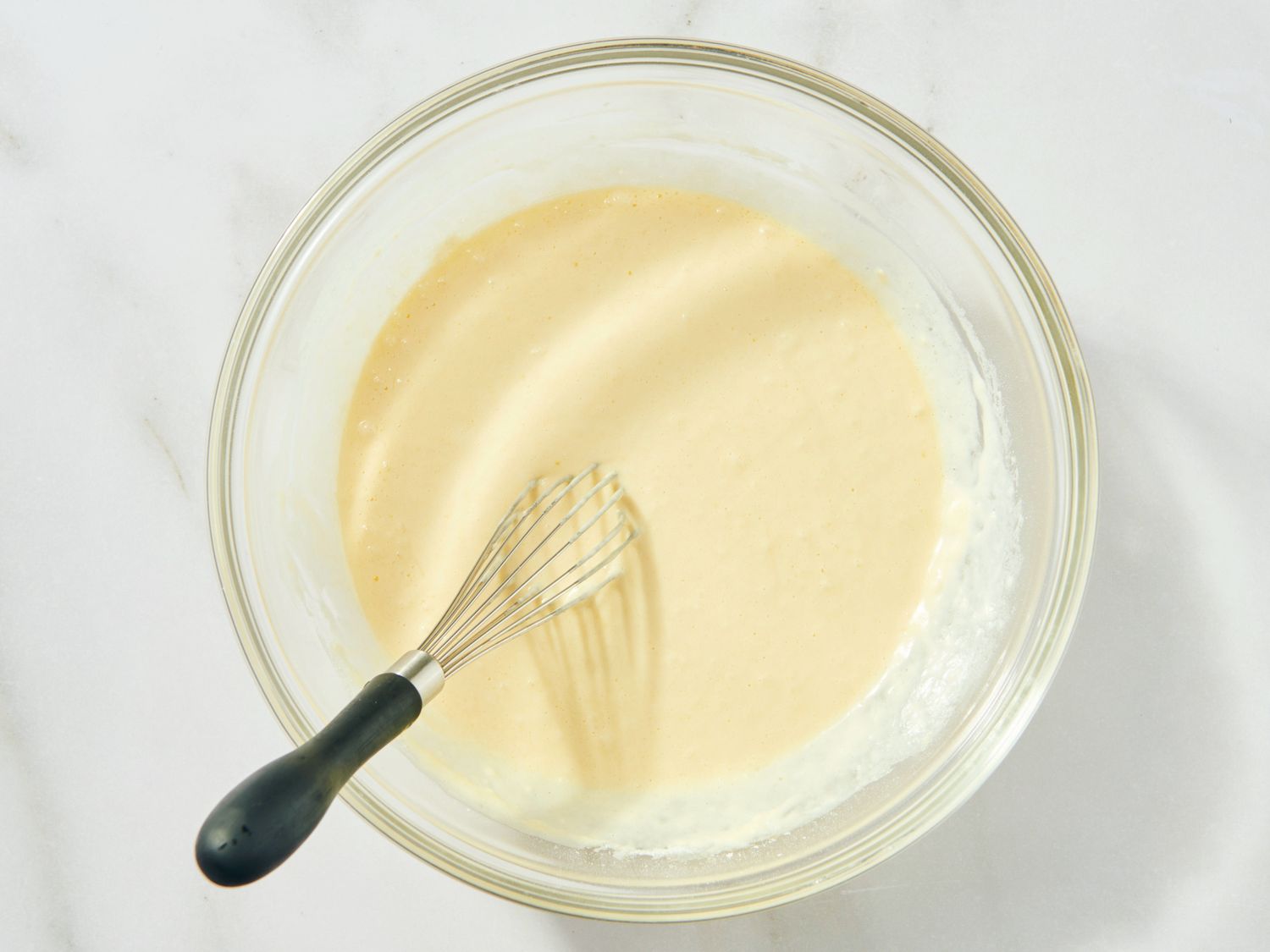
A mixing bowl of pancake batter being whisked gently with a few small lumps remaining on a bright kitchen counter

I used to treat pancakes like a weekend-only hobby, the kind of thing that required a full kitchen reset and at least one minor flour incident. Then I started keeping a jar of dry mix on the shelf and suddenly pancakes became a Tuesday option. The best part is how low-stress it feels: you can still get that golden, buttery payoff without committing to a whole production. Also, I like the little chaos of it. One day it is chocolate chips, the next day it is sliced bananas and a pinch of cinnamon, because apparently I contain multitudes before 9 a.m.