Mom's Best Recipes
Recipe

Homemade Play Dough (Soft, No-Cook)

Smooth, stretchy, no-cook play dough made with simple pantry ingredients, plus tips to fix stickiness and keep it soft for weeks.

Author By Matt Campbell
4.8
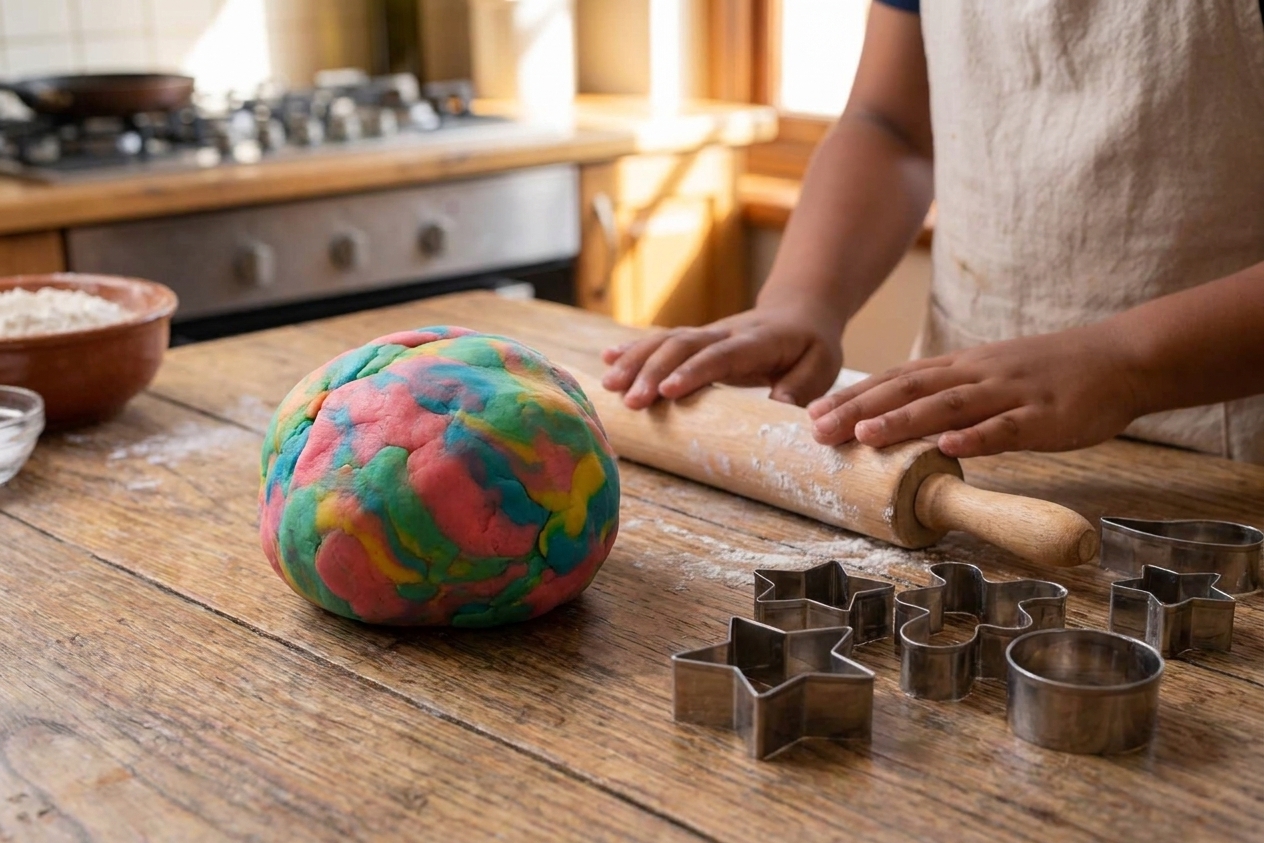
A bright ball of homemade play dough on a wooden kitchen table with a small rolling pin and cookie cutters nearby.

Play dough is basically the kitchen’s most forgiving "recipe." You dump in a few pantry staples, stir like you mean it, and suddenly you have a squishy, smooth dough that keeps little hands busy while you drink your coffee before it goes cold. This is my favorite no-cook version. It comes together fast, it is easy to color, and it stays soft with simple storage.

Bonus: if it turns out a little sticky or a little dry, you can fix it in under a minute. That is the kind of kitchen chaos I can get behind.

Why It Works

  • No cooking required: just mix, knead, and play.
  • Soft and pliable: the oil and cream of tartar help keep the texture smooth instead of crumbly.
  • Easy to customize: color it, scent it, or add sparkle without wrecking the dough.
  • Make-ahead friendly: stores well for weeks when sealed properly.
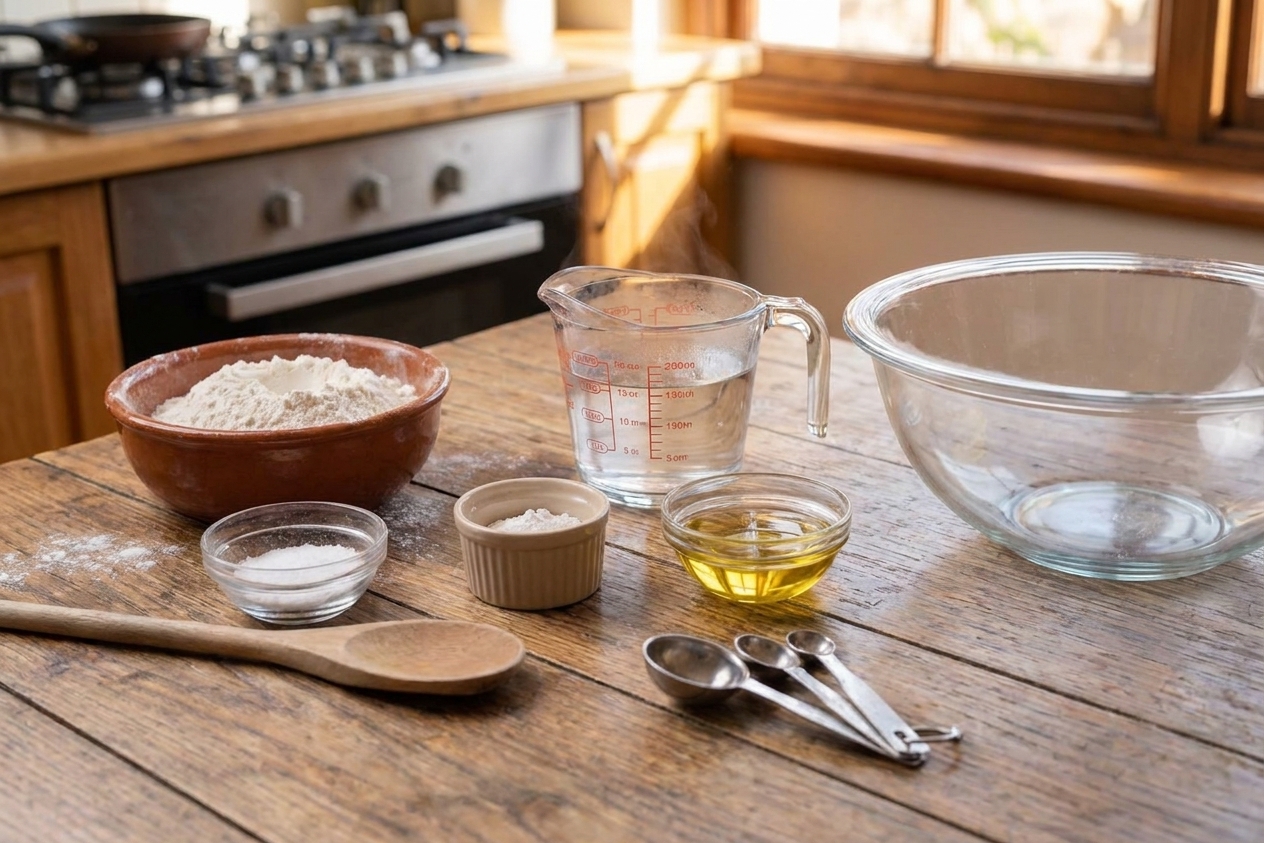
Measured flour, salt, cream of tartar, vegetable oil, and warm water arranged on a clean kitchen counter with mixing bowls and measuring spoons.

Pairs Well With

Storage Tips

Short term: Store play dough in an airtight container or a zip-top bag with as much air pressed out as possible. Keep it at room temperature.

Keep it soft: If it starts to dry out, knead in a few drops of water (a tiny splash at a time) until it loosens up. If it gets sticky, knead in a pinch of flour.

How long it lasts: Typically about 2 to 4 weeks, sometimes longer, depending on how clean hands and surfaces are during play and how well it is sealed. If you notice a sour smell, visible mold, or a weird slimy feel, toss it.

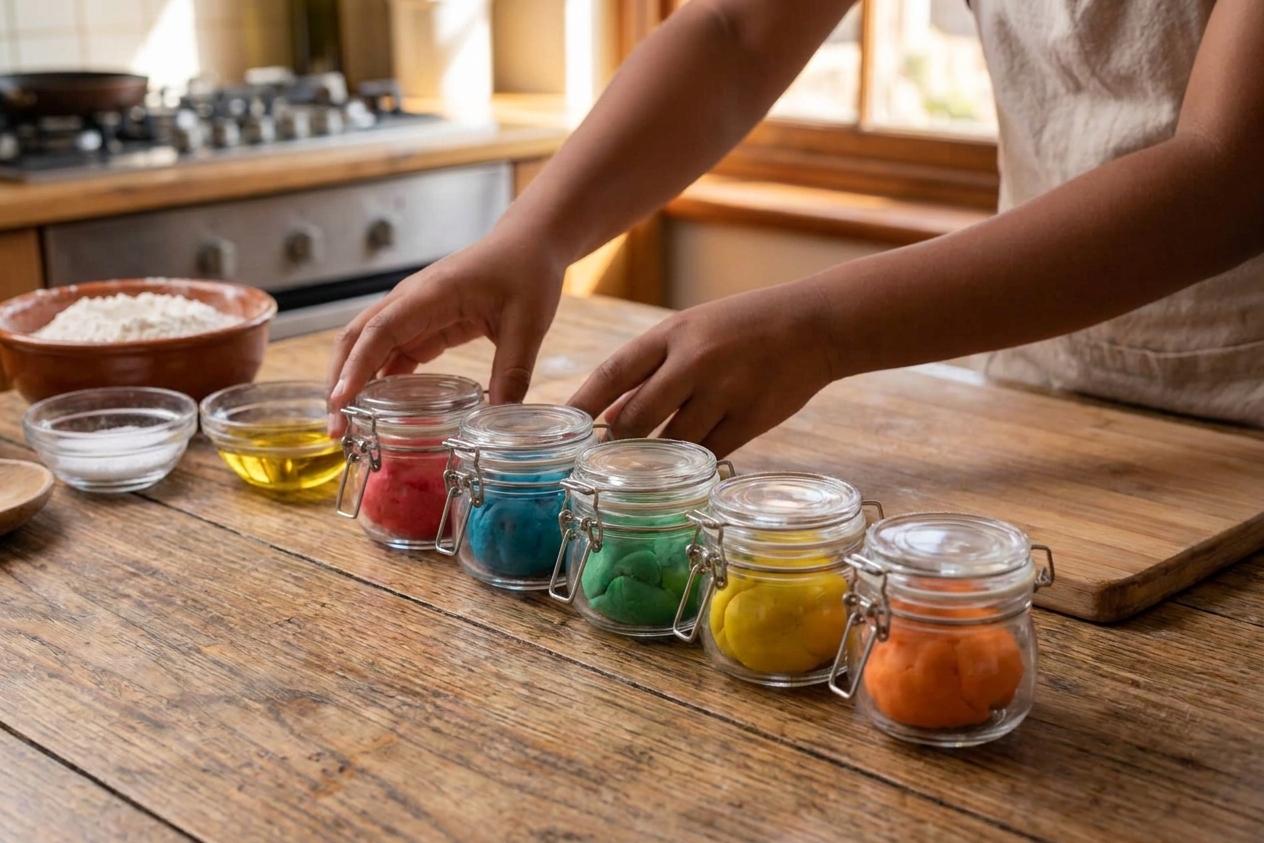
Color storage tip: Store colors separately. If you store different colors together, they will slowly turn into a single “mystery mauve.”

Common Questions

Is homemade play dough safe if my toddler tastes it?

This recipe is not meant to be eaten, but it is made with food-grade ingredients. It is very salty, which helps discourage snacking. Always supervise, especially with toddlers who still mouth everything. Also keep it away from pets, the high salt can be dangerous if they swallow a bunch.

Any safety notes for add-ins like glitter?

Skip anything that could be a choking hazard for little ones who still put things in their mouths. If you use glitter, go for fine glitter and supervise closely. For scents, use kid-safe, skin-safe options and start with the tiniest amount. Some kids can be sensitive to things like cinnamon, so when in doubt, leave it out.

Why is my play dough sticky?

Either the water was a bit high or your flour was a bit low. Knead in flour 1 teaspoon at a time until it feels smooth and barely tacky.

Why is my play dough crumbly or cracking?

It needs more moisture. Wet your hands and knead, or add a few drops of water and keep kneading. Crumbly dough usually comes back to life with patience and tiny splashes.

Do I really need cream of tartar?

It helps with softness and longevity. If you do not have it, you can still make the dough, but it may dry out sooner and feel less silky. In a pinch, you can add 1 to 2 teaspoons lemon juice for a little acidity, but it is not a perfect swap. If you use lemon juice, reduce the water slightly and expect the texture and shelf life to vary.

What kind of salt works best?

Fine or table salt works best because it blends in more smoothly. Coarse salt can feel gritty. Warm water also helps the salt dissolve faster, which keeps the dough from feeling crunchy.

How do I color play dough without staining hands?

Use gel food coloring if you can, and knead the color in while wearing disposable gloves or inside a zip-top bag. Start with a tiny amount, it intensifies as it spreads.

Can I add glitter or scents?

Yes. Add fine glitter or a pinch of cocoa powder, or a drop of kid-safe, skin-safe extract. Go light on liquids so you do not change the texture too much.

Adult hands kneading a ball of play dough on a lightly floured kitchen counter.

I wanted to go to culinary school, but I ended up chasing the hands-on route instead. Turns out, that mindset shows up everywhere, even in play dough. It is the same satisfaction as making pasta dough: you start with a bowl of “this will never work,” and then it clicks into something smooth and alive. Also, it is one of the only kitchen projects where making a mess is basically the point, which feels like permission I did not know I needed.