Common Questions
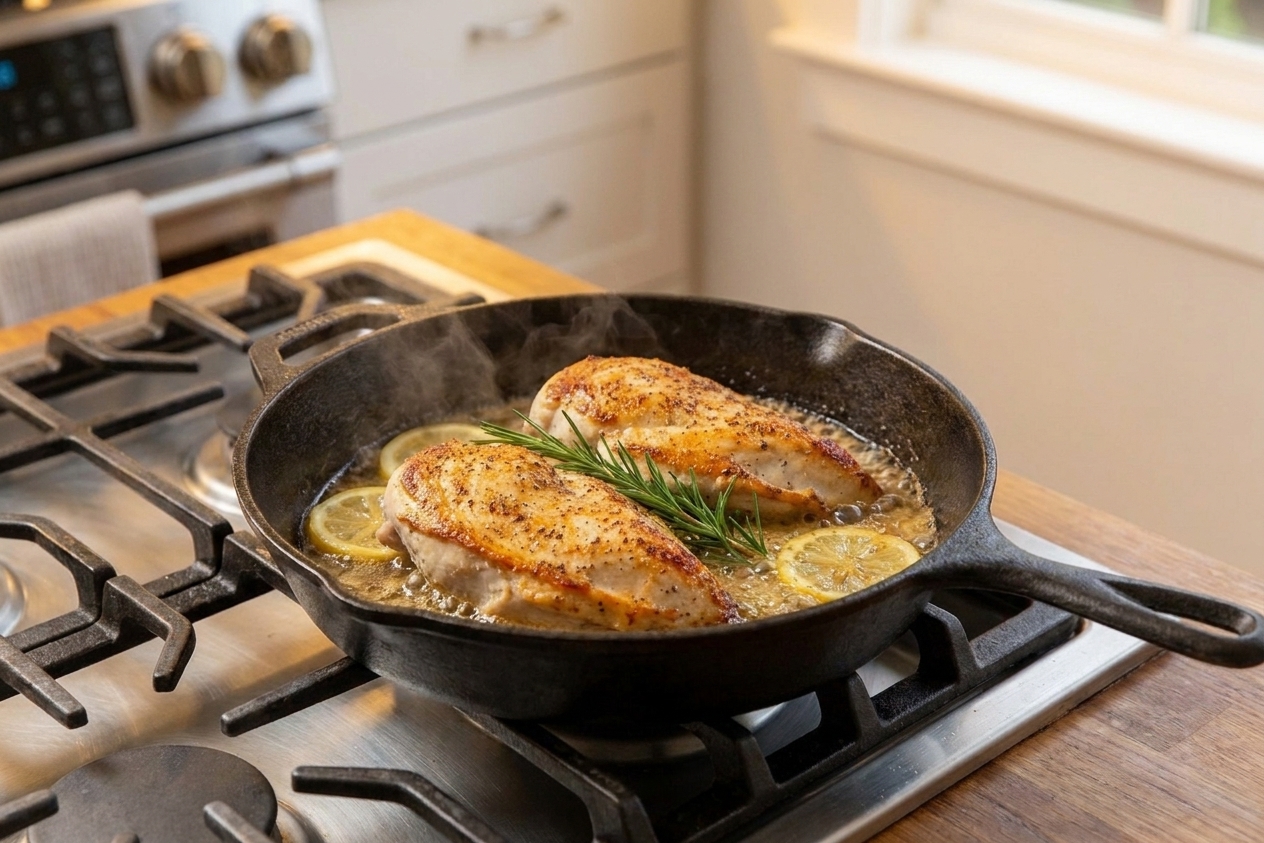
Can I use chicken breasts instead of thighs?
Yes. Use thin-sliced breasts or pound them to an even thickness so they cook quickly and stay juicy. Breasts are typically done around 165 F in the thickest part. If you pull them at 160 to 165 F and let them rest for 5 minutes, they stay especially tender.
What kind of mustard is best?
Dijon is the sweet spot for tang and smooth texture. Whole grain mustard is great for texture too. Yellow mustard works in a pinch, but it is sharper and less complex, so consider adding an extra teaspoon of honey.
How do I make the sauce less sweet?
Start with 3 tablespoons honey instead of 1/4 cup, then add more at the end if you want. You can also add an extra teaspoon of vinegar or a squeeze of lemon to brighten it up.
Why did my sauce break or look greasy?
Usually the heat was too high after adding butter. Keep the simmer gentle, and whisk or swirl the pan as the butter melts. If it does separate, whisking in a tablespoon of warm water can often help bring it back together.
Can I bake it instead of using the stove?
Yep. Sear the chicken first if you can, then pour in the sauce and bake at 400 F until the chicken reaches a safe internal temperature of 165 F. Timing varies a lot by thickness and baking dish, so use a thermometer. As a rough guide, it can take about 15 to 25 minutes. If you want the sauce thicker, simmer it on the stove for a minute or two at the end.
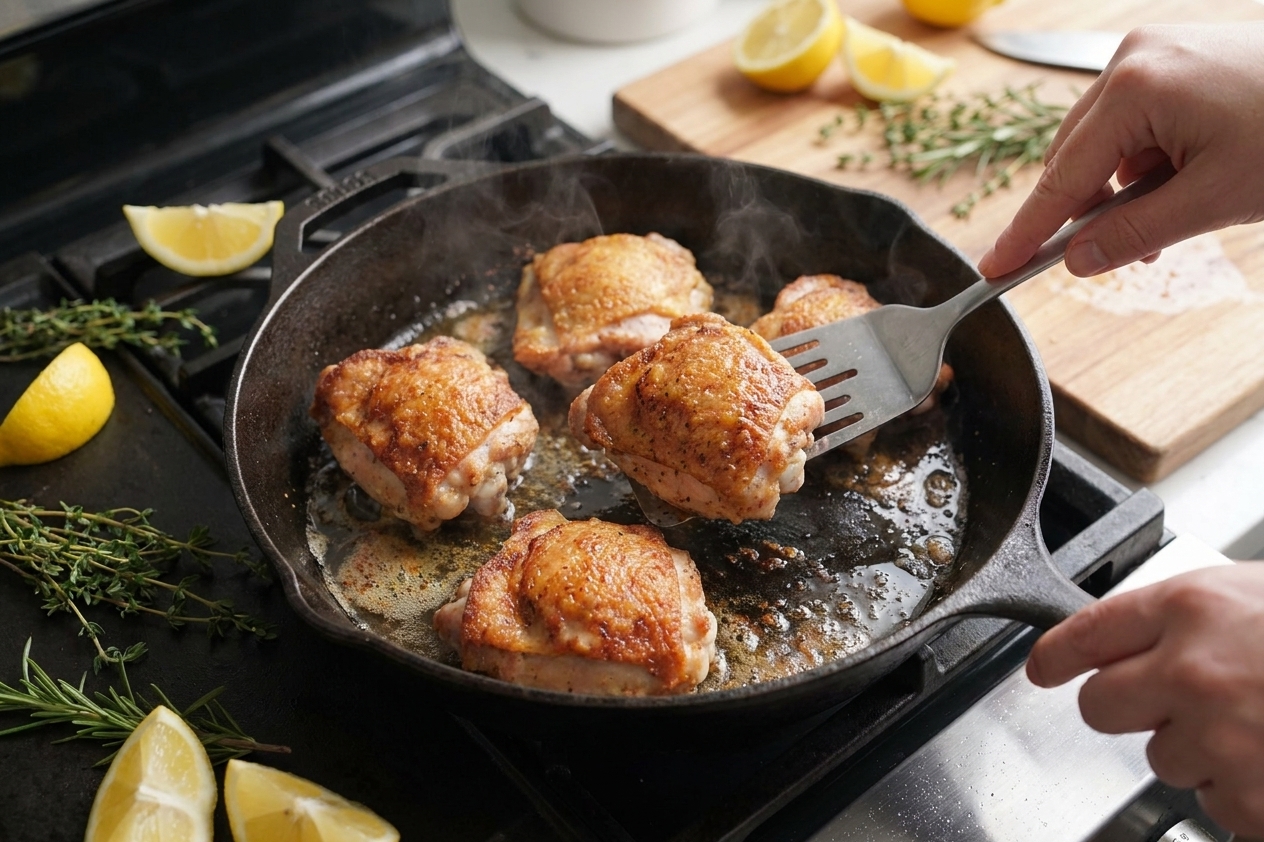
What temperature should I cook thighs to?
Thighs are safe at 165 F, but they often get more tender if you take them higher, roughly 175 to 195 F. The sauce is forgiving, so you can let them go a little longer without drying out.