Mom's Best Recipes
Recipe

Jamie-Inspired Spaghetti Carbonara

Creamy without cream, punchy with black pepper, and ready fast. This carbonara is inspired by Jamie Oliver’s fuss-free vibe while keeping the technique legit.

Author By Matt Campbell
4.8
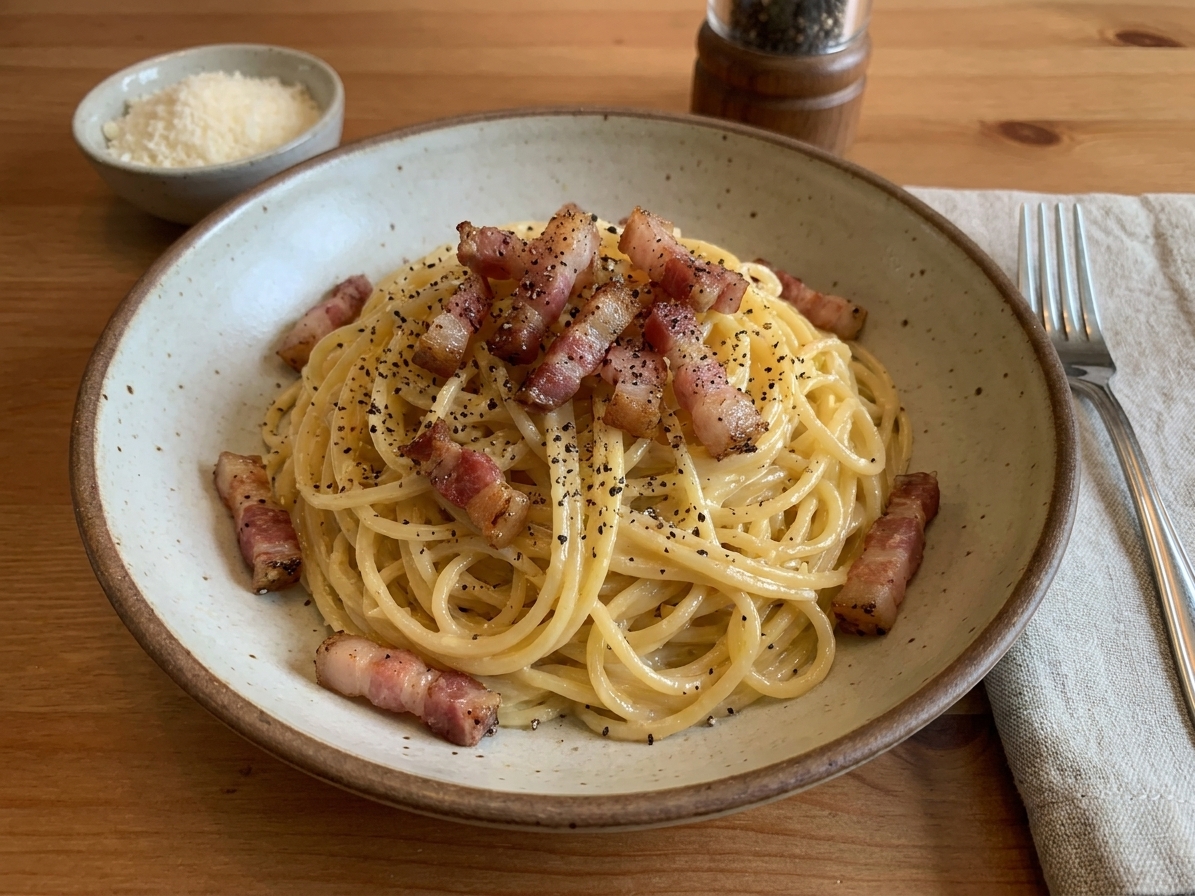
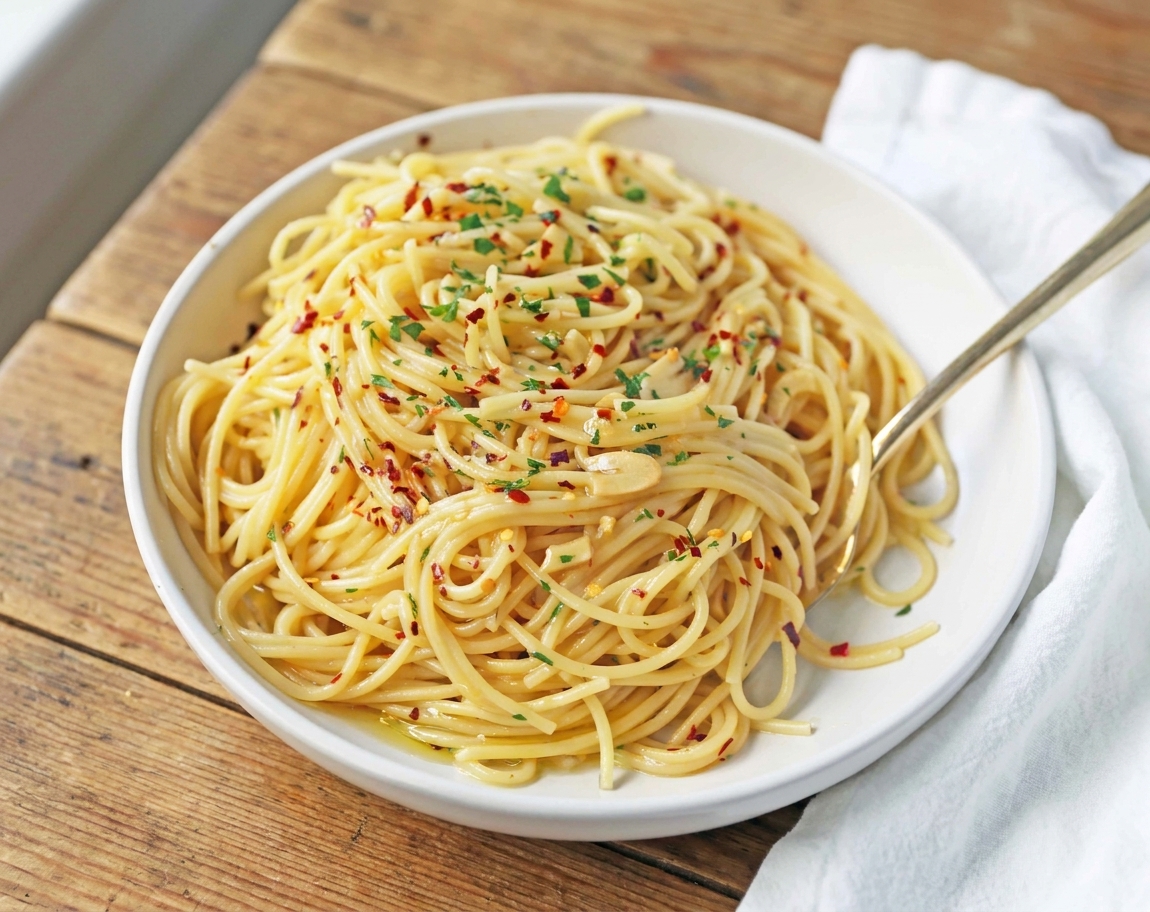
A shallow bowl of spaghetti carbonara with crispy pancetta, grated Parmesan, and cracked black pepper on a wooden table with a fork resting on the rim

Jamie Oliver recipes have a way of making you feel like you can cook right now, even if your kitchen is a little chaotic and your pantry is doing its best. That is my kind of energy. This is a carbonara inspired by that approach: approachable, fast, and big on flavor without turning dinner into a science project.

Quick note before we grab the pan: classic carbonara is all about egg, cheese, cured pork, pepper, and the pasta water you were going to drain anyway. No cream. Purists will also tell you the most traditional combo is guanciale and Pecorino Romano, but pancetta or bacon and Parmesan still make a seriously good, weeknight-friendly bowl. The “sauce” is a glossy emulsion you build off-heat. It feels fancy, but it is really just timing and confidence. We can do timing and confidence.
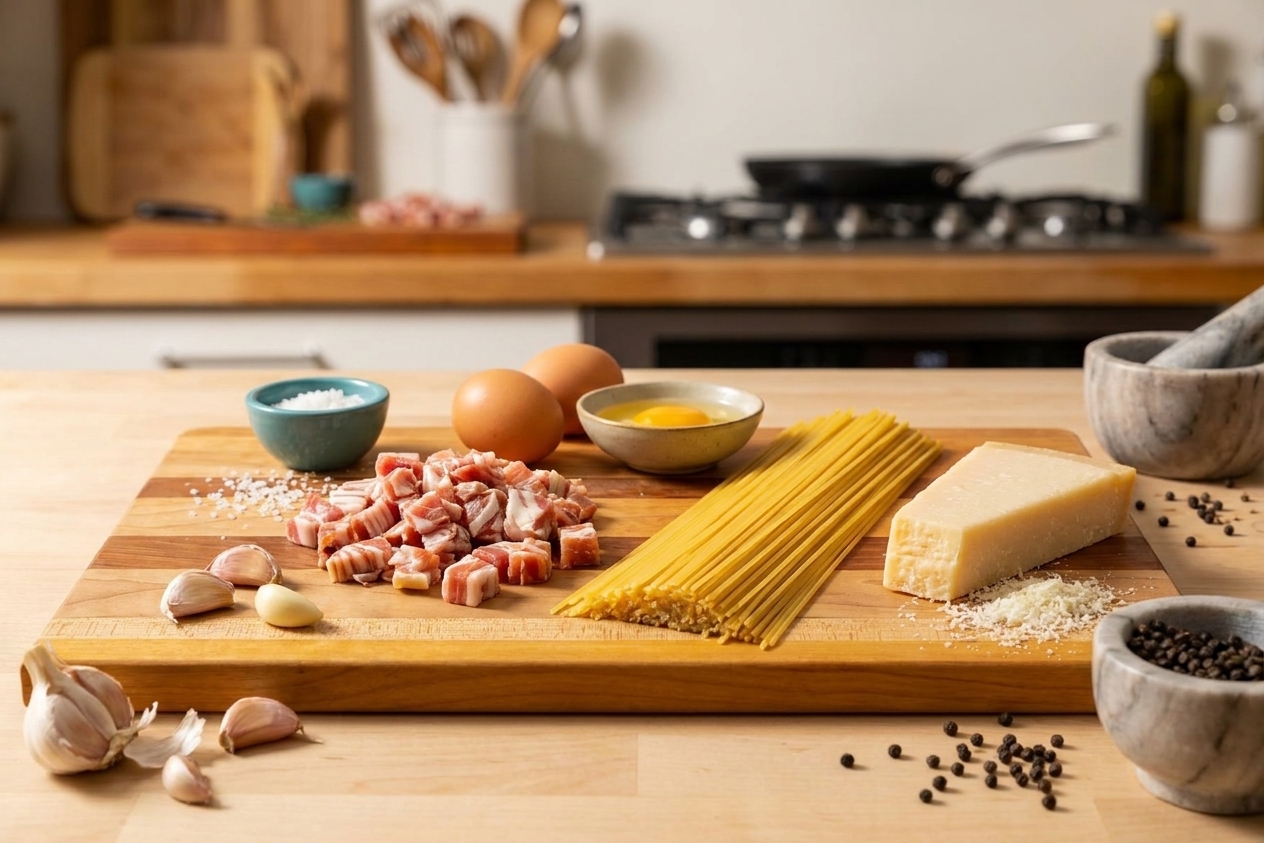
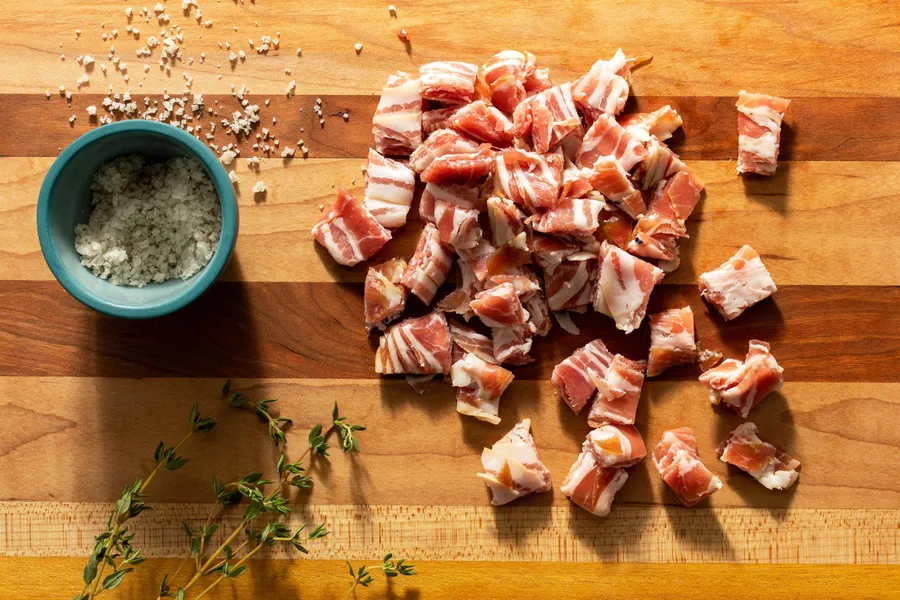
Spaghetti, eggs, Parmesan cheese, pancetta, garlic, black pepper, and salt arranged on a light kitchen counter with a cutting board

Why It Works

  • Cozy, creamy texture without cream: the egg and cheese thicken gently with residual heat, and pasta water makes it silky instead of scrambled.
  • Crispy edges, soft center: rendering pancetta (or bacon) slowly gives you crunchy bits and flavorful fat for the sauce to cling to.
  • Fast but not flimsy: this is a 30 minute dinner that still tastes like you cared.
  • Flexible: swap pancetta for thick-cut bacon, Parmesan for Pecorino, add an extra yolk for richness, and toss in peas if your house votes for “a vegetable was present.”

Pairs Well With

Storage Tips

Carbonara is best the moment it is made, but leftovers can still be good if you reheat gently.

Refrigerate

Store in an airtight container for up to 2 days.

Reheat (best method)

  • Add pasta to a skillet over low heat with a splash of water.
  • Toss constantly until loosened and warmed through. If it looks dry, add another splash.
  • Stop once it is warmed. High heat or long reheating can tighten the eggs and make the sauce grainy.

Freezing

I do not recommend freezing carbonara. The sauce can turn grainy and the texture gets a little odd.

Common Questions

Do I really need to turn the heat off before adding the eggs?

Yes. This is the whole move. Off-heat plus hot pasta equals creamy sauce. On-heat plus eggs can turn it into scrambled egg bits.

What if my sauce turns clumpy or starts to scramble?

Immediately take the pan off the burner (if it is not already), then add 1 to 3 tablespoons hot pasta water and toss until it smooths out. You are trying to cool and emulsify at the same time.

Can I use bacon instead of pancetta?

Absolutely. Thick-cut bacon works great. If it is very smoky, go lighter on extra salt until you taste at the end.

Parmesan or Pecorino?

Either. Pecorino is sharper and saltier, Parmesan is nuttier and mellow. A 50-50 mix is a great middle ground. Traditional carbonara is usually Pecorino Romano and guanciale, but this version stays weeknight-friendly.

Can I add peas like some Jamie-inspired versions do?

Yes. Toss in 1 cup frozen peas for the last 60 seconds of pasta boiling, then drain and proceed.

How peppery should it be?

Start with 1 teaspoon freshly cracked black pepper, then add more at the end. Carbonara should taste boldly peppery, but you get to pick the volume.

Any extra insurance against scrambling?

Let your egg mixture sit on the counter while the pasta cooks so it is not ice-cold. You can also whisk 1 tablespoon hot pasta water into the egg and cheese bowl to loosen it before tossing with the pasta.

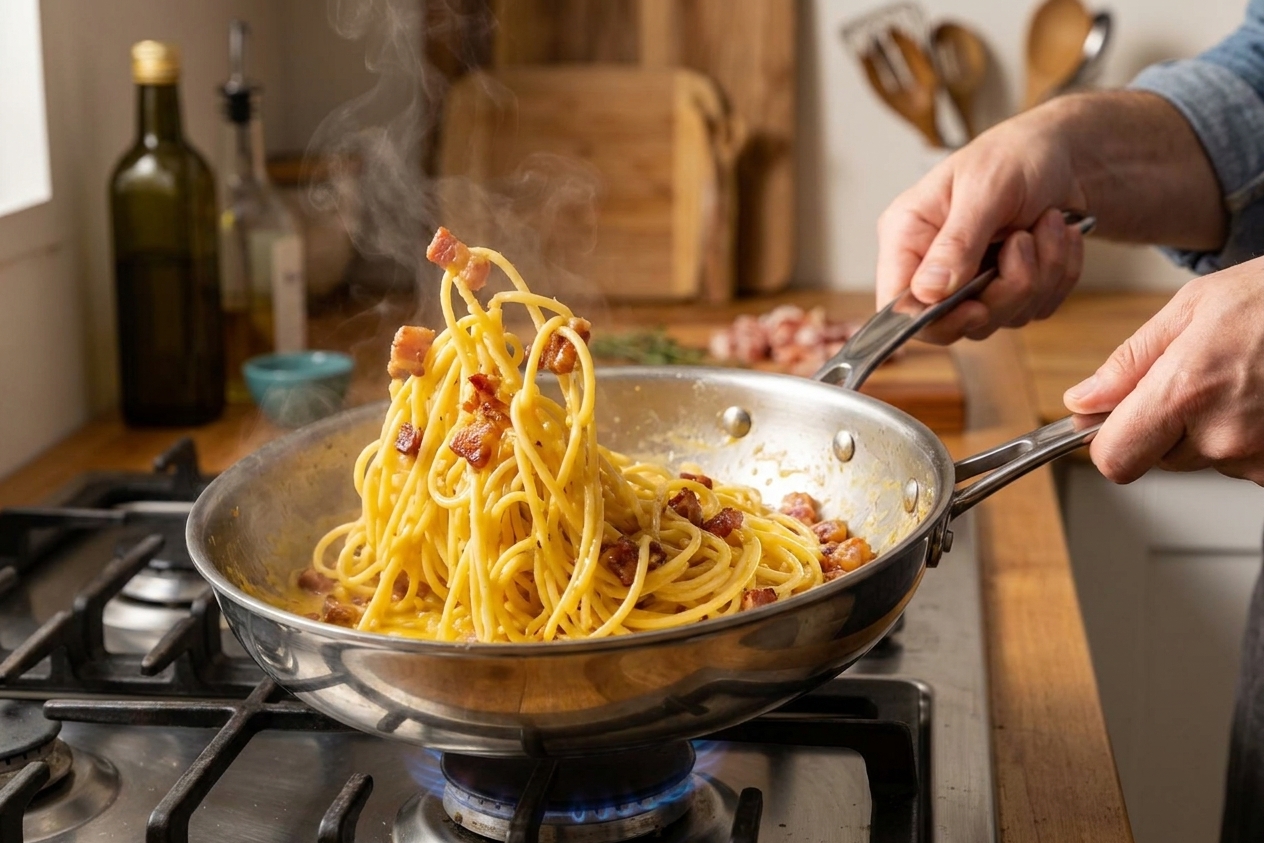
Hands tossing spaghetti in a skillet with crispy pancetta as the sauce turns glossy, steam rising over a stovetop

The first time I tried to make carbonara, I treated it like a regular “add sauce to pan” situation and learned, in real time, what scrambled eggs look like when they are pretending to be dinner. Now I make it the way I wish someone had told me from the start: prep everything first, save pasta water like it is liquid gold, and kill the heat before the eggs ever show up. It is the kind of recipe that makes you feel like a better cook by bite three, which is basically the best kind of recipe.