What is “golden curry” exactly?
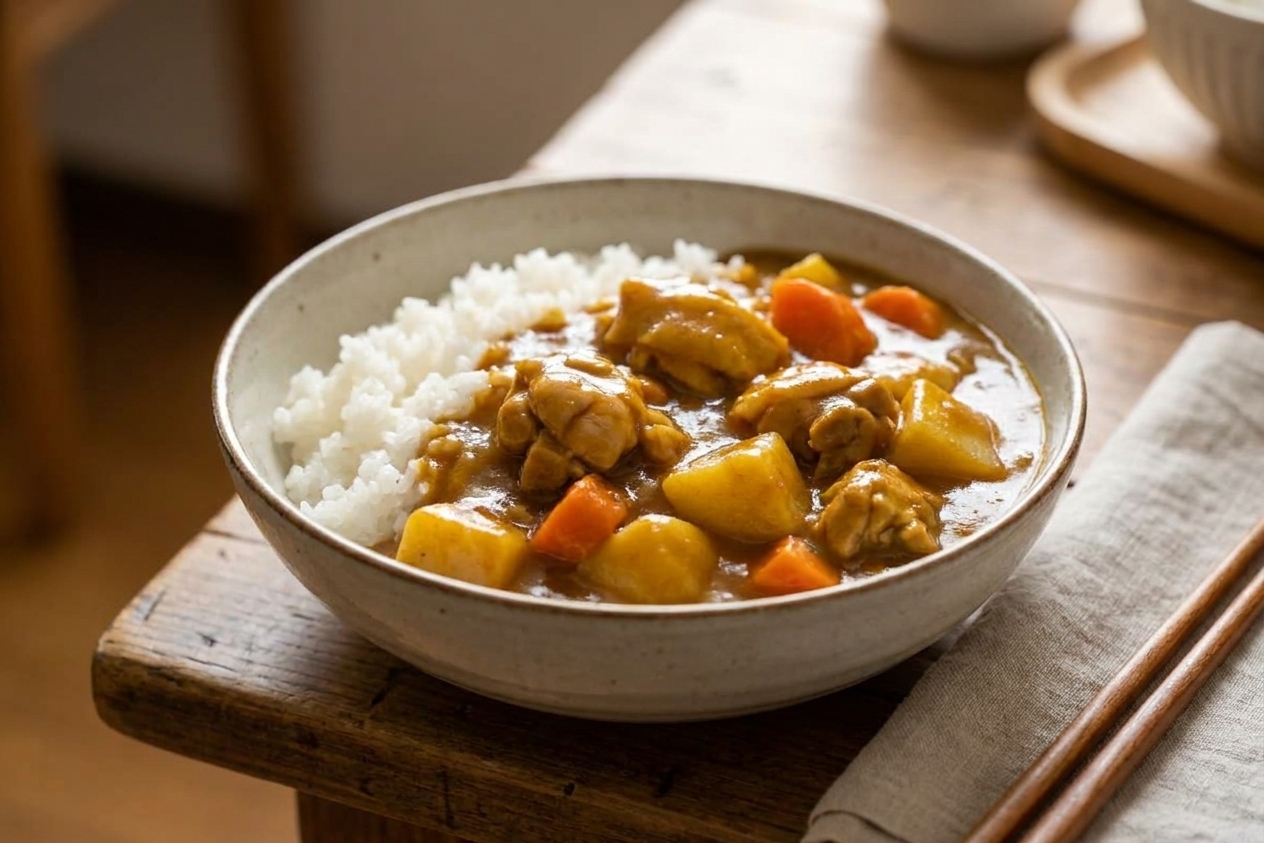
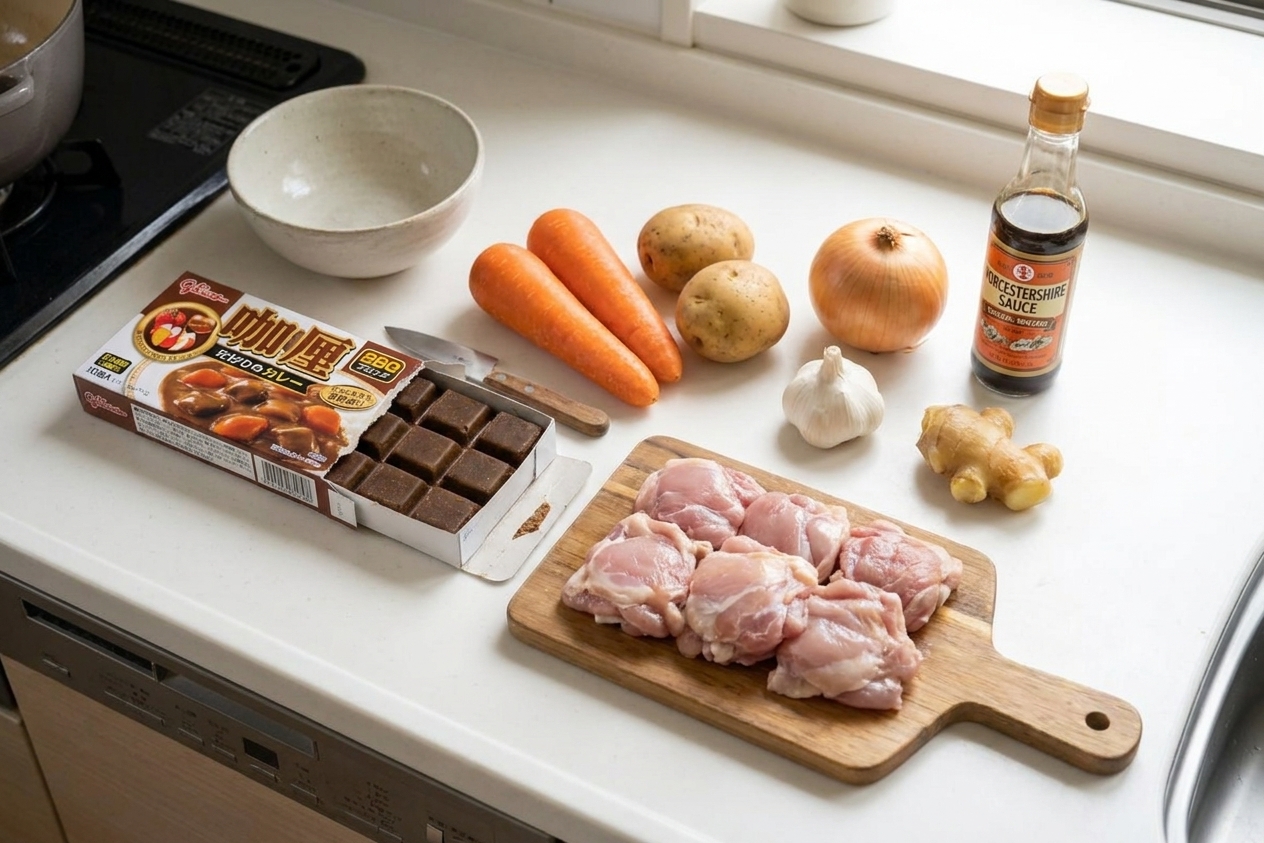
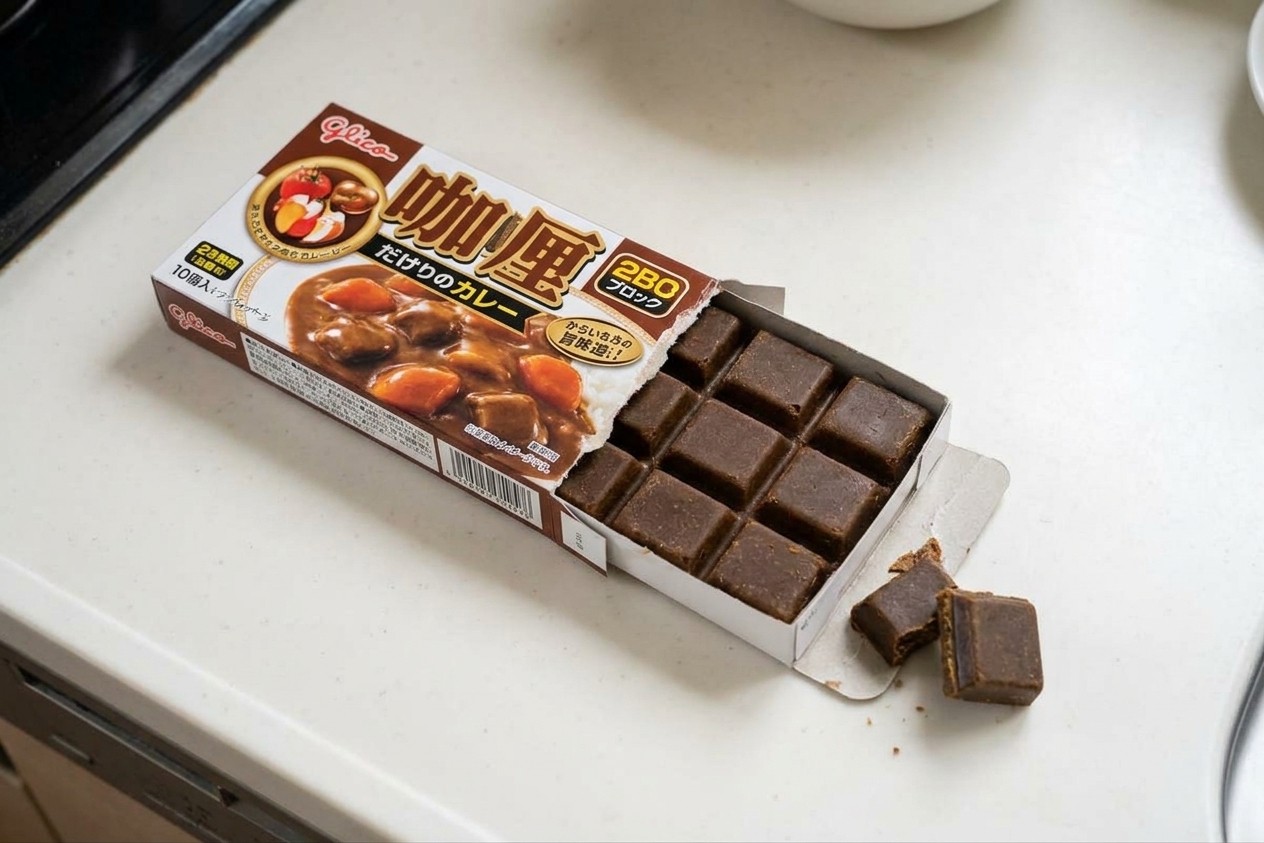
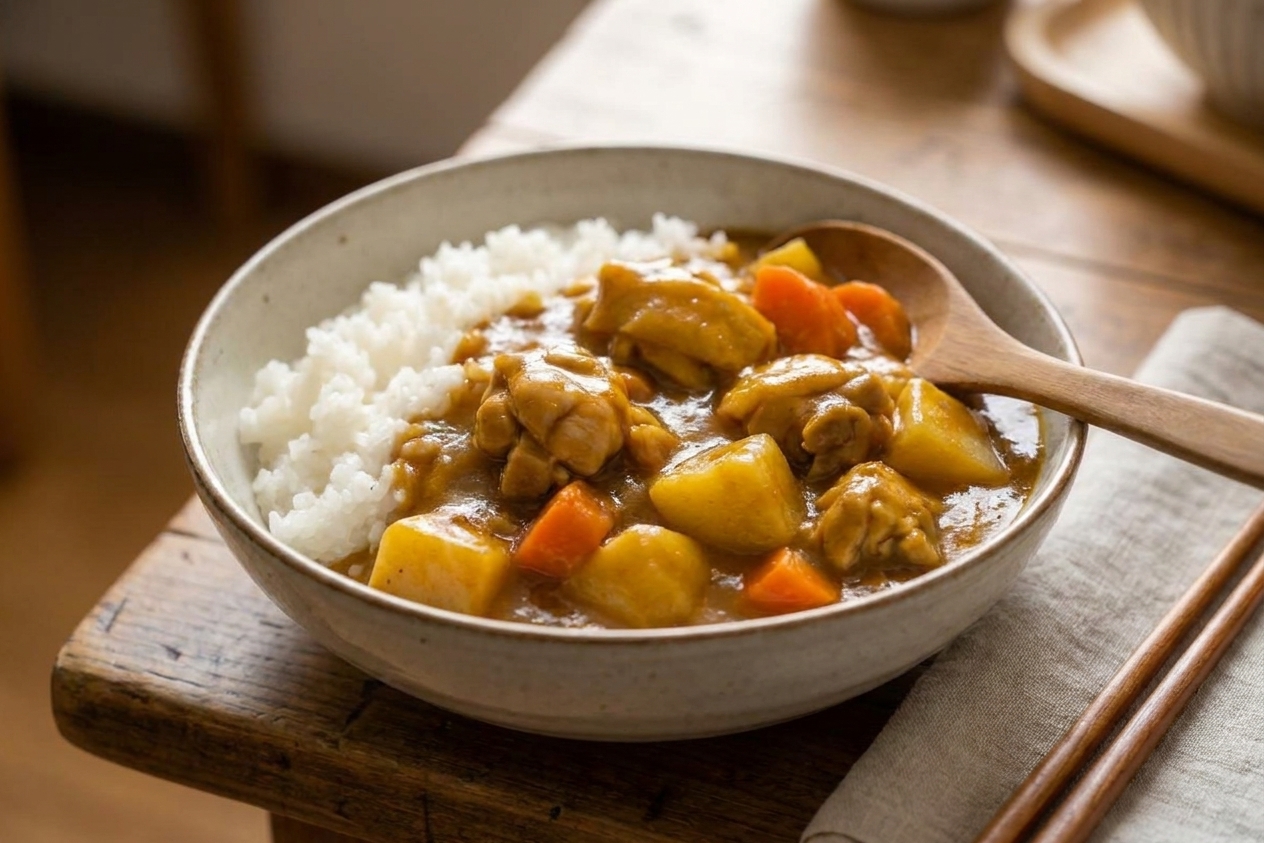
Often, especially in the U.S., people mean Japanese-style curry made with Golden Curry brand roux (by S&B) or a similar curry roux. It is usually mild, slightly sweet, and thick like a stew, not thin like many South Asian curries.
Can I make it vegetarian?
Yes. Swap chicken for mushrooms, tofu, or chickpeas, and use vegetable stock. Check your roux package, since some brands include animal-derived ingredients like beef or pork fat (and sometimes dairy).
How do I make it thicker or thinner?
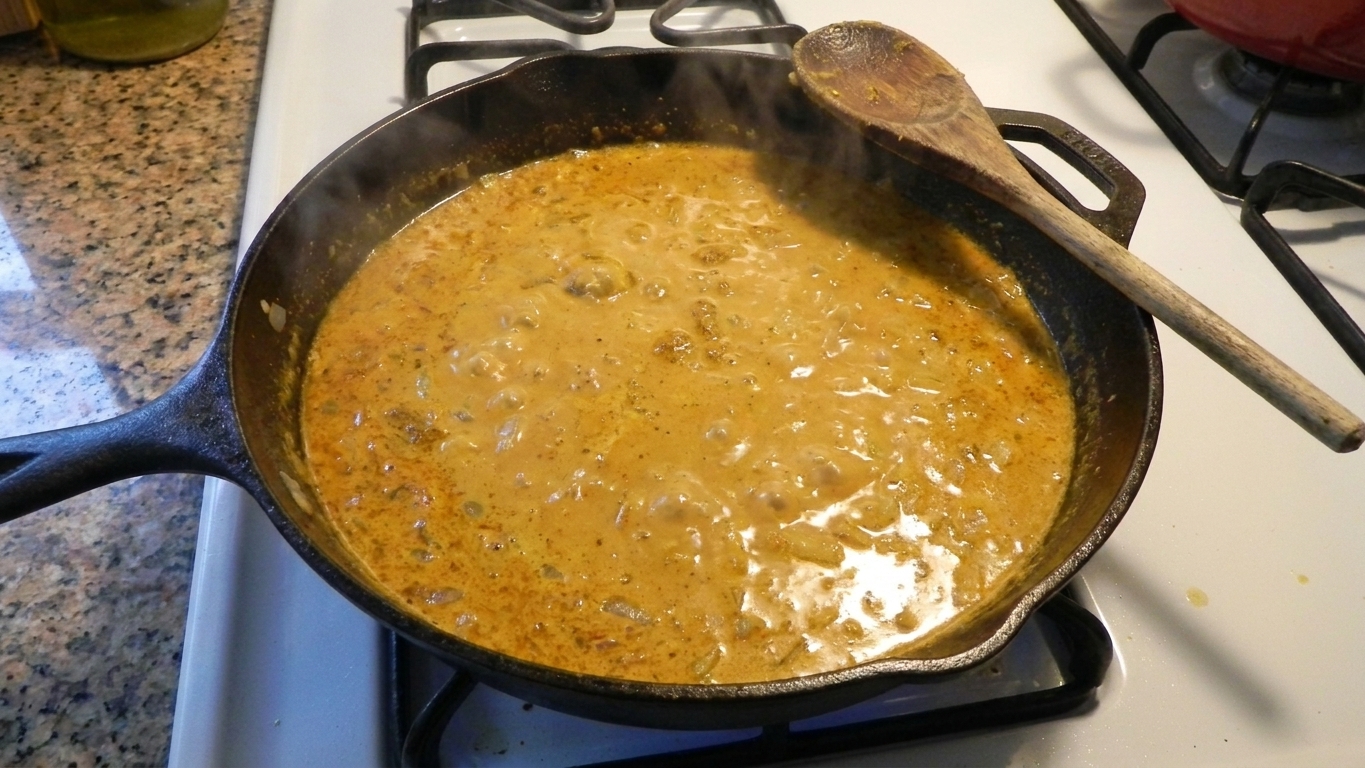
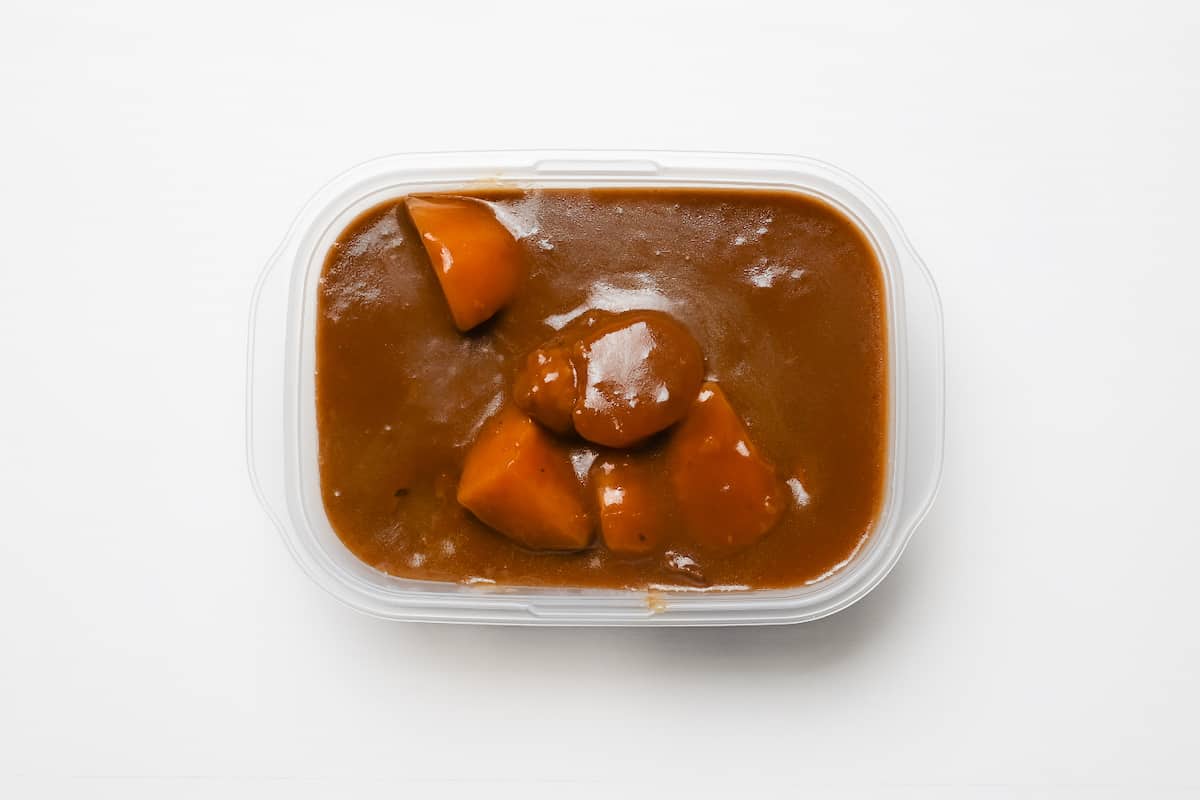
Thicker: Simmer uncovered a few minutes longer, or mash a couple potato chunks into the sauce. Thinner: Stir in warm stock or water a little at a time.
What can I add to deepen the flavor?
A teaspoon of Worcestershire sauce, soy sauce, ketchup, or a small spoon of miso can add depth. You only need one or two of these. No need to add all of them, pick a lane.
Do I have to use chicken thighs?
No, but they stay tender. If you use chicken breast, add it a little later so it does not dry out.
How much rice should I make?
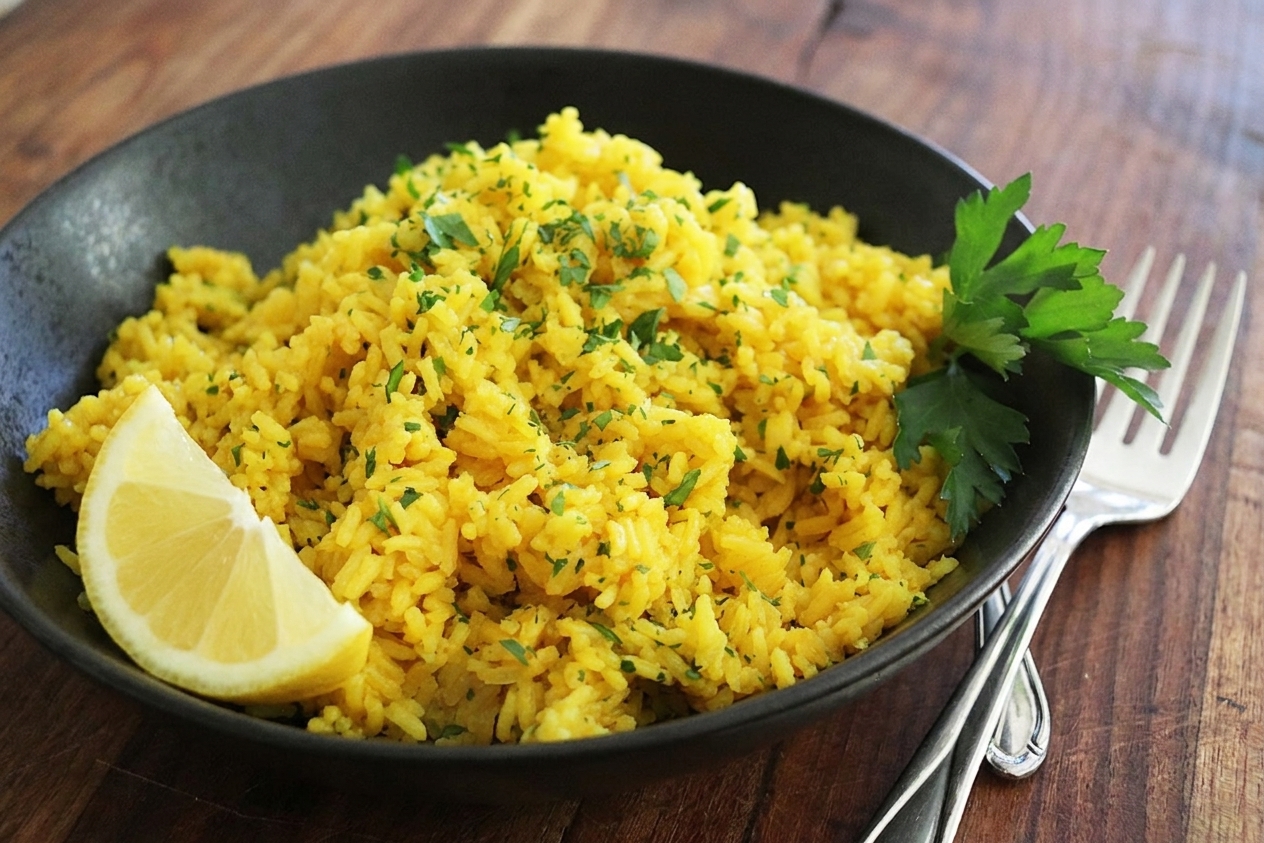
For 4 to 6 servings, cook about 1 1/2 to 2 cups uncooked short-grain or jasmine rice (that is roughly 4 to 6 cups cooked). Go with your household’s rice-to-curry ratio.
How spicy is it?
Most “mild” curry roux is very mild. “Hot” is usually more of a gentle heat than a full-on burn, but it depends on the brand.
Any common allergens?
Many Japanese curry roux blocks contain wheat (and some contain milk or other dairy). Check the package if you are gluten-free or dairy-sensitive.