Common Questions
Should I soak oxtails or blanch them first?
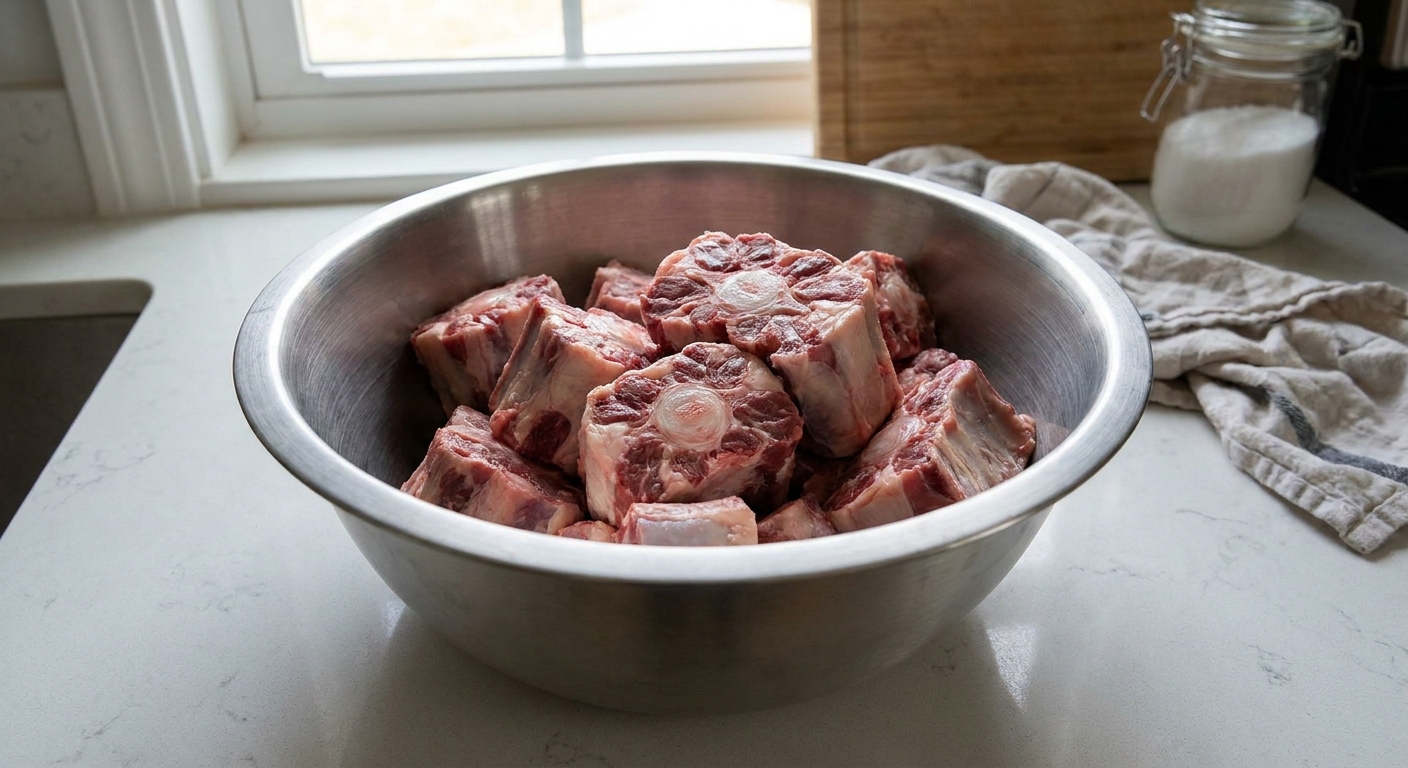
You can do either. Soaking (in cold water) can help reduce excess blood in the pot, and many cooks find it leads to a calmer simmer later. Blanching (a quick boil, then rinse) is faster and helps rinse away surface scum and impurities.
- Soak: Cover oxtails with cold water for 30 to 60 minutes, changing the water once or twice. Pat dry.
- Blanch: Cover with cold water, bring to a boil, boil 5 to 7 minutes, drain, then rinse oxtails well under running water, scrubbing off any gray foam bits. Clean the pot before braising to avoid carrying any scummy flavor into the sauce.
If your oxtails look especially bloody, I lean toward blanching. If you have a little time, soaking is wonderfully low-effort.
How do I skim the fat without babysitting the pot?
During cooking, skim with a wide spoon whenever you notice a shiny layer collecting on top. For the easiest skim, chill the sauce and remove the solid fat cap the next day. That is the tidy trick Pip would absolutely approve of, mostly because it involves less hovering.
How do I know when oxtails are done?
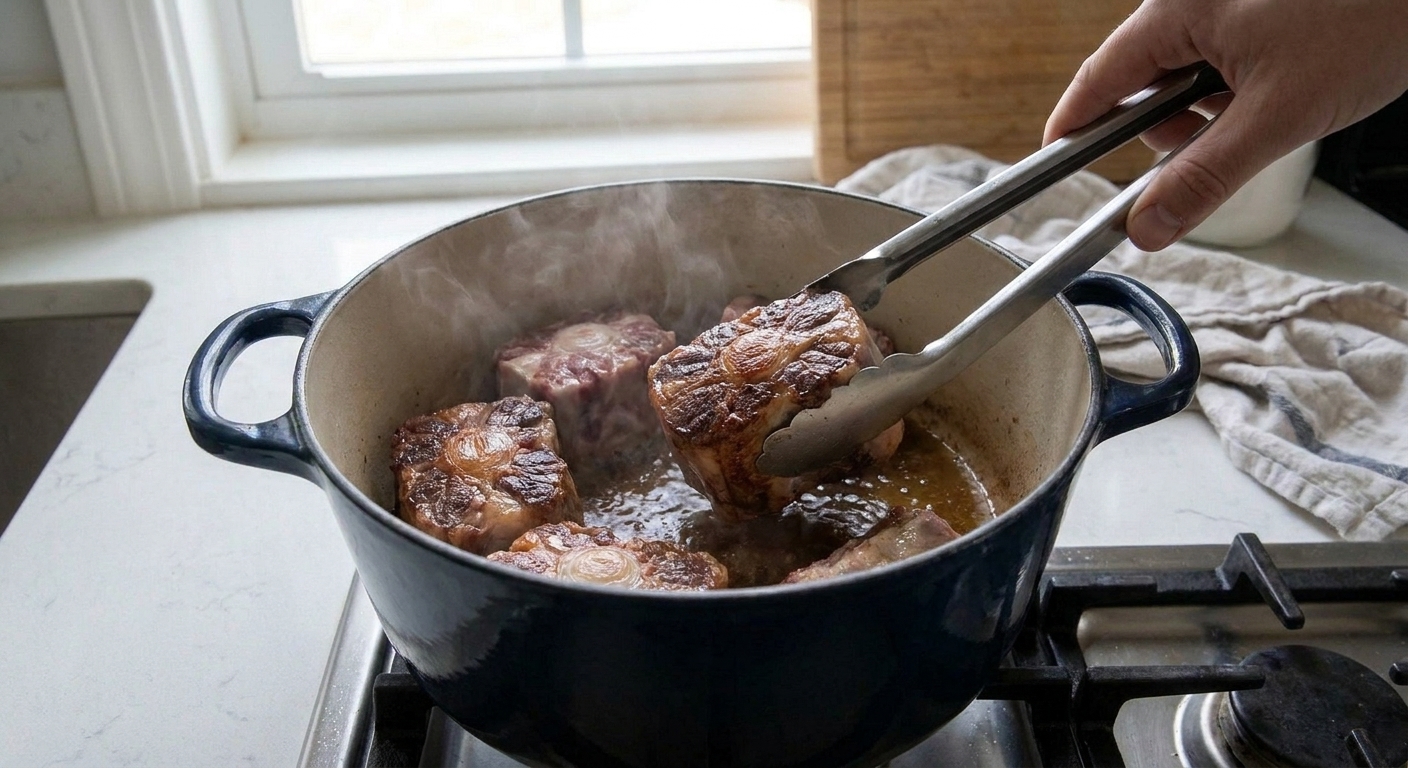
Go by doneness, not the clock. They are ready when a fork slides in with little resistance and the meat starts to pull back from the bone, exposing more of the round bone center. If you grab a piece with tongs, it should feel tender and a bit wobbly, not tight and springy. Some batches are perfect at 2 1/2 to 3 hours, but bigger pieces can take 3 1/2 to 4+ hours.
How gentle should the simmer be?
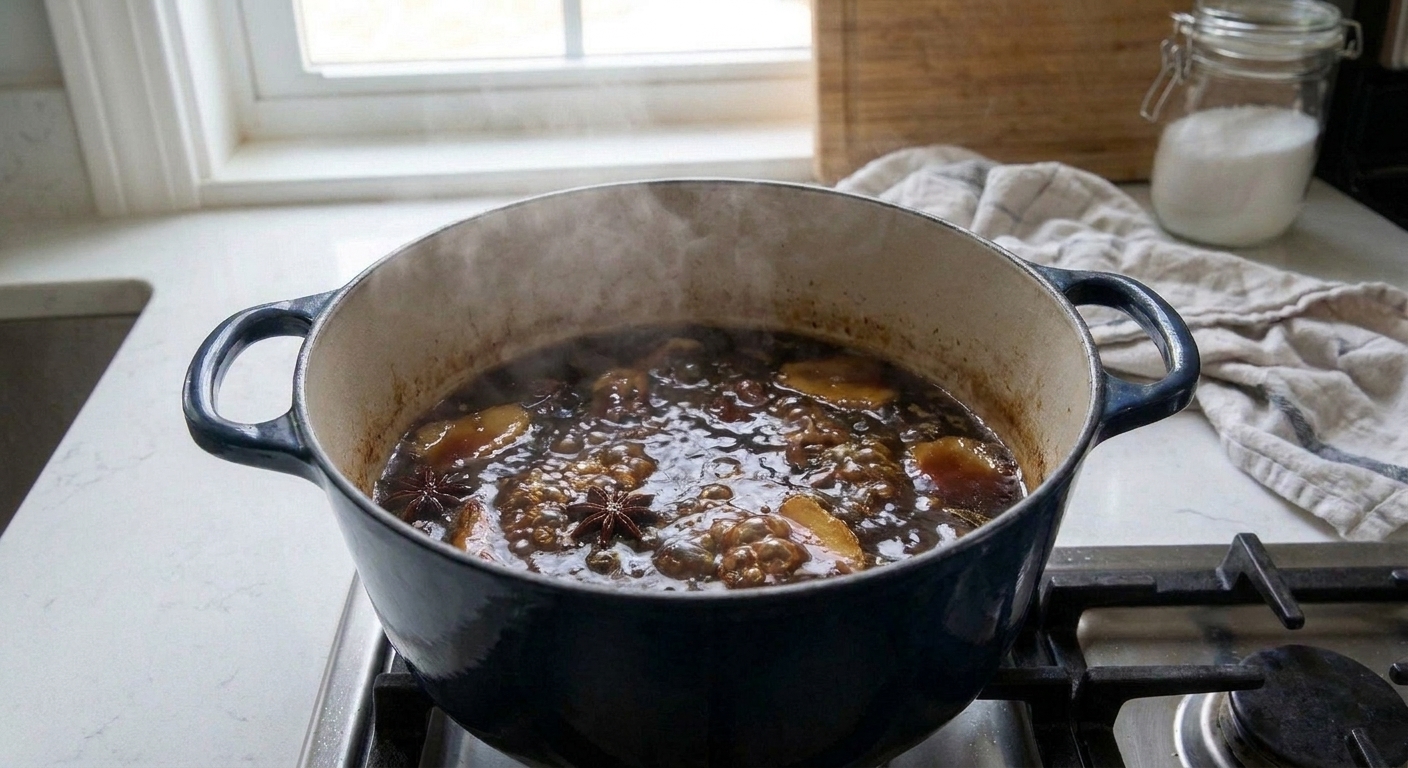
Think quiet and steady, not a rolling boil. You want just a few lazy bubbles. A hard boil can make the liquid evaporate too fast and can leave you with a greasy, salty reduction before the meat is fully tender.
My sauce tastes salty. What do I do?
Because the braising liquid gets reduced into a glaze, it can concentrate. If it tastes salty near the end, stir in a splash of water or unsalted broth, then keep reducing gently until it tastes balanced again. You can also stop the reduction a little earlier and keep it more saucy.
My sauce will not thicken. What do I do?
Turn the heat up slightly and simmer uncovered. A wider pot reduces faster. If your pot is narrow and deep, it may just need a few extra minutes.
Is this the same as Korean oxtail soup?
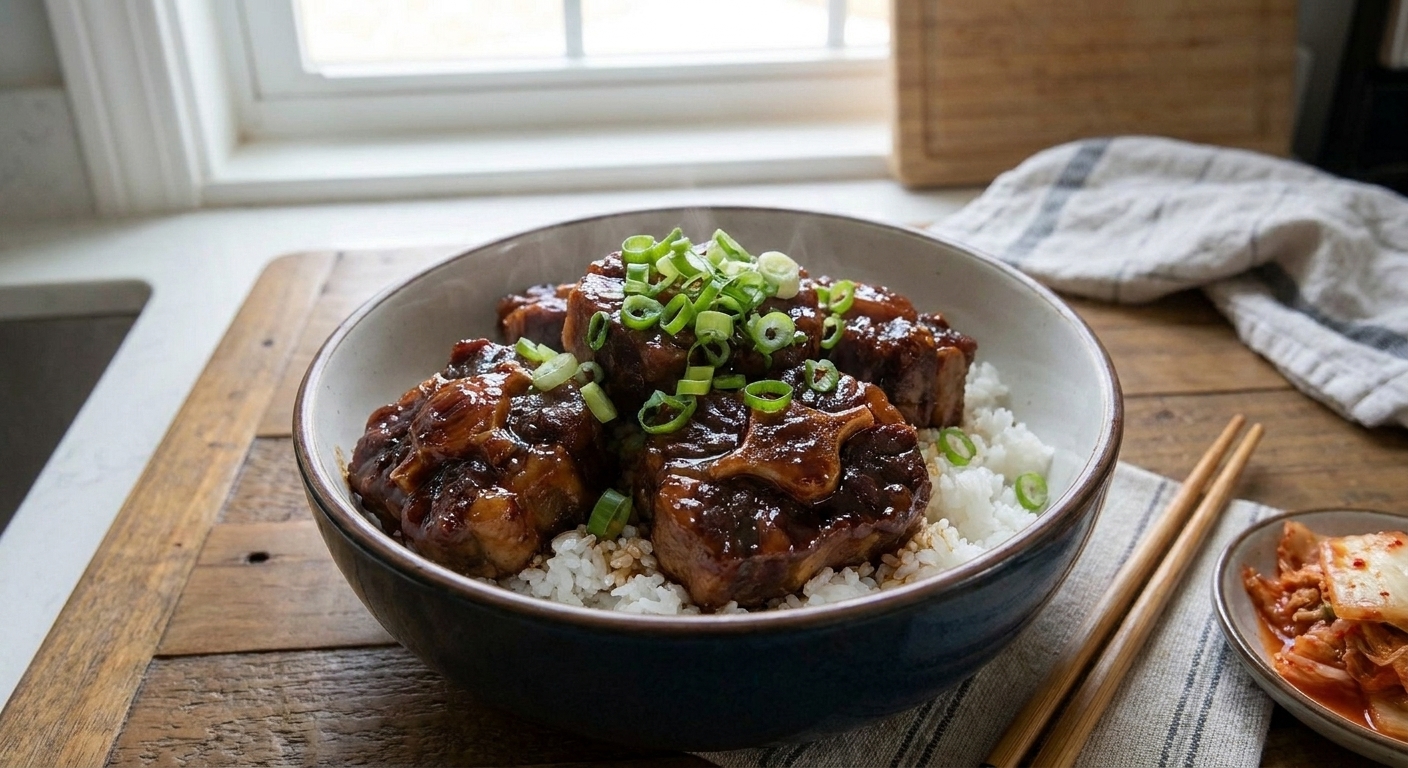
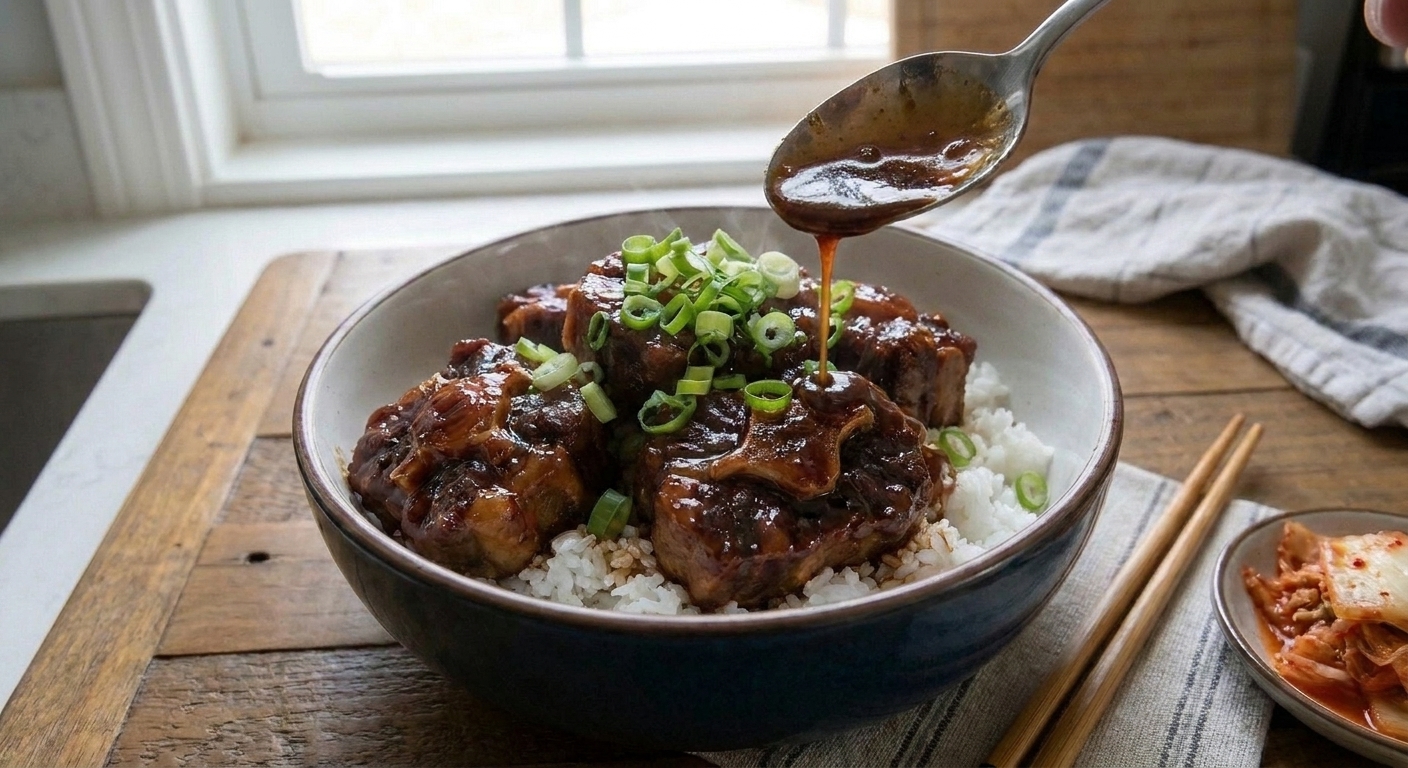
No. Korean oxtail soup is typically a clear, milky, or lightly seasoned broth-forward dish, served as soup. This recipe finishes by reducing the braising liquid into a glaze so it clings to the meat for a rice bowl vibe.
Is this like Jamaican oxtail?
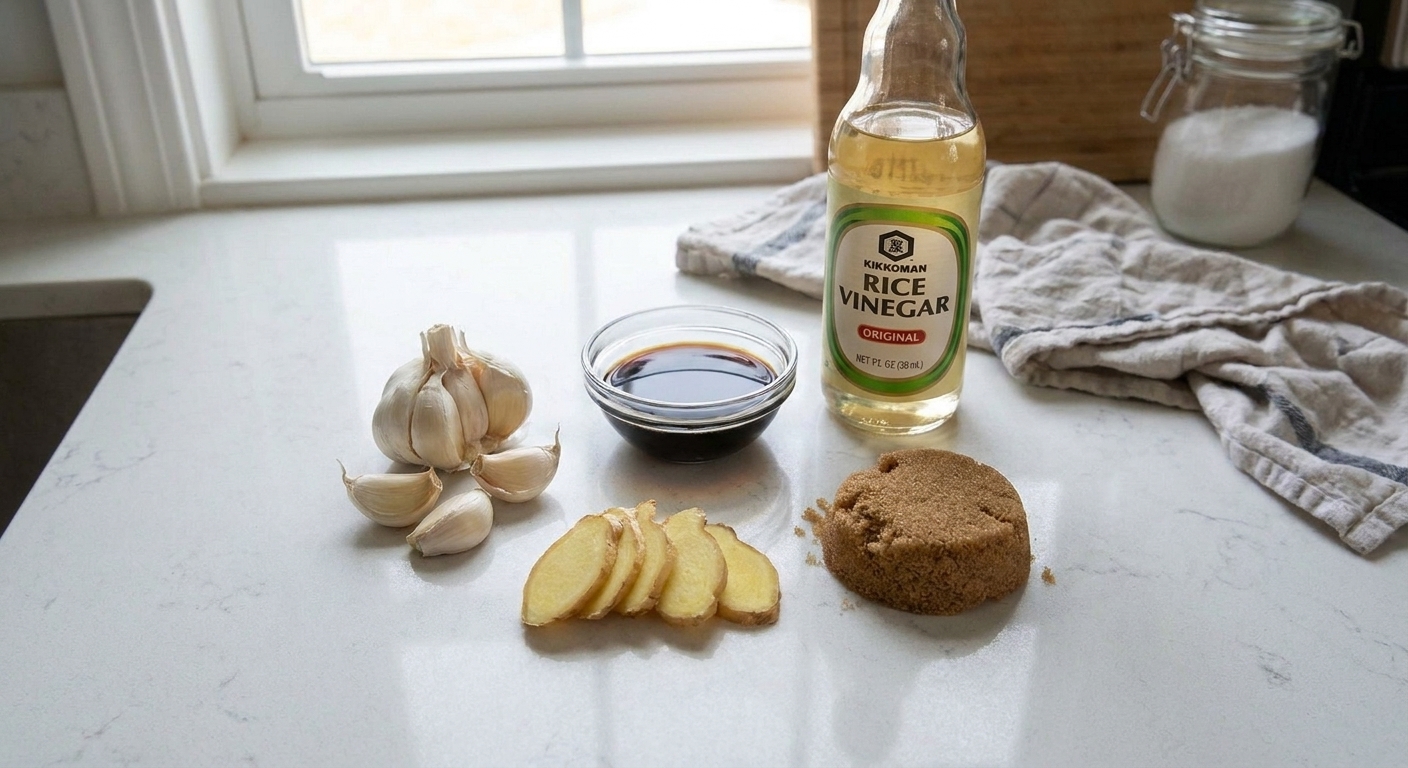
Also no. Jamaican oxtail often features allspice, thyme, browning, and a thick stew-style gravy. This Korean-inspired braise centers on soy sauce, garlic, ginger, and a sweet-savory reduction.
Can I make it less sweet?
Yes. Start with the lower amount of brown sugar and keep the final reduction shorter. You can also add an extra splash of water or unsalted broth at the end if it concentrates too much.
Do I need gochujang or chili?
Not required. This version stays comfortably sweet-savory. If you want heat, add 1 to 2 teaspoons gochujang or a pinch of gochugaru during the braise.
Any other add-ins that work well?
Yes, if you want a little extra Korean-inspired depth: add a few slices of Asian pear or apple to the pot, or a couple dried red chilies for background warmth. Keep it subtle so the garlic-ginger soy vibe still leads.