Mom's Best Recipes
Recipe

Korean Food Tteokbokki

Chewy rice cakes in a spicy-sweet, glossy gochujang sauce with easy add-ins like fish cakes, eggs, and scallions.

Author By Matt Campbell
4.8
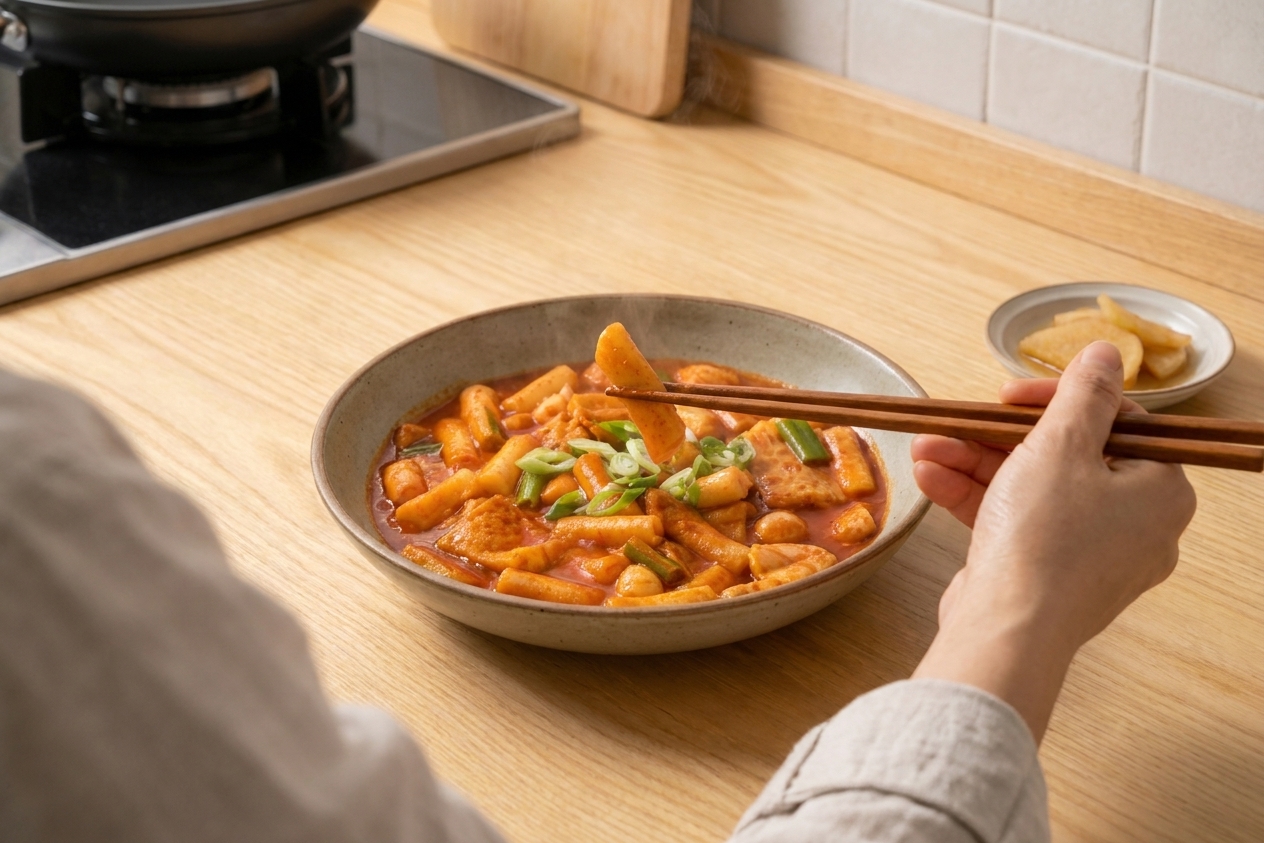
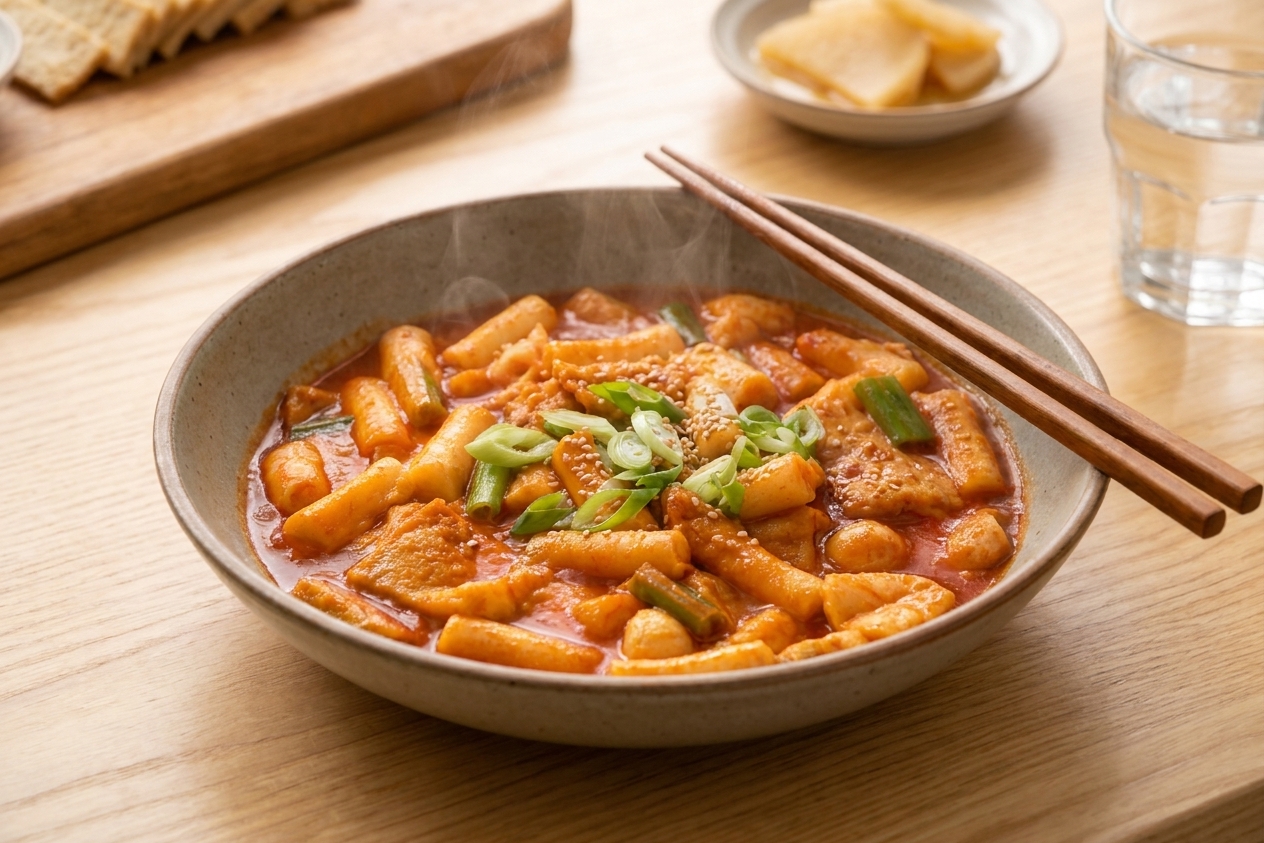
A steaming bowl of tteokbokki with chewy rice cakes coated in glossy red sauce, topped with sliced scallions and sesame seeds on a simple kitchen table

Tteokbokki is one of those dishes that feels like it should be complicated because it tastes so loud in the best way. But it is basically chewy rice cakes taking a hot bath in a spicy-sweet sauce that clings to everything like it has a plan. The goal here is weeknight-friendly: a glossy sauce, bouncy tteok, and enough wiggle room to use what you have.

Make it mild, make it fiery, add ramen, add eggs, clean out the veggie drawer. Just promise me one thing: taste as you go. That sauce tells you what it needs.
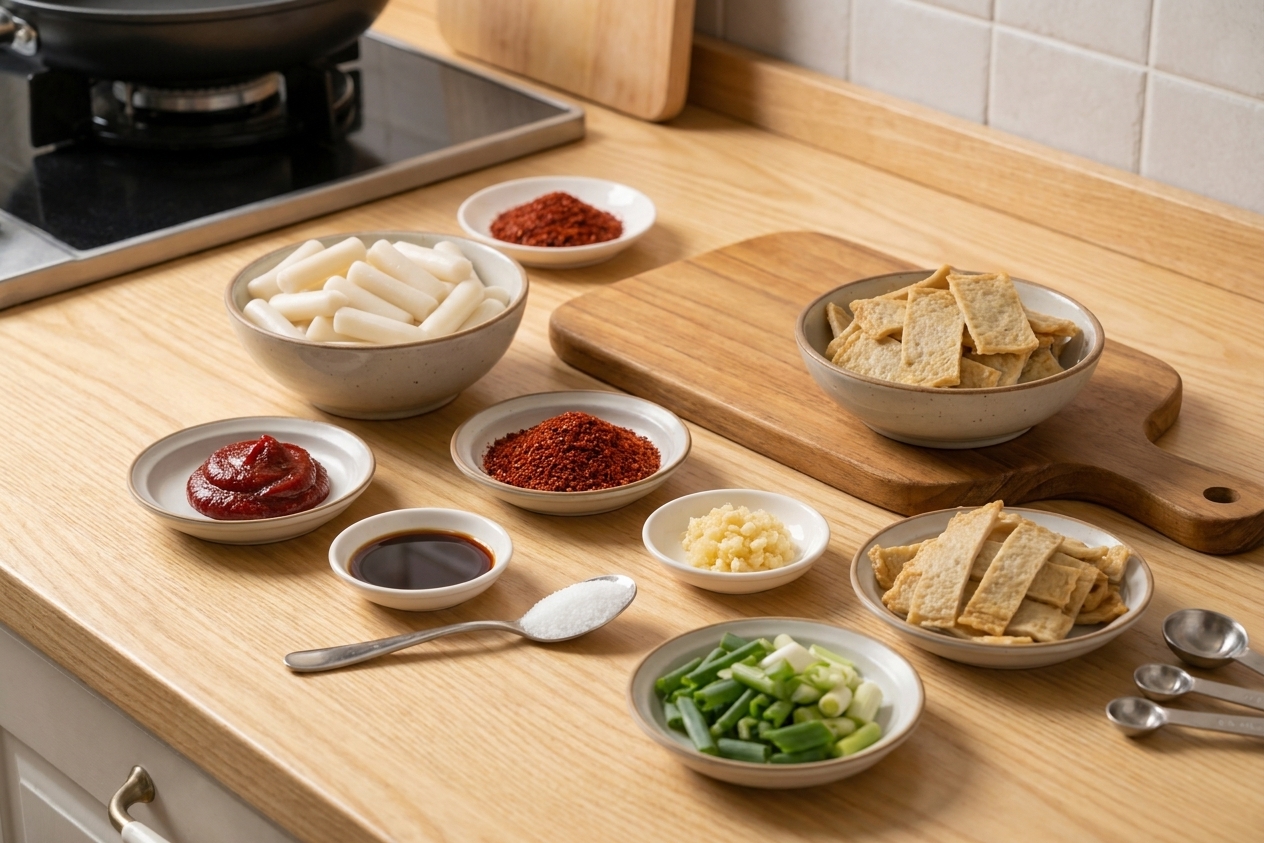
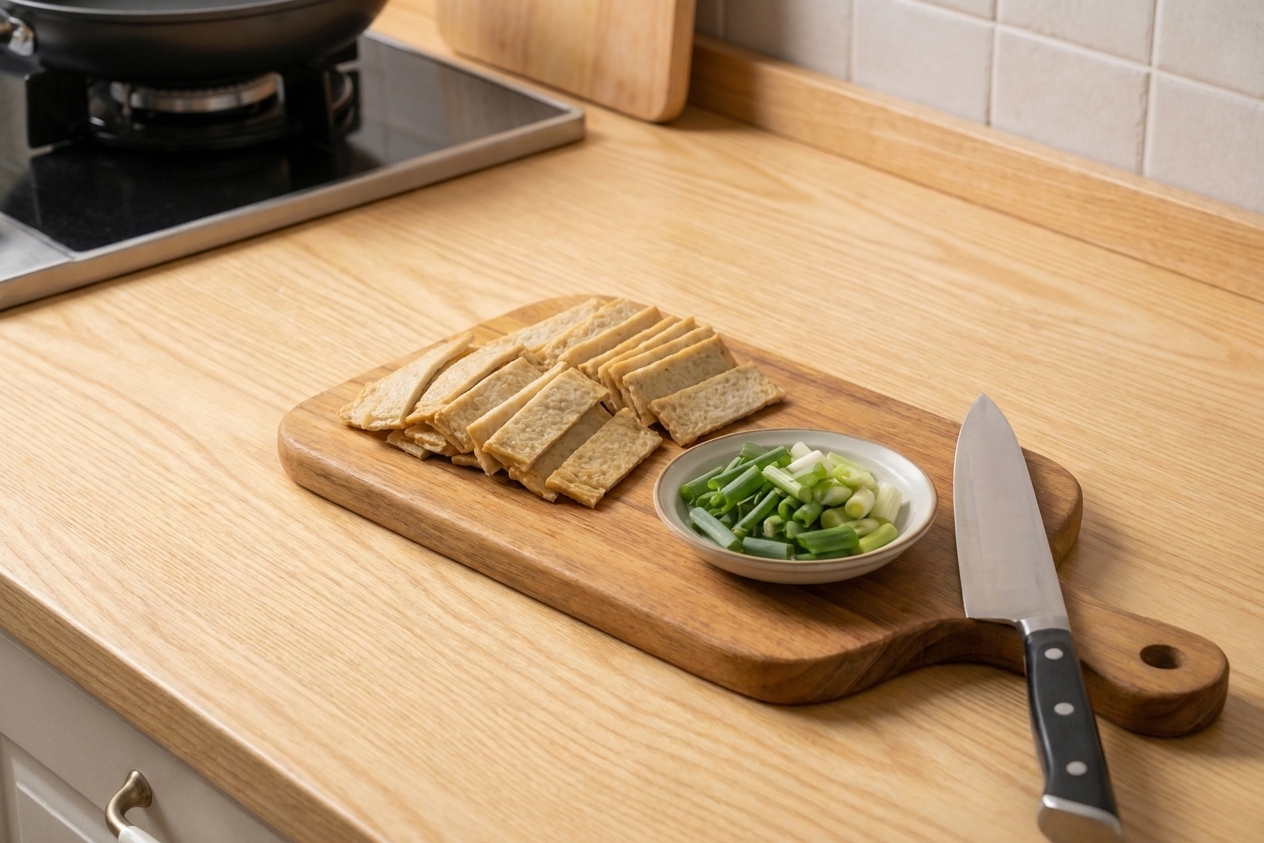
Measured ingredients for tteokbokki on a light kitchen counter including rice cakes, gochujang, gochugaru, soy sauce, sugar, garlic, scallions, and fish cakes

Why It Works

  • Big flavor with small effort: the gochujang-based sauce builds fast and reduces into that classic glossy coat.
  • Chewy, not mushy: the right soak (based on rice cake type) plus a gentle simmer keeps rice cakes bouncy.
  • Easy to customize: keep it simple or bulk it up with fish cakes, eggs, veggies, or ramen.
  • One-pan comfort: everything happens in a single skillet or saucepan, minimal cleanup, maximum cozy.

Pairs Well With

Storage Tips

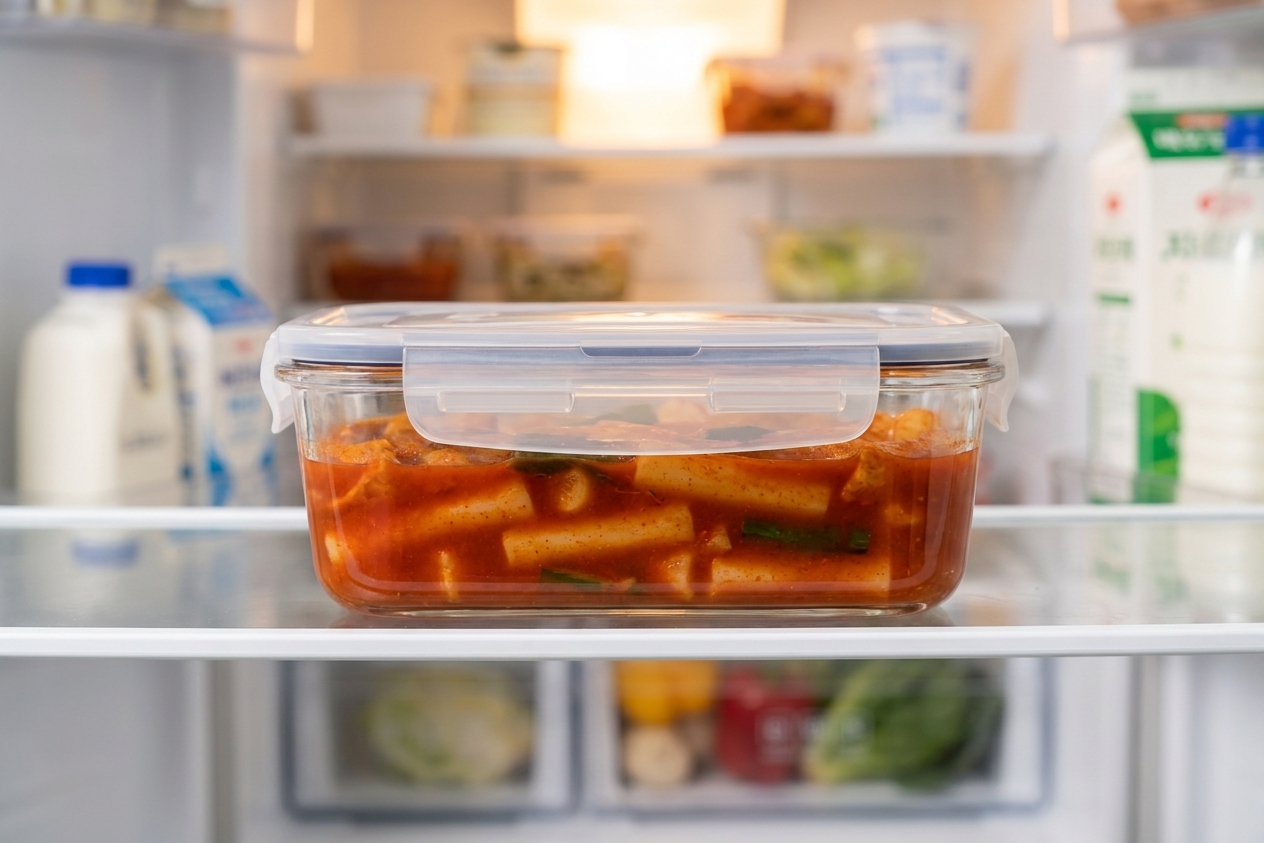
Refrigerate: Store leftovers in an airtight container for up to 3 days. The rice cakes will firm up in the fridge. Totally normal.

Reheat: Rewarm in a small pan over medium-low with a splash of water or broth, stirring gently until the sauce loosens and the rice cakes turn chewy again, 5 to 8 minutes. Microwave works too, but add a spoonful of water and cover so it steams.

Freeze: I do not love freezing finished tteokbokki because the texture can get a little weird. If you want to prep ahead, freeze uncooked rice cakes and make the sauce fresh when you need it.

A sealed glass container of leftover tteokbokki with red sauce on a refrigerator shelf

Common Questions

What kind of rice cakes do I buy for tteokbokki?

Look for cylindrical Korean rice cakes labeled tteokbokki tteok (often in the refrigerated or frozen section of an Asian grocery). Shelf-stable versions also work. If they are very hard or dried, soak them longer (or parboil) before cooking.

Is tteokbokki very spicy?

It can be. This recipe lands at a medium heat if you use the listed gochugaru. For mild, skip the gochugaru and start with a little less gochujang, then add more at the end if you want.

Can I make it without fish cakes?

Absolutely. Fish cakes add savory chew, but you can leave them out or swap in cooked sausage, shrimp, mushrooms, or extra veggies.

Why is my sauce watery?

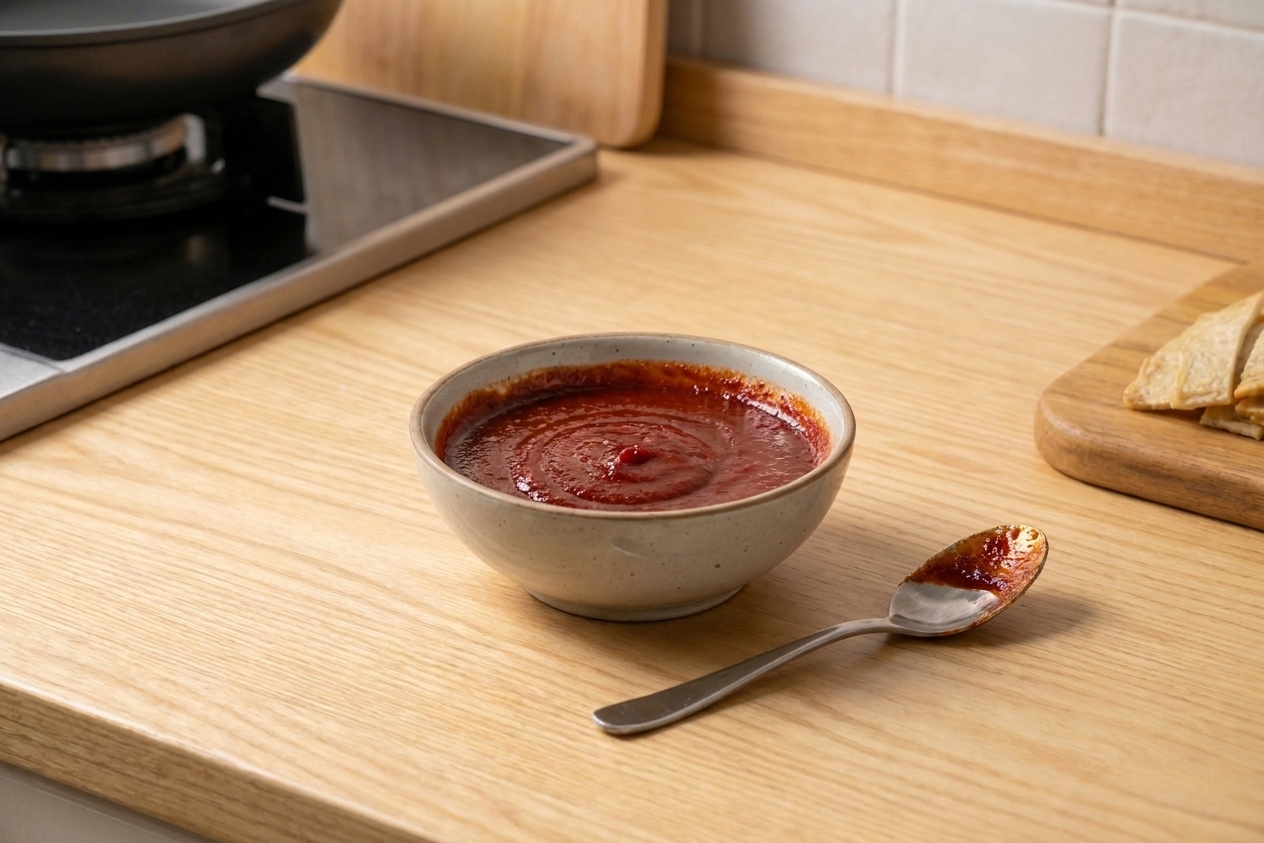
Two common reasons: too much liquid or not enough simmer time. Keep it at a steady, uncovered simmer and stir often. You are looking for a sauce that coats the rice cakes and leaves a brief trail when you drag a spoon through the pan. If it still looks thin after 10 to 12 minutes, simmer 2 to 3 minutes longer. If you need a quick fix, stir in a small slurry of 1 teaspoon cornstarch + 1 tablespoon water.

Why are my rice cakes falling apart?

They were likely overcooked or already very soft. Keep the heat at a gentle simmer, stir carefully, and stop as soon as they are chewy and heated through.

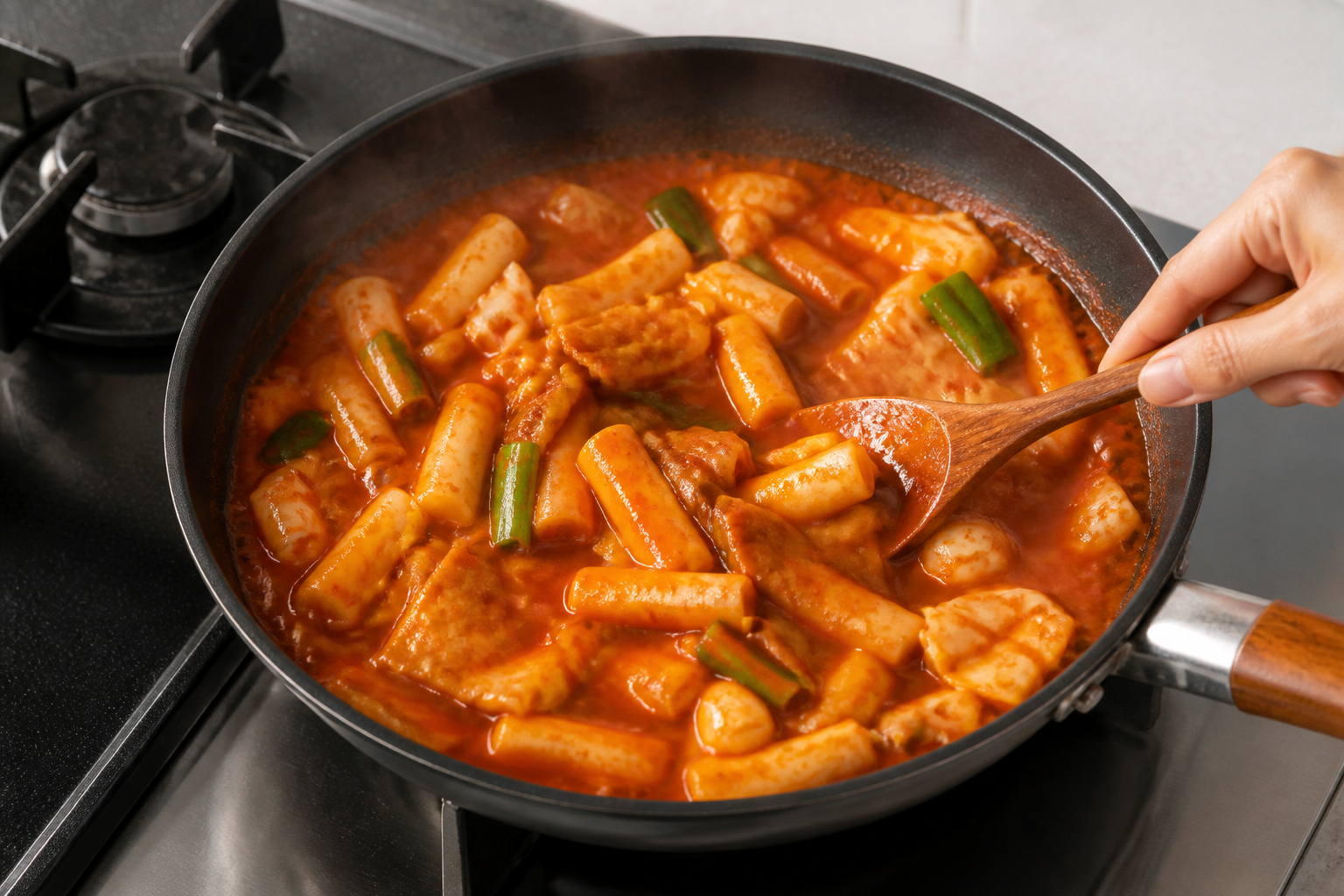
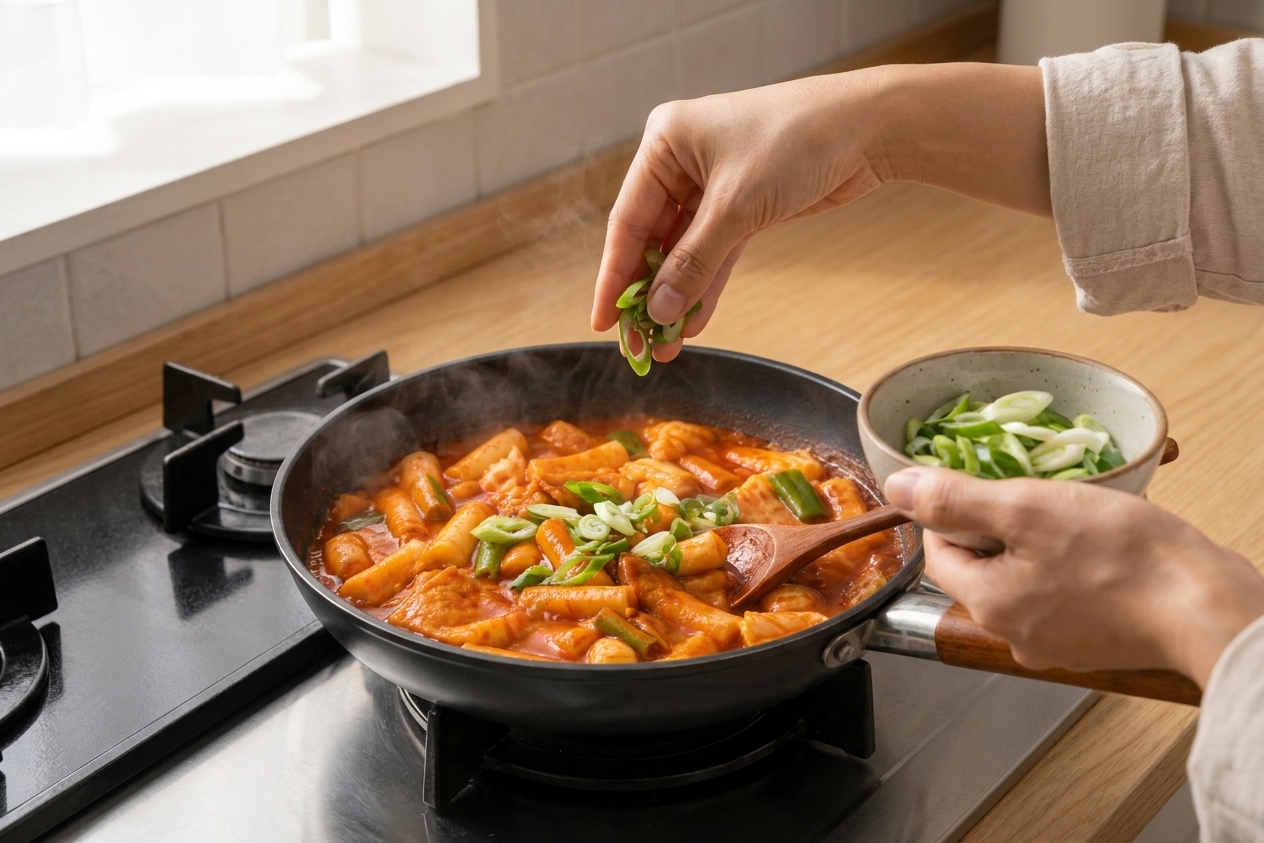
Tteokbokki sauce bubbling in a shallow pan with rice cakes and fish cake pieces, a wooden spoon stirring on a stovetop

The first time I made tteokbokki at home, I expected a whole project. Then I realized it is basically sauce management. Once you get that sweet-spicy balance and the right simmer, it is pure comfort with crisp edges where the sauce hits the pan. Now it is my go-to when I want something fun and bold without committing to an entire kitchen cleanup.