Mom's Best Recipes
Recipe

Light and Crispy Tempura Batter

An easy, reliable tempura batter that fries up airy and crunchy with those signature lacy bits.

Author By Matt Campbell
4.8
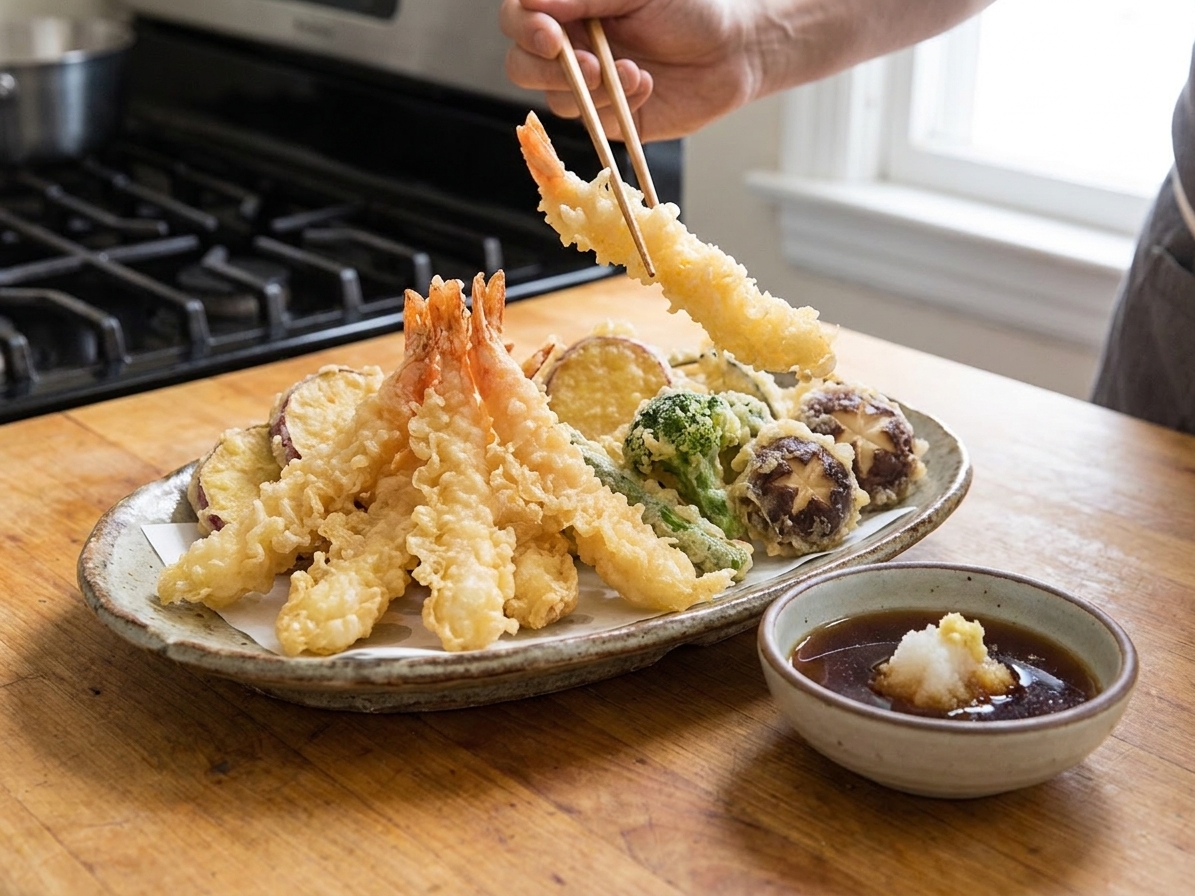
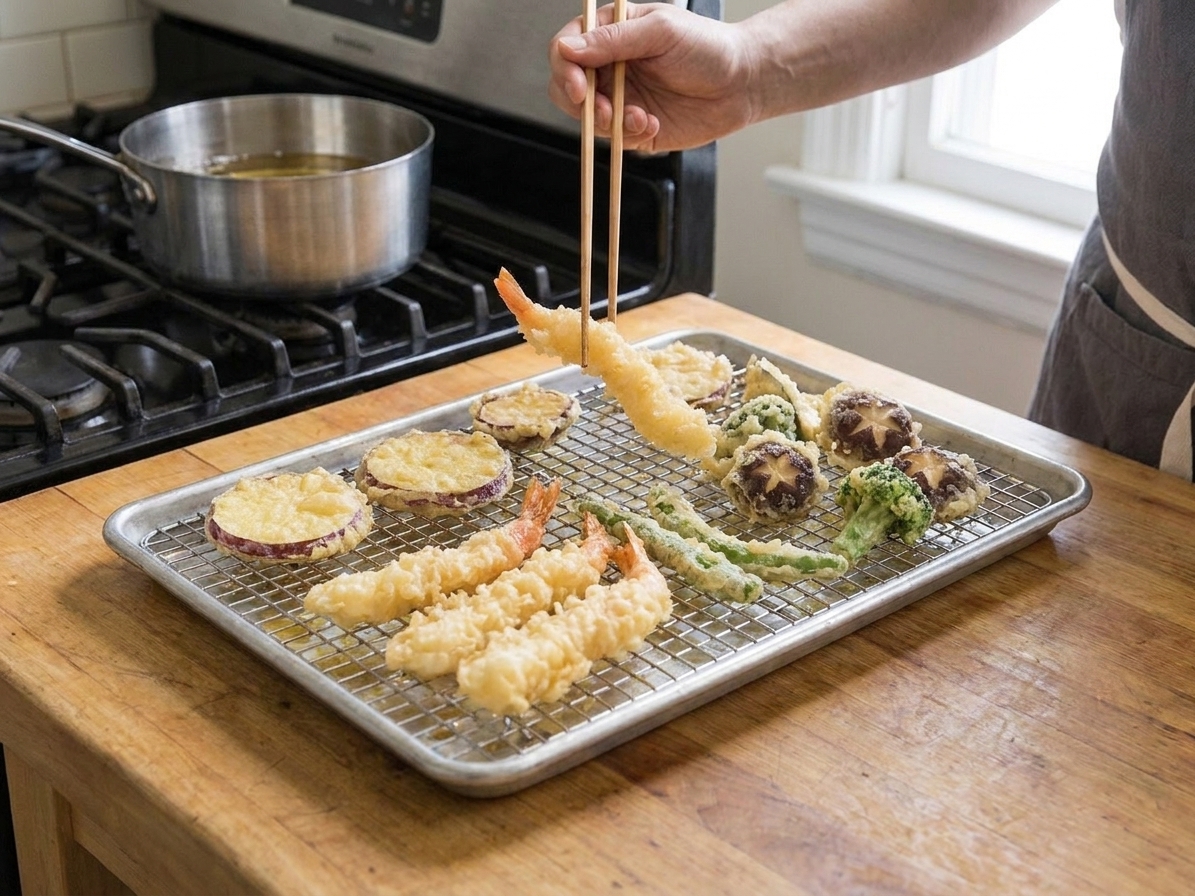
A platter of golden vegetable and shrimp tempura with airy, lacy crisp edges, served with a small bowl of dipping sauce on a warm kitchen table

Tempura is one of those things that feels like restaurant magic until you do it once and realize the “magic” is mostly cold batter, hot oil, and the self control to not whisk the life out of it. The goal is a thin, barely there coating that fries up crisp, light, and a little chaotic at the edges in the best way.

This batter is my go-to for shrimp, green beans, sweet potato, mushrooms, onion rings, and basically any veggie that has ever looked at me and said, “I would like to be crunchy today.”

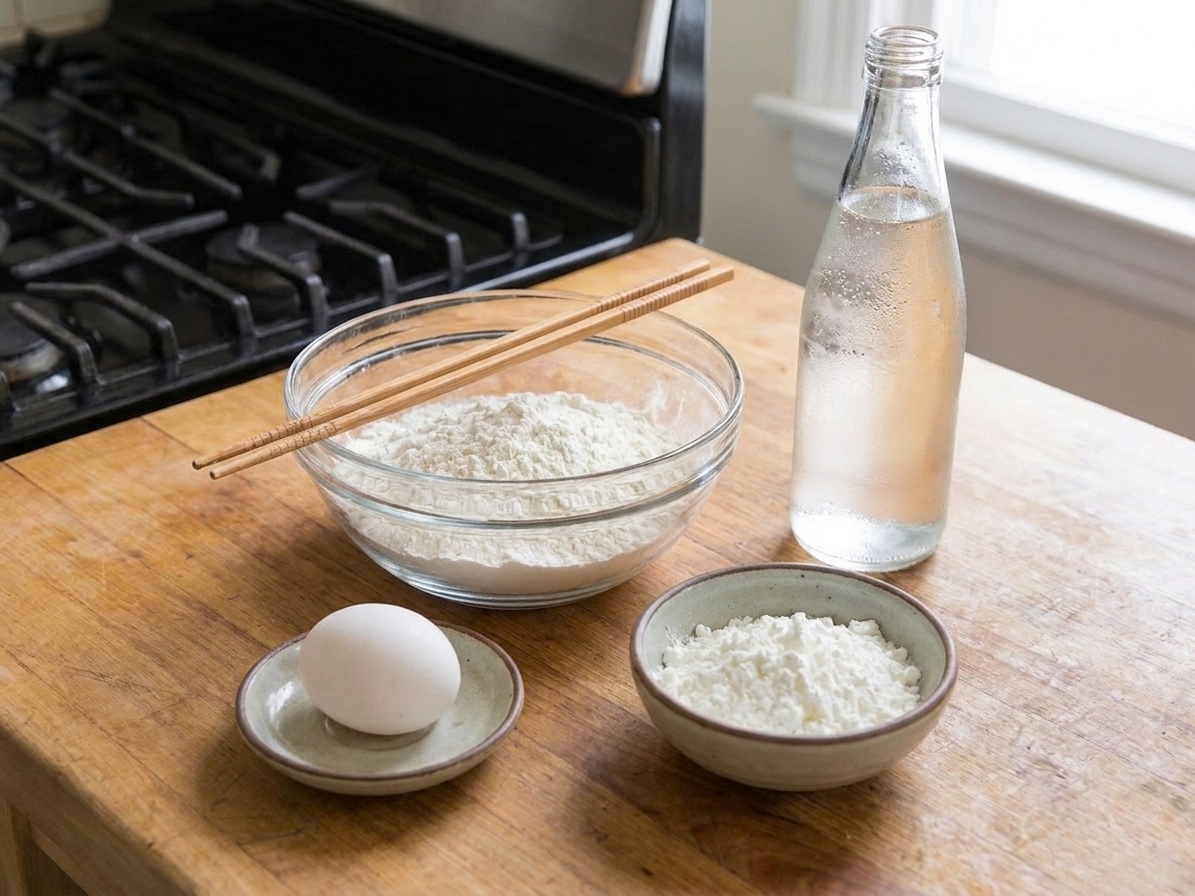
A bowl of flour, a small bowl of cornstarch, an egg, a bottle of sparkling water, and chopsticks arranged on a bright kitchen counter

Why It Works

  • Light texture, not bready: A mix of flour and cornstarch keeps the coating delicate and crisp.
  • A little extra lift: Ice-cold sparkling water can help create an airy, lacy shell.
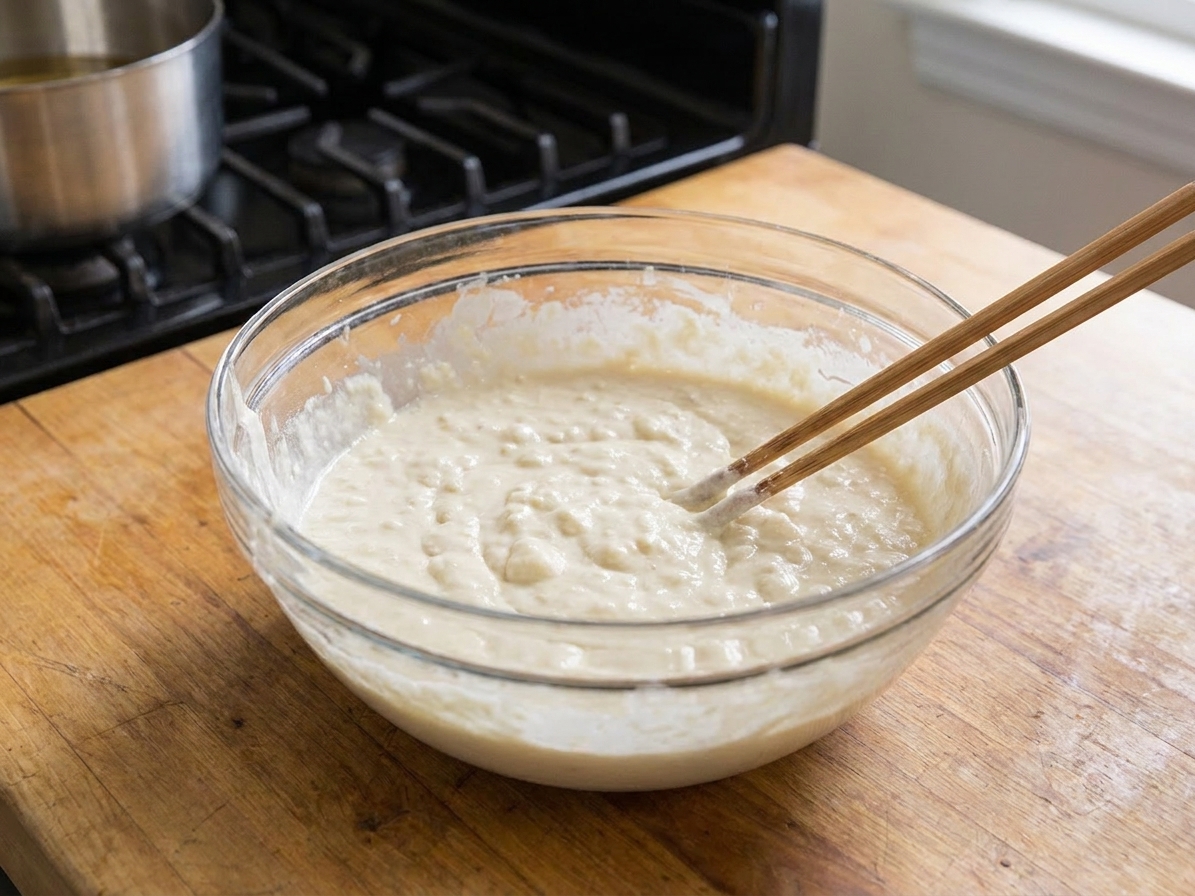
  • No tough batter: Minimal mixing limits gluten development so the crust stays tender and shattering, not chewy.
  • Predictable frying: A simple temperature range gives you pale, crisp tempura without greasy fallout.

Pairs Well With

Storage Tips

Tempura is at its peak right after frying, but leftovers can still be revived.

  • Fridge: Store cooled tempura in a paper towel lined container and loosely cover it. Eat within 1 day for best texture.
  • Reheat: Use an oven or air fryer at 400°F until hot and crisp, about 5 to 8 minutes. Skip the microwave unless you enjoy sadness.
  • Do not freeze: You can, but the coating tends to lose that signature delicate crunch.
  • Leftover batter: Discard. Once the batter warms up and sits, it loses the sparkle and can go gummy.

Common Questions

Common Questions

Why does my tempura come out greasy?

Usually one of three things: the oil is too cool, you overcrowded the pot, or your ingredients were wet. Aim for 350°F to 365°F most of the time (it can briefly climb toward 375°F between batches), fry in small batches, and pat ingredients dry before dipping.

Do I really need sparkling water?

No, but it can help. The bubbles can add a little lift and encourage those lacy edges. If you only have regular water, make it ice cold and you will still get great tempura.

Can I make tempura batter ahead of time?

I would not. Tempura batter is a “mix it and use it” situation. If you need to prep, measure your dry ingredients ahead and keep the water chilled, then mix right before frying.

Why is my tempura not crispy?

Overmixing is a big one. Lumps are good here. Also check oil temperature and make sure you are not letting battered pieces sit around before frying.

Can I make it gluten-free?

Yes, usually. Swap the all-purpose flour for a gluten-free all-purpose blend and keep the cornstarch. Blends vary, so you may need a small splash more water (or a spoonful more flour) to get a thin, pourable batter. Some blends also brown faster, so keep an eye on color and pull when crisp and pale.

What should I tempura fry first?

Start with sturdier veggies (sweet potato, broccoli) and finish with delicate items (shrimp, herbs). That way your oil stays cleaner longer.
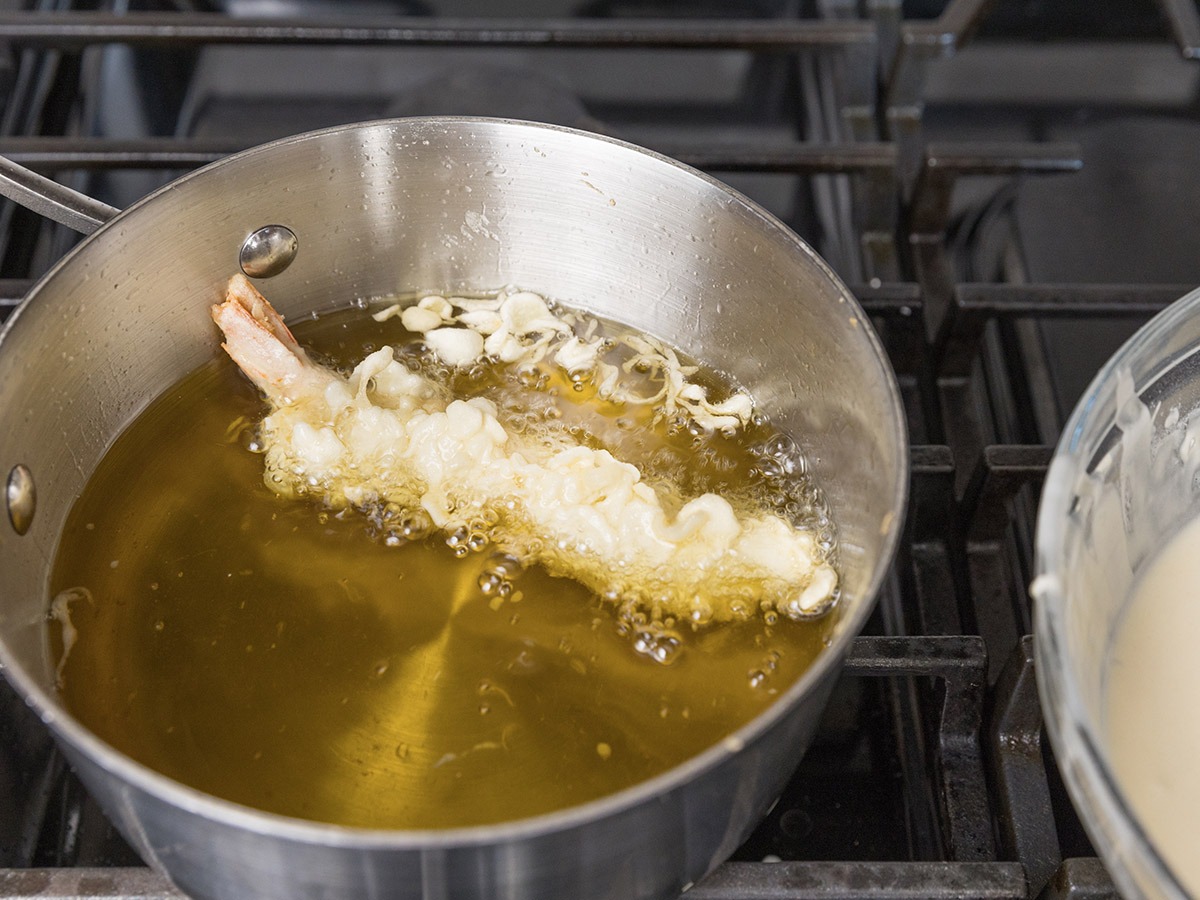

Shrimp tempura pieces bubbling in hot oil in a deep pot while a spider strainer lifts one piece

I used to think tempura was a fussy, chef-only project. Then I tried it at home and learned it is basically a vibe check: keep things cold, keep the oil hot, and stop stirring like you are auditioning for a baking show. Now it is my favorite way to turn a random bag of veggies into a snack that disappears suspiciously fast. Also, if you are cooking with kids or friends, tempura is peak “team activity” food. Someone dips, someone fries, someone steals the first batch off the rack. It is community.