Is sago the same as tapioca pearls?
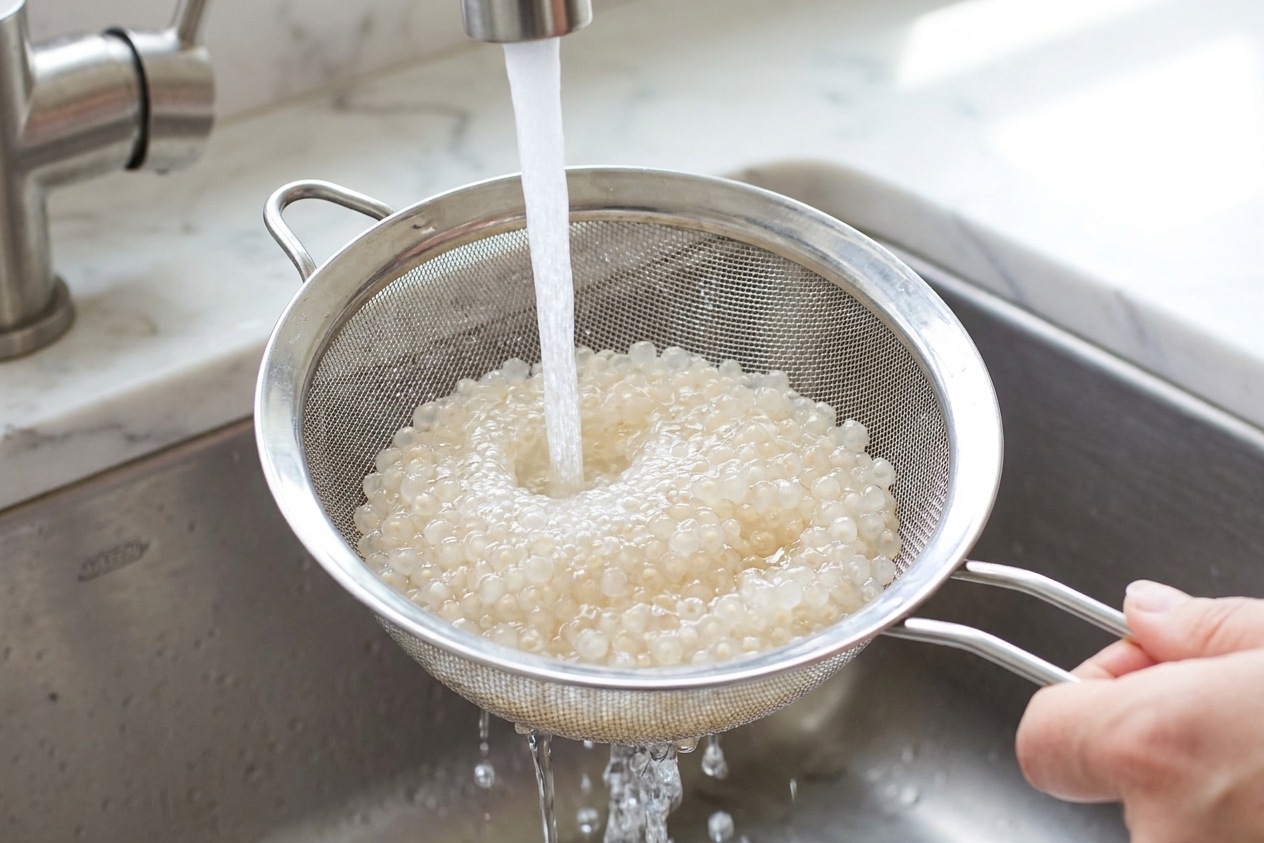
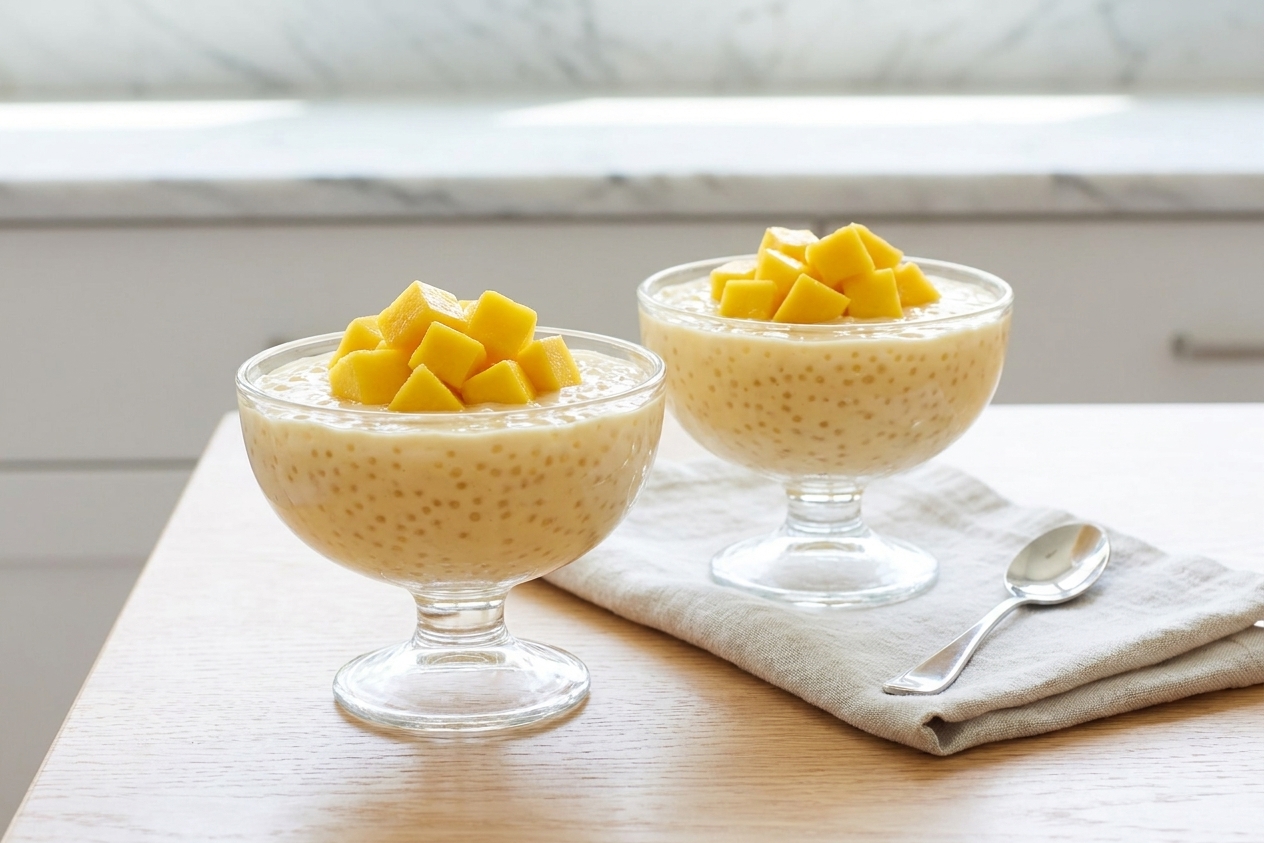
They are close cousins. Sago is traditionally made from sago palm starch, while tapioca comes from cassava. That said, in many markets “sago pearls” are actually tapioca-based, so labels can be a little loose. Either way, small tapioca pearls are the easiest swap and work great here. Just choose the small ones for the classic texture.
Why are my pearls sticking together?
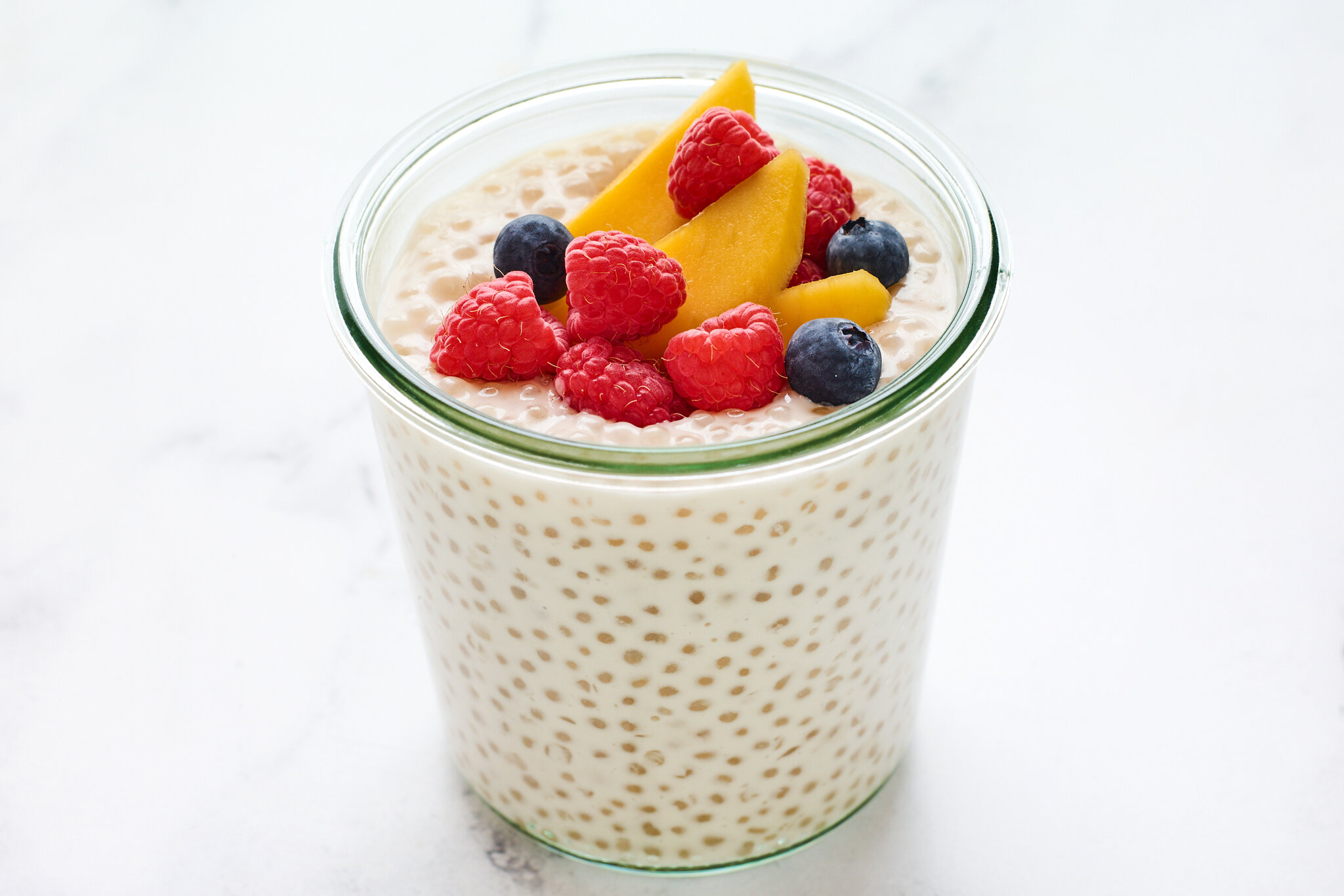
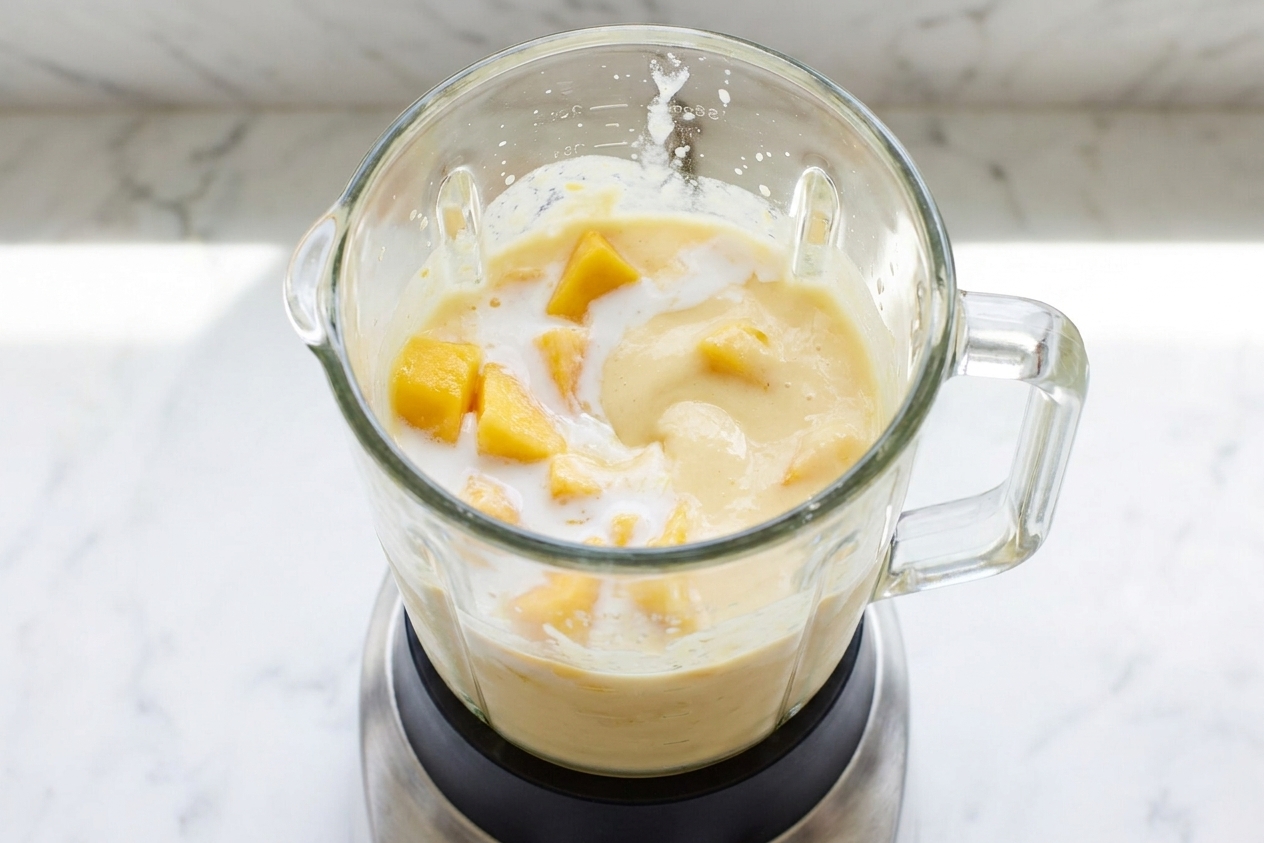
This usually happens when they are not rinsed enough, or they sit in a small amount of liquid while warm. Use plenty of water, keep the pot at a gentle simmer (not a furious boil), and stir often so they do not glue themselves to the bottom. Then rinse in cold water until the water runs mostly clear, mix the pearls into the mango base, and chill. If they clump, stir firmly and add a splash more coconut milk.
How do I know when sago is cooked?
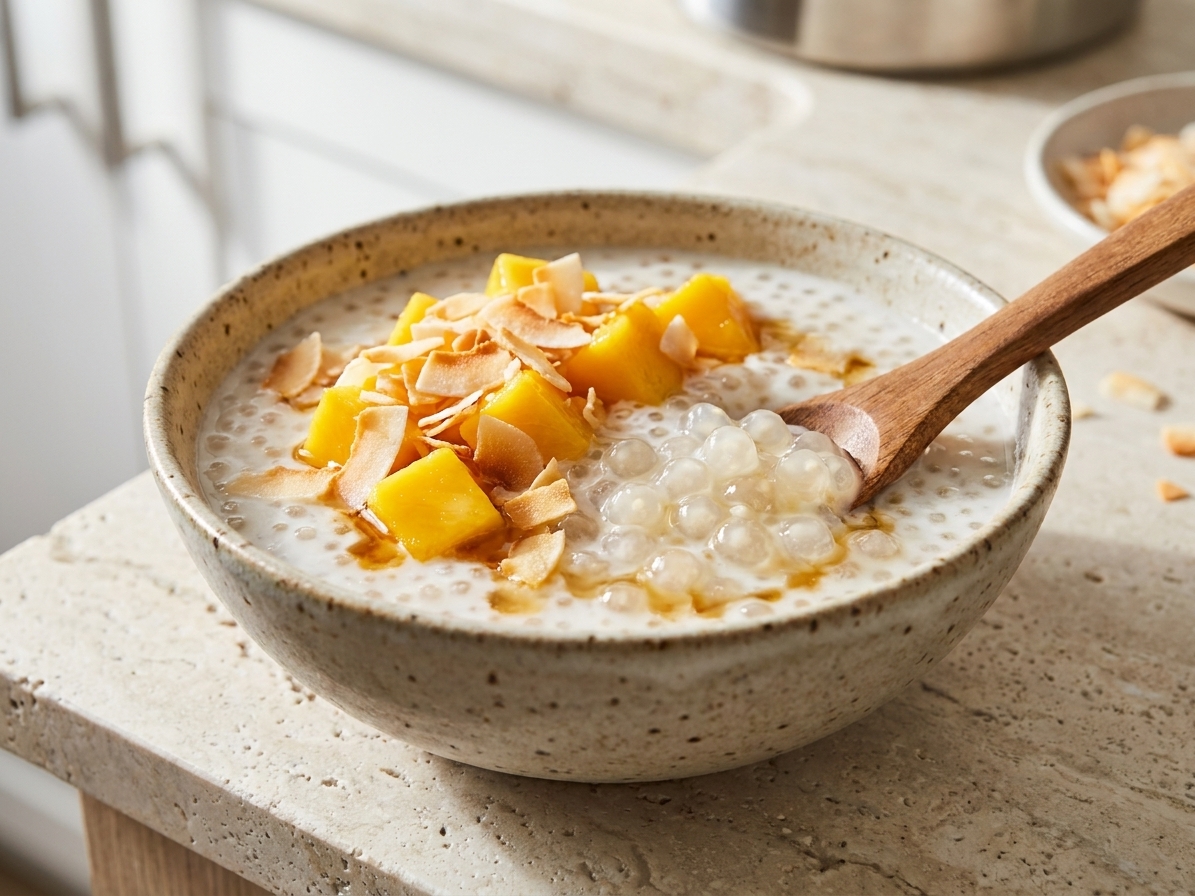
The pearls should be mostly translucent with maybe a tiny pin-dot in the center. If there is a bigger white core, simmer a few minutes more, then turn off the heat and let them sit covered to finish.
Can I make mango sago without condensed milk?
Yes. Swap in 2 to 3 tablespoons sugar, honey, or maple syrup to taste. Condensed milk adds a specific caramel-y dairy sweetness, but the dessert still works without it.
What mangoes are best?
Use ripe, non-fibrous mangoes if you can. Ataulfo (Honey) mangoes are a dream: sweet, smooth, and easy to blend. Any ripe mango works though, just blend longer if it is a bit fibrous and strain if you want it extra silky.
Do I have to use full-fat coconut milk?
For the creamiest, most spoonable texture, yes, full-fat coconut milk is the move. Light coconut milk works, but the base will be thinner and a little less rich. If you like it thicker, use full-fat and add a bit more mango. If you like it looser, splash in extra coconut milk when serving.