Will vinegar kill weeds permanently?
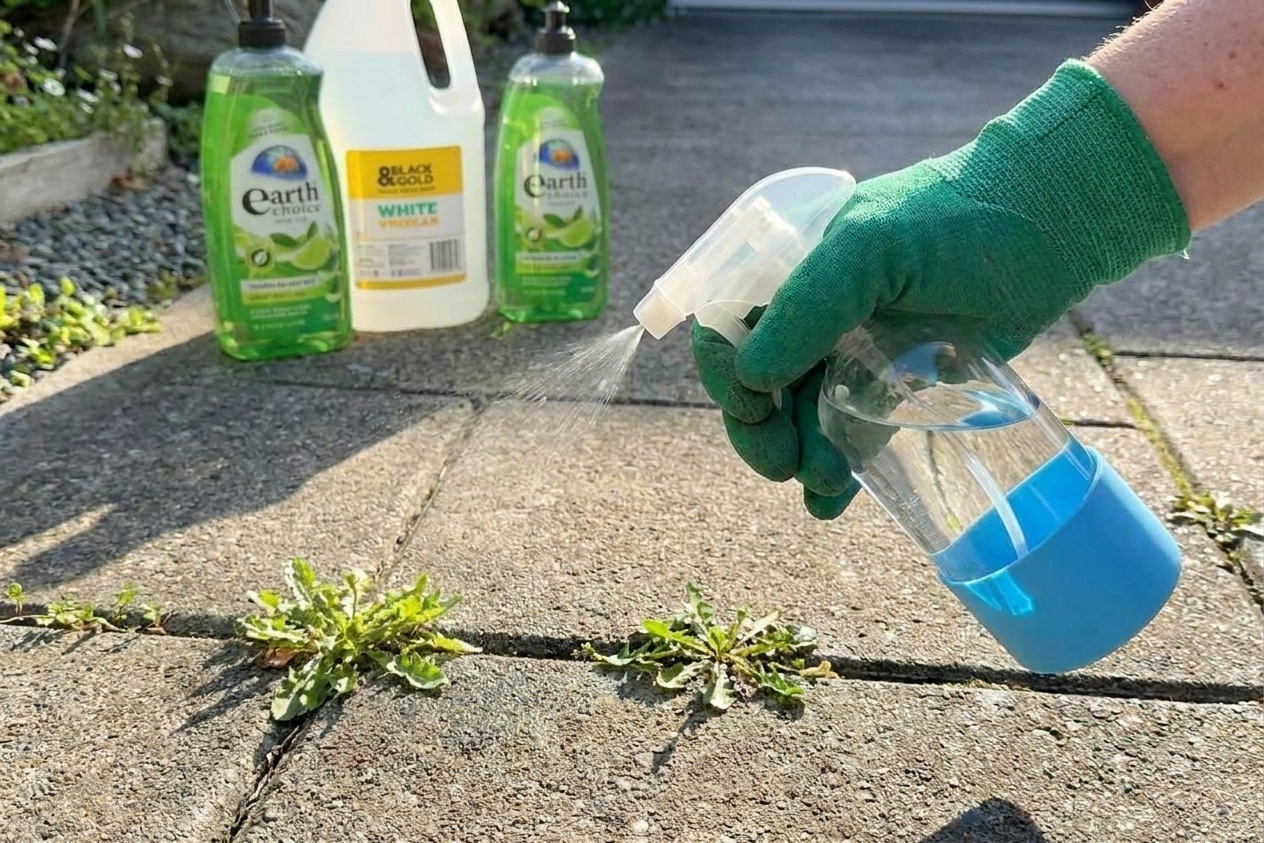
Vinegar-based sprays usually kill the top growth. Deep-rooted weeds may come back because the root survives. For repeat offenders, hit them again in 3 to 7 days, or pull after they weaken.
What this will not do
This is not a long-term pre-emergent. It will not stop new weed seeds from sprouting later, and it is not magic on big perennial weeds with serious roots. It is best for small, tender weeds and fresh growth in cracks and gravel.
Can I use this in my lawn?
I would not. This is non-selective, which means it can brown grass just as happily as it browns weeds. For lawns, stick to hand pulling, spot digging, or lawn-safe options.
Is more salt better?
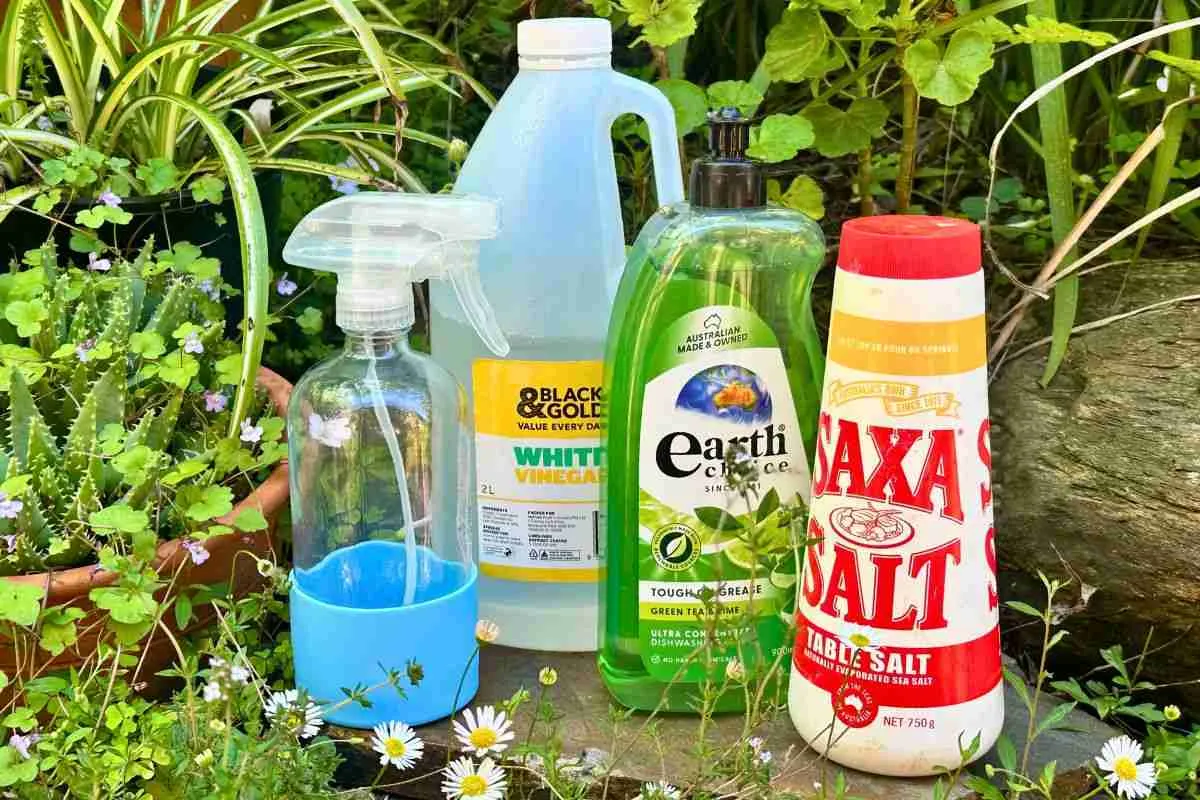
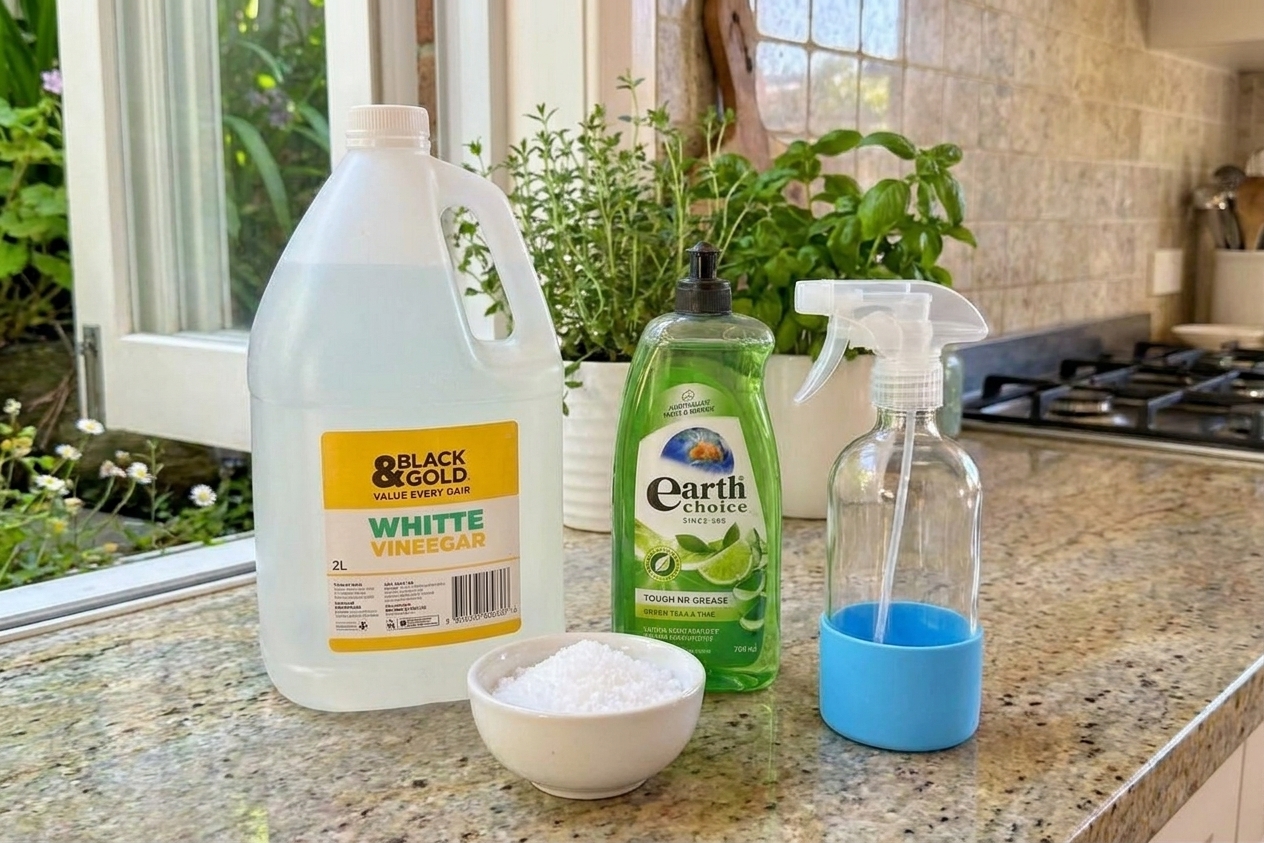
Not really. Salt can build up in soil and make it hard for anything to grow there later. Use the amount listed and keep it to areas where you want bare ground.
Do I need cleaning vinegar or regular white vinegar?
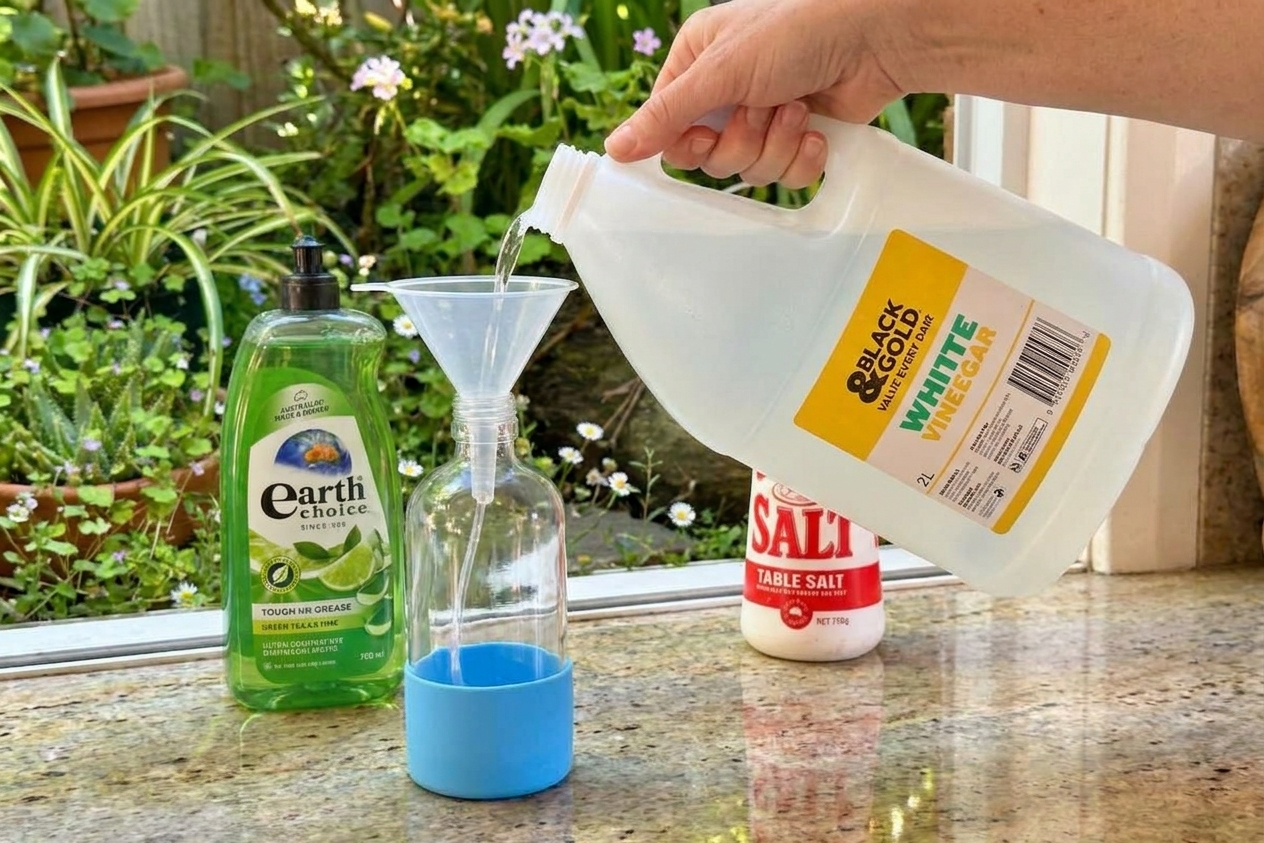
Regular 5% white vinegar works for young weeds. Stronger vinegar (like 20% “horticultural” vinegar) can be much harsher on skin and eyes and can damage nearby plants more easily. If you use it, wear serious protection and use a dedicated outdoor chemical sprayer (not a kitchen spray bottle). Avoid inhaling the mist, and keep kids and pets well away.
Why add dish soap?
It acts as a surfactant, which helps the spray spread and cling to the leaf surface. That means more contact, better results, and fewer re-sprays.
Is it safe around pets and kids?
Keep everyone away while spraying and until the area is fully dry. Avoid treating spots pets commonly lick, roll in, or graze near. If a pet walks through wet spray, rinse paws with plain water. Vinegar is food grade, but this mixture is not something you want ingested, and salt exposure can be an issue depending on the amount and the size of the pet.
When is the best time to spray?
A warm, sunny, low-wind day is ideal. Spray when you have at least a few hours of dry weather so rain does not rinse it off.
Can vinegar damage surfaces?
Yes, sometimes. Vinegar can etch or dull certain natural stone (and some sealants), and it can speed up corrosion on some metals. Avoid overspray on surfaces you care about, and test a small, out of the way spot first if you are unsure.