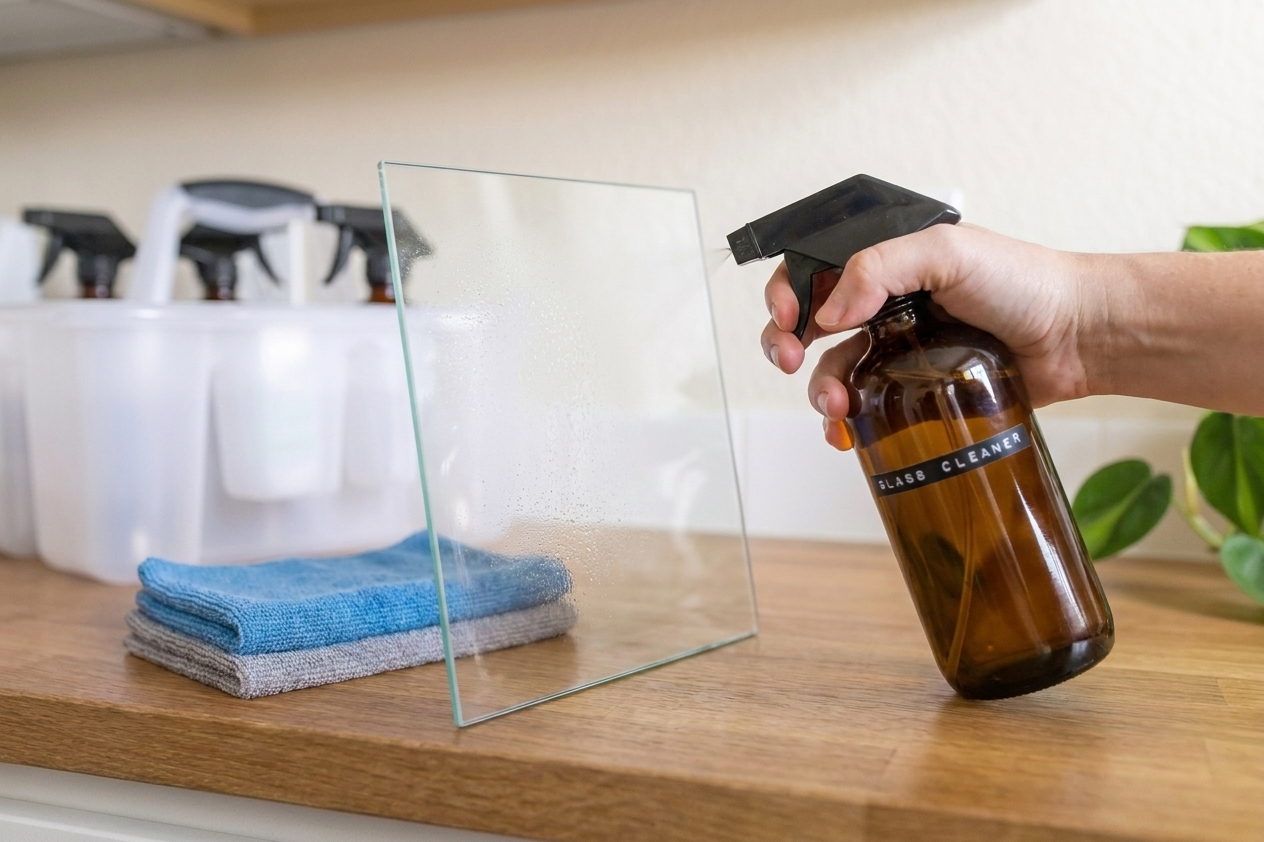
Why are my windows streaky even after cleaning?
Usually one of these: (1) you are using too much product, (2) the glass is hot from sun, (3) you are wiping with a linty towel, or (4) the window is actually still greasy. Use a microfiber cloth (skip fabric softener), clean in the shade, and do a final dry buff with a second cloth.
Can I use this on tinted windows?
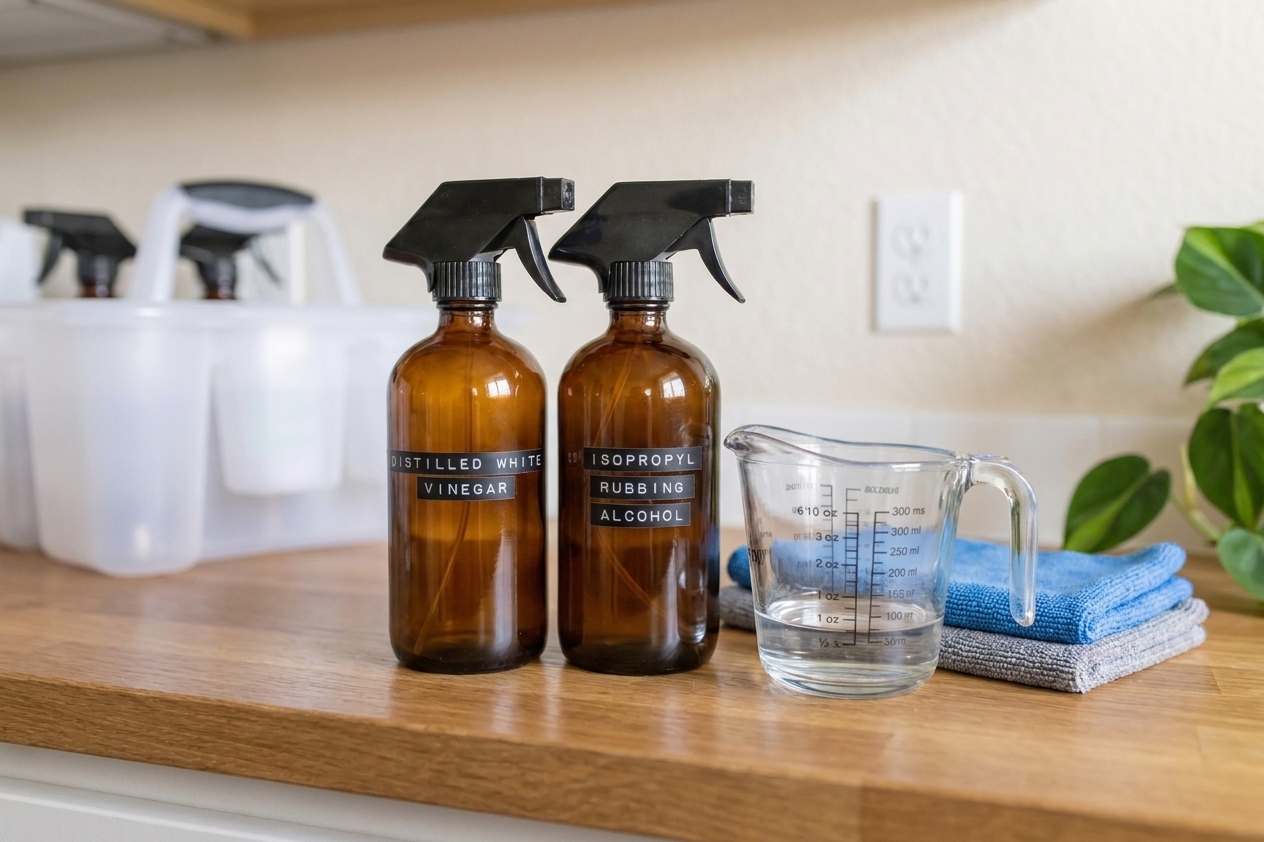
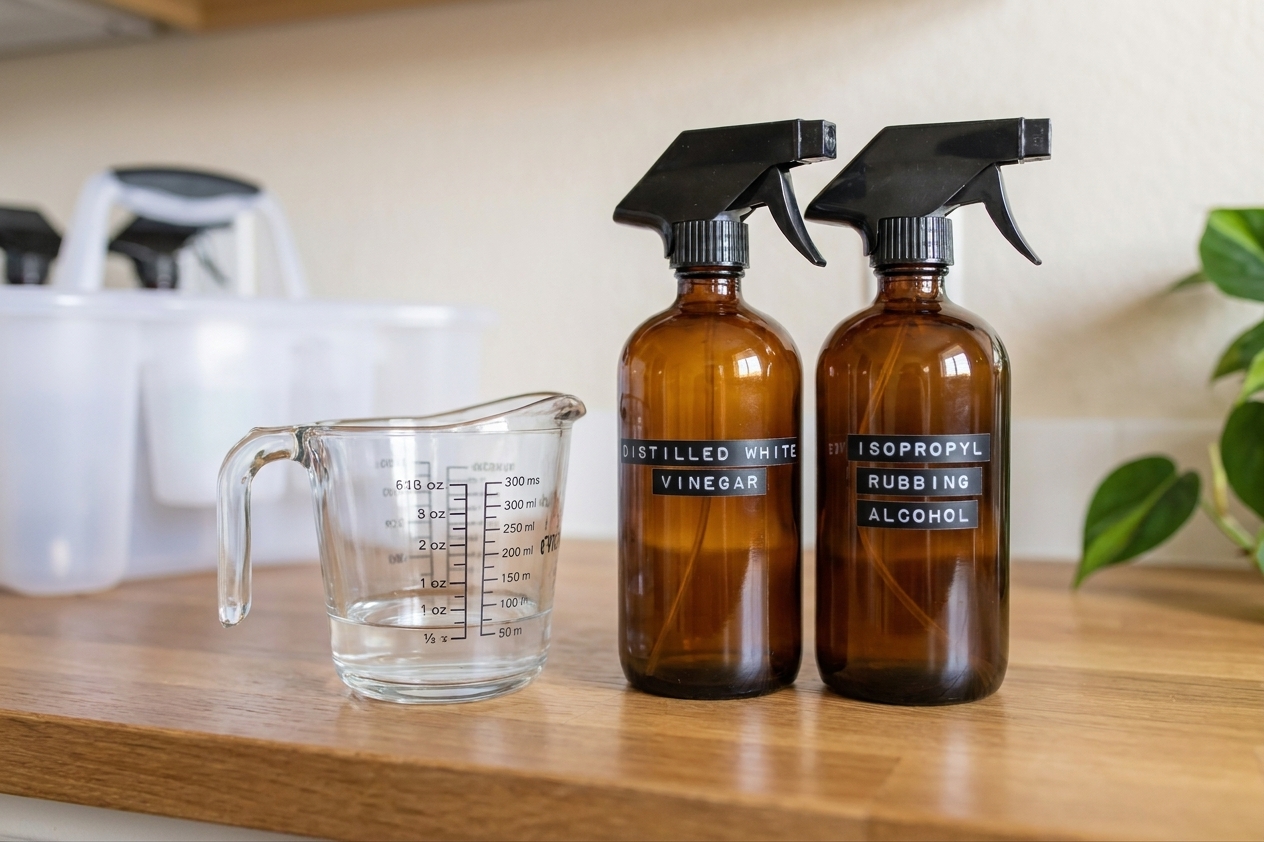
For aftermarket window tint, the safest play is: avoid ammonia, use a gentle cleaner, and check your tint manufacturer guidance if you have it. If you are unsure, use the alcohol version as written, spray onto the cloth instead of the glass, and test an inconspicuous corner first.
Is vinegar safe for all glass?
It is generally safe for glass, but avoid using vinegar on natural stone around windows (marble, granite, travertine) and be careful around old or delicate finishes. Acids and stone are not friends.
Can I add essential oils?
You can add 2 to 4 drops for scent, but oils can leave a film if you overdo it. If you want truly streak-free, keep it simple.
What should I never mix into homemade window cleaner?
Never mix bleach with vinegar or ammonia. Also do not mix vinegar with hydrogen peroxide, and never mix chemicals “just to see.” If you are switching from a store-bought cleaner, rinse the bottle first so you are not accidentally creating a chemistry experiment.
Can I use this on plastic or acrylic?
Use caution. Alcohol can haze some plastics and acrylics. If you are cleaning a clear plastic guard, a framed poster cover, or anything you would describe as “acrylic,” spot test first and use the gentlest option.