Common Questions
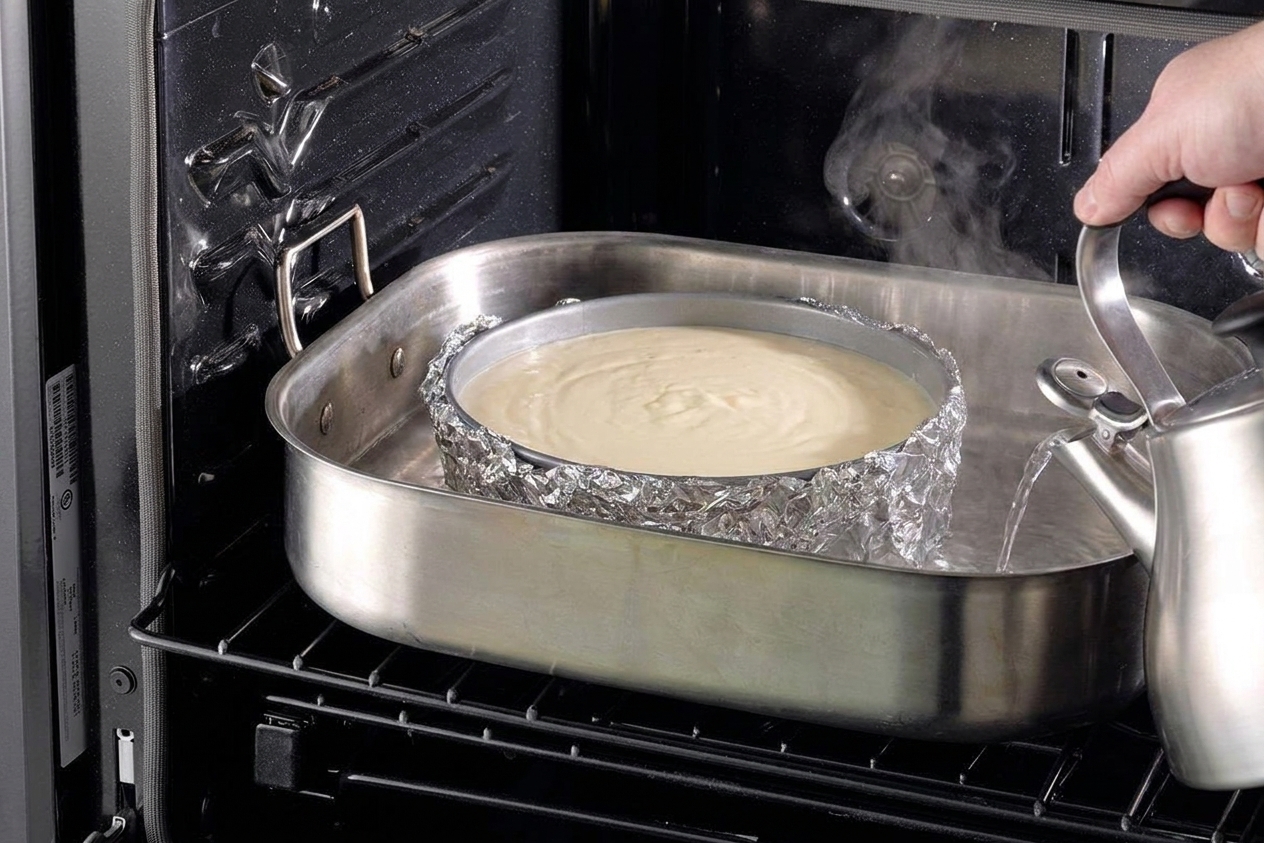
Do I really need a water bath?
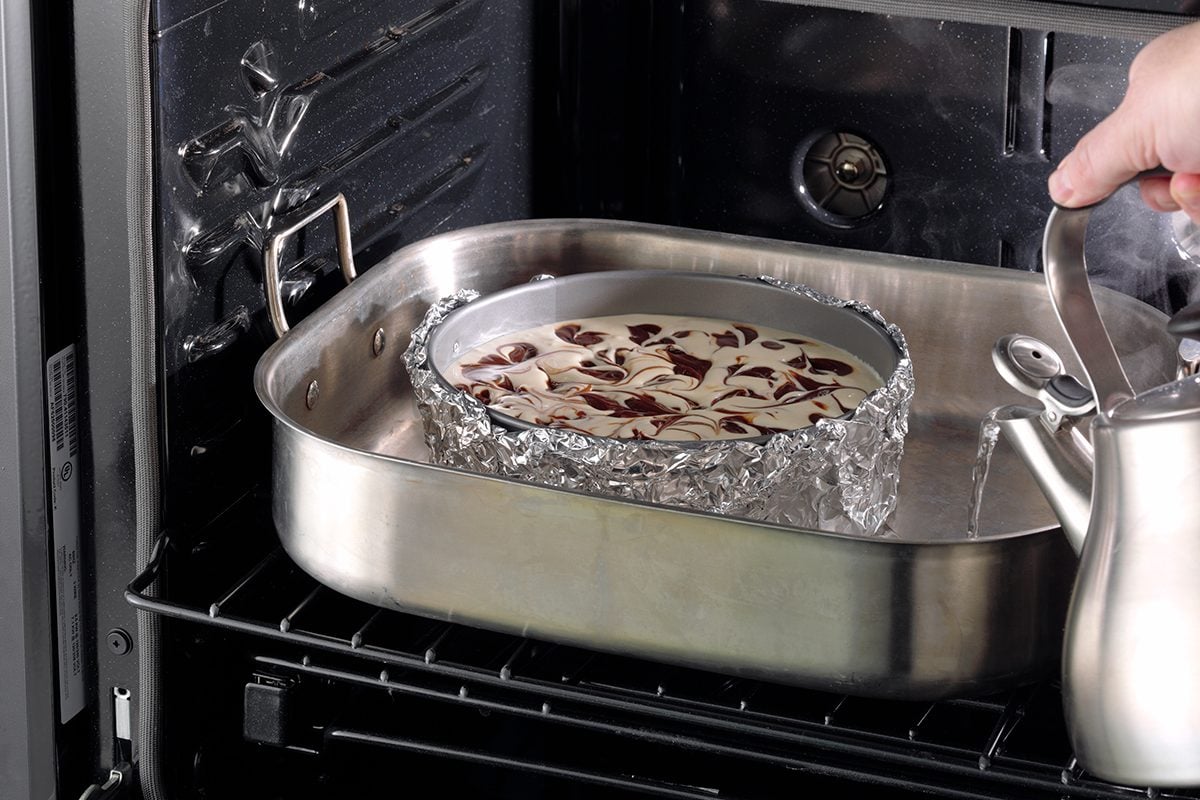
You do not have to, but it helps a lot. The steam keeps the oven environment moist and gentle, which reduces cracks and gives you a creamier, more even bake.
If you hate wrestling with foil, you can set the springform pan inside a slightly larger cake pan, then place that inside the roasting pan. It adds a layer between your cheesecake and the water, which helps prevent leaks.
How do I know when cheesecake is done?
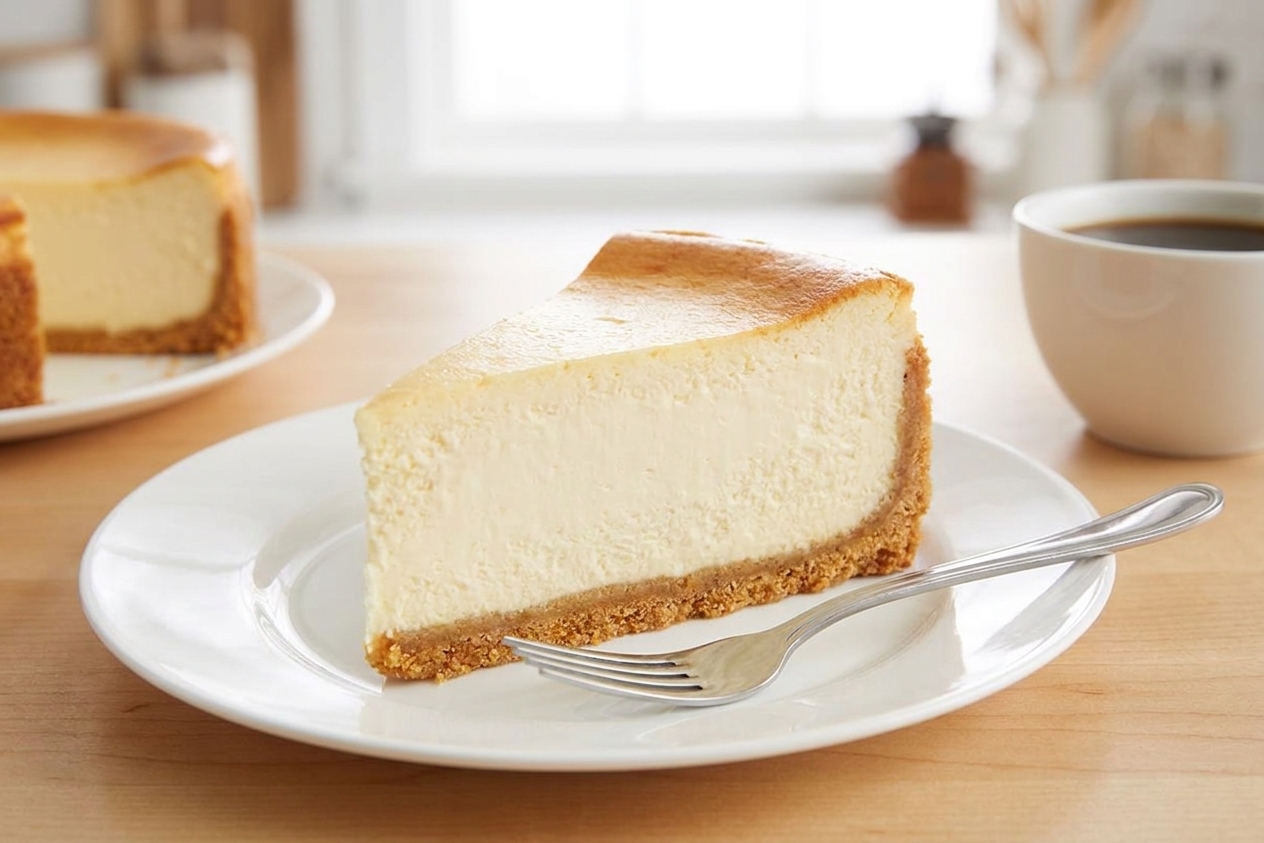
The edges should look set and slightly puffed, and only the center should wobble. Aim for a 2 to 3 inch soft jiggle in the middle like Jell-O, not a ripple across the whole surface.
If you use a thermometer, the center is typically done around 145 to 155°F. Closer to 145°F gives you a creamier set, closer to 155°F is a little firmer. It will continue to set as it cools.
Why did my cheesecake crack?
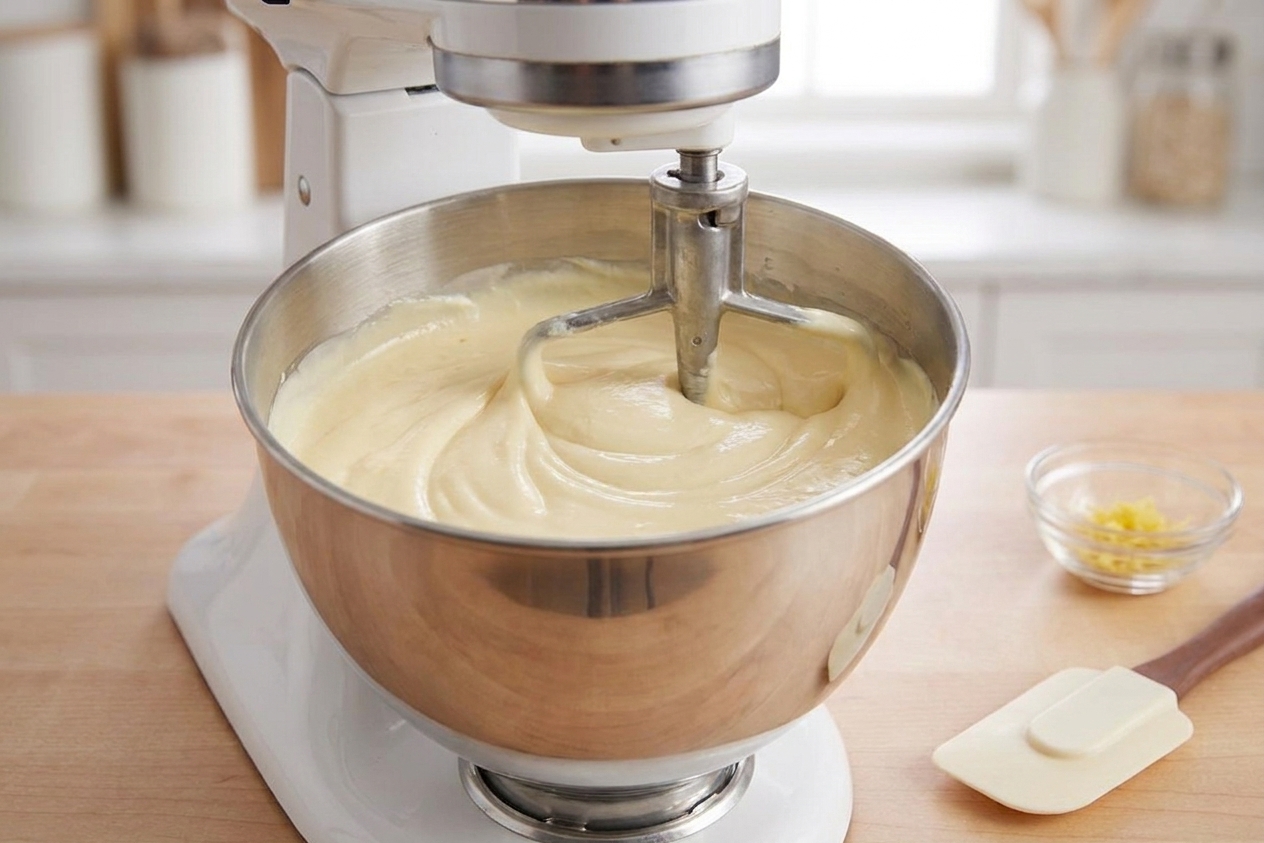
Common culprits are overmixing (too much air), baking too hot, skipping the water bath, or cooling too fast. Also, opening the oven a bunch does not help.
One more sneaky cause: the cheesecake can cling to the sides of the pan and crack as it contracts. Running a thin knife around the edge after baking (while it is still warm) helps.
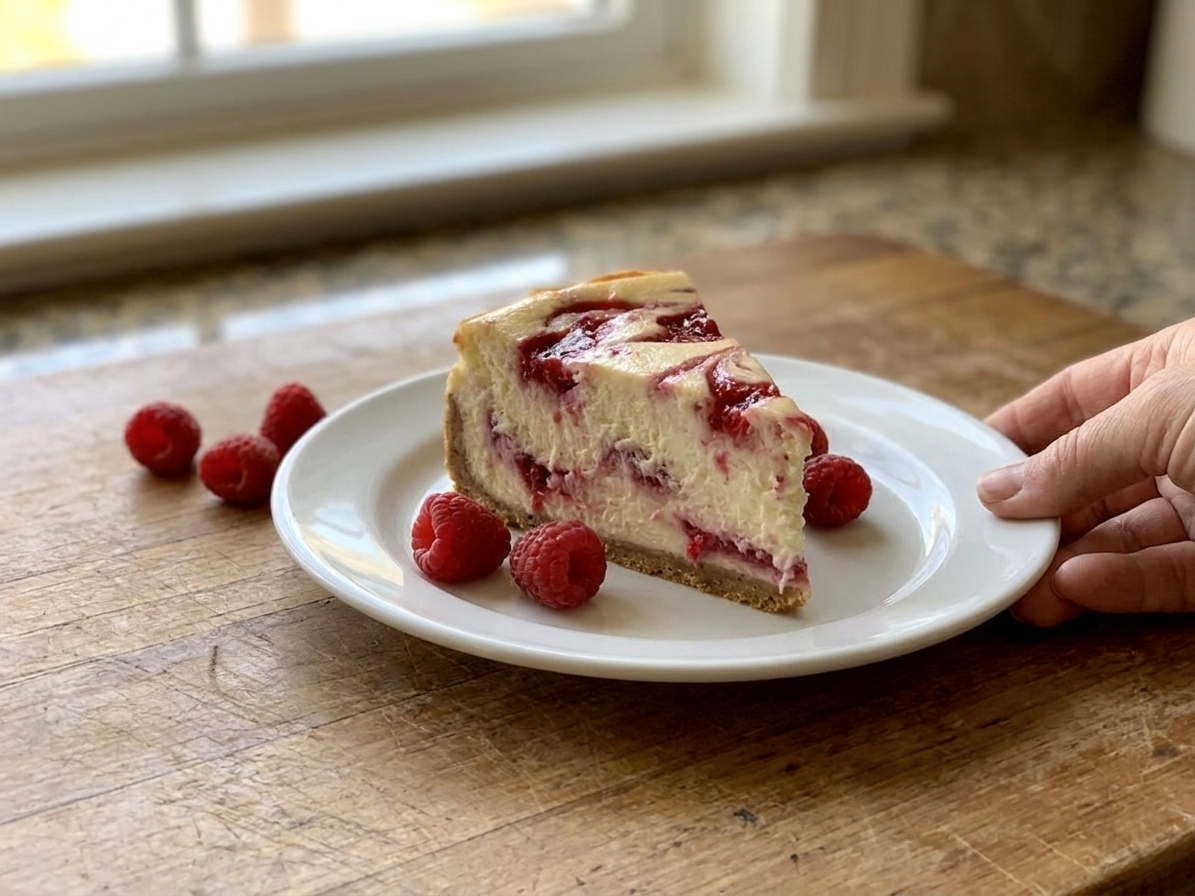
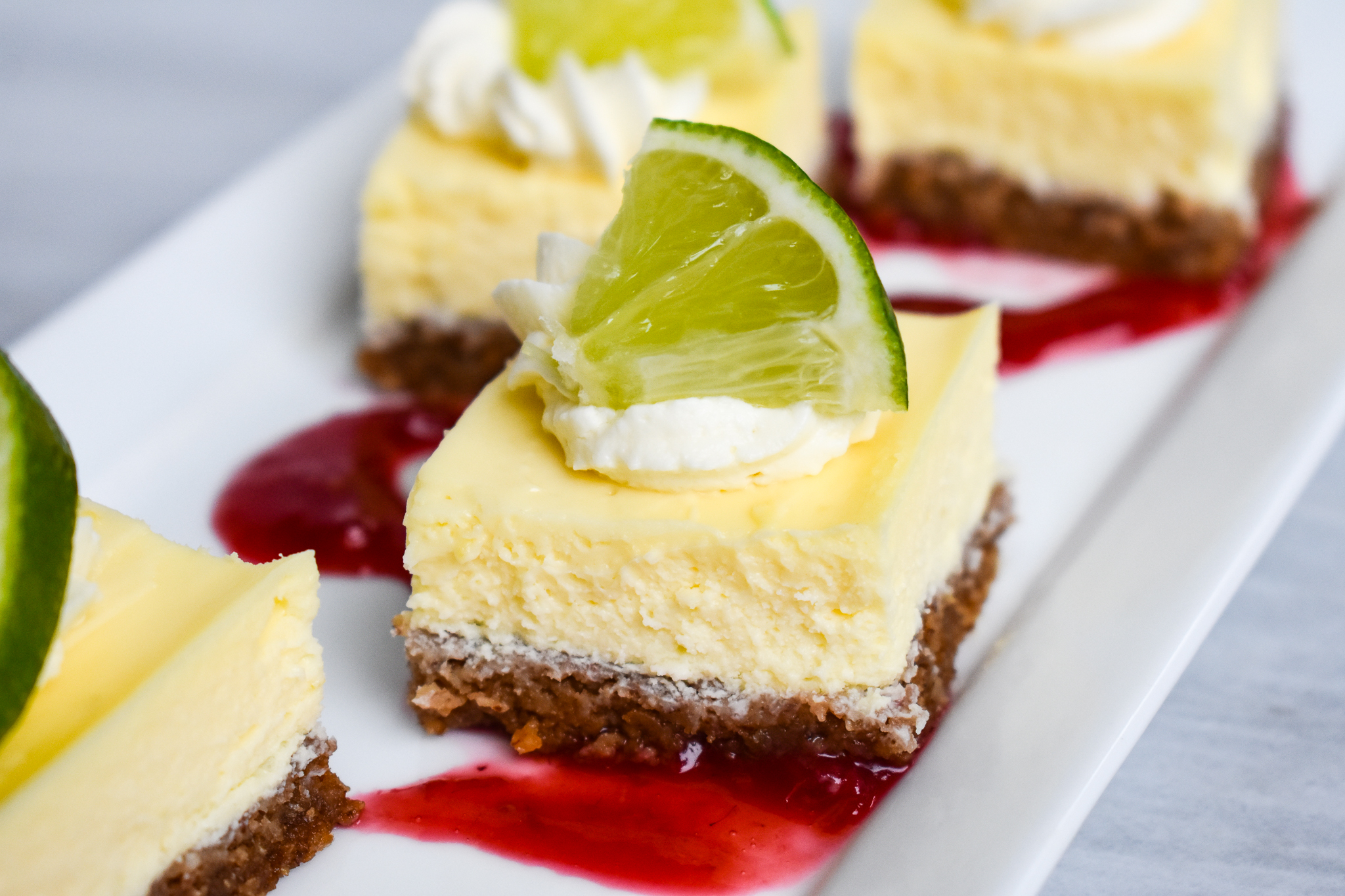
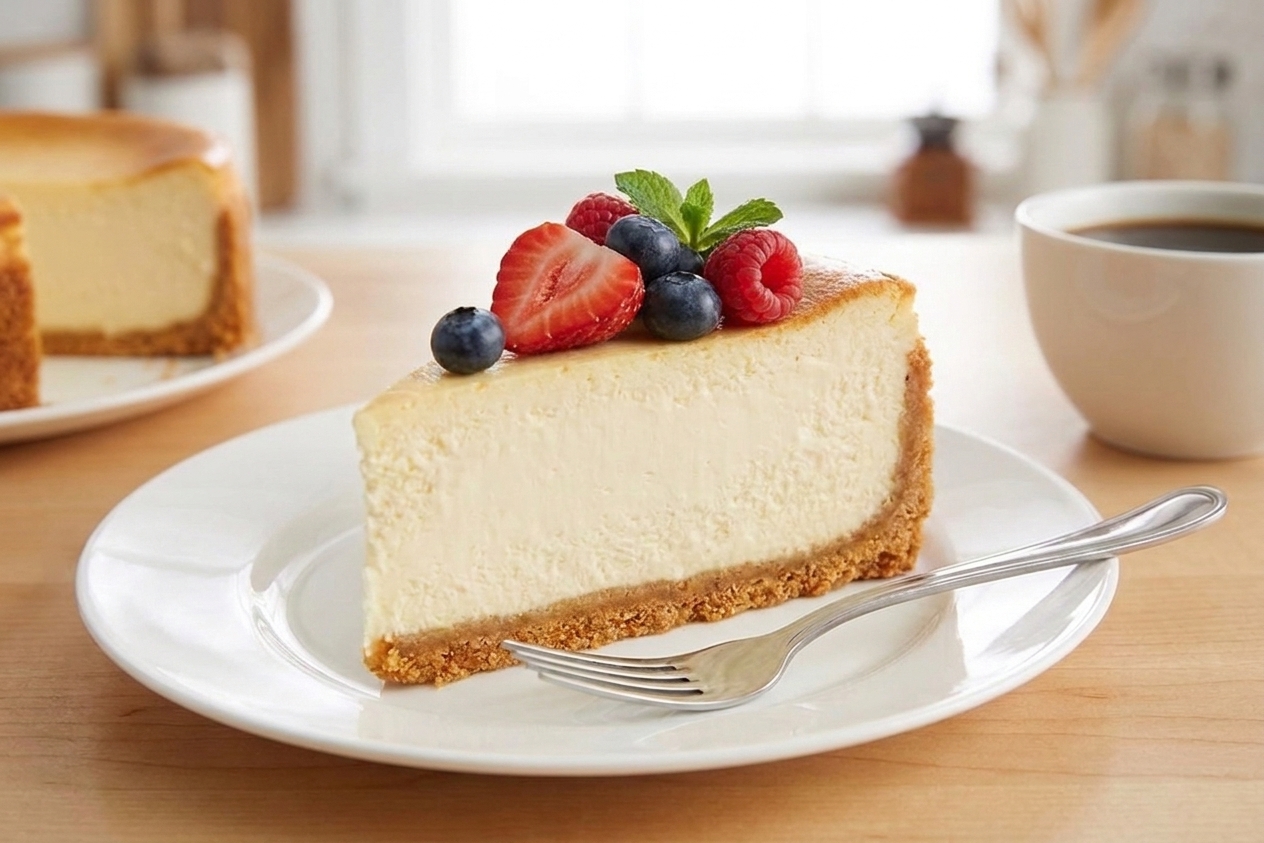
If it cracks anyway, top it with berries, sour cream topping, or lemon curd and call it intentional.
Can I make this without a springform pan?
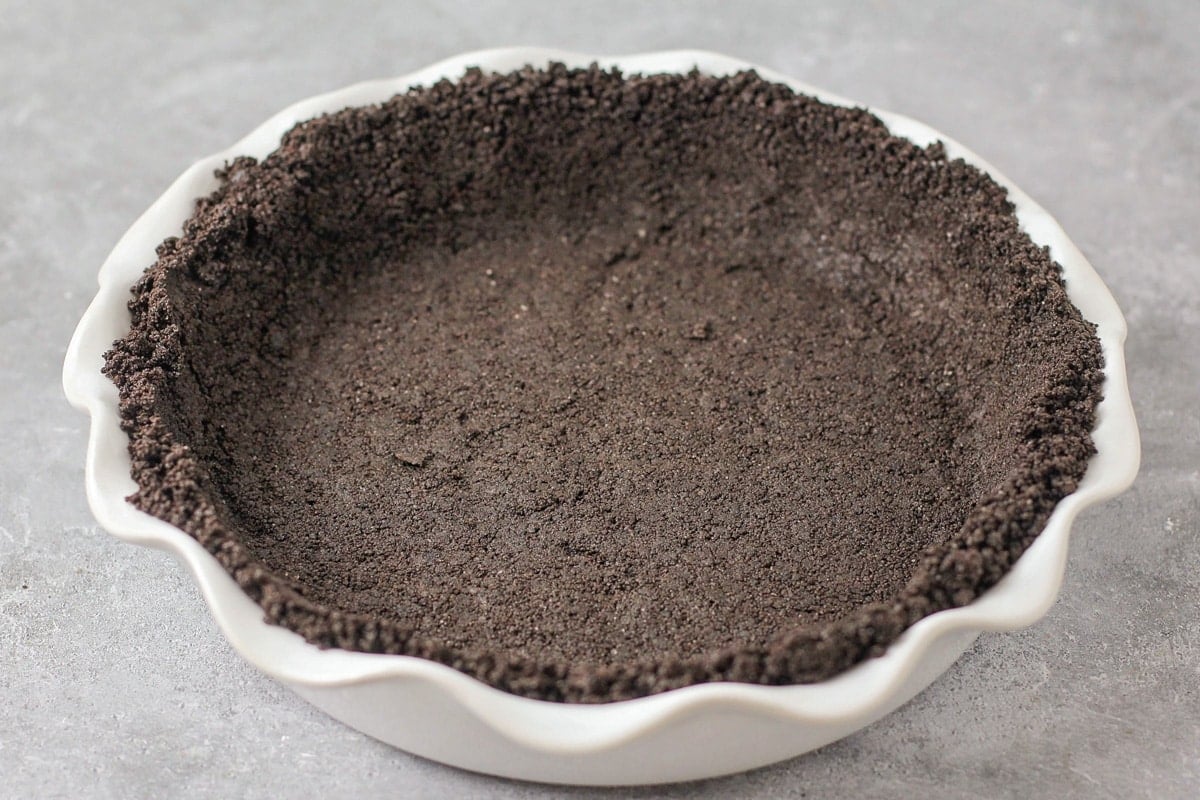
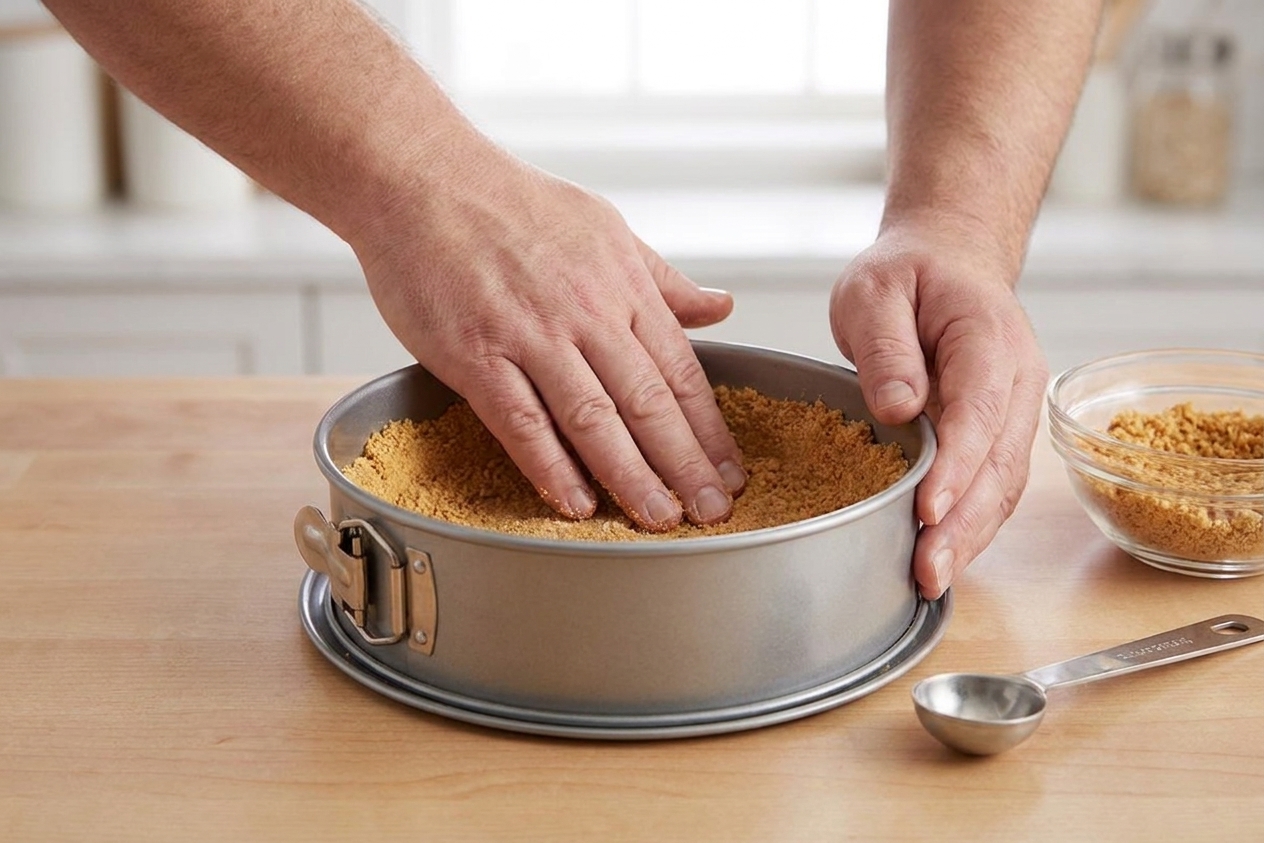
A springform pan makes unmolding easy. If you do not have one, you can bake in a deep cake pan and serve it from the pan, but slicing is trickier and you will want parchment on the bottom and sides.
Can I use low-fat cream cheese or Greek yogurt?
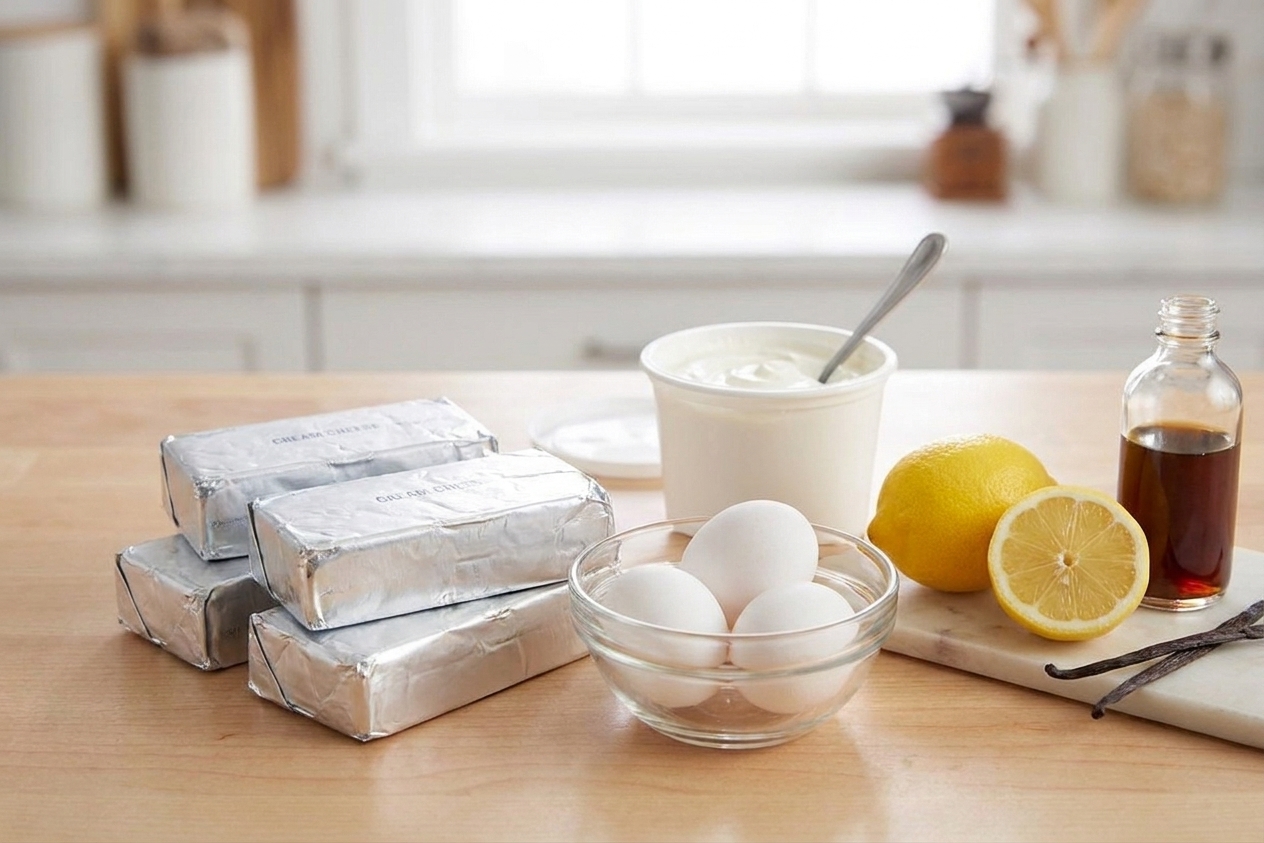
For a true New York-style texture, stick with full-fat cream cheese and sour cream. Low-fat swaps tend to bake up looser and can taste a little sharp.
When should I add toppings?
Add toppings after the cheesecake is fully chilled and set. If you are using anything wet like berries or sauce, spoon it on right before serving so the top stays neat.