Can I make pizza dough without yeast and without baking powder?
You can, but it will be more like a flatbread cracker situation. Baking powder is what gives this dough some lift and tenderness.
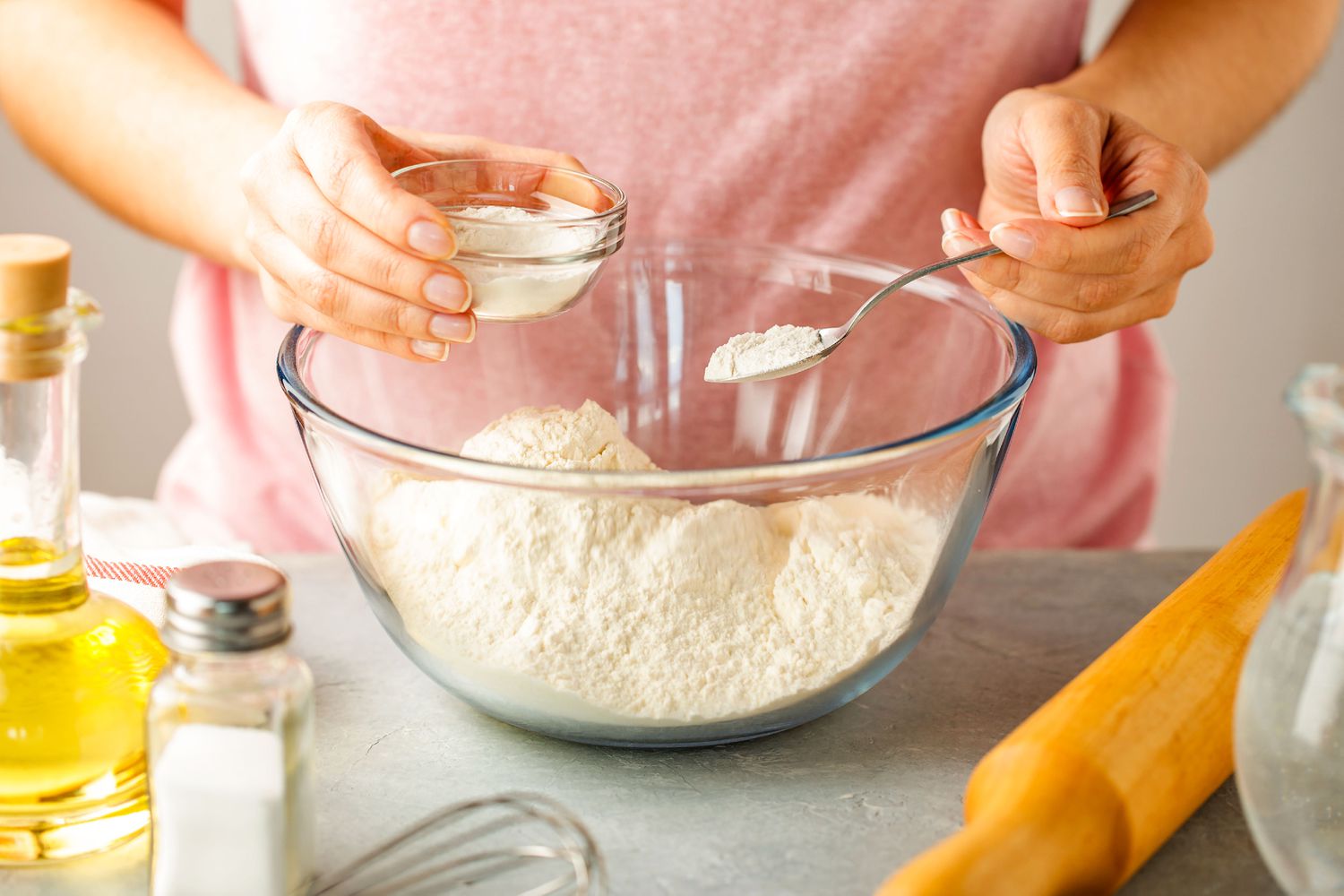
If you are out, the most reliable move is to use self-rising flour (see below). In a true emergency, you can try 1/2 teaspoon baking soda plus 1 tablespoon lemon juice or vinegar mixed into the water, but it is not an equal swap for baking powder here. Expect a flatter crust and a slightly different flavor.
Why is my no-yeast dough tough?
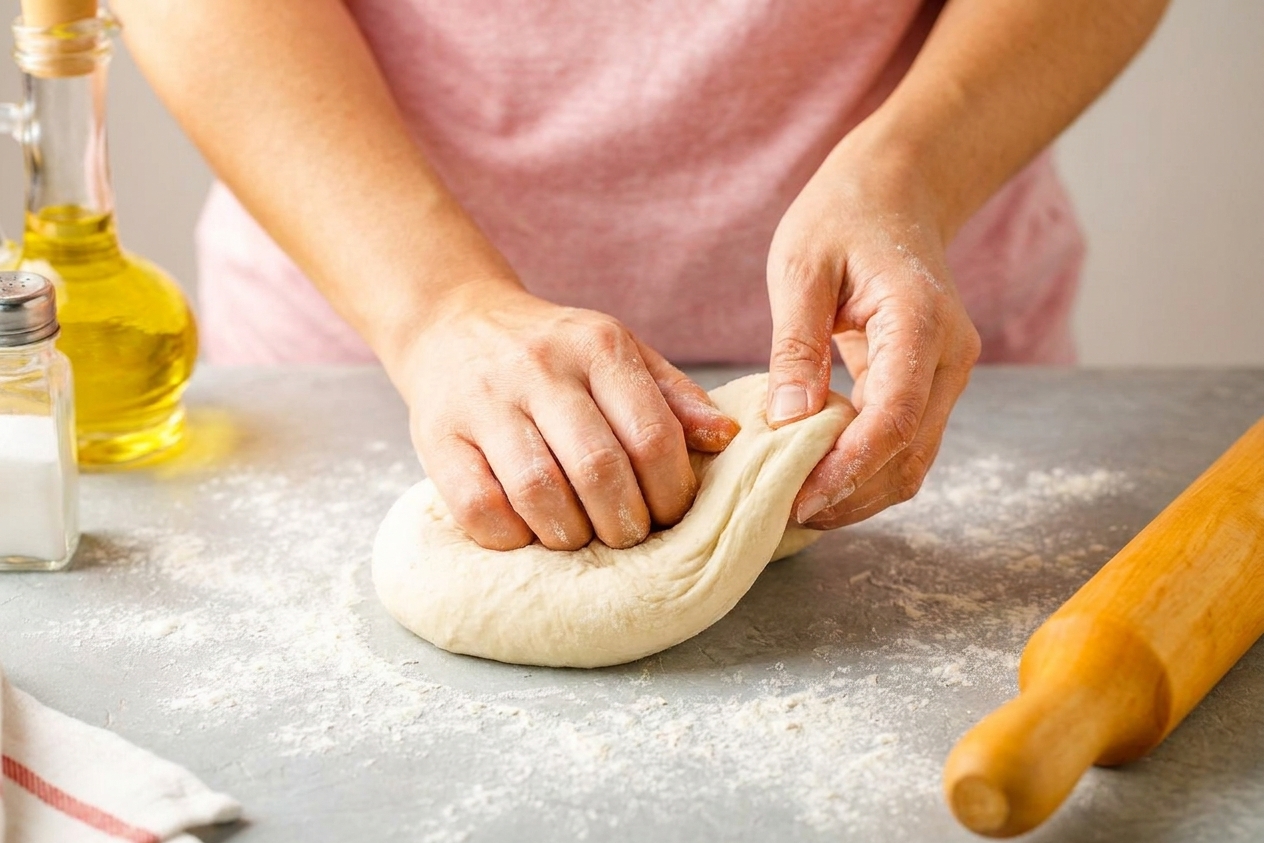
Usually one of two things: too much flour or too much kneading. Start with a little less flour than you think you need and add only enough so the dough is easy to handle without sticking. Knead just until smooth, then let it rest so it relaxes.
Can I use self-rising flour?
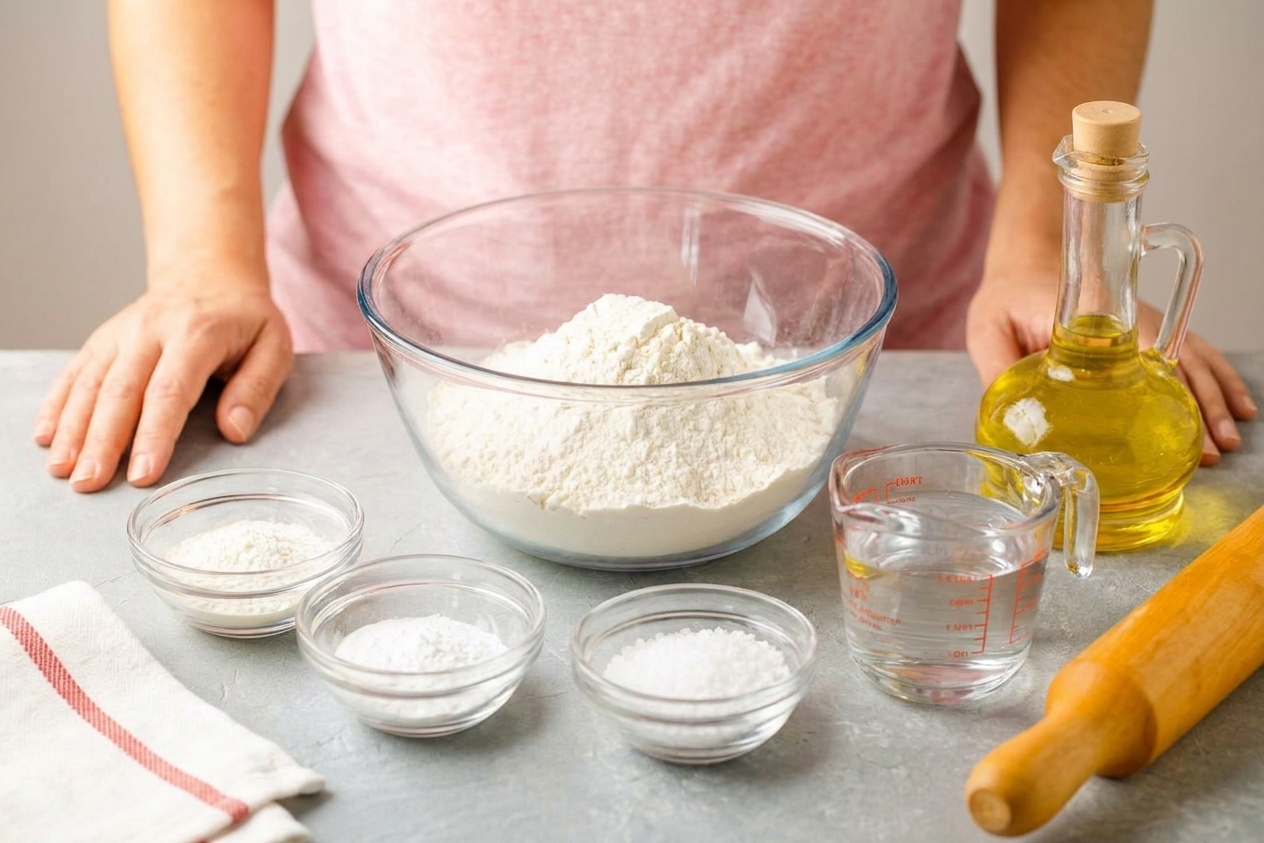
Yes. Self-rising flour already has leavening and salt. For this recipe, use 2 cups self-rising flour and skip the baking powder and salt. Add water and oil as written, adjusting water as needed.
Can I make this gluten-free?
You can try a 1:1 gluten-free baking blend, but the dough will be more delicate. Chill it for 15 minutes, press it out between parchment, and bake on parchment for easier handling.
What temperature should I bake it at?
Hotter is better for crisp. Aim for 475°F. If your oven tops out at 450°F, bake a few minutes longer and consider preheating the pan or stone.
How thick should I roll it?
For a crispier thin crust, aim for about 1/8 inch. For a slightly thicker, softer base, go closer to 1/4 inch. Thicker dough may need an extra 1 to 3 minutes of bake time, so use the color cues too.