Common Questions
What temperature should I cook chuck roast in the oven?
For a braise, 300°F is my sweet spot. It’s gentle enough to tenderize the meat without drying it out, and it gives you a pretty predictable timeline.
How long does chuck roast take in the oven?
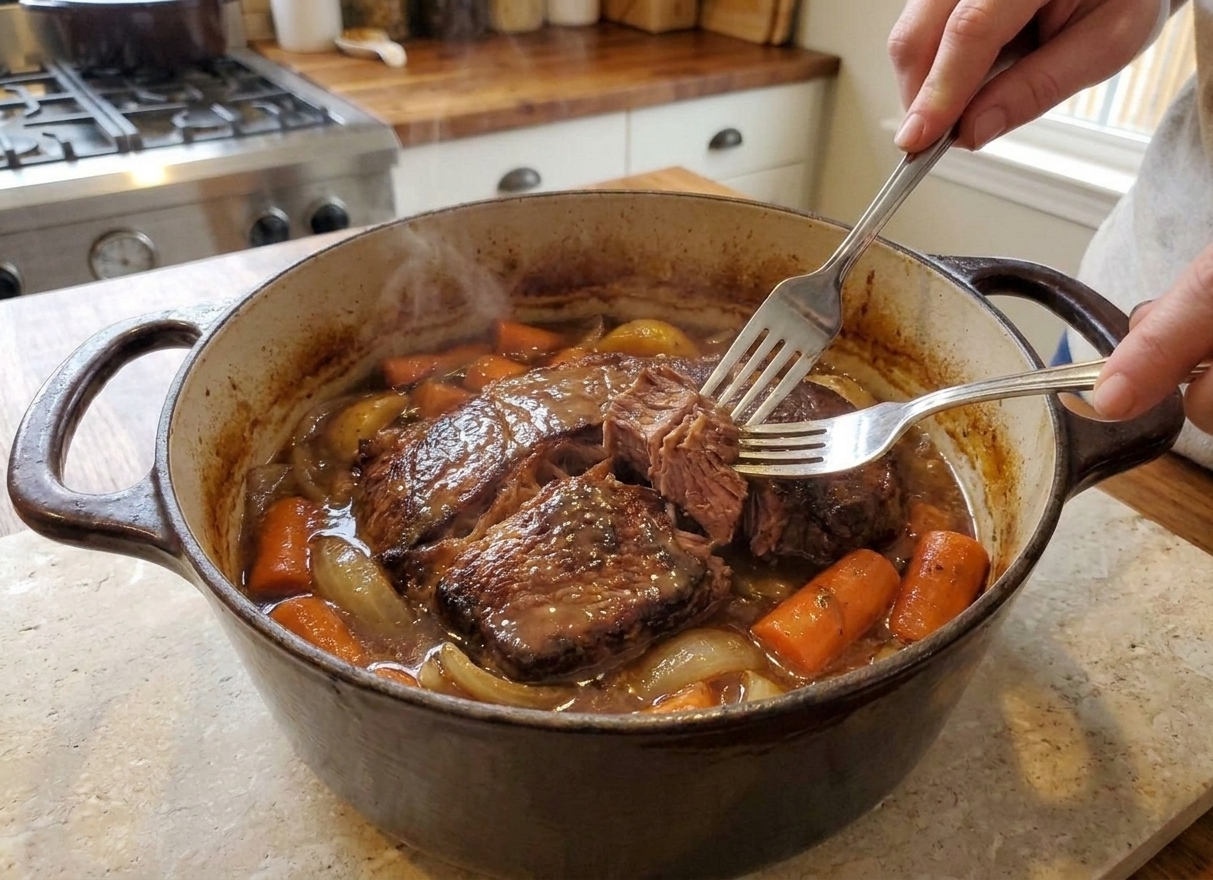
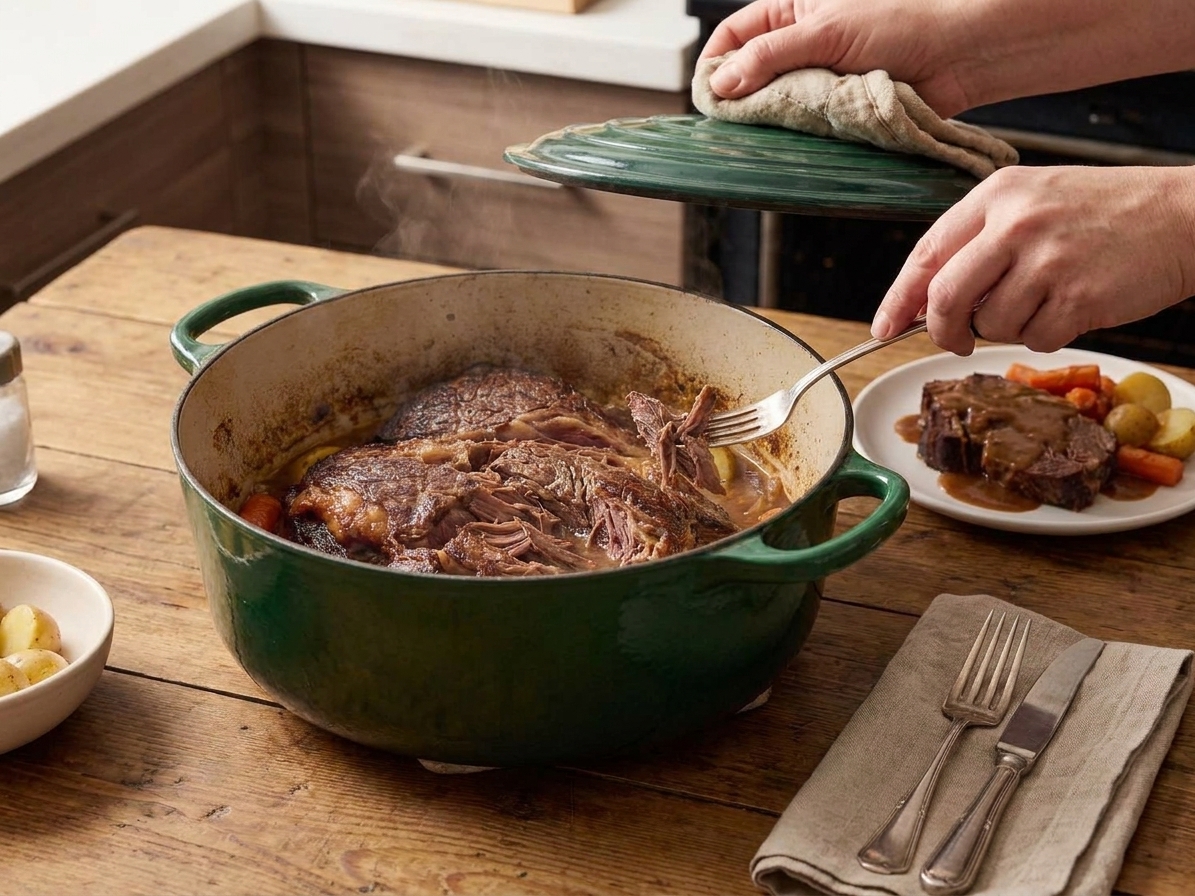
Plan on about 3 to 3 1/2 hours for a 3 to 4 pound roast at 300°F, plus time to sear. That said, ovens vary and roasts vary, so tenderness is the real indicator. You’re done when it pulls apart easily with a fork.
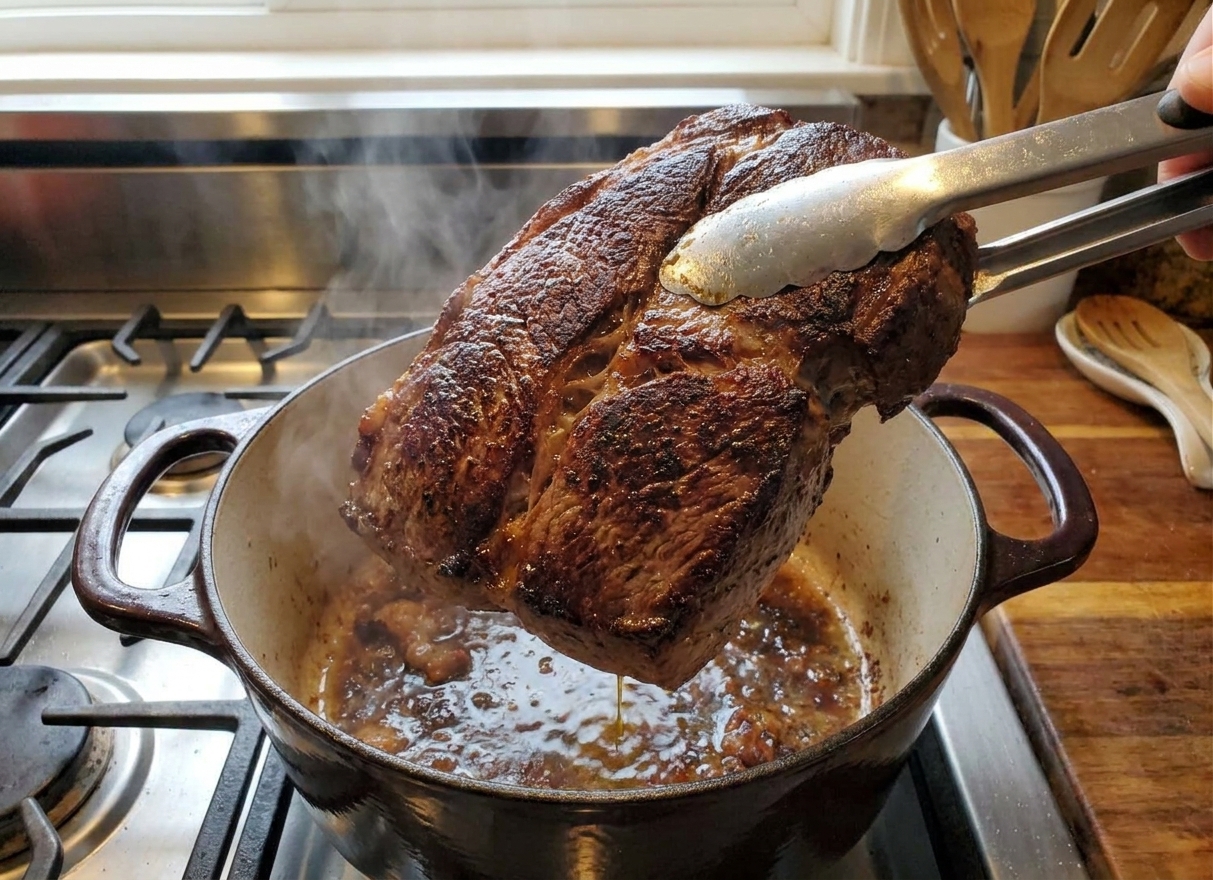
Do I have to sear the roast first?
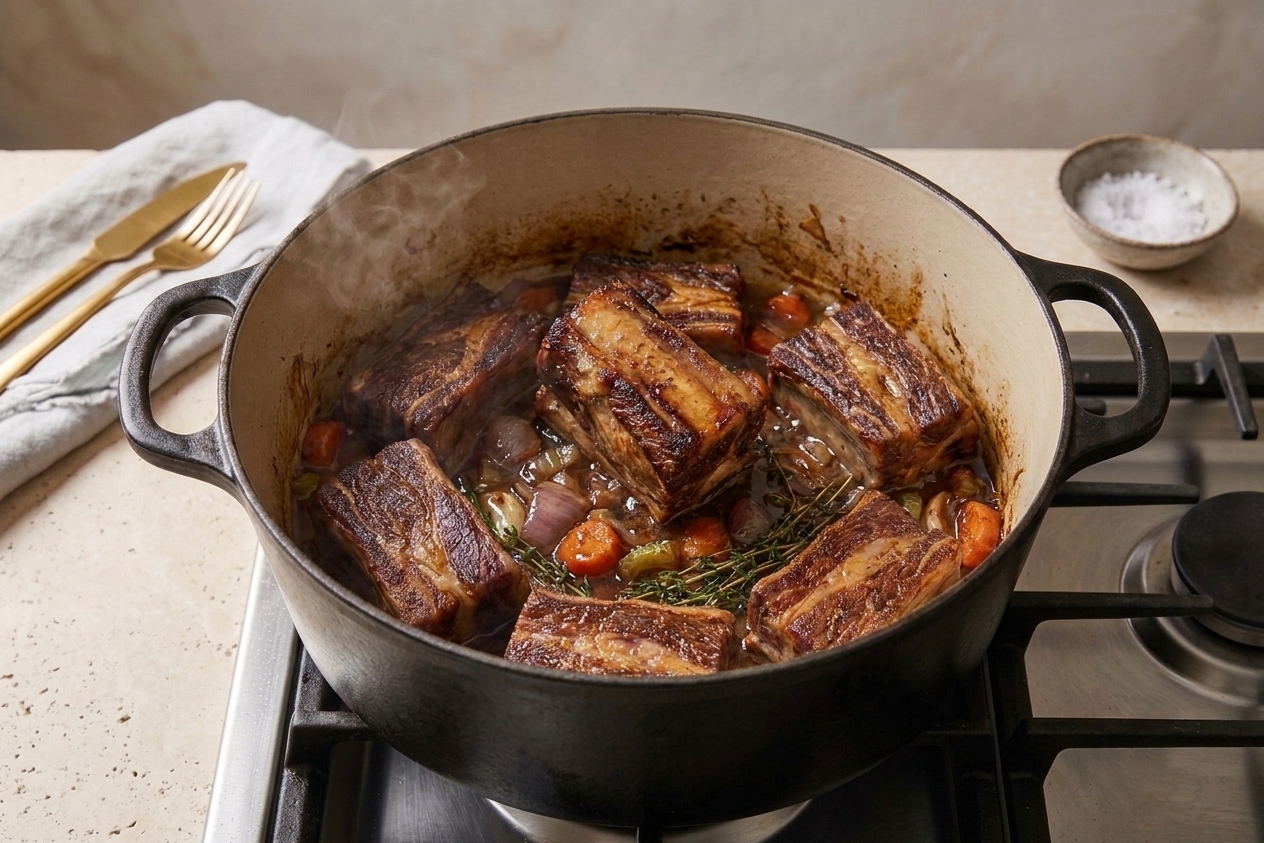
You don’t have to, but you’ll miss out on flavor. Searing builds deep browning, and those browned bits melt into the braising liquid and make the gravy taste like it cooked all day (because it did, but you know what I mean).
Why is my chuck roast tough even after cooking?
Two usual suspects: it needs more time or your oven temp is too high. Chuck gets tender when collagen fully breaks down. If it’s tough, cover it back up and keep cooking in 20 to 30 minute chunks until it gives in.
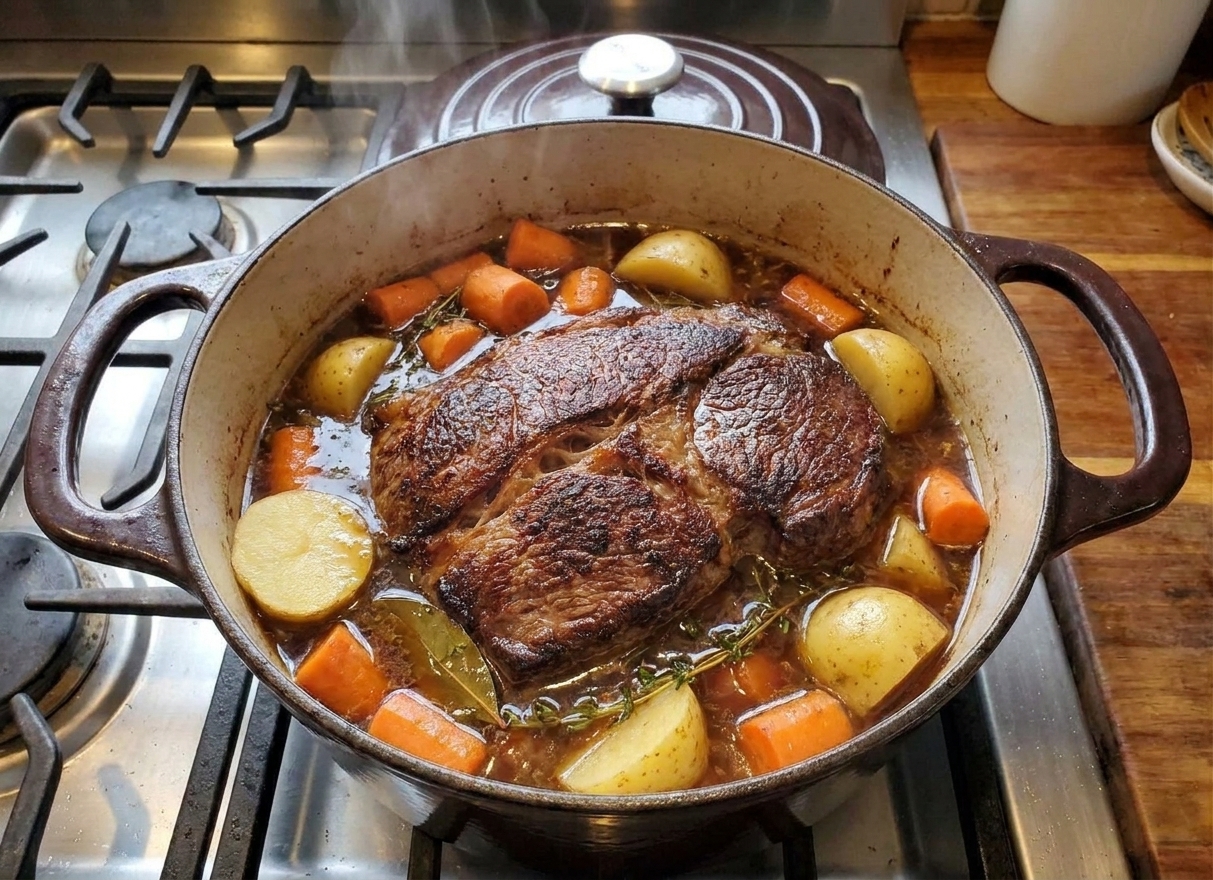
Can I add vegetables without making them mushy?
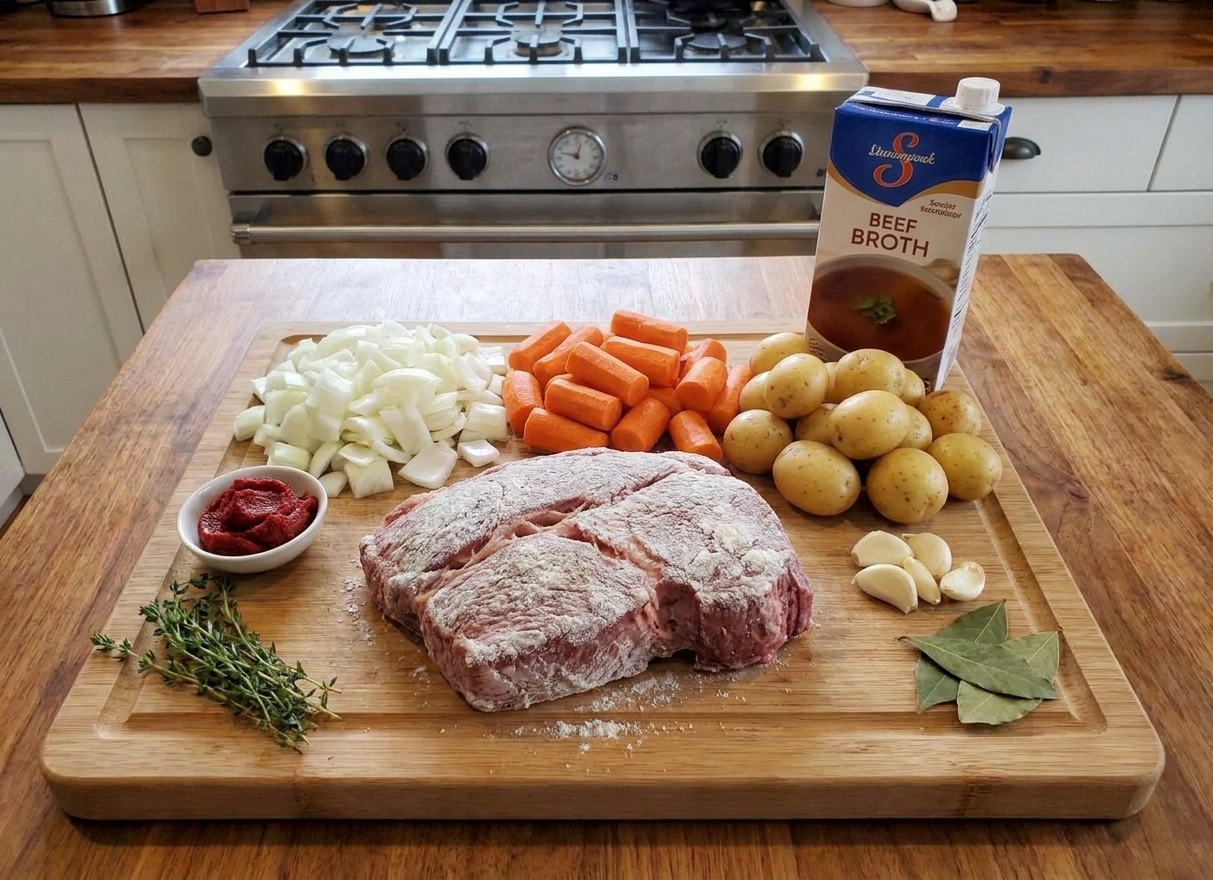
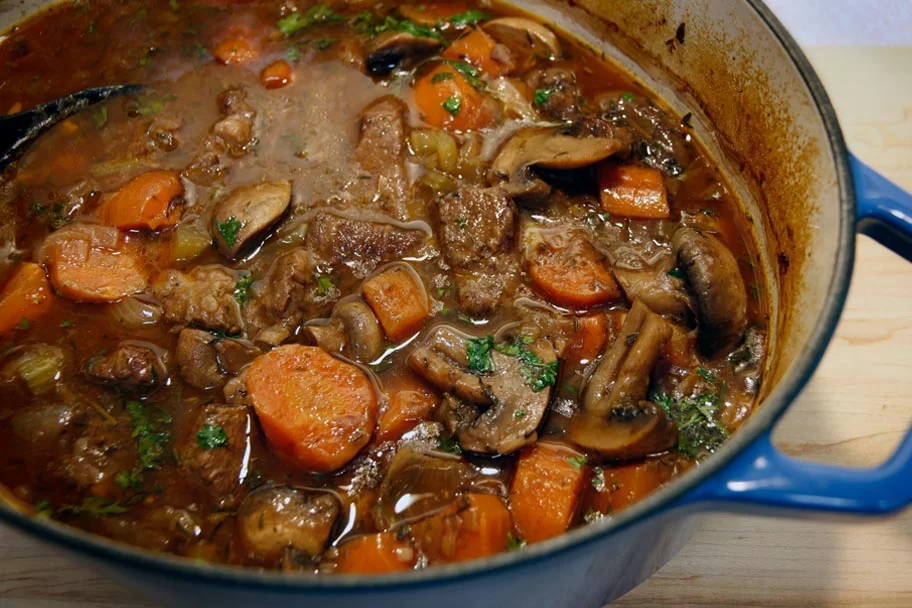
Yep. Add potatoes and carrots for the last 75 to 90 minutes so they stay intact. If your potato chunks are large or you’re using a denser variety, start checking at 60 minutes and keep going until they’re tender.
Can I make this without wine?
Absolutely. Use more beef broth plus 1 tablespoon Worcestershire for depth. You’ll still get a rich gravy.
What temperature should the roast be?
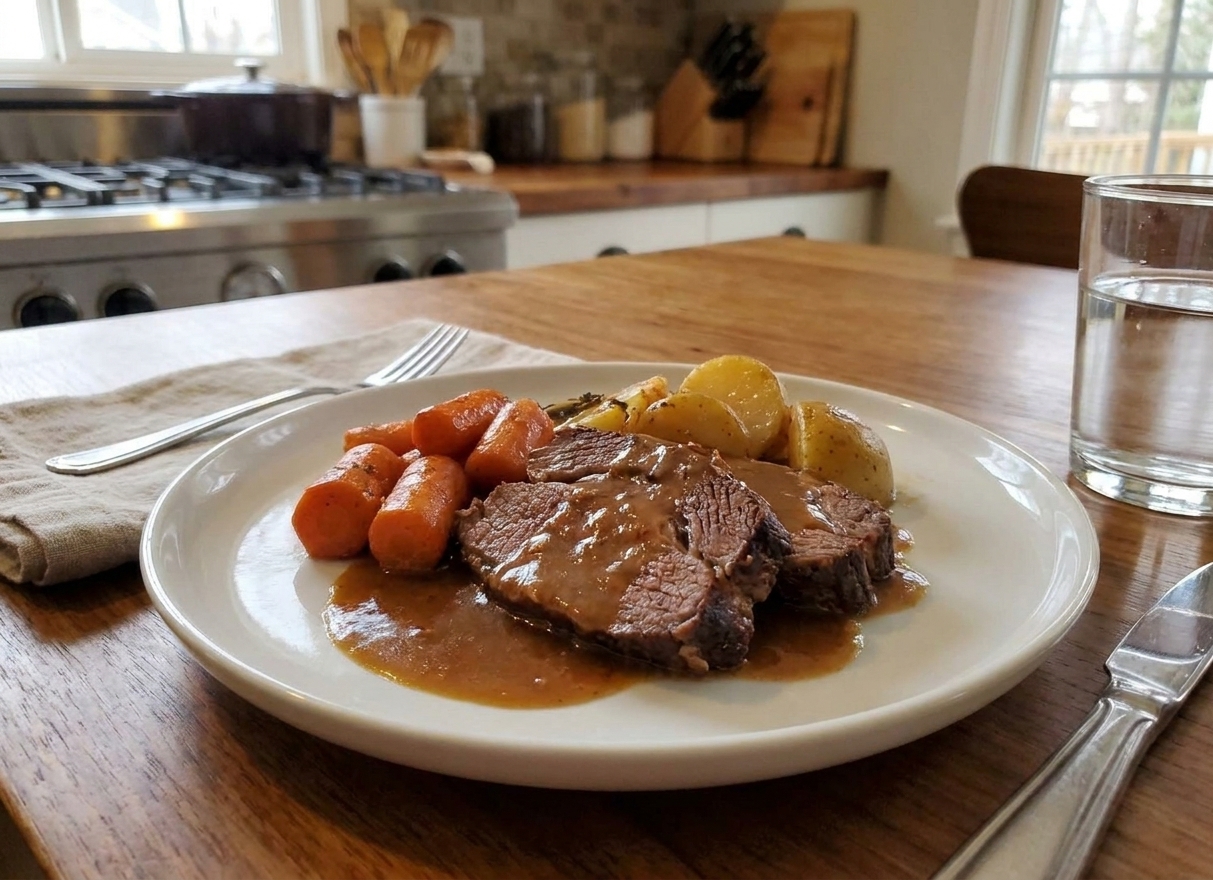
If you’re using that optional thermometer, think of it as a helpful clue, not a finish line. Chuck is usually in the 190 to 205°F range when it turns truly tender, but the best test is simple: slide in a fork. If it twists and pulls apart easily, you’re there.
What if my gravy is thin?
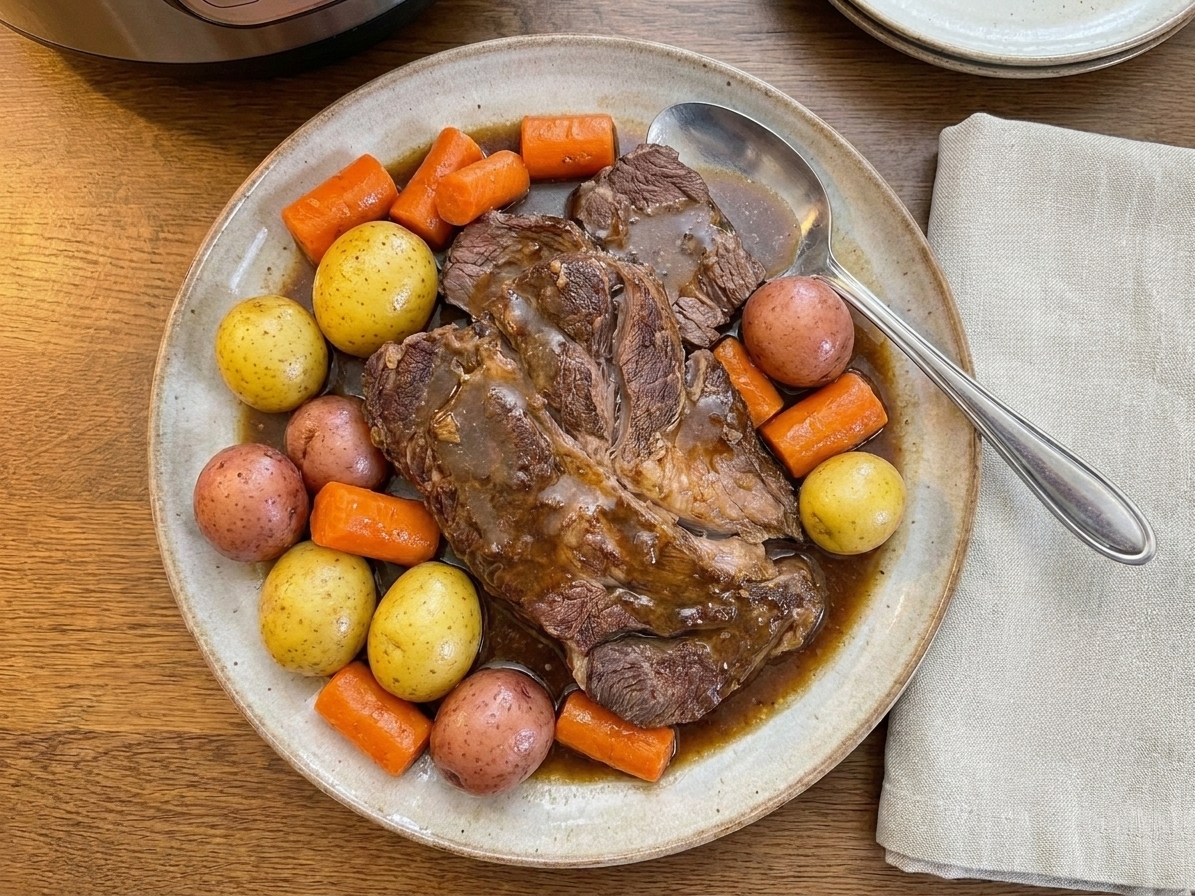
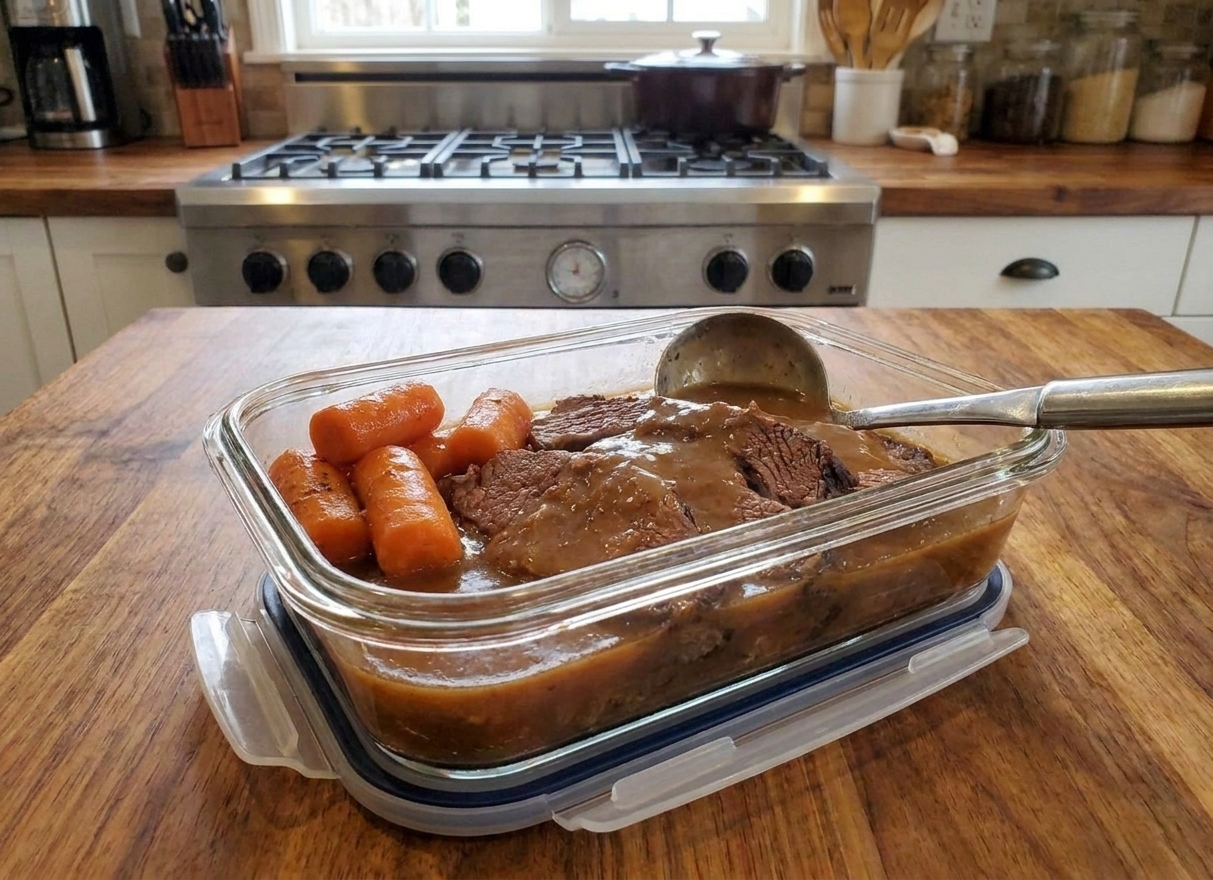
First, simmer it a bit longer. If you want a thicker, spoon-coating gravy, use one of these: cornstarch slurry (1 tbsp cornstarch + 1 tbsp cold water, whisk in and simmer 1 to 2 minutes) or a quick butter-flour paste (mash 1 tbsp soft butter with 1 tbsp flour, whisk in a little at a time, then simmer).