Is pad khi mao the same as pad krapow?
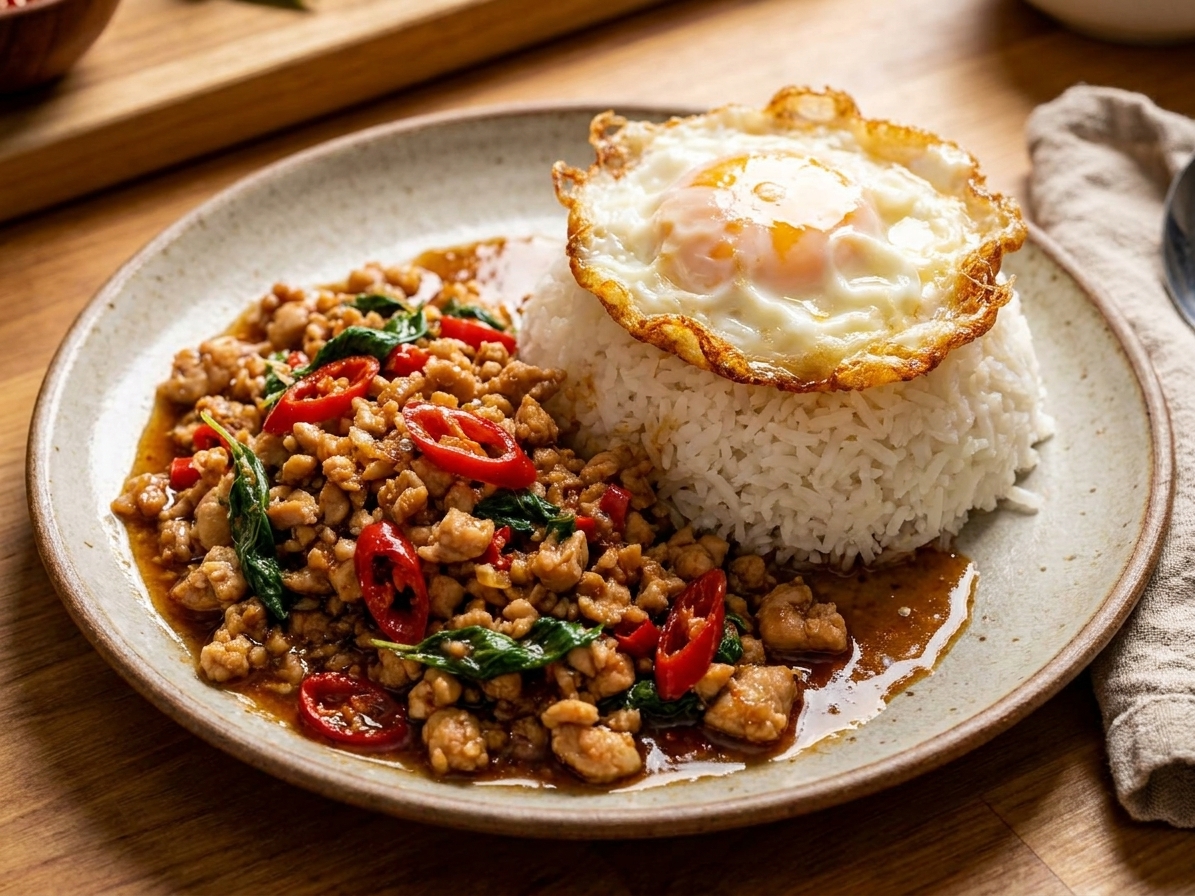
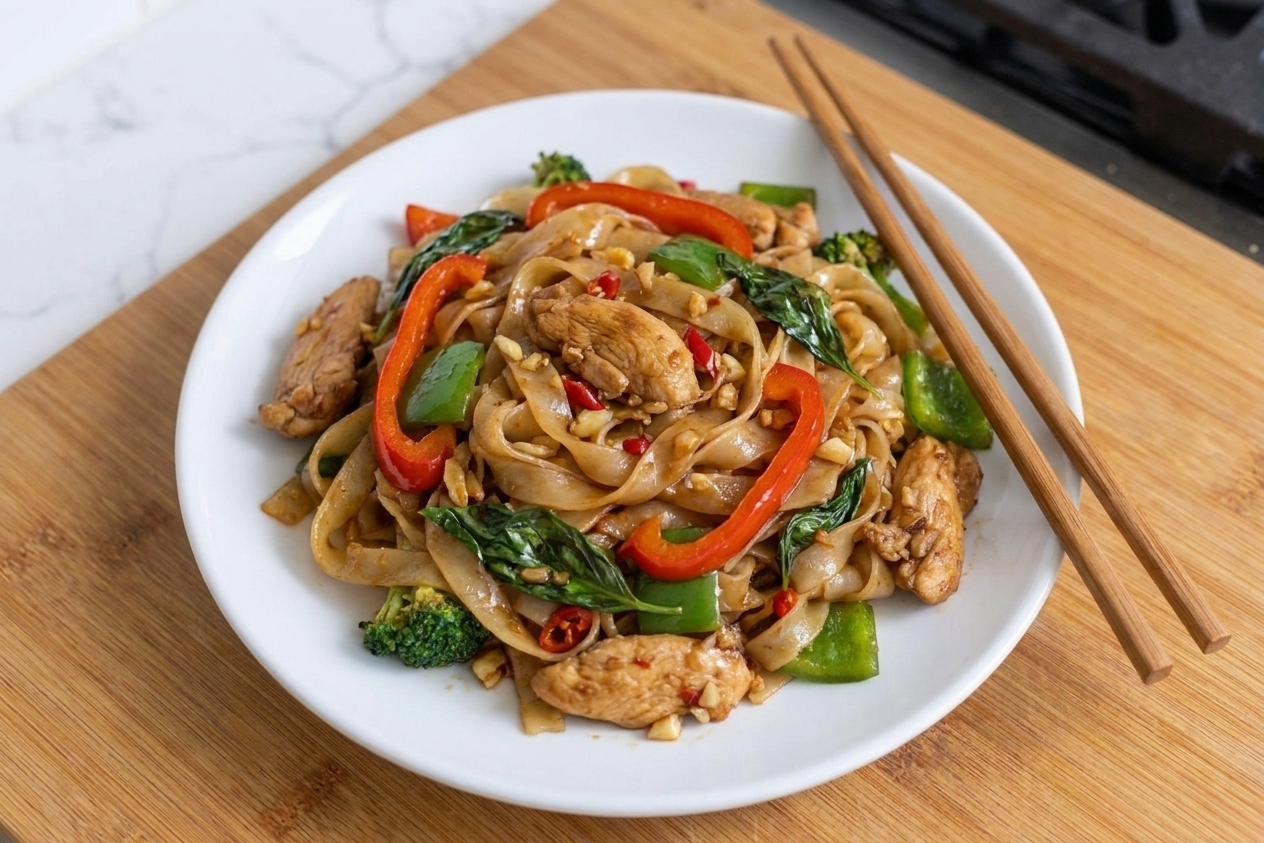
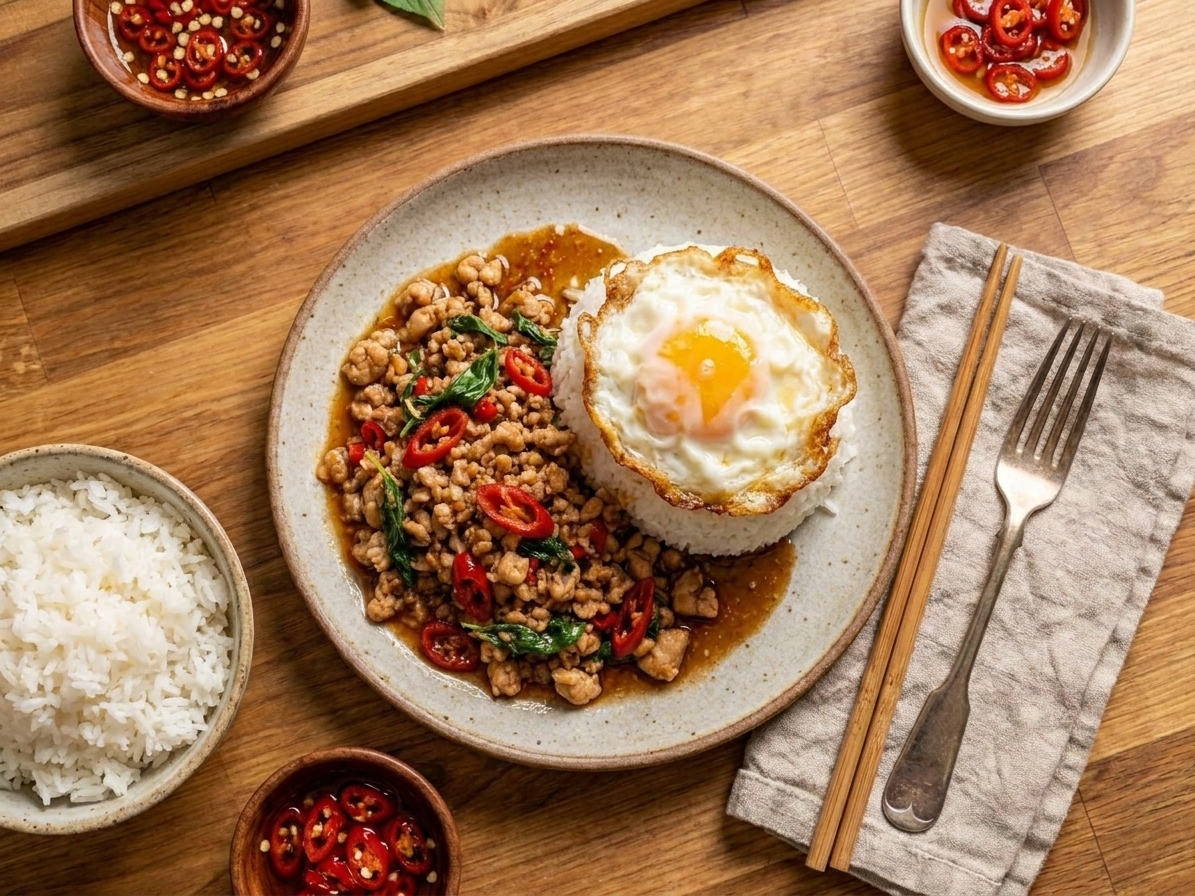
Not exactly. Pad khi mao is most commonly drunken noodles, while pad krapow is the classic Thai basil stir-fry served with rice (often topped with a fried egg). That said, on some English-language menus and in home kitchens, you will hear “drunken” used as shorthand for the garlic, chile, basil, salty-sweet vibe. This recipe is pad krapow inspired and aims straight for that craving.
Do I need holy basil?
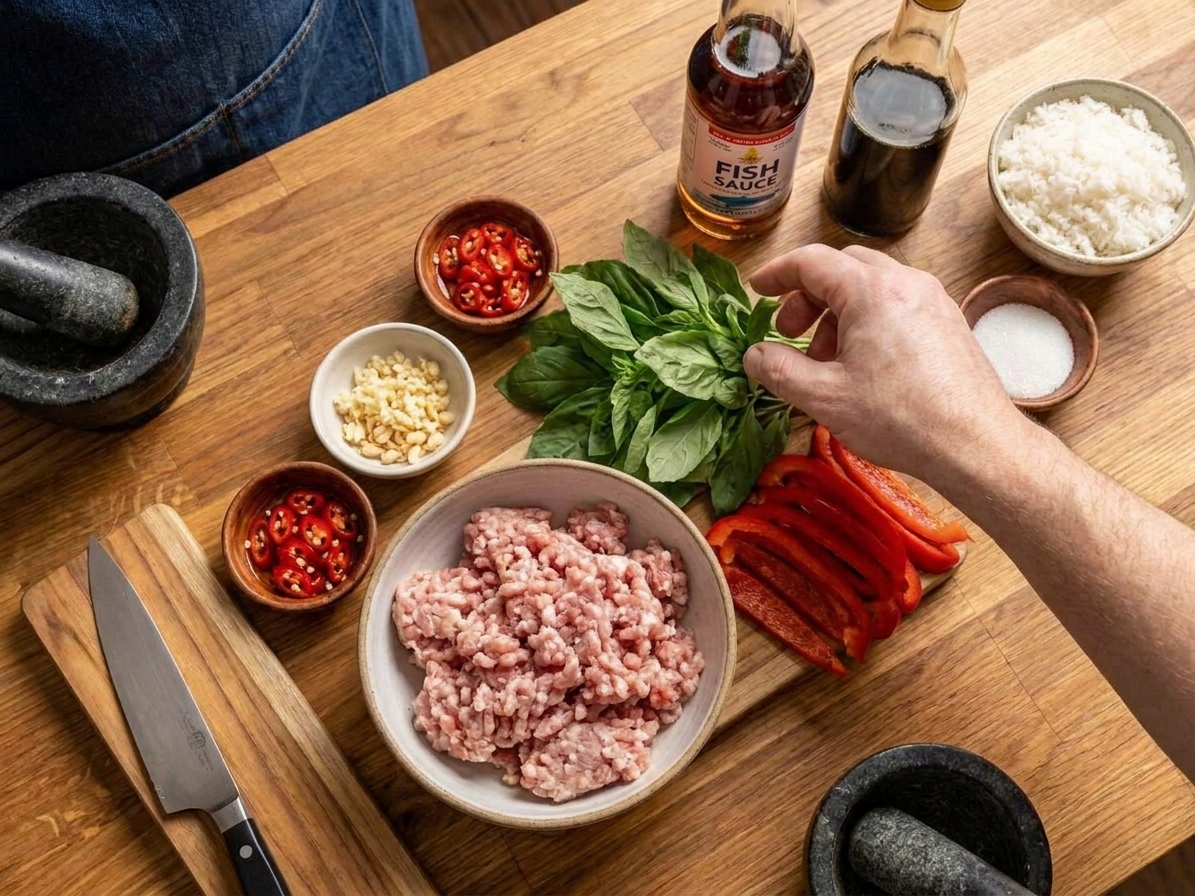
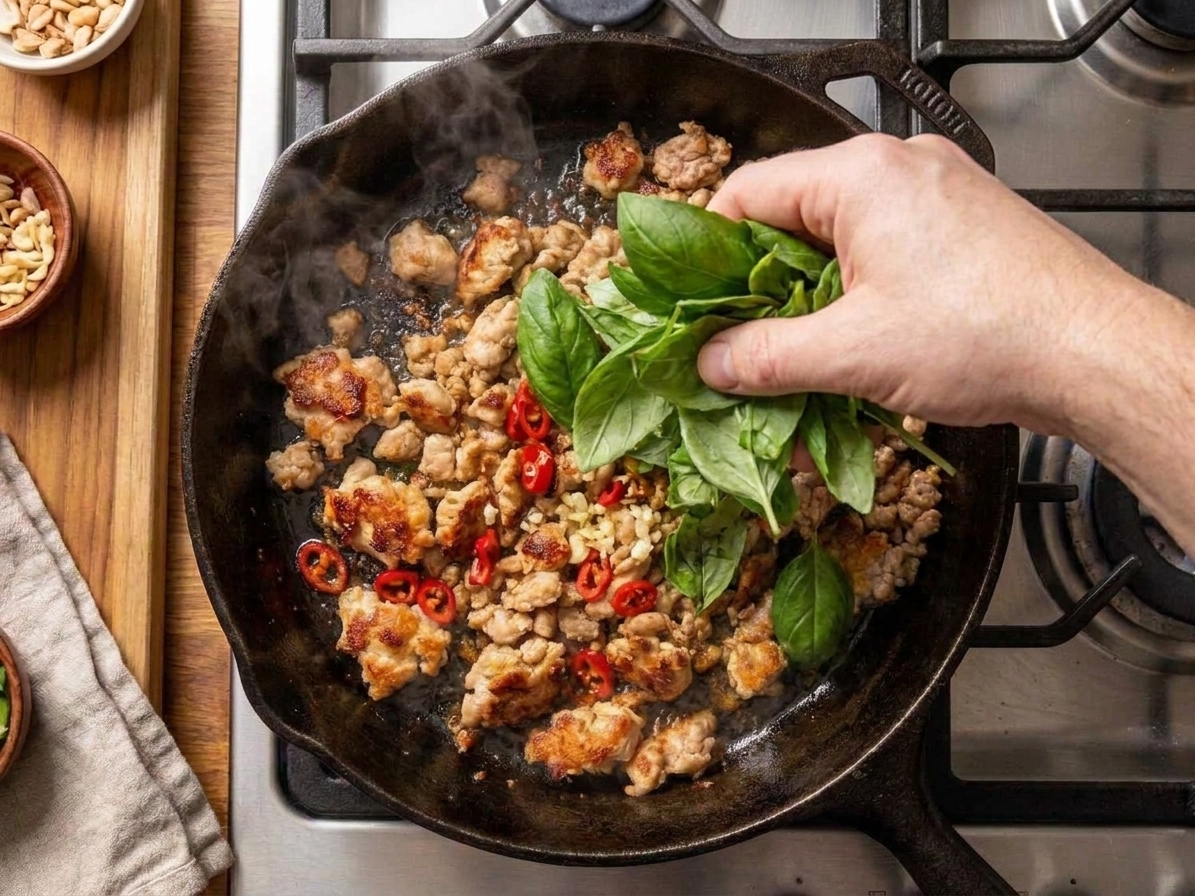
Holy basil is traditional for pad krapow, but it can be hard to find. Use what you can get:
- Holy basil: peppery, a little clove-like, the real deal.
- Thai basil: best easy substitute, slightly anise-y, holds up well to heat.
- Italian basil: works in a pinch, a bit sweeter and more delicate, so add it off the heat.
Is oyster sauce traditional? What about cornstarch?
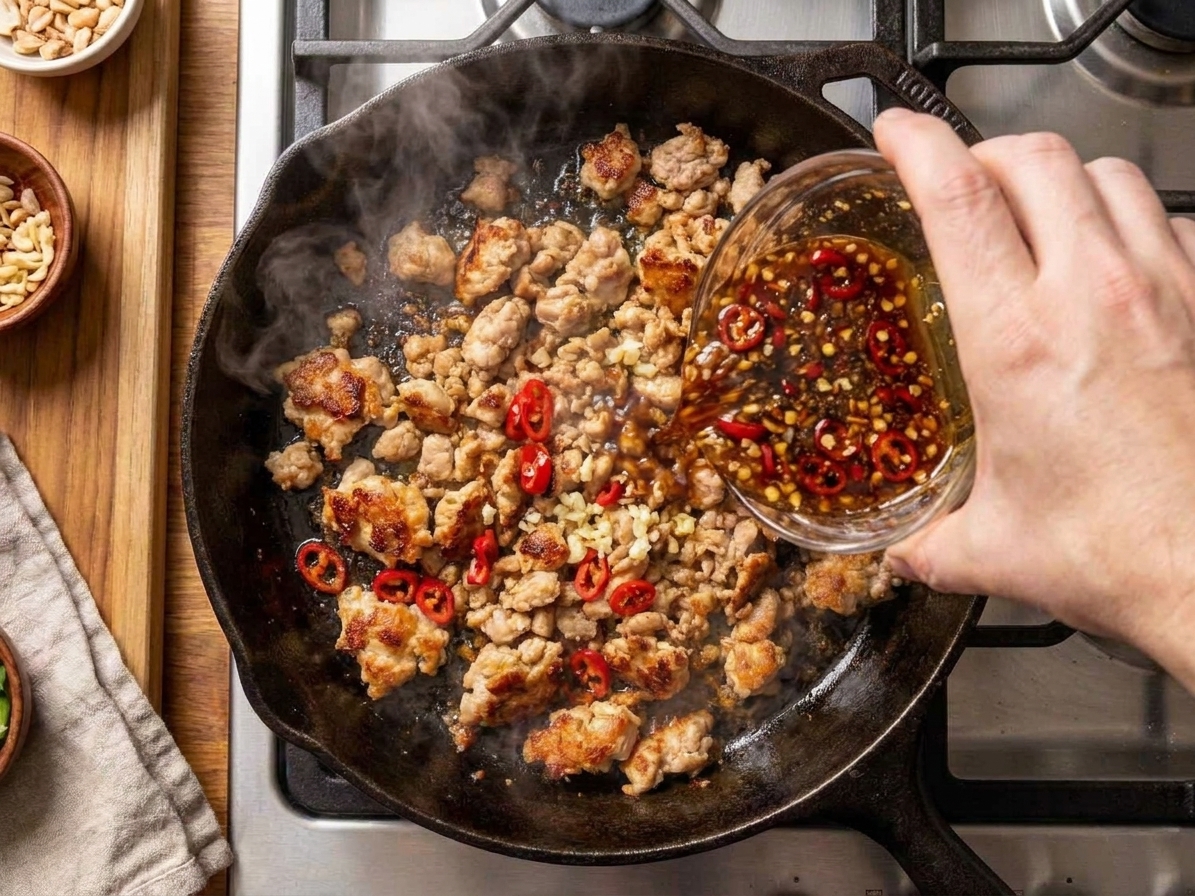
Some versions of pad krapow skip oyster sauce, but it is common in modern home cooking and it adds body and a rounder savory sweetness here. Cornstarch is not traditional, it is just an optional shortcut for gloss if you like that clingy sauce finish. You can leave it out and simply boil the sauce down for an extra 30 to 60 seconds.
What protein works best?
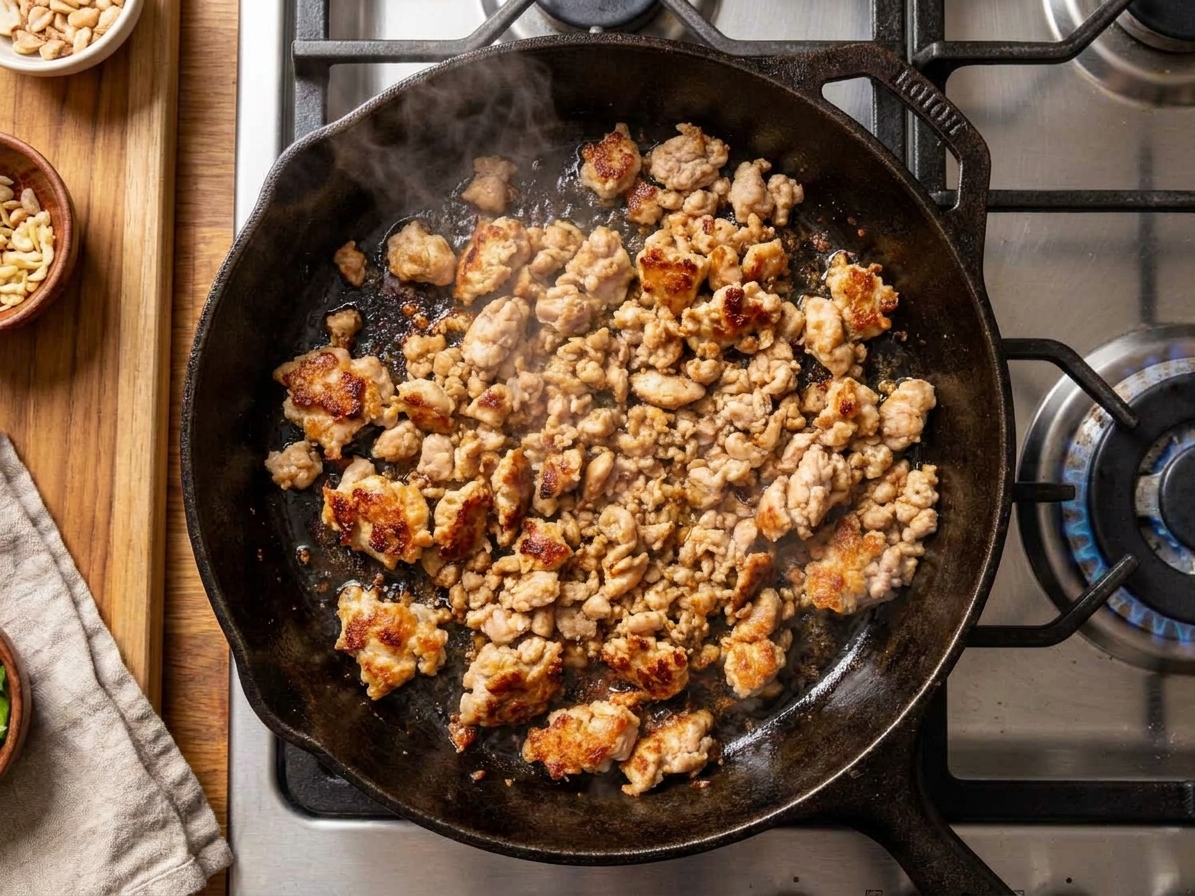
Ground chicken, pork, turkey, or beef all work. If you prefer chunks, thinly sliced chicken thighs or shrimp are great too. Just keep the pan hot so you get browning instead of simmering.
Can I make it less spicy?
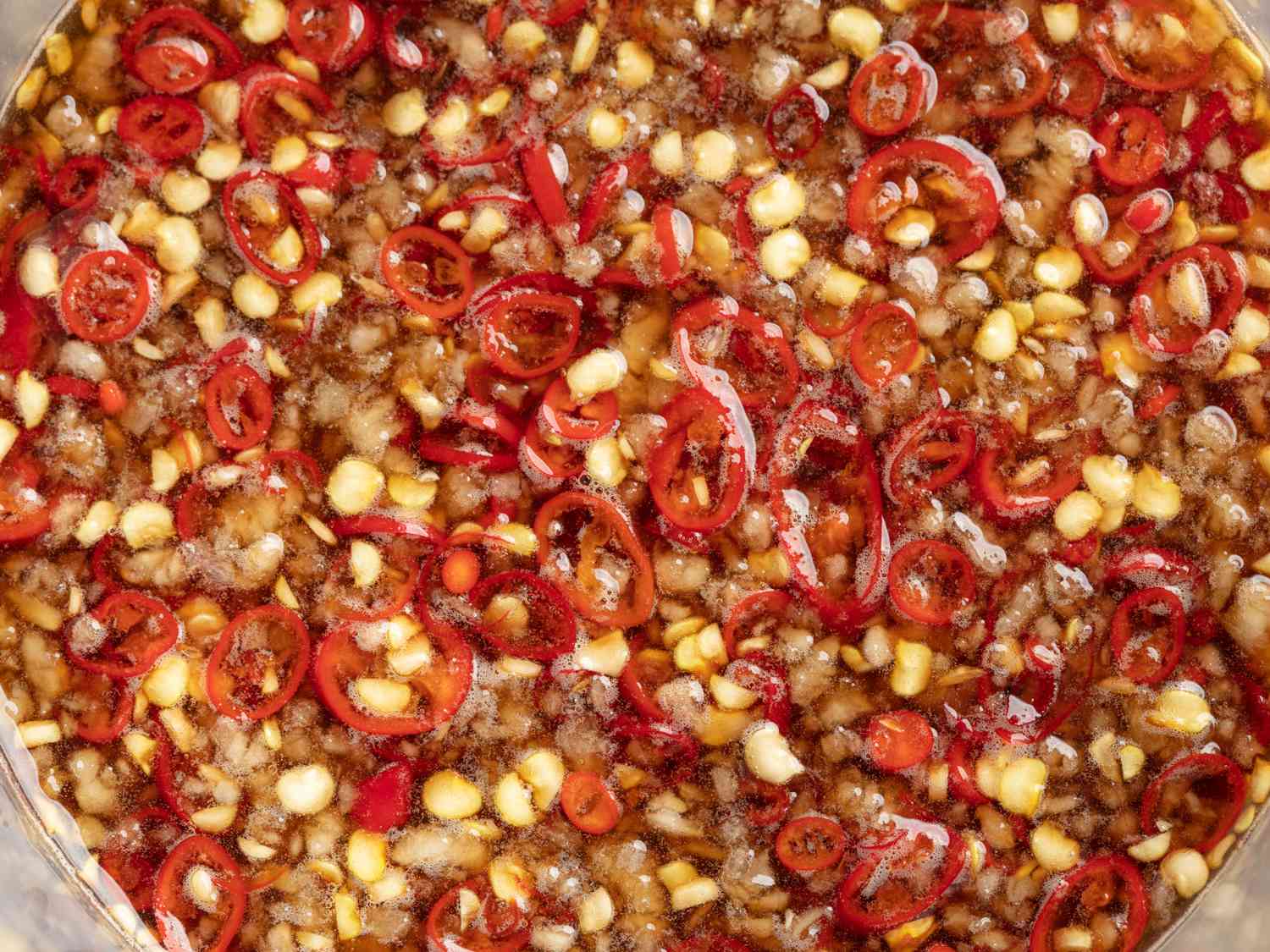
Yes. Use 1 chile (or none) and add heat back with chili crisp or chili garlic sauce at the table. You still get the garlic-basil flavor without the sweat.
Can I make it vegetarian or vegan?
Yes. Use crumbled extra-firm tofu (or a plant-based ground), swap fish sauce for soy sauce plus a tiny splash of lime, and use vegetarian oyster sauce or mushroom stir-fry sauce. Keep the heat high so the tofu gets browned edges before the sauce goes in.
What do I serve it with?
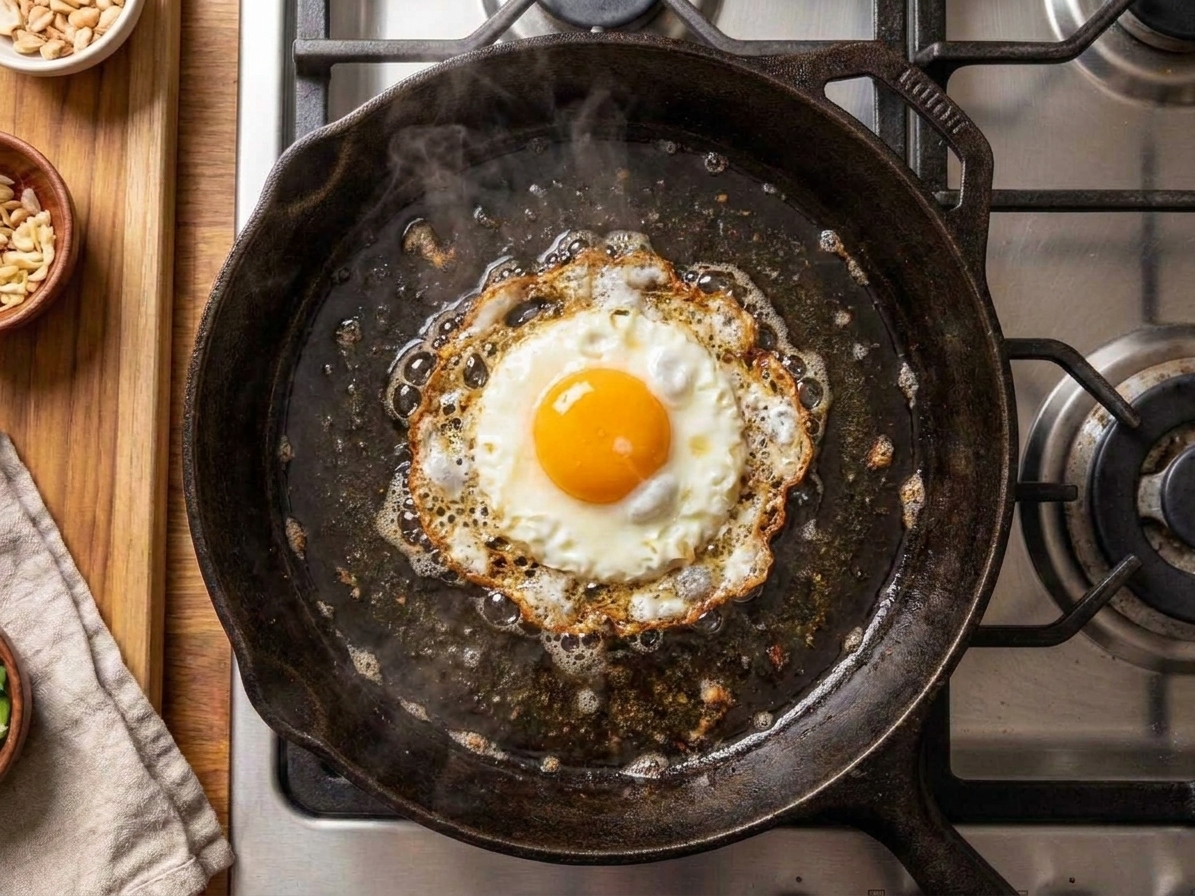
Jasmine rice is the move. A crispy fried egg on top is basically mandatory in my kitchen. Quick cucumber salad on the side is a nice cooling reset.