Mom's Best Recipes
Recipe

Pan de Muerto

A soft, lightly sweet Mexican bread perfumed with orange, finished with melted butter and a snowy sugar coat.

Author By Matt Campbell
4.8
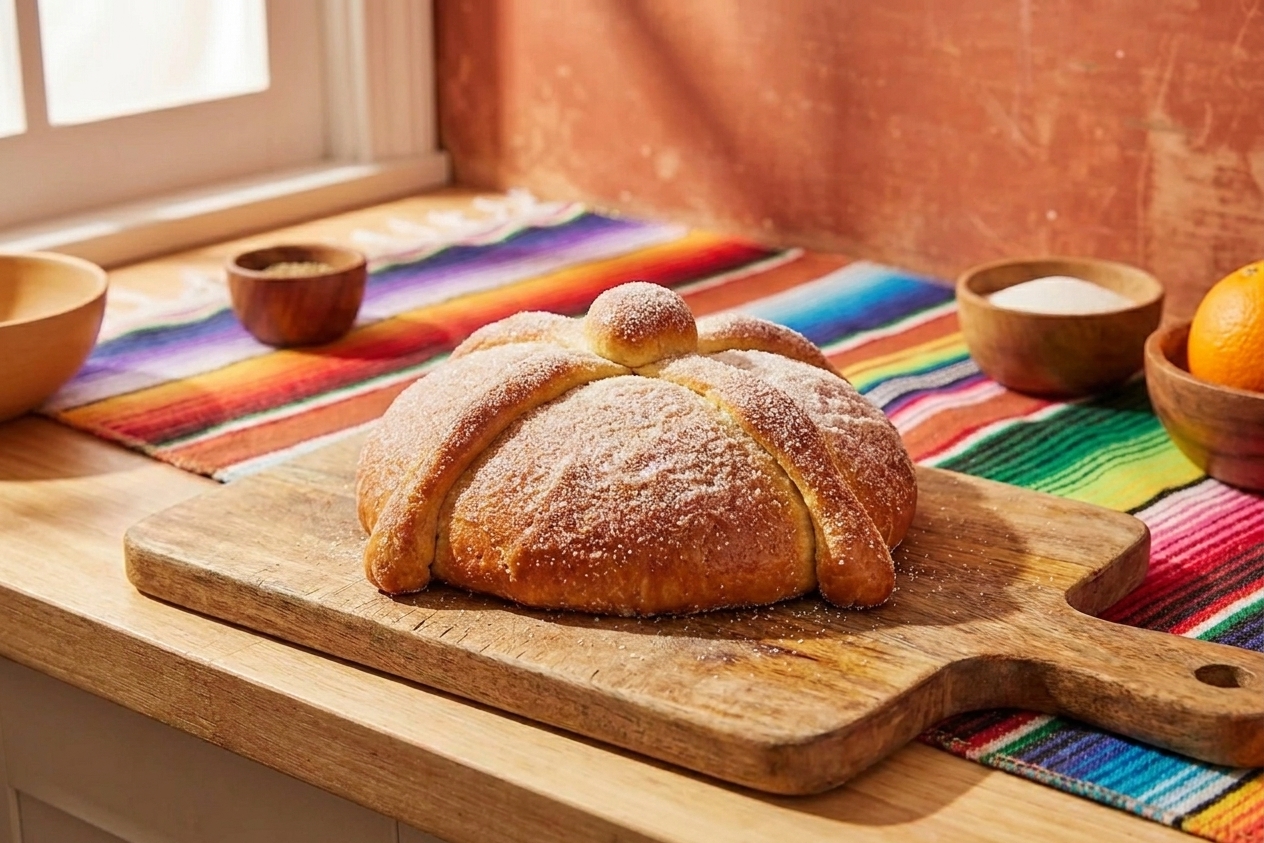
A freshly baked pan de muerto on a wooden board, topped with classic dough bones and a sugar coating, set on a warm kitchen table with soft afternoon light

Pan de muerto is one of those breads that feels like a hug and a high five at the same time. It is tender and buttery, smells like orange the second you crack the oven door, and has that signature topknot with dough “bones” that makes it instantly recognizable.

Traditionally enjoyed around Día de Muertos, it is often flavored with orange and sometimes a whisper of anise or orange blossom. This version keeps ingredients realistic for a home kitchen but still nails the vibes: fluffy crumb, gentle sweetness, and a buttery sugar finish that turns every slice into a snack you keep “checking” until it mysteriously disappears.

If you have ever been nervous about enriched dough, this is a friendly one to start with. We go step by step, and yes, tasting as you go is encouraged.
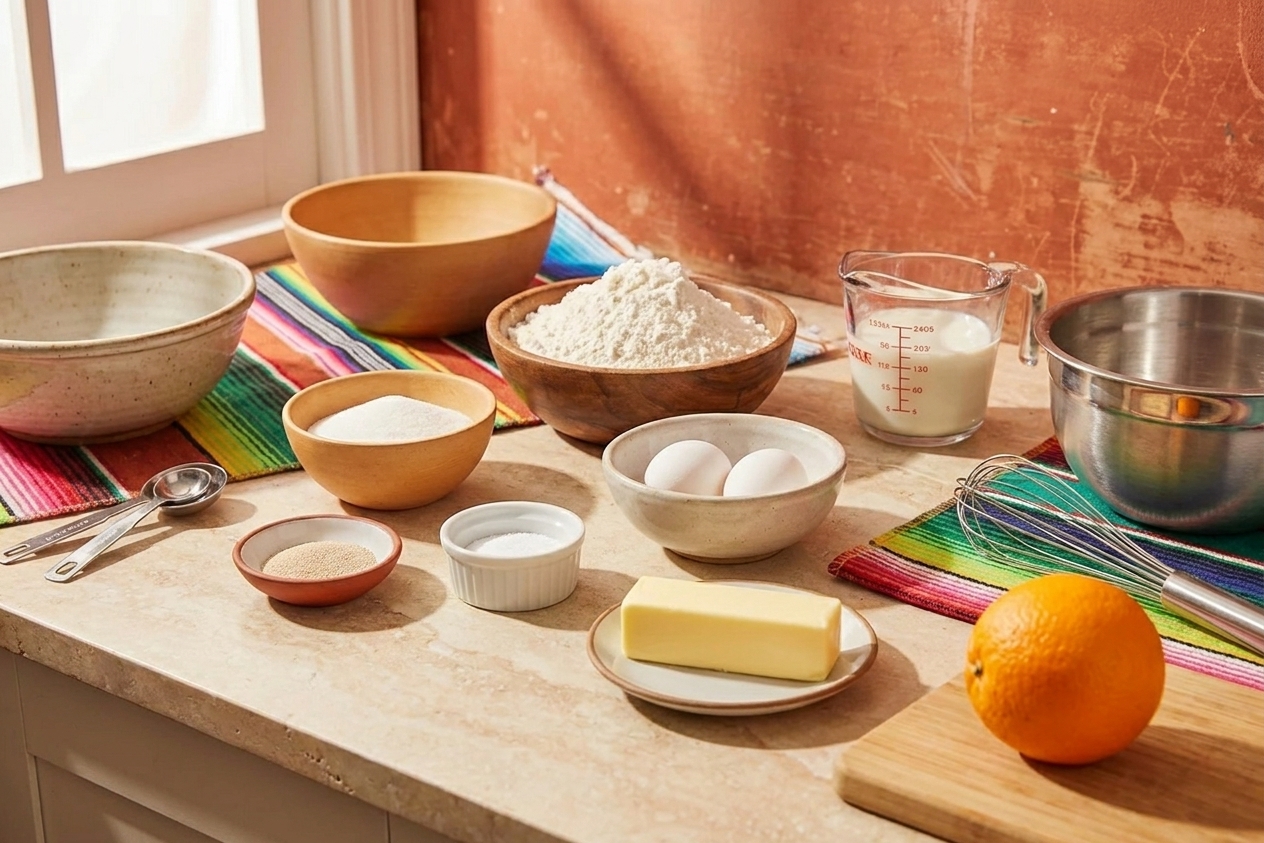
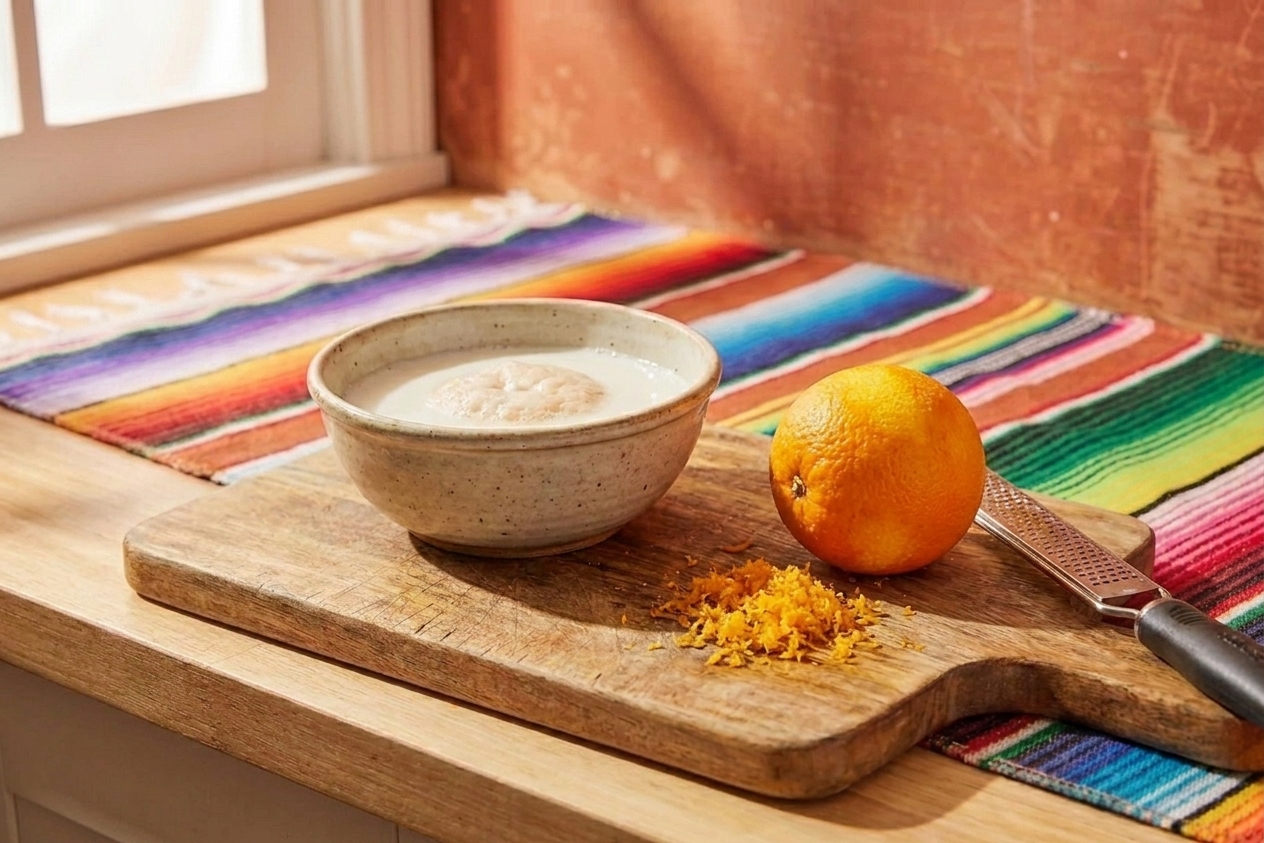
Measured flour, sugar, yeast, eggs, butter, milk, orange, and salt arranged on a light stone kitchen counter with mixing bowls and measuring spoons

Why It Works

  • Soft, enriched crumb: Eggs, butter, and milk create that bakery-tender texture without feeling heavy.
  • Big orange aroma: Orange zest and a touch of orange blossom water (optional but lovely) give classic flavor that reads instantly as pan de muerto.
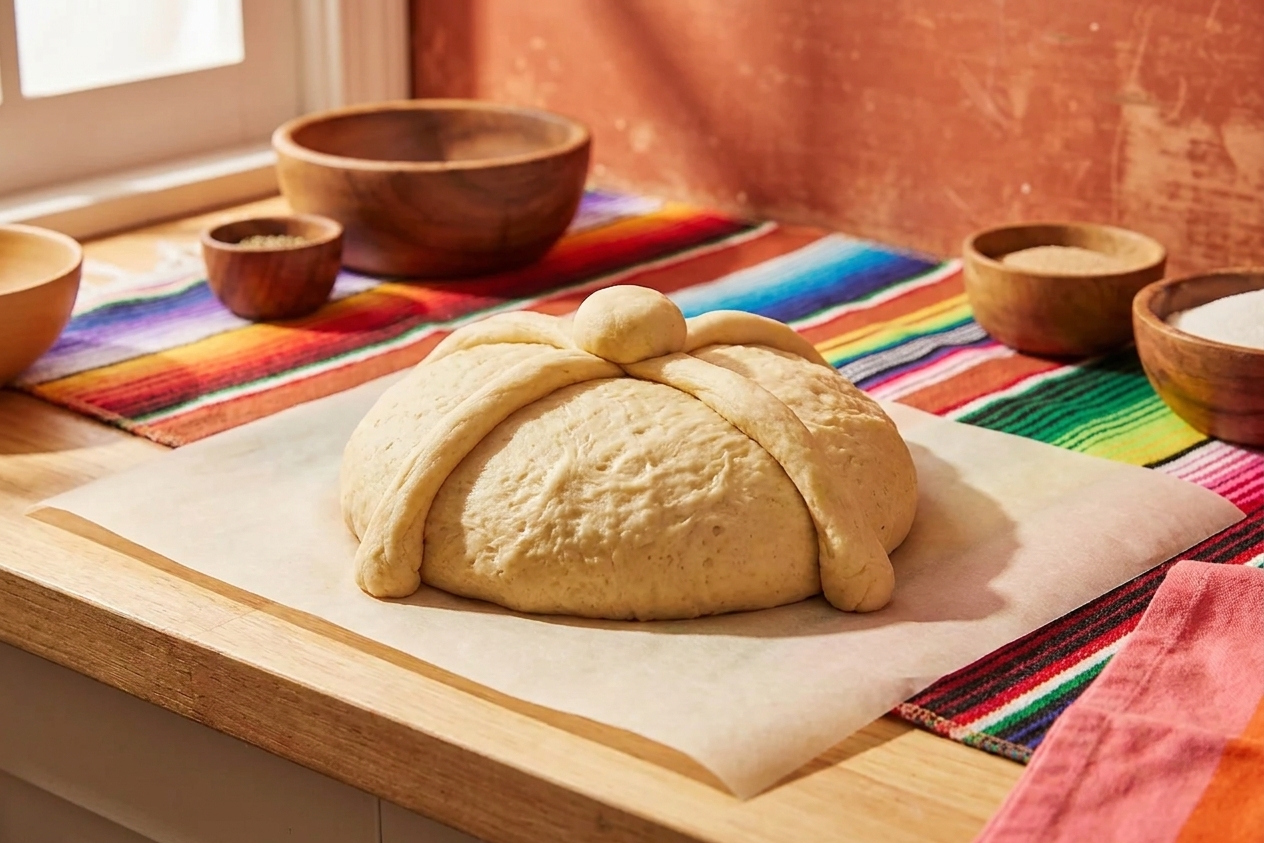
  • Clear shaping: The “bones” look fancy, but they are basically dough ropes with knuckles. We keep it simple.
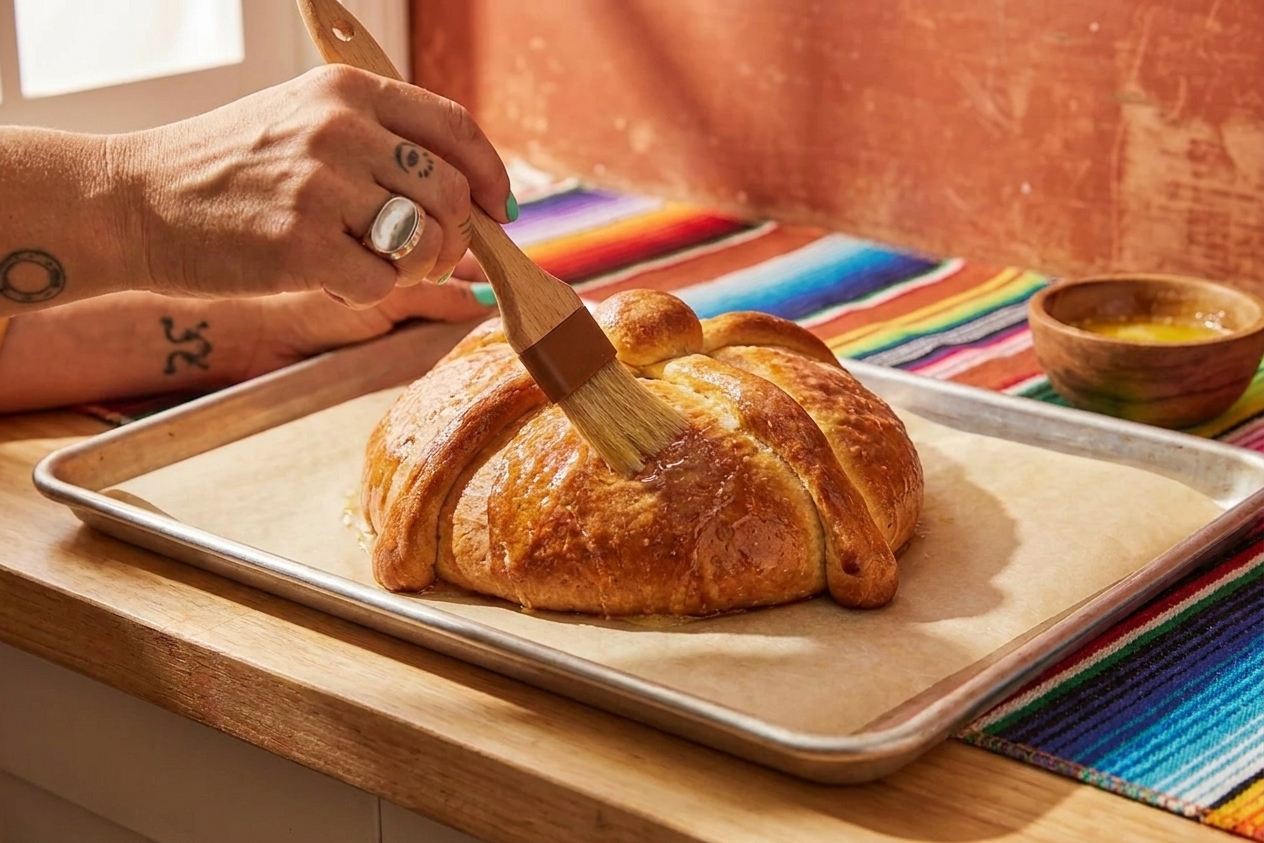
  • That buttery sugar coat: Brushing with butter after baking helps the sugar cling and keeps the crust pleasantly soft.
A round pan de muerto dough ball on parchment with two rope-like dough bones crossed on top and a small dough knob in the center

Pairs Well With

Storage Tips

Room temperature: Let the bread cool completely, then keep it in an airtight container or zip-top bag for 1 to 2 days for best quality, or up to 3 days if your kitchen is cool and dry. (If it is warm or humid, the bread will go downhill faster, and freezing is your friend.)

Freeze: Freeze (whole or sliced) tightly wrapped for up to 1 to 2 months for best quality. For best results, freeze without the final butter and sugar, then finish after reheating.

Reheat: Warm slices in a 300°F oven for 8 to 10 minutes, or toast lightly. If it needs a refresh, brush with a little melted butter and re-dust with sugar.

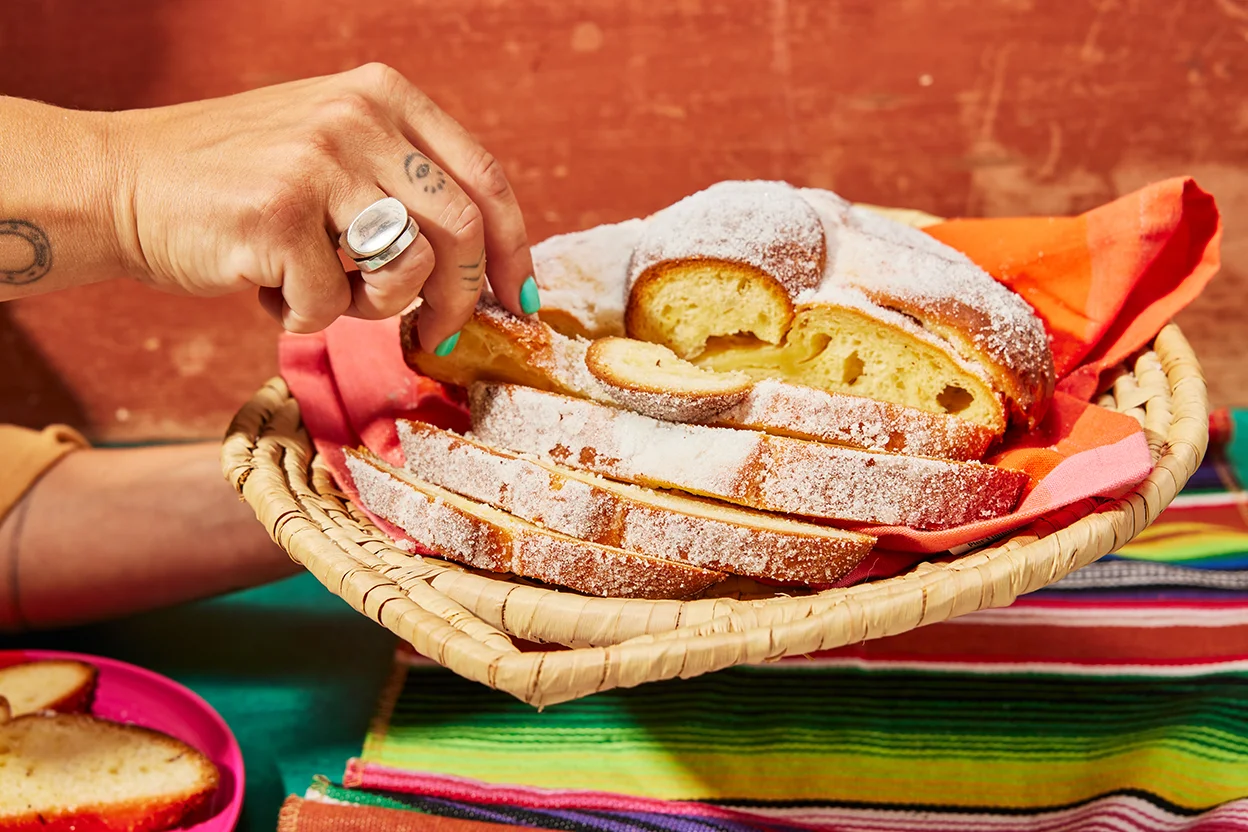
Slices of pan de muerto on a small ceramic plate with a light sugar dusting, next to a mug on a wooden table

Common Questions

What does pan de muerto taste like?

It is lightly sweet and buttery with a soft, fluffy crumb. The main flavor note is orange zest, sometimes with a floral hint from orange blossom water. Think brioche-adjacent, but with a brighter citrus perfume.

Do I have to use orange blossom water?

No. It is traditional in many recipes, but not required. If you skip it, add 1 more teaspoon of orange zest or the zest of a second orange if you want it extra citrusy. A tiny splash of vanilla also works, just a different direction.

Can I make the dough ahead?

Yes. After kneading, cover and refrigerate overnight for the first rise. The next day, let it sit at room temperature 45 to 90 minutes until the dough is relaxed and slightly puffy, then shape, proof, and bake.

Why did my dough feel sticky?

Enriched doughs start sticky. Give it time to knead so gluten develops and butter fully incorporates. If it is still unmanageable after 8 to 10 minutes of kneading, add flour 1 tablespoon at a time. The goal is soft and slightly tacky, not dry.

Can I use instant yeast instead of active dry yeast?

Yes. Using the same amount works well for most home bakers. If you want to be extra precise, you can use about 25 percent less instant yeast. You can mix it directly into the dry ingredients, but I still like blooming it in warm milk because it is a nice confidence boost.

The first time I tried making pan de muerto at home, I got way too confident about the “bones.” Mine looked more like little bread noodles doing their best. But when it came out of the oven and I brushed on the butter, that orange smell hit the kitchen and everyone suddenly stopped caring about my questionable anatomy skills.

Now I treat it like my annual reminder that food does not have to be perfect to be meaningful. Get the dough soft, get the crust golden, and do not skimp on the butter-sugar finish. That part is non-negotiable.