Mom's Best Recipes
Recipe

Mediterranean Salmon

Roasted lemon-garlic salmon with a juicy tomato, olive, caper, and feta topping.

Author By Matt Campbell
4.8
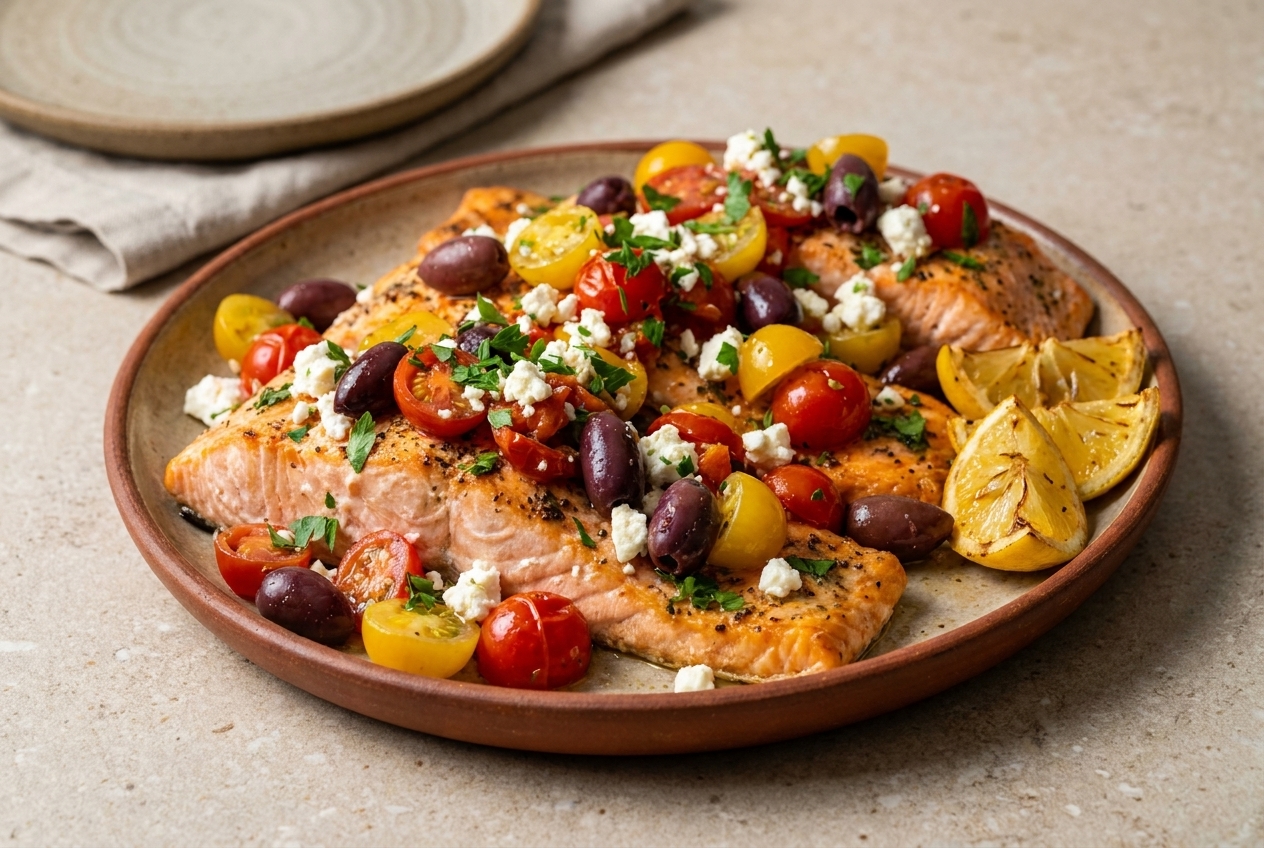
A platter of roasted salmon fillets topped with a chunky mix of cherry tomatoes, Kalamata olives, feta, and fresh parsley, with lemon wedges on the side on a neutral stoneware table setting

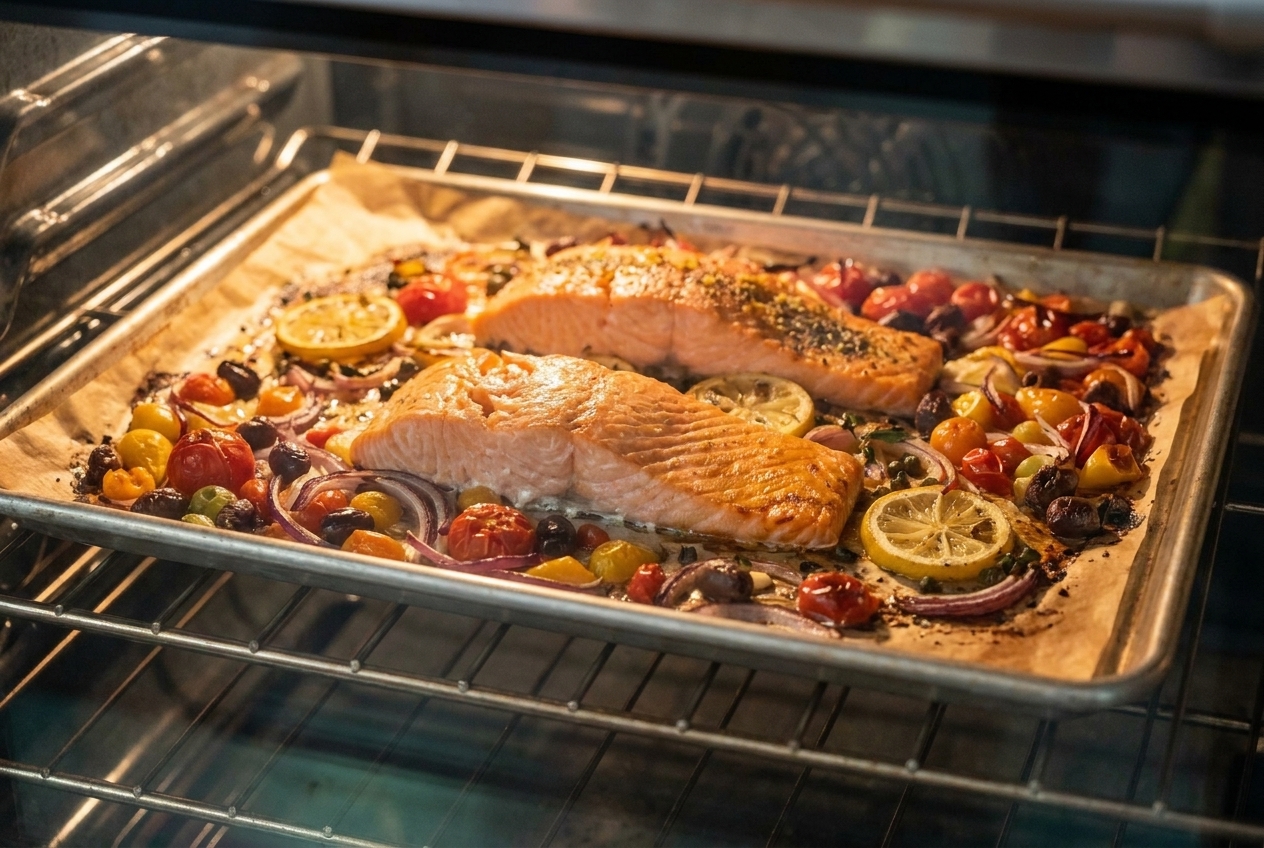
If you want salmon that tastes like you tried very hard without actually trying very hard, this is the move. We roast the fish hot and fast so the edges get a little browned, then pile on a bright, briny topping that does the heavy lifting: cherry tomatoes, olives, capers, lemon, and feta. It is salty, juicy, and just messy enough to feel fun.

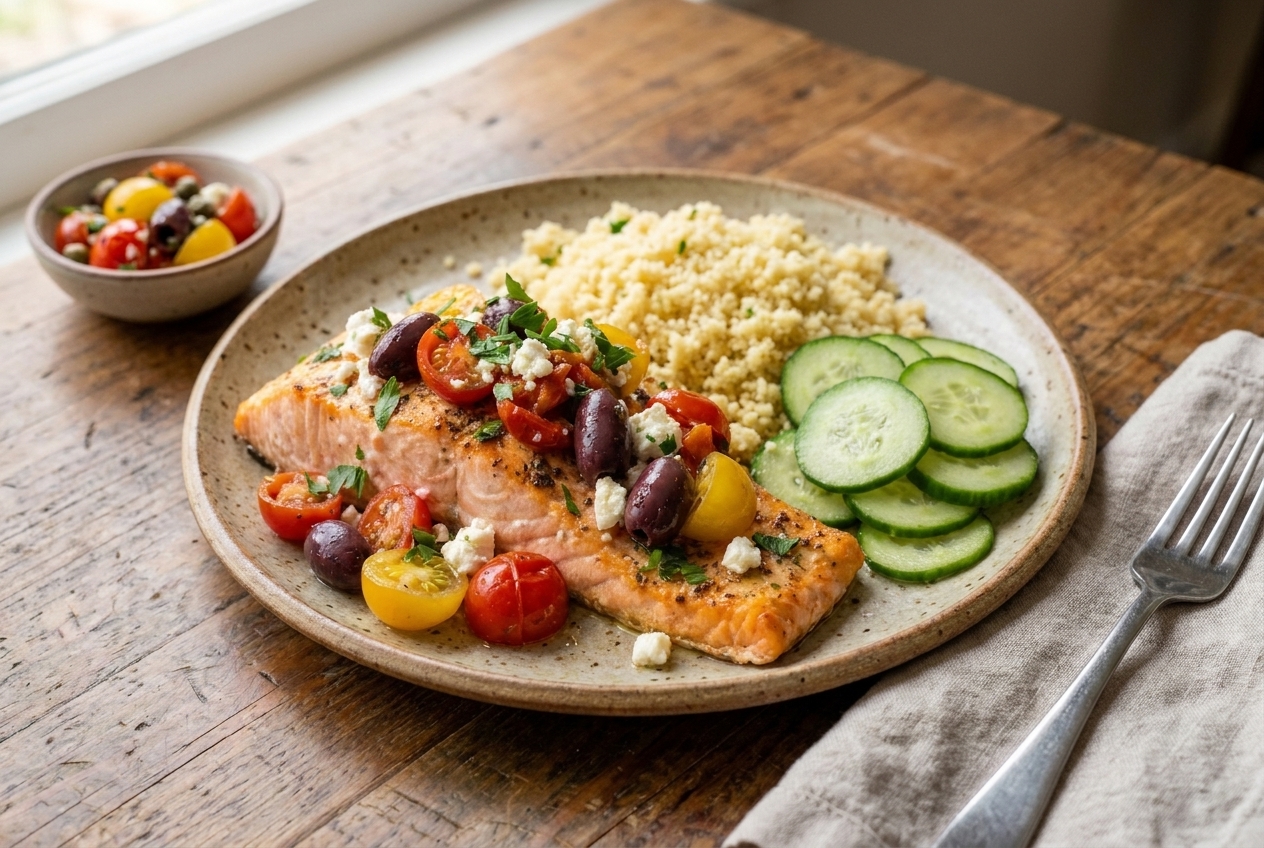
This is one of those dinners that looks restaurant-y on a plate, but it is secretly a sheet pan situation. You can spoon the topping over rice, couscous, or bread after the salmon is gone, which is my favorite kind of leftover math.
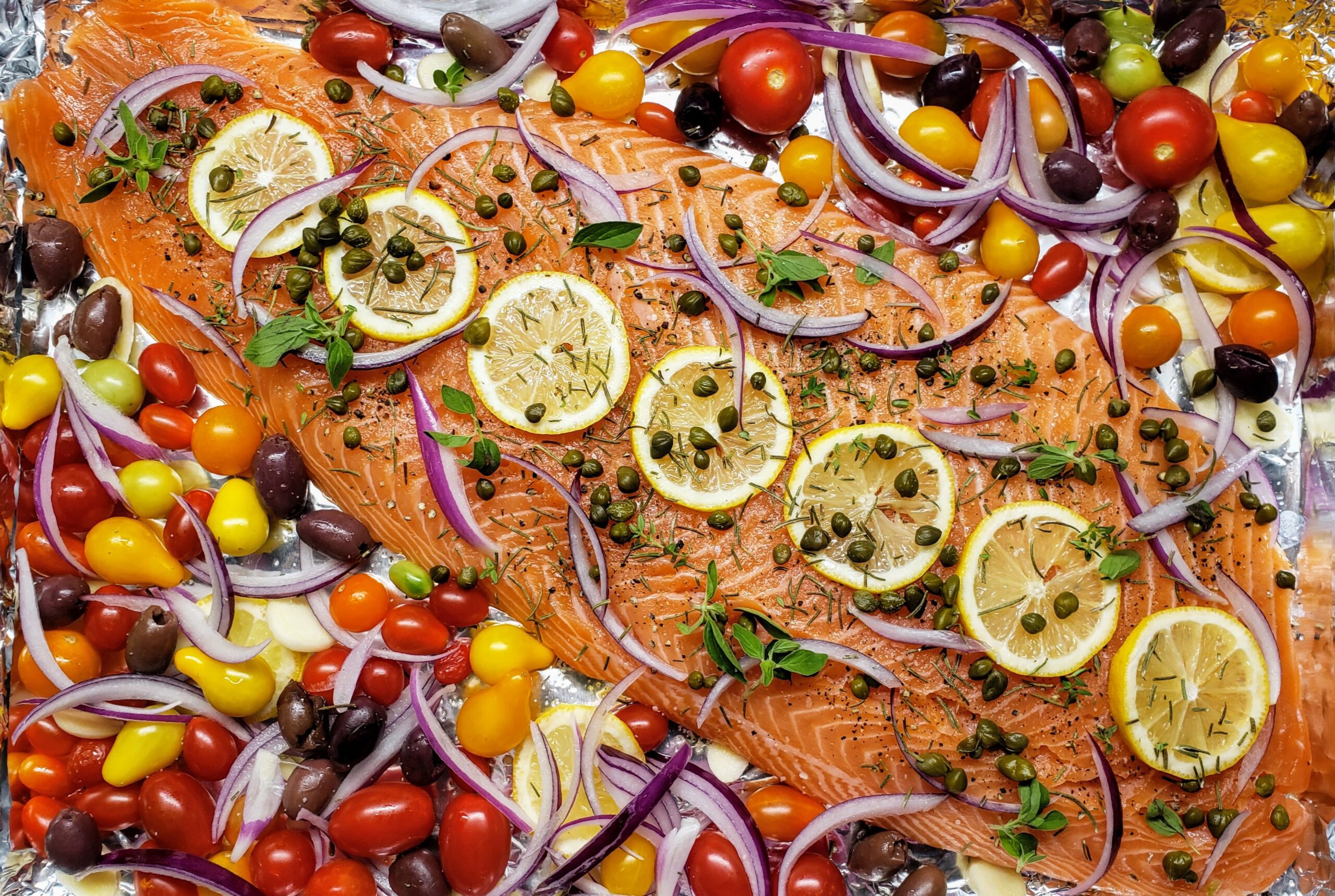
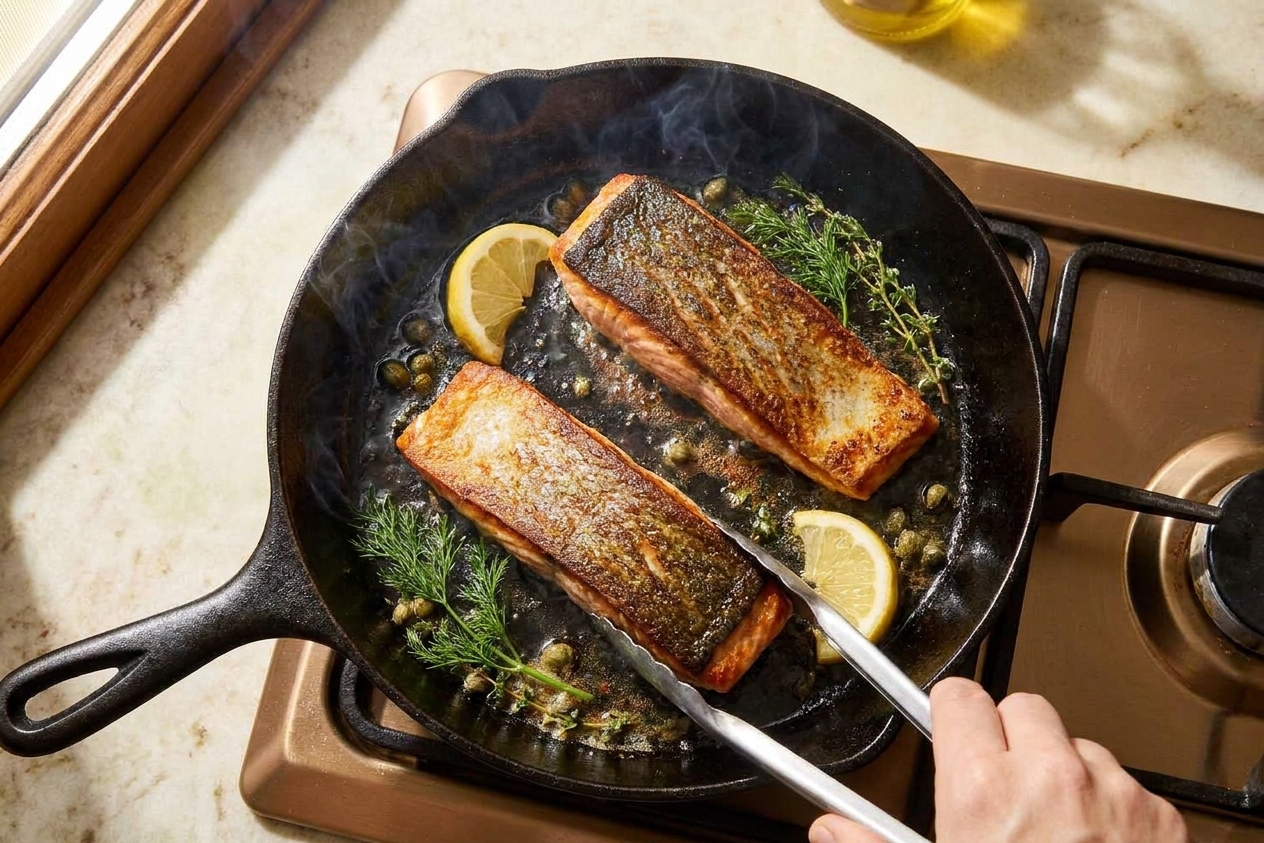
Raw salmon fillets, cherry tomatoes, Kalamata olives, feta, lemons, garlic, olive oil, and fresh parsley arranged on a bright kitchen counter with a cutting board

Why It Works

  • Big Mediterranean flavor with basic groceries: lemon, garlic, oregano, olives, and feta do not require a specialty store run.
  • Perfect texture without stress: a hot oven sets the outside while keeping the inside tender. No flipping, no babysitting.
  • The topping is the sauce: tomatoes burst a little, feta gets creamy, and the brine from olives and capers makes everything taste seasoned on purpose.
  • Easy to flex: swap herbs, change the cheese, or make it mild for kids by dialing back capers.

Pairs Well With

Storage Tips

Refrigerate: Store salmon and topping in an airtight container for up to 3 days. If possible, keep extra topping separate so you can reheat the fish gently and spoon the cool topping on after.

Reheat: Warm in a 300°F oven for 8 to 12 minutes, just until heated through. Microwave works in short bursts, but go low power to avoid dry salmon.

Eat it cold: Leftover salmon flaked into a salad with cucumbers, chickpeas, and a lemony drizzle is shockingly good.

Freezing (quality note): You can freeze cooked salmon for up to 2 months for best quality, but the feta and tomatoes get a little weird after thawing. If you want to freeze, freeze just the salmon and make fresh topping later.

Common Questions

Can I use frozen salmon?

Yes. Thaw it completely in the fridge overnight, then pat it very dry before seasoning. Water is the enemy of browning.

How do I know when salmon is done?

The easiest home-cook method is visual plus a gentle poke: the salmon should turn mostly opaque and just begin to flake with gentle pressure at the thickest point. If you use a thermometer, many cooks love 125°F to 130°F for moist, medium salmon. For food-safety guidance, the USDA recommends 145°F. Choose the temperature that fits your comfort level, especially if serving anyone who is pregnant or immunocompromised.

Do I need to remove the skin?

No. If your fillets have skin, roast them skin-side down. The skin acts like a little protective jacket. You can eat it if it crisps, or slide the flesh off after cooking.

What can I substitute for feta?

Goat cheese for extra tang, shaved Parmesan for a saltier finish, or leave cheese out and add a spoon of plain Greek yogurt on the plate for creaminess.

Is this recipe kid-friendly?

Usually yes, especially if your kids like lemony flavors. For a milder version, reduce capers and use fewer olives, then let everyone add them at the table.

I started making versions of this when I was trying to cook “healthy” but still wanted dinner to feel like dinner. Salmon is great, but salmon plus a chaotic little pile of tomatoes, olives, and feta is where things get interesting. It is the kind of meal that makes people hover near the sheet pan and “taste test” the topping with a piece of bread. Which I fully support.